"7b46a695175d8694"{"id":"1000364","slug":"driveable-vehicle-seaplane","title":"Driveable Vehicle: Seaplane","category":"Vehicles \u0026 Transportation","engine":"4.26+,5.0+","assetVersion":"","engineVersion":"Engine Version: 4.26+,5.0+","tag":"Vehicles","accent":"blue","visual":"mech","summary":"A fully rigged, realistic seaplane mesh featuring a demonstration blueprint for flight simulation, designed primarily for exterior camera workflows.","platform":"Unreal Engine","publishedAt":"2026-07-06T08:06:17.339Z","updatedAt":"2026-07-06T08:06:17.339Z","sourceNotes":[],"fileContents":[],"compatibility":["Unreal Engine","Engine Version: 4.26+,5.0+"],"featuredImage":{"alt":"Driveable Vehicle: Seaplane","src":"/wp-content/uploads/published/2026/07/ededd00a4af6-34c774f8-1d98-426c-bfbb-37188df509db-e2065c6d6a.webp"},"hasDownloadLink":true,"downloads":0,"terms":[{"taxonomy":"category","slug":"vehicles-and-transportation","name":"Vehicles \u0026 Transportation"}],"galleryImages":[{"src":"/wp-content/uploads/published/2026/07/d32bfbc02737-aa45cc61-40c0-4854-91ae-7ed18bff87a6-215fc23e3f.webp","alt":"Driveable Vehicle: Seaplane"},{"src":"/wp-content/uploads/published/2026/07/ff2ec55cc14e-8dd3bb87-1479-4ccb-bccb-054303571b70-68ae5f8a6e.webp","alt":"Driveable Vehicle: Seaplane"},{"src":"/wp-content/uploads/published/2026/07/3cc8bddd072d-5fb24382-4d2b-41dc-9673-79b3fa8948de-f95bc6257d.webp","alt":"Driveable Vehicle: Seaplane"},{"src":"/wp-content/uploads/published/2026/07/f6645e188211-1016af42-e218-4e69-a2fb-1f33396f0ec7-8344cc06db.webp","alt":"Driveable Vehicle: Seaplane"},{"src":"/wp-content/uploads/published/2026/07/0c5690b05611-1e056635-a35e-4ba1-bff0-fe7369522785-5f711dff7c.webp","alt":"Driveable Vehicle: Seaplane"},{"src":"/wp-content/uploads/published/2026/07/eca73f848451-182dbb24-99db-4a55-ba02-85747c385636-104c03d009.webp","alt":"Driveable Vehicle: Seaplane"},{"src":"/wp-content/uploads/published/2026/07/66be2d6e0a6b-2d96caf7-c54b-439e-bef0-426ef023eba5-59595cb271.webp","alt":"Driveable Vehicle: Seaplane"},{"src":"/wp-content/uploads/published/2026/07/7b84beca693f-3d04a562-7c64-4748-a566-ae99d1ca2cd2-fd9d3375e8.webp","alt":"Driveable Vehicle: Seaplane"},{"src":"/wp-content/uploads/published/2026/07/a3a85264b4e9-2043ace5-ad5c-4700-aeed-5d89a1602411-0dcfe9eb38.webp","alt":"Driveable Vehicle: Seaplane"}],"accessPanel":{"kind":"resource","title":"Download this resource","eyebrow":"Free Download","message":"Log in or create a free account to start your download.","fileName":"Content.7z","safetyNote":"Resources are manually reviewed before listing to improve quality and reduce obvious risks.","actionLabel":"Download Free","resourceType":"Resource archive"},"contentHtml":"\u003ch2\u003eCoastal and Industrial Simulation Environments\u003c/h2\u003e\n\u003cp\u003eSetting up a credible flight simulation or an industrial transport route requires vehicles that match the physical expectations of the environment. The Driveable Vehicle: Seaplane provides a foundational mesh for these exact scenarios. Tagged heavily for realistic and industrial applications, this aircraft serves as a functional centerpiece for environments structured through aviation, coastal transport, or broader simulation projects. By providing an asset categorized specifically for realistic simulation, creators can integrate a specialized aircraft that looks the part of a working, industrial machine rather than a stylized prop. The presence of a dedicated seaplane expands the types of navigable terrain a project can suggest, bridging the visual gap between airborne operations and specialized landings.\u003c/p\u003e\n\u003cp\u003eFor development teams, integrating a realistic aircraft involves matching the visual fidelity of the vehicle with the mechanical tone of the project. The industrial design language of this seaplane ensures it fits naturally into gritty, grounded environments where machinery is expected to look functional and robust. Whether it is being used as a player-controlled transport or as ambient background traffic in a larger simulation, the exterior mesh provides the necessary visual weight to ground the scene.\u003c/p\u003e\n\u003ch2\u003eImplementing the Demonstration Blueprint\u003c/h2\u003e\n\u003cp\u003eTransitioning a static 3D model into a functional, drivable vehicle is often one of the most time-consuming aspects of game development. To address this, the package includes a demonstration blueprint designed specifically to showcase the potential flying mechanics that can be achieved with this specific mesh. This blueprint acts as a live, interactive reference point for the aircraft's capabilities.\u003c/p\u003e\n\u003cp\u003eRather than leaving the developer to guess how the aircraft should behave or how its rigging should be driven by logic, the demonstration blueprint provides a functional baseline. It illustrates the drivable nature of the aircraft, proving out the flight concepts and allowing developers to observe the mesh in motion immediately upon implementation. Developers can dissect this blueprint to understand the intended movement profile, study how the inputs translate into the vehicle's spatial translation, or use it as a structural starting point to build out a more complex, customized flight simulation system tailored to their specific project requirements. It effectively shortens the prototyping phase by providing a working mechanical foundation.\u003c/p\u003e\n\u003ch2\u003eStructural Anatomy of the Fully Rigged Flying Seaplane\u003c/h2\u003e\n\u003cp\u003eBeneath the drivable logic, the core of the asset is the fully rigged flying seaplane mesh. Rigging is a critical prerequisite for any vehicle intended for active simulation. Because the seaplane is fully rigged out of the box, the structural hierarchy required to animate the moving parts during flight is already established and prepared for input.\u003c/p\u003e\n\u003cp\u003eDevelopers bypass the technical hurdle of manually setting up bones, joints, and weight painting for the mechanical components of the aircraft. The rig is constructed to support the flying mechanics demonstrated in the accompanying blueprint, ensuring that the visual representation of the aircraft's movement aligns perfectly with the logic of a flight system. This out-of-the-box rigging ensures that the seaplane is prepared to react to the physics and control logic applied to it, maintaining the realistic standard expected of an active industrial aircraft simulation. It allows technical artists and programmers to immediately begin hooking up flight controllers without needing to route the model through external rigging software first.\u003c/p\u003e\n\u003ch2\u003eManaging the Seaplane Interior Polygons\u003c/h2\u003e\n\u003cp\u003eA crucial aspect of implementing this specific seaplane involves understanding its structural constraints, particularly regarding its interior geometry. The asset is explicitly designed without a complete interior environment. While the mesh does include interior polys for the inside of the seaplane, it does not contain a cockpit or any internal instrumentation. There are no internals provided for the pilot's station or the main cabin area.\u003c/p\u003e\n\u003cp\u003eThis specific design choice heavily influences how the aircraft should be utilized within a project. The presence of interior polys is highly beneficial for rendering; it provides necessary structural thickness to the fuselage and prevents backface culling issues if the camera happens to clip the exterior shell. It ensures the model maintains its solidity from a distance, allowing light to interact more naturally with the shell rather than passing through a one-sided mesh. The interior polys ensure that glimpses through the windows do not reveal a broken or hollow skybox. However, the complete absence of a cockpit means the asset is not suited for close-up internal inspection out of the box.\u003c/p\u003e\n\u003ch2\u003eCamera Setup and Project Integration\u003c/h2\u003e\n\u003cp\u003eBecause the mesh lacks internal details and a cockpit, integration should focus heavily on exterior camera setups. The aircraft is best suited for third-person drivable camera angles, cinematic flybys, or AI-controlled traffic where the view remains securely outside the fuselage. Developers building a realistic flight simulation will need to design their camera systems to orbit the exterior of the fully rigged mesh, relying on the detailed outer industrial design to carry the visual narrative of the scene.\u003c/p\u003e\n\u003cp\u003eBy keeping the camera at a distance, the lack of internals becomes a non-issue, allowing the engine to save resources that would otherwise be spent rendering high-density cockpit instrumentation. If a project absolutely requires a first-person pilot perspective, developers will need to source or create a separate cockpit interior to insert into the existing interior polygons.\u003c/p\u003e\n\u003ch2\u003eFit-for-Project Guidance: Realistic Aircraft Deployments\u003c/h2\u003e\n\u003cp\u003eWhen planning to bring this aircraft into a production pipeline, the technical boundaries define its most effective use cases. The Driveable Vehicle: Seaplane is an ideal fit for projects that need a highly functional, fully rigged exterior mesh capable of demonstrating realistic flight through an included blueprint. It immediately accelerates development for third-person flight mechanics and exterior aviation showcases.\u003c/p\u003e\n\u003cp\u003eProjects demanding intricate interior cabin interactions or deep, interactive cockpit instrument panels will need to significantly supplement the mesh with additional assets. Conversely, for projects focused on the broader mechanics of flying an industrial seaplane, navigating coastal environments, or populating a realistic simulation with drivable exterior vehicles, the rigged mesh and demonstration blueprint provide the exact groundwork needed to get the vehicle airborne quickly and efficiently.\u003c/p\u003e\n\n\u003ch2\u003eRelated Resources Worth Checking\u003c/h2\u003e\n\u003cul\u003e\n\u003cli\u003e\u003ca href=\"https://3dcghub.com/driveable-vehicle-ah-raider/\" title=\"Driveable Vehicle : AH-Raider\"\u003eDriveable Vehicle : AH-Raider\u003c/a\u003e\u003c/li\u003e\n\u003cli\u003e\u003ca href=\"https://3dcghub.com/driveable-steampunk-car-vehicle-steampunk-car-retro-futuristic-victorian/\" title=\"Driveable SteamPunk Car / Vehicle ( SteamPunk Car Retro Futuristic Victorian)\"\u003eDriveable SteamPunk Car / Vehicle ( SteamPunk Car Retro Futuristic Victorian)\u003c/a\u003e\u003c/li\u003e\n\u003cli\u003e\u003ca href=\"https://3dcghub.com/dystopia-airship/\" title=\"Dystopia Airship\"\u003eDystopia Airship\u003c/a\u003e\u003c/li\u003e\n\u003cli\u003e\u003ca href=\"https://3dcghub.com/sci-fi-aircraft/\" title=\"Sci Fi Aircraft\"\u003eSci Fi Aircraft\u003c/a\u003e\u003c/li\u003e\n\u003cli\u003e\u003ca href=\"https://3dcghub.com/physics-based-helicopter/\" title=\"Physics Based Helicopter\"\u003ePhysics Based Helicopter\u003c/a\u003e\u003c/li\u003e\n\u003c/ul\u003e","contentTextLength":7019,"navigation":{"current":1257,"total":3481,"previous":{"id":"1000365","slug":"drone","title":"Drone","category":"Characters \u0026 Creatures","platform":"Unreal Engine","updatedAt":"2026-07-06T08:11:05.295Z"},"next":{"id":"1000363","slug":"cyberpunk-sci-fi-bar-asset-pack-cyberpunk-sci-fii-bar-cyberpunk-bar-cyber","title":"CyberPunk / Sci-Fi Bar Asset Pack ( CyberPunk Sci-Fii Bar Cyberpunk Bar Cyber )","category":"Cyberpunk","platform":"Unreal Engine","updatedAt":"2026-07-06T07:59:41.376Z"}},"relatedResources":[{"id":"5107","slug":"driveable-vehicle-ah-raider","title":"Driveable Vehicle : AH-Raider","category":"Vehicles \u0026 Transportation","engine":"5.0+","assetVersion":"Engine version: 5.0+","engineVersion":"4.16","tag":"Vehicles","accent":"blue","visual":"animation","summary":"Boost your Unreal Engine project with the AH-Raider. This drivable stealth helicopter features optimized blueprints, seven skins, and advanced weapon systems.","platform":"Unreal Engine","publishedAt":"2026-02-14T17:43:29.000Z","updatedAt":"2026-04-19T15:57:01.000Z","sourceNotes":[],"fileContents":[],"compatibility":["Unreal Engine","Engine version: 5.0+"],"featuredImage":{"alt":"Driveable Vehicle : AH-Raider","src":"https://3dcghub.com/wp-content/uploads/2026/02/99e4b997-773c-4bcc-b1c0-ddff44a70701.webp"},"hasDownloadLink":true,"downloads":0},{"id":"1001506","slug":"buggy-vehicles-pack","title":"Buggy Vehicles Pack","category":"Vehicles \u0026 Transportation","engine":"4.27+,5.0+","assetVersion":"","engineVersion":"Engine Version: 4.27+,5.0+","tag":"Vehicles","accent":"blue","visual":"mech","summary":"Examine the Buggy Vehicles Pack, featuring three driveable off-road buggies with complex suspension, 4K PBR textures, and UE5 Chaos Vehicles support.","platform":"Unreal Engine","publishedAt":"2026-10-09T07:33:01.176Z","updatedAt":"2026-10-09T07:33:01.176Z","sourceNotes":[],"fileContents":[],"compatibility":["Unreal Engine","Engine Version: 4.27+,5.0+"],"featuredImage":{"alt":"Buggy Vehicles Pack","src":"/wp-content/uploads/published/2026/10/5febaafb9021-beea6147-75c4-438e-903c-802d4a03cd8b-d8f3a4105a.webp"},"hasDownloadLink":true,"downloads":0},{"id":"27114","slug":"driveable-steampunk-car-vehicle-steampunk-car-retro-futuristic-victorian","title":"Driveable SteamPunk Car / Vehicle ( SteamPunk Car Retro Futuristic Victorian)","category":"Vehicles \u0026 Transportation","engine":"5.0+","assetVersion":"Engine version: 5.0+","engineVersion":"","tag":"Vehicles","accent":"blue","visual":"audio","summary":"This Victorian steampunk car combines a playable vehicle setup with a retro-futuristic look and AAA-quality presentation. It also includes five custom painted material variations and both single-mesh and 20-piece mesh options for flexible scene work.","platform":"Unreal Engine","publishedAt":"2026-04-21T10:30:10.000Z","updatedAt":"2026-04-21T10:30:11.000Z","sourceNotes":[],"fileContents":[],"compatibility":["Unreal Engine","Engine version: 5.0+"],"featuredImage":{"alt":"Driveable SteamPunk Car / Vehicle ( SteamPunk Car Retro Futuristic Victorian)","src":"https://3dcghub.com/wp-content/uploads/2026/04/5e1c523dde65_c9bf7782-71c6-475a-9bdd-1f70bf92b6af.webp"},"hasDownloadLink":true,"downloads":0}]}
Vehicles
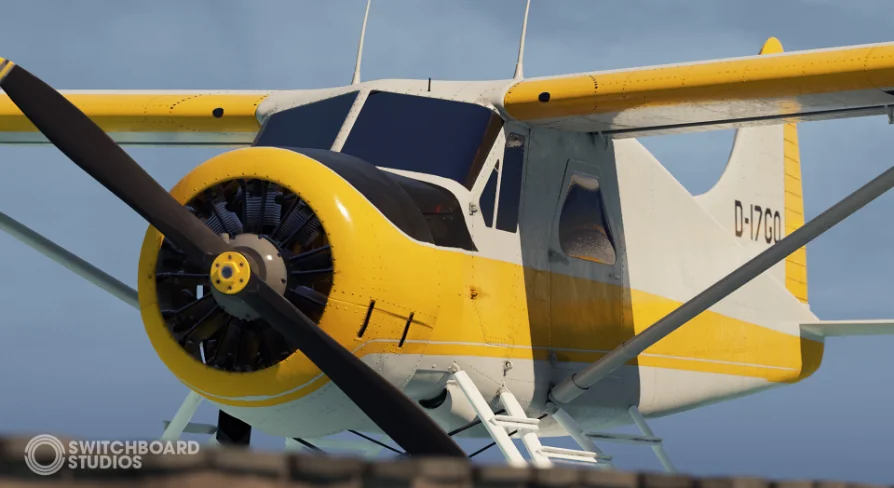
Driveable Vehicle: Seaplane
A fully rigged, realistic seaplane mesh featuring a demonstration blueprint for flight simulation, designed primarily for exterior camera workflows.
Setting up a credible flight simulation or an industrial transport route requires vehicles that match the physical expectations of the environment. The Driveable Vehicle: Seaplane provides a foundational mesh for these exact scenarios. Tagged heavily for realistic and industrial applications, this aircraft serves as a functional centerpiece for environments structured through aviation, coastal transport, or broader simulation projects. By providing an asset categorized specifically for realistic simulation, creators can integrate a specialized aircraft that looks the part of a working, industrial machine rather than a stylized prop. The presence of a dedicated seaplane expands the types of navigable terrain a project can suggest, bridging the visual gap between airborne operations and specialized landings.
For development teams, integrating a realistic aircraft involves matching the visual fidelity of the vehicle with the mechanical tone of the project. The industrial design language of this seaplane ensures it fits naturally into gritty, grounded environments where machinery is expected to look functional and robust. Whether it is being used as a player-controlled transport or as ambient background traffic in a larger simulation, the exterior mesh provides the necessary visual weight to ground the scene.
Implementing the Demonstration Blueprint
Transitioning a static 3D model into a functional, drivable vehicle is often one of the most time-consuming aspects of game development. To address this, the package includes a demonstration blueprint designed specifically to showcase the potential flying mechanics that can be achieved with this specific mesh. This blueprint acts as a live, interactive reference point for the aircraft's capabilities.
Rather than leaving the developer to guess how the aircraft should behave or how its rigging should be driven by logic, the demonstration blueprint provides a functional baseline. It illustrates the drivable nature of the aircraft, proving out the flight concepts and allowing developers to observe the mesh in motion immediately upon implementation. Developers can dissect this blueprint to understand the intended movement profile, study how the inputs translate into the vehicle's spatial translation, or use it as a structural starting point to build out a more complex, customized flight simulation system tailored to their specific project requirements. It effectively shortens the prototyping phase by providing a working mechanical foundation.
Structural Anatomy of the Fully Rigged Flying Seaplane
Beneath the drivable logic, the core of the asset is the fully rigged flying seaplane mesh. Rigging is a critical prerequisite for any vehicle intended for active simulation. Because the seaplane is fully rigged out of the box, the structural hierarchy required to animate the moving parts during flight is already established and prepared for input.
Developers bypass the technical hurdle of manually setting up bones, joints, and weight painting for the mechanical components of the aircraft. The rig is constructed to support the flying mechanics demonstrated in the accompanying blueprint, ensuring that the visual representation of the aircraft's movement aligns perfectly with the logic of a flight system. This out-of-the-box rigging ensures that the seaplane is prepared to react to the physics and control logic applied to it, maintaining the realistic standard expected of an active industrial aircraft simulation. It allows technical artists and programmers to immediately begin hooking up flight controllers without needing to route the model through external rigging software first.
Managing the Seaplane Interior Polygons
A crucial aspect of implementing this specific seaplane involves understanding its structural constraints, particularly regarding its interior geometry. The asset is explicitly designed without a complete interior environment. While the mesh does include interior polys for the inside of the seaplane, it does not contain a cockpit or any internal instrumentation. There are no internals provided for the pilot's station or the main cabin area.
This specific design choice heavily influences how the aircraft should be utilized within a project. The presence of interior polys is highly beneficial for rendering; it provides necessary structural thickness to the fuselage and prevents backface culling issues if the camera happens to clip the exterior shell. It ensures the model maintains its solidity from a distance, allowing light to interact more naturally with the shell rather than passing through a one-sided mesh. The interior polys ensure that glimpses through the windows do not reveal a broken or hollow skybox. However, the complete absence of a cockpit means the asset is not suited for close-up internal inspection out of the box.
Camera Setup and Project Integration
Because the mesh lacks internal details and a cockpit, integration should focus heavily on exterior camera setups. The aircraft is best suited for third-person drivable camera angles, cinematic flybys, or AI-controlled traffic where the view remains securely outside the fuselage. Developers building a realistic flight simulation will need to design their camera systems to orbit the exterior of the fully rigged mesh, relying on the detailed outer industrial design to carry the visual narrative of the scene.
By keeping the camera at a distance, the lack of internals becomes a non-issue, allowing the engine to save resources that would otherwise be spent rendering high-density cockpit instrumentation. If a project absolutely requires a first-person pilot perspective, developers will need to source or create a separate cockpit interior to insert into the existing interior polygons.
When planning to bring this aircraft into a production pipeline, the technical boundaries define its most effective use cases. The Driveable Vehicle: Seaplane is an ideal fit for projects that need a highly functional, fully rigged exterior mesh capable of demonstrating realistic flight through an included blueprint. It immediately accelerates development for third-person flight mechanics and exterior aviation showcases.
Projects demanding intricate interior cabin interactions or deep, interactive cockpit instrument panels will need to significantly supplement the mesh with additional assets. Conversely, for projects focused on the broader mechanics of flying an industrial seaplane, navigating coastal environments, or populating a realistic simulation with drivable exterior vehicles, the rigged mesh and demonstration blueprint provide the exact groundwork needed to get the vehicle airborne quickly and efficiently.
 Vehicles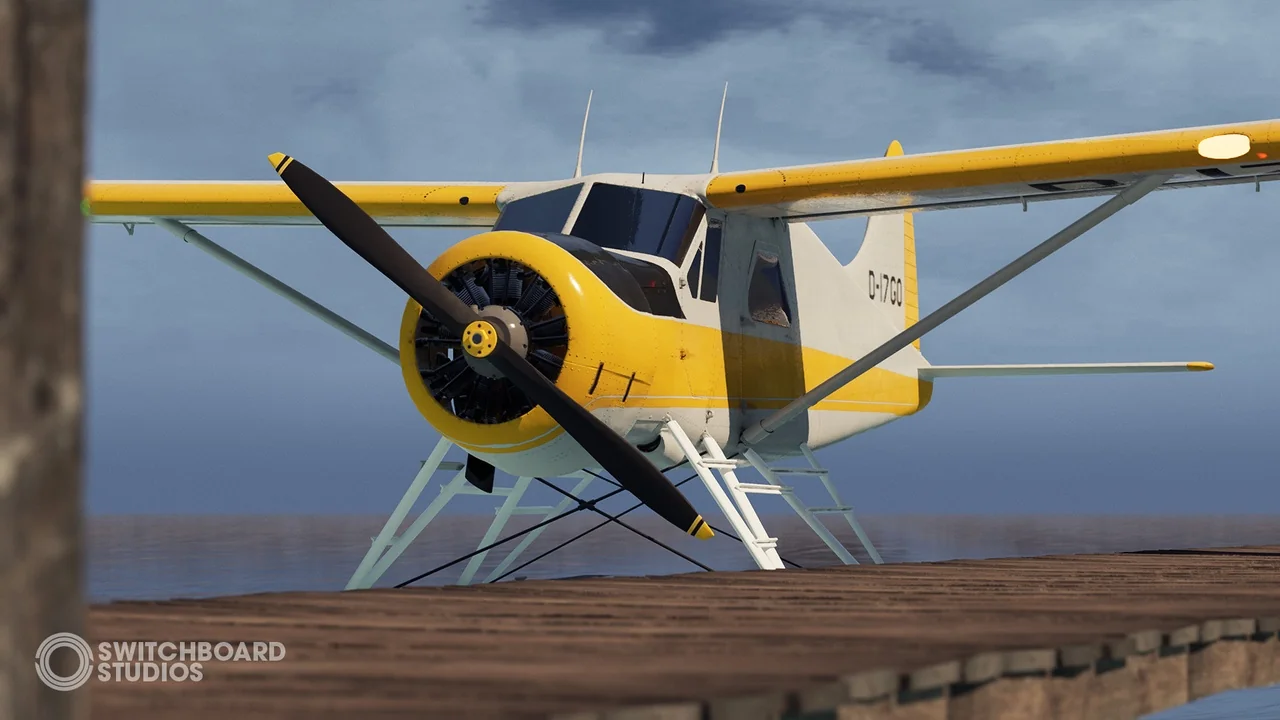
 Vehicles
 Vehicles
 Vehicles