"6c6413bef81af556"{"id":"1000810","slug":"cyberpunk-holograms-neon-set-set-of-33-holograms","title":"Cyberpunk Holograms / Neon Set ( Set of 33 Holograms )","category":"Spacecraft","engine":"4.26+,5.0+","assetVersion":"","engineVersion":"Engine Version: 4.26+,5.0+","tag":"Spacecraft","accent":"blue","visual":"mech","summary":"A set of 33 cyberpunk holograms with tileable materials for adjusting colors, tiles, and emissions. Built for sci-fi and futuristic environment builds.","platform":"Unreal Engine","publishedAt":"2026-07-31T08:58:26.683Z","updatedAt":"2026-07-31T08:58:26.683Z","sourceNotes":[],"fileContents":[],"compatibility":["Unreal Engine","Engine Version: 4.26+,5.0+"],"featuredImage":{"alt":"Cyberpunk Holograms / Neon Set ( Set of 33 Holograms )","src":"/wp-content/uploads/published/2026/07/abf8d189c42a-f8e4c32f-08d0-4f35-8823-21f8c0d8e8c2-a411de1062.webp"},"hasDownloadLink":true,"downloads":0,"terms":[{"taxonomy":"category","slug":"spacecraft","name":"Spacecraft"}],"galleryImages":[{"src":"/wp-content/uploads/published/2026/07/92ed3824eb86-62df3b85-f417-43b5-88f8-5a0c12351a77-73349ad99b.webp","alt":"Cyberpunk Holograms / Neon Set ( Set of 33 Holograms )"},{"src":"/wp-content/uploads/published/2026/07/6942aefc9c3e-0f459ade-217c-40e3-a286-aa7dab99541c-53bf3614bf.webp","alt":"Cyberpunk Holograms / Neon Set ( Set of 33 Holograms )"},{"src":"/wp-content/uploads/published/2026/07/6e1253d02836-50714b9b-66e0-45a1-90c6-04fbc10fc859-124c01c10c.webp","alt":"Cyberpunk Holograms / Neon Set ( Set of 33 Holograms )"}],"accessPanel":{"kind":"resource","title":"Download this resource","eyebrow":"Free Download","message":"Log in or create a free account to start your download.","fileName":"Content.7z","safetyNote":"Resources are manually reviewed before listing to improve quality and reduce obvious risks.","actionLabel":"Download Free","resourceType":"Resource archive"},"contentHtml":"\u003cp\u003eCyberpunk, sci-fi, and futuristic environment builds rely heavily on surface activity to feel alive. The \u003cem\u003eCyberpunk Holograms / Neon Set (Set of 33 Holograms)\u003c/em\u003e addresses that need with a focused collection of holographic elements intended to bring signage, displays, and floating projections into a scene without requiring custom texture work from scratch.\u003c/p\u003e\n\n\u003ch2\u003e33 Holograms Built for Cyberpunk and Sci-Fi Scenes\u003c/h2\u003e\n\u003cp\u003eThe pack contains 33 different cyberpunk holograms, each created as concept art by the Leartes team. Rather than functioning as generic background dressing, the holograms are designed to serve as distinct visual anchors within futuristic environments. They can be used to populate building facades, interior command centers, street-level kiosks, or floating projections above urban architecture.\u003c/p\u003e\n\n\u003cp\u003eThe tag set associated with the pack—\u003cem\u003eSign\u003c/em\u003e, \u003cem\u003eCar\u003c/em\u003e, \u003cem\u003eFuturistic\u003c/em\u003e, \u003cem\u003eNeon\u003c/em\u003e, \u003cem\u003eSci-Fi\u003c/em\u003e, \u003cem\u003eFantasy\u003c/em\u003e, \u003cem\u003eHologram\u003c/em\u003e, \u003cem\u003eSpace\u003c/em\u003e, \u003cem\u003eStudio\u003c/em\u003e, \u003cem\u003eCity\u003c/em\u003e, \u003cem\u003eCyberpunk\u003c/em\u003e, and \u003cem\u003eSpaceship\u003c/em\u003e—points to the range of settings where these holograms can be deployed. A cityscape can use them as animated neon signage. A spaceship interior can rely on them for operational displays. A studio render can use them as floating decorative light sources. The thematic spread is shaped by the same core aesthetic: glowing, projected, semi-transparent visual elements that read as technology in motion.\u003c/p\u003e\n\n\u003ch2\u003eTileable Materials and Parameter Control\u003c/h2\u003e\n\u003cp\u003eOne of the defining technical characteristics of this set is the use of tileable materials across the holograms. Tileable materials allow the surface appearance of a hologram to repeat seamlessly, which means a single hologram texture can be scaled across larger or smaller surfaces without visible breaks or distortion at the edges.\u003c/p\u003e\n\n\u003cp\u003eBecause the materials are tileable, the developer or artist can adjust a range of material parameters directly. The pack explicitly supports adjustment of:\u003c/p\u003e\n\u003cul\u003e\n \u003cli\u003e\u003cstrong\u003eColors:\u003c/strong\u003e Allows a hologram to be retinted to match a specific scene palette.\u003c/li\u003e\n \u003cli\u003e\u003cstrong\u003eTiling:\u003c/strong\u003e Controls how many times the material pattern repeats across a surface.\u003c/li\u003e\n \u003cli\u003e\u003cstrong\u003eEmissions:\u003c/strong\u003e Governs how strongly the hologram glows, which affects how it reads against dark or brightly lit backgrounds.\u003c/li\u003e\n \u003cli\u003e\u003cstrong\u003eAdditional Material Parameters:\u003c/strong\u003e Described as \"many more parameters,\" giving further room for customization beyond the core controls.\u003c/li\u003e\n\u003c/ul\u003e\n\n\u003cp\u003eThis parameter access matters because cyberpunk and sci-fi environments often demand tight color and lighting control. A hologram placed in a dark alley may need strong emission to function as a light source substitute, while the same hologram placed in a brightly lit flagship store facade may need its emission reduced so it does not blow out the surrounding scene. The material system gives the artist that control without forcing them to re-export or re-author textures.\u003c/p\u003e\n\n\u003cp\u003eThe same logic applies to color. A neon pink hologram can be shifted to cyan, green, or another palette-appropriate tone to fit the mood of a specific district or interior. Tiling adjustments allow the same hologram to cover a narrow vertical strip on a building edge or a wide horizontal panel above a gate, giving each placement a different visual rhythm from the same base asset.\u003c/p\u003e\n\n\u003ch2\u003eCompatibility with Ultimate Level Art Tool\u003c/h2\u003e\n\u003cp\u003eThe set is noted as compatible with the \u003cem\u003eUltimate Level Art Tool\u003c/em\u003e (ULAT). ULAT is described as a tool that allows creators to build custom modular buildings quickly, while also offering a way to populate scenes naturally. The original name of the tool, translated from the project language, is \"A modular design development tool for mobile and web-based systems.\"\u003c/p\u003e\n\n\u003cp\u003eFor artists already using ULAT to assemble building shells and architectural layouts, the hologram set can function as a detailing layer. Once a modular structure is in place, the tileable holograms can be applied as surface displays, projected signage, or floating environmental accents. Because the materials are adjustable, the holograms can be tuned to match the scale and lighting of each modular piece rather than appearing as flat overlays.\u003c/p\u003e\n\n\u003cp\u003eThe described compatibility does not mean the holograms are locked to ULAT workflows. The set stands on its own as an environment pack, but the stated compatibility indicates that the assets are intended to integrate into modular building pipelines where rapid scene assembly is the priority.\u003c/p\u003e\n\n\u003ch2\u003eUse Across Futuristic and Fantasy Contexts\u003c/h2\u003e\n\u003cp\u003eAlthough the name centers on cyberpunk, the tag list extends the usable range beyond a single genre. The presence of tags like \u003cem\u003eSpace\u003c/em\u003e, \u003cem\u003eSpaceship\u003c/em\u003e, \u003cem\u003eStudio\u003c/em\u003e, \u003cem\u003eFantasy\u003c/em\u003e, and \u003cem\u003eSci-Fi\u003c/em\u003e suggests the holograms can be placed in contexts that are not strictly dystopian or urban. A spaceship cockpit can use them as navigational holograms. A fantasy-tech hybrid scene can use them as magical projection surfaces. A studio lighting render can use them as colorful backdrop elements to test neon reflections on characters and vehicles.\u003c/p\u003e\n\n\u003cp\u003eThe \u003cem\u003eCar\u003c/em\u003e tag also implies potential application in vehicle-focused scenes, where holograms could serve as dashboard displays, external ad projections, or floating traffic signage. In a city scene, the same holograms placed at different heights and scales can create a layered sense of depth—small holograms at street level for pedestrian-facing signage, larger ones higher up for building-mounted projections.\u003c/p\u003e\n\n\u003ch2\u003eRenders, Showcase, and Custom Contexts\u003c/h2\u003e\n\u003cp\u003eThe stated showcase for the pack involves renders created using the \u003cem\u003eCyberpunk Environment Megapack\u003c/em\u003e, another Leartes release. This context indicates that the holograms are intended to be viewed as part of a full environment composition rather than in isolation. Artists evaluating the set can expect the holograms to function as surface and space-filling elements within a larger architectural scene, contributing glow, color, and visual density to areas that would otherwise feel empty or under-dressed.\u003c/p\u003e\n\n\u003cp\u003eTutorial and showcase video references are provided alongside the pack, and ULAT-specific demonstration videos are listed separately. These resources are intended to help users see the holograms in motion and understand how the assets interact with the broader tool ecosystem. The developer also points to a separate platform where free environment packs are available, suggesting that users interested in expanding their scene library can find additional context assets in the same ecosystem.\u003c/p\u003e\n\n\u003cp\u003eFor custom work, technical support, and project-specific requests, the Leartes team directs users to create tickets. Custom outsource environment projects are also mentioned, which positions the studio as available for scene-building work beyond the scope of the released packs.\u003c/p\u003e\n\n\u003ch2\u003eWho the Set Serves Best\u003c/h2\u003e\n\u003cp\u003eThis pack is built for environment artists and developers working in cyberpunk, sci-fi, and futuristic settings who need ready-made holographic elements with material control. The tileable material system makes it a practical fit for projects where color palette, emission intensity, and surface tiling need to be adjusted per scene. Creators using modular building workflows—particularly ULAT—can integrate the holograms as a detailing layer without breaking their assembly pipeline.\u003c/p\u003e\n\n\u003cp\u003eFor larger productions, the 33-piece count provides enough variety to populate multiple districts, interiors, or vehicle scenes without repeating the exact same hologram in every shot. The concept-art origin of the holograms also means each piece carries a hand-authored visual identity rather than functioning as a procedural texture variation, which can help scenes feel curated rather than auto-generated.\u003c/p\u003e\n\n\u003cp\u003eArtists who want full control over their neon palette, who need holograms that can scale across different architectural surfaces, and who are building in genres tagged by the pack—\u003cem\u003eCyberpunk\u003c/em\u003e, \u003cem\u003eSci-Fi\u003c/em\u003e, \u003cem\u003eFuturistic\u003c/em\u003e, \u003cem\u003eFantasy\u003c/em\u003e, \u003cem\u003eSpace\u003c/em\u003e, and \u003cem\u003eCity\u003c/em\u003e—will find the set aligned with that workflow. The material parameters are the core advantage, and the genre spread is the secondary value: one set of holograms serving a wide range of futuristic scene types.\u003c/p\u003e\n\n\u003ch2\u003eMore From The Same Workflow\u003c/h2\u003e\n\u003cul\u003e\n\u003cli\u003e\u003ca href=\"https://3dcghub.com/cyberpunk-japan-holograms-neon-set-cyberpunk-japan-holograms-japans-hologram/\" title=\"Cyberpunk Japan Holograms / Neon Set (Cyberpunk Japan Holograms Japans Hologram)\"\u003eCyberpunk Japan Holograms / Neon Set (Cyberpunk Japan Holograms Japans Hologram)\u003c/a\u003e\u003c/li\u003e\n\u003cli\u003e\u003ca href=\"https://3dcghub.com/hologram-display-pack/\" title=\"HOLOGRAM DISPLAY Pack\"\u003eHOLOGRAM DISPLAY Pack\u003c/a\u003e\u003c/li\u003e\n\u003cli\u003e\u003ca href=\"https://3dcghub.com/hologram-vfx-with-niagara-2/\" title=\"HOLOGRAM VFX With Niagara 2\"\u003eHOLOGRAM VFX With Niagara 2\u003c/a\u003e\u003c/li\u003e\n\u003cli\u003e\u003ca href=\"https://3dcghub.com/nerves/\" title=\"Nerves\"\u003eNerves\u003c/a\u003e\u003c/li\u003e\n\u003cli\u003e\u003ca href=\"https://3dcghub.com/cyberpunk-futuristic-structures-set-cyberpunk-pack-21-assets-futuristic/\" title=\"Cyberpunk / Futuristic Structures Set ( Cyberpunk Pack 21 Assets Futuristic )\"\u003eCyberpunk / Futuristic Structures Set ( Cyberpunk Pack 21 Assets Futuristic )\u003c/a\u003e\u003c/li\u003e\n\u003c/ul\u003e","contentTextLength":8200,"navigation":{"current":414,"total":3140,"previous":{"id":"1000811","slug":"dance-party-mocap-pack","title":"Dance Party - MoCap Pack","category":"Variety","platform":"Unreal Engine","updatedAt":"2026-07-31T09:15:04.523Z"},"next":{"id":"1000809","slug":"customized-post-apocalyptic-characters","title":"Customized Post Apocalyptic Characters","category":"Characters \u0026 Creatures","platform":"Unreal Engine","updatedAt":"2026-07-31T08:49:21.684Z"}},"relatedResources":[{"id":"5234","slug":"cyberpunk-japan-holograms-neon-set-cyberpunk-japan-holograms-japans-hologram","title":"Cyberpunk Japan Holograms / Neon Set (Cyberpunk Japan Holograms Japans Hologram)","category":"Spacecraft","engine":"4.27,5.0+","assetVersion":"Engine version: 4.27,5.0+","engineVersion":"5.0","tag":"Spacecraft","accent":"blue","visual":"mech","summary":"Elevate your futuristic environments with 51 Cyberpunk Japanese holograms. These customizable neon assets are perfect for sci-fi game development and 3D art.","platform":"Unreal Engine","publishedAt":"2026-02-14T18:19:05.000Z","updatedAt":"2026-04-19T15:56:59.000Z","sourceNotes":[],"fileContents":[],"compatibility":["Unreal Engine","Engine version: 4.27,5.0+"],"featuredImage":{"alt":"Cyberpunk Japan Holograms / Neon Set (Cyberpunk Japan Holograms Japans Hologram)","src":"https://3dcghub.com/wp-content/uploads/2026/02/e2f6e679-1b94-456d-ad4f-2f5361890062-1.webp"},"hasDownloadLink":true,"downloads":0},{"id":"15902","slug":"hologram-display-pack","title":"HOLOGRAM DISPLAY Pack","category":"Shaders","engine":"4.26+,5.0+","assetVersion":"Engine version: 4.26+,5.0+","engineVersion":"4.20","tag":"Shaders","accent":"blue","visual":"audio","summary":"Enhance your project with the HOLOGRAM DISPLAY Pack, featuring over 27 materials and 170 UI elements. This comprehensive set includes interactive blueprints and various display models for professional results.","platform":"Unreal Engine","publishedAt":"2026-03-12T13:26:50.000Z","updatedAt":"2026-04-19T15:44:39.000Z","sourceNotes":[],"fileContents":[],"compatibility":["Unreal Engine","Engine version: 4.26+,5.0+"],"featuredImage":{"alt":"HOLOGRAM DISPLAY Pack","src":"https://3dcghub.com/wp-content/uploads/2026/03/91c14bed-ee41-46b7-a0f5-12cb8e0e1e75.webp"},"hasDownloadLink":true,"downloads":0},{"id":"28262","slug":"hologram-vfx-with-niagara-2","title":"HOLOGRAM VFX With Niagara 2","category":"Gameplay Features","engine":"5.0+","assetVersion":"Engine version: 5.0+","engineVersion":"","tag":"Gameplay Features","accent":"blue","visual":"mech","summary":"HOLOGRAM VFX With Niagara Pack 2 gathers hologram effects, materials, UI imagery, sci-fi modules, and display props into one production-ready set. It is aimed at projects that need customizable hologram visuals for screens, devices, props, and futuristic en...","platform":"Unreal Engine","publishedAt":"2026-05-06T15:41:40.000Z","updatedAt":"2026-05-06T15:41:42.000Z","sourceNotes":[],"fileContents":[],"compatibility":["Unreal Engine","Engine version: 5.0+"],"featuredImage":{"alt":"HOLOGRAM VFX With Niagara 2","src":"https://3dcghub.com/wp-content/uploads/2026/05/4afc48995ce4_429769af-bbda-4040-96aa-1cb94942512e.webp"},"hasDownloadLink":true,"downloads":0}]}
Spacecraft
Cyberpunk Holograms / Neon Set ( Set of 33 Holograms )
A set of 33 cyberpunk holograms with tileable materials for adjusting colors, tiles, and emissions. Built for sci-fi and futuristic environment builds.
Cyberpunk, sci-fi, and futuristic environment builds rely heavily on surface activity to feel alive. The Cyberpunk Holograms / Neon Set (Set of 33 Holograms) addresses that need with a focused collection of holographic elements intended to bring signage, displays, and floating projections into a scene without requiring custom texture work from scratch.
33 Holograms Built for Cyberpunk and Sci-Fi Scenes
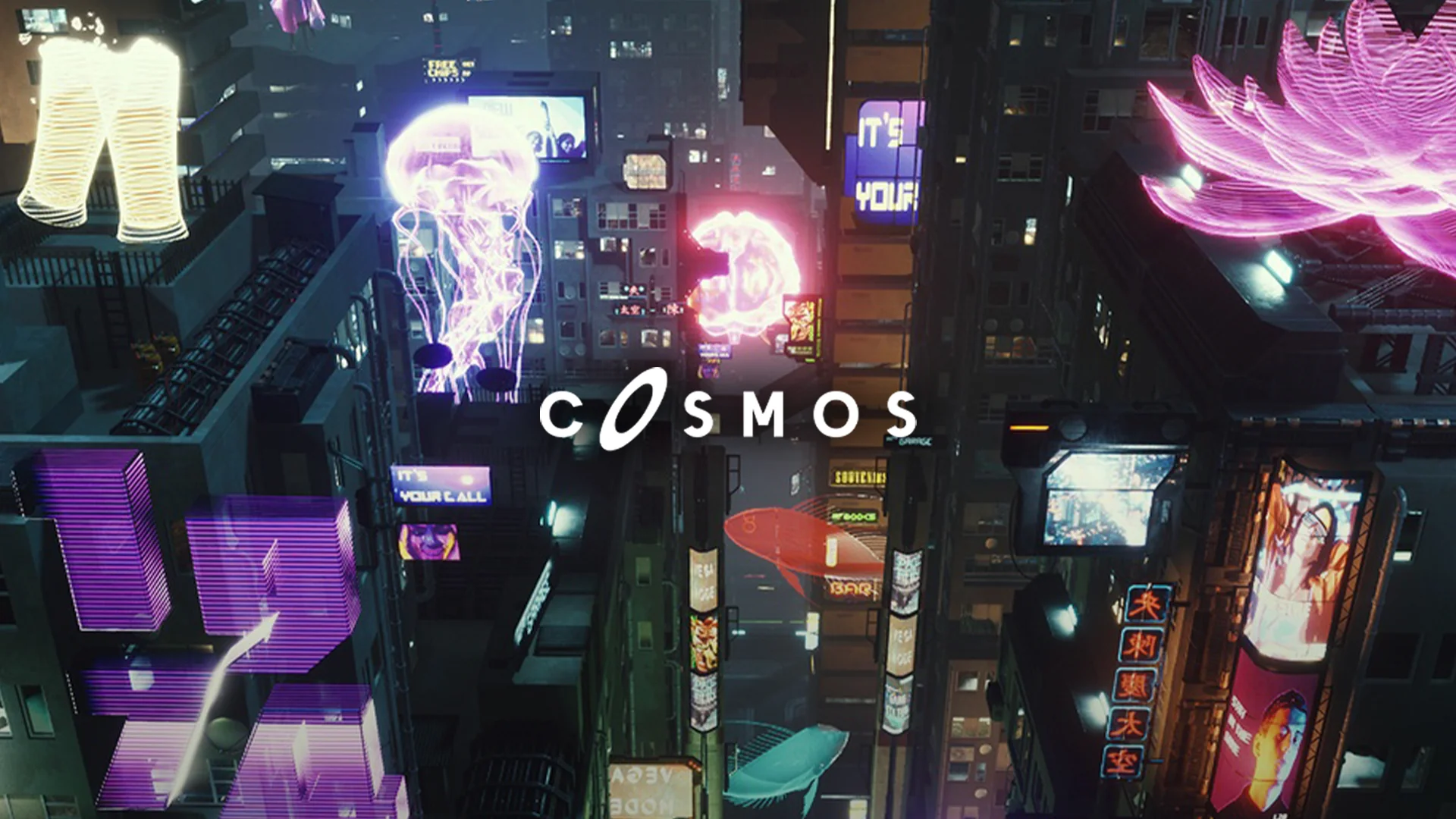
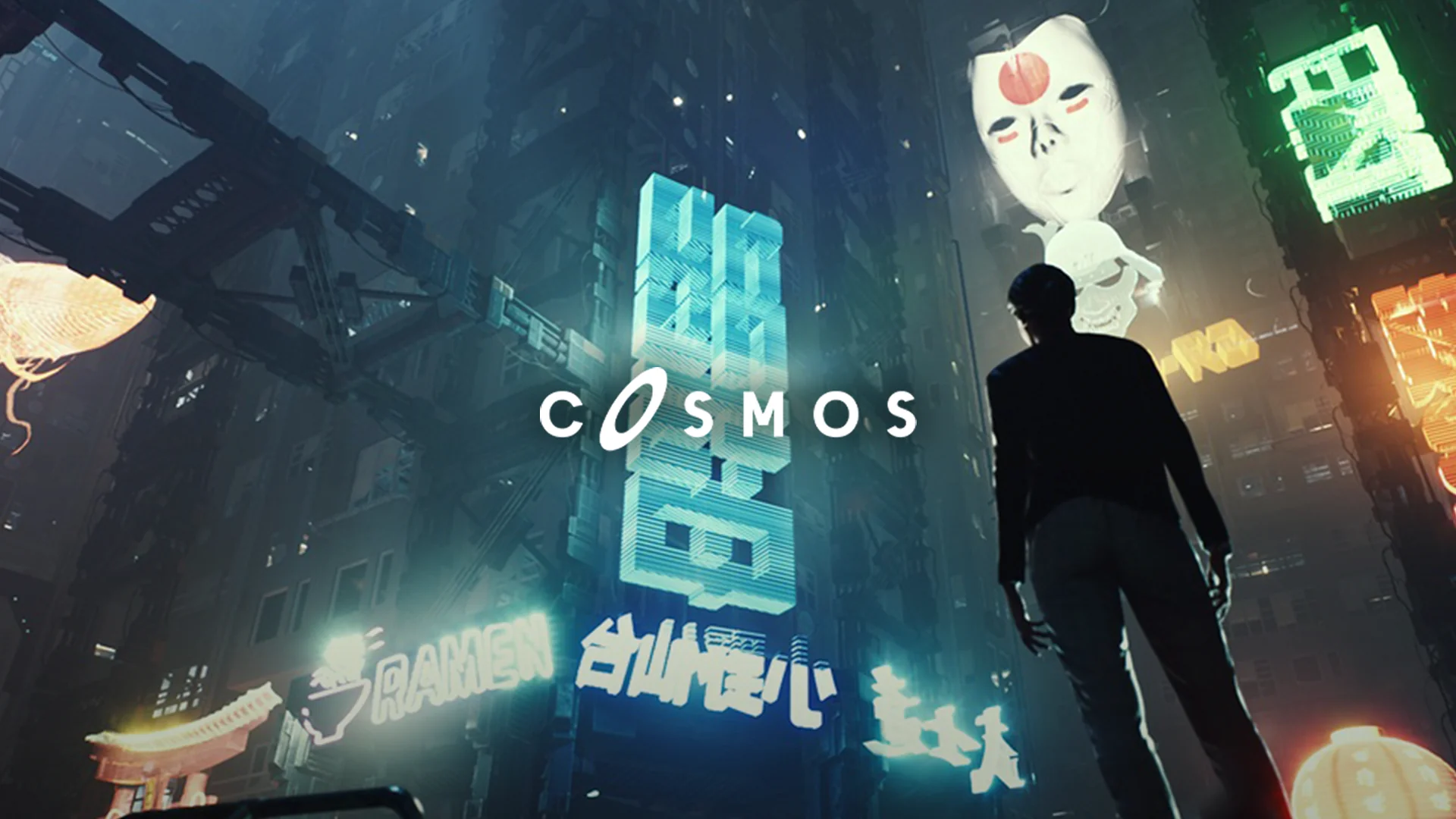
The pack contains 33 different cyberpunk holograms, each created as concept art by the Leartes team. Rather than functioning as generic background dressing, the holograms are designed to serve as distinct visual anchors within futuristic environments. They can be used to populate building facades, interior command centers, street-level kiosks, or floating projections above urban architecture.
The tag set associated with the pack—Sign, Car, Futuristic, Neon, Sci-Fi, Fantasy, Hologram, Space, Studio, City, Cyberpunk, and Spaceship—points to the range of settings where these holograms can be deployed. A cityscape can use them as animated neon signage. A spaceship interior can rely on them for operational displays. A studio render can use them as floating decorative light sources. The thematic spread is shaped by the same core aesthetic: glowing, projected, semi-transparent visual elements that read as technology in motion.
Tileable Materials and Parameter Control
One of the defining technical characteristics of this set is the use of tileable materials across the holograms. Tileable materials allow the surface appearance of a hologram to repeat seamlessly, which means a single hologram texture can be scaled across larger or smaller surfaces without visible breaks or distortion at the edges.
Because the materials are tileable, the developer or artist can adjust a range of material parameters directly. The pack explicitly supports adjustment of:
Colors: Allows a hologram to be retinted to match a specific scene palette.
Tiling: Controls how many times the material pattern repeats across a surface.
Emissions: Governs how strongly the hologram glows, which affects how it reads against dark or brightly lit backgrounds.
Additional Material Parameters: Described as "many more parameters," giving further room for customization beyond the core controls.
This parameter access matters because cyberpunk and sci-fi environments often demand tight color and lighting control. A hologram placed in a dark alley may need strong emission to function as a light source substitute, while the same hologram placed in a brightly lit flagship store facade may need its emission reduced so it does not blow out the surrounding scene. The material system gives the artist that control without forcing them to re-export or re-author textures.
The same logic applies to color. A neon pink hologram can be shifted to cyan, green, or another palette-appropriate tone to fit the mood of a specific district or interior. Tiling adjustments allow the same hologram to cover a narrow vertical strip on a building edge or a wide horizontal panel above a gate, giving each placement a different visual rhythm from the same base asset.
Compatibility with Ultimate Level Art Tool
The set is noted as compatible with the Ultimate Level Art Tool (ULAT). ULAT is described as a tool that allows creators to build custom modular buildings quickly, while also offering a way to populate scenes naturally. The original name of the tool, translated from the project language, is "A modular design development tool for mobile and web-based systems."
For artists already using ULAT to assemble building shells and architectural layouts, the hologram set can function as a detailing layer. Once a modular structure is in place, the tileable holograms can be applied as surface displays, projected signage, or floating environmental accents. Because the materials are adjustable, the holograms can be tuned to match the scale and lighting of each modular piece rather than appearing as flat overlays.
The described compatibility does not mean the holograms are locked to ULAT workflows. The set stands on its own as an environment pack, but the stated compatibility indicates that the assets are intended to integrate into modular building pipelines where rapid scene assembly is the priority.
Use Across Futuristic and Fantasy Contexts
Although the name centers on cyberpunk, the tag list extends the usable range beyond a single genre. The presence of tags like Space, Spaceship, Studio, Fantasy, and Sci-Fi suggests the holograms can be placed in contexts that are not strictly dystopian or urban. A spaceship cockpit can use them as navigational holograms. A fantasy-tech hybrid scene can use them as magical projection surfaces. A studio lighting render can use them as colorful backdrop elements to test neon reflections on characters and vehicles.
The Car tag also implies potential application in vehicle-focused scenes, where holograms could serve as dashboard displays, external ad projections, or floating traffic signage. In a city scene, the same holograms placed at different heights and scales can create a layered sense of depth—small holograms at street level for pedestrian-facing signage, larger ones higher up for building-mounted projections.
Renders, Showcase, and Custom Contexts
The stated showcase for the pack involves renders created using the Cyberpunk Environment Megapack, another Leartes release. This context indicates that the holograms are intended to be viewed as part of a full environment composition rather than in isolation. Artists evaluating the set can expect the holograms to function as surface and space-filling elements within a larger architectural scene, contributing glow, color, and visual density to areas that would otherwise feel empty or under-dressed.
Tutorial and showcase video references are provided alongside the pack, and ULAT-specific demonstration videos are listed separately. These resources are intended to help users see the holograms in motion and understand how the assets interact with the broader tool ecosystem. The developer also points to a separate platform where free environment packs are available, suggesting that users interested in expanding their scene library can find additional context assets in the same ecosystem.
For custom work, technical support, and project-specific requests, the Leartes team directs users to create tickets. Custom outsource environment projects are also mentioned, which positions the studio as available for scene-building work beyond the scope of the released packs.
Who the Set Serves Best
This pack is built for environment artists and developers working in cyberpunk, sci-fi, and futuristic settings who need ready-made holographic elements with material control. The tileable material system makes it a practical fit for projects where color palette, emission intensity, and surface tiling need to be adjusted per scene. Creators using modular building workflows—particularly ULAT—can integrate the holograms as a detailing layer without breaking their assembly pipeline.
For larger productions, the 33-piece count provides enough variety to populate multiple districts, interiors, or vehicle scenes without repeating the exact same hologram in every shot. The concept-art origin of the holograms also means each piece carries a hand-authored visual identity rather than functioning as a procedural texture variation, which can help scenes feel curated rather than auto-generated.
Artists who want full control over their neon palette, who need holograms that can scale across different architectural surfaces, and who are building in genres tagged by the pack—Cyberpunk, Sci-Fi, Futuristic, Fantasy, Space, and City—will find the set aligned with that workflow. The material parameters are the core advantage, and the genre spread is the secondary value: one set of holograms serving a wide range of futuristic scene types.
 Spacecraft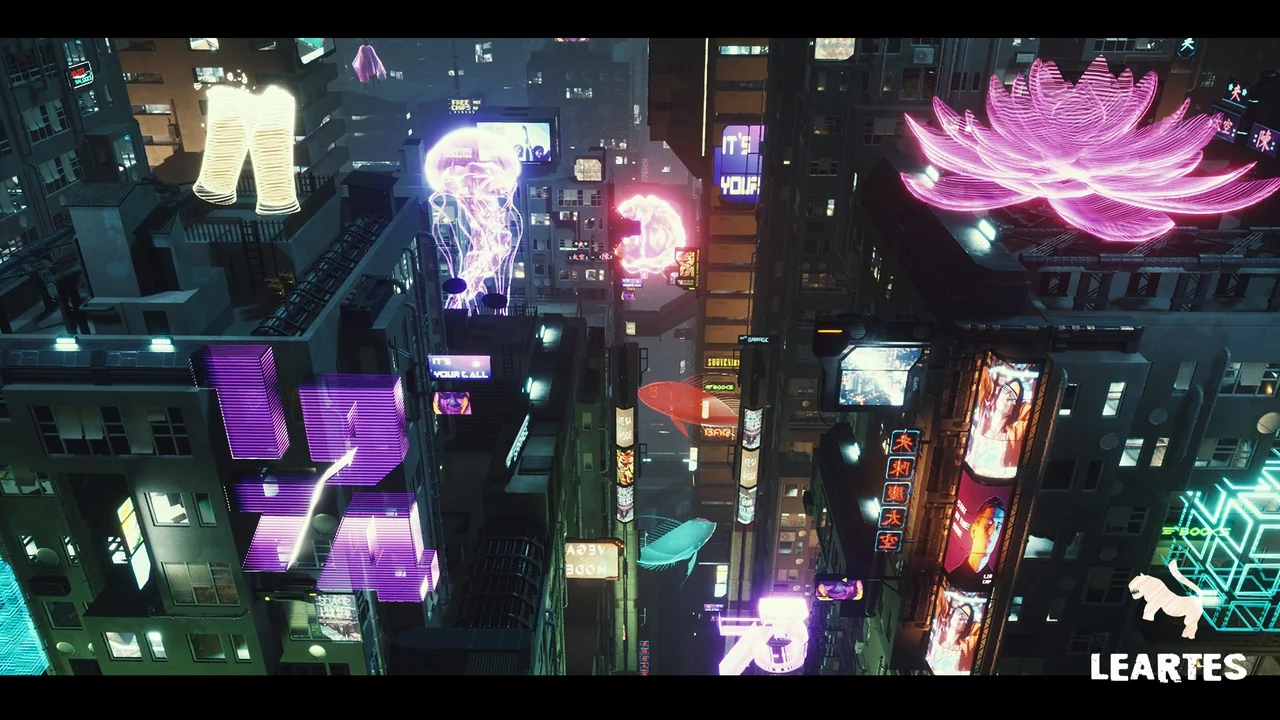
 Spacecraft
 Shaders
 Gameplay Features