"95fdaf16012263fa"{"id":"1002314","slug":"cyberpunk-alley-storefronts-pack","title":"Cyberpunk Alley Storefronts Pack","category":"Cyberpunk","engine":"4.10+,5.0+","assetVersion":"","engineVersion":"Engine Version: 4.10+,5.0+","tag":"Cyberpunk","accent":"blue","visual":"mech","summary":"A collection of over 150 textured models for building cyberpunk alleys, with varied storefronts, a maglev train, a time-traveling car, and dense machine detail.","platform":"Unreal Engine","indexPolicy":"index","publishedAt":"2026-11-06T06:16:19.579Z","updatedAt":"2026-11-06T06:16:19.579Z","sourceNotes":[],"fileContents":[],"compatibility":["Unreal Engine","Engine Version: 4.10+,5.0+"],"featuredImage":{"alt":"Cyberpunk Alley Storefronts Pack","src":"/wp-content/uploads/published/2026/11/d06f102573f1-88b1d072-542e-4684-b24f-7cc33ee15b74-74544f0112.webp"},"hasDownloadLink":true,"downloads":0,"terms":[{"taxonomy":"category","slug":"cyberpunk","name":"Cyberpunk"}],"galleryImages":[{"src":"/wp-content/uploads/published/2026/11/54aa9dc55eb7-39d0c30b-7910-452f-9f02-9b45ccd0b566-e90ae06026.webp","alt":"Cyberpunk Alley Storefronts Pack"},{"src":"/wp-content/uploads/published/2026/11/de69cebda829-634a6b0e-bafd-4431-b92a-d3c9f3a6a88a-9d2210d766.webp","alt":"Cyberpunk Alley Storefronts Pack"},{"src":"/wp-content/uploads/published/2026/11/0a582597c38a-a542c828-4eef-4adb-90f4-2b2fd62055e5-f49692b5a2.webp","alt":"Cyberpunk Alley Storefronts Pack"},{"src":"/wp-content/uploads/published/2026/11/28e59ebfe2fe-0bd99878-7f94-42c0-bee0-8913c6397758-d82bd755ec.webp","alt":"Cyberpunk Alley Storefronts Pack"},{"src":"/wp-content/uploads/published/2026/11/301902c15eb4-2077a038-b613-447d-ae8c-19c1fecd7cd9-c682612966.webp","alt":"Cyberpunk Alley Storefronts Pack"}],"accessPanel":{"kind":"resource","title":"Get this resource","eyebrow":"Free resource","message":"3DCGHUB is the service provider for this listing. Access is fulfilled through the official publisher channel.","fileName":"Content.7z","safetyNote":"Resources are manually reviewed before listing to improve quality and reduce obvious risks.","actionLabel":"Get this resource","resourceType":"Resource archive","versions":[]},"contentHtml":"\u003cp\u003eNarrow service alleys, industrial street corridors, and blocks of lit shopfronts pressed close together — that is the territory the Cyberpunk Alley Storefronts Pack occupies. It arrives as a set of more than 150 textured models meant to be arranged into futuristic urban environments, and the intended destinations are stated plainly enough: cinematic background plates, or the streets of an entire game.\u003c/p\u003e \u003ch2\u003eStorefronts that change what a street reads like\u003c/h2\u003e \u003cp\u003eThe facade work is the part that keeps a long alley from feeling like one building copied down its length. The pack includes a variety of storefronts covering different looks and different purposes, so a run of shopfronts can be varied rather than uniform. That variety matters at close range, where a player or a camera passes each doorway in sequence and the eye starts cataloguing repetition.\u003c/p\u003e \u003cp\u003eBecause these are textured models rather than bare geometry, the fronts carry their own surface detail into the scene without extra work layered on top. The same holds for the rest of the set — the count is stated in terms of textured models, which is the number that actually matters when an alley has to be dressed quickly and still hold up under a moving camera.\u003c/p\u003e \u003ch2\u003eBright lights, dense machinery, and the texture of a future city\u003c/h2\u003e \u003cp\u003eA cyberpunk street lives or dies on clutter, and this pack leans into it. Two things are called out specifically: bright lights and a variety of complex machine details. Together they do the atmospheric work — the glow that gives an alley its colour and the mechanical density that makes walls read as infrastructure instead of flat panels.\u003c/p\u003e \u003cp\u003eThat combination is what turns the set into something usable as a background rather than just a prop library. An alley assembled from these pieces becomes a place with depth behind the action: pipes and housings and equipment filling the negative space, signage lighting the wet corners, geometry layered so a camera looking down the corridor has something to look at all the way back.\u003c/p\u003e \u003ch3\u003eMaglev train and time-traveling car as setting anchors\u003c/h3\u003e \u003cp\u003eAmong the setting-specific props, two stand out as scene anchors rather than filler. A maglev train gives the environment a scale cue — a piece of transit large enough to imply a city continuing past the edges of the alley. A time-traveling car is the more idiosyncratic inclusion, a single narrative object that can sit in a yard or at a curb and immediately suggest that something is happening in this location beyond ordinary street life.\u003c/p\u003e \u003cp\u003eProps like these are what convert a modular wall kit into a specific place. Storefronts establish the commercial layer, machine detail establishes the industrial layer, and a train or a distinctive vehicle establishes the story layer.\u003c/p\u003e \u003ch2\u003eModular pieces at level scale\u003c/h2\u003e \u003cp\u003eThe pack is tagged Modular, Level, and Cyberpunk, and those three words describe how it is meant to be used rather than just how it looks. Modular means the parts are built to be combined and repeated into larger assemblies. Level means the intended output is a walkable space — a stretch of street with a beginning, a middle, and a far end — not a display turntable. Cyberpunk fixes the aesthetic register: neon-lit, machine-heavy, urban and industrial at once.\u003c/p\u003e \u003cp\u003eWorking this way, an artist lays out a corridor of storefronts first, then fills the gaps and rooflines with the machine detailing, then places lighting so the bright elements carve the alley into lit and shadowed zones. The maglev train and the car slot in wherever the layout needs weight or a focal point. Because the collection is large — over 150 textured models — there is enough raw material to keep a single street visually distinct from the next one in the same project, which is the practical advantage of a kit at this size over a handful of hero assets.\u003c/p\u003e \u003ch2\u003eCinematic backdrops or a full game's street grid\u003c/h2\u003e \u003cp\u003eThe two use cases named for the pack pull in slightly different directions, and the set covers both. For cinematics, the value is in a dressed environment that reads as immersive the moment it is behind a character — light and machinery doing the mood work, storefronts giving the frame depth down the alley. For games, the same pieces take on the job of a level: repeated modular segments forming navigable streets, props marking out landmarks, the whole thing holding together when a player walks through it rather than when a camera glides past.\u003c/p\u003e \u003cp\u003eAn urban or industrial street scene in either context is the fit. The pack is not framed around interiors, vehicles alone, or standalone hero props — it is framed around the alley and the street, and everything in it supports that spine.\u003c/p\u003e \u003ch2\u003eWho gets the most out of it\u003c/h2\u003e \u003cp\u003eEnvironment artists and level designers building near-future city streets are the obvious match, particularly anyone who needs a lit, densely detailed alley without assembling the storefronts and machine clutter from scratch. Cinematic teams needing a cyberpunk backdrop that holds up behind action will find the lighting and detail already accounted for. Anyone building a project where the street is the whole point — a chase, a conversation in a doorway, a walk through a night market corridor — has the most to gain from the 150-plus textured models and the transit and vehicle props that give the location its identity.\u003c/p\u003e\n\n\u003ch2\u003eContinue Browsing Similar Packs\u003c/h2\u003e\n\u003cul\u003e\n\u003cli\u003e\u003ca href=\"https://3dcghub.com/cyberpunk-high-city/\" rel=\"noopener noreferrer\"\u003eCyberpunk - High City\u003c/a\u003e\u003c/li\u003e\n\u003cli\u003e\u003ca href=\"https://3dcghub.com/cyberpunk-street/\" rel=\"noopener noreferrer\"\u003eCYBERPUNK STREET\u003c/a\u003e\u003c/li\u003e\n\u003cli\u003e\u003ca href=\"https://3dcghub.com/cyberpunk-sci-fi-environment-cyberpunk-asset-set-cyberpunk-sci-fi-cyber/\" rel=\"noopener noreferrer\"\u003eCyberPunk / Sci-Fi Environment Cyberpunk Asset Set ( CyberPunk Sci-Fi Cyber )\u003c/a\u003e\u003c/li\u003e\n\u003cli\u003e\u003ca href=\"https://3dcghub.com/cyberpunk-industries-vol-1/\" rel=\"noopener noreferrer\"\u003eCyberpunk Industries Vol.1\u003c/a\u003e\u003c/li\u003e\n\u003cli\u003e\u003ca href=\"https://3dcghub.com/dystopian-city-environment-cyberpunk-cyberpunk-city-cyberpunk-buildings/\" rel=\"noopener noreferrer\"\u003eDystopian City Environment (Cyberpunk, Cyberpunk City, Cyberpunk Buildings)\u003c/a\u003e\u003c/li\u003e\n\u003c/ul\u003e","contentTextLength":5539,"navigation":{"current":54,"total":4291,"previous":{"id":"1002315","slug":"cyberpunk-vehicle-hovermod-flymod","title":"Cyberpunk Vehicle ( HoverMod + FlyMod )","category":"Gameplay Features","platform":"Unreal Engine","updatedAt":"2026-11-06T06:17:19.865Z"},"next":{"id":"1002313","slug":"cute-hamsters","title":"Cute Hamsters","category":"Animals","platform":"Unreal Engine","updatedAt":"2026-11-06T06:15:37.558Z"}},"relatedResources":[{"id":"27554","slug":"cyberpunk-high-city","title":"Cyberpunk - High City","category":"Cyberpunk","engine":"5.0+","assetVersion":"Engine version: 5.0+","engineVersion":"","tag":"Cyberpunk","accent":"blue","visual":"city","summary":"Cyberpunk - High City is a modular constructor for high-detailed sci-fi city streets, alleys, and blocks. It also includes a fly cars pack and a blueprint-based background traffic system.","platform":"Unreal Engine","indexPolicy":"index","publishedAt":"2026-04-26T07:32:19.000Z","updatedAt":"2026-04-26T07:32:20.000Z","sourceNotes":[],"fileContents":[],"compatibility":["Unreal Engine","Engine version: 5.0+"],"featuredImage":{"alt":"Cyberpunk - High City","src":"https://3dcghub.com/wp-content/uploads/2026/04/b511bde35619_8d2cc377-b2bd-497e-8c7d-0aff19074eda.webp"},"hasDownloadLink":true,"downloads":1},{"id":"1001645","slug":"cyberpunk-street","title":"CYBERPUNK STREET","category":"Cyberpunk","engine":"4.22+,5.0+","assetVersion":"","engineVersion":"Engine Version: 4.22+,5.0+","tag":"Cyberpunk","accent":"blue","visual":"mech","summary":"Explore the modular CYBERPUNK STREET environment pack, featuring vertex-paintable surfaces, spline-based wires, customizable materials, and a demo scene.","platform":"Unreal Engine","indexPolicy":"index","publishedAt":"2026-10-13T02:29:04.369Z","updatedAt":"2026-10-13T02:29:04.369Z","sourceNotes":[],"fileContents":[],"compatibility":["Unreal Engine","Engine Version: 4.22+,5.0+"],"featuredImage":{"alt":"CYBERPUNK STREET","src":"/wp-content/uploads/published/2026/10/f4f9bd4d3485-4ff078f6-9e32-413c-aa92-3ca73448bb26-d43622898c.webp"},"hasDownloadLink":true,"downloads":2},{"id":"1001727","slug":"cyberpunk-sci-fi-environment-cyberpunk-asset-set-cyberpunk-sci-fi-cyber","title":"CyberPunk / Sci-Fi Environment Cyberpunk Asset Set ( CyberPunk Sci-Fi Cyber )","category":"Cyberpunk","engine":"4.26+,5.0+","assetVersion":"","engineVersion":"Engine Version: 4.26+,5.0+","tag":"Cyberpunk","accent":"blue","visual":"city","summary":"Explore the CyberPunk / Sci-Fi Environment Cyberpunk Asset Set featuring 150+ modular meshes, decals, preassembled scenes, and Ultimate Level Art Tool integrati","platform":"Unreal Engine","indexPolicy":"index","publishedAt":"2026-10-20T02:33:57.285Z","updatedAt":"2026-10-20T02:33:57.285Z","sourceNotes":[],"fileContents":[],"compatibility":["Unreal Engine","Engine Version: 4.26+,5.0+"],"featuredImage":{"alt":"CyberPunk / Sci-Fi Environment Cyberpunk Asset Set ( CyberPunk Sci-Fi Cyber )","src":"/wp-content/uploads/published/2026/10/828946c678bb-408a572e-b348-48b2-b1a2-b20bc22f6e62-94509f3da8.webp"},"hasDownloadLink":true,"downloads":1}]}
Cyberpunk
Cyberpunk Alley Storefronts Pack
A collection of over 150 textured models for building cyberpunk alleys, with varied storefronts, a maglev train, a time-traveling car, and dense machine detail.
Category:Unreal Engine,CyberpunkPlatform: Unreal EngineEngine Version: 4.10+,5.0+Published: Nov 6, 2026
Cyberpunk
Resource overview
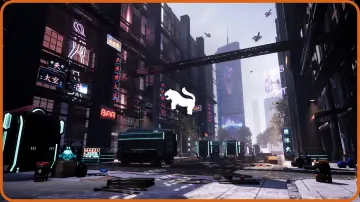
Narrow service alleys, industrial street corridors, and blocks of lit shopfronts pressed close together — that is the territory the Cyberpunk Alley Storefronts Pack occupies. It arrives as a set of more than 150 textured models meant to be arranged into futuristic urban environments, and the intended destinations are stated plainly enough: cinematic background plates, or the streets of an entire game.
Storefronts that change what a street reads like
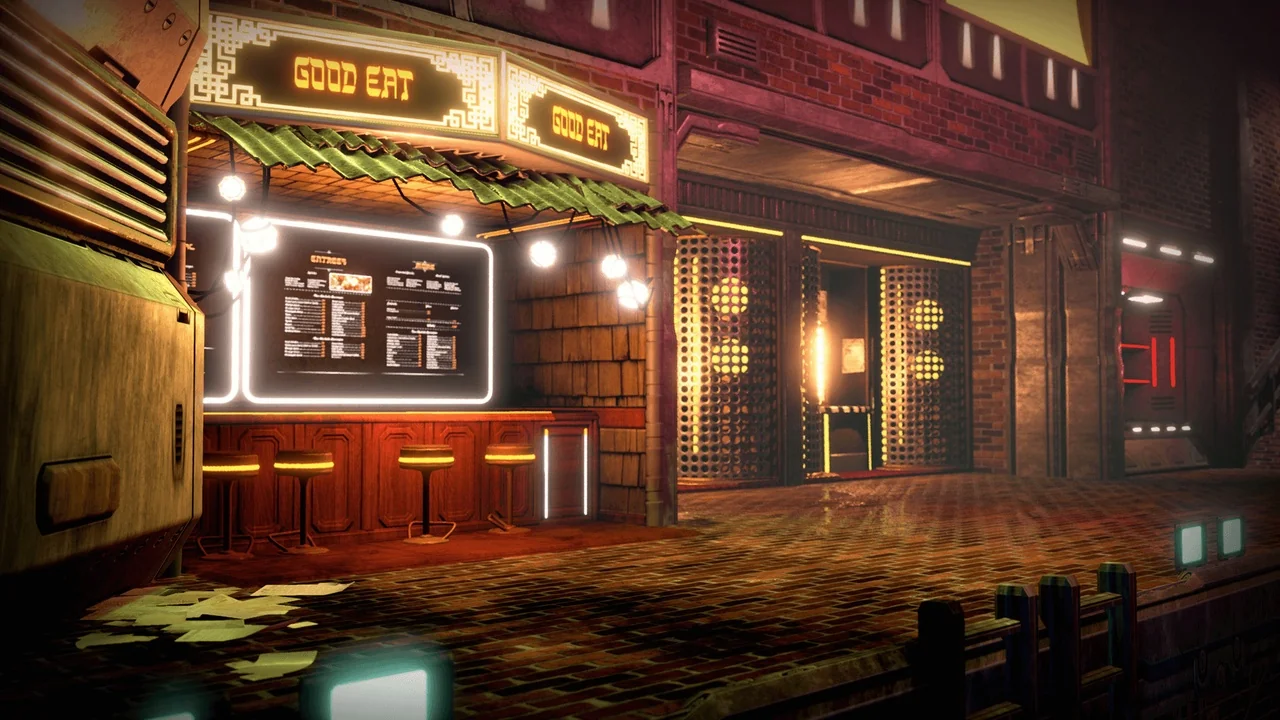
The facade work is the part that keeps a long alley from feeling like one building copied down its length. The pack includes a variety of storefronts covering different looks and different purposes, so a run of shopfronts can be varied rather than uniform. That variety matters at close range, where a player or a camera passes each doorway in sequence and the eye starts cataloguing repetition.
Because these are textured models rather than bare geometry, the fronts carry their own surface detail into the scene without extra work layered on top. The same holds for the rest of the set — the count is stated in terms of textured models, which is the number that actually matters when an alley has to be dressed quickly and still hold up under a moving camera.
Bright lights, dense machinery, and the texture of a future city
A cyberpunk street lives or dies on clutter, and this pack leans into it. Two things are called out specifically: bright lights and a variety of complex machine details. Together they do the atmospheric work — the glow that gives an alley its colour and the mechanical density that makes walls read as infrastructure instead of flat panels.
That combination is what turns the set into something usable as a background rather than just a prop library. An alley assembled from these pieces becomes a place with depth behind the action: pipes and housings and equipment filling the negative space, signage lighting the wet corners, geometry layered so a camera looking down the corridor has something to look at all the way back.
Maglev train and time-traveling car as setting anchors
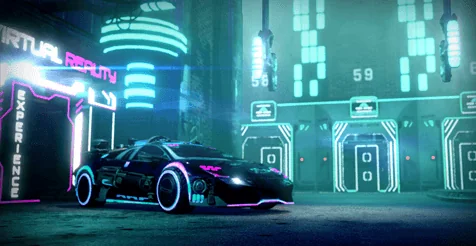
Among the setting-specific props, two stand out as scene anchors rather than filler. A maglev train gives the environment a scale cue — a piece of transit large enough to imply a city continuing past the edges of the alley. A time-traveling car is the more idiosyncratic inclusion, a single narrative object that can sit in a yard or at a curb and immediately suggest that something is happening in this location beyond ordinary street life.
Props like these are what convert a modular wall kit into a specific place. Storefronts establish the commercial layer, machine detail establishes the industrial layer, and a train or a distinctive vehicle establishes the story layer.
Modular pieces at level scale
The pack is tagged Modular, Level, and Cyberpunk, and those three words describe how it is meant to be used rather than just how it looks. Modular means the parts are built to be combined and repeated into larger assemblies. Level means the intended output is a walkable space — a stretch of street with a beginning, a middle, and a far end — not a display turntable. Cyberpunk fixes the aesthetic register: neon-lit, machine-heavy, urban and industrial at once.
Working this way, an artist lays out a corridor of storefronts first, then fills the gaps and rooflines with the machine detailing, then places lighting so the bright elements carve the alley into lit and shadowed zones. The maglev train and the car slot in wherever the layout needs weight or a focal point. Because the collection is large — over 150 textured models — there is enough raw material to keep a single street visually distinct from the next one in the same project, which is the practical advantage of a kit at this size over a handful of hero assets.
Cinematic backdrops or a full game's street grid
The two use cases named for the pack pull in slightly different directions, and the set covers both. For cinematics, the value is in a dressed environment that reads as immersive the moment it is behind a character — light and machinery doing the mood work, storefronts giving the frame depth down the alley. For games, the same pieces take on the job of a level: repeated modular segments forming navigable streets, props marking out landmarks, the whole thing holding together when a player walks through it rather than when a camera glides past.
An urban or industrial street scene in either context is the fit. The pack is not framed around interiors, vehicles alone, or standalone hero props — it is framed around the alley and the street, and everything in it supports that spine.
Who gets the most out of it
Environment artists and level designers building near-future city streets are the obvious match, particularly anyone who needs a lit, densely detailed alley without assembling the storefronts and machine clutter from scratch. Cinematic teams needing a cyberpunk backdrop that holds up behind action will find the lighting and detail already accounted for. Anyone building a project where the street is the whole point — a chase, a conversation in a doorway, a walk through a night market corridor — has the most to gain from the 150-plus textured models and the transit and vehicle props that give the location its identity.
 Cyberpunk
 Cyberpunk
 Cyberpunk
 Cyberpunk