"a338a1d501976271"{"id":"1001384","slug":"dystopian-city-environment-cyberpunk-cyberpunk-city-cyberpunk-buildings","title":"Dystopian City Environment (Cyberpunk, Cyberpunk City, Cyberpunk Buildings)","category":"Cyberpunk","engine":"4.22+,5.0+","assetVersion":"","engineVersion":"Engine Version: 4.22+,5.0+","tag":"Cyberpunk","accent":"blue","visual":"city","summary":"Explore the Dystopian City Environment, featuring cyberpunk building blueprints, highway spline tools, street props, and an island map with static lighting.","platform":"Unreal Engine","publishedAt":"2026-10-04T15:02:41.998Z","updatedAt":"2026-10-04T15:02:41.998Z","sourceNotes":[],"fileContents":[],"compatibility":["Unreal Engine","Engine Version: 4.22+,5.0+"],"featuredImage":{"alt":"Dystopian City Environment (Cyberpunk, Cyberpunk City, Cyberpunk Buildings)","src":"/wp-content/uploads/published/2026/10/a9881c905287-f3d9ccf9-65cf-4a6b-abcd-771735b75281-e567afcd10.webp"},"hasDownloadLink":true,"downloads":0,"terms":[{"taxonomy":"category","slug":"cyberpunk","name":"Cyberpunk"}],"galleryImages":[{"src":"/wp-content/uploads/published/2026/10/278b6179eec7-49d92c7b-dd58-4e2d-81ef-20af2185e549-c173c58392.webp","alt":"Dystopian City Environment (Cyberpunk, Cyberpunk City, Cyberpunk Buildings)"},{"src":"/wp-content/uploads/published/2026/10/a01f8b56e328-ffd718aa-999f-4242-baa3-25484363933e-0f5230d6a8.webp","alt":"Dystopian City Environment (Cyberpunk, Cyberpunk City, Cyberpunk Buildings)"},{"src":"/wp-content/uploads/published/2026/10/6dce7e06e340-4f7ba39b-1ece-491d-a252-24789e3297a7-3fb25f02e6.webp","alt":"Dystopian City Environment (Cyberpunk, Cyberpunk City, Cyberpunk Buildings)"},{"src":"/wp-content/uploads/published/2026/10/95654183bc2e-f3f8bfa3-4b34-4e85-8f30-a865c2e1b36c-261e1c3ad9.webp","alt":"Dystopian City Environment (Cyberpunk, Cyberpunk City, Cyberpunk Buildings)"},{"src":"/wp-content/uploads/published/2026/10/49e22097c7a1-f118aa76-71f2-4acb-96e7-8e617b1fd49d-c528994d86.webp","alt":"Dystopian City Environment (Cyberpunk, Cyberpunk City, Cyberpunk Buildings)"},{"src":"/wp-content/uploads/published/2026/10/b1979bf5cd68-608cc1da-a7e0-4a4b-bdd7-6ace771ee352-57fecf2a5c.webp","alt":"Dystopian City Environment (Cyberpunk, Cyberpunk City, Cyberpunk Buildings)"},{"src":"/wp-content/uploads/published/2026/10/a61fa01d644a-0621c378-b597-4901-9423-5943701d5516-688379d2cd.webp","alt":"Dystopian City Environment (Cyberpunk, Cyberpunk City, Cyberpunk Buildings)"},{"src":"/wp-content/uploads/published/2026/10/2b807d573b4b-feadb8de-4bc2-44c1-bd92-bf438a678e6f-b26e3973d5.webp","alt":"Dystopian City Environment (Cyberpunk, Cyberpunk City, Cyberpunk Buildings)"},{"src":"/wp-content/uploads/published/2026/10/b0f9187f08d6-6e779431-7dd6-41ca-b8e3-0621b7154bed-fdefb1a05f.webp","alt":"Dystopian City Environment (Cyberpunk, Cyberpunk City, Cyberpunk Buildings)"},{"src":"/wp-content/uploads/published/2026/10/27c2dd0915cf-8744bde0-3897-493a-b17c-6fec78295bfa-fabcfe91a5.webp","alt":"Dystopian City Environment (Cyberpunk, Cyberpunk City, Cyberpunk Buildings)"}],"accessPanel":{"kind":"resource","title":"Download this resource","eyebrow":"Free Download","message":"Log in or create a free account to start your download.","fileName":"Content.7z","safetyNote":"Resources are manually reviewed before listing to improve quality and reduce obvious risks.","actionLabel":"Download Free","resourceType":"Resource archive"},"contentHtml":"\u003ch2\u003eConstructing Dense Sectors with Cyberpunk Building Blueprints and Meshes\u003c/h2\u003e\n\u003cp\u003eAssembling a believable futuristic metropolis requires a balance between distinct architectural silhouettes and efficient asset reuse. The Dystopian City Environment provides a framework geared toward sprawling sci-fi layouts, dense highrise backdrops, and crowded metropolitan thoroughfares. The core of this architectural pipeline rests on building blueprints configured with distinct façade elements, alongside standalone building meshes that accept wide-ranged tileable materials.\u003c/p\u003e\n\u003cp\u003eFaçade elements allow exterior walls, window arrays, and vertical surfaces to be swapped or configured directly within the blueprint actors. Because skyscrapers and highrises dominate the skyline, having access to wide-ranged tileable materials prevents repetitive UV tiling artifacts across towering vertical surfaces. The building meshes themselves are structured for rapid modification, enabling level designers to adjust proportions, heights, and exterior finishes without breaking the visual coherence of the district.\u003c/p\u003e\n\u003cp\u003eWhether assembling background cityscapes for cinematics or building traversable street corridors for real-time projects, the combination of blueprints and mesh variants simplifies structural variation. Designers can establish low-tier industrial zones, neon-drenched commercial rows, or towering corporate skyscrapers while preserving a consistent aesthetic throughout every sector.\u003c/p\u003e \u003ch2\u003eRoad Networks and Transit Routing Through the Highway Spline System\u003c/h2\u003e\n\u003cp\u003eUrban planning in a futuristic, vertical metropolis extends far beyond ground-level sidewalks. The included Highway Spline System supplies the tools needed to route multi-lane expressways, elevated transit corridors, and overpasses between distant skyscrapers. Instead of manually aligning rigid road meshes across uneven terrain or varied building elevations, splines allow tracks to curve, rise, and dip fluidly around city infrastructure.\u003c/p\u003e\n\u003cp\u003eElevated highways serve both aesthetic and navigational functions. Visually, they cut across the verticality of highrise architecture, breaking up the profile of sheer concrete and glass walls. Functionally, they outline traffic arteries where vehicles, streetlights, and transit barriers define the flow of the city. Level builders can direct these highway splines between individual building blocks, weaving transit networks over water or connecting separated districts into a unified metropolitan system.\u003c/p\u003e \u003ch2\u003ePopulating Street Level with Neon Details and Cyberpunk Street Props\u003c/h2\u003e\n\u003cp\u003eWhile skyscrapers define the skyline, street-level density conveys the lived-in reality of a dystopian setting. The collection includes numerous cyberpunk styled street props and architectural dressings that turn empty ground corridors into active urban spaces. From glowing billboards and neon accents to practical roadside fixtures, these assets ground the high-tech architecture in tangible clutter.\u003c/p\u003e\n\u003cp\u003eProps can be scattered along sidewalks, underneath elevated overpasses, or mounted directly onto building façades to simulate commercial enterprise and municipal neglect. Billboards introduce vibrant neon highlights against dark, postapocalyptic structural tones, creating the sharp lighting contrasts central to the sci-fi aesthetic. Integrating these props around transit hubs, alleyways, and building entrances gives each block a distinct atmosphere without requiring external modeling work.\u003c/p\u003e \u003ch2\u003eAssembling Urban Hubs on the Ten-Block City Island Map\u003c/h2\u003e\n\u003cp\u003eTo showcase how the individual components interact at scale, the package features a pre-assembled example level laid out as a city island. This map incorporates more than ten complete city blocks surrounded entirely by open water. Every blueprint, mesh, and highway path on the island has been positioned to create a cohesive, fully realized dystopian environment right out of the box.\u003c/p\u003e\n\u003cp\u003eThe island configuration presents an ideal testing bed for examining sightlines, vertical composition, and block layout density. Having water border the entire perimeter establishes natural boundaries for the urban footprint while highlighting the contrast between the reflective shoreline and the interior highrise districts. Creators can navigate through the multi-block layout to analyze how architectural blueprints, street dressing, and highway networks interlock across an active production-style map.\u003c/p\u003e \u003ch2\u003eStatic Lighting Performance Across Dystopic Cyberpunk Environments\u003c/h2\u003e\n\u003cp\u003eComplex urban scenes with extensive neon illumination and dense structural overlapping present major performance hurdles when calculated entirely in real time. To maintain stable framerates across such a vast scene, the example city island map utilizes a pre-calculated static lighting build. Baking the lighting significantly increases runtime efficiency compared to relying strictly on fully dynamic illumination.\u003c/p\u003e\n\u003cp\u003eStatic lighting handles the heavy lifting of ambient occlusion, soft bounce light from vibrant signs, and structural shadows cast across deep alleyways. This provides solid visual fidelity across the island's ten blocks while preserving processing headroom for gameplay logic, characters, or vehicular systems. For developers aiming to construct custom layouts from scratch, the same assets support custom lighting setups, giving teams the choice between baking performance-focused lightmaps or deploying alternative illumination strategies.\u003c/p\u003e \u003ch2\u003eProject Deployment and Custom City Development\u003c/h2\u003e\n\u003cp\u003eThe package caters to two distinct development approaches. Teams requiring an immediate, ready-to-render urban backdrop can adopt the island map directly, leveraging the built lighting and complete street dressing for cinematics, background plates, or contained gameplay scenarios. Every district across the ten-block expanse is already populated with highrises, highway splines, and roadside props.\u003c/p\u003e\n\u003cp\u003eConversely, creators building original worlds from the ground up can strip the island down to its modular constituents. The building blueprints, modifiable building meshes, highway splines, and wide-ranged tileable materials offer all the individual components required to construct custom sci-fi environments, sprawling metropolitan sectors, or postapocalyptic ruins tailored to unique level designs.\u003c/p\u003e\n\n\u003ch2\u003eExplore Similar Assets\u003c/h2\u003e\n\u003cul\u003e\n\u003cli\u003e\u003ca href=\"https://3dcghub.com/modular-stylized-cyberpunk-street-cyberpunk-cyber-street-cyberpunk-stylized/\" title=\"Modular Stylized Cyberpunk Street ( Cyberpunk Cyber Street Cyberpunk Stylized )\"\u003eModular Stylized Cyberpunk Street ( Cyberpunk Cyber Street Cyberpunk Stylized )\u003c/a\u003e\u003c/li\u003e\n\u003cli\u003e\u003ca href=\"https://3dcghub.com/rainy-neon-streets/\" title=\"Rainy Neon Streets\"\u003eRainy Neon Streets\u003c/a\u003e\u003c/li\u003e\n\u003cli\u003e\u003ca href=\"https://3dcghub.com/cyberpunk-night-street-cyberpunk-town-cyberpunk-props-night-city/\" title=\"Cyberpunk Night Street ( Cyberpunk Town, Cyberpunk Props , Night City )\"\u003eCyberpunk Night Street ( Cyberpunk Town, Cyberpunk Props , Night City )\u003c/a\u003e\u003c/li\u003e\n\u003cli\u003e\u003ca href=\"https://3dcghub.com/cyberpunk-high-city/\" title=\"Cyberpunk - High City\"\u003eCyberpunk - High City\u003c/a\u003e\u003c/li\u003e\n\u003cli\u003e\u003ca href=\"https://3dcghub.com/cyberpunk-urban-steel/\" title=\"Cyberpunk - Urban Steel\"\u003eCyberpunk - Urban Steel\u003c/a\u003e\u003c/li\u003e\n\u003c/ul\u003e","contentTextLength":6512,"navigation":{"current":17,"total":3338,"previous":{"id":"1001385","slug":"fighting-stage-environment-fighting-stage-environment-fight-stage-fighting","title":"Fighting Stage Environment ( Fighting Stage Environment Fight Stage Fighting )","category":"Fantasy","platform":"Unreal Engine","updatedAt":"2026-10-04T15:20:08.978Z"},"next":{"id":"1001383","slug":"classic-mansion","title":"Classic Mansion","category":"Interior","platform":"Unreal Engine","updatedAt":"2026-10-04T13:56:00.563Z"}},"relatedResources":[{"id":"7634","slug":"modular-stylized-cyberpunk-street-cyberpunk-cyber-street-cyberpunk-stylized","title":"Modular Stylized Cyberpunk Street ( Cyberpunk Cyber Street Cyberpunk Stylized )","category":"Cyberpunk","engine":"4.26+,5.0+","assetVersion":"Engine version: 4.26+,5.0+","engineVersion":"4.22","tag":"Cyberpunk","accent":"blue","visual":"city","summary":"Build a stunning dystopian future with the Modular Stylized Cyberpunk Street environment pack. This collection offers optimized, game-ready assets perfect for creating neon-soaked urban landscapes.","platform":"Unreal Engine","publishedAt":"2026-02-21T17:09:43.000Z","updatedAt":"2026-04-19T15:55:57.000Z","sourceNotes":[],"fileContents":[],"compatibility":["Unreal Engine","Engine version: 4.26+,5.0+"],"featuredImage":{"alt":"Modular Stylized Cyberpunk Street ( Cyberpunk Cyber Street Cyberpunk Stylized )","src":"https://3dcghub.com/wp-content/uploads/2026/02/b2d9eab6-70d3-45b1-9edd-9eb0da052401.webp"},"hasDownloadLink":true,"downloads":1},{"id":"1001357","slug":"rainy-neon-streets","title":"Rainy Neon Streets","category":"Cyberpunk","engine":"5.1+","assetVersion":"","engineVersion":"Engine Version: 5.1+","tag":"Cyberpunk","accent":"blue","visual":"mech","summary":"Explore Rainy Neon Streets, a detailed sci-fi environment pack featuring two modular building sets, Blueprints, and realistic dystopian city assets.","platform":"Unreal Engine","publishedAt":"2026-10-04T10:25:36.152Z","updatedAt":"2026-10-04T10:25:36.152Z","sourceNotes":[],"fileContents":[],"compatibility":["Unreal Engine","Engine Version: 5.1+"],"featuredImage":{"alt":"Rainy Neon Streets","src":"/wp-content/uploads/published/2026/10/aba24a4a1fc1-f30a2a39-5250-45c0-bf1b-e8827c170ec0-b4b5d38893.webp"},"hasDownloadLink":true,"downloads":1},{"id":"7617","slug":"cyberpunk-night-street-cyberpunk-town-cyberpunk-props-night-city","title":"Cyberpunk Night Street ( Cyberpunk Town, Cyberpunk Props , Night City )","category":"Cyberpunk","engine":"5.1+","assetVersion":"Engine version: 5.1+","engineVersion":"5.1","tag":"Cyberpunk","accent":"blue","visual":"city","summary":"Transform your digital environments with a comprehensive collection of modular buildings, neon props, and gritty street assets designed for futuristic cityscapes.","platform":"Unreal Engine","publishedAt":"2026-02-21T17:05:44.000Z","updatedAt":"2026-07-13T11:55:33.583Z","sourceNotes":[],"fileContents":[],"compatibility":["Unreal Engine","Engine version: 5.1+"],"featuredImage":{"alt":"Cyberpunk Night Street ( Cyberpunk Town, Cyberpunk Props , Night City )","src":"https://3dcghub.com/wp-content/uploads/2026/02/98b1667a-a348-4361-aee6-0a3281b3f848.webp"},"hasDownloadLink":true,"downloads":0}]}
Cyberpunk
Dystopian City Environment (Cyberpunk, Cyberpunk City, Cyberpunk Buildings)
Explore the Dystopian City Environment, featuring cyberpunk building blueprints, highway spline tools, street props, and an island map with static lighting.
Category:Unreal Engine,CyberpunkPlatform: Unreal EngineEngine Version: 4.22+,5.0+Published: Oct 4, 2026
Cyberpunk
Resource overview
Constructing Dense Sectors with Cyberpunk Building Blueprints and Meshes
Assembling a believable futuristic metropolis requires a balance between distinct architectural silhouettes and efficient asset reuse. The Dystopian City Environment provides a framework geared toward sprawling sci-fi layouts, dense highrise backdrops, and crowded metropolitan thoroughfares. The core of this architectural pipeline rests on building blueprints configured with distinct façade elements, alongside standalone building meshes that accept wide-ranged tileable materials.
Façade elements allow exterior walls, window arrays, and vertical surfaces to be swapped or configured directly within the blueprint actors. Because skyscrapers and highrises dominate the skyline, having access to wide-ranged tileable materials prevents repetitive UV tiling artifacts across towering vertical surfaces. The building meshes themselves are structured for rapid modification, enabling level designers to adjust proportions, heights, and exterior finishes without breaking the visual coherence of the district.
Whether assembling background cityscapes for cinematics or building traversable street corridors for real-time projects, the combination of blueprints and mesh variants simplifies structural variation. Designers can establish low-tier industrial zones, neon-drenched commercial rows, or towering corporate skyscrapers while preserving a consistent aesthetic throughout every sector.
Road Networks and Transit Routing Through the Highway Spline System
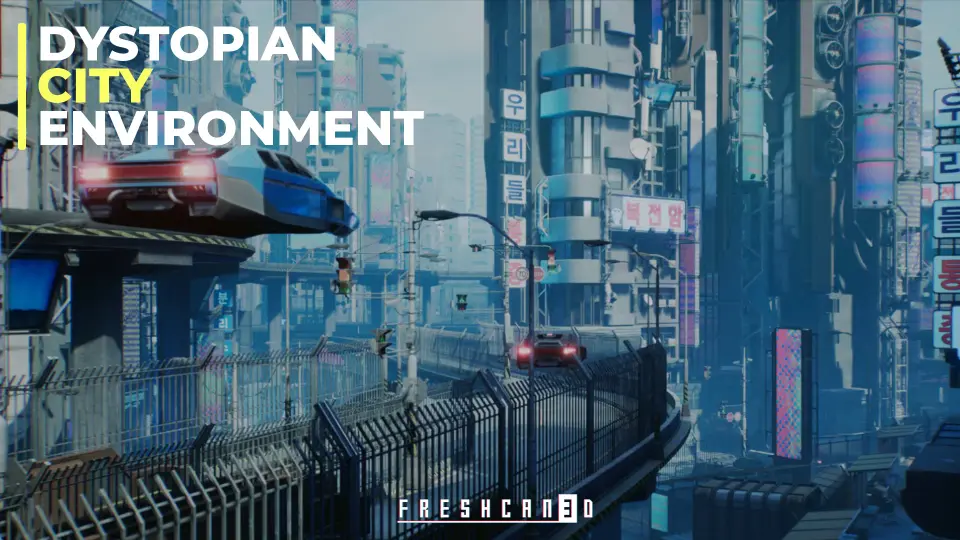
Urban planning in a futuristic, vertical metropolis extends far beyond ground-level sidewalks. The included Highway Spline System supplies the tools needed to route multi-lane expressways, elevated transit corridors, and overpasses between distant skyscrapers. Instead of manually aligning rigid road meshes across uneven terrain or varied building elevations, splines allow tracks to curve, rise, and dip fluidly around city infrastructure.
Elevated highways serve both aesthetic and navigational functions. Visually, they cut across the verticality of highrise architecture, breaking up the profile of sheer concrete and glass walls. Functionally, they outline traffic arteries where vehicles, streetlights, and transit barriers define the flow of the city. Level builders can direct these highway splines between individual building blocks, weaving transit networks over water or connecting separated districts into a unified metropolitan system.
Populating Street Level with Neon Details and Cyberpunk Street Props
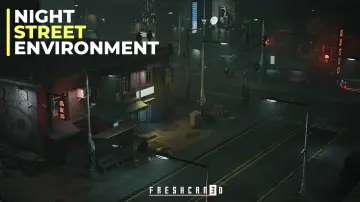
While skyscrapers define the skyline, street-level density conveys the lived-in reality of a dystopian setting. The collection includes numerous cyberpunk styled street props and architectural dressings that turn empty ground corridors into active urban spaces. From glowing billboards and neon accents to practical roadside fixtures, these assets ground the high-tech architecture in tangible clutter.
Props can be scattered along sidewalks, underneath elevated overpasses, or mounted directly onto building façades to simulate commercial enterprise and municipal neglect. Billboards introduce vibrant neon highlights against dark, postapocalyptic structural tones, creating the sharp lighting contrasts central to the sci-fi aesthetic. Integrating these props around transit hubs, alleyways, and building entrances gives each block a distinct atmosphere without requiring external modeling work.
Assembling Urban Hubs on the Ten-Block City Island Map
To showcase how the individual components interact at scale, the package features a pre-assembled example level laid out as a city island. This map incorporates more than ten complete city blocks surrounded entirely by open water. Every blueprint, mesh, and highway path on the island has been positioned to create a cohesive, fully realized dystopian environment right out of the box.
The island configuration presents an ideal testing bed for examining sightlines, vertical composition, and block layout density. Having water border the entire perimeter establishes natural boundaries for the urban footprint while highlighting the contrast between the reflective shoreline and the interior highrise districts. Creators can navigate through the multi-block layout to analyze how architectural blueprints, street dressing, and highway networks interlock across an active production-style map.
Static Lighting Performance Across Dystopic Cyberpunk Environments
Complex urban scenes with extensive neon illumination and dense structural overlapping present major performance hurdles when calculated entirely in real time. To maintain stable framerates across such a vast scene, the example city island map utilizes a pre-calculated static lighting build. Baking the lighting significantly increases runtime efficiency compared to relying strictly on fully dynamic illumination.
Static lighting handles the heavy lifting of ambient occlusion, soft bounce light from vibrant signs, and structural shadows cast across deep alleyways. This provides solid visual fidelity across the island's ten blocks while preserving processing headroom for gameplay logic, characters, or vehicular systems. For developers aiming to construct custom layouts from scratch, the same assets support custom lighting setups, giving teams the choice between baking performance-focused lightmaps or deploying alternative illumination strategies.
Project Deployment and Custom City Development
The package caters to two distinct development approaches. Teams requiring an immediate, ready-to-render urban backdrop can adopt the island map directly, leveraging the built lighting and complete street dressing for cinematics, background plates, or contained gameplay scenarios. Every district across the ten-block expanse is already populated with highrises, highway splines, and roadside props.
Conversely, creators building original worlds from the ground up can strip the island down to its modular constituents. The building blueprints, modifiable building meshes, highway splines, and wide-ranged tileable materials offer all the individual components required to construct custom sci-fi environments, sprawling metropolitan sectors, or postapocalyptic ruins tailored to unique level designs.
 Cyberpunk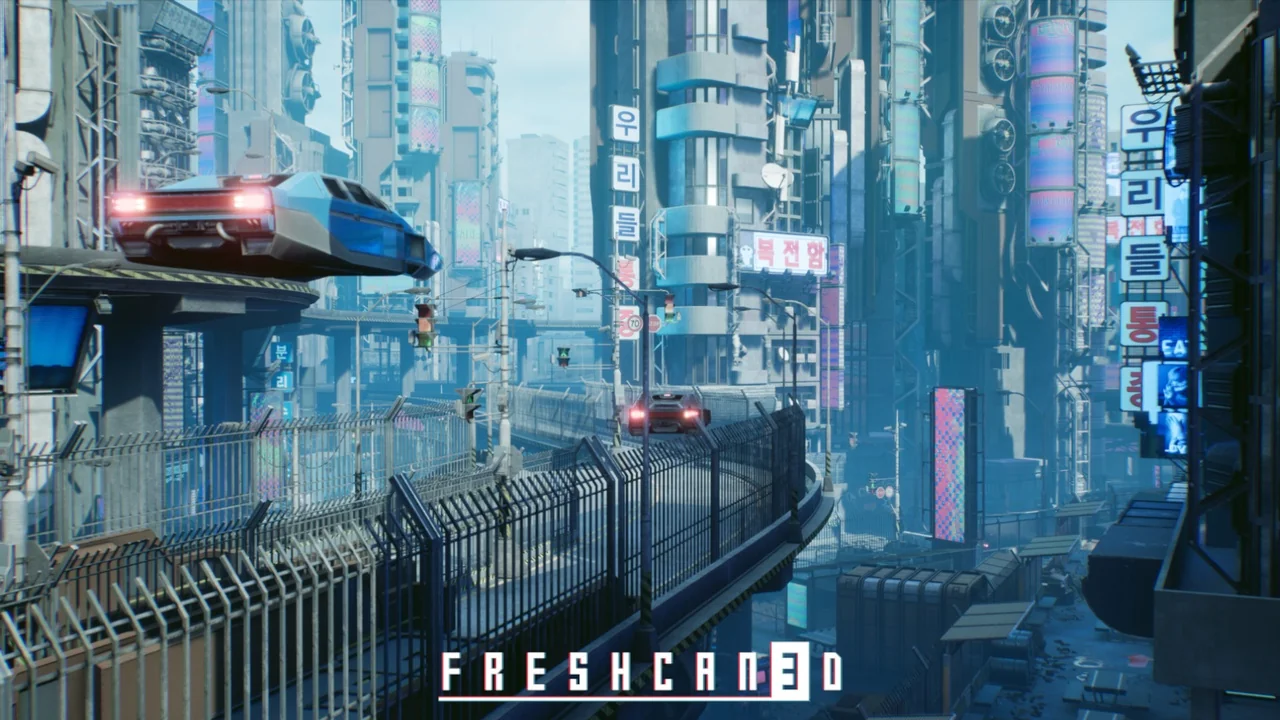
 Cyberpunk
 Cyberpunk
 Cyberpunk