"a338a1d501976271"{"id":"1001357","slug":"rainy-neon-streets","title":"Rainy Neon Streets","category":"Cyberpunk","engine":"5.1+","assetVersion":"","engineVersion":"Engine Version: 5.1+","tag":"Cyberpunk","accent":"blue","visual":"mech","summary":"Explore Rainy Neon Streets, a detailed sci-fi environment pack featuring two modular building sets, Blueprints, and realistic dystopian city assets.","platform":"Unreal Engine","publishedAt":"2026-10-04T10:25:36.152Z","updatedAt":"2026-10-04T10:25:36.152Z","sourceNotes":[],"fileContents":[],"compatibility":["Unreal Engine","Engine Version: 5.1+"],"featuredImage":{"alt":"Rainy Neon Streets","src":"/wp-content/uploads/published/2026/10/aba24a4a1fc1-f30a2a39-5250-45c0-bf1b-e8827c170ec0-b4b5d38893.webp"},"hasDownloadLink":true,"downloads":1,"terms":[{"taxonomy":"category","slug":"cyberpunk","name":"Cyberpunk"}],"galleryImages":[{"src":"/wp-content/uploads/published/2026/10/66a8d6b3e8a1-12ad67fc-0bfa-4909-828d-a801bcc166b3-4b50526ee6.webp","alt":"Rainy Neon Streets"},{"src":"/wp-content/uploads/published/2026/10/e3376950053e-b57693e3-5404-46eb-aee2-110da0701f0a-ae2cd89dec.webp","alt":"Rainy Neon Streets"},{"src":"/wp-content/uploads/published/2026/10/2474306b59cd-26728306-16ac-439c-be36-797f98ec38ab-2330e7f90c.webp","alt":"Rainy Neon Streets"},{"src":"/wp-content/uploads/published/2026/10/7153bb96ceb7-30b33ad6-a856-4486-a66d-0cd4abaee7b6-a40a460883.webp","alt":"Rainy Neon Streets"},{"src":"/wp-content/uploads/published/2026/10/547738497cf1-33bf3d4c-4915-49ba-8dd0-f97843257f8d-ab6ad6015b.webp","alt":"Rainy Neon Streets"},{"src":"/wp-content/uploads/published/2026/10/99649c36e209-9bf6c89a-e6e8-4022-9a40-fda41fb495fa-740857b434.webp","alt":"Rainy Neon Streets"},{"src":"/wp-content/uploads/published/2026/10/a1da26021baa-9f4659f5-26aa-444f-9969-1939d382be6b-90d9cceaa9.webp","alt":"Rainy Neon Streets"},{"src":"/wp-content/uploads/published/2026/10/df3eeb1fab32-5d77ce4e-51aa-4c45-b856-c1657615c332-28a80a962e.webp","alt":"Rainy Neon Streets"},{"src":"/wp-content/uploads/published/2026/10/fd938de8ebce-c8a2e328-593f-495e-a97b-63cd064445fb-79a2ed093d.webp","alt":"Rainy Neon Streets"},{"src":"/wp-content/uploads/published/2026/10/ce652705e595-2afd7161-0482-4166-a0e8-6c5df1033763-8b99c7181f.webp","alt":"Rainy Neon Streets"}],"accessPanel":{"kind":"resource","title":"Download this resource","eyebrow":"Free Download","message":"Log in or create a free account to start your download.","fileName":"Content.7z","safetyNote":"Resources are manually reviewed before listing to improve quality and reduce obvious risks.","actionLabel":"Download Free","resourceType":"Resource archive"},"contentHtml":"\u003cp\u003eSlick pavement catches intense colored light beneath downpours, casting sharp reflections across dense, dark architectural corridors. Rainy Neon Streets establishes this exact atmospheric interplay, combining wet surfaces with radiant, saturated illumination to anchor a convincing sci-fi city scene. Rather than presenting isolated props, the collection provides a fully realized level environment structured through the visual language of dystopian cyberpunk settings, where dark urban structures contrast directly with high-output neon signage and soaked ground planes.\u003c/p\u003e \u003ch2\u003eAtmospheric Illumination in Rainy Neon Streets\u003c/h2\u003e\n\u003cp\u003eThe visual signature of the environment relies heavily on the physical interaction between rain effects and vibrant neon elements. In a dystopian or sci-fi setting, neon serves both as a primary light source and as a narrative device, cutting through shadows to define street corners, building faces, and alleyways. The interplay of direct light and secondary reflections gives the wet pavement depth, transforming simple walkways into complex surfaces that scatter illumination across the scene.\u003c/p\u003e\n\u003cp\u003eBecause the pack is built to showcase realistic visuals, every surface is calibrated to respond naturally to directional, ambient, and emissive lighting. Rain-soaked materials exhibit shifting glossiness, with moisture altering surface roughness and amplifying reflections. This dynamic makes the environment especially suitable for testing how light disperses across slick asphalt, concrete, and metal, capturing the distinctive tone expected in modern cyberpunk level design.\u003c/p\u003e \u003ch2\u003eConstructing Dystopian Architecture with Two Modular Sets\u003c/h2\u003e\n\u003cp\u003eUrban density in game development requires architectural variety, and Rainy Neon Streets addresses this requirement through two distinct modular sets dedicated to building construction. Rather than relying on rigid, single-piece structures that limit spatial variation, these modular collections provide the fundamental structural components needed to construct customized buildings from the ground up.\u003c/p\u003e\n\u003cp\u003eHaving two separate modular sets allows developers to establish contrasting architectural styles within the same city sector. One set can form foundational street-level storefronts or industrial facades, while the second can be assembled into towering vertical high-rises or complex overhead walkways. This modular division prevents repetitive visual patterns across the cityscape, enabling level designers to assemble:\u003c/p\u003e\n\u003cul\u003e \u003cli\u003eNarrow dystopian alleyways bracketed by asymmetrical building facades\u003c/li\u003e \u003cli\u003eExpansive multi-story street corners with integrated neon fixtures\u003c/li\u003e \u003cli\u003eLayered architectural backdrops that provide visual depth behind playable ground areas\u003c/li\u003e \u003cli\u003eCustom structural configurations tailored to specific navigation paths and sightlines\u003c/li\u003e\n\u003c/ul\u003e\n\u003cp\u003eBy arranging structural panels, wall sections, and architectural trims, teams can adapt the urban footprint to fit specific encounter spaces or cinematic camera angles while maintaining stylistic consistency across the entire level.\u003c/p\u003e \u003ch2\u003eBalancing Realistic Visuals with Scene Budget\u003c/h2\u003e\n\u003cp\u003eCreating dense, highly detailed environments often introduces significant performance overhead, particularly when multiple light sources, wet materials, and heavy geometry converge. Rainy Neon Streets addresses this technical challenge by designing each asset with realistic visuals, style, and production budget explicitly in mind.\u003c/p\u003e\n\u003cp\u003eBalancing visual fidelity against budget constraints requires careful asset optimization. Structural components, props, and modular pieces must preserve crisp geometric silhouettes and convincing material readouts without carrying unnecessary polygon density or unmanageable draw overhead. This disciplined asset design ensures that the scene can sustain dense arrangements of buildings, street clutter, and emissive neon elements simultaneously. The balance maintained throughout the pack allows developers to populate broad level areas without immediately sacrificing the performance headroom necessary for gameplay mechanics, artificial intelligence, or post-processing pipelines.\u003c/p\u003e \u003ch2\u003eDeploying Blueprints for Sci-Fi Level Assembly\u003c/h2\u003e\n\u003cp\u003eOrganization within a complex urban environment often hinges on technical integration, and the inclusion of Blueprints in Rainy Neon Streets streamlines how assets are arranged and deployed across the level. Blueprints help consolidate individual props, lighting fixtures, and modular building components into cohesive, easily placed units.\u003c/p\u003e\n\u003cp\u003eIn a rain-soaked, neon-heavy setting, placing individual light fixtures, structural supports, and decorative elements manually across an entire city block can be time-consuming. Blueprints provide structured containers for these assets, allowing creators to drop fully configured street setups, lighted building sections, or specialized prop groupings directly into the world. This approach simplifies iterative level design, making it straightforward to reposition entire architectural configurations, test alternative layout paths, or adjust visual balance across large scene sectors.\u003c/p\u003e \u003ch2\u003eDeconstructing the Scene Setup for Lighting Studies\u003c/h2\u003e\n\u003cp\u003eBeyond acting as a backdrop for interactive gameplay, Rainy Neon Streets serves as an educational and technical benchmark for environment artists. The pack is configured so users can examine exactly how a complete, atmospheric environment is organized from top to bottom.\u003c/p\u003e\n\u003cp\u003eLighting artists can treat the environment as a dedicated lighting study, analyzing how emissive signs, atmospheric density, and wet ground materials cooperate to establish mood. By breaking down the scene setup, artists can inspect:\u003c/p\u003e\n\u003cul\u003e \u003cli\u003eThe balance between ambient darkness and high-intensity neon light sources\u003c/li\u003e \u003cli\u003eHow light bounce and reflections behave across saturated, wet surfaces\u003c/li\u003e \u003cli\u003eThe spatial distribution of modular building components to control shadow casting\u003c/li\u003e \u003cli\u003eThe placement of focal lighting to guide player attention through urban corridors\u003c/li\u003e\n\u003c/ul\u003e\n\u003cp\u003eStudying a functional scene layout reveals the subtle technical choices that separate an unconvincing city street from a believable dystopian environment. Understanding how individual assets are layered to create depth, where shadows are left deep and unlit, and how neon sources are balanced against the weather provides practical insight that artists can apply directly to their own sci-fi scene development.\u003c/p\u003e \u003ch2\u003eApplication in Production Pipelines\u003c/h2\u003e\n\u003cp\u003eRainy Neon Streets is best suited for developers, level designers, and technical artists who need a comprehensive, rain-drenched cyberpunk setting without assembling every modular facade and neon fixture from scratch. Game developers working within sci-fi, dystopian, or urban action genres gain an immediate, cohesive level foundation built with two modular building sets and budget-conscious assets. Meanwhile, lighting artists and environment specialists gain a fully assembled testbed designed to demonstrate the intricate relationship between rain, architectural geometry, and vibrant neon illumination.\u003c/p\u003e\n\n\u003ch2\u003eExplore Similar Assets\u003c/h2\u003e\n\u003cul\u003e\n\u003cli\u003e\u003ca href=\"https://3dcghub.com/cyberpunk-night-street-cyberpunk-town-cyberpunk-props-night-city/\" title=\"Cyberpunk Night Street ( Cyberpunk Town, Cyberpunk Props , Night City )\"\u003eCyberpunk Night Street ( Cyberpunk Town, Cyberpunk Props , Night City )\u003c/a\u003e\u003c/li\u003e\n\u003cli\u003e\u003ca href=\"https://3dcghub.com/modular-stylized-cyberpunk-street-cyberpunk-cyber-street-cyberpunk-stylized/\" title=\"Modular Stylized Cyberpunk Street ( Cyberpunk Cyber Street Cyberpunk Stylized )\"\u003eModular Stylized Cyberpunk Street ( Cyberpunk Cyber Street Cyberpunk Stylized )\u003c/a\u003e\u003c/li\u003e\n\u003cli\u003e\u003ca href=\"https://3dcghub.com/cyberpunk-high-city/\" title=\"Cyberpunk - High City\"\u003eCyberpunk - High City\u003c/a\u003e\u003c/li\u003e\n\u003cli\u003e\u003ca href=\"https://3dcghub.com/cyberpunk-kyiv-street-environment-cyberpunk-kyiv-street-street-ukraine-slav/\" title=\"Cyberpunk Kyiv Street Environment ( Cyberpunk Kyiv Street Street Ukraine Slav )\"\u003eCyberpunk Kyiv Street Environment ( Cyberpunk Kyiv Street Street Ukraine Slav )\u003c/a\u003e\u003c/li\u003e\n\u003cli\u003e\u003ca href=\"https://3dcghub.com/cyber-night-city/\" title=\"Cyber Night City\"\u003eCyber Night City\u003c/a\u003e\u003c/li\u003e\n\u003c/ul\u003e","contentTextLength":7274,"navigation":{"current":45,"total":3338,"previous":{"id":"1001358","slug":"ready-map-vol-2-bridge-environment-nature","title":"Ready Map Vol 2 - Bridge Environment / Nature","category":"Apocalyptic / Post-apocalyptic","platform":"Unreal Engine","updatedAt":"2026-10-04T10:26:35.727Z"},"next":{"id":"1001356","slug":"polygon-nightclubs","title":"POLYGON - Nightclubs","category":"Cities","platform":"Unreal Engine","updatedAt":"2026-10-04T10:24:46.503Z"}},"relatedResources":[{"id":"7617","slug":"cyberpunk-night-street-cyberpunk-town-cyberpunk-props-night-city","title":"Cyberpunk Night Street ( Cyberpunk Town, Cyberpunk Props , Night City )","category":"Cyberpunk","engine":"5.1+","assetVersion":"Engine version: 5.1+","engineVersion":"5.1","tag":"Cyberpunk","accent":"blue","visual":"city","summary":"Transform your digital environments with a comprehensive collection of modular buildings, neon props, and gritty street assets designed for futuristic cityscapes.","platform":"Unreal Engine","publishedAt":"2026-02-21T17:05:44.000Z","updatedAt":"2026-07-13T11:55:33.583Z","sourceNotes":[],"fileContents":[],"compatibility":["Unreal Engine","Engine version: 5.1+"],"featuredImage":{"alt":"Cyberpunk Night Street ( Cyberpunk Town, Cyberpunk Props , Night City )","src":"https://3dcghub.com/wp-content/uploads/2026/02/98b1667a-a348-4361-aee6-0a3281b3f848.webp"},"hasDownloadLink":true,"downloads":0},{"id":"7634","slug":"modular-stylized-cyberpunk-street-cyberpunk-cyber-street-cyberpunk-stylized","title":"Modular Stylized Cyberpunk Street ( Cyberpunk Cyber Street Cyberpunk Stylized )","category":"Cyberpunk","engine":"4.26+,5.0+","assetVersion":"Engine version: 4.26+,5.0+","engineVersion":"4.22","tag":"Cyberpunk","accent":"blue","visual":"city","summary":"Build a stunning dystopian future with the Modular Stylized Cyberpunk Street environment pack. This collection offers optimized, game-ready assets perfect for creating neon-soaked urban landscapes.","platform":"Unreal Engine","publishedAt":"2026-02-21T17:09:43.000Z","updatedAt":"2026-04-19T15:55:57.000Z","sourceNotes":[],"fileContents":[],"compatibility":["Unreal Engine","Engine version: 4.26+,5.0+"],"featuredImage":{"alt":"Modular Stylized Cyberpunk Street ( Cyberpunk Cyber Street Cyberpunk Stylized )","src":"https://3dcghub.com/wp-content/uploads/2026/02/b2d9eab6-70d3-45b1-9edd-9eb0da052401.webp"},"hasDownloadLink":true,"downloads":1},{"id":"27554","slug":"cyberpunk-high-city","title":"Cyberpunk - High City","category":"Cyberpunk","engine":"5.0+","assetVersion":"Engine version: 5.0+","engineVersion":"","tag":"Cyberpunk","accent":"blue","visual":"city","summary":"Cyberpunk - High City is a modular constructor for high-detailed sci-fi city streets, alleys, and blocks. It also includes a fly cars pack and a blueprint-based background traffic system.","platform":"Unreal Engine","publishedAt":"2026-04-26T07:32:19.000Z","updatedAt":"2026-04-26T07:32:20.000Z","sourceNotes":[],"fileContents":[],"compatibility":["Unreal Engine","Engine version: 5.0+"],"featuredImage":{"alt":"Cyberpunk - High City","src":"https://3dcghub.com/wp-content/uploads/2026/04/b511bde35619_8d2cc377-b2bd-497e-8c7d-0aff19074eda.webp"},"hasDownloadLink":true,"downloads":0}]}
Cyberpunk
Rainy Neon Streets
Explore Rainy Neon Streets, a detailed sci-fi environment pack featuring two modular building sets, Blueprints, and realistic dystopian city assets.
Category:Unreal Engine,CyberpunkPlatform: Unreal EngineEngine Version: 5.1+Published: Oct 4, 2026
Cyberpunk
Resource overview
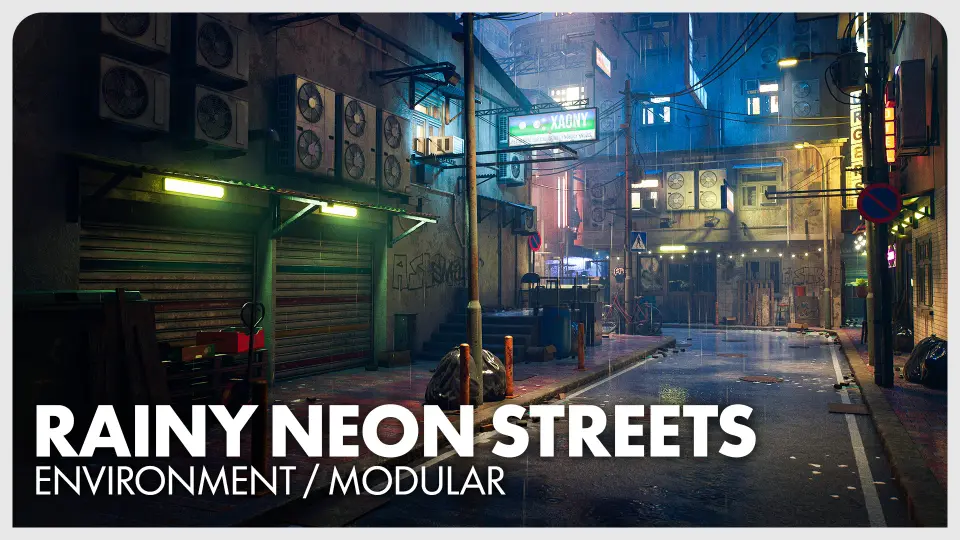
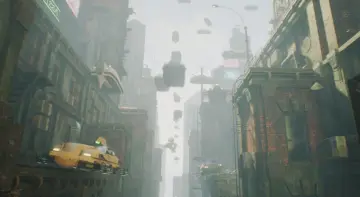
Slick pavement catches intense colored light beneath downpours, casting sharp reflections across dense, dark architectural corridors. Rainy Neon Streets establishes this exact atmospheric interplay, combining wet surfaces with radiant, saturated illumination to anchor a convincing sci-fi city scene. Rather than presenting isolated props, the collection provides a fully realized level environment structured through the visual language of dystopian cyberpunk settings, where dark urban structures contrast directly with high-output neon signage and soaked ground planes.
Atmospheric Illumination in Rainy Neon Streets
The visual signature of the environment relies heavily on the physical interaction between rain effects and vibrant neon elements. In a dystopian or sci-fi setting, neon serves both as a primary light source and as a narrative device, cutting through shadows to define street corners, building faces, and alleyways. The interplay of direct light and secondary reflections gives the wet pavement depth, transforming simple walkways into complex surfaces that scatter illumination across the scene.
Because the pack is built to showcase realistic visuals, every surface is calibrated to respond naturally to directional, ambient, and emissive lighting. Rain-soaked materials exhibit shifting glossiness, with moisture altering surface roughness and amplifying reflections. This dynamic makes the environment especially suitable for testing how light disperses across slick asphalt, concrete, and metal, capturing the distinctive tone expected in modern cyberpunk level design.
Constructing Dystopian Architecture with Two Modular Sets
Urban density in game development requires architectural variety, and Rainy Neon Streets addresses this requirement through two distinct modular sets dedicated to building construction. Rather than relying on rigid, single-piece structures that limit spatial variation, these modular collections provide the fundamental structural components needed to construct customized buildings from the ground up.
Having two separate modular sets allows developers to establish contrasting architectural styles within the same city sector. One set can form foundational street-level storefronts or industrial facades, while the second can be assembled into towering vertical high-rises or complex overhead walkways. This modular division prevents repetitive visual patterns across the cityscape, enabling level designers to assemble:
Narrow dystopian alleyways bracketed by asymmetrical building facades
Expansive multi-story street corners with integrated neon fixtures
Layered architectural backdrops that provide visual depth behind playable ground areas
Custom structural configurations tailored to specific navigation paths and sightlines
By arranging structural panels, wall sections, and architectural trims, teams can adapt the urban footprint to fit specific encounter spaces or cinematic camera angles while maintaining stylistic consistency across the entire level.
Balancing Realistic Visuals with Scene Budget
Creating dense, highly detailed environments often introduces significant performance overhead, particularly when multiple light sources, wet materials, and heavy geometry converge. Rainy Neon Streets addresses this technical challenge by designing each asset with realistic visuals, style, and production budget explicitly in mind.
Balancing visual fidelity against budget constraints requires careful asset optimization. Structural components, props, and modular pieces must preserve crisp geometric silhouettes and convincing material readouts without carrying unnecessary polygon density or unmanageable draw overhead. This disciplined asset design ensures that the scene can sustain dense arrangements of buildings, street clutter, and emissive neon elements simultaneously. The balance maintained throughout the pack allows developers to populate broad level areas without immediately sacrificing the performance headroom necessary for gameplay mechanics, artificial intelligence, or post-processing pipelines.
Deploying Blueprints for Sci-Fi Level Assembly
Organization within a complex urban environment often hinges on technical integration, and the inclusion of Blueprints in Rainy Neon Streets streamlines how assets are arranged and deployed across the level. Blueprints help consolidate individual props, lighting fixtures, and modular building components into cohesive, easily placed units.
In a rain-soaked, neon-heavy setting, placing individual light fixtures, structural supports, and decorative elements manually across an entire city block can be time-consuming. Blueprints provide structured containers for these assets, allowing creators to drop fully configured street setups, lighted building sections, or specialized prop groupings directly into the world. This approach simplifies iterative level design, making it straightforward to reposition entire architectural configurations, test alternative layout paths, or adjust visual balance across large scene sectors.
Deconstructing the Scene Setup for Lighting Studies
Beyond acting as a backdrop for interactive gameplay, Rainy Neon Streets serves as an educational and technical benchmark for environment artists. The pack is configured so users can examine exactly how a complete, atmospheric environment is organized from top to bottom.
Lighting artists can treat the environment as a dedicated lighting study, analyzing how emissive signs, atmospheric density, and wet ground materials cooperate to establish mood. By breaking down the scene setup, artists can inspect:
The balance between ambient darkness and high-intensity neon light sources
How light bounce and reflections behave across saturated, wet surfaces
The spatial distribution of modular building components to control shadow casting
The placement of focal lighting to guide player attention through urban corridors
Studying a functional scene layout reveals the subtle technical choices that separate an unconvincing city street from a believable dystopian environment. Understanding how individual assets are layered to create depth, where shadows are left deep and unlit, and how neon sources are balanced against the weather provides practical insight that artists can apply directly to their own sci-fi scene development.
Application in Production Pipelines
Rainy Neon Streets is best suited for developers, level designers, and technical artists who need a comprehensive, rain-drenched cyberpunk setting without assembling every modular facade and neon fixture from scratch. Game developers working within sci-fi, dystopian, or urban action genres gain an immediate, cohesive level foundation built with two modular building sets and budget-conscious assets. Meanwhile, lighting artists and environment specialists gain a fully assembled testbed designed to demonstrate the intricate relationship between rain, architectural geometry, and vibrant neon illumination.
 Cyberpunk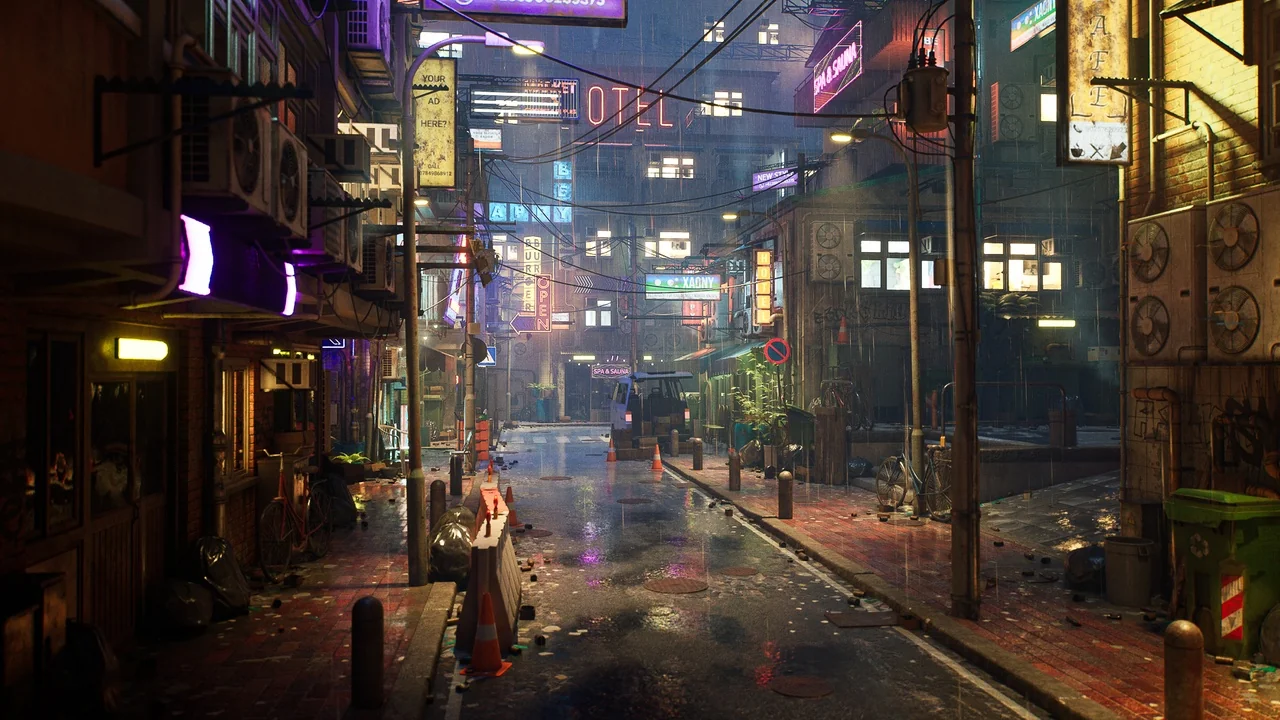
 Cyberpunk
 Cyberpunk
 Cyberpunk