"7e6fc58c410f2894"{"id":"1001625","slug":"cyberpunk-industries-vol-1","title":"Cyberpunk Industries Vol.1","category":"Cyberpunk","engine":"4.25+,5.0+","assetVersion":"","engineVersion":"Engine Version: 4.25+,5.0+","tag":"Cyberpunk","accent":"blue","visual":"mech","summary":"Explore Cyberpunk Industries Vol.1, featuring modular ready-made wall panels, detailed props, a complete demo level, and Unreal Engine support from 4.19 to 5.00","platform":"Unreal Engine","publishedAt":"2026-10-13T01:58:03.436Z","updatedAt":"2026-10-13T01:58:03.436Z","sourceNotes":[],"fileContents":[],"compatibility":["Unreal Engine","Engine Version: 4.25+,5.0+"],"featuredImage":{"alt":"Cyberpunk Industries Vol.1","src":"/wp-content/uploads/published/2026/10/81b2d6e5f899-17c61130-4687-40af-9fa7-191eb65baa59-ecb36f0a1b.webp"},"hasDownloadLink":true,"downloads":0,"terms":[{"taxonomy":"category","slug":"cyberpunk","name":"Cyberpunk"}],"galleryImages":[{"src":"/wp-content/uploads/published/2026/10/9b3480ba8f92-8c78dd47-f035-4124-a95c-896da0805dde-575951bca5.webp","alt":"Cyberpunk Industries Vol.1"},{"src":"/wp-content/uploads/published/2026/10/27e0e8ac1584-27466b12-fc21-465e-838f-e866e560ed3d-eb46747a26.webp","alt":"Cyberpunk Industries Vol.1"},{"src":"/wp-content/uploads/published/2026/10/5d9fa6af2c9f-09a790e2-9250-4099-b698-59057a3d3c4b-3ed4bcda0b.webp","alt":"Cyberpunk Industries Vol.1"},{"src":"/wp-content/uploads/published/2026/10/1f2a39125103-da7e320c-cf1c-4e11-bec1-599a07362d16-c47855fe12.webp","alt":"Cyberpunk Industries Vol.1"},{"src":"/wp-content/uploads/published/2026/10/8f69ae6bdfd7-b2bcba5f-9ad0-4344-bfdd-8b27b9be4c2d-f22b2e04b5.webp","alt":"Cyberpunk Industries Vol.1"},{"src":"/wp-content/uploads/published/2026/10/cf7cca2b6f79-94df8bc1-4fde-486a-8d50-78348b097360-0926459f44.webp","alt":"Cyberpunk Industries Vol.1"},{"src":"/wp-content/uploads/published/2026/10/9a9f97b23b91-4497b62f-3129-4321-a1b3-565ae8cf6f29-30af10d3d0.webp","alt":"Cyberpunk Industries Vol.1"},{"src":"/wp-content/uploads/published/2026/10/65539c8874b4-cf720aee-2593-467c-bd8f-b9c96d06437a-67852c528e.webp","alt":"Cyberpunk Industries Vol.1"},{"src":"/wp-content/uploads/published/2026/10/c041f766011d-f4260f07-21ef-4c0e-97ef-e76226a3796b-b144dc3103.webp","alt":"Cyberpunk Industries Vol.1"},{"src":"/wp-content/uploads/published/2026/10/e2dd3a8407f1-9bafa4a7-8ca9-4835-9827-12d19529c394-2b5148dc72.webp","alt":"Cyberpunk Industries Vol.1"}],"accessPanel":{"kind":"resource","title":"Download this resource","eyebrow":"Free Download","message":"Log in or create a free account to start your download.","fileName":"Cyberpunk Industries Vol.1.7z","safetyNote":"Resources are manually reviewed before listing to improve quality and reduce obvious risks.","actionLabel":"Download Free","resourceType":"Resource archive"},"contentHtml":"\u003ch2\u003eDemo Level Exploration and Initial Scene Setup\u003c/h2\u003e\n\u003cp\u003eStarting an environment build begins most effectively by launching the included demo level. Rather than assembling isolated meshes in an empty viewport, loading this pre-configured space provides an immediate look at spatial proportions, asset density, and functional staging. Designers can walk the scene directly to observe how modular components lock together, how light interacts with varied surfaces, and how verticality can be developed across an industrial skyline.\u003c/p\u003e\n\u003cp\u003eThe demo level functions as an interactive blueprint for production. It demonstrates clear solutions for organizing pedestrian walkways, wall junctions, and industrial recesses. Artists evaluating visual composition can measure sightlines, study prop cluster placement, and gauge how large-scale architecture frames playable zones. Deconstructing this functional showcase eliminates guesswork during early layout phases, allowing teams to move straight from spatial testing into active world-building.\u003c/p\u003e \u003ch2\u003eAssembling Custom Structures with Ready-Made Wall Panels\u003c/h2\u003e\n\u003cp\u003eArchitecture in this asset collection relies on a modular system of ready-made wall panels. Instead of locking level designers into rigid, pre-assembled structures, these modular panels can be combined in varied arrangements to construct customized building footprints. Every building can take on a distinct form, whether the scene demands massive corporate warehouses, tight backstreet corridors, or stacked industrial complexes.\u003c/p\u003e\n\u003cp\u003eWorking with individual wall panels allows for continuous variation across urban districts. Designers can introduce rhythmic alterations along long facades, break up flat planes with inset elements, or step structures backward as they rise. Because the panels share a unified construction logic, assembling unique configurations does not produce jarring seam transitions or mismatched seams. By alternating component placement horizontally and vertically, developers can craft diverse architectural silhouettes that prevent procedural repetition across sprawling urban sectors.\u003c/p\u003e \u003ch2\u003eProp Placement and High-Detail Surface Texturing\u003c/h2\u003e\n\u003cp\u003eA structure remains incomplete without the mechanical clutter that defines an active industrial sector. Cyberpunk Industries Vol.1 supplies a broad selection of props to dress surrounding spaces, each textured with high-detail surface work. These elements provide the fine-grained visual interest needed at ground level, giving life to bare concrete or metal walls.\u003c/p\u003e\n\u003cp\u003eThe presence of detailed textures across all prop items ensures that assets hold up under close player scrutiny. First-person and close third-person perspectives benefit from crisp surface definition on industrial hardware, street furniture, and utility fittings. Integrated within a physically based rendering (PBR) pipeline, these surfaces react realistically to direct spotlights, colored neon glows, and ambient skylight reflections. Scattering props across loading bays, rooftops, and maintenance corridors grounds the larger architectural panels in believable utilitarian function.\u003c/p\u003e \u003ch2\u003eThematic Adaptability Across RPG, Horror, and City Levels\u003c/h2\u003e\n\u003cp\u003eWhile cyberpunk aesthetics sit at the center of the design, the visual language carries enough flexibility to support several distinct genres. The combination of realistic material responses and stylized, low-poly geometry enables these components to adapt smoothly to standard city developments, speculative sci-fi games, role-playing adventures, and survival horror environments.\u003c/p\u003e\n\u003cp\u003eIn horror settings, the weathered industrial panels and heavy props can be staged under sparse, high-contrast illumination to form claustrophobic, abandoned facilities. For sprawling RPG projects, the modular wall panels facilitate the rapid blockout of vast mechanical settlements or fortified compounds. The assets balance realistic industrial wear with a stylized structural clarity, allowing art teams to shift project tone through lighting and layout choices alone.\u003c/p\u003e \u003ch2\u003eBlueprint Organization and Low-Poly Performance\u003c/h2\u003e\n\u003cp\u003eManaging large environments demands strict control over technical budgets. The low-poly foundation of these assets helps keep geometry counts within reasonable bounds, preserving performance during scenes with complex view distances or high prop counts. Real-time projects maintain steady framerates even when layering intricate wall sequences and street dressing into a single playable district.\u003c/p\u003e\n\u003cp\u003eBlueprint integration streamlines the placement and management of these assets in the editor. Organizing modular panels and prop groupings within Blueprints allows level artists to duplicate functional architectural modules, adjust structural variations on the fly, and test mechanical layouts rapidly. This technical infrastructure keeps production organized, reducing manual placement overhead and allowing rapid iteration during level blockouts.\u003c/p\u003e \u003ch2\u003eUnreal Engine Compatibility Across UE 4.19 Through UE 5.00\u003c/h2\u003e\n\u003cp\u003eLong production cycles often require asset stability across different engine versions. Cyberpunk Industries Vol.1 maintains compatibility across a wide range of Unreal Engine releases, natively supporting engine versions 4.19, 4.20, 4.21, 4.22, 4.23, 4.24, 4.25, 4.26, 4.27, and 5.00.\u003c/p\u003e\n\u003cp\u003eThis wide coverage accommodates established projects operating on earlier Unreal Engine 4 baselines without forcing an untimely engine upgrade. At the same time, teams building inside Unreal Engine 5.00 can deploy the wall panels, detailed props, and demo level directly into newer workflows. The continuous support across these milestones ensures consistent asset behavior, reliable material shading, and steady scene performance across multiple generations of Unreal Engine development.\u003c/p\u003e\n\n\u003ch2\u003eMore From The Same Workflow\u003c/h2\u003e\n\u003cul\u003e\n\u003cli\u003e\u003ca href=\"https://3dcghub.com/cyberpunk-sci-fi-apartment-interior-environment-cyberpunk-cyberpunk-scfi/\" title=\"Cyberpunk / Sci - Fi Apartment Interior Environment ( Cyberpunk Cyberpunk Scfi )\"\u003eCyberpunk / Sci - Fi Apartment Interior Environment ( Cyberpunk Cyberpunk Scfi )\u003c/a\u003e\u003c/li\u003e\n\u003cli\u003e\u003ca href=\"https://3dcghub.com/nova-space-burgers-cyberpunk-abandoned-restaurant-space-bar-cyberpunk-art/\" title=\"Nova Space Burgers / Cyberpunk Abandoned Restaurant / Space Bar Cyberpunk Art\"\u003eNova Space Burgers / Cyberpunk Abandoned Restaurant / Space Bar Cyberpunk Art\u003c/a\u003e\u003c/li\u003e\n\u003cli\u003e\u003ca href=\"https://3dcghub.com/dystopian-city-environment-cyberpunk-cyberpunk-city-cyberpunk-buildings/\" title=\"Dystopian City Environment (Cyberpunk, Cyberpunk City, Cyberpunk Buildings)\"\u003eDystopian City Environment (Cyberpunk, Cyberpunk City, Cyberpunk Buildings)\u003c/a\u003e\u003c/li\u003e\n\u003cli\u003e\u003ca href=\"https://3dcghub.com/cyberpunk-sci-fi-bar-asset-pack-cyberpunk-sci-fii-bar-cyberpunk-bar-cyber/\" title=\"CyberPunk / Sci-Fi Bar Asset Pack ( CyberPunk Sci-Fii Bar Cyberpunk Bar Cyber )\"\u003eCyberPunk / Sci-Fi Bar Asset Pack ( CyberPunk Sci-Fii Bar Cyberpunk Bar Cyber )\u003c/a\u003e\u003c/li\u003e\n\u003cli\u003e\u003ca href=\"https://3dcghub.com/modular-stylized-cyberpunk-street-cyberpunk-cyber-street-cyberpunk-stylized/\" title=\"Modular Stylized Cyberpunk Street ( Cyberpunk Cyber Street Cyberpunk Stylized )\"\u003eModular Stylized Cyberpunk Street ( Cyberpunk Cyber Street Cyberpunk Stylized )\u003c/a\u003e\u003c/li\u003e\n\u003c/ul\u003e","contentTextLength":6151,"navigation":{"current":58,"total":3618,"previous":{"id":"1001626","slug":"cyberpunk-interior-environment-kitbash-set","title":"Cyberpunk Interior Environment Kitbash Set","category":"Interior","platform":"Unreal Engine","updatedAt":"2026-10-13T02:03:30.063Z"},"next":{"id":"1001624","slug":"cyberpunk-sci-fi-apartment-interior-environment-cyberpunk-cyberpunk-scfi","title":"Cyberpunk / Sci - Fi Apartment Interior Environment ( Cyberpunk Cyberpunk Scfi )","category":"Cyberpunk","platform":"Unreal Engine","updatedAt":"2026-10-13T01:57:01.362Z"}},"relatedResources":[{"id":"1001645","slug":"cyberpunk-street","title":"CYBERPUNK STREET","category":"Cyberpunk","engine":"4.22+,5.0+","assetVersion":"","engineVersion":"Engine Version: 4.22+,5.0+","tag":"Cyberpunk","accent":"blue","visual":"mech","summary":"Explore the modular CYBERPUNK STREET environment pack, featuring vertex-paintable surfaces, spline-based wires, customizable materials, and a demo scene.","platform":"Unreal Engine","publishedAt":"2026-10-13T02:29:04.369Z","updatedAt":"2026-10-13T02:29:04.369Z","sourceNotes":[],"fileContents":[],"compatibility":["Unreal Engine","Engine Version: 4.22+,5.0+"],"featuredImage":{"alt":"CYBERPUNK STREET","src":"/wp-content/uploads/published/2026/10/f4f9bd4d3485-4ff078f6-9e32-413c-aa92-3ca73448bb26-d43622898c.webp"},"hasDownloadLink":true,"downloads":1},{"id":"1001624","slug":"cyberpunk-sci-fi-apartment-interior-environment-cyberpunk-cyberpunk-scfi","title":"Cyberpunk / Sci - Fi Apartment Interior Environment ( Cyberpunk Cyberpunk Scfi )","category":"Cyberpunk","engine":"4.26+,5.0+","assetVersion":"","engineVersion":"Engine Version: 4.26+,5.0+","tag":"Cyberpunk","accent":"blue","visual":"city","summary":"Explore the Cyberpunk / Sci-Fi Apartment Interior Environment featuring 132 assets, 7 blueprints, trim textures, and modular level design tools.","platform":"Unreal Engine","publishedAt":"2026-10-13T01:57:01.362Z","updatedAt":"2026-10-13T01:57:01.362Z","sourceNotes":[],"fileContents":[],"compatibility":["Unreal Engine","Engine Version: 4.26+,5.0+"],"featuredImage":{"alt":"Cyberpunk / Sci - Fi Apartment Interior Environment ( Cyberpunk Cyberpunk Scfi )","src":"/wp-content/uploads/published/2026/10/ae6f09dbde09-50aa84e2-f971-4b86-a168-c6d75b69bdeb-74cdbcd26e.webp"},"hasDownloadLink":true,"downloads":0},{"id":"1001144","slug":"nova-space-burgers-cyberpunk-abandoned-restaurant-space-bar-cyberpunk-art","title":"Nova Space Burgers / Cyberpunk Abandoned Restaurant / Space Bar Cyberpunk Art","category":"Cyberpunk","engine":"4.26+,5.0+","assetVersion":"","engineVersion":"Engine Version: 4.26+,5.0+","tag":"Cyberpunk","accent":"blue","visual":"mech","summary":"Explore Nova Space Burgers, a game-ready cyberpunk abandoned restaurant and space bar environment pack built for Unreal Engine with modular ULAT tools.","platform":"Unreal Engine","publishedAt":"2026-09-09T05:51:55.337Z","updatedAt":"2026-09-09T05:51:55.337Z","sourceNotes":[],"fileContents":[],"compatibility":["Unreal Engine","Engine Version: 4.26+,5.0+"],"featuredImage":{"alt":"Nova Space Burgers / Cyberpunk Abandoned Restaurant / Space Bar Cyberpunk Art","src":"/wp-content/uploads/published/2026/09/801739e8908c-51e559a4-7a58-43f5-b7f7-7d47bf6b9779-9c9bbaf04e.webp"},"hasDownloadLink":true,"downloads":2}]}
Cyberpunk
Cyberpunk Industries Vol.1
Explore Cyberpunk Industries Vol.1, featuring modular ready-made wall panels, detailed props, a complete demo level, and Unreal Engine support from 4.19 to 5.00
Category:Unreal Engine,CyberpunkPlatform: Unreal EngineEngine Version: 4.25+,5.0+Published: Oct 13, 2026
Cyberpunk
Resource overview
Demo Level Exploration and Initial Scene Setup
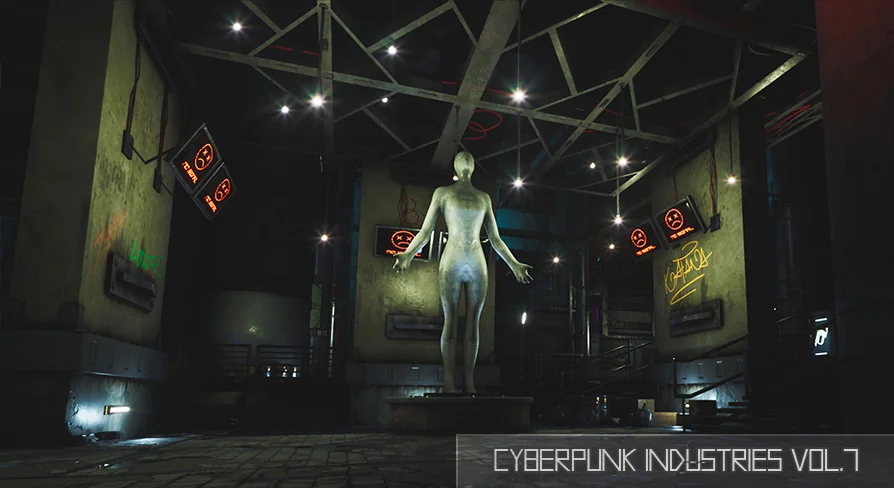
Starting an environment build begins most effectively by launching the included demo level. Rather than assembling isolated meshes in an empty viewport, loading this pre-configured space provides an immediate look at spatial proportions, asset density, and functional staging. Designers can walk the scene directly to observe how modular components lock together, how light interacts with varied surfaces, and how verticality can be developed across an industrial skyline.
The demo level functions as an interactive blueprint for production. It demonstrates clear solutions for organizing pedestrian walkways, wall junctions, and industrial recesses. Artists evaluating visual composition can measure sightlines, study prop cluster placement, and gauge how large-scale architecture frames playable zones. Deconstructing this functional showcase eliminates guesswork during early layout phases, allowing teams to move straight from spatial testing into active world-building.
Assembling Custom Structures with Ready-Made Wall Panels
Architecture in this asset collection relies on a modular system of ready-made wall panels. Instead of locking level designers into rigid, pre-assembled structures, these modular panels can be combined in varied arrangements to construct customized building footprints. Every building can take on a distinct form, whether the scene demands massive corporate warehouses, tight backstreet corridors, or stacked industrial complexes.
Working with individual wall panels allows for continuous variation across urban districts. Designers can introduce rhythmic alterations along long facades, break up flat planes with inset elements, or step structures backward as they rise. Because the panels share a unified construction logic, assembling unique configurations does not produce jarring seam transitions or mismatched seams. By alternating component placement horizontally and vertically, developers can craft diverse architectural silhouettes that prevent procedural repetition across sprawling urban sectors.
Prop Placement and High-Detail Surface Texturing
A structure remains incomplete without the mechanical clutter that defines an active industrial sector. Cyberpunk Industries Vol.1 supplies a broad selection of props to dress surrounding spaces, each textured with high-detail surface work. These elements provide the fine-grained visual interest needed at ground level, giving life to bare concrete or metal walls.
The presence of detailed textures across all prop items ensures that assets hold up under close player scrutiny. First-person and close third-person perspectives benefit from crisp surface definition on industrial hardware, street furniture, and utility fittings. Integrated within a physically based rendering (PBR) pipeline, these surfaces react realistically to direct spotlights, colored neon glows, and ambient skylight reflections. Scattering props across loading bays, rooftops, and maintenance corridors grounds the larger architectural panels in believable utilitarian function.
Thematic Adaptability Across RPG, Horror, and City Levels
While cyberpunk aesthetics sit at the center of the design, the visual language carries enough flexibility to support several distinct genres. The combination of realistic material responses and stylized, low-poly geometry enables these components to adapt smoothly to standard city developments, speculative sci-fi games, role-playing adventures, and survival horror environments.
In horror settings, the weathered industrial panels and heavy props can be staged under sparse, high-contrast illumination to form claustrophobic, abandoned facilities. For sprawling RPG projects, the modular wall panels facilitate the rapid blockout of vast mechanical settlements or fortified compounds. The assets balance realistic industrial wear with a stylized structural clarity, allowing art teams to shift project tone through lighting and layout choices alone.
Blueprint Organization and Low-Poly Performance
Managing large environments demands strict control over technical budgets. The low-poly foundation of these assets helps keep geometry counts within reasonable bounds, preserving performance during scenes with complex view distances or high prop counts. Real-time projects maintain steady framerates even when layering intricate wall sequences and street dressing into a single playable district.
Blueprint integration streamlines the placement and management of these assets in the editor. Organizing modular panels and prop groupings within Blueprints allows level artists to duplicate functional architectural modules, adjust structural variations on the fly, and test mechanical layouts rapidly. This technical infrastructure keeps production organized, reducing manual placement overhead and allowing rapid iteration during level blockouts.
Unreal Engine Compatibility Across UE 4.19 Through UE 5.00
Long production cycles often require asset stability across different engine versions. Cyberpunk Industries Vol.1 maintains compatibility across a wide range of Unreal Engine releases, natively supporting engine versions 4.19, 4.20, 4.21, 4.22, 4.23, 4.24, 4.25, 4.26, 4.27, and 5.00.
This wide coverage accommodates established projects operating on earlier Unreal Engine 4 baselines without forcing an untimely engine upgrade. At the same time, teams building inside Unreal Engine 5.00 can deploy the wall panels, detailed props, and demo level directly into newer workflows. The continuous support across these milestones ensures consistent asset behavior, reliable material shading, and steady scene performance across multiple generations of Unreal Engine development.
 Cyberpunk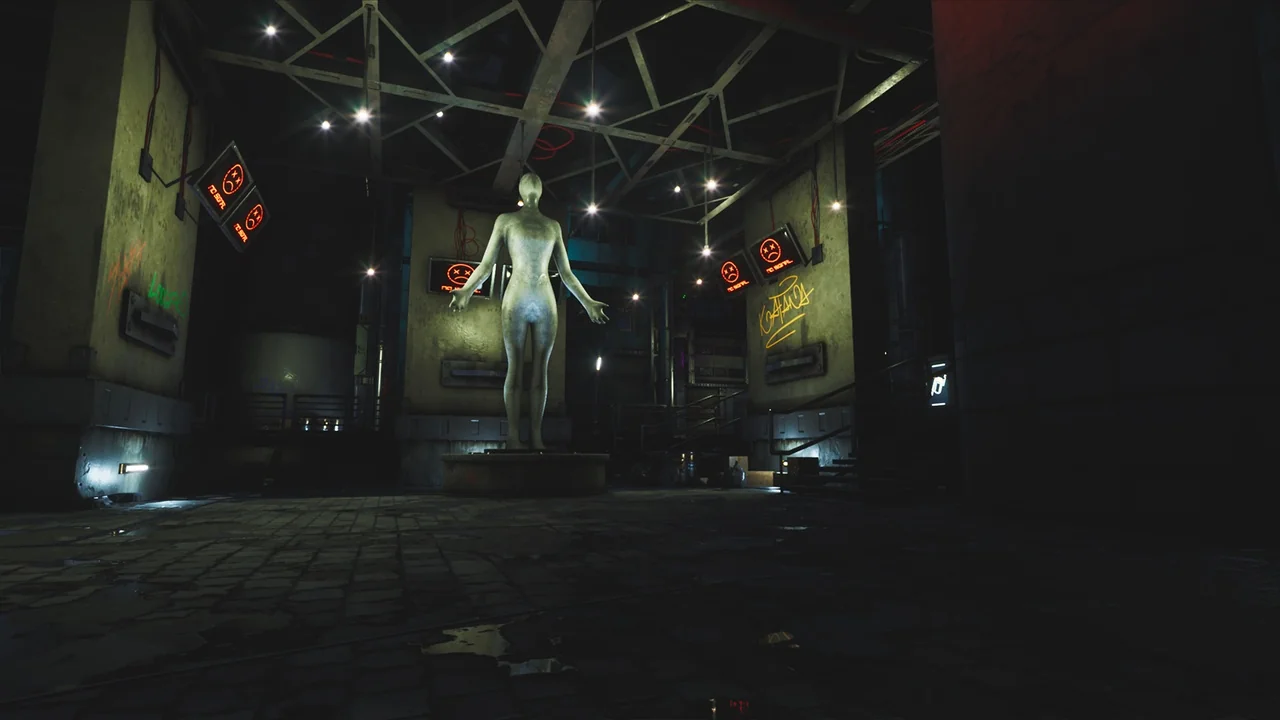
 Cyberpunk
 Cyberpunk
 Cyberpunk