"d037b61901c110d2"{"id":"1002655","slug":"construction-props","title":"Construction PROPS","category":"Industrial","engine":"5.3+","assetVersion":"","engineVersion":"Engine Version: 5.3+","tag":"Industrial","accent":"blue","visual":"mech","summary":"Explore the Construction PROPS collection featuring 120 semi-modular assets, pre-assembled actor components, decals, and day-night demonstration maps.","platform":"Unreal Engine","indexPolicy":"index","publishedAt":"2026-11-16T21:54:09.323Z","updatedAt":"2026-11-16T21:54:09.323Z","sourceNotes":[],"fileContents":[],"compatibility":["Unreal Engine","Engine Version: 5.3+"],"featuredImage":{"alt":"Construction PROPS","src":"/wp-content/uploads/published/2026/11/9dad6522fe6f-b1f576e1-ecf3-47cc-b937-518138cdaaa7-a251ec740e.webp"},"fileSizeBytes":1299724895,"hasDownloadLink":true,"downloads":0,"terms":[{"taxonomy":"category","slug":"industrial","name":"Industrial"}],"galleryImages":[{"src":"/wp-content/uploads/published/2026/11/5ece099c1081-7d7cbb3a-cf41-481c-a0e0-407f97d76c29-3ad9e310c8.webp","alt":"Construction PROPS"},{"src":"/wp-content/uploads/published/2026/11/b9de57cdf539-af64273d-51d9-48e2-a218-de7567e34749-2932470556.webp","alt":"Construction PROPS"},{"src":"/wp-content/uploads/published/2026/11/9793b9bc147b-9bf21439-d96a-43c7-95e6-947041a6dec0-7377e500c2.webp","alt":"Construction PROPS"},{"src":"/wp-content/uploads/published/2026/11/d0add1fe196b-3d725bbc-372c-41ba-a101-a3c6857dd16d-9869b4fabc.webp","alt":"Construction PROPS"},{"src":"/wp-content/uploads/published/2026/11/4df1579de7f2-7a065047-e9a6-4df8-92ec-859da7b4fca0-7924f0c600.webp","alt":"Construction PROPS"},{"src":"/wp-content/uploads/published/2026/11/ea9b6353ffbc-0adbcceb-31d0-4116-a2a9-6bf1b2de2206-45f19f7421.webp","alt":"Construction PROPS"},{"src":"/wp-content/uploads/published/2026/11/4abdbfe78f13-5462fc65-040a-4ceb-b33e-46eaafe00c16-711ac6f555.webp","alt":"Construction PROPS"},{"src":"/wp-content/uploads/published/2026/11/bdf82ad300cd-0f708377-ce9f-47a1-9269-7c790d0af42a-2c4efa6bca.webp","alt":"Construction PROPS"},{"src":"/wp-content/uploads/published/2026/11/6566f5096696-53013c7b-b4c9-4fe4-8972-5a4814e5c2f8-5db315004d.webp","alt":"Construction PROPS"},{"src":"/wp-content/uploads/published/2026/11/9847cb56b0ef-9ace30cf-d55e-445a-86b8-333524a16fde-135615ff41.webp","alt":"Construction PROPS"}],"accessPanel":{"kind":"resource","title":"Get this resource","eyebrow":"Free resource","message":"Download this resource in your browser.","fileName":"Content.7z","safetyNote":"Resources are manually reviewed before listing to improve quality and reduce obvious risks.","actionLabel":"Get this resource","resourceType":"Resource archive","versions":[]},"contentHtml":"\u003cp\u003eRaw concrete footings, stacks of brick, and bags of cement instantly alter the mood of an urban environment, turning polished city blocks into dynamic work zones. Construction PROPS establishes that active, unfinished look by providing a collection of individual elements and pre-configured assemblies built to portray active structural work across urban levels. Designed to blend directly with regional street scenes, specifically matching the aesthetic cues of Brazilian neighborhood settings, the asset set supplies the structural fragments and peripheral clutter necessary to build believable building sites from the ground up.\u003c/p\u003e \u003ch2\u003eAssembling Construction Sites with Semi-Modular Pieces\u003c/h2\u003e\n\u003cp\u003eAt the center of the package are 120 semi-modular assets introduced in the initial release. Rather than relying on rigid, single-piece buildings that limit layout freedom, the semi-modular approach lets environment artists dictate the exact scale, footprint, and progress level of a job site. You can stage an active renovation tucked between residential houses, frame an unfinished multi-story concrete structure, or assemble a sprawling public works project cutting through a city road.\u003c/p\u003e \u003cp\u003eThe core material palette relies heavily on cement, concrete, and exposed brick. These foundational building materials give the props an authentic physical presence in modern city maps. Individual units can be aligned neatly in staging areas as fresh pallets of materials or scattered around excavation pits and half-poured slabs as active debris. Because the assets are built to work together modularly, pieces can be repeated, rotated, and stacked to adapt to irregular terrain, sloped urban hillside lots, or tight alleys without producing jarring visual seams.\u003c/p\u003e \u003cp\u003eWorking with individual components allows for fine-grained environmental storytelling. A building project is rarely static; it shifts from ground leveling and trenching to masonry, framing, and final finishing. Having a broad selection of discrete props ensures that an environment can show distinct phases of progress within the same district, helping players navigate urban spaces by recognizing the operational state of each lot.\u003c/p\u003e \u003ch2\u003ePreconfigured Actor Components and Structural Wall Layouts\u003c/h2\u003e\n\u003cp\u003ePlacing dozens of small items by hand across large levels can quickly become a bottleneck in environment production. To streamline dressing large work zones, the set includes five dedicated actor components that serve as ready-to-use construction site examples. These pre-assembled actors combine individual meshes into balanced arrangements, offering instant clusters of equipment, materials, and staging clutter that can be dropped directly into an empty lot or roadside clearing.\u003c/p\u003e \u003cp\u003eBeyond the primary site arrangements, three miscellaneous wall actor components provide modular enclosure and partitioning solutions. Construction sites require clear boundaries, both to block sightlines and to demarcate dangerous ground. These wall components make it straightforward to fence off active digging zones, set up perimeter security lines, or represent structural masonry walls mid-assembly. Level designers can use them to shape player navigation, block off inaccessible geometry, or create natural choke points in competitive multiplayer arenas without relying on artificial invisible barriers.\u003c/p\u003e \u003cp\u003eUsing actor components also simplifies scene organization within the engine. Instead of managing hundreds of individual static mesh placements in the level outliner, designers can move, duplicate, or adjust coordinated groups of meshes as single functional entities. This setup makes rapid level blocking practical while leaving room to break open components or layer loose props over top for custom variations.\u003c/p\u003e \u003ch2\u003eSurface Detailing and Material Variation Across Props\u003c/h2\u003e\n\u003cp\u003eBelievable work environments depend heavily on grime, surface wear, and natural material diversity. Real job sites are covered in dust, spattered mortar, and tracked dirt. To handle this layer of surface detail, the package provides a set of decals tailored for general usage across construction areas. These decals can be projected over fresh concrete, paved asphalt, perimeter walls, and foundational slabs to soften harsh edges, ground placed props into their surrounding terrain, and simulate years of dirt accumulation or recent chemical staining.\u003c/p\u003e \u003cp\u003eIn addition to decals, material variation options are included for a selection of the assets. In a large construction level, identical pallets of bricks, stacked cement bags, or structural forms placed repeatedly can break immersion if the textures match perfectly. By providing alternate material setups, the pack allows developers to vary surface tones, distress patterns, and wear across identical meshes. Alternating clean and weathered finishes helps populate extensive worksites without revealing obvious texture tiling patterns.\u003c/p\u003e \u003cp\u003eThese surface treatment options become particularly important when matching the set to wider neighborhood environments. When combined with adjacent residential or commercial properties, the material variants ensure that the construction clutter looks like an authentic, messy intrusion into an everyday community rather than a generic backdrop.\u003c/p\u003e \u003ch2\u003eInspecting Construction Assets Across Showcase and Day-Night Maps\u003c/h2\u003e\n\u003cp\u003eEvaluating assets inside dedicated test environments is essential for understanding how materials, geometry, and pivots hold up before integrating them into a production level. The package includes an asset showcase map that lays out all 120 semi-modular meshes, the actor components, and the decal sets in an organized, neutral testing space. This map allows artists to examine object proportions, check material fidelity up close, and understand how the individual modular segments connect.\u003c/p\u003e \u003cp\u003eFor testing assets in context, the included playable demonstration map offers full scene walk-throughs under both day and night lighting setups. Testing construction props under shifting lighting conditions is critical because rough materials like unpolished concrete, dry cement, and porous brick react very differently depending on the light angle and intensity. Under bright daylight settings, surface textures and decal edges reveal their detail, allowing designers to check contrast levels and shadow depth across deep recesses in masonry walls.\u003c/p\u003e \u003cp\u003eUnder night settings, the same environment highlights how materials respond to localized artificial illumination, such as harsh site work lights, street lamps, or ambient city glow. The demonstration map provides direct insight into how the props cast shadows and bounce light within an active urban neighborhood layout, ensuring that whether a game features dynamic time-of-day cycles or static cinematic lighting, the assets retain their physical grit and depth.\u003c/p\u003e\n\n\u003ch2\u003eContinue Browsing Similar Packs\u003c/h2\u003e\n\u003cul\u003e\n\u003cli\u003e\u003ca href=\"https://3dcghub.com/urban-props-vol-2/\" rel=\"noopener noreferrer\"\u003eUrban Props Vol. 2\u003c/a\u003e\u003c/li\u003e\n\u003cli\u003e\u003ca href=\"https://3dcghub.com/driveable-animated-construction-truck-construction-truck-heavy-duty-3d-model/\" rel=\"noopener noreferrer\"\u003eDriveable / Animated Construction Truck (Construction Truck Heavy Duty 3D Model)\u003c/a\u003e\u003c/li\u003e\n\u003cli\u003e\u003ca href=\"https://3dcghub.com/racing-track/\" rel=\"noopener noreferrer\"\u003eRacing Track\u003c/a\u003e\u003c/li\u003e\n\u003cli\u003e\u003ca href=\"https://3dcghub.com/construction-site-vol-2-tools-parts-and-machine-props/\" rel=\"noopener noreferrer\"\u003eConstruction Site VOL. 2 - Tools, Parts, and Machine Props\u003c/a\u003e\u003c/li\u003e\n\u003cli\u003e\u003ca href=\"https://3dcghub.com/modular-warehouse/\" rel=\"noopener noreferrer\"\u003eModular Warehouse\u003c/a\u003e\u003c/li\u003e\n\u003c/ul\u003e","contentTextLength":7022,"navigation":{"current":34,"total":4611,"previous":{"id":"1002656","slug":"deep-elder-caves","title":"Deep Elder Caves","category":"Dungeon","platform":"Unreal Engine","updatedAt":"2026-11-16T21:55:21.915Z"},"next":{"id":"1002654","slug":"city-environment-megapack-vol-02","title":"City Environment Megapack vol 02","category":"Cities","platform":"Unreal Engine","updatedAt":"2026-11-16T21:53:15.433Z"}},"relatedResources":[{"id":"1002082","slug":"urban-props-vol-2","title":"Urban Props Vol. 2","category":"Industrial","engine":"5.1+","assetVersion":"","engineVersion":"Engine Version: 5.1+","tag":"Industrial","accent":"blue","visual":"mech","summary":"Urban Props Vol. 2 delivers 40 unique photogrammetry meshes and 83 variations with Nanite and Lumen support for modern city and industrial environments.","platform":"Unreal Engine","indexPolicy":"index","publishedAt":"2026-10-26T15:51:41.228Z","updatedAt":"2026-10-26T15:51:41.228Z","sourceNotes":[],"fileContents":[],"compatibility":["Unreal Engine","Engine Version: 5.1+"],"featuredImage":{"alt":"Urban Props Vol. 2","src":"/wp-content/uploads/published/2026/10/936cb084e9ca-d570e607-9283-4f5e-b411-14883d609dc2-9a4032c248.webp"},"fileSizeBytes":1834014099,"hasDownloadLink":true,"downloads":1},{"id":"5022","slug":"driveable-animated-construction-truck-construction-truck-heavy-duty-3d-model","title":"Driveable / Animated Construction Truck (Construction Truck Heavy Duty 3D Model)","category":"Cars \u0026 Trucks","engine":"5.4+","assetVersion":"Engine version: 5.4+","engineVersion":"4.19","tag":"Cars \u0026 Trucks","accent":"blue","visual":"city","summary":"Enhance your game with this high-quality, driveable construction truck asset. Features include rigging, animations, and customizable dirty/clean materials.","platform":"Unreal Engine","indexPolicy":"noindex","publishedAt":"2026-02-14T17:23:34.000Z","updatedAt":"2026-04-19T15:57:02.000Z","sourceNotes":[],"fileContents":[],"compatibility":["Unreal Engine","Engine version: 5.4+"],"featuredImage":{"alt":"Driveable / Animated Construction Truck (Construction Truck Heavy Duty 3D Model)","src":"https://3dcghub.com/wp-content/uploads/2026/02/27feb049-79ef-4288-aeb2-93b532ca5153.webp"},"fileSizeBytes":446589899,"hasDownloadLink":true,"downloads":0},{"id":"1001571","slug":"racing-track","title":"Racing Track","category":"Streets \u0026 Construction","engine":"5.3+","assetVersion":"","engineVersion":"Engine Version: 5.3+","tag":"Streets","accent":"blue","visual":"mech","summary":"Build high-speed motorsport environments with Racing Track, featuring 10 spline blueprints, 127 unique props, pit stops, and an 8-layer landscape.","platform":"Unreal Engine","indexPolicy":"index","publishedAt":"2026-10-10T04:05:33.498Z","updatedAt":"2026-10-10T04:05:33.498Z","sourceNotes":[],"fileContents":[],"compatibility":["Unreal Engine","Engine Version: 5.3+"],"featuredImage":{"alt":"Racing Track","src":"/wp-content/uploads/published/2026/10/7ad9820a0bc6-4157f003-82f4-43af-b369-c672cdfaa999-bff01b44fa.webp"},"fileSizeBytes":3802241451,"hasDownloadLink":true,"downloads":0}]}
Resource screenshots
1 / 10
Industrial
Construction PROPS
Explore the Construction PROPS collection featuring 120 semi-modular assets, pre-assembled actor components, decals, and day-night demonstration maps.
Raw concrete footings, stacks of brick, and bags of cement instantly alter the mood of an urban environment, turning polished city blocks into dynamic work zones. Construction PROPS establishes that active, unfinished look by providing a collection of individual elements and pre-configured assemblies built to portray active structural work across urban levels. Designed to blend directly with regional street scenes, specifically matching the aesthetic cues of Brazilian neighborhood settings, the asset set supplies the structural fragments and peripheral clutter necessary to build believable building sites from the ground up.
Assembling Construction Sites with Semi-Modular Pieces
At the center of the package are 120 semi-modular assets introduced in the initial release. Rather than relying on rigid, single-piece buildings that limit layout freedom, the semi-modular approach lets environment artists dictate the exact scale, footprint, and progress level of a job site. You can stage an active renovation tucked between residential houses, frame an unfinished multi-story concrete structure, or assemble a sprawling public works project cutting through a city road.
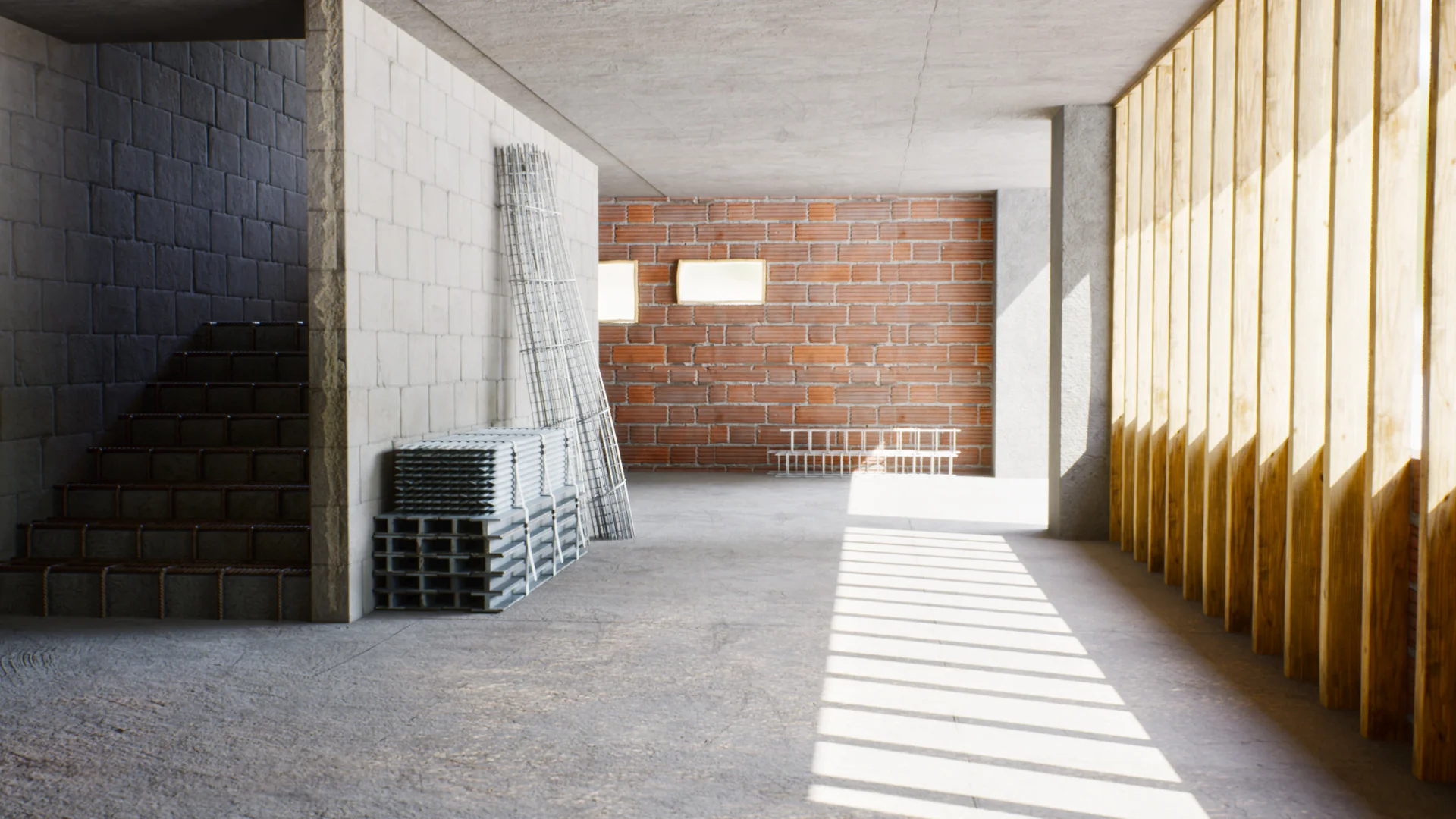
The core material palette relies heavily on cement, concrete, and exposed brick. These foundational building materials give the props an authentic physical presence in modern city maps. Individual units can be aligned neatly in staging areas as fresh pallets of materials or scattered around excavation pits and half-poured slabs as active debris. Because the assets are built to work together modularly, pieces can be repeated, rotated, and stacked to adapt to irregular terrain, sloped urban hillside lots, or tight alleys without producing jarring visual seams.
Working with individual components allows for fine-grained environmental storytelling. A building project is rarely static; it shifts from ground leveling and trenching to masonry, framing, and final finishing. Having a broad selection of discrete props ensures that an environment can show distinct phases of progress within the same district, helping players navigate urban spaces by recognizing the operational state of each lot.
Preconfigured Actor Components and Structural Wall Layouts
Placing dozens of small items by hand across large levels can quickly become a bottleneck in environment production. To streamline dressing large work zones, the set includes five dedicated actor components that serve as ready-to-use construction site examples. These pre-assembled actors combine individual meshes into balanced arrangements, offering instant clusters of equipment, materials, and staging clutter that can be dropped directly into an empty lot or roadside clearing.
Beyond the primary site arrangements, three miscellaneous wall actor components provide modular enclosure and partitioning solutions. Construction sites require clear boundaries, both to block sightlines and to demarcate dangerous ground. These wall components make it straightforward to fence off active digging zones, set up perimeter security lines, or represent structural masonry walls mid-assembly. Level designers can use them to shape player navigation, block off inaccessible geometry, or create natural choke points in competitive multiplayer arenas without relying on artificial invisible barriers.
Using actor components also simplifies scene organization within the engine. Instead of managing hundreds of individual static mesh placements in the level outliner, designers can move, duplicate, or adjust coordinated groups of meshes as single functional entities. This setup makes rapid level blocking practical while leaving room to break open components or layer loose props over top for custom variations.
Surface Detailing and Material Variation Across Props
Believable work environments depend heavily on grime, surface wear, and natural material diversity. Real job sites are covered in dust, spattered mortar, and tracked dirt. To handle this layer of surface detail, the package provides a set of decals tailored for general usage across construction areas. These decals can be projected over fresh concrete, paved asphalt, perimeter walls, and foundational slabs to soften harsh edges, ground placed props into their surrounding terrain, and simulate years of dirt accumulation or recent chemical staining.
In addition to decals, material variation options are included for a selection of the assets. In a large construction level, identical pallets of bricks, stacked cement bags, or structural forms placed repeatedly can break immersion if the textures match perfectly. By providing alternate material setups, the pack allows developers to vary surface tones, distress patterns, and wear across identical meshes. Alternating clean and weathered finishes helps populate extensive worksites without revealing obvious texture tiling patterns.
These surface treatment options become particularly important when matching the set to wider neighborhood environments. When combined with adjacent residential or commercial properties, the material variants ensure that the construction clutter looks like an authentic, messy intrusion into an everyday community rather than a generic backdrop.
Inspecting Construction Assets Across Showcase and Day-Night Maps
Evaluating assets inside dedicated test environments is essential for understanding how materials, geometry, and pivots hold up before integrating them into a production level. The package includes an asset showcase map that lays out all 120 semi-modular meshes, the actor components, and the decal sets in an organized, neutral testing space. This map allows artists to examine object proportions, check material fidelity up close, and understand how the individual modular segments connect.
For testing assets in context, the included playable demonstration map offers full scene walk-throughs under both day and night lighting setups. Testing construction props under shifting lighting conditions is critical because rough materials like unpolished concrete, dry cement, and porous brick react very differently depending on the light angle and intensity. Under bright daylight settings, surface textures and decal edges reveal their detail, allowing designers to check contrast levels and shadow depth across deep recesses in masonry walls.
Under night settings, the same environment highlights how materials respond to localized artificial illumination, such as harsh site work lights, street lamps, or ambient city glow. The demonstration map provides direct insight into how the props cast shadows and bounce light within an active urban neighborhood layout, ensuring that whether a game features dynamic time-of-day cycles or static cinematic lighting, the assets retain their physical grit and depth.
 Industrial
 Cars & Trucks
 Streets