"d037b61901c110d2"{"id":"1002654","slug":"city-environment-megapack-vol-02","title":"City Environment Megapack vol 02","category":"Cities","engine":"5.0+","assetVersion":"","engineVersion":"Engine Version: 5.0+","tag":"Cities","accent":"blue","visual":"city","summary":"Explore modular urban worldbuilding across Japanese streetscapes, Brazilian favelas, and Middle Eastern architecture in City Environment Megapack vol 02.","platform":"Unreal Engine","indexPolicy":"index","publishedAt":"2026-11-16T21:53:15.433Z","updatedAt":"2026-11-16T21:53:15.433Z","sourceNotes":[],"fileContents":[],"compatibility":["Unreal Engine","Engine Version: 5.0+"],"featuredImage":{"alt":"City Environment Megapack vol 02","src":"/wp-content/uploads/published/2026/11/89cfd7016d43-e4118286-0e73-4492-befe-29951273ddfb-bc91e43046.webp"},"fileSizeBytes":18231753417,"hasDownloadLink":true,"downloads":0,"terms":[{"taxonomy":"category","slug":"cities","name":"Cities"}],"galleryImages":[{"src":"/wp-content/uploads/published/2026/11/6cf97b90faa2-8ec41264-ffe5-47dc-8232-acd0645cf4d1-ebaeaf382f.webp","alt":"City Environment Megapack vol 02"},{"src":"/wp-content/uploads/published/2026/11/7ee8db9a66fc-567e4e03-acb8-48de-9b8e-2f271feafad2-41bbd4210d.webp","alt":"City Environment Megapack vol 02"},{"src":"/wp-content/uploads/published/2026/11/20bc7cd87f91-9920c7a0-f45a-4b80-b331-c15a17eb8825-2e2720f71c.webp","alt":"City Environment Megapack vol 02"},{"src":"/wp-content/uploads/published/2026/11/491c77cf07fb-1b4a2270-47c5-4b85-9d9a-3d467c2348fd-5f3fe0ec52.webp","alt":"City Environment Megapack vol 02"},{"src":"/wp-content/uploads/published/2026/11/944bf94d2ae1-61a12d38-3e2f-4947-a584-e9a0296c67c1-15a3176396.webp","alt":"City Environment Megapack vol 02"},{"src":"/wp-content/uploads/published/2026/11/b25f3aebd8ea-7ab8cd45-e617-436c-8542-bb7039068a6a-deb3b64012.webp","alt":"City Environment Megapack vol 02"},{"src":"/wp-content/uploads/published/2026/11/5f87937c647c-0bf2321f-e26b-4b70-a09d-0567e48251d6-358521038b.webp","alt":"City Environment Megapack vol 02"},{"src":"/wp-content/uploads/published/2026/11/c0c7ffa7893b-914f592f-ec84-429e-a8fa-be4e016d4894-b9362662f1.webp","alt":"City Environment Megapack vol 02"},{"src":"/wp-content/uploads/published/2026/11/123346b5fc34-d2fb88db-cf04-4ee5-9b9a-a72e4c2eefff-8786a2f889.webp","alt":"City Environment Megapack vol 02"},{"src":"/wp-content/uploads/published/2026/11/b19853d2c98b-b156920b-10d0-464c-a4db-95e2b23e5103-0e2f7719fb.webp","alt":"City Environment Megapack vol 02"}],"accessPanel":{"kind":"resource","title":"Get this resource","eyebrow":"Free resource","message":"Download this resource in your browser.","fileName":"Content.7z","safetyNote":"Resources are manually reviewed before listing to improve quality and reduce obvious risks.","actionLabel":"Get this resource","resourceType":"Resource archive","versions":[]},"contentHtml":"\u003ch2\u003eRegional Urban Variety in the City Environment Megapack vol 02\u003c/h2\u003e\u003cp\u003eConstructing distinct geographic backdrops often requires fundamentally different structural systems, surface treatments, and prop arrangements. City Environment Megapack vol 02 compiles three major urban settings into a unified collection of modular spaces: modern Japanese streetscapes, dense Brazilian favelas, and regional Middle Eastern architectural districts. Rather than offering isolated set pieces, the pack approaches regional worldbuilding through modular infrastructure, providing the building blocks necessary to assemble expansive city blocks, residential villages, and varied industrial or commercial sectors.\u003c/p\u003e\u003cp\u003eThe modular logic shared across these distinct environments accommodates a wide range of production goals, spanning realistic real-world backdrops, simulation spaces, arid desert outposts, and dense cyberpunk or sci-fi skylines. Designers can establish entire neighborhoods by snapping together modular facades, laying down road and sidewalk networks, and detailing spaces with cultural and utilitarian props tailored to each respective territory.\u003c/p\u003e\u003ch2\u003eTokyo Megapack Modular Frameworks and Street Level Details\u003c/h2\u003e\u003cp\u003eThe Japanese section of the collection, rooted in the Tokyo Megapack framework, focuses entirely on the density and organization of modern Japanese urban settings. Its central organizational pillar is a fully realized demo scene showcasing an assembled Japanese city. This pre-built level provides an immediate template for how individual pieces align, demonstrating the spatial balance between road corridors, pedestrian pathways, and towering structural blocks.\u003c/p\u003e\u003cp\u003eEvery house and building in the Japanese set relies on modular design, enabling structural reconfiguration into anything from narrow residential homes to dense commercial towers. Street-level accuracy is reinforced through dedicated modular sidewalks and asphalt road segments, allowing creators to map out intricate intersections, narrow alleyways, and primary transit arteries. To capture the lived-in realism of a Japanese metropolitan district, the environment provides a substantial inventory of characteristic props that reflect municipal planning, storefront installations, and neighborhood infrastructure. When deployed alongside high-rise skyscraper modules, these assets transition naturally into high-density industrial pockets or illuminated cyberpunk city districts.\u003c/p\u003e\u003ch2\u003eBrazilian Favela Districts with Modular Interiors and Gathering Hubs\u003c/h2\u003e\u003cp\u003eShifting away from paved metropolitan centers, the Brazilian favela section addresses the vertical, unplanned density typical of hillside settlements and informal suburban communities. The architecture here relies on aged, weathered residential structures built with modular versatility. This modular system allows users to stack and interlock homes unpredictably, mirroring the organic growth patterns of real-world favelas and slum neighborhoods.\u003c/p\u003e\u003cp\u003eUnlike exterior-only shells, all houses in this favela kit include interior layouts, split between simple spatial enclosures and more detailed living arrangements. Certain structures feature dedicated collections of household items and interior decorations, allowing seamless transitions from outdoor alleyways directly into furnished living spaces. This interior access supports ground-level exploration, tactical positioning, and narrative storytelling without requiring separate indoor sets.\u003c/p\u003e\u003cp\u003eBeyond basic residential stacks, the favela environment incorporates distinct communal and public zones. These include a dedicated football field and an outdoor concert stage complete with light music staging elements. These focal points allow designers to build active gathering spaces within tight residential boundaries, introducing variety into the vertical landscape of old homes, rusty facades, and communal sports and event clearings.\u003c/p\u003e\u003ch2\u003eMiddle Eastern Architectural Environments for Arid and Historic Settings\u003c/h2\u003e\u003cp\u003eThe Middle Eastern component serves as a universal architectural asset kit designed to capture the structural forms unique to the region. The included buildings, walls, and structural elements reflect architectural conventions typical of Middle Eastern towns, desert outposts, and historical urban sectors like those found throughout Afghanistan and neighboring desert environments.\u003c/p\u003e\u003cp\u003eBecause the architectural style is specific to arid settlements, the assets naturally bridge the gap between rural village layouts and compact desert cities. The structures maintain clean, regional lines that function effectively under intense sunlight or barren desert conditions. When integrated into level design pipelines, this universal framework gives artists the tools to develop military training simulations, historical recreations, or modern urban combat arenas without having to sculpt disparate adobe, plaster, and stone elements from scratch.\u003c/p\u003e\u003ch2\u003eAdapting Modular Assets Across Diverse Level Themes\u003c/h2\u003e\u003cp\u003eBecause the collection spans three culturally and architecturally distinct zones, its components support a broad spectrum of technical and creative disciplines. Level designers can isolate single regional modules to build focused projects—such as an authentic Japanese city corridor or a sprawling hillside favela—or tap into the shared structural logic to create speculative hybrid spaces. The coexistence of modern roads, weathered shanties, arid desert compounds, and high-density towers makes the pack adaptable across multiple project types:\u003c/p\u003e\u003cul\u003e\u003cli\u003eDense cyberpunk and science-fiction levels that integrate Japanese commercial street structures, neon-friendly props, and high-rise skyscraper walls.\u003c/li\u003e\u003cli\u003eTactical combat layouts and open-world survival maps taking advantage of the favela's complex verticality, interlinked rooftops, and accessible residential interiors.\u003c/li\u003e\u003cli\u003eAthletic or narrative simulation sequences framed around the favela concert stage, sports field, and active social areas.\u003c/li\u003e\u003cli\u003eArid simulation scenarios, desert conflict zones, and rural village encounters utilizing authentic Middle Eastern buildings and compound layouts.\u003c/li\u003e\u003cli\u003eEveryday urban exploration projects requiring fully realized roadway systems, sidewalks, and district-defining props straight out of the box.\u003c/li\u003e\u003c/ul\u003e\u003cp\u003eBy relying on modular houses across all included regions and supplementing them with functional road networks, props, and public arenas, the pack provides production-ready kits capable of shifting effortlessly from tight residential interiors to massive metropolitan horizons.\u003c/p\u003e\n\n\u003ch2\u003eExplore Similar Assets\u003c/h2\u003e\n\u003cul\u003e\n\u003cli\u003e\u003ca href=\"https://3dcghub.com/visus-city-vol-2/\" rel=\"noopener noreferrer\"\u003eVisus City Vol 2\u003c/a\u003e\u003c/li\u003e\n\u003cli\u003e\u003ca href=\"https://3dcghub.com/1950s-nyc-environment-megapack-1950s-50s-nycs-nycity-environment-packs-urban/\" rel=\"noopener noreferrer\"\u003e1950s NYC Environment Megapack ( 1950s 50s nycs NYCity Environment Packs Urban )\u003c/a\u003e\u003c/li\u003e\n\u003cli\u003e\u003ca href=\"https://3dcghub.com/miami-club-megapack-miami-miami-club-club/\" rel=\"noopener noreferrer\"\u003eMiami Club Megapack ( Miami Miami Club Club )\u003c/a\u003e\u003c/li\u003e\n\u003cli\u003e\u003ca href=\"https://3dcghub.com/signage-vol-2-town-and-city-nanite-and-low-poly/\" rel=\"noopener noreferrer\"\u003eSignage VOL.2 - Town and City (Nanite and Low Poly)\u003c/a\u003e\u003c/li\u003e\n\u003cli\u003e\u003ca href=\"https://3dcghub.com/visus-city-vol-1/\" rel=\"noopener noreferrer\"\u003eVisus City Vol 1\u003c/a\u003e\u003c/li\u003e\n\u003c/ul\u003e","contentTextLength":6745,"navigation":{"current":35,"total":4611,"previous":{"id":"1002655","slug":"construction-props","title":"Construction PROPS","category":"Industrial","platform":"Unreal Engine","updatedAt":"2026-11-16T21:54:09.323Z"},"next":{"id":"1002653","slug":"brushify-desert-mountains-pack","title":"Brushify - Desert Mountains Pack","category":"Desert","platform":"Unreal Engine","updatedAt":"2026-11-16T21:52:14.584Z"}},"relatedResources":[{"id":"1001712","slug":"visus-city-vol-2","title":"Visus City Vol 2","category":"Cities","engine":"5.4+","assetVersion":"","engineVersion":"Engine Version: 5.4+","tag":"Cities","accent":"blue","visual":"city","summary":"Visus City Vol 2 delivers procedural urban generation, 127 road templates, Packed Level Actors, and interactive setups for Unreal Engine 5.","platform":"Unreal Engine","indexPolicy":"index","publishedAt":"2026-10-14T17:16:38.123Z","updatedAt":"2026-10-14T17:16:38.123Z","sourceNotes":[],"fileContents":[],"compatibility":["Unreal Engine","Engine Version: 5.4+"],"featuredImage":{"alt":"Visus City Vol 2","src":"/wp-content/uploads/published/2026/10/fe41f104ad5d-84c79a54-ecf4-4369-a8c8-b49678f2e637-d208d2da2a.webp"},"fileSizeBytes":840166081,"hasDownloadLink":true,"downloads":1},{"id":"6984","slug":"1950s-nyc-environment-megapack-1950s-50s-nycs-nycity-environment-packs-urban","title":"1950s NYC Environment Megapack ( 1950s 50s nycs NYCity Environment Packs Urban )","category":"Cities","engine":"5.1+","assetVersion":"Engine version: 5.1+","engineVersion":"4.22","tag":"Cities","accent":"blue","visual":"city","summary":"Transform your project with the 1950s NYC Environment Megapack, featuring over 1150 unique meshes and modular building tools. This comprehensive kit is perfect for creating authentic, optimized mid-century urban landscapes.","platform":"Unreal Engine","indexPolicy":"noindex","publishedAt":"2026-02-20T16:30:54.000Z","updatedAt":"2026-04-19T15:56:05.000Z","sourceNotes":[],"fileContents":[],"compatibility":["Unreal Engine","Engine version: 5.1+"],"featuredImage":{"alt":"1950s NYC Environment Megapack ( 1950s 50s nycs NYCity Environment Packs Urban )","src":"https://3dcghub.com/wp-content/uploads/2026/02/79eaf5b3-8ed4-421b-b543-adaa62c01c1e.webp"},"fileSizeBytes":14594423420,"hasDownloadLink":true,"downloads":3},{"id":"27211","slug":"miami-club-megapack-miami-miami-club-club","title":"Miami Club Megapack ( Miami Miami Club Club )","category":"Cities","engine":"5.0+","assetVersion":"Engine version: 5.0+","engineVersion":"5.0","tag":"Cities","accent":"blue","visual":"city","summary":"The Miami Club Megapack starts with a preassembled nightclub scene built from over 784 unique meshes, merged assets, and Blueprints for easier use. It uses Real-time Lumen lighting and supports Nanite and Lumen in Unreal Engine 5.0+, with ULAT included for...","platform":"Unreal Engine","indexPolicy":"noindex","publishedAt":"2026-04-21T17:01:25.000Z","updatedAt":"2026-04-21T17:01:27.000Z","sourceNotes":[],"fileContents":[],"compatibility":["Unreal Engine","Engine version: 5.0+"],"featuredImage":{"alt":"Miami Club Megapack ( Miami Miami Club Club )","src":"https://3dcghub.com/wp-content/uploads/2026/04/146e2f2b5063_33695d1e-a487-4469-8050-c5bb59b89f28.webp"},"fileSizeBytes":14767310092,"hasDownloadLink":true,"downloads":2}]}
Resource screenshots
1 / 10
Cities
City Environment Megapack vol 02
Explore modular urban worldbuilding across Japanese streetscapes, Brazilian favelas, and Middle Eastern architecture in City Environment Megapack vol 02.
Regional Urban Variety in the City Environment Megapack vol 02
Constructing distinct geographic backdrops often requires fundamentally different structural systems, surface treatments, and prop arrangements. City Environment Megapack vol 02 compiles three major urban settings into a unified collection of modular spaces: modern Japanese streetscapes, dense Brazilian favelas, and regional Middle Eastern architectural districts. Rather than offering isolated set pieces, the pack approaches regional worldbuilding through modular infrastructure, providing the building blocks necessary to assemble expansive city blocks, residential villages, and varied industrial or commercial sectors.
The modular logic shared across these distinct environments accommodates a wide range of production goals, spanning realistic real-world backdrops, simulation spaces, arid desert outposts, and dense cyberpunk or sci-fi skylines. Designers can establish entire neighborhoods by snapping together modular facades, laying down road and sidewalk networks, and detailing spaces with cultural and utilitarian props tailored to each respective territory.
Tokyo Megapack Modular Frameworks and Street Level Details
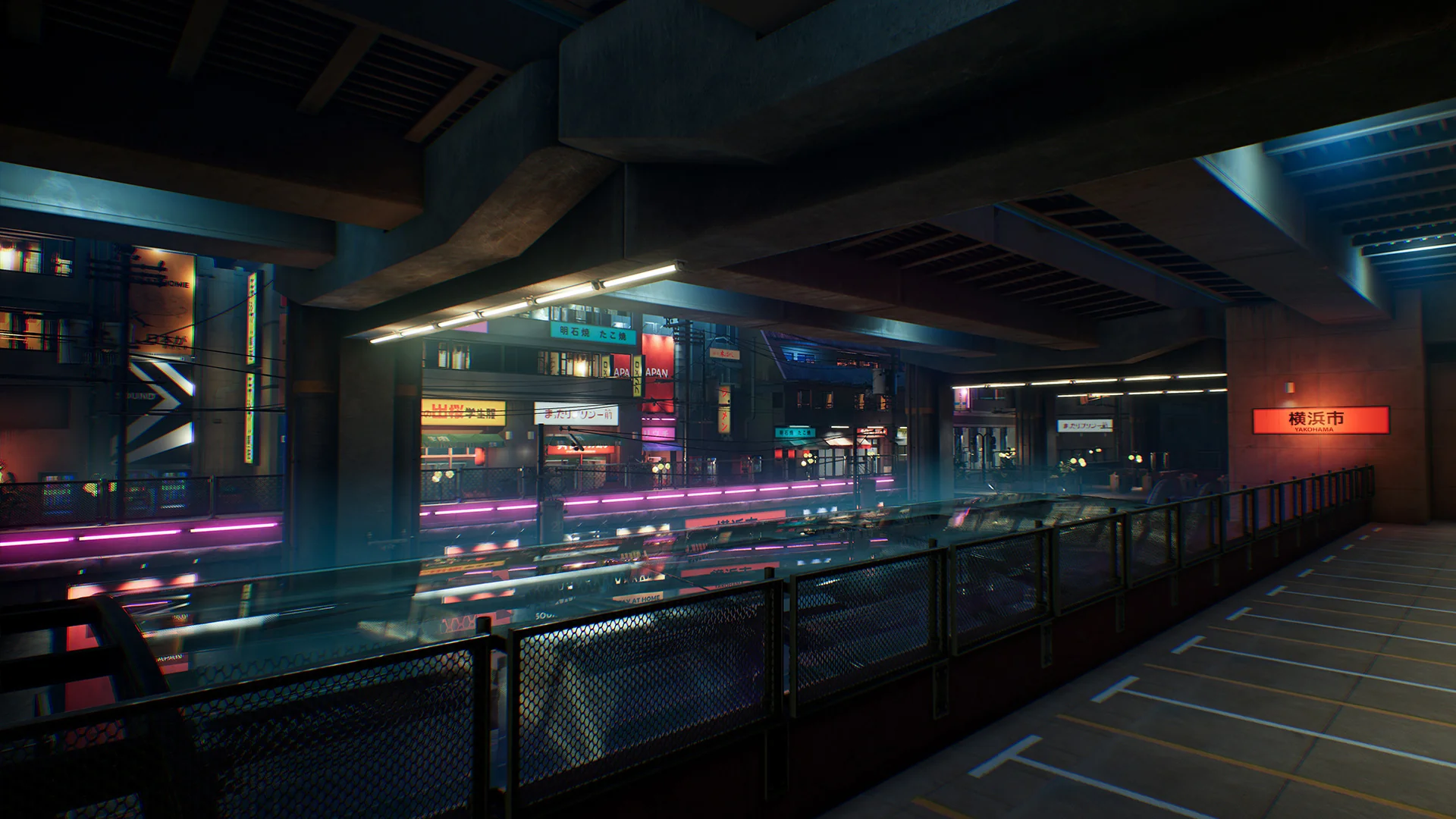
The Japanese section of the collection, rooted in the Tokyo Megapack framework, focuses entirely on the density and organization of modern Japanese urban settings. Its central organizational pillar is a fully realized demo scene showcasing an assembled Japanese city. This pre-built level provides an immediate template for how individual pieces align, demonstrating the spatial balance between road corridors, pedestrian pathways, and towering structural blocks.
Every house and building in the Japanese set relies on modular design, enabling structural reconfiguration into anything from narrow residential homes to dense commercial towers. Street-level accuracy is reinforced through dedicated modular sidewalks and asphalt road segments, allowing creators to map out intricate intersections, narrow alleyways, and primary transit arteries. To capture the lived-in realism of a Japanese metropolitan district, the environment provides a substantial inventory of characteristic props that reflect municipal planning, storefront installations, and neighborhood infrastructure. When deployed alongside high-rise skyscraper modules, these assets transition naturally into high-density industrial pockets or illuminated cyberpunk city districts.
Brazilian Favela Districts with Modular Interiors and Gathering Hubs
Shifting away from paved metropolitan centers, the Brazilian favela section addresses the vertical, unplanned density typical of hillside settlements and informal suburban communities. The architecture here relies on aged, weathered residential structures built with modular versatility. This modular system allows users to stack and interlock homes unpredictably, mirroring the organic growth patterns of real-world favelas and slum neighborhoods.
Unlike exterior-only shells, all houses in this favela kit include interior layouts, split between simple spatial enclosures and more detailed living arrangements. Certain structures feature dedicated collections of household items and interior decorations, allowing seamless transitions from outdoor alleyways directly into furnished living spaces. This interior access supports ground-level exploration, tactical positioning, and narrative storytelling without requiring separate indoor sets.
Beyond basic residential stacks, the favela environment incorporates distinct communal and public zones. These include a dedicated football field and an outdoor concert stage complete with light music staging elements. These focal points allow designers to build active gathering spaces within tight residential boundaries, introducing variety into the vertical landscape of old homes, rusty facades, and communal sports and event clearings.
Middle Eastern Architectural Environments for Arid and Historic Settings
The Middle Eastern component serves as a universal architectural asset kit designed to capture the structural forms unique to the region. The included buildings, walls, and structural elements reflect architectural conventions typical of Middle Eastern towns, desert outposts, and historical urban sectors like those found throughout Afghanistan and neighboring desert environments.
Because the architectural style is specific to arid settlements, the assets naturally bridge the gap between rural village layouts and compact desert cities. The structures maintain clean, regional lines that function effectively under intense sunlight or barren desert conditions. When integrated into level design pipelines, this universal framework gives artists the tools to develop military training simulations, historical recreations, or modern urban combat arenas without having to sculpt disparate adobe, plaster, and stone elements from scratch.
Adapting Modular Assets Across Diverse Level Themes
Because the collection spans three culturally and architecturally distinct zones, its components support a broad spectrum of technical and creative disciplines. Level designers can isolate single regional modules to build focused projects—such as an authentic Japanese city corridor or a sprawling hillside favela—or tap into the shared structural logic to create speculative hybrid spaces. The coexistence of modern roads, weathered shanties, arid desert compounds, and high-density towers makes the pack adaptable across multiple project types:
Dense cyberpunk and science-fiction levels that integrate Japanese commercial street structures, neon-friendly props, and high-rise skyscraper walls.
Tactical combat layouts and open-world survival maps taking advantage of the favela's complex verticality, interlinked rooftops, and accessible residential interiors.
Athletic or narrative simulation sequences framed around the favela concert stage, sports field, and active social areas.
Arid simulation scenarios, desert conflict zones, and rural village encounters utilizing authentic Middle Eastern buildings and compound layouts.
Everyday urban exploration projects requiring fully realized roadway systems, sidewalks, and district-defining props straight out of the box.
By relying on modular houses across all included regions and supplementing them with functional road networks, props, and public arenas, the pack provides production-ready kits capable of shifting effortlessly from tight residential interiors to massive metropolitan horizons.
 Cities
 Cities
 Cities