"2596237520a17fbf"{"id":"1002901","slug":"compact-email-service","title":"Compact Email Service [Email, Notification, Verification, Remote Config...]","category":"Engine Tools","engine":"4.27 - 5.3","assetVersion":"Asset Version: 1.0","engineVersion":"Engine Version: 4.27 - 5.3","tag":"Engine Tools","accent":"blue","visual":"mech","summary":"Send standard and verification emails directly from Unreal Engine Blueprints without configuring a dedicated mail server using Compact Email Service.","platform":"Unreal Engine","indexPolicy":"index","publishedAt":"2026-11-21T04:48:23.676Z","updatedAt":"2026-11-21T05:22:33.129Z","sourceNotes":[],"fileContents":[],"compatibility":["Unreal Engine","Asset Version: 1.0","Engine Version: 4.27 - 5.3"],"featuredImage":{"alt":"Compact Email Service","src":"/wp-content/uploads/published/2026/11/7d3b6d2daee7-48bc5121-d1b7-4f7d-b85c-82dd48dd2c4e-e5d42d9311.webp"},"fileSizeBytes":46677839,"hasDownloadLink":true,"downloads":0,"terms":[{"taxonomy":"category","slug":"engine-tools-tools-and-plugins","name":"Engine Tools"}],"galleryImages":[{"src":"/wp-content/uploads/published/2026/11/e82b6231f0e8-e00e1da2-bcca-441e-9cda-bdd622cf3785-f9dfef0cbc.webp","alt":"Compact Email Service"},{"src":"/wp-content/uploads/published/2026/11/208540844d68-51f754de-0f9a-4013-994c-9e571b5f6cd8-5a7e084f3e.webp","alt":"Compact Email Service"},{"src":"/wp-content/uploads/published/2026/11/ad0b62d8a5ea-d6178663-0e64-4035-ac0f-6737ed4f896b-1022cd9b61.webp","alt":"Compact Email Service"},{"src":"/wp-content/uploads/published/2026/11/853933039159-6724dabf-d836-4f2d-ab31-71b76ffcb6bd-575da78124.webp","alt":"Compact Email Service"},{"src":"/wp-content/uploads/published/2026/11/2e0dc6089ec1-b19d50db-8ffe-4372-aa1a-f53e952d2a02-901bbb3549.webp","alt":"Compact Email Service"}],"contentHtml":"\u003cp\u003eTriggering an automated email directly from an interactive application typically requires bridging the game engine to an external web server, maintaining custom Simple Mail Transfer Protocol (SMTP) daemons, or establishing dedicated backend infrastructure. Compact Email Service alters this setup for Unreal Engine developers by packaging outbound email dispatching directly into the local project environment. By removing the need to configure and maintain an independent mail server, project logic running inside the engine can trigger external notifications, player alerts, and account checks directly from the visual scripting layer.\u003c/p\u003e\u003ch2\u003eDispatching Operations Through the Compact Email Service Architecture\u003c/h2\u003e\u003cp\u003eRunning a dedicated mail server introduces continuous operational overhead into game production and deployment. Development teams must normally handle host configuration, network routing, server security certificates, firewall rules, and persistent service monitoring simply to confirm a player's email address or pass a system alert outside the game client. Compact Email Service bypasses this infrastructure requirement entirely. The plugin provides the capability to transmit outgoing electronic messages directly from Unreal Engine without demanding server-side mail stack provisioning or complex external routing setups.\u003c/p\u003e\u003cp\u003eThe operational core of the tool centers on a single Blueprint function. Rather than spreading communication logic across multiple asynchronous callbacks, authentication handshakes, and network sockets, developers can drop one node directly into an Event Graph. Through this single entry point, the engine can execute both standard email deliveries and automated verification dispatches. The visual scripting interface accepts all necessary operational parameters directly through node pins, allowing developers to connect strings from user interface text boxes, dynamic gameplay events, or stored profile variables without writing intermediate glue code.\u003c/p\u003e\u003cp\u003eBecause the functionality lives inside a standard Blueprint node, it integrates cleanly into common Unreal Engine UI pipelines built with Unreal Motion Graphics (UMG). When a user inputs an address during an account creation or registration screen, an event graph can route that input string straight into the sending function. There is no intermediate step requiring a custom game server to receive the request, process the text, and make a separate web request to an email API. The communication logic remains completely contained within the engine's standard visual scripting structure.\u003c/p\u003e\u003ch2\u003eVerification Workflows and Parameter Configuration\u003c/h2\u003e\u003cp\u003eOne of the primary operations handled by the plugin is sending verification emails. Online games, software tools, and interactive experiences frequently require identity confirmation to tie game progress, digital access, or community communication to a real user. Setting up this behavior with Compact Email Service requires minimal node graph complexity because verification handling is built directly into the primary sending workflow.\u003c/p\u003e\u003cp\u003eDevelopers can tailor the structure of verification dispatches to match specific security requirements:\u003c/p\u003e\u003cul\u003e\u003cli\u003e\u003cstrong\u003eVerification Code Length:\u003c/strong\u003e The node allows explicit configuration of the length of the generated security code. Projects needing rapid, user-friendly entry can opt for shorter numeric PIN sequences, while systems requiring stronger validation barriers can set longer strings.\u003c/li\u003e\u003cli\u003e\u003cstrong\u003eCustom Email Content:\u003c/strong\u003e Message bodies can be populated dynamically. Game developers can combine static instructional strings with dynamic user data, ensuring the recipient receives clear context regarding why the verification code was generated.\u003c/li\u003e\u003cli\u003e\u003cstrong\u003eConfigurable Reply Address:\u003c/strong\u003e The function exposes parameters to define the designated reply email address. This ensures that any incoming responses from players or end users route back to an active support or operational mailbox rather than getting lost in transmission.\u003c/li\u003e\u003c/ul\u003e\u003cp\u003eBy housing verification code generation and delivery in a unified node call, the tool minimizes the custom state-checking logic developers must write. Once the function fires, the generated code and the formatted message are processed simultaneously, allowing the frontend game logic to transition directly into an awaiting-verification state inside the player interface.\u003c/p\u003e\u003ch2\u003eEnforcing Valid Email Addresses and Regulatory Compliance\u003c/h2\u003e\u003cp\u003eWhile the plugin simplifies the technical friction of sending messages from Unreal Engine, network communication remains strictly governed by modern email transit regulations. A critical operational rule within the plugin prohibits the use of fake, placeholder, or non-existent sender addresses. Historically, software tests often utilized mock strings such as dummy addresses ending in example domains or unregistered accounts. Under the operational requirements of this service, using an address like noreply@example.com is strictly disallowed.\u003c/p\u003e\u003cp\u003eThis restriction exists to comply with modern anti-abuse standards, anti-spam legislation, and carrier delivery protocols. When outbound mail services push traffic through standard web routes, intermediate transfer agents and recipient servers evaluate domain records, sender reputations, and mailbox validity. Transmitting messages from non-existent origins causes immediate delivery failures, automated bounce notifications, and severe reputation penalties across mail network routes. To ensure messages reach their destination, developers must configure the sender identity using a legitimate, registered, and functioning email address that actually exists on an active domain.\u003c/p\u003e\u003cp\u003eAdhering to this requirement is straightforward in production environments. Developers should establish an authentic operational domain or verified email inbox prior to deploying outbound messaging logic in their game graphs. Ensuring the sending address is completely valid guarantees that verification codes and alerts clear filtering systems and reach player inboxes without silent rejections or domain blocks.\u003c/p\u003e\u003ch2\u003eHandling In-Game Notification Delivery from Unreal Engine\u003c/h2\u003e\u003cp\u003eBeyond security verification routines, the ability to send normal emails directly from Unreal Engine opens up practical administrative and gameplay-facing communication options. Standard emails sent through the system can serve as direct notification pipelines between the game client and administrative teams, or between the game world and the player's personal inbox.\u003c/p\u003e\u003cp\u003eFor instance, developers testing internal builds can wire bug-reporting widgets directly to the plugin's Blueprint node. When a QA tester encounters an issue, an in-game form can collect system details, player coordinates, and error text, packaging that information into an email sent straight to an internal team address. Because the reply address and email body are dynamically configurable within Blueprints, the form can automatically inject the tester's contact details into the reply parameter, simplifying subsequent technical follow-ups.\u003c/p\u003e\u003cp\u003eSimilarly, projects that feature long-form simulation, asynchronous gameplay, or remote player alerts can use the standard email function to ping users when specific conditions are met. Because the system operates entirely within the native Unreal Engine Blueprint framework, designers do not need to write custom C++ wrappers or maintain third-party network plugins to handle straightforward outbound text notifications.\u003c/p\u003e\u003cp\u003eTeams seeking an uncomplicated method to send authentication codes and automated updates directly from Unreal Engine will find that Compact Email Service eliminates the typical backend server requirements. By pairing single-node execution with strict adherence to legitimate email address compliance, the plugin provides a reliable, self-contained mechanism for handling player communication straight from the project graph.\u003c/p\u003e\n\n\u003ch2\u003eRelated Resources Worth Checking\u003c/h2\u003e\n\u003cul\u003e\n\u003cli\u003e\u003ca href=\"https://3dcghub.com/ios-native-goodies/\" rel=\"noopener noreferrer\"\u003eiOS Native Goodies\u003c/a\u003e\u003c/li\u003e\n\u003cli\u003e\u003ca href=\"https://3dcghub.com/offline-speech-recognition/\" rel=\"noopener noreferrer\"\u003eOffline Speech Recognition\u003c/a\u003e\u003c/li\u003e\n\u003cli\u003e\u003ca href=\"https://3dcghub.com/compact-login-system/\" rel=\"noopener noreferrer\"\u003eCompact Login System\u003c/a\u003e\u003c/li\u003e\n\u003cli\u003e\u003ca href=\"https://3dcghub.com/play-services-goodies/\" rel=\"noopener noreferrer\"\u003ePlay Services Goodies\u003c/a\u003e\u003c/li\u003e\n\u003cli\u003e\u003ca href=\"https://3dcghub.com/firebase-goodies/\" rel=\"noopener noreferrer\"\u003eFirebase Goodies\u003c/a\u003e\u003c/li\u003e\n\u003c/ul\u003e","contentTextLength":7994,"navigation":{"current":19,"total":4839,"previous":{"id":"25066","slug":"directexcel","title":"DirectExcel","category":"Engine Tools","platform":"Unreal Engine","updatedAt":"2026-11-21T06:25:47.725Z"},"next":{"id":"1002904","slug":"cinematic-bike-rig-motorcycle-rigging-and-animation-blueprint","title":"Cinematic Bike Rig: Motorcycle Rigging \u0026 Animation Blueprint","category":"Procedural Systems","platform":"Unreal Engine","updatedAt":"2026-11-21T05:08:18.415Z"}},"relatedResources":[{"id":"1002892","slug":"easyfirebase-pro","title":"EasyFirebase Pro","category":"Engine Tools","engine":"4.27","assetVersion":"Asset Version: 1.9.7","engineVersion":"Engine Version: 4.27","tag":"Engine Tools","accent":"blue","visual":"mech","summary":"Explore EasyFirebase Pro for integrating Firebase Auth, Realtime Database, Analytics, Remote Config, Messaging, and Crashlytics across desktop and mobile.","platform":"Unreal Engine","indexPolicy":"index","publishedAt":"2026-11-21T02:01:18.104Z","updatedAt":"2026-11-21T02:01:18.104Z","sourceNotes":[],"fileContents":[],"compatibility":["Unreal Engine","Asset Version: 1.9.7","Engine Version: 4.27"],"featuredImage":{"alt":"EasyFirebase Pro","src":"/wp-content/uploads/published/2026/11/306ad41e579c-8f56bd31-882b-497f-add7-d59618c3a034-e663ba4c80.webp"},"fileSizeBytes":162602615,"hasDownloadLink":true,"downloads":0},{"id":"25066","slug":"directexcel","title":"DirectExcel","category":"Engine Tools","engine":"4.27, 5.0 - 5.4, 5.6 - 5.7","assetVersion":"Asset Version: 3.3 - 3.5","engineVersion":"Engine Version: 4.27, 5.0 - 5.4, 5.6 - 5.7","tag":"Engine Tools","accent":"blue","visual":"luts","summary":"DirectExcel connects Unreal projects to Excel files through Blueprints and C++, letting developers read and write sheet data without converting it into CSV first. It also handles sheet editing, cell values, appearance data, and file-change notifications for...","platform":"Unreal Engine","indexPolicy":"index","publishedAt":"2026-04-18T16:40:31.000Z","updatedAt":"2026-11-21T06:25:47.725Z","sourceNotes":[],"fileContents":[],"compatibility":["Unreal Engine","Asset Version: 3.3 - 3.5","Engine Version: 4.27, 5.0 - 5.4, 5.6 - 5.7"],"featuredImage":{"alt":"DirectExcel","src":"https://3dcghub.com/wp-content/uploads/2026/04/0a2fd4260f89_1d6b08b4-7174-4f78-bfec-17b20c8fa55e.webp"},"fileSizeBytes":235750225,"hasDownloadLink":true,"downloads":0},{"id":"1002886","slug":"ios-native-goodies","title":"iOS Native Goodies","category":"Engine Tools","engine":"4.26","assetVersion":"Asset Version: 1.5.1","engineVersion":"Engine Version: 4.26","tag":"Engine Tools","accent":"blue","visual":"mech","summary":"Integrate native iOS UI, camera capture, MessageUI email, haptic feedback, and system pickers into Unreal Engine projects via Blueprints.","platform":"Unreal Engine","indexPolicy":"index","publishedAt":"2026-11-21T01:54:21.877Z","updatedAt":"2026-11-21T01:54:21.877Z","sourceNotes":[],"fileContents":[],"compatibility":["Unreal Engine","Asset Version: 1.5.1","Engine Version: 4.26"],"featuredImage":{"alt":"iOS Native Goodies","src":"/wp-content/uploads/published/2026/11/c432793c5950-c3dd9e78-9a46-413f-8c8b-babb9656a56f-48a93dc759.webp"},"fileSizeBytes":20199127,"hasDownloadLink":true,"downloads":0}]}
Resource screenshots
1 / 5
Join our channel
Follow 3DCGHUB on Telegram for new resource drops, migration updates, and community notices.
Triggering an automated email directly from an interactive application typically requires bridging the game engine to an external web server, maintaining custom Simple Mail Transfer Protocol (SMTP) daemons, or establishing dedicated backend infrastructure. Compact Email Service alters this setup for Unreal Engine developers by packaging outbound email dispatching directly into the local project environment. By removing the need to configure and maintain an independent mail server, project logic running inside the engine can trigger external notifications, player alerts, and account checks directly from the visual scripting layer.
Dispatching Operations Through the Compact Email Service Architecture
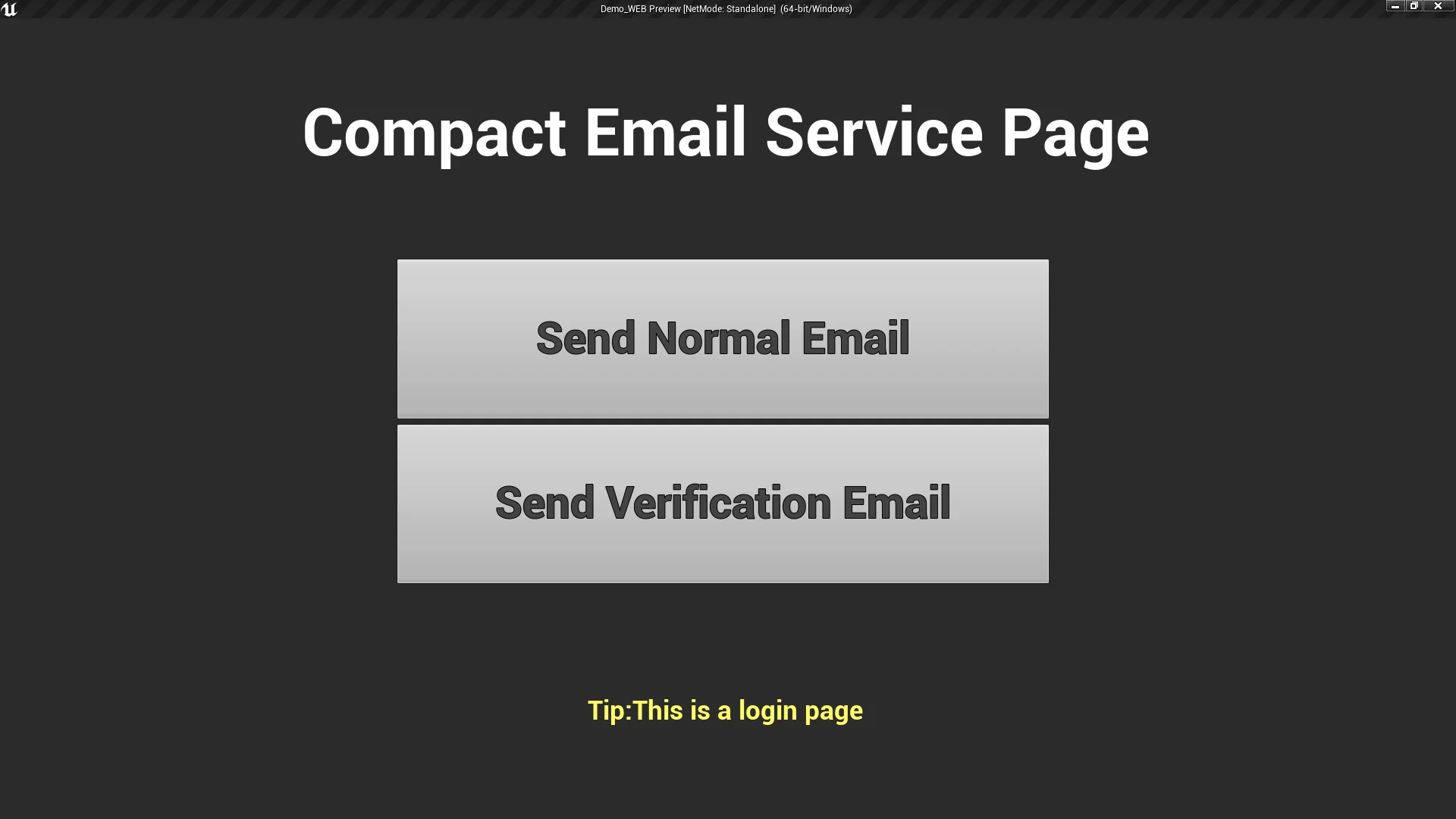
Running a dedicated mail server introduces continuous operational overhead into game production and deployment. Development teams must normally handle host configuration, network routing, server security certificates, firewall rules, and persistent service monitoring simply to confirm a player's email address or pass a system alert outside the game client. Compact Email Service bypasses this infrastructure requirement entirely. The plugin provides the capability to transmit outgoing electronic messages directly from Unreal Engine without demanding server-side mail stack provisioning or complex external routing setups.
The operational core of the tool centers on a single Blueprint function. Rather than spreading communication logic across multiple asynchronous callbacks, authentication handshakes, and network sockets, developers can drop one node directly into an Event Graph. Through this single entry point, the engine can execute both standard email deliveries and automated verification dispatches. The visual scripting interface accepts all necessary operational parameters directly through node pins, allowing developers to connect strings from user interface text boxes, dynamic gameplay events, or stored profile variables without writing intermediate glue code.
Because the functionality lives inside a standard Blueprint node, it integrates cleanly into common Unreal Engine UI pipelines built with Unreal Motion Graphics (UMG). When a user inputs an address during an account creation or registration screen, an event graph can route that input string straight into the sending function. There is no intermediate step requiring a custom game server to receive the request, process the text, and make a separate web request to an email API. The communication logic remains completely contained within the engine's standard visual scripting structure.
Verification Workflows and Parameter Configuration
One of the primary operations handled by the plugin is sending verification emails. Online games, software tools, and interactive experiences frequently require identity confirmation to tie game progress, digital access, or community communication to a real user. Setting up this behavior with Compact Email Service requires minimal node graph complexity because verification handling is built directly into the primary sending workflow.
Developers can tailor the structure of verification dispatches to match specific security requirements:
Verification Code Length: The node allows explicit configuration of the length of the generated security code. Projects needing rapid, user-friendly entry can opt for shorter numeric PIN sequences, while systems requiring stronger validation barriers can set longer strings.
Custom Email Content: Message bodies can be populated dynamically. Game developers can combine static instructional strings with dynamic user data, ensuring the recipient receives clear context regarding why the verification code was generated.
Configurable Reply Address: The function exposes parameters to define the designated reply email address. This ensures that any incoming responses from players or end users route back to an active support or operational mailbox rather than getting lost in transmission.
By housing verification code generation and delivery in a unified node call, the tool minimizes the custom state-checking logic developers must write. Once the function fires, the generated code and the formatted message are processed simultaneously, allowing the frontend game logic to transition directly into an awaiting-verification state inside the player interface.
Enforcing Valid Email Addresses and Regulatory Compliance
While the plugin simplifies the technical friction of sending messages from Unreal Engine, network communication remains strictly governed by modern email transit regulations. A critical operational rule within the plugin prohibits the use of fake, placeholder, or non-existent sender addresses. Historically, software tests often utilized mock strings such as dummy addresses ending in example domains or unregistered accounts. Under the operational requirements of this service, using an address like noreply@example.com is strictly disallowed.
This restriction exists to comply with modern anti-abuse standards, anti-spam legislation, and carrier delivery protocols. When outbound mail services push traffic through standard web routes, intermediate transfer agents and recipient servers evaluate domain records, sender reputations, and mailbox validity. Transmitting messages from non-existent origins causes immediate delivery failures, automated bounce notifications, and severe reputation penalties across mail network routes. To ensure messages reach their destination, developers must configure the sender identity using a legitimate, registered, and functioning email address that actually exists on an active domain.
Adhering to this requirement is straightforward in production environments. Developers should establish an authentic operational domain or verified email inbox prior to deploying outbound messaging logic in their game graphs. Ensuring the sending address is completely valid guarantees that verification codes and alerts clear filtering systems and reach player inboxes without silent rejections or domain blocks.
Handling In-Game Notification Delivery from Unreal Engine
Beyond security verification routines, the ability to send normal emails directly from Unreal Engine opens up practical administrative and gameplay-facing communication options. Standard emails sent through the system can serve as direct notification pipelines between the game client and administrative teams, or between the game world and the player's personal inbox.
For instance, developers testing internal builds can wire bug-reporting widgets directly to the plugin's Blueprint node. When a QA tester encounters an issue, an in-game form can collect system details, player coordinates, and error text, packaging that information into an email sent straight to an internal team address. Because the reply address and email body are dynamically configurable within Blueprints, the form can automatically inject the tester's contact details into the reply parameter, simplifying subsequent technical follow-ups.
Similarly, projects that feature long-form simulation, asynchronous gameplay, or remote player alerts can use the standard email function to ping users when specific conditions are met. Because the system operates entirely within the native Unreal Engine Blueprint framework, designers do not need to write custom C++ wrappers or maintain third-party network plugins to handle straightforward outbound text notifications.
Teams seeking an uncomplicated method to send authentication codes and automated updates directly from Unreal Engine will find that Compact Email Service eliminates the typical backend server requirements. By pairing single-node execution with strict adherence to legitimate email address compliance, the plugin provides a reliable, self-contained mechanism for handling player communication straight from the project graph.
 Engine Tools
 Engine Tools
 Engine Tools