"6c6413bef81af556"{"id":"1000803","slug":"close-combat-swordsman","title":"Close Combat: Swordsman","category":"Gameplay Features","engine":"5.0+","assetVersion":"","engineVersion":"Engine Version: 5.0+","tag":"Gameplay Features","accent":"blue","visual":"mech","summary":"Close Combat: Swordsman builds a combat, movement, leveling, and skill template for action games, RPGs, slashers, and fighting games with melee swordplay system","platform":"Unreal Engine","publishedAt":"2026-07-30T23:17:13.049Z","updatedAt":"2026-07-30T23:17:13.049Z","sourceNotes":[],"fileContents":[],"compatibility":["Unreal Engine","Engine Version: 5.0+"],"featuredImage":{"alt":"Close Combat: Swordsman","src":"/wp-content/uploads/published/2026/07/538fb59b9a20-d1fddabc-3782-4bdd-83c2-39e1f39f2c83-1d9aab6c4b.webp"},"hasDownloadLink":true,"downloads":1,"terms":[{"taxonomy":"category","slug":"gameplay-features","name":"Gameplay Features"}],"galleryImages":[{"src":"/wp-content/uploads/published/2026/07/94c649cc650e-94e5c519-c961-4393-9808-2ffa1f5b38ea-c0d3ce0b89.webp","alt":"Close Combat: Swordsman"},{"src":"/wp-content/uploads/published/2026/07/4c73a41b4b1e-706934f7-4654-450b-b6c8-0cf5bb6afc33-a03a6cb458.webp","alt":"Close Combat: Swordsman"},{"src":"/wp-content/uploads/published/2026/07/44a28e6adeaa-27051519-c198-4b47-8b78-7ede7ca2a1ae-aeb298fcb9.webp","alt":"Close Combat: Swordsman"},{"src":"/wp-content/uploads/published/2026/07/d819ff0f5ec4-b32739ee-37d0-4630-829a-8bc2139395cd-0392fcc872.webp","alt":"Close Combat: Swordsman"},{"src":"/wp-content/uploads/published/2026/07/a55368a1ec24-9af0f85a-6af2-4182-b06c-38470d717f28-b021d0d4ac.webp","alt":"Close Combat: Swordsman"},{"src":"/wp-content/uploads/published/2026/07/f5ad87f48c29-421a84dc-6f1b-44a0-999d-cff4bcc0f81d-1501f9d111.webp","alt":"Close Combat: Swordsman"}],"accessPanel":{"kind":"resource","title":"Download this resource","eyebrow":"Free Download","message":"Log in or create a free account to start your download.","fileName":"CloseCombatSwordsman.7z","safetyNote":"Resources are manually reviewed before listing to improve quality and reduce obvious risks.","actionLabel":"Download Free","resourceType":"Resource archive"},"contentHtml":"\u003cp\u003eWhen a prototype needs a sword-wielding protagonist who can string together attacks, level up, and use distinct skills, starting from a blank Blueprint graph rarely gets a team to a playable vertical slice quickly. \u003cem\u003eClose Combat: Swordsman\u003c/em\u003e positions itself as that starting point. The project ships with the mechanical backbone a melee-heavy game demands: a combat system, a character movement system, a level-up management layer, and a character skill system, all addressed directly to action games, RPGs, slashers, and fighting games.\u003c/p\u003e\n\n\u003cp\u003eFor developers building around armed melee encounters, that grouping matters. Instead of wiring a health component, an attack trace, a momentum handler, and an XP curve independently, the template folds them into a unified structure calibrated to genres where close-range weapon hits drive the core loop. A slasher prototype can lean on the combat system for responsive hit reactions. An action RPG can extend the leveling and skill frameworks into a progression tree. A fighting-game prototype can use the same movement and combat primitives for a grounded duel with fewer external dependencies.\u003c/p\u003e\n\n\u003ch2\u003eCombat and Skill Systems Framing the Melee Loop\u003c/h2\u003e\n\u003cp\u003eAt the center of the project sits a dedicated combat system paired with a character skill system. Four genre archetypes are addressed directly: action games, RPGs, slashers, and fighting games. Each of those categories shares a fundamental requirement, which is reliable close-range strike resolution. A swordsman template needs to translate player input into readable melee behavior, and the bundled combat and skill systems provide that express lane.\u003c/p\u003e\n\n\u003cp\u003eThe skill system gives the character a structure for active abilities. Rather than bolting abilities onto a movement capsule after the fact, developers can treat skills as part of the combat identity from the earliest prototype phase. This narrows the gap between a functional prototype and a shippable combat feel.\u003c/p\u003e\n\n\u003cp\u003eA system for character movement runs alongside the combat layer. In sword-based gameplay, attack reach, spacing, and cancel windows are often tied to how the character approaches and retreats. Having movement handled as part of the same template reduces the integration cost of getting an attack animation to feel connected to its input rather than floating above an unrelated locomotion setup.\u003c/p\u003e\n\n\u003cp\u003eNot every prototype stays small. The level-up management system lets a project grow from a single-encounter demo into something with progression. Experience, thresholds, and advance mechanics are accounted for, which previews how a character might evolve across a longer action RPG or slasher session rather than peaking at one combat encounter.\u003c/p\u003e\n\n\u003ch2\u003eMoving from Swords to Fists with Close Combat: Fighter\u003c/h2\u003e\n\u003cp\u003eNot every fight scene belongs to a weapon-wielding hero. For situations that call for punches and grappling instead of blade arcs, the project connects to a hand-to-hand counterpart. \u003cem\u003eClose Combat: Fighter\u003c/em\u003e is described as fully compatible with the \u003cem\u003eSwordsman\u003c/em\u003e release, offering developers an analogous baseline for unarmed encounters.\u003c/p\u003e\n\n\u003cp\u003eThat compatibility has a practical studio effect. A team can build a swordsman-focused action game and later introduce a brawler sequence or an unarmed enemy variant without replacing the underlying framework. Because both packages share a design lineage, the hand-to-hand version slots into the same combat and movement assumptions rather than forcing a parallel codebase.\u003c/p\u003e\n\n\u003cp\u003eIt is noted separately that \u003cem\u003eClose Combat: Fighter\u003c/em\u003e is distributed separately. That keeps the initial \u003cem\u003eSwordsman\u003c/em\u003e template focused on armed melee for developers who only need swordplay, while leaving a clear expansion path for those building wider martial-arts scope.\u003c/p\u003e\n\n\u003ch2\u003eSupporting Animation and Interaction Scope Beyond Core Combat\u003c/h2\u003e\n\u003cp\u003eFor developers who need to populate a world around the combat template, additional projects are referenced covering a range of animation needs. The listed animation categories include interactions, car mechanics, magic, skills, and additional melee content. These external libraries give teams resources for the non-combat beats a playable level requires.\u003c/p\u003e\n\n\u003cp\u003eAn action game built on \u003cem\u003eSwordsman\u003c/em\u003e might need a protagonist who can swing a sword, pause to open a door, enter a vehicle to traverse a level, and cast a spell to stagger distant enemies. Pulling from interaction, car, and magic animation sets keeps the gameplay presentation coherent when scenes shift between armed melee and general world activity.\u003c/p\u003e\n\n\u003cp\u003eThe tags attached to the project reinforce this scope. \u003cem\u003eStory\u003c/em\u003e, \u003cem\u003eFighter\u003c/em\u003e, \u003cem\u003eEffect\u003c/em\u003e, \u003cem\u003eFighting\u003c/em\u003e, \u003cem\u003eKnight\u003c/em\u003e, \u003cem\u003eCombat\u003c/em\u003e, \u003cem\u003eSword\u003c/em\u003e, \u003cem\u003eMelee\u003c/em\u003e, and \u003cem\u003eBlueprint\u003c/em\u003e map directly to the gameplay situations the template supports. \u003cem\u003eEffect\u003c/em\u003e and \u003cem\u003eKnight\u003c/em\u003e suggest a presentation leaning toward visual flair and historical armed combat. \u003cem\u003eStory\u003c/em\u003e and \u003cem\u003eFighting\u003c/em\u003e pull the focus toward narrative-driven slashers or duel-centric titles. \u003cem\u003eBlueprint\u003c/em\u003e grounds the package as a node-based Unreal Engine project rather than a passive content dump developers must rewire in C++.\u003c/p\u003e\n\n\u003ch2\u003ePrototyping Multi-Genre Ideas Within One Framework\u003c/h2\u003e\n\u003cp\u003eSeveral production pathways suit this template. A solo developer assembling a slasher pitch can use the combat and movement systems to get responsive hit detection working within days. A small RPG team can rely on the leveling and skill systems to stand up a basic progression curve without rebuilding those subsystems from scratch.\u003c/p\u003e\n\n\u003cp\u003eFighting-game creators benefit as well. A template that already manages close-range strikes and character skills reduces the friction of prototyping a duel-ready character. Whether the project stays a one-on-one fighter or grows into an arena combat concept, the same foundation supports it.\u003c/p\u003e\n\n\u003cp\u003eAn action RPG stands out as the widest fit. Sword-based combat, level-up management, and a skill system cover three of the genre's most visible systems. Developers can focus on content creation, encounter design, and polish rather than rebuilding foundational systems. When unarmed encounters enter the design as enemies, cutscenes, or alternate player modes, the \u003cem\u003eClose Combat: Fighter\u003c/em\u003e companion is available as a matched extension.\u003c/p\u003e\n\n\u003ch3\u003ePractical Takeaway for Teams Choosing This Template\u003c/h3\u003e\n\u003cp\u003e\u003cem\u003eClose Combat: Swordsman\u003c/em\u003e is built for developers who need a melee combat foundation without resigning themselves to wiring one from empty nodes. The template's value is structural: combat, movement, leveling, and skills are unified pieces of a single starting Blueprint project rather than disconnected plugins waiting for a developer to resolve their dependencies.\u003c/p\u003e\n\n\u003cp\u003eSmall teams and solo creators gain immediate momentum for prototyping sword-centric gameplay across slashers, action games, RPGs, and fighters. The optional \u003cem\u003eFighter\u003c/em\u003e companion preserves a compatible path for hand-to-hand moments without early commitment. For action-RPG projects seeking armed progression with combat-ready skill mechanics out of the gate, this template shrinks the distance between a project's first session and a working playable build.\u003c/p\u003e\n\n\u003ch2\u003eRelated Resources Worth Checking\u003c/h2\u003e\n\u003cul\u003e\n\u003cli\u003e\u003ca href=\"https://3dcghub.com/close-combat-fighter/\" title=\"Close Combat: Fighter\"\u003eClose Combat: Fighter\u003c/a\u003e\u003c/li\u003e\n\u003cli\u003e\u003ca href=\"https://3dcghub.com/true-fighting-game-engine/\" title=\"TRUE Fighting Game Engine\"\u003eTRUE Fighting Game Engine\u003c/a\u003e\u003c/li\u003e\n\u003cli\u003e\u003ca href=\"https://3dcghub.com/combat-drone/\" title=\"Combat Drone\"\u003eCombat Drone\u003c/a\u003e\u003c/li\u003e\n\u003cli\u003e\u003ca href=\"https://3dcghub.com/dynamic-combat-system-archery/\" title=\"Dynamic Combat System - Archery\"\u003eDynamic Combat System - Archery\u003c/a\u003e\u003c/li\u003e\n\u003cli\u003e\u003ca href=\"https://3dcghub.com/freeflow-combat/\" title=\"Freeflow Combat\"\u003eFreeflow Combat\u003c/a\u003e\u003c/li\u003e\n\u003c/ul\u003e","contentTextLength":7131,"navigation":{"current":421,"total":3140,"previous":{"id":"1000804","slug":"clown-man","title":"Clown Man","category":"Characters \u0026 Creatures","platform":"Unreal Engine","updatedAt":"2026-07-31T03:29:34.401Z"},"next":{"id":"1000802","slug":"chat-groups-guilds","title":"Chat Groups Guilds","category":"Gameplay Features","platform":"Unreal Engine","updatedAt":"2026-07-30T23:12:29.822Z"}},"relatedResources":[{"id":"1000820","slug":"euphoria-close-combat","title":"Euphoria - Close Combat","category":"Gameplay Features","engine":"5.3+","assetVersion":"","engineVersion":"Engine Version: 5.3+","tag":"Gameplay Features","accent":"blue","visual":"mech","summary":"A high fidelity data-driven close combat framework for realistic, cinematic Unreal Engine games with advanced environment interaction and Motion Warping Transfo","platform":"Unreal Engine","publishedAt":"2026-07-31T11:39:00.360Z","updatedAt":"2026-07-31T11:39:00.360Z","sourceNotes":[],"fileContents":[],"compatibility":["Unreal Engine","Engine Version: 5.3+"],"featuredImage":{"alt":"Euphoria - Close Combat","src":"/wp-content/uploads/published/2026/07/e2f9b34d706d-executionsystempreview-1920x1080-e8d62f36f0315be38-66dd487364.webp"},"hasDownloadLink":true,"downloads":0},{"id":"1001049","slug":"character-interaction","title":"Character Interaction","category":"Gameplay Features","engine":"5.3+","assetVersion":"","engineVersion":"Engine Version: 5.3+","tag":"Gameplay Features","accent":"blue","visual":"character","summary":"Blueprint-based character interaction system for UE5 with IK, first-person support, weapon switcher, vehicles, AI enemies, and close combat. Includes CI Add-on","platform":"Unreal Engine","publishedAt":"2026-08-27T16:20:39.102Z","updatedAt":"2026-08-27T16:20:39.102Z","sourceNotes":[],"fileContents":[],"compatibility":["Unreal Engine","Engine Version: 5.3+"],"featuredImage":{"alt":"Character Interaction","src":"/wp-content/uploads/published/2026/08/c04328b89794-30343517-c1fe-4277-9c93-7f18419493c9-612ecb684f.webp"},"hasDownloadLink":true,"downloads":2},{"id":"10677","slug":"close-combat-fighter","title":"Close Combat: Fighter","category":"Gameplay Features","engine":"4.26+,5.0+","assetVersion":"Engine version: 4.26+,5.0+","engineVersion":"4.18","tag":"Gameplay Features","accent":"blue","visual":"animation","summary":"Close Combat: Fighter provides a versatile foundation for developers building action-packed titles. This template includes essential systems for movement, skills, and character progression.","platform":"Unreal Engine","publishedAt":"2026-03-03T15:58:31.000Z","updatedAt":"2026-04-19T15:49:57.000Z","sourceNotes":[],"fileContents":[],"compatibility":["Unreal Engine","Engine version: 4.26+,5.0+"],"featuredImage":{"alt":"Close Combat: Fighter","src":"https://3dcghub.com/wp-content/uploads/2026/03/4de6eeb7-9df9-4c76-9a99-8058524224ee.webp"},"hasDownloadLink":true,"downloads":1}]}
Gameplay Features
Close Combat: Swordsman
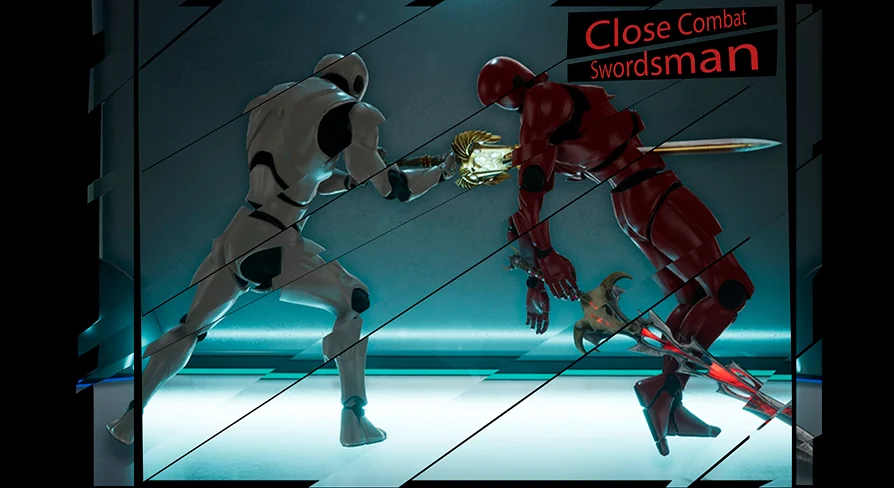
Close Combat: Swordsman builds a combat, movement, leveling, and skill template for action games, RPGs, slashers, and fighting games with melee swordplay system
When a prototype needs a sword-wielding protagonist who can string together attacks, level up, and use distinct skills, starting from a blank Blueprint graph rarely gets a team to a playable vertical slice quickly. Close Combat: Swordsman positions itself as that starting point. The project ships with the mechanical backbone a melee-heavy game demands: a combat system, a character movement system, a level-up management layer, and a character skill system, all addressed directly to action games, RPGs, slashers, and fighting games.
For developers building around armed melee encounters, that grouping matters. Instead of wiring a health component, an attack trace, a momentum handler, and an XP curve independently, the template folds them into a unified structure calibrated to genres where close-range weapon hits drive the core loop. A slasher prototype can lean on the combat system for responsive hit reactions. An action RPG can extend the leveling and skill frameworks into a progression tree. A fighting-game prototype can use the same movement and combat primitives for a grounded duel with fewer external dependencies.
Combat and Skill Systems Framing the Melee Loop
At the center of the project sits a dedicated combat system paired with a character skill system. Four genre archetypes are addressed directly: action games, RPGs, slashers, and fighting games. Each of those categories shares a fundamental requirement, which is reliable close-range strike resolution. A swordsman template needs to translate player input into readable melee behavior, and the bundled combat and skill systems provide that express lane.
The skill system gives the character a structure for active abilities. Rather than bolting abilities onto a movement capsule after the fact, developers can treat skills as part of the combat identity from the earliest prototype phase. This narrows the gap between a functional prototype and a shippable combat feel.
A system for character movement runs alongside the combat layer. In sword-based gameplay, attack reach, spacing, and cancel windows are often tied to how the character approaches and retreats. Having movement handled as part of the same template reduces the integration cost of getting an attack animation to feel connected to its input rather than floating above an unrelated locomotion setup.
Not every prototype stays small. The level-up management system lets a project grow from a single-encounter demo into something with progression. Experience, thresholds, and advance mechanics are accounted for, which previews how a character might evolve across a longer action RPG or slasher session rather than peaking at one combat encounter.
Moving from Swords to Fists with Close Combat: Fighter
Not every fight scene belongs to a weapon-wielding hero. For situations that call for punches and grappling instead of blade arcs, the project connects to a hand-to-hand counterpart. Close Combat: Fighter is described as fully compatible with the Swordsman release, offering developers an analogous baseline for unarmed encounters.
That compatibility has a practical studio effect. A team can build a swordsman-focused action game and later introduce a brawler sequence or an unarmed enemy variant without replacing the underlying framework. Because both packages share a design lineage, the hand-to-hand version slots into the same combat and movement assumptions rather than forcing a parallel codebase.
It is noted separately that Close Combat: Fighter is distributed separately. That keeps the initial Swordsman template focused on armed melee for developers who only need swordplay, while leaving a clear expansion path for those building wider martial-arts scope.
Supporting Animation and Interaction Scope Beyond Core Combat
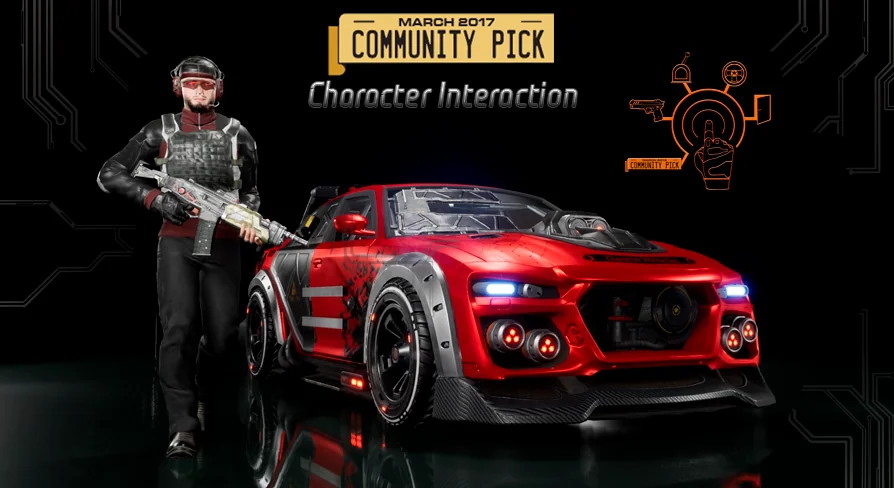
For developers who need to populate a world around the combat template, additional projects are referenced covering a range of animation needs. The listed animation categories include interactions, car mechanics, magic, skills, and additional melee content. These external libraries give teams resources for the non-combat beats a playable level requires.
An action game built on Swordsman might need a protagonist who can swing a sword, pause to open a door, enter a vehicle to traverse a level, and cast a spell to stagger distant enemies. Pulling from interaction, car, and magic animation sets keeps the gameplay presentation coherent when scenes shift between armed melee and general world activity.
The tags attached to the project reinforce this scope. Story, Fighter, Effect, Fighting, Knight, Combat, Sword, Melee, and Blueprint map directly to the gameplay situations the template supports. Effect and Knight suggest a presentation leaning toward visual flair and historical armed combat. Story and Fighting pull the focus toward narrative-driven slashers or duel-centric titles. Blueprint grounds the package as a node-based Unreal Engine project rather than a passive content dump developers must rewire in C++.
Prototyping Multi-Genre Ideas Within One Framework
Several production pathways suit this template. A solo developer assembling a slasher pitch can use the combat and movement systems to get responsive hit detection working within days. A small RPG team can rely on the leveling and skill systems to stand up a basic progression curve without rebuilding those subsystems from scratch.
Fighting-game creators benefit as well. A template that already manages close-range strikes and character skills reduces the friction of prototyping a duel-ready character. Whether the project stays a one-on-one fighter or grows into an arena combat concept, the same foundation supports it.
An action RPG stands out as the widest fit. Sword-based combat, level-up management, and a skill system cover three of the genre's most visible systems. Developers can focus on content creation, encounter design, and polish rather than rebuilding foundational systems. When unarmed encounters enter the design as enemies, cutscenes, or alternate player modes, the Close Combat: Fighter companion is available as a matched extension.
Practical Takeaway for Teams Choosing This Template
Close Combat: Swordsman is built for developers who need a melee combat foundation without resigning themselves to wiring one from empty nodes. The template's value is structural: combat, movement, leveling, and skills are unified pieces of a single starting Blueprint project rather than disconnected plugins waiting for a developer to resolve their dependencies.
Small teams and solo creators gain immediate momentum for prototyping sword-centric gameplay across slashers, action games, RPGs, and fighters. The optional Fighter companion preserves a compatible path for hand-to-hand moments without early commitment. For action-RPG projects seeking armed progression with combat-ready skill mechanics out of the gate, this template shrinks the distance between a project's first session and a working playable build.
 Gameplay Features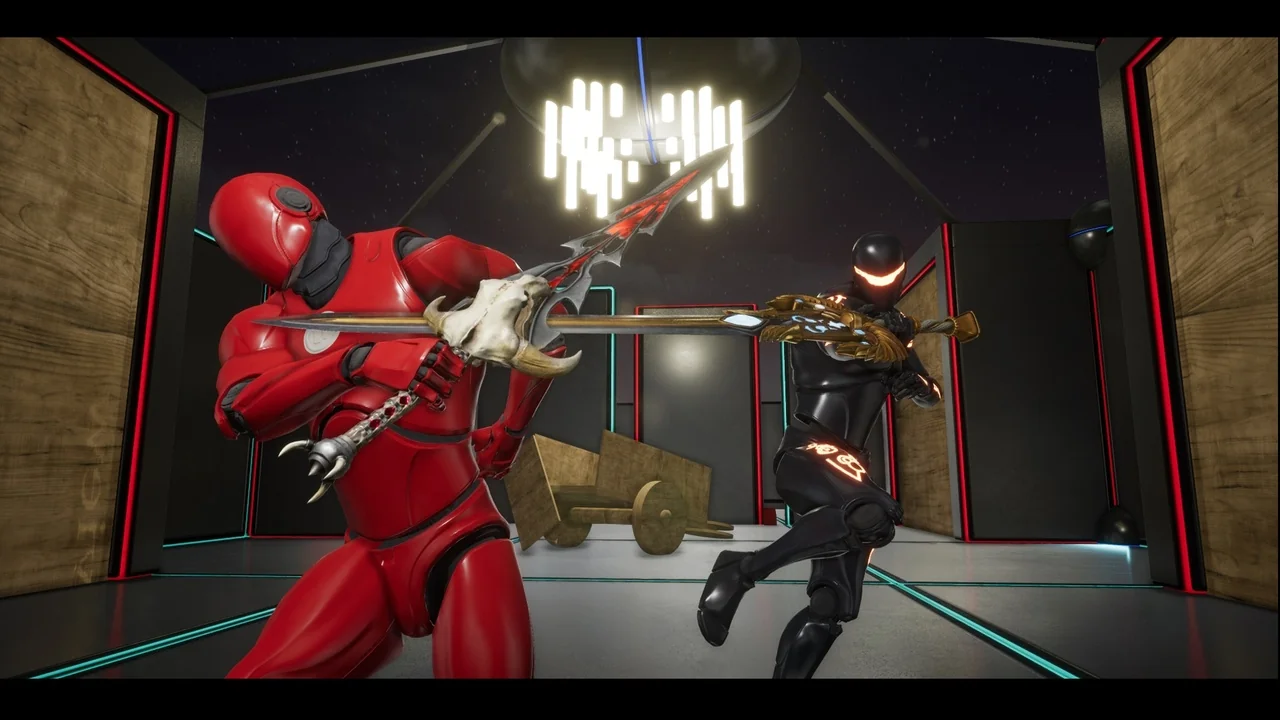
 Gameplay Features
 Gameplay Features
 Gameplay Features