"a5ffaf404b9c2b7e"{"id":"1002625","slug":"cardboard-props-vol1","title":"Cardboard Props Vol1","category":"Storage","engine":"5.0+","assetVersion":"","engineVersion":"Engine Version: 5.0+","tag":"Storage","accent":"blue","visual":"mech","summary":"Cardboard Props Vol1 brings Apocalyptic Hospital set dressing to Unreal Engine 5.4 for hospital, office, and studio environment meshing workflows.","platform":"Unreal Engine","indexPolicy":"index","publishedAt":"2026-11-15T06:03:06.317Z","updatedAt":"2026-11-15T06:03:06.317Z","sourceNotes":[],"fileContents":[],"compatibility":["Unreal Engine","Engine Version: 5.0+"],"featuredImage":{"alt":"Cardboard Props Vol1","src":"/wp-content/uploads/published/2026/11/49904665b47c-a3b558dd-d7b5-40f9-8c52-fe322b802e70-9fd393b927.webp"},"hasDownloadLink":true,"downloads":0,"terms":[{"taxonomy":"category","slug":"storage-tools-objects-and-decor","name":"Storage"}],"galleryImages":[{"src":"/wp-content/uploads/published/2026/11/90f25e3efb87-f9476b7b-5e17-4f96-9291-fac1416282a6-51bdaad903.webp","alt":"Cardboard Props Vol1"},{"src":"/wp-content/uploads/published/2026/11/4b20967dfd96-9ba80c32-947a-497c-a742-65fce65df7dd-933367ccba.webp","alt":"Cardboard Props Vol1"},{"src":"/wp-content/uploads/published/2026/11/eae0725ef3bb-53ee8e96-f3dd-4d30-b9d0-e1c0d5b5b44b-96d41c90c2.webp","alt":"Cardboard Props Vol1"},{"src":"/wp-content/uploads/published/2026/11/c37ea0fac835-fcba4094-1c2a-4679-86a9-24cd14d41dea-311b3b931e.webp","alt":"Cardboard Props Vol1"},{"src":"/wp-content/uploads/published/2026/11/e81de54aa1ff-ccf5f8ec-6089-4536-8fce-fc97ecdc8a47-acf98d111f.webp","alt":"Cardboard Props Vol1"},{"src":"/wp-content/uploads/published/2026/11/4090ed73b9b5-54b575e8-9b51-4d4a-9325-ac50a2d2746a-591bc0a570.webp","alt":"Cardboard Props Vol1"},{"src":"/wp-content/uploads/published/2026/11/8cd833b2097d-8ae3bf0b-4ada-44e5-9bac-c533628aa506-5b72a3a77a.webp","alt":"Cardboard Props Vol1"},{"src":"/wp-content/uploads/published/2026/11/bc2f27e177a5-6f210637-06eb-4a8e-8860-ea72a0663e49-56bc15c642.webp","alt":"Cardboard Props Vol1"}],"accessPanel":{"kind":"resource","title":"Get this resource","eyebrow":"Free resource","message":"Download this resource in your browser.","fileName":"Content.7z","safetyNote":"Resources are manually reviewed before listing to improve quality and reduce obvious risks.","actionLabel":"Get this resource","resourceType":"Resource archive","versions":[]},"contentHtml":"\u003ch2\u003eIntegrating Cardboard Props in Unreal Engine 5.4 Workflows\u003c/h2\u003e\n\u003cp\u003eCardboard Props Vol1 provides an accessible entry point for environment artists looking to populate contemporary scenes with functional, utilitarian clutter. Tailored to operate directly within Unreal Engine 5.4, the release integrates seamlessly into current game engine projects without requiring version conversion or custom migration steps. Assets can be incorporated immediately into an established asset hierarchy, making the props ready for direct level placement right after importing.\u003c/p\u003e\n\u003cp\u003eWorking in modern engine viewports often highlights the stark contrast between pristine architectural surfaces and believable, inhabited spaces. Large rooms, wide corridors, and open structural floors can feel unnaturally barren without secondary dress pieces to disrupt clean geometry. Because these models are prepared natively for Unreal Engine 5.4, they conform to modern static meshing pipelines, viewport lighting, and level instancing routines. Environment designers can place, duplicate, rotate, and scale these pieces throughout complex layouts without encountering format discrepancies, performance bottlenecks, or asset conversion errors.\u003c/p\u003e\n\u003cp\u003eBy keeping the scope focused on core dressing elements, the pack avoids the overhead that typically comes with importing extensive multi-gigabyte structural packs. Level designers working against memory budgets and clean dependency structures can drop these specific meshes into their scene content trees, maintaining a lightweight footprint while systematically addressing the visual needs of the level.\u003c/p\u003e \u003ch2\u003eApocalyptic Hospital Origins of the Props Collection\u003c/h2\u003e\n\u003cp\u003eThe visual character of Cardboard Props Vol1 is rooted in its development history as part of the broader Apocalyptic Hospital pack. In that original context, these items were crafted to convey neglect, systemic disruption, and the rapid abandonment of an emergency medical facility. The assets reflect the aesthetic demands of an environment caught in crisis, carrying surface wear, structural utility, and the grounded realism necessary for apocalyptic world-building.\u003c/p\u003e\n\u003cp\u003eExtracting these items into a dedicated Volume 1 release isolates their functionality for projects that do not require an entire abandoned medical complex. While the original hospital environment combines massive modular building pieces, architectural framework, heavy clinical machinery, and interior fixtures, world builders often only require the secondary container elements to tell smaller environmental stories. Providing the props as an independent collection allows artists to harness the high quality of the parent project while keeping their production dependencies minimal and tidy.\u003c/p\u003e\n\u003cp\u003eThe gritty visual lineage established by the medical disaster setting ensures that each cardboard box carries authentic structural character. Rather than appearing as sterile, pristine primitives, the props evoke practical handling, transit, and storage. This design background provides immediate narrative weight when placed in any scene depicting urgency, hasty evacuation, or long-term structural abandonment.\u003c/p\u003e \u003ch2\u003eMeshing Cardboard Geometry Across Hospital and Office Environments\u003c/h2\u003e\n\u003cp\u003eAlthough developed for an apocalyptic scenario, the functional nature of cardboard containers makes them uniquely versatile across varied interior archetypes. The package tags identify hospital and office spaces as primary targets for meshing passes, where storage boxes serve as universal indicators of administrative and operational activity.\u003c/p\u003e\n\u003cp\u003eWithin healthcare and clinical settings, cardboard containers play an indispensable role in day-to-day operations and emergency protocols alike. Whether constructing an operational clinic, a chaotic field hospital, or a desolate medical ward, cardboard meshes can be staged to communicate specific operational realities. Placing sealed containers near loading bays and triage stations suggests recent pharmaceutical deliveries or shipments of surgical gear. Stacking boxes haphazardly along basement utility hallways or behind nursing stations communicates logistical strain, hasty supply sorting, or the orderly archiving of medical records. When scattered loosely across flooded floors or overturned in examination rooms, they visually narrate an emergency exit or systemic breakdown.\u003c/p\u003e\n\u003cp\u003eIn corporate and administrative office scenes, cardboard props perform an entirely different visual function. Modern workspaces routinely accumulate cardboard during phases of internal relocation, seasonal audits, technical hardware rollouts, and document archiving. Grouping these boxes around cubicle clusters, printer stations, and conference room perimeters gives an office space the lived-in texture of an active company undergoing turnover. Placing labeled or taped boxes within back-office storage closets, utility rooms, or server spaces reinforces realism by illustrating the unglamorous storage requirements of everyday business operations.\u003c/p\u003e \u003ch2\u003eStudio Set Dressing with Vol1 Packaging Meshes\u003c/h2\u003e\n\u003cp\u003eThe versatility of the Vol1 collection extends directly into studio setups and creative production spaces, another environment category explicitly supported by the asset tags. Soundstages, broadcast studios, television production facilities, and industrial art spaces frequently utilize temporary cardboard packaging to move, unpack, and house delicate production gear, fabrication tools, and stage properties.\u003c/p\u003e\n\u003cp\u003eWhen meshing a studio interior, cardboard containers provide an effective visual bridge between clean production areas and behind-the-scenes staging zones. Stacking boxes near lighting stands, backstage corridors, grip gear cases, or carpentry workshops communicates ongoing fabrication and active production cycles. Because studios are fundamentally transitional spaces where scenery and equipment are constantly assembled and disassembled, scattering utilitarian packaging across the perimeter of the room creates a convincing sense of ongoing creative industry.\u003c/p\u003e\n\u003cp\u003eThe neutral aesthetic of cardboard packaging prevents the props from distracting the eye from focal narrative elements. Instead, they act as grounding set dressing that anchors heavy equipment, breaks up hard floor planes, and frames doorways, helping environment artists transform sterile soundstage floor plans into believable, working technical environments.\u003c/p\u003e \u003ch2\u003eCommunity Support and Updates for Cardboard Props\u003c/h2\u003e\n\u003cp\u003eSustaining production pipelines across ongoing engine releases requires clear communication channels between creators and end users. Cardboard Props Vol1 is backed by an active creator community organized through a dedicated Discord server. This hub serves as a central clearinghouse where artists and technical directors can obtain the latest news, track future product releases, and receive dedicated technical support for asset implementation.\u003c/p\u003e\n\u003cp\u003eAccess to direct support ensures that questions regarding engine compatibility, viewport configuration, and level dressing workflows are addressed in real time. Beyond troubleshooting, the community space invites developers and artists to participate in regular contests, offering opportunities to showcase creative scene compositions and win prizes. This collaborative environment keeps user feedback closely tied to the asset collection, ensuring that future updates, engine revisions, and subsequent prop volumes remain aligned with the evolving demands of Unreal Engine developers.\u003c/p\u003e\n\n\u003ch2\u003eRelated Resources Worth Checking\u003c/h2\u003e\n\u003cul\u003e\n\u003cli\u003e\u003ca href=\"https://3dcghub.com/apocalyptic-office-props-vol1/\" rel=\"noopener noreferrer\"\u003eApocalyptic Office Props Vol1\u003c/a\u003e\u003c/li\u003e\n\u003cli\u003e\u003ca href=\"https://3dcghub.com/feudal-japan-exterior-props-vol1/\" rel=\"noopener noreferrer\"\u003eFeudal Japan Exterior Props Vol1\u003c/a\u003e\u003c/li\u003e\n\u003cli\u003e\u003ca href=\"https://3dcghub.com/wooden-props-environment-pack/\" rel=\"noopener noreferrer\"\u003eWooden props environment pack\u003c/a\u003e\u003c/li\u003e\n\u003cli\u003e\u003ca href=\"https://3dcghub.com/nanite-foliage-vol1/\" rel=\"noopener noreferrer\"\u003eNanite Foliage Vol1\u003c/a\u003e\u003c/li\u003e\n\u003cli\u003e\u003ca href=\"https://3dcghub.com/airport-set-vol1/\" rel=\"noopener noreferrer\"\u003eAirport Set Vol1\u003c/a\u003e\u003c/li\u003e\n\u003c/ul\u003e","contentTextLength":7618,"navigation":{"current":23,"total":4570,"previous":{"id":"1002626","slug":"clothing-and-shoe-stores","title":"CLOTHING AND SHOE STORES","category":"Commercial Buildings","platform":"Unreal Engine","updatedAt":"2026-11-15T06:04:17.667Z"},"next":{"id":"1002624","slug":"buildings-vol-8-commercial-doors-nanite-and-low-poly","title":"Buildings VOL.8 - Commercial Doors (Nanite \u0026 Low Poly)","category":"Components","platform":"Unreal Engine","updatedAt":"2026-11-15T06:02:16.017Z"}},"relatedResources":[{"id":"1001790","slug":"apocalyptic-office-props-vol1","title":"Apocalyptic Office Props Vol1","category":"Buildings \u0026 Architecture","engine":"5.3+","assetVersion":"","engineVersion":"Engine Version: 5.3+","tag":"Buildings","accent":"blue","visual":"mech","summary":"Apocalyptic Office Props Vol1 brings realistic hospital and office assets into Unreal Engine 5.4 for post-apocalyptic and abandoned interior environments.","platform":"Unreal Engine","indexPolicy":"index","publishedAt":"2026-10-21T07:42:48.211Z","updatedAt":"2026-10-21T07:42:48.211Z","sourceNotes":[],"fileContents":[],"compatibility":["Unreal Engine","Engine Version: 5.3+"],"featuredImage":{"alt":"Apocalyptic Office Props Vol1","src":"/wp-content/uploads/published/2026/10/9319306b06ba-7da03850-c648-4a18-b50f-ddfdaa2f7a9a-82644ff2d2.webp"},"hasDownloadLink":true,"downloads":2},{"id":"1000426","slug":"feudal-japan-exterior-props-vol1","title":"Feudal Japan Exterior Props Vol1","category":"Art \u0026 Statues","engine":"5.1+","assetVersion":"","engineVersion":"Engine Version: 5.1+","tag":"Art \u0026 Statues","accent":"blue","visual":"mech","summary":"Feudal Japan Exterior Props Vol1 supplies Unreal Engine 5-compatible 3D props, pulled from the Feudal Japan Megapack, to populate period environments with statu","platform":"Unreal Engine","indexPolicy":"index","publishedAt":"2026-07-09T20:48:07.858Z","updatedAt":"2026-07-09T20:48:07.858Z","sourceNotes":[],"fileContents":[],"compatibility":["Unreal Engine","Engine Version: 5.1+"],"featuredImage":{"alt":"Feudal Japan Exterior Props Vol1","src":"/wp-content/uploads/published/2026/07/fa26362621a4-c08faca2-788a-474e-8500-c237c90667c8-3cb6fe529d.webp"},"hasDownloadLink":true,"downloads":0},{"id":"1002611","slug":"wooden-props-environment-pack","title":"Wooden props environment pack","category":"Tools, Objects \u0026 Decor","engine":"5.0+","assetVersion":"","engineVersion":"Engine Version: 5.0+","tag":"Tools","accent":"blue","visual":"city","summary":"Examine the technical layout, 10.24 texel density, 4K textures, collision setup, and modular timber pieces in the Wooden props environment pack.","platform":"Unreal Engine","indexPolicy":"index","publishedAt":"2026-11-14T06:10:37.608Z","updatedAt":"2026-11-14T06:10:37.608Z","sourceNotes":[],"fileContents":[],"compatibility":["Unreal Engine","Engine Version: 5.0+"],"featuredImage":{"alt":"Wooden props environment pack","src":"/wp-content/uploads/published/2026/11/befbe9e38914-97b915f9-7e7d-470d-bead-8c5ace4fd2fe-e10621e5b4.webp"},"hasDownloadLink":true,"downloads":0}]}
Storage
Cardboard Props Vol1
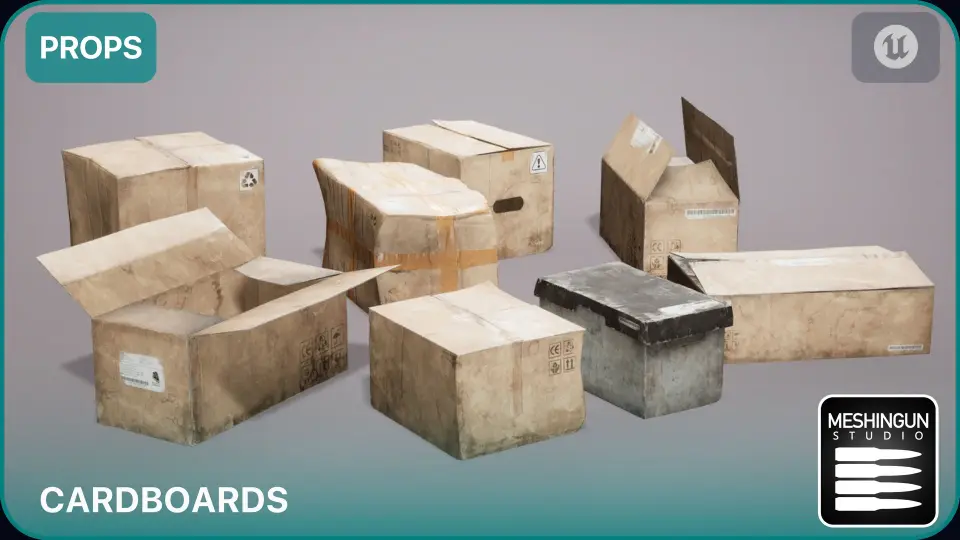
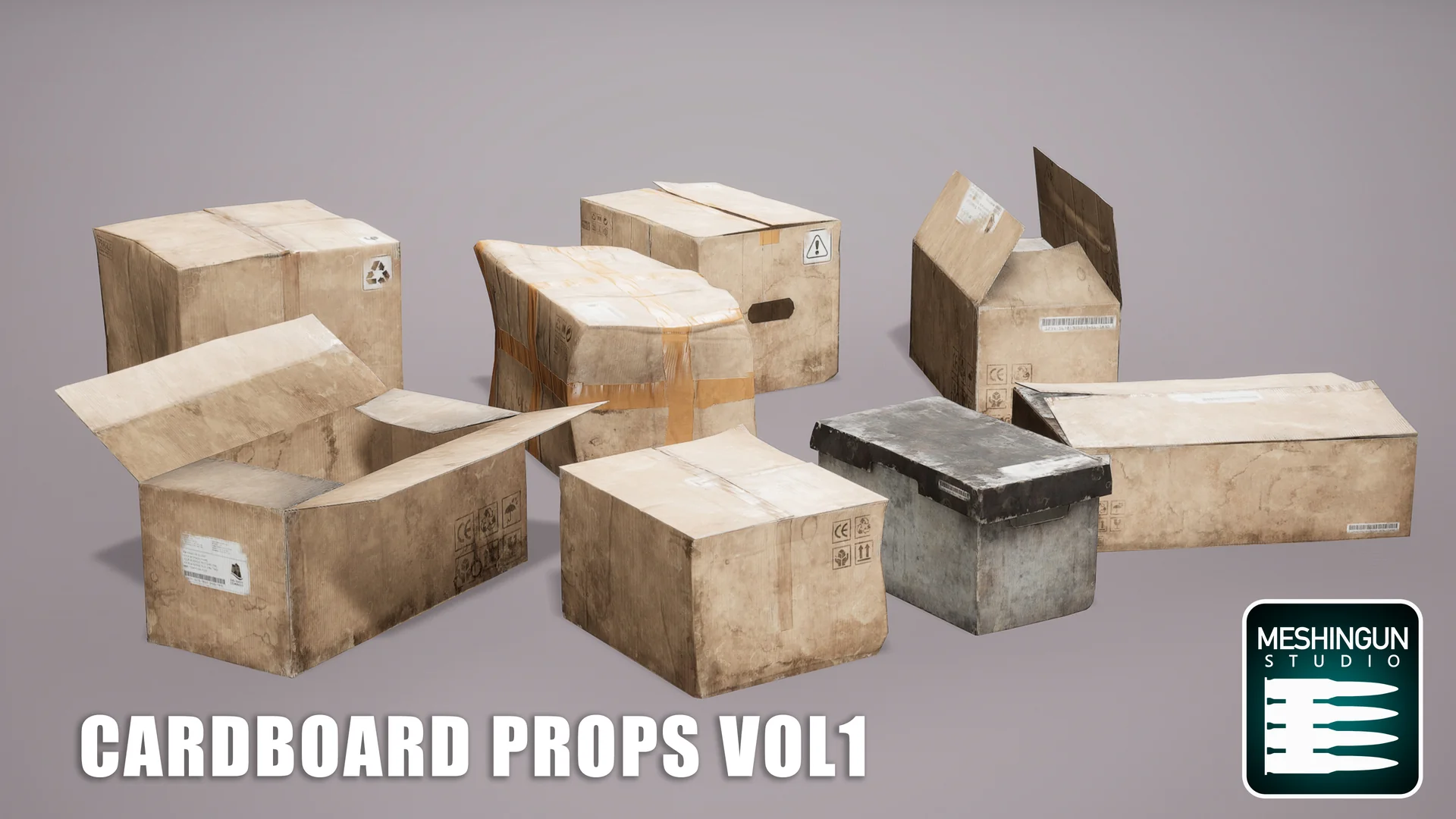
Cardboard Props Vol1 brings Apocalyptic Hospital set dressing to Unreal Engine 5.4 for hospital, office, and studio environment meshing workflows.
Category:Unreal Engine,StoragePlatform: Unreal EngineEngine Version: 5.0+Published: Nov 15, 2026
Storage
Resource overview
Integrating Cardboard Props in Unreal Engine 5.4 Workflows
Cardboard Props Vol1 provides an accessible entry point for environment artists looking to populate contemporary scenes with functional, utilitarian clutter. Tailored to operate directly within Unreal Engine 5.4, the release integrates seamlessly into current game engine projects without requiring version conversion or custom migration steps. Assets can be incorporated immediately into an established asset hierarchy, making the props ready for direct level placement right after importing.
Working in modern engine viewports often highlights the stark contrast between pristine architectural surfaces and believable, inhabited spaces. Large rooms, wide corridors, and open structural floors can feel unnaturally barren without secondary dress pieces to disrupt clean geometry. Because these models are prepared natively for Unreal Engine 5.4, they conform to modern static meshing pipelines, viewport lighting, and level instancing routines. Environment designers can place, duplicate, rotate, and scale these pieces throughout complex layouts without encountering format discrepancies, performance bottlenecks, or asset conversion errors.
By keeping the scope focused on core dressing elements, the pack avoids the overhead that typically comes with importing extensive multi-gigabyte structural packs. Level designers working against memory budgets and clean dependency structures can drop these specific meshes into their scene content trees, maintaining a lightweight footprint while systematically addressing the visual needs of the level.
Apocalyptic Hospital Origins of the Props Collection
The visual character of Cardboard Props Vol1 is rooted in its development history as part of the broader Apocalyptic Hospital pack. In that original context, these items were crafted to convey neglect, systemic disruption, and the rapid abandonment of an emergency medical facility. The assets reflect the aesthetic demands of an environment caught in crisis, carrying surface wear, structural utility, and the grounded realism necessary for apocalyptic world-building.
Extracting these items into a dedicated Volume 1 release isolates their functionality for projects that do not require an entire abandoned medical complex. While the original hospital environment combines massive modular building pieces, architectural framework, heavy clinical machinery, and interior fixtures, world builders often only require the secondary container elements to tell smaller environmental stories. Providing the props as an independent collection allows artists to harness the high quality of the parent project while keeping their production dependencies minimal and tidy.
The gritty visual lineage established by the medical disaster setting ensures that each cardboard box carries authentic structural character. Rather than appearing as sterile, pristine primitives, the props evoke practical handling, transit, and storage. This design background provides immediate narrative weight when placed in any scene depicting urgency, hasty evacuation, or long-term structural abandonment.
Meshing Cardboard Geometry Across Hospital and Office Environments
Although developed for an apocalyptic scenario, the functional nature of cardboard containers makes them uniquely versatile across varied interior archetypes. The package tags identify hospital and office spaces as primary targets for meshing passes, where storage boxes serve as universal indicators of administrative and operational activity.
Within healthcare and clinical settings, cardboard containers play an indispensable role in day-to-day operations and emergency protocols alike. Whether constructing an operational clinic, a chaotic field hospital, or a desolate medical ward, cardboard meshes can be staged to communicate specific operational realities. Placing sealed containers near loading bays and triage stations suggests recent pharmaceutical deliveries or shipments of surgical gear. Stacking boxes haphazardly along basement utility hallways or behind nursing stations communicates logistical strain, hasty supply sorting, or the orderly archiving of medical records. When scattered loosely across flooded floors or overturned in examination rooms, they visually narrate an emergency exit or systemic breakdown.
In corporate and administrative office scenes, cardboard props perform an entirely different visual function. Modern workspaces routinely accumulate cardboard during phases of internal relocation, seasonal audits, technical hardware rollouts, and document archiving. Grouping these boxes around cubicle clusters, printer stations, and conference room perimeters gives an office space the lived-in texture of an active company undergoing turnover. Placing labeled or taped boxes within back-office storage closets, utility rooms, or server spaces reinforces realism by illustrating the unglamorous storage requirements of everyday business operations.
Studio Set Dressing with Vol1 Packaging Meshes
The versatility of the Vol1 collection extends directly into studio setups and creative production spaces, another environment category explicitly supported by the asset tags. Soundstages, broadcast studios, television production facilities, and industrial art spaces frequently utilize temporary cardboard packaging to move, unpack, and house delicate production gear, fabrication tools, and stage properties.
When meshing a studio interior, cardboard containers provide an effective visual bridge between clean production areas and behind-the-scenes staging zones. Stacking boxes near lighting stands, backstage corridors, grip gear cases, or carpentry workshops communicates ongoing fabrication and active production cycles. Because studios are fundamentally transitional spaces where scenery and equipment are constantly assembled and disassembled, scattering utilitarian packaging across the perimeter of the room creates a convincing sense of ongoing creative industry.
The neutral aesthetic of cardboard packaging prevents the props from distracting the eye from focal narrative elements. Instead, they act as grounding set dressing that anchors heavy equipment, breaks up hard floor planes, and frames doorways, helping environment artists transform sterile soundstage floor plans into believable, working technical environments.
Community Support and Updates for Cardboard Props
Sustaining production pipelines across ongoing engine releases requires clear communication channels between creators and end users. Cardboard Props Vol1 is backed by an active creator community organized through a dedicated Discord server. This hub serves as a central clearinghouse where artists and technical directors can obtain the latest news, track future product releases, and receive dedicated technical support for asset implementation.
Access to direct support ensures that questions regarding engine compatibility, viewport configuration, and level dressing workflows are addressed in real time. Beyond troubleshooting, the community space invites developers and artists to participate in regular contests, offering opportunities to showcase creative scene compositions and win prizes. This collaborative environment keeps user feedback closely tied to the asset collection, ensuring that future updates, engine revisions, and subsequent prop volumes remain aligned with the evolving demands of Unreal Engine developers.
 Storage
 Buildings
 Art & Statues
 Tools