Efficient Asset Migration with Asset Downgrader
The Asset Downgrader is a specialized tool for developers who need to move assets to projects using older Unreal Engine versions. If you have ever tried to migrate content only to find it missing from the content browser, this plugin provides a solution. It allows you to make your modern assets available for use in earlier versions of the engine.
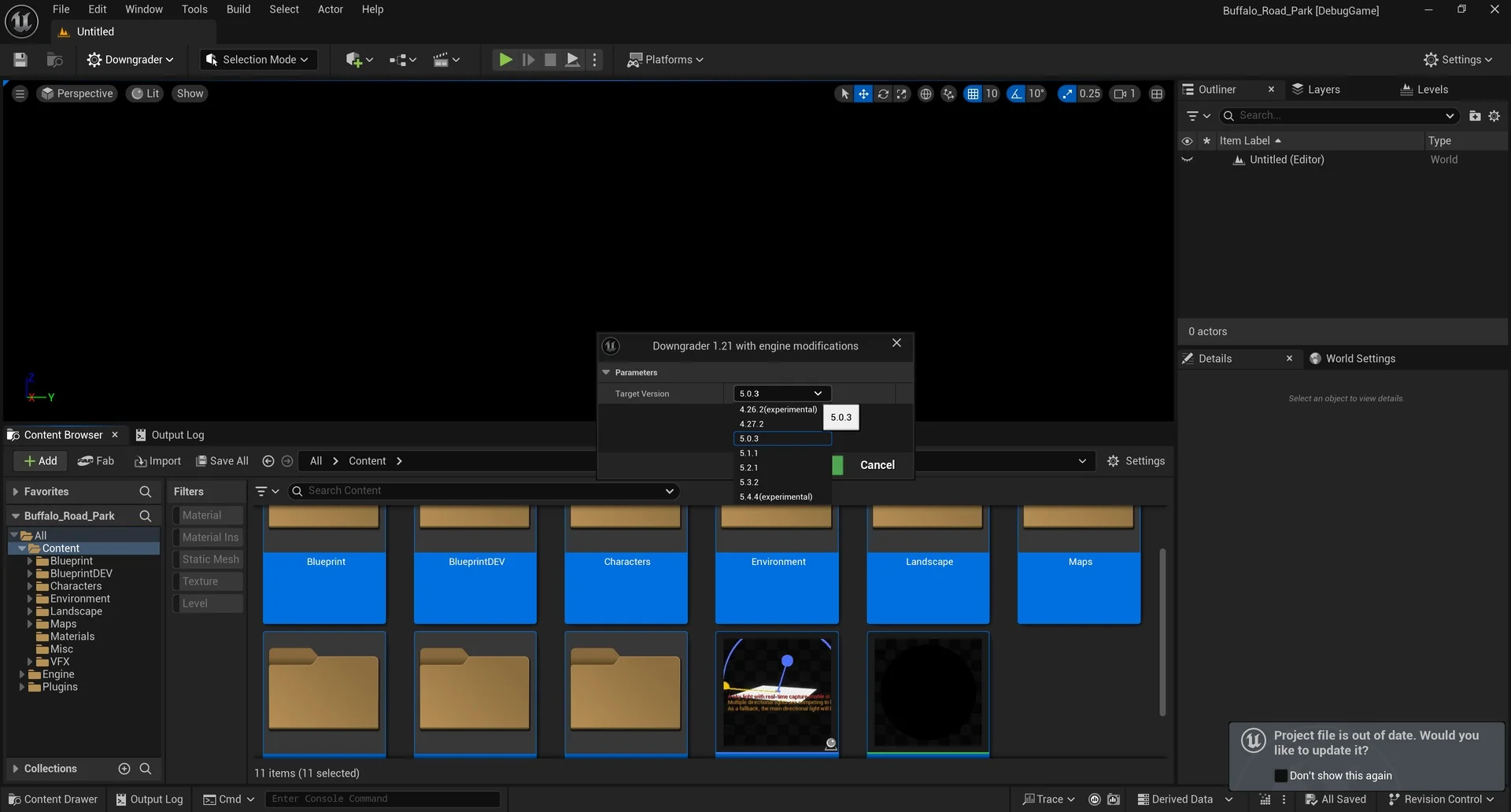
This plugin supports a wide range of target versions. Specifically, it can downgrade assets to 5.6.1, 5.5.4, 5.4.4, 5.3.2, 5.2.1, 5.1.1, 5.0.3, 4.27, and 4.26. Consequently, developers have more flexibility when working across different project environments or sharing assets with others.
How the Asset Downgrader Works
The Asset Downgrader functions by first upgrading assets to a source version (5.6). Afterward, it applies various patches to the .uasset files to ensure compatibility with your chosen target version. This process effectively strips newer data that the older engine cannot read.
However, it is important to note that newer features cannot be ported back to versions that do not support them. For example, Nanite data is removed for a 4.27 downgrade. Similarly, new material nodes or Niagara modules will not function in older versions. Therefore, the developer recommends checking for compatibility before starting the process.
Workflow and Integration
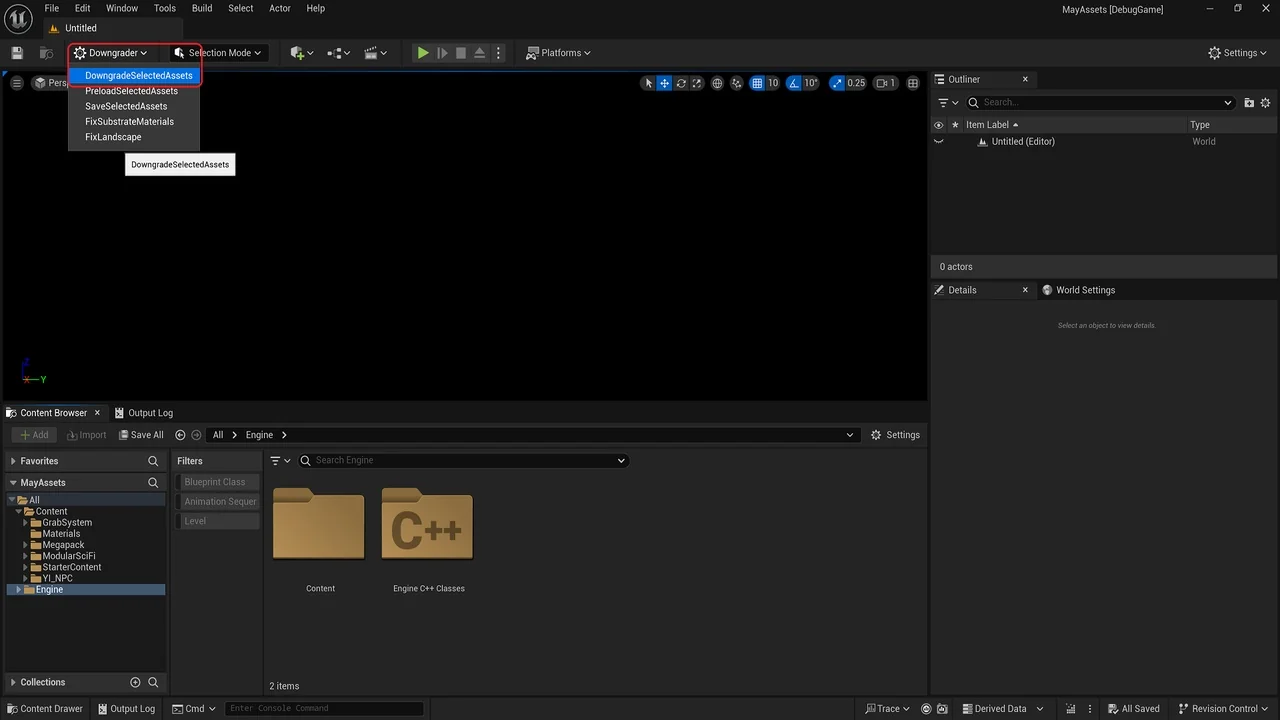
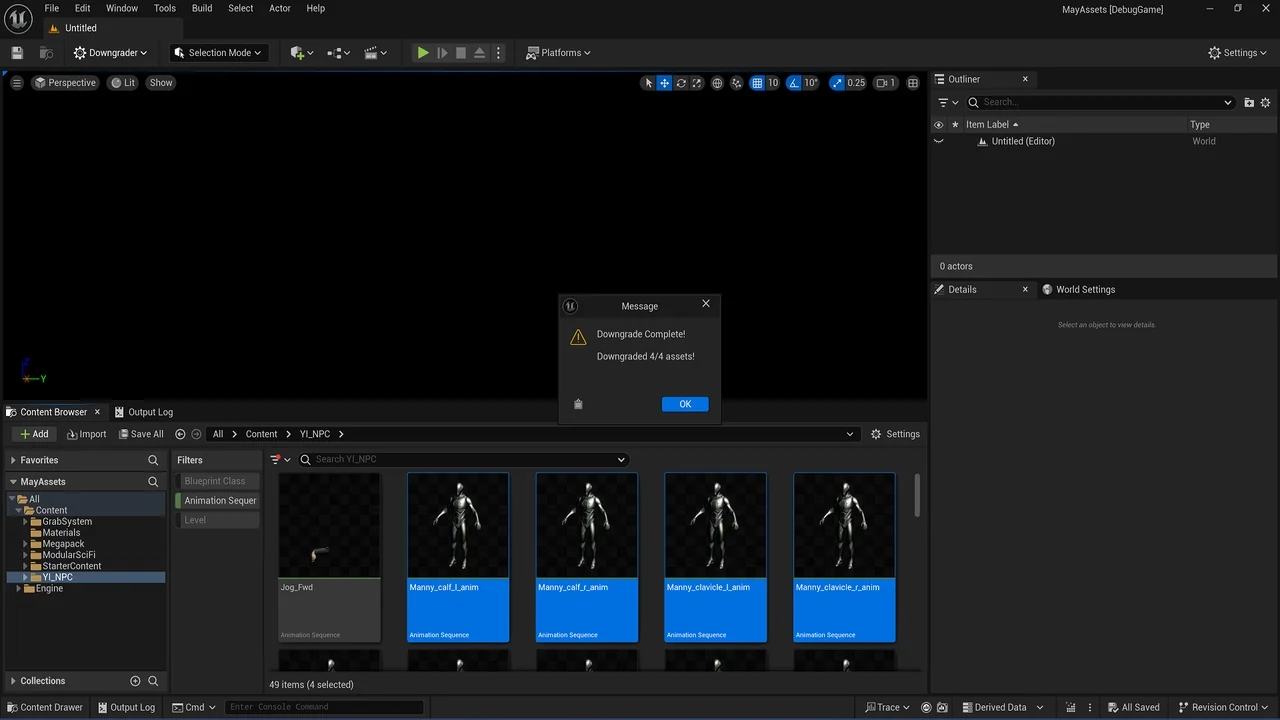
To use the tool, you should first backup all assets because the plugin is highly experimental. You can either work with two separate projects or switch the version of your current project. Once the plugin is integrated into both projects, you select your assets and choose the “DowngradeSelectedAssets” option.
Instead of using the standard Unreal “Migrate” action, you must copy and paste the .uasset files manually. This prevents the engine from resaving them in the newer format. Furthermore, if you are targeting version 5.0.3, you must enable “UsePackageTrailer” in your configuration files to prevent startup crashes.
Custom Engine Requirements
Some assets may require a custom version of Unreal Engine to complete the process. For instance, downgrading assets for version 5.4 often necessitates a modified engine build. The creator provides these builds to ensure the patching process works correctly for complex asset types. Additionally, upgrading to the latest custom engine build is recommended for active development.
Troubleshooting and Known Issues
The Asset Downgrader includes specific tools for troubleshooting common migration errors. You can use the “FixLandscape” option if landscapes appear black in version 4.27. Additionally, the “SaveSelectedAssets” feature helps ensure that downgraded content appears correctly in packaged builds.
- High RAM usage (up to 128GB) may be required for large projects.
- Skeletal meshes should be saved in the source project first to update their binary format.
- Packed level actors should be broken down before downgrading to 4.27.
- Certain texture formats like RGBA32F are not supported in versions prior to 5.0.
In conclusion, the Asset Downgrader is a powerful utility for managing asset compatibility across Unreal Engine versions. While the process is experimental, it provides a unique path for back-porting content that would otherwise be locked to newer engine releases.
Screenshots & Gallery