"b00678cacce53329"{"id":"1002771","slug":"aoe-magic-abilities-vol-1","title":"AoE Magic Abilities Vol. 1","category":"Variety","engine":"4.21+,5.0+","assetVersion":"","engineVersion":"Engine Version: 4.21+,5.0+","tag":"Variety","accent":"blue","visual":"mech","summary":"A deep look at AoE Magic Abilities Vol. 1, featuring 45 Niagara area spells, buffs, heals, and elemental attacks for Unreal Engine 4.27+ on PC and mobile.","platform":"Unreal Engine","indexPolicy":"index","publishedAt":"2026-11-20T06:49:44.012Z","updatedAt":"2026-11-20T06:49:44.012Z","sourceNotes":[],"fileContents":[],"compatibility":["Unreal Engine","Engine Version: 4.21+,5.0+"],"featuredImage":{"alt":"AoE Magic Abilities Vol. 1","src":"/wp-content/uploads/published/2026/11/e478fdb6312f-43f9da32-9c84-4827-bdd5-97adad471fe0-f1356a6c52.webp"},"fileSizeBytes":117298748,"hasDownloadLink":true,"downloads":0,"terms":[{"taxonomy":"category","slug":"variety-vfx","name":"Variety"}],"galleryImages":[{"src":"/wp-content/uploads/published/2026/11/f26ac2b10ea9-93fd9f3e-c794-4071-b730-2b789154ad8e-6d40a2e2fe.webp","alt":"AoE Magic Abilities Vol. 1"},{"src":"/wp-content/uploads/published/2026/11/1f7c1e571f44-a633d14d-3ffb-426f-b0ae-04a8259d356d-f1486b8256.webp","alt":"AoE Magic Abilities Vol. 1"},{"src":"/wp-content/uploads/published/2026/11/6bfc4bf0b11b-8a642758-a2a1-456e-b5d9-8792abea9e76-05ddd8ccde.webp","alt":"AoE Magic Abilities Vol. 1"},{"src":"/wp-content/uploads/published/2026/11/e0e54622a714-ec706c48-9d66-4fd0-8f92-196748a4b63f-7110479d25.webp","alt":"AoE Magic Abilities Vol. 1"},{"src":"/wp-content/uploads/published/2026/11/2e4f493dabc5-050dee3d-ba22-4838-97e8-eb63314f5284-7dc1813b9e.webp","alt":"AoE Magic Abilities Vol. 1"},{"src":"/wp-content/uploads/published/2026/11/5743084236be-a2be333e-6b9d-449c-b7e3-80c48851e5e3-8dabba53a5.webp","alt":"AoE Magic Abilities Vol. 1"},{"src":"/wp-content/uploads/published/2026/11/eac35d44a266-ea964e62-3c7e-46cb-80f3-3a096f3821ad-0cd74f5e9a.webp","alt":"AoE Magic Abilities Vol. 1"},{"src":"/wp-content/uploads/published/2026/11/1904785744ea-0502f53e-3cfe-447e-b387-0eef51e12304-855c8e79ad.webp","alt":"AoE Magic Abilities Vol. 1"},{"src":"/wp-content/uploads/published/2026/11/8f35e030798a-7fa28840-1f7e-4e24-b307-98de69d05809-19d2185d23.webp","alt":"AoE Magic Abilities Vol. 1"},{"src":"/wp-content/uploads/published/2026/11/dd744ae80110-3aebf7d7-f600-42aa-a49c-6c08a2ee9c20-afe5c1c5ed.webp","alt":"AoE Magic Abilities Vol. 1"}],"accessPanel":{"kind":"resource","title":"Get this resource","safetyNote":"Resources are manually reviewed before listing to improve quality and reduce obvious risks.","fileName":"Content.7z","resourceType":"Resource archive","versions":[]},"contentHtml":"\u003cp\u003eIntegrating visual feedback for area-based spells begins with establishing clear spatial boundaries on the game field. AoE Magic Abilities Vol. 1 supplies 45 separate area-of-effect magic abilities tailored to communicate critical gameplay moments such as spell impacts, persistent hazard zones, and defensive support perimeters. The collection covers an array of utility, offensive, and protective mechanics, providing visual assets for spells, broad areas of attack, restorative heals, statistical buffs, tactical stuns, and elemental magic types including fire, electricity, and dark magic. Because the systems have been manually converted to the Niagara particle framework for Unreal Engine 4.27 and newer iterations, creators can immediately wire these effects into character ability systems without relying on legacy particle pipelines.\u003c/p\u003e \u003ch2\u003eDeploying AoE Systems for Fantasy Spellcasting\u003c/h2\u003e\n\u003cp\u003eCombat readability in fantasy games relies heavily on how well area-of-effect attacks communicate danger, timing, and borders to players. The 45 abilities in this asset collection address diverse combat scenarios, ranging from instantaneous spell bursts to ongoing territorial denial. When designing encounters with a mage character, developers need visual effects that clearly delineate where damage is dealt versus where allies can safely stand.\u003c/p\u003e\n\u003cp\u003eAreas of attack within the collection supply the visual cues required for high-threat combat skills. A burst of dark magic or a rapid electricity discharge communicates immediate damage within a defined radius, allowing players to execute dodges or reposition tactical units. Beyond straight damage, the inclusion of stuns introduces dedicated visual feedback for crowd-control status effects, giving designers a way to mark targets caught in immobilizing magic. When planning support mechanics, the collection balances offensive threats with specialized visual assets for heals and buffs. These supportive effects give healers and paladin-type archetypes recognizable visual signatures for regeneration rings, shielding auras, and stat-boosting fields that stand apart from hostile floor hazards.\u003c/p\u003e \u003ch2\u003eThematic Elements Across Magic Archetypes\u003c/h2\u003e\n\u003cp\u003eVisual variety prevents combat encounters from feeling homogeneous across an extended campaign. The collection incorporates several distinct magical disciplines, allowing game creators to assign coherent visual identities to different factions, enemy classes, or player skill trees.\u003c/p\u003e\n\u003cp\u003eFire effects provide high-impact, blazing visuals suitable for aggressive offensive casters. Incorporating concepts like fireball bursts and fiery floor zones, these assets suit destructive pyromancers aiming to control space with lingering heat. In contrast, electricity abilities provide sharper, energetic visual beats suited for lightning mages, shock traps, or high-tempo interrupt spells. Dark magic introduces a brooding, shadowy aesthetic useful for warlocks, necromancers, or boss encounters that deploy cursed ground, draining fields, and corrupting status debuffs.\u003c/p\u003e\n\u003cp\u003eBecause the collection spans both offensive arts and restorative disciplines, designers can construct complete character kits out of a single library. A spellcaster might open an encounter with a long-range dark magic stun, follow with an electricity area attack to clear minions, and drop a protective buff or healing ring to recover party health, maintaining stylistic cohesion throughout the sequence.\u003c/p\u003e \u003ch2\u003eCustomizing Abilities for Diverse Character Kits\u003c/h2\u003e\n\u003cp\u003eEvery combat design requires bespoke timing, range, and thematic coloring. The particle systems in this package are built to be easily scaled and recolored, giving technical artists and designers the freedom to adapt one base effect across multiple gameplay functions.\u003c/p\u003e\n\u003cp\u003eScaling capabilities allow an effect that works as a modest, close-range character aura to be expanded into a massive battlefield-clearing ultimate attack. Adjusting the scale ensures that the boundaries of the visual effect accurately reflect the underlying gameplay collision volumes or trace distances. A small localized stun trap can be adjusted to fit narrow dungeon corridors, while boss-tier abilities can be scaled up to encompass entire arena floors without breaking the composition of the effect.\u003c/p\u003e\n\u003cp\u003eColor modification opens up extensive variations for character progression. A base fire effect can be recolored to vibrant green for fel magic, cold blue for frostfire, or radiant gold for holy solar magic. This flexibility allows teams to represent tiered ability levels visually. A novice player spell might use an unadorned baseline color and smaller scale, whereas an upgraded, master-rank version of the same ability can feature larger scales and altered chromatic values to show amplified power.\u003c/p\u003e \u003ch2\u003eNiagara Migration and Technical Pipeline in Vol. 1\u003c/h2\u003e\n\u003cp\u003eThe technical foundation of real-time effects dictates how easily an asset library integrates into active production pipelines. Following the v1.1 update released on May 29, 2024, the collection was manually converted from Unreal Engine's legacy Cascade system into Niagara, targeting Unreal Engine 4.27 and all subsequent engine versions.\u003c/p\u003e\n\u003cp\u003eManual conversion ensures that each particle system functions correctly under Niagara's modular logic rather than relying on automated translators that can introduce parameter mismatches. In Niagara, creators gain access to clean parameter interfaces, allowing fast access to emitter lifetimes, scale factors, and color adjustments. The move away from Cascade ensures full alignment with modern Unreal Engine rendering standards, simplifying implementation for developers maintaining current projects.\u003c/p\u003e\n\u003cp\u003eThe developer has established a broad library of complementary particle packages that share structural principles with this set. Related packages in the collection ecosystem include Magic Projectiles Mega Pack Vol.1, Niagara Mega Pack Vol. 1, Niagara Mega Pack Vol. 2, Stylized Explosions Vol. 1, and Sci-Fi Pack Vol. 1. Teams utilizing these systems can establish a visual pipeline that pairs projectile impacts and explosive bursts with the grounded area-of-effect hazards found here.\u003c/p\u003e \u003ch2\u003eCross-Platform Optimization for PC and Mobile Projects\u003c/h2\u003e\n\u003cp\u003ePerformance constraints vary significantly between high-end desktop environments and mobile hardware. The particle effects in this library are developed to operate reliably across both PC and mobile platforms, making them viable for cross-platform titles or projects aimed specifically at mobile devices.\u003c/p\u003e\n\u003cp\u003eStylized aesthetics and balanced particle counts help maintain visual clarity even on smaller mobile screens, where cluttered visual effects can easily obscure player characters or incoming threats. At the same time, the bold colors and distinct shapes hold up well on high-resolution PC displays. Whether deployed in an isometric mobile action RPG, a top-down strategy title, or a third-person PC fantasy brawler, the 45 abilities provide dependable visual impact without requiring platform-specific rebuilding.\u003c/p\u003e\n\n\u003ch2\u003eExplore Similar Assets\u003c/h2\u003e\n\u003cul\u003e\n\u003cli\u003e\u003ca href=\"https://3dcghub.com/character-body-fx-vol-3/\" rel=\"noopener noreferrer\"\u003eCharacter Body FX Vol. 3\u003c/a\u003e\u003c/li\u003e\n\u003cli\u003e\u003ca href=\"https://3dcghub.com/fantasy-vfx-collection-2/\" rel=\"noopener noreferrer\"\u003eFANTASY VFX COLLECTION \u0026#039;2\u0026#039;\u003c/a\u003e\u003c/li\u003e\n\u003cli\u003e\u003ca href=\"https://3dcghub.com/magic-projectiles-vol-1-niagara/\" rel=\"noopener noreferrer\"\u003eMagic Projectiles Vol. 1 - Niagara\u003c/a\u003e\u003c/li\u003e\n\u003cli\u003e\u003ca href=\"https://3dcghub.com/runesvfx/\" rel=\"noopener noreferrer\"\u003eRunesVFX\u003c/a\u003e\u003c/li\u003e\n\u003cli\u003e\u003ca href=\"https://3dcghub.com/magic-kit-01/\" rel=\"noopener noreferrer\"\u003eMagic Kit 01\u003c/a\u003e\u003c/li\u003e\n\u003c/ul\u003e","contentTextLength":7163,"navigation":{"current":109,"total":4797,"previous":{"id":"1002772","slug":"aoe-shock-wave-visual-effects-pack","title":"AoE Shock Wave Visual Effects Pack","category":"Variety","platform":"Unreal Engine","updatedAt":"2026-11-20T06:50:58.405Z"},"next":{"id":"1002770","slug":"advancedmagicfx19","title":"AdvancedMagicFX19","category":"Spells \u0026 Combat","platform":"Unreal Engine","updatedAt":"2026-11-20T06:48:43.575Z"}},"relatedResources":[{"id":"1002808","slug":"magic-sigil-vfx-material-pack","title":"Magic Sigil VFX/Material Pack","category":"Variety","engine":"4.24+,5.0+","assetVersion":"","engineVersion":"Engine Version: 4.24+,5.0+","tag":"Variety","accent":"blue","visual":"luts","summary":"Explore the Magic Sigil VFX/Material Pack, featuring 16 distinct sigils, 53 mix-and-match material states, and 20 pre-made stylized fantasy spell effects.","platform":"Unreal Engine","indexPolicy":"index","publishedAt":"2026-11-20T07:38:46.587Z","updatedAt":"2026-11-20T07:38:46.587Z","sourceNotes":[],"fileContents":[],"compatibility":["Unreal Engine","Engine Version: 4.24+,5.0+"],"featuredImage":{"alt":"Magic Sigil VFX/Material Pack","src":"/wp-content/uploads/published/2026/11/cd9b033897c1-41ce472d-c645-4e90-af38-106610feb0cb-3dcf0dcf2f.webp"},"fileSizeBytes":44536366,"hasDownloadLink":true,"downloads":0},{"id":"1002806","slug":"magic-explosions","title":"Magic Explosions","category":"Variety","engine":"4.19+,5.0+","assetVersion":"","engineVersion":"Engine Version: 4.19+,5.0+","tag":"Variety","accent":"blue","visual":"mech","summary":"Examine how the 16 particle effects in Magic Explosions support stylized game projects, fantasy combat, and time-based visual detonation dynamics.","platform":"Unreal Engine","indexPolicy":"index","publishedAt":"2026-11-20T07:36:38.300Z","updatedAt":"2026-11-20T07:36:38.300Z","sourceNotes":[],"fileContents":[],"compatibility":["Unreal Engine","Engine Version: 4.19+,5.0+"],"featuredImage":{"alt":"Magic Explosions","src":"/wp-content/uploads/published/2026/11/4bf6a8b76a51-7e4144aa-09e9-4479-abdc-375180eadbf4-7f28af9fe2.webp"},"fileSizeBytes":25075629,"hasDownloadLink":true,"downloads":0},{"id":"1002772","slug":"aoe-shock-wave-visual-effects-pack","title":"AoE Shock Wave Visual Effects Pack","category":"Variety","engine":"4.24+,5.0+","assetVersion":"","engineVersion":"Engine Version: 4.24+,5.0+","tag":"Variety","accent":"blue","visual":"mech","summary":"An in-depth look at the AoE Shock Wave Visual Effects Pack, featuring 10 unique Cascade effects, 20 color variations, and sub-100 instruction shaders.","platform":"Unreal Engine","indexPolicy":"index","publishedAt":"2026-11-20T06:50:58.405Z","updatedAt":"2026-11-20T06:50:58.405Z","sourceNotes":[],"fileContents":[],"compatibility":["Unreal Engine","Engine Version: 4.24+,5.0+"],"featuredImage":{"alt":"AoE Shock Wave Visual Effects Pack","src":"/wp-content/uploads/published/2026/11/b3202dce5140-055b0659-c63b-4e29-963b-a5759eeeee5a-997b576a78.webp"},"fileSizeBytes":70103461,"hasDownloadLink":true,"downloads":0}]}
Resource screenshots
1 / 10
Join our channel
Follow 3DCGHUB on Telegram for new resource drops, migration updates, and community notices.
Resources are manually reviewed before listing to improve quality and reduce obvious risks.
No account required
Variety
AoE Magic Abilities Vol. 1
A deep look at AoE Magic Abilities Vol. 1, featuring 45 Niagara area spells, buffs, heals, and elemental attacks for Unreal Engine 4.27+ on PC and mobile.
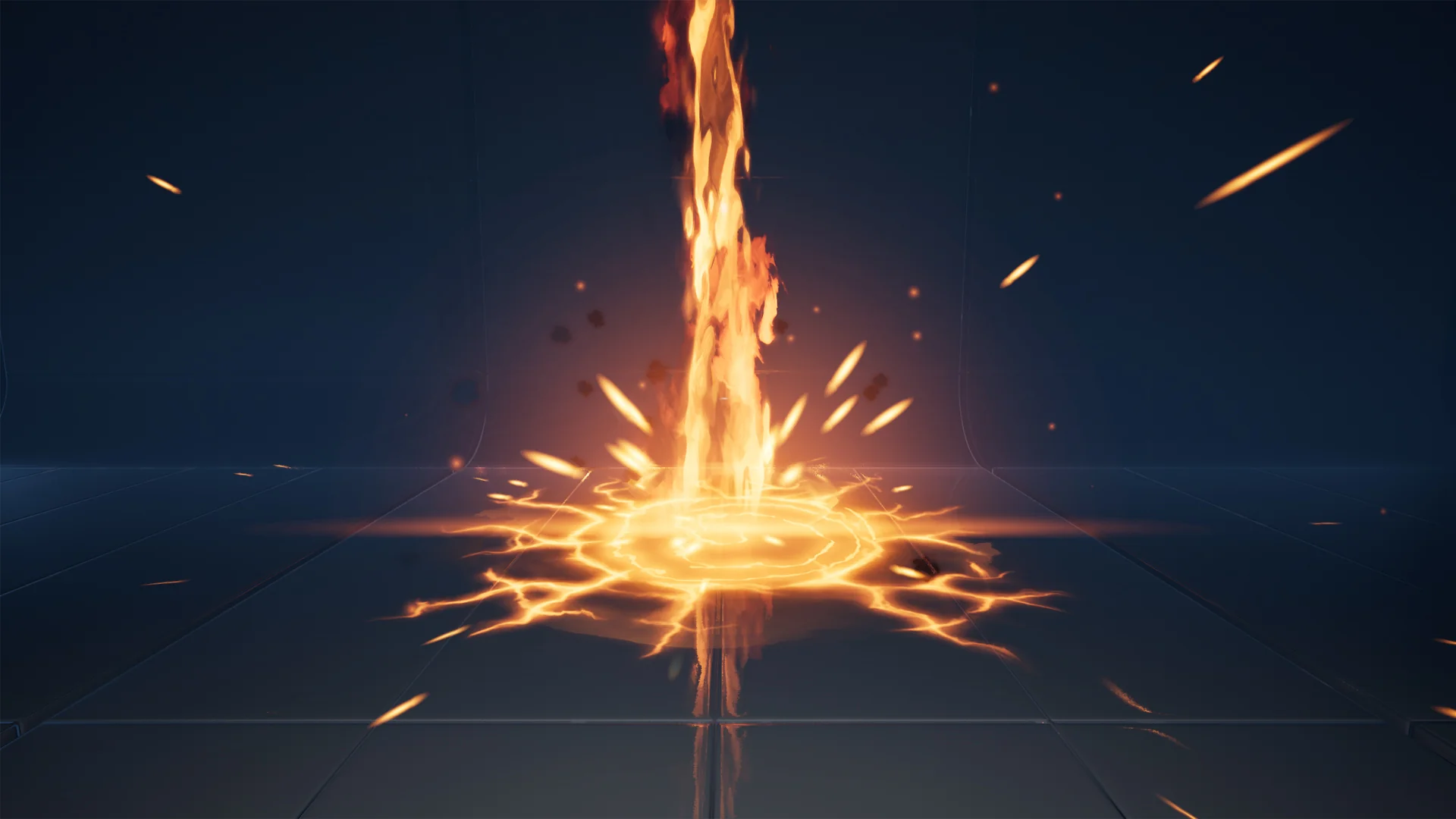
Integrating visual feedback for area-based spells begins with establishing clear spatial boundaries on the game field. AoE Magic Abilities Vol. 1 supplies 45 separate area-of-effect magic abilities tailored to communicate critical gameplay moments such as spell impacts, persistent hazard zones, and defensive support perimeters. The collection covers an array of utility, offensive, and protective mechanics, providing visual assets for spells, broad areas of attack, restorative heals, statistical buffs, tactical stuns, and elemental magic types including fire, electricity, and dark magic. Because the systems have been manually converted to the Niagara particle framework for Unreal Engine 4.27 and newer iterations, creators can immediately wire these effects into character ability systems without relying on legacy particle pipelines.
Deploying AoE Systems for Fantasy Spellcasting
Combat readability in fantasy games relies heavily on how well area-of-effect attacks communicate danger, timing, and borders to players. The 45 abilities in this asset collection address diverse combat scenarios, ranging from instantaneous spell bursts to ongoing territorial denial. When designing encounters with a mage character, developers need visual effects that clearly delineate where damage is dealt versus where allies can safely stand.
Areas of attack within the collection supply the visual cues required for high-threat combat skills. A burst of dark magic or a rapid electricity discharge communicates immediate damage within a defined radius, allowing players to execute dodges or reposition tactical units. Beyond straight damage, the inclusion of stuns introduces dedicated visual feedback for crowd-control status effects, giving designers a way to mark targets caught in immobilizing magic. When planning support mechanics, the collection balances offensive threats with specialized visual assets for heals and buffs. These supportive effects give healers and paladin-type archetypes recognizable visual signatures for regeneration rings, shielding auras, and stat-boosting fields that stand apart from hostile floor hazards.
Thematic Elements Across Magic Archetypes
Visual variety prevents combat encounters from feeling homogeneous across an extended campaign. The collection incorporates several distinct magical disciplines, allowing game creators to assign coherent visual identities to different factions, enemy classes, or player skill trees.
Fire effects provide high-impact, blazing visuals suitable for aggressive offensive casters. Incorporating concepts like fireball bursts and fiery floor zones, these assets suit destructive pyromancers aiming to control space with lingering heat. In contrast, electricity abilities provide sharper, energetic visual beats suited for lightning mages, shock traps, or high-tempo interrupt spells. Dark magic introduces a brooding, shadowy aesthetic useful for warlocks, necromancers, or boss encounters that deploy cursed ground, draining fields, and corrupting status debuffs.
Because the collection spans both offensive arts and restorative disciplines, designers can construct complete character kits out of a single library. A spellcaster might open an encounter with a long-range dark magic stun, follow with an electricity area attack to clear minions, and drop a protective buff or healing ring to recover party health, maintaining stylistic cohesion throughout the sequence.
Customizing Abilities for Diverse Character Kits
Every combat design requires bespoke timing, range, and thematic coloring. The particle systems in this package are built to be easily scaled and recolored, giving technical artists and designers the freedom to adapt one base effect across multiple gameplay functions.
Scaling capabilities allow an effect that works as a modest, close-range character aura to be expanded into a massive battlefield-clearing ultimate attack. Adjusting the scale ensures that the boundaries of the visual effect accurately reflect the underlying gameplay collision volumes or trace distances. A small localized stun trap can be adjusted to fit narrow dungeon corridors, while boss-tier abilities can be scaled up to encompass entire arena floors without breaking the composition of the effect.
Color modification opens up extensive variations for character progression. A base fire effect can be recolored to vibrant green for fel magic, cold blue for frostfire, or radiant gold for holy solar magic. This flexibility allows teams to represent tiered ability levels visually. A novice player spell might use an unadorned baseline color and smaller scale, whereas an upgraded, master-rank version of the same ability can feature larger scales and altered chromatic values to show amplified power.
Niagara Migration and Technical Pipeline in Vol. 1
The technical foundation of real-time effects dictates how easily an asset library integrates into active production pipelines. Following the v1.1 update released on May 29, 2024, the collection was manually converted from Unreal Engine's legacy Cascade system into Niagara, targeting Unreal Engine 4.27 and all subsequent engine versions.
Manual conversion ensures that each particle system functions correctly under Niagara's modular logic rather than relying on automated translators that can introduce parameter mismatches. In Niagara, creators gain access to clean parameter interfaces, allowing fast access to emitter lifetimes, scale factors, and color adjustments. The move away from Cascade ensures full alignment with modern Unreal Engine rendering standards, simplifying implementation for developers maintaining current projects.
The developer has established a broad library of complementary particle packages that share structural principles with this set. Related packages in the collection ecosystem include Magic Projectiles Mega Pack Vol.1, Niagara Mega Pack Vol. 1, Niagara Mega Pack Vol. 2, Stylized Explosions Vol. 1, and Sci-Fi Pack Vol. 1. Teams utilizing these systems can establish a visual pipeline that pairs projectile impacts and explosive bursts with the grounded area-of-effect hazards found here.
Cross-Platform Optimization for PC and Mobile Projects
Performance constraints vary significantly between high-end desktop environments and mobile hardware. The particle effects in this library are developed to operate reliably across both PC and mobile platforms, making them viable for cross-platform titles or projects aimed specifically at mobile devices.
Stylized aesthetics and balanced particle counts help maintain visual clarity even on smaller mobile screens, where cluttered visual effects can easily obscure player characters or incoming threats. At the same time, the bold colors and distinct shapes hold up well on high-resolution PC displays. Whether deployed in an isometric mobile action RPG, a top-down strategy title, or a third-person PC fantasy brawler, the 45 abilities provide dependable visual impact without requiring platform-specific rebuilding.
 Variety
 Variety
 Variety