"a7cfa646d0d8ae55"{"id":"1001215","slug":"advanced-crt-tv-vcr-vhs-effects","title":"Advanced CRT TV - VCR - VHS Effects","category":"Variety","engine":"5.0+","assetVersion":"","engineVersion":"Engine Version: 5.0+","tag":"Variety","accent":"blue","visual":"mech","summary":"Recreate vintage cathode-ray monitors, UI retainer filters, and VCR video artifacts using 47 parameters, screen hop controls, and a dedicated timestamp Blueprin","platform":"Unreal Engine","publishedAt":"2026-09-19T08:55:15.447Z","updatedAt":"2026-09-19T08:55:15.447Z","sourceNotes":[],"fileContents":[],"compatibility":["Unreal Engine","Engine Version: 5.0+"],"featuredImage":{"alt":"Advanced CRT TV - VCR - VHS Effects","src":"/wp-content/uploads/published/2026/09/6c2175087da5-32e8ab76-e985-477b-9183-578075276e5d-03d6e91402.webp"},"hasDownloadLink":true,"downloads":0,"terms":[{"taxonomy":"category","slug":"variety","name":"Variety"}],"galleryImages":[{"src":"/wp-content/uploads/published/2026/09/5954d4c1e1a2-89cc9d06-9bb5-457a-b1de-288f4f833ead-7fd6b6c859.webp","alt":"Advanced CRT TV - VCR - VHS Effects"},{"src":"/wp-content/uploads/published/2026/09/3a1fbd3f6639-4a77cd1d-9dfd-4611-b411-b3610ca8baed-261c74c7c3.webp","alt":"Advanced CRT TV - VCR - VHS Effects"},{"src":"/wp-content/uploads/published/2026/09/abc52ffc4a5c-e50cf890-7b7d-40a6-8bab-2b7f790d5f8e-06cd031e21.webp","alt":"Advanced CRT TV - VCR - VHS Effects"},{"src":"/wp-content/uploads/published/2026/09/2a683386e015-ac2ba535-7ce1-486a-9302-fdb5c9ec35b9-541b4aae89.webp","alt":"Advanced CRT TV - VCR - VHS Effects"},{"src":"/wp-content/uploads/published/2026/09/eac93b0a44bf-28b8cc18-eb66-4b43-8417-dc73e70c73c9-becd3acff3.webp","alt":"Advanced CRT TV - VCR - VHS Effects"},{"src":"/wp-content/uploads/published/2026/09/e6c89e4a423a-90f0d9a6-c014-41f1-b74e-53e43721817b-453a057d7f.webp","alt":"Advanced CRT TV - VCR - VHS Effects"},{"src":"/wp-content/uploads/published/2026/09/bcd29c6cfb23-0eb4751a-4b03-4f74-9ec2-3f3c2f61bf20-2cc7627f92.webp","alt":"Advanced CRT TV - VCR - VHS Effects"},{"src":"/wp-content/uploads/published/2026/09/fe91710104db-1232ef36-7f58-4a03-9d92-e8aee6b264ce-4f933833da.webp","alt":"Advanced CRT TV - VCR - VHS Effects"},{"src":"/wp-content/uploads/published/2026/09/1f4d5a57b8a5-7917f930-3ced-4a49-a61f-e8ec1ed30b23-50bdba8815.webp","alt":"Advanced CRT TV - VCR - VHS Effects"},{"src":"/wp-content/uploads/published/2026/09/3ac6dadb6028-09549aaf-655e-47ad-a733-6e52a26208ab-c2af4b9f76.webp","alt":"Advanced CRT TV - VCR - VHS Effects"}],"accessPanel":{"kind":"resource","title":"Download this resource","eyebrow":"Free Download","message":"Log in or create a free account to start your download.","fileName":"Content.7z","safetyNote":"Resources are manually reviewed before listing to improve quality and reduce obvious risks.","actionLabel":"Download Free","resourceType":"Resource archive"},"contentHtml":"\u003cp\u003eReplicating the quirks of cathode-ray tube displays and analog video cassettes inside a real-time 3D engine requires balancing raster distortion, phosphor patterns, and performance overhead. Achieving authentic video tape artifacts involves far more than simply overlaying noise across the camera view. Advanced CRT TV - VCR - VHS Effects provides a dedicated material and post-process architecture configured with 47 adjustable parameters to simulate analog television hardware, VCR tape playback, and vintage computer monitors.\u003c/p\u003e\n\u003cp\u003eThe system operates both as a post-process screen effect and as a specialized surface material, giving creators the freedom to project vintage signals across entire game viewports or confine them directly to the surface of 3D display hardware in the environment. Scene environments shown in preview demos are omitted, keeping the package focused directly on its shaders, a Multisonic TV static mesh, and supporting display geometry.\u003c/p\u003e \u003ch2\u003eSimulating Cathode-Ray Tubes with 47 Adjustable Parameters\u003c/h2\u003e\n\u003cp\u003eAnalog screens rely on distinct physical properties that define how glass, phosphors, and electron beams interact.\u003c/p\u003e\n\u003cp\u003eThrough its 47 exposed parameters, the master material lets artists calibrate core optical behaviors including screen glow, halation, and scanline rendering. The package incorporates optimized scanline logic engineered to be computationally cheap while preserving sharp cathode raster lines. Display rendering can be further tuned through low and high quality phosphor settings, enabling projects to shift from coarse broadcast television grilles to crisper monitors. Mipmap controls allow direct adjustment over underlying image blurriness, while a master filter toggle lets developers switch effects on and off instantly during gameplay sequences.\u003c/p\u003e \u003ch2\u003eFine-Tuning Screen Hop Parameters and Analog Glitch Mechanics\u003c/h2\u003e\n\u003cp\u003eTape tracking errors and broadcast sync drops frequently cause visual feeds to jump or slip vertically.\u003c/p\u003e\n\u003cp\u003eThe asset handles these physical anomalies using dedicated screen hop parameters that manage erratic vertical frame shifts. Screen Hop Intensity dictates the physical hop distance across the screen area, while Screen Hop Interval sets the exact time delay between sudden screen jumps. Screen Hop Duration controls how long each jump displacement persists before settling. To keep glitch sequences from appearing repetitive or static, a dedicated seed value and Screen Hop Randomness parameters inject variation into the timing and positioning of frame slips.\u003c/p\u003e \u003ch2\u003eHUD Widgets and Retainer Box Post Processing\u003c/h2\u003e\n\u003cp\u003eRetro user interfaces frequently require CRT scanline passes without applying full-screen post processing to the rest of the 3D world.\u003c/p\u003e\n\u003cp\u003eThe package integrates directly with Unreal Engine UMG interface workflows through retainer box material instances. Artists can assign the included \u003ccode\u003eRetainer_Preset_saturated_VCR_distorted\u003c/code\u003e Material instance directly to HUD retainer boxes, confining the CRT and VCR distortion strictly to the 2D interface layer. The retainer implementation includes dedicated fixes ensuring dark colors render cleanly on widgets without clipping or washing out, accompanied by an example UI widget within an included sample level map to verify setup configurations.\u003c/p\u003e \u003ch2\u003eConfiguring the Single Blueprint Timestamp System\u003c/h2\u003e\n\u003cp\u003eOn-screen display clocks are a signature element of camcorders, security feeds, and home video cassette recordings.\u003c/p\u003e\n\u003cp\u003eThe timestamp mechanics are packaged into a standalone Blueprint actor, allowing developers to drop the clock display directly into a level and configure the date through simple exposed fields. Performance efficiency is maintained by updating the capture system at 1 FPS instead of polling the display every frame in real time. The timestamp system also features customizable timestamp color parameters and updated texture sample handling configured for colorspace stability in Unreal Engine 5.\u003c/p\u003e \u003ch2\u003eAdapting Displays for 8-Bit Computers and Multisonic TV Hardware\u003c/h2\u003e\n\u003cp\u003eDifferent production styles demand vastly different video signals, ranging from clean personal computer monitors to decaying home video tapes.\u003c/p\u003e\n\u003cp\u003eThe system includes dedicated setups for distinct display types, allowing users to shift from high-contrast 8-bit computer screens to noisy, saturated VCR output. In-world scene placement is supported by included 3D monitor and television models, featuring the Multisonic TV static mesh ready for surface material assignment. For projects requiring older shader configurations or specific look-dev references, previous revisions of the master materials are preserved directly within the legacy material directory.\u003c/p\u003e \u003ch2\u003eIntegrating Analog Video Feeds into Game Production\u003c/h2\u003e\n\u003cp\u003eRetro video filters work best when they match the exact functional demands of a specific gameplay beat or environment prop. By isolating UI filters to retainer boxes, running camera timestamps at low tick rates, and offering granular control over physical screen hops, this material collection serves narrative video recorders, retro terminals, and stylized horror viewports without introducing unnecessary rendering strain.\u003c/p\u003e\n\n\u003ch2\u003eMore From The Same Workflow\u003c/h2\u003e\n\u003cul\u003e\n\u003cli\u003e\u003ca href=\"https://3dcghub.com/art-of-shader-film-and-special-effects/\" title=\"Art of Shader - Film And Special Effects\"\u003eArt of Shader - Film And Special Effects\u003c/a\u003e\u003c/li\u003e\n\u003cli\u003e\u003ca href=\"https://3dcghub.com/fantastical-resource-shader/\" title=\"Fantastical Resource Shader\"\u003eFantastical Resource Shader\u003c/a\u003e\u003c/li\u003e\n\u003cli\u003e\u003ca href=\"https://3dcghub.com/shiny-things/\" title=\"Shiny Things\"\u003eShiny Things\u003c/a\u003e\u003c/li\u003e\n\u003cli\u003e\u003ca href=\"https://3dcghub.com/baltic-vfx-material-functions-and-effects-library/\" title=\"Baltic VFX : Material functions and effects library\"\u003eBaltic VFX : Material functions and effects library\u003c/a\u003e\u003c/li\u003e\n\u003cli\u003e\u003ca href=\"https://3dcghub.com/abstract-fx-meshes/\" title=\"Abstract FX: Meshes\"\u003eAbstract FX: Meshes\u003c/a\u003e\u003c/li\u003e\n\u003c/ul\u003e","contentTextLength":5281,"navigation":{"current":10,"total":3167,"previous":{"id":"1001216","slug":"ep-master-materials","title":"EP Master Materials","category":"Variety","platform":"Unreal Engine","updatedAt":"2026-09-19T08:57:25.445Z"},"next":{"id":"1001214","slug":"water-materials","title":"Water Materials","category":"Water","platform":"Unreal Engine","updatedAt":"2026-09-19T08:52:56.340Z"}},"relatedResources":[{"id":"1001218","slug":"led-screen-effect","title":"LED Screen Effect","category":"Variety","engine":"5.0+","assetVersion":"","engineVersion":"Engine Version: 5.0+","tag":"Variety","accent":"blue","visual":"mech","summary":"Configure dynamic digital displays with LED Screen Effect in Unreal Engine 5, featuring 58 material designs and capsule templates for scaling.","platform":"Unreal Engine","publishedAt":"2026-09-19T09:04:05.992Z","updatedAt":"2026-09-19T09:04:05.992Z","sourceNotes":[],"fileContents":[],"compatibility":["Unreal Engine","Engine Version: 5.0+"],"featuredImage":{"alt":"LED Screen Effect","src":"/wp-content/uploads/published/2026/09/76e79ed67272-3c5e0628-c5cd-41b0-9ce1-7ab9ed3fa12b-e4692fc186.webp"},"hasDownloadLink":true,"downloads":0},{"id":"28564","slug":"art-of-shader-film-and-special-effects","title":"Art of Shader - Film And Special Effects","category":"Variety","engine":"5.1+","assetVersion":"Engine version: 5.1+","engineVersion":"","tag":"Variety","accent":"blue","visual":"luts","summary":"Art of Shader - Film And Special Effects focuses on cinematic image treatment through advanced post-process materials. Its Blueprint-driven workflow makes it easier to combine, blend, and group effects while keeping each look highly adjustable.","platform":"Unreal Engine","publishedAt":"2026-05-17T13:13:44.000Z","updatedAt":"2026-05-17T13:13:54.000Z","sourceNotes":[],"fileContents":[],"compatibility":["Unreal Engine","Engine version: 5.1+"],"featuredImage":{"alt":"Art of Shader - Film And Special Effects","src":"https://3dcghub.com/wp-content/uploads/2026/05/0d2392df6753_a14b78aa-9364-4758-b087-a9276d782faf.webp"},"hasDownloadLink":true,"downloads":0},{"id":"13126","slug":"fantastical-resource-shader","title":"Fantastical Resource Shader","category":"Variety","engine":"4.26+,5.0+","assetVersion":"Engine version: 4.26+,5.0+","engineVersion":"4.18","tag":"Variety","accent":"blue","visual":"luts","summary":"Enhance your game's interface with the Fantastical Resource Shader. This versatile tool allows for deep customization of resource orbs, potions, and magical effects using over 45 parameters.","platform":"Unreal Engine","publishedAt":"2026-03-10T15:54:25.000Z","updatedAt":"2026-04-19T15:46:31.000Z","sourceNotes":[],"fileContents":[],"compatibility":["Unreal Engine","Engine version: 4.26+,5.0+"],"featuredImage":{"alt":"Fantastical Resource Shader","src":"https://3dcghub.com/wp-content/uploads/2026/03/8dab64b5-a820-4d69-b557-63fd42ff3760.webp"},"hasDownloadLink":true,"downloads":0}]}
Variety
Advanced CRT TV - VCR - VHS Effects
Recreate vintage cathode-ray monitors, UI retainer filters, and VCR video artifacts using 47 parameters, screen hop controls, and a dedicated timestamp Blueprin
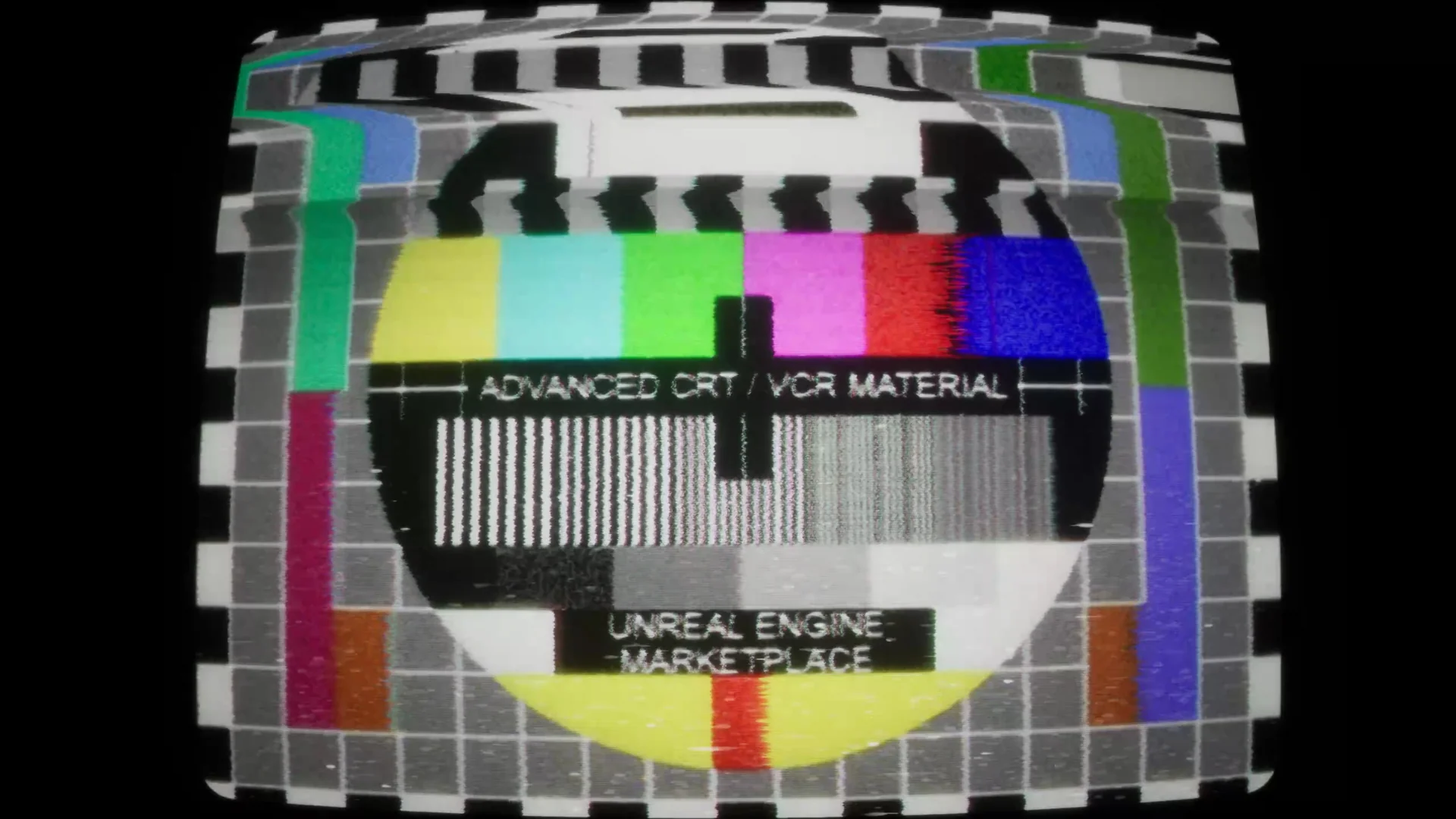
Replicating the quirks of cathode-ray tube displays and analog video cassettes inside a real-time 3D engine requires balancing raster distortion, phosphor patterns, and performance overhead. Achieving authentic video tape artifacts involves far more than simply overlaying noise across the camera view. Advanced CRT TV - VCR - VHS Effects provides a dedicated material and post-process architecture configured with 47 adjustable parameters to simulate analog television hardware, VCR tape playback, and vintage computer monitors.
The system operates both as a post-process screen effect and as a specialized surface material, giving creators the freedom to project vintage signals across entire game viewports or confine them directly to the surface of 3D display hardware in the environment. Scene environments shown in preview demos are omitted, keeping the package focused directly on its shaders, a Multisonic TV static mesh, and supporting display geometry.
Simulating Cathode-Ray Tubes with 47 Adjustable Parameters
Analog screens rely on distinct physical properties that define how glass, phosphors, and electron beams interact.
Through its 47 exposed parameters, the master material lets artists calibrate core optical behaviors including screen glow, halation, and scanline rendering. The package incorporates optimized scanline logic engineered to be computationally cheap while preserving sharp cathode raster lines. Display rendering can be further tuned through low and high quality phosphor settings, enabling projects to shift from coarse broadcast television grilles to crisper monitors. Mipmap controls allow direct adjustment over underlying image blurriness, while a master filter toggle lets developers switch effects on and off instantly during gameplay sequences.
Fine-Tuning Screen Hop Parameters and Analog Glitch Mechanics
Tape tracking errors and broadcast sync drops frequently cause visual feeds to jump or slip vertically.
The asset handles these physical anomalies using dedicated screen hop parameters that manage erratic vertical frame shifts. Screen Hop Intensity dictates the physical hop distance across the screen area, while Screen Hop Interval sets the exact time delay between sudden screen jumps. Screen Hop Duration controls how long each jump displacement persists before settling. To keep glitch sequences from appearing repetitive or static, a dedicated seed value and Screen Hop Randomness parameters inject variation into the timing and positioning of frame slips.
HUD Widgets and Retainer Box Post Processing
Retro user interfaces frequently require CRT scanline passes without applying full-screen post processing to the rest of the 3D world.
The package integrates directly with Unreal Engine UMG interface workflows through retainer box material instances. Artists can assign the included Retainer_Preset_saturated_VCR_distorted Material instance directly to HUD retainer boxes, confining the CRT and VCR distortion strictly to the 2D interface layer. The retainer implementation includes dedicated fixes ensuring dark colors render cleanly on widgets without clipping or washing out, accompanied by an example UI widget within an included sample level map to verify setup configurations.
Configuring the Single Blueprint Timestamp System
On-screen display clocks are a signature element of camcorders, security feeds, and home video cassette recordings.
The timestamp mechanics are packaged into a standalone Blueprint actor, allowing developers to drop the clock display directly into a level and configure the date through simple exposed fields. Performance efficiency is maintained by updating the capture system at 1 FPS instead of polling the display every frame in real time. The timestamp system also features customizable timestamp color parameters and updated texture sample handling configured for colorspace stability in Unreal Engine 5.
Adapting Displays for 8-Bit Computers and Multisonic TV Hardware
Different production styles demand vastly different video signals, ranging from clean personal computer monitors to decaying home video tapes.
The system includes dedicated setups for distinct display types, allowing users to shift from high-contrast 8-bit computer screens to noisy, saturated VCR output. In-world scene placement is supported by included 3D monitor and television models, featuring the Multisonic TV static mesh ready for surface material assignment. For projects requiring older shader configurations or specific look-dev references, previous revisions of the master materials are preserved directly within the legacy material directory.
Integrating Analog Video Feeds into Game Production
Retro video filters work best when they match the exact functional demands of a specific gameplay beat or environment prop. By isolating UI filters to retainer boxes, running camera timestamps at low tick rates, and offering granular control over physical screen hops, this material collection serves narrative video recorders, retro terminals, and stylized horror viewports without introducing unnecessary rendering strain.
 Variety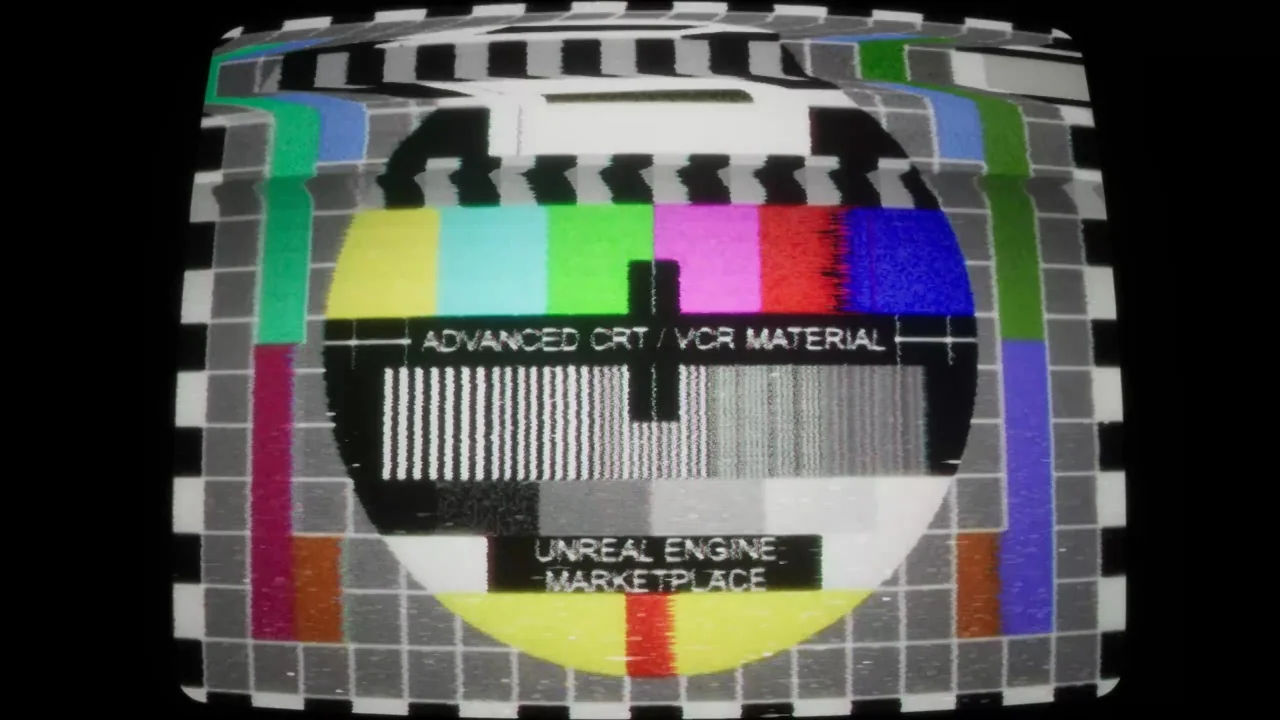
 Variety
 Variety
 Variety