"e9c335e082208b17"{"id":"1002876","slug":"action-rpg-multiplayer-starter-template","title":"Action RPG Multiplayer Starter Template","category":"RPG","engine":"5.0+","assetVersion":"","engineVersion":"Engine Version: 5.0+","tag":"RPG","accent":"blue","visual":"mech","summary":"Explore the Action RPG Multiplayer Starter Template featuring jigsaw inventory, data-driven skills, AI encounters, quest authoring, and trading.","platform":"Unreal Engine","indexPolicy":"index","publishedAt":"2026-11-21T01:05:41.691Z","updatedAt":"2026-11-21T01:05:41.691Z","sourceNotes":[],"fileContents":[],"compatibility":["Unreal Engine","Engine Version: 5.0+"],"featuredImage":{"alt":"Action RPG Multiplayer Starter Template","src":"/wp-content/uploads/published/2026/11/1046e0a3eb0a-722ea6b8-641b-4312-80dd-80c2ac6a831d-a70db02ce7.webp"},"fileSizeBytes":335168011,"hasDownloadLink":true,"downloads":0,"terms":[{"taxonomy":"category","slug":"rpg","name":"RPG"}],"galleryImages":[{"src":"/wp-content/uploads/published/2026/11/a53fcabacf9b-f8f3faae-4dcb-4bcd-aca7-534a73d7d366-7c7e944bed.webp","alt":"Action RPG Multiplayer Starter Template"},{"src":"/wp-content/uploads/published/2026/11/433d26b84464-bb096a3d-01c1-4a54-ad6c-5ff1fb0d556b-5ef26398b8.webp","alt":"Action RPG Multiplayer Starter Template"},{"src":"/wp-content/uploads/published/2026/11/c4515202081e-d8341782-e617-4a75-b510-b2c2b64935e7-10b562564f.webp","alt":"Action RPG Multiplayer Starter Template"},{"src":"/wp-content/uploads/published/2026/11/8b4604c4d291-fff0e6ba-dabd-477d-aa65-d4d811cf5fb3-c98c56f928.webp","alt":"Action RPG Multiplayer Starter Template"},{"src":"/wp-content/uploads/published/2026/11/69b147d4bb51-9a718ea5-7404-4b8a-84c4-7f1fb9564bfa-fc52e03836.webp","alt":"Action RPG Multiplayer Starter Template"},{"src":"/wp-content/uploads/published/2026/11/e8256dec013b-d0c742d1-941c-45f2-8f53-60db650f7cda-0eb92727a5.webp","alt":"Action RPG Multiplayer Starter Template"},{"src":"/wp-content/uploads/published/2026/11/06037f5a567b-0bb99177-ff83-4df2-a4c7-895d8caacdcc-864fac837a.webp","alt":"Action RPG Multiplayer Starter Template"},{"src":"/wp-content/uploads/published/2026/11/beb5d15120cb-a51889ba-ed61-4826-a95b-15dc8a834e93-f214570a5d.webp","alt":"Action RPG Multiplayer Starter Template"},{"src":"/wp-content/uploads/published/2026/11/5d38a904f343-f252f69b-d0a6-4365-a1b4-367057672a7e-7f7f5e41b3.webp","alt":"Action RPG Multiplayer Starter Template"},{"src":"/wp-content/uploads/published/2026/11/6ef13d5ece7c-06ff9a07-6213-450a-a02f-026328c37541-2566bbd876.webp","alt":"Action RPG Multiplayer Starter Template"}],"accessPanel":{"kind":"resource","title":"Get this resource","safetyNote":"Resources are manually reviewed before listing to improve quality and reduce obvious risks.","fileName":"Action RPG Multiplayer Starter Template.7z","resourceType":"Resource archive","versions":[]},"contentHtml":"\u003cp\u003eSetting up an online fantasy world or an isometric dungeon crawler requires solid underlying networking, predictable data propagation, and cohesive player interactions. The Action RPG Multiplayer Starter Template serves as a complete foundation for projects needing deep itemization, responsive character progression, and multi-actor combat setups. Supporting both top-down and third-person perspectives, the framework gives developers the freedom to sculpt tight isometric combat encounters or build sprawling third-person overland adventures without having to rebuild character control logic or network state management from scratch.\u003c/p\u003e \u003ch2\u003eDual Perspectives and Action RPG Combat Flow\u003c/h2\u003e\n\u003cp\u003eCombat and movement can shift between top-down and third-person modes, granting flexibility for classic isometric hack-and-slash setups or over-the-shoulder action titles. Character performance is driven by an integrated attribute system shared across both playable characters and non-player actors. These attributes govern core strength and defensive capacities, updating dynamically whenever gear changes or temporary conditions trigger.\u003c/p\u003e\n\u003cp\u003eStats derived from gear feed straight into character attributes, with built-in logic handling how those values are added or deducted as equipment changes. Custom stats can be introduced into the pipeline, giving developers complete authority over how derived values affect survivability, combat efficiency, and mobility. Beyond solitary encounters, multiplayer player-to-player functionality is active out of the box. Players can initiate duels, trade items directly with peers, and access context menus simply by right-clicking other adventurers in the shared environment.\u003c/p\u003e \u003ch2\u003eMultiplayer Inventory Management and Item Generation Rules\u003c/h2\u003e\n\u003cp\u003eThe core of the item pipeline uses a jigsaw-style multi-grid inventory layout. Rather than forcing single-slot limitations, items occupy distinct spatial footprints across grid containers, matching the visual management style popularized by classic action role-playing games. Right-clicking an item in any container or backpack reveals a context menu tailored for rapid management, dropping, and manual usage.\u003c/p\u003e\n\u003cp\u003eItems, equipment pieces, and active player skills are authored in data tables, allowing designers to configure an entire registry of gameplay assets from a central location. Pickups support fixed baseline attributes alongside randomized stat pools. These values roll when an item drops in the world, generates inside a loot chest, or emerges from the crafting table. Developers maintain fine control over the generation rules, setting boundaries on how extreme stat variance can be across different item tiers.\u003c/p\u003e\n\u003cp\u003eEquipment modification adds another layer of depth to the inventory architecture. Items can accommodate auxiliary upgrades, such as socketing gems into weapon frames to boost existing stats or grant new offensive capabilities. Because all modifications route through the established item data table structure, socketed improvements properly update the character attribute matrix immediately upon equipping.\u003c/p\u003e \u003ch2\u003eEnvironmental Hazard Fields and Actor-Driven Buff Mechanics\u003c/h2\u003e\n\u003cp\u003eCombat encounters extend beyond direct weapon swings through a modular status effect system. Buffs and debuffs can be distributed by direct player abilities, enemy offensive strikes, or static level actors placed across the game world. An environmental zone can apply a persistent burn debuff that deals periodic damage over time while simultaneously clamping the player's movement speed to simulate difficult terrain or hazard pools.\u003c/p\u003e\n\u003cp\u003eBecause the status system operates on an actor-agnostic base, any blueprint capable of overlap detection or targeted line checks can apply these conditions. Developers can craft hazard puzzles, traps, defensive wards, or area-of-effect spells with minimal friction, keeping character attributes responsive to external status effects.\u003c/p\u003e \u003ch2\u003eAI Behavior Controls, Boss Encounters, and Spawner Classes\u003c/h2\u003e\n\u003cp\u003eEnemies within the template rely on modular decision logic that takes distance, ability cooldowns, and remaining health percentages into account. Behavior profiles allow distinct tactical roles: an enemy can be configured to avoid melee range entirely, favoring evasive maneuvering and ranged spell attacks, while others close distance aggressively. Attacks can apply customized status effects and debuffs on impact, challenging players to balance status clearing alongside standard combat.\u003c/p\u003e\n\u003cp\u003eBoss encounters incorporate scripted phase triggers linked to current vitality. Bosses are configured to enter a stunned state upon reaching specific health thresholds—specifically at 75%, 50%, and 25% of their total health pool. These vulnerability windows reward coordinated team bursts and grant distinct pacing checkpoints during difficult multiplayer encounters.\u003c/p\u003e\n\u003cp\u003eEnemies populate the world through a specialized AI spawner blueprint that supports delayed spawning routines. When defeated, non-player characters consult assigned drop tables to scatter randomized loot pickups across the immediate terrain.\u003c/p\u003e \u003ch2\u003eQuest Widget Authoring, Skill Progression, and Resource Harvesting\u003c/h2\u003e\n\u003cp\u003eContent generation tools provide rapid iteration pipelines for narrative and progression milestones without requiring hardcoded Blueprint revisions:\u003c/p\u003e\n\u003cul\u003e \u003cli\u003e\u003cstrong\u003eWidget Quest Creator:\u003c/strong\u003e Designers can assemble interactive quest dialogues, define prerequisite chains, and establish multi-tier reward bundles. Available objective categories include kill quotas, collection goals, and conversational requirements with specific world characters. Completed tasks return targeted payouts such as raw experience points, skill points, currency gold, or specific item entries.\u003c/li\u003e \u003cli\u003e\u003cstrong\u003eTree Creator Tool:\u003c/strong\u003e Massive skill progression networks can be plotted visually. The resulting skill trees let players spend accumulated skill points to boost active capabilities, modify operational cooldowns, or unlock passive attribute bonuses.\u003c/li\u003e \u003cli\u003e\u003cstrong\u003eHarvesting and Spawner Architecture:\u003c/strong\u003e The template features a versatile blueprint spawner for populating items across levels at random. This spawner serves as the parent class for the dedicated harvesting blueprint. Harvesting actors can be set to produce yields immediately at game start, trigger when hit by player damage, or activate through manual interaction. An integrated interaction hold timer enables delayed execution, providing the baseline mechanics necessary for searching harvesting nodes or unlocking heavy supply chests.\u003c/li\u003e\n\u003c/ul\u003e \u003ch2\u003eImplementation Environment and Project Scope\u003c/h2\u003e\n\u003cp\u003eThe systems within the framework are engineered entirely in Unreal Engine Blueprints, built with multiplayer replication patterns established across character, container, and combat classes. Projects targeting version 4.26 or newer benefit from substantial baseline framework updates implemented directly for modern engine versions. The interconnected arrangement of multi-grid inventory spaces, data-driven item modification, boss pacing routines, and trade interactions makes this starter template well suited for developers building self-contained dungeon crawlers, co-op action adventures, or proto-MMO systems requiring deep, production-ready combat architecture.\u003c/p\u003e\n\n\u003ch2\u003eExplore Similar Assets\u003c/h2\u003e\n\u003cul\u003e\n\u003cli\u003e\u003ca href=\"https://3dcghub.com/easy-survival-rpg-v5/\" rel=\"noopener noreferrer\"\u003eEasy Survival RPG V5\u003c/a\u003e\u003c/li\u003e\n\u003cli\u003e\u003ca href=\"https://3dcghub.com/rpg-engine-v7/\" rel=\"noopener noreferrer\"\u003eRPG Engine V7\u003c/a\u003e\u003c/li\u003e\n\u003cli\u003e\u003ca href=\"https://3dcghub.com/survival-rpg-engine/\" rel=\"noopener noreferrer\"\u003eSurvival RPG Engine\u003c/a\u003e\u003c/li\u003e\n\u003cli\u003e\u003ca href=\"https://3dcghub.com/easy-topdown-template-v2-1-survival-action-shooter-top-down-rpg/\" rel=\"noopener noreferrer\"\u003eEasy TopDown Template V2.1 | Survival Action Shooter Top Down RPG\u003c/a\u003e\u003c/li\u003e\n\u003cli\u003e\u003ca href=\"https://3dcghub.com/massive-rpg-systems/\" rel=\"noopener noreferrer\"\u003eMassive RPG Systems\u003c/a\u003e\u003c/li\u003e\n\u003c/ul\u003e","contentTextLength":7348,"navigation":{"current":59,"total":4839,"previous":{"id":"1002877","slug":"actor-pool-manager-plugin","title":"Actor Pool Manager Plugin","category":"Engine Tools","platform":"Unreal Engine","updatedAt":"2026-11-21T01:35:40.505Z"},"next":{"id":"15266","slug":"global-world-optimization-framework-pro-max-high-performance-for-large-worlds","title":"Global World Optimization Framework PRO MAX - High Performance for Large Worlds","category":"Procedural Systems","platform":"Unreal Engine","updatedAt":"2026-11-20T19:38:56.677Z"}},"relatedResources":[{"id":"11819","slug":"easy-survival-rpg-v5","title":"Easy Survival RPG V5","category":"RPG","engine":"5.1+,5.8+","assetVersion":"","engineVersion":"Engine Version: 5.1+,5.8+","tag":"RPG","accent":"blue","visual":"character","summary":"Easy Survival RPG V5 provides a battle-tested foundation for creating professional multiplayer games. This modular template includes everything from combat and crafting to advanced life simulation systems.","platform":"Unreal Engine","indexPolicy":"noindex","publishedAt":"2026-03-05T19:04:26.000Z","updatedAt":"2026-10-07T09:08:33.708Z","sourceNotes":[],"fileContents":[],"compatibility":["Unreal Engine","Engine Version: 5.1+,5.8+"],"featuredImage":{"alt":"Easy Survival RPG V5","src":"https://3dcghub.com/wp-content/uploads/2026/03/bcd7af22-1493-4aa2-8994-25e309eac033.webp"},"fileSizeBytes":2783351175,"hasDownloadLink":true,"downloads":7},{"id":"1001702","slug":"rpg-engine-v7","title":"RPG Engine V7","category":"RPG","engine":"5.5+","assetVersion":"","engineVersion":"Engine Version: 5.5+","tag":"RPG","accent":"blue","visual":"mech","summary":"Explore RPG Engine V7, a multiplayer RPG framework for Unreal Engine 5 featuring replicated combat, MetaHuman integration, and DataAsset HUB configuration.","platform":"Unreal Engine","indexPolicy":"index","publishedAt":"2026-10-14T13:31:26.770Z","updatedAt":"2026-10-14T13:31:26.770Z","sourceNotes":[],"fileContents":[],"compatibility":["Unreal Engine","Engine Version: 5.5+"],"featuredImage":{"alt":"RPG Engine V7","src":"/wp-content/uploads/published/2026/10/b93a6c265b05-685c12d7-10e4-4c73-828e-25a26e074f1d-6592963c47.webp"},"fileSizeBytes":4456428515,"hasDownloadLink":true,"downloads":2},{"id":"1001584","slug":"survival-rpg-engine","title":"Survival RPG Engine","category":"RPG","engine":"5.5+","assetVersion":"","engineVersion":"Engine Version: 5.5+","tag":"RPG","accent":"blue","visual":"mech","summary":"Explore the mechanics of Survival RPG Engine, covering multiplayer networking, PCG world generation, building systems, and data-driven character progression.","platform":"Unreal Engine","indexPolicy":"index","publishedAt":"2026-10-10T09:08:31.079Z","updatedAt":"2026-10-10T09:08:31.079Z","sourceNotes":[],"fileContents":[],"compatibility":["Unreal Engine","Engine Version: 5.5+"],"featuredImage":{"alt":"Survival RPG Engine","src":"/wp-content/uploads/published/2026/10/5090c18eb0af-217516e7-a06d-4940-9399-2fc1ef6d175f-16d4eef1b1.webp"},"fileSizeBytes":1747333546,"hasDownloadLink":true,"downloads":1}]}
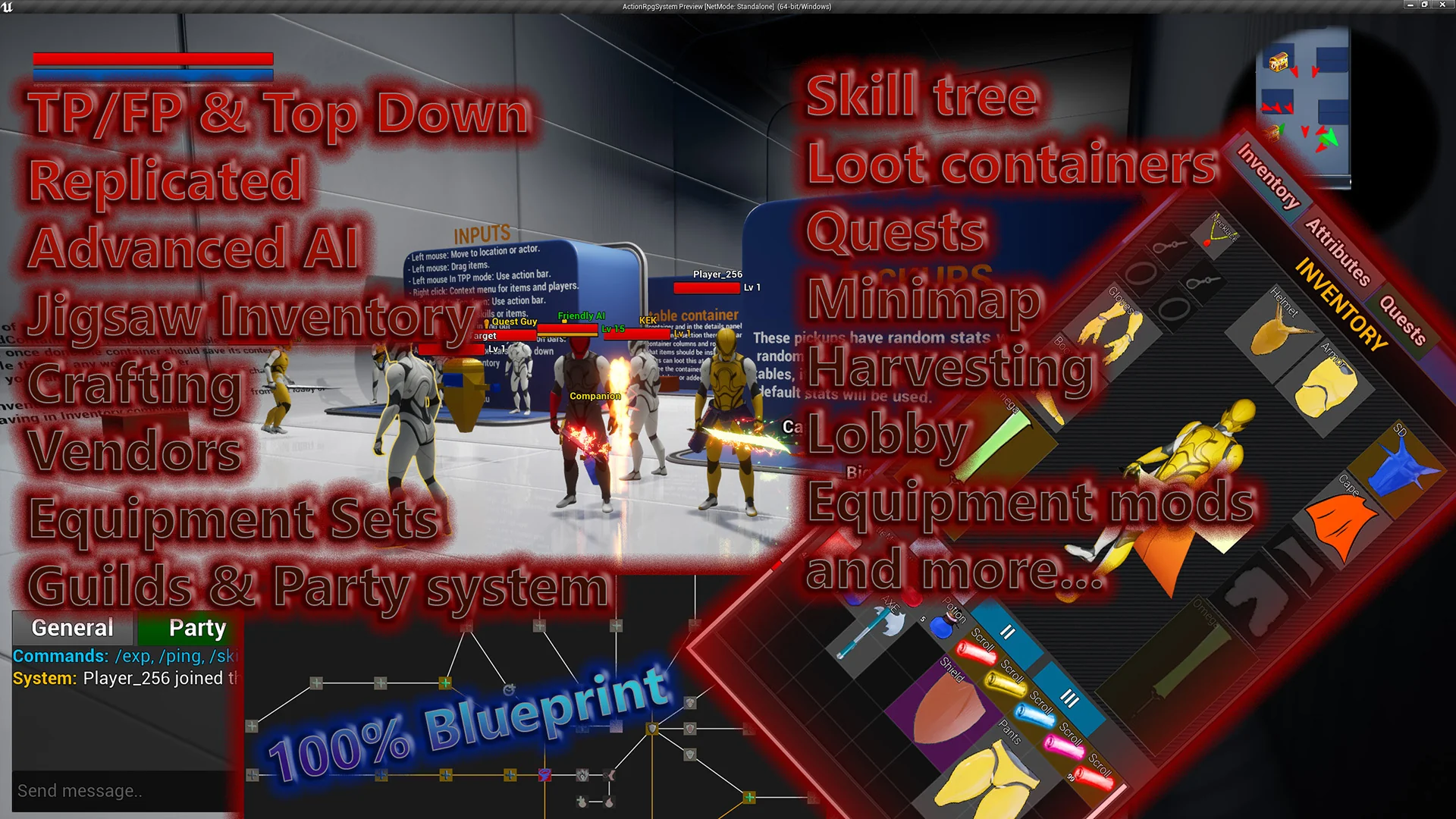
Resource screenshots
1 / 10
Join our channel
Follow 3DCGHUB on Telegram for new resource drops, migration updates, and community notices.
Setting up an online fantasy world or an isometric dungeon crawler requires solid underlying networking, predictable data propagation, and cohesive player interactions. The Action RPG Multiplayer Starter Template serves as a complete foundation for projects needing deep itemization, responsive character progression, and multi-actor combat setups. Supporting both top-down and third-person perspectives, the framework gives developers the freedom to sculpt tight isometric combat encounters or build sprawling third-person overland adventures without having to rebuild character control logic or network state management from scratch.
Dual Perspectives and Action RPG Combat Flow
Combat and movement can shift between top-down and third-person modes, granting flexibility for classic isometric hack-and-slash setups or over-the-shoulder action titles. Character performance is driven by an integrated attribute system shared across both playable characters and non-player actors. These attributes govern core strength and defensive capacities, updating dynamically whenever gear changes or temporary conditions trigger.
Stats derived from gear feed straight into character attributes, with built-in logic handling how those values are added or deducted as equipment changes. Custom stats can be introduced into the pipeline, giving developers complete authority over how derived values affect survivability, combat efficiency, and mobility. Beyond solitary encounters, multiplayer player-to-player functionality is active out of the box. Players can initiate duels, trade items directly with peers, and access context menus simply by right-clicking other adventurers in the shared environment.
Multiplayer Inventory Management and Item Generation Rules
The core of the item pipeline uses a jigsaw-style multi-grid inventory layout. Rather than forcing single-slot limitations, items occupy distinct spatial footprints across grid containers, matching the visual management style popularized by classic action role-playing games. Right-clicking an item in any container or backpack reveals a context menu tailored for rapid management, dropping, and manual usage.
Items, equipment pieces, and active player skills are authored in data tables, allowing designers to configure an entire registry of gameplay assets from a central location. Pickups support fixed baseline attributes alongside randomized stat pools. These values roll when an item drops in the world, generates inside a loot chest, or emerges from the crafting table. Developers maintain fine control over the generation rules, setting boundaries on how extreme stat variance can be across different item tiers.
Equipment modification adds another layer of depth to the inventory architecture. Items can accommodate auxiliary upgrades, such as socketing gems into weapon frames to boost existing stats or grant new offensive capabilities. Because all modifications route through the established item data table structure, socketed improvements properly update the character attribute matrix immediately upon equipping.
Environmental Hazard Fields and Actor-Driven Buff Mechanics
Combat encounters extend beyond direct weapon swings through a modular status effect system. Buffs and debuffs can be distributed by direct player abilities, enemy offensive strikes, or static level actors placed across the game world. An environmental zone can apply a persistent burn debuff that deals periodic damage over time while simultaneously clamping the player's movement speed to simulate difficult terrain or hazard pools.
Because the status system operates on an actor-agnostic base, any blueprint capable of overlap detection or targeted line checks can apply these conditions. Developers can craft hazard puzzles, traps, defensive wards, or area-of-effect spells with minimal friction, keeping character attributes responsive to external status effects.
AI Behavior Controls, Boss Encounters, and Spawner Classes
Enemies within the template rely on modular decision logic that takes distance, ability cooldowns, and remaining health percentages into account. Behavior profiles allow distinct tactical roles: an enemy can be configured to avoid melee range entirely, favoring evasive maneuvering and ranged spell attacks, while others close distance aggressively. Attacks can apply customized status effects and debuffs on impact, challenging players to balance status clearing alongside standard combat.
Boss encounters incorporate scripted phase triggers linked to current vitality. Bosses are configured to enter a stunned state upon reaching specific health thresholds—specifically at 75%, 50%, and 25% of their total health pool. These vulnerability windows reward coordinated team bursts and grant distinct pacing checkpoints during difficult multiplayer encounters.
Enemies populate the world through a specialized AI spawner blueprint that supports delayed spawning routines. When defeated, non-player characters consult assigned drop tables to scatter randomized loot pickups across the immediate terrain.
Quest Widget Authoring, Skill Progression, and Resource Harvesting
Content generation tools provide rapid iteration pipelines for narrative and progression milestones without requiring hardcoded Blueprint revisions:
Widget Quest Creator: Designers can assemble interactive quest dialogues, define prerequisite chains, and establish multi-tier reward bundles. Available objective categories include kill quotas, collection goals, and conversational requirements with specific world characters. Completed tasks return targeted payouts such as raw experience points, skill points, currency gold, or specific item entries.
Tree Creator Tool: Massive skill progression networks can be plotted visually. The resulting skill trees let players spend accumulated skill points to boost active capabilities, modify operational cooldowns, or unlock passive attribute bonuses.
Harvesting and Spawner Architecture: The template features a versatile blueprint spawner for populating items across levels at random. This spawner serves as the parent class for the dedicated harvesting blueprint. Harvesting actors can be set to produce yields immediately at game start, trigger when hit by player damage, or activate through manual interaction. An integrated interaction hold timer enables delayed execution, providing the baseline mechanics necessary for searching harvesting nodes or unlocking heavy supply chests.
Implementation Environment and Project Scope
The systems within the framework are engineered entirely in Unreal Engine Blueprints, built with multiplayer replication patterns established across character, container, and combat classes. Projects targeting version 4.26 or newer benefit from substantial baseline framework updates implemented directly for modern engine versions. The interconnected arrangement of multi-grid inventory spaces, data-driven item modification, boss pacing routines, and trade interactions makes this starter template well suited for developers building self-contained dungeon crawlers, co-op action adventures, or proto-MMO systems requiring deep, production-ready combat architecture.
 RPG
 RPG
 RPG