"1c2c8b66743036b4"{"id":"1001699","slug":"abandoned-industrial-factory-environment-abandoned-industrial-factory-3d","title":"Abandoned Industrial Factory Environment ( Abandoned Industrial Factory 3D )","category":"Industrial","engine":"5.2+","assetVersion":"","engineVersion":"Engine Version: 5.2+","tag":"Industrial","accent":"blue","visual":"city","summary":"Explore the Abandoned Industrial Factory Environment, featuring 180 game-ready meshes, Lumen lighting support, and the Ultimate Level Art Tool.","platform":"Unreal Engine","publishedAt":"2026-10-14T13:28:27.773Z","updatedAt":"2026-10-14T13:28:27.773Z","sourceNotes":[],"fileContents":[],"compatibility":["Unreal Engine","Engine Version: 5.2+"],"featuredImage":{"alt":"Abandoned Industrial Factory Environment ( Abandoned Industrial Factory 3D )","src":"/wp-content/uploads/published/2026/10/4542d5ed6110-f0bb63a1-32f1-4adc-992d-9875eb15bad2-deb57c934b.webp"},"hasDownloadLink":true,"downloads":0,"terms":[{"taxonomy":"category","slug":"industrial","name":"Industrial"}],"galleryImages":[{"src":"/wp-content/uploads/published/2026/10/20f46133663f-fb9e7a84-0d8b-4cda-a259-94398c2a5feb-3618785bb7.webp","alt":"Abandoned Industrial Factory Environment ( Abandoned Industrial Factory 3D )"},{"src":"/wp-content/uploads/published/2026/10/8c4d328a674a-001845be-62df-417c-8b39-5aec00aa2292-aeb6ac4e7f.webp","alt":"Abandoned Industrial Factory Environment ( Abandoned Industrial Factory 3D )"},{"src":"/wp-content/uploads/published/2026/10/a1bdaabe20a2-a7042883-1e7e-43c4-8e26-4dbb5c567604-a6ab3abaf0.webp","alt":"Abandoned Industrial Factory Environment ( Abandoned Industrial Factory 3D )"},{"src":"/wp-content/uploads/published/2026/10/0549cab57970-971ef253-0c26-44f7-8b61-f6f52ef3372e-9fc63c4756.webp","alt":"Abandoned Industrial Factory Environment ( Abandoned Industrial Factory 3D )"},{"src":"/wp-content/uploads/published/2026/10/97b426580315-de648e35-eacd-4ad6-912d-c28a916d65c3-ad71cd6539.webp","alt":"Abandoned Industrial Factory Environment ( Abandoned Industrial Factory 3D )"},{"src":"/wp-content/uploads/published/2026/10/f10969faa9f2-8494f9e0-1bad-4885-82bb-cd51cc5a93ed-e3d15e92c2.webp","alt":"Abandoned Industrial Factory Environment ( Abandoned Industrial Factory 3D )"},{"src":"/wp-content/uploads/published/2026/10/c39f6a972829-d2c3e9cc-8551-4130-ab5c-83286c36537f-6a91f41ea9.webp","alt":"Abandoned Industrial Factory Environment ( Abandoned Industrial Factory 3D )"},{"src":"/wp-content/uploads/published/2026/10/91a0d0ed04c4-26efc3c7-afdd-4840-8d22-75e89453ad18-fb1ec31a1d.webp","alt":"Abandoned Industrial Factory Environment ( Abandoned Industrial Factory 3D )"},{"src":"/wp-content/uploads/published/2026/10/bcf37d7e81ac-7b1be93c-9fe7-4c11-996a-63e293afdf51-b725712c58.webp","alt":"Abandoned Industrial Factory Environment ( Abandoned Industrial Factory 3D )"}],"accessPanel":{"kind":"resource","title":"Download this resource","eyebrow":"Free Download","message":"Log in or create a free account to start your download.","fileName":"Abandoned Industrial Factory Environment ( Abandoned Industrial Factory 3D ).7z","safetyNote":"Resources are manually reviewed before listing to improve quality and reduce obvious risks.","actionLabel":"Download Free","resourceType":"Resource archive"},"contentHtml":"\u003ch2\u003eConstructing Derelict Spaces and Industrial Factory Ruins\u003c/h2\u003e\n\u003cp\u003eDecaying architecture forms the backbone of survival, post-apocalyptic, and dystopian world-building. The Abandoned Industrial Factory Environment offers an expansive setting shaped by neglect, weather exposure, and structural collapse. It emphasizes tactile decay through worn surfaces, faded paint, cracked concrete walls, and shattered glass panes. Rather than clean geometric halls, the layout leans into hazardous industrial archetypes: steel refineries, heavy machinery workshops, echoing warehouse spaces, and subterranean facilities left to gather dust and corrosion.\u003c/p\u003e\n\u003cp\u003eThe aesthetic profile ranges from mid-century industrial installations to forgotten manufacturing zones scarred by chemical contamination and toxic waste. Piles of scrap metal, scorched structural members, and loose oil drums punctuate the floor plans, framing paths through broken corridors and collapsed factory roofs. Visual motifs such as rusting pipes, tall factory chimneys, and exposed steel beams allow level designers to construct believable urban decay scenarios, whether the target scene depicts a forgotten ghost town or an abandoned plant overrun by harsh wasteland conditions.\u003c/p\u003e \u003ch2\u003eMesh Inventory and Physical Industrial Detailing\u003c/h2\u003e\n\u003cp\u003eThe collection supplies 180 unique meshes designed to provide granular control when dressing complex industrial scenes. Every asset has been prepared with game-ready performance in mind, balancing a clean level of detail against real-time runtime budgets. Meshes represent both structural architecture and smaller contextual set dressings, giving creators the components required to assemble complete facilities from structural foundations to interior debris fields.\u003c/p\u003e\n\u003cp\u003ePhysical surfaces carry extensive texturing work that captures heavy weathering, oxidation, and material breakdown. Cold metal structures display heavy rust, peeling paint coats, and pitted corrosion. Masonry and concrete components show fracturing, crumbling edges, and dust accumulation. Mechanical wreckage, junk assemblies, and discarded containers populate floor surfaces to create natural physical friction for navigating characters. By relying on distinct props—ranging from heavy production machinery to loose scrap piles and shattered window frames—levels can be dressed densely without repeating identifiable visual silhouettes across adjacent rooms.\u003c/p\u003e \u003ch2\u003eDynamic Lighting via Lumen Architecture\u003c/h2\u003e\n\u003cp\u003eReal-time visual fidelity in modern engines depends heavily on realistic illumination and accurate shadow falloff. The Abandoned Industrial Factory Environment comes with Lumen enabled, allowing dynamic global illumination and detailed reflections to interact directly with distressed surfaces. Light bouncing through broken roofing sheets or shattered skylights casts dramatic shafts across dusty interiors, cutting through shadowy halls and foggy production floors.\u003c/p\u003e\n\u003cp\u003eLumen integration significantly alters how material details read across the scene. Pitted metals, rusted structural columns, and textured concrete scatter ambient light naturally, reinforcing the dark, oppressive atmosphere essential for survival horrors or gritty urban exploration. Shadowed underground facilities and dimly lit warehouse corners benefit from indirect bounce lighting, softening contrast without washing out the stark, cinematic mood established by industrial ruins.\u003c/p\u003e \u003ch2\u003eRapid Modular Assembly with the Ultimate Level Art Tool\u003c/h2\u003e\n\u003cp\u003eAssembling large facilities from individual components often introduces workflow bottlenecks. This environment pack includes the Ultimate Level Art Tool (ULAT), a specialized modular design development tool originally created for mobile and web-based modular workflows. ULAT provides dedicated functionality to accelerate the generation of custom modular buildings, allowing environmental artists to bypass tedious manual snapping and alignment tasks during architectural blockout phases.\u003c/p\u003e\n\u003cp\u003eBeyond structural framework placement, the tool features functions designed to populate scenes naturally. By distributing props, industrial detritus, and structural variations in a cohesive manner, ULAT enables users to fill massive warehouse spans, factory courtyards, and derelict rooms with consistent visual density. The assets inside the package are fully compatible with this tooling setup, ensuring seamless coordination between the 180 included meshes and the procedural assembly system.\u003c/p\u003e \u003ch2\u003eAI Integration Kit and Pipeline Compatibility\u003c/h2\u003e\n\u003cp\u003eModern production pipelines increasingly rely on interconnected tooling to streamline world layout and logic binding. The package supports integration with the NWIRO - AI Integration Kit, expanding workflow capability through Unreal Copilot, MCP systems, inverse kinematics (IK) setups, and the Ultimate AI Bridge MCP. This compatibility bridges environment assembly with automated assistant operations, supporting developers who utilize AI-driven production hooks to inspect, configure, or adjust scene setups directly inside the engine environment.\u003c/p\u003e \u003ch2\u003eApplication in Gritty, Wasteland, and Survival Scenarios\u003c/h2\u003e\n\u003cp\u003eThe asset collection targets productions requiring authentic neglect and material breakdown. Survival games benefit immediately from the hazardous visual language: collapsing buildings, rusted pipes, scrap-filled junkyard layouts, and toxic waste staging provide organic environmental obstacles for gameplay. Post-apocalyptic titles can deploy the modular steel structures and crumbling infrastructure to establish sprawling complexes reclaimed by time and urban decay.\u003c/p\u003e\n\u003cp\u003eCinematic productions, dystopian narratives, and investigative urban exploration projects can similarly harness the moody, shadowy atmosphere of the echoing halls. The combination of complete architectural modularity, dedicated population tools, and realistic material responses ensures that designers can execute diverse floor plans without sacrificing the cohesion of a derelict, mid-century industrial complex.\u003c/p\u003e\n\n\u003ch2\u003eRelated Resources Worth Checking\u003c/h2\u003e\n\u003cul\u003e\n\u003cli\u003e\u003ca href=\"https://3dcghub.com/industrial-factory-factory-warehouse-industrial-factory-modular-factory/\" title=\"Industrial Factory (Factory, Warehouse, Industrial Factory, Modular Factory)\"\u003eIndustrial Factory (Factory, Warehouse, Industrial Factory, Modular Factory)\u003c/a\u003e\u003c/li\u003e\n\u003cli\u003e\u003ca href=\"https://3dcghub.com/factory-warehouse-interior-modular-pack/\" title=\"Factory/Warehouse Interior Modular Pack\"\u003eFactory/Warehouse Interior Modular Pack\u003c/a\u003e\u003c/li\u003e\n\u003cli\u003e\u003ca href=\"https://3dcghub.com/industrial-area/\" title=\"Industrial Area\"\u003eIndustrial Area\u003c/a\u003e\u003c/li\u003e\n\u003cli\u003e\u003ca href=\"https://3dcghub.com/abandoned-factory-factory-warehouse-industrial-factory-industrial-warehouse/\" title=\"Abandoned Factory (Factory, Warehouse, Industrial Factory, Industrial Warehouse)\"\u003eAbandoned Factory (Factory, Warehouse, Industrial Factory, Industrial Warehouse)\u003c/a\u003e\u003c/li\u003e\n\u003cli\u003e\u003ca href=\"https://3dcghub.com/hawknest-an-aircraft-factory-hangar-modular/\" title=\"HAWKNEST An Aircraft Factory Hangar (Modular)\"\u003eHAWKNEST An Aircraft Factory Hangar (Modular)\u003c/a\u003e\u003c/li\u003e\n\u003c/ul\u003e","contentTextLength":6266,"navigation":{"current":16,"total":3651,"previous":{"id":"1001700","slug":"impact-explosion-fx-vdb","title":"Impact Explosion FX VDB","category":"Fire \u0026 Explosions","platform":"Unreal Engine","updatedAt":"2026-10-14T13:29:19.115Z"},"next":{"id":"1001698","slug":"post-apocalyptic-abandoned-coffee-shop-drive-thru","title":"Post Apocalyptic Abandoned Coffee Shop Drive Thru","category":"Apocalyptic / Post-apocalyptic","platform":"Unreal Engine","updatedAt":"2026-10-14T10:07:50.072Z"}},"relatedResources":[{"id":"1001480","slug":"industrial-factory-factory-warehouse-industrial-factory-modular-factory","title":"Industrial Factory (Factory, Warehouse, Industrial Factory, Modular Factory)","category":"Industrial","engine":"5.3+","assetVersion":"","engineVersion":"Engine Version: 5.3+","tag":"Industrial","accent":"blue","visual":"mech","summary":"Explore the Industrial Factory modular environment pack featuring enterable buildings, PCG tools, pipe splines, photorealistic foliage, and Lumen support.","platform":"Unreal Engine","publishedAt":"2026-10-08T08:48:14.024Z","updatedAt":"2026-10-08T08:48:14.024Z","sourceNotes":[],"fileContents":[],"compatibility":["Unreal Engine","Engine Version: 5.3+"],"featuredImage":{"alt":"Industrial Factory (Factory, Warehouse, Industrial Factory, Modular Factory)","src":"/wp-content/uploads/published/2026/10/8695f35bdde3-414ac376-dfdd-4242-b070-6fc74e11ac78-0894952941.webp"},"hasDownloadLink":true,"downloads":0},{"id":"1001389","slug":"factory-warehouse-interior-modular-pack","title":"Factory/Warehouse Interior Modular Pack","category":"Industrial","engine":"4.15+,5.0+","assetVersion":"","engineVersion":"Engine Version: 4.15+,5.0+","tag":"Industrial","accent":"blue","visual":"mech","summary":"An architectural kit featuring 90 modular meshes, 89 prefabs, manual lightmap UVs, and trim-sheet textures for desktop, mobile, and Meta Quest VR.","platform":"Unreal Engine","publishedAt":"2026-10-04T15:30:17.771Z","updatedAt":"2026-10-04T15:30:17.771Z","sourceNotes":[],"fileContents":[],"compatibility":["Unreal Engine","Engine Version: 4.15+,5.0+"],"featuredImage":{"alt":"Factory/Warehouse Interior Modular Pack","src":"/wp-content/uploads/published/2026/10/c9f58b4a89b4-eea1d7a5-4df0-4a6e-b4d2-fad07f03cd33-ec37054ed2.webp"},"hasDownloadLink":true,"downloads":0},{"id":"1001141","slug":"industrial-area","title":"Industrial Area","category":"Industrial","engine":"5.1+","assetVersion":"","engineVersion":"Engine Version: 5.1+","tag":"Industrial","accent":"blue","visual":"mech","summary":"An analysis of Industrial Area, featuring game-ready photoscanned buildings, PBR props, and realistic abandoned level design for FPS environments.","platform":"Unreal Engine","publishedAt":"2026-09-09T05:16:35.247Z","updatedAt":"2026-09-09T05:16:35.247Z","sourceNotes":[],"fileContents":[],"compatibility":["Unreal Engine","Engine Version: 5.1+"],"featuredImage":{"alt":"Industrial Area","src":"/wp-content/uploads/published/2026/09/4071030deedb-8d212f00-4819-4fe6-90c9-a878bc44889b-62ceffabfc.webp"},"hasDownloadLink":true,"downloads":0}]}
Industrial
Abandoned Industrial Factory Environment ( Abandoned Industrial Factory 3D )
Explore the Abandoned Industrial Factory Environment, featuring 180 game-ready meshes, Lumen lighting support, and the Ultimate Level Art Tool.
Category:Unreal Engine,IndustrialPlatform: Unreal EngineEngine Version: 5.2+Published: Oct 14, 2026
Industrial
Resource overview
Constructing Derelict Spaces and Industrial Factory Ruins
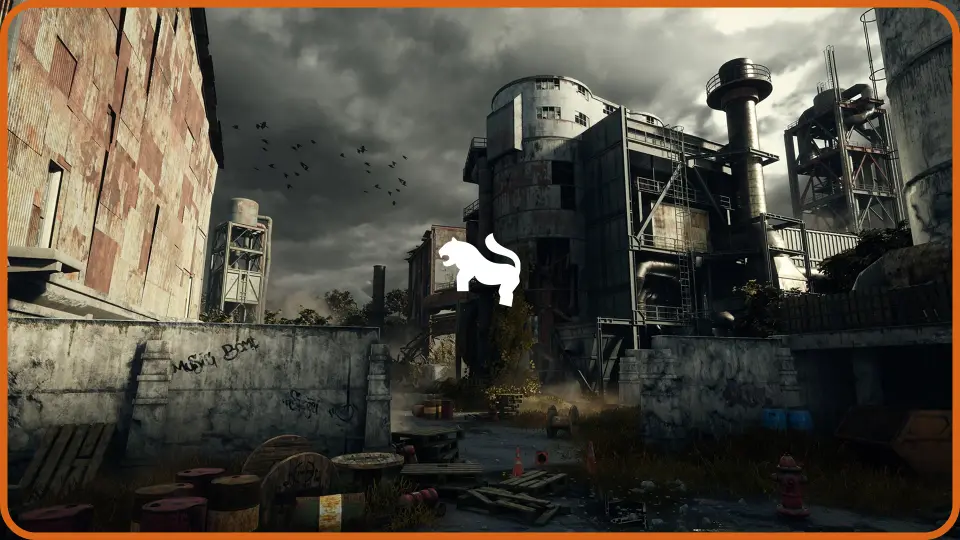
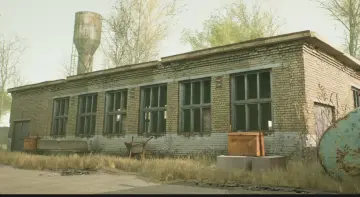
Decaying architecture forms the backbone of survival, post-apocalyptic, and dystopian world-building. The Abandoned Industrial Factory Environment offers an expansive setting shaped by neglect, weather exposure, and structural collapse. It emphasizes tactile decay through worn surfaces, faded paint, cracked concrete walls, and shattered glass panes. Rather than clean geometric halls, the layout leans into hazardous industrial archetypes: steel refineries, heavy machinery workshops, echoing warehouse spaces, and subterranean facilities left to gather dust and corrosion.
The aesthetic profile ranges from mid-century industrial installations to forgotten manufacturing zones scarred by chemical contamination and toxic waste. Piles of scrap metal, scorched structural members, and loose oil drums punctuate the floor plans, framing paths through broken corridors and collapsed factory roofs. Visual motifs such as rusting pipes, tall factory chimneys, and exposed steel beams allow level designers to construct believable urban decay scenarios, whether the target scene depicts a forgotten ghost town or an abandoned plant overrun by harsh wasteland conditions.
Mesh Inventory and Physical Industrial Detailing
The collection supplies 180 unique meshes designed to provide granular control when dressing complex industrial scenes. Every asset has been prepared with game-ready performance in mind, balancing a clean level of detail against real-time runtime budgets. Meshes represent both structural architecture and smaller contextual set dressings, giving creators the components required to assemble complete facilities from structural foundations to interior debris fields.
Physical surfaces carry extensive texturing work that captures heavy weathering, oxidation, and material breakdown. Cold metal structures display heavy rust, peeling paint coats, and pitted corrosion. Masonry and concrete components show fracturing, crumbling edges, and dust accumulation. Mechanical wreckage, junk assemblies, and discarded containers populate floor surfaces to create natural physical friction for navigating characters. By relying on distinct props—ranging from heavy production machinery to loose scrap piles and shattered window frames—levels can be dressed densely without repeating identifiable visual silhouettes across adjacent rooms.
Dynamic Lighting via Lumen Architecture
Real-time visual fidelity in modern engines depends heavily on realistic illumination and accurate shadow falloff. The Abandoned Industrial Factory Environment comes with Lumen enabled, allowing dynamic global illumination and detailed reflections to interact directly with distressed surfaces. Light bouncing through broken roofing sheets or shattered skylights casts dramatic shafts across dusty interiors, cutting through shadowy halls and foggy production floors.
Lumen integration significantly alters how material details read across the scene. Pitted metals, rusted structural columns, and textured concrete scatter ambient light naturally, reinforcing the dark, oppressive atmosphere essential for survival horrors or gritty urban exploration. Shadowed underground facilities and dimly lit warehouse corners benefit from indirect bounce lighting, softening contrast without washing out the stark, cinematic mood established by industrial ruins.
Rapid Modular Assembly with the Ultimate Level Art Tool
Assembling large facilities from individual components often introduces workflow bottlenecks. This environment pack includes the Ultimate Level Art Tool (ULAT), a specialized modular design development tool originally created for mobile and web-based modular workflows. ULAT provides dedicated functionality to accelerate the generation of custom modular buildings, allowing environmental artists to bypass tedious manual snapping and alignment tasks during architectural blockout phases.
Beyond structural framework placement, the tool features functions designed to populate scenes naturally. By distributing props, industrial detritus, and structural variations in a cohesive manner, ULAT enables users to fill massive warehouse spans, factory courtyards, and derelict rooms with consistent visual density. The assets inside the package are fully compatible with this tooling setup, ensuring seamless coordination between the 180 included meshes and the procedural assembly system.
AI Integration Kit and Pipeline Compatibility
Modern production pipelines increasingly rely on interconnected tooling to streamline world layout and logic binding. The package supports integration with the NWIRO - AI Integration Kit, expanding workflow capability through Unreal Copilot, MCP systems, inverse kinematics (IK) setups, and the Ultimate AI Bridge MCP. This compatibility bridges environment assembly with automated assistant operations, supporting developers who utilize AI-driven production hooks to inspect, configure, or adjust scene setups directly inside the engine environment.
Application in Gritty, Wasteland, and Survival Scenarios
The asset collection targets productions requiring authentic neglect and material breakdown. Survival games benefit immediately from the hazardous visual language: collapsing buildings, rusted pipes, scrap-filled junkyard layouts, and toxic waste staging provide organic environmental obstacles for gameplay. Post-apocalyptic titles can deploy the modular steel structures and crumbling infrastructure to establish sprawling complexes reclaimed by time and urban decay.
Cinematic productions, dystopian narratives, and investigative urban exploration projects can similarly harness the moody, shadowy atmosphere of the echoing halls. The combination of complete architectural modularity, dedicated population tools, and realistic material responses ensures that designers can execute diverse floor plans without sacrificing the cohesion of a derelict, mid-century industrial complex.
 Industrial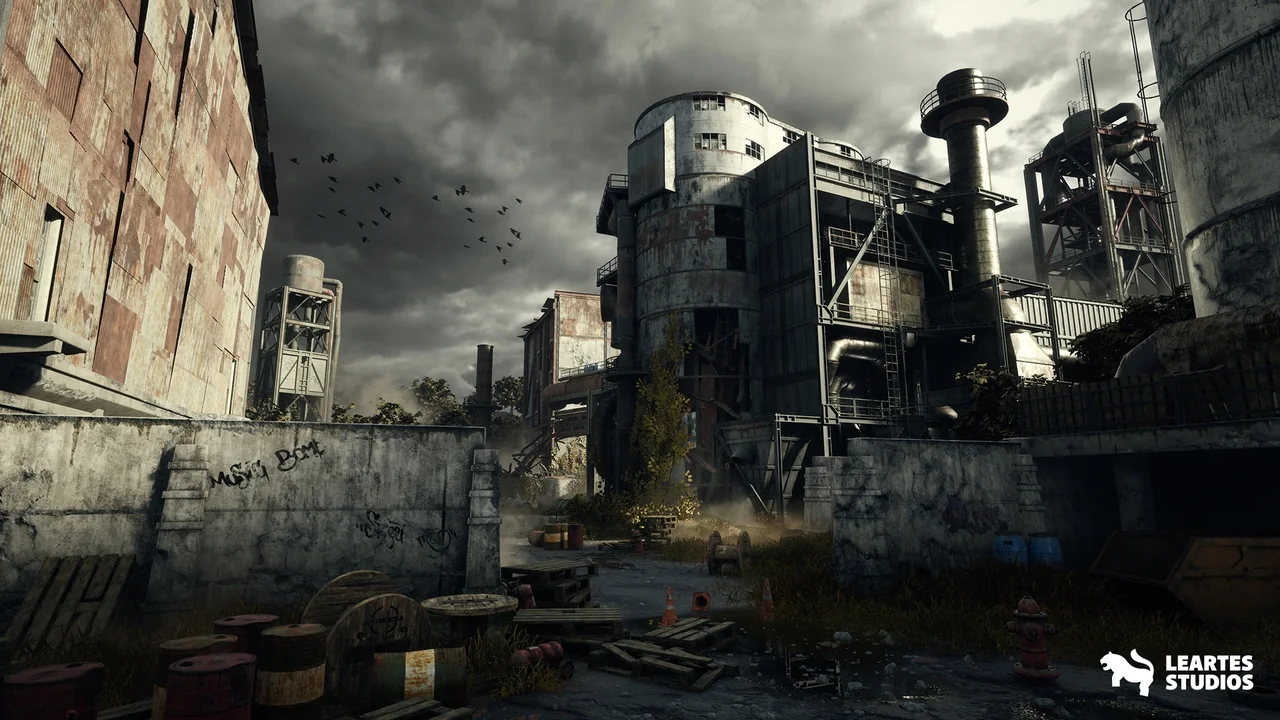
 Industrial
 Industrial
 Industrial