"1c2c8b66743036b4"{"id":"1001714","slug":"zombie-ai-system","title":"Zombie AI System","category":"Artificial Intelligence","engine":"5.0+","assetVersion":"","engineVersion":"Engine Version: 5.0+","tag":"Artificial Intelli","accent":"blue","visual":"mech","summary":"Explore the Zombie AI System for Unreal Engine, featuring drag-and-drop setup, customizable movement states, and single-player survival mechanics.","platform":"Unreal Engine","publishedAt":"2026-10-14T17:18:34.903Z","updatedAt":"2026-10-14T17:18:34.903Z","sourceNotes":[],"fileContents":[],"compatibility":["Unreal Engine","Engine Version: 5.0+"],"featuredImage":{"alt":"Zombie AI System","src":"/wp-content/uploads/published/2026/10/893e70521d68-f2274112-b13d-41c0-8305-dfba10437621-fe288309de.webp"},"hasDownloadLink":true,"downloads":0,"terms":[{"taxonomy":"category","slug":"artificial-intelligence","name":"Artificial Intelligence"}],"galleryImages":[{"src":"/wp-content/uploads/published/2026/10/eef7fad16a5e-dd830994-1613-4204-8921-5d20b5e1d5db-dcbd24577f.webp","alt":"Zombie AI System"},{"src":"/wp-content/uploads/published/2026/10/9e39ae0cad1c-53a083a0-259f-41fa-a6da-359c12c92fbc-f8cc593ed4.webp","alt":"Zombie AI System"},{"src":"/wp-content/uploads/published/2026/10/816e94caf3b2-56833fb3-2b79-443b-9bc5-c0c3a03705cf-fed7ac3057.webp","alt":"Zombie AI System"},{"src":"/wp-content/uploads/published/2026/10/f850f0935c22-cec7c7cb-3cc9-490b-b74c-21ea631f12b8-0603b699dd.webp","alt":"Zombie AI System"},{"src":"/wp-content/uploads/published/2026/10/3d32f5fbe753-cc191a86-cb5d-4553-ad4b-0c8e1ef58442-c4ab0f655a.webp","alt":"Zombie AI System"},{"src":"/wp-content/uploads/published/2026/10/e96e6f006638-f5c93bbe-ad40-454d-9380-6605aee8cc94-5a480f3e11.webp","alt":"Zombie AI System"}],"accessPanel":{"kind":"resource","title":"Download this resource","eyebrow":"Free Download","message":"Log in or create a free account to start your download.","fileName":"Content.7z","safetyNote":"Resources are manually reviewed before listing to improve quality and reduce obvious risks.","actionLabel":"Download Free","resourceType":"Resource archive"},"contentHtml":"\u003ch2\u003eDeploying Undead Encounters in Survival and Horror Projects\u003c/h2\u003e\u003cp\u003ePopulating a post-apocalyptic ruin or an isolated horror corridor requires non-player characters that react cleanly to the player's presence. The Zombie AI System supplies a modular foundation intended to place functional, reactive enemies directly into an Unreal Engine level. Instead of assembling behavior trees and sensing routines from scratch, developers can drop these entities straight into an environment and immediately verify how they track, pursue, and engage the player.\u003c/p\u003e\u003cp\u003eAtmospheric horror, survival scenarios, and exploration games rely heavily on how threats inhabit the physical space. A lone wandering threat down an unlit hallway creates a very different pacing dynamic than a pack charging across an open field. Because the system focuses on immediate integration, testing these encounters takes seconds. Level designers can place instances throughout a map to verify sight lines, choke points, and tension curves without stopping to troubleshoot fundamental AI navigation or core event flow.\u003c/p\u003e\u003cp\u003eThe package functions entirely without manual programming. Built 100% in Blueprints, the internal logic remains open for immediate visual inspection, allowing developers to inspect how alerts trigger, how states change, and how the underlying network of nodes interacts with the surrounding world.\u003c/p\u003e\u003ch2\u003eCamera Perspectives from First-Person to Top-Down Setups\u003c/h2\u003e\u003cp\u003eEnemy behavior must adapt to how the player views the action. A system that works well behind a tight first-person camera might fail completely when viewed from an elevated vantage point where navigational quirks become visible. The Zombie AI System is structured to accommodate varied camera presentations, including first-person (FPS), third-person (TPS), and top-down project formats.\u003c/p\u003e\u003cp\u003eIn a first-person shooter, tension is defined by close-quarters proximity and sudden aggression. The player's limited peripheral vision requires AI that closes distance deliberately and triggers attacks at readable intervals, giving the player a brief window to react, parry, or evade. Third-person action games shift the focus toward spatial awareness, where the player tracks animations, flanking angles, and closing distances relative to the full character model. Here, clear transitions between idle wanderings and aggressive sprints communicate the exact level of danger.\u003c/p\u003e\u003cp\u003eTop-down survival titles demand predictable pathing across broader, open-plan spaces. When the player commands an expansive view of the battlefield, enemies must maintain consistent movement states so the player can formulate tactical decisions. Because the underlying logic functions independently of camera placement, teams building action games, tactical top-down survival titles, or story-driven horror adventures can apply the same core intelligence without restructuring the character's perception loops.\u003c/p\u003e\u003ch2\u003eConfiguring the Zombie AI System Blueprint Parameters\u003c/h2\u003e\u003cp\u003eEvery survival title demands distinct balancing for its adversaries. Some subgenres call for slow, relentless shamblers that absorb high amounts of damage, while others rely on swift, fragile sprinters that overwhelm through sheer speed. The Zombie AI System exposes its essential variables directly in the Blueprint parameters, enabling rapid iteration over character balance without diving into deep node graphs.\u003c/p\u003e\u003cp\u003eMovement profiles represent one of the primary points of configuration. The system supports distinct movement states, including Walk, Run, and Idle. By toggling these states or tuning their corresponding values, an encounter can be dialed in from a classic slow-paced undead walker to an aggressive, modern infection runner. These states determine not only how enemies patrol an empty scene while idle, but also the velocity and urgency with which they close the gap once an alert state initiates.\u003c/p\u003e\u003cp\u003eCombat mechanics require equal precision. The package provides direct adjustments for attack activation timing, allowing creators to balance how long an enemy winds up before a hit registers. Tuning this window dictates whether combat feels deliberate and reactive or sudden and punishing. Paired with attack timing are explicit controls for damage output and health values. Designers can establish low-tier fodder that falls to a single strike, construct durable mini-bosses that pressure the player over prolonged battles, or tune outgoing damage to make every physical strike a catastrophic event for the player character.\u003c/p\u003e\u003ch2\u003eModular Animation and Behavior Logic on the Epic Skeleton\u003c/h2\u003e\u003cp\u003eExtending functionality beyond standard archetypes is a standard step in game development. The Zombie AI System uses a modular architecture that adapts to diverse art directions and thematic settings, from modern city streets and cyberpunk alleys to medieval ruins, steampunk facilities, or fantasy dungeons. The underlying intelligence remains decoupled from the specific visual skin applied to the character.\u003c/p\u003e\u003cp\u003eBecause the logic maps cleanly to standard Unreal Engine setups, including Animation Blueprints and the standard Epic Skeleton, retargeting and applying custom animations is straightforward. The AI triggers the appropriate movement and combat states, which then drive the corresponding animation blend spaces and montages. If a project requires custom flinch reactions, unique crawling motions, or specialized attack swings, these can be slotted into the existing animation graph without breaking the decision-making rules driving the character.\u003c/p\u003e\u003cp\u003eThe system avoids rigid, hard-coded routines in favor of clean componentized logic. If a developer needs to introduce unique environmental triggers, custom sound cues, or secondary state transitions, the Blueprint graph can be expanded directly. New logic branches can link into the existing health and damage calculations, preserving the stability of the core AI while accommodating bespoke gameplay mechanics.\u003c/p\u003e\u003ch2\u003ePerformance Considerations for Single-Player Games and Beyond\u003c/h2\u003e\u003cp\u003eMaintaining a stable frame rate in single-player experiences requires AI routines that run efficiently without claiming excessive processing time. The Zombie AI System is designed specifically for single-player games to ensure optimal performance and behavior consistency. When an encounter involves multiple active enemies navigating a detailed environment, predictable computational overhead prevents micro-stutters during heavy combat sequences.\u003c/p\u003e\u003cp\u003eBehavior consistency is critical for maintaining immersion in single-player titles. An enemy that loses track of a visible target or stumbles unpredictably breaks the suspense needed in horror and survival games. By narrowing the design scope to single-player demands, the logic focuses on rock-solid target acquisition, direct line-of-sight tracking, and immediate attack execution. At the same time, projects that transition into cooperative or network-aware environments can leverage the companion Zombie AI Behaviour setup supporting multiplayer functionality, preserving the core hostile routines across shared sessions.\u003c/p\u003e\u003ch2\u003eImplementation Context for Independent Creators\u003c/h2\u003e\u003cp\u003eSolo developers and lean indie teams benefit most from this setup because it eliminates the time-consuming step of engineering foundational navigation, perception, and state management. Building an AI framework from the ground up often involves weeks of testing edge cases—resolving stuck states, calibrating pathfinding updates, and wiring health and combat interfaces together.\u003c/p\u003e\u003cp\u003eBy starting with a ready-to-use, drag-and-drop toolkit, creators can bypass foundational systems engineering and jump directly into game feel, level composition, and atmospheric design. Whether the end goal is a compact single-player horror demo, a multi-stage survival gauntlet, or an extensive post-apocalyptic adventure, the system provides a dependable, easily modified baseline that keeps production moving forward.\u003c/p\u003e\n\n\u003ch2\u003eExplore Similar Assets\u003c/h2\u003e\n\u003cul\u003e\n\u003cli\u003e\u003ca href=\"https://3dcghub.com/fast-ai-plugin-multiplayer/\" title=\"Fast AI Plugin (Multiplayer)\"\u003eFast AI Plugin (Multiplayer)\u003c/a\u003e\u003c/li\u003e\n\u003cli\u003e\u003ca href=\"https://3dcghub.com/advanced-multiplayer-survival-templatev2/\" title=\"Advanced Multiplayer Survival TemplateV2\"\u003eAdvanced Multiplayer Survival TemplateV2\u003c/a\u003e\u003c/li\u003e\n\u003cli\u003e\u003ca href=\"https://3dcghub.com/zombie-shooter-kit-v2-12-unreal-engine-5-starter-pack/\" title=\"Zombie Shooter Kit v2.12 - UNREAL ENGINE 5 Starter Pack\"\u003eZombie Shooter Kit v2.12 - UNREAL ENGINE 5 Starter Pack\u003c/a\u003e\u003c/li\u003e\n\u003cli\u003e\u003ca href=\"https://3dcghub.com/multiplayer-zombie-survival-template/\" title=\"Multiplayer Zombie Survival Template\"\u003eMultiplayer Zombie Survival Template\u003c/a\u003e\u003c/li\u003e\n\u003cli\u003e\u003ca href=\"https://3dcghub.com/monster-ai-kit/\" title=\"Monster Ai Kit\"\u003eMonster Ai Kit\u003c/a\u003e\u003c/li\u003e\n\u003c/ul\u003e","contentTextLength":8109,"navigation":{"current":1,"total":3651,"next":{"id":"1001713","slug":"waterfall-3d-vdb-pack","title":"Waterfall 3D VDB Pack","category":"Liquid","platform":"Unreal Engine","updatedAt":"2026-10-14T17:17:55.843Z"}},"relatedResources":[{"id":"1000602","slug":"fast-ai-plugin-multiplayer","title":"Fast AI Plugin (Multiplayer)","category":"Artificial Intelligence","engine":"5.3,5.5 - 5.6","assetVersion":"Asset Version: 2.1.3 - 2.2.6","engineVersion":"Engine Version: 5.3,5.5 - 5.6","tag":"Artificial Intelli","accent":"blue","visual":"mech","summary":"C++ AI system for Unreal Engine supporting single-player and multiplayer with melee, ranged, zombie, animal, and civilian NPCs, plus pooling and optimization to","platform":"Unreal Engine","publishedAt":"2026-07-20T15:37:11.434Z","updatedAt":"2026-07-20T15:37:11.434Z","sourceNotes":[],"fileContents":[],"compatibility":["Unreal Engine","Asset Version: 2.1.3 - 2.2.6","Engine Version: 5.3,5.5 - 5.6"],"featuredImage":{"alt":"Fast AI Plugin (Multiplayer)","src":"/wp-content/uploads/published/2026/07/02f169ae5179-f5295a1f-228e-4784-8203-b58dd35d6870-7131490d73.webp"},"hasDownloadLink":true,"downloads":0},{"id":"11798","slug":"advanced-multiplayer-survival-templatev2","title":"Advanced Multiplayer Survival TemplateV2","category":"RPG","engine":"5.5+","assetVersion":"Engine version: 5.5+","engineVersion":"Asset Version:V2","tag":"RPG","accent":"blue","visual":"character","summary":"Build a high-quality survival experience with the Advanced Multiplayer Survival TemplateV2. This comprehensive foundation includes essential systems like zombie AI, item crafting, and full multiplayer support.","platform":"Unreal Engine","publishedAt":"2026-03-05T19:00:24.000Z","updatedAt":"2026-04-19T15:48:07.000Z","sourceNotes":[],"fileContents":[],"compatibility":["Unreal Engine","Engine version: 5.5+","Asset Version: V2"],"featuredImage":{"alt":"Advanced Multiplayer Survival TemplateV2","src":"https://3dcghub.com/wp-content/uploads/2026/03/dbeacd86-ed41-4e46-bde4-64c9d1a5b350.webp"},"hasDownloadLink":true,"downloads":7},{"id":"1001097","slug":"zombie-shooter-kit-v2-12-unreal-engine-5-starter-pack","title":"Zombie Shooter Kit v2.12 - UNREAL ENGINE 5 Starter Pack","category":"Shooter","engine":"5.7+","assetVersion":"Asset Version: 2.11","engineVersion":"Engine Version: 5.7+","tag":"Shooter","accent":"blue","visual":"mech","summary":"Blueprint-based UE5 starter for survival shooters: replicated multiplayer, zombies and human AI, jigsaw inventory, crafting, vehicles, weather, and G.A.S.P. Loc","platform":"Unreal Engine","publishedAt":"2026-09-06T02:45:34.766Z","updatedAt":"2026-09-06T02:45:34.766Z","sourceNotes":[],"fileContents":[],"compatibility":["Unreal Engine","Asset Version: 2.11","Engine Version: 5.7+"],"featuredImage":{"alt":"Zombie Shooter Kit v2.12 - UNREAL ENGINE 5 Starter Pack","src":"/wp-content/uploads/published/2026/09/1d7d8e00baab-vqwonz-9f5e01b28f.webp"},"hasDownloadLink":true,"downloads":10}]}
Artificial Intelli
Zombie AI System
Explore the Zombie AI System for Unreal Engine, featuring drag-and-drop setup, customizable movement states, and single-player survival mechanics.
Deploying Undead Encounters in Survival and Horror Projects
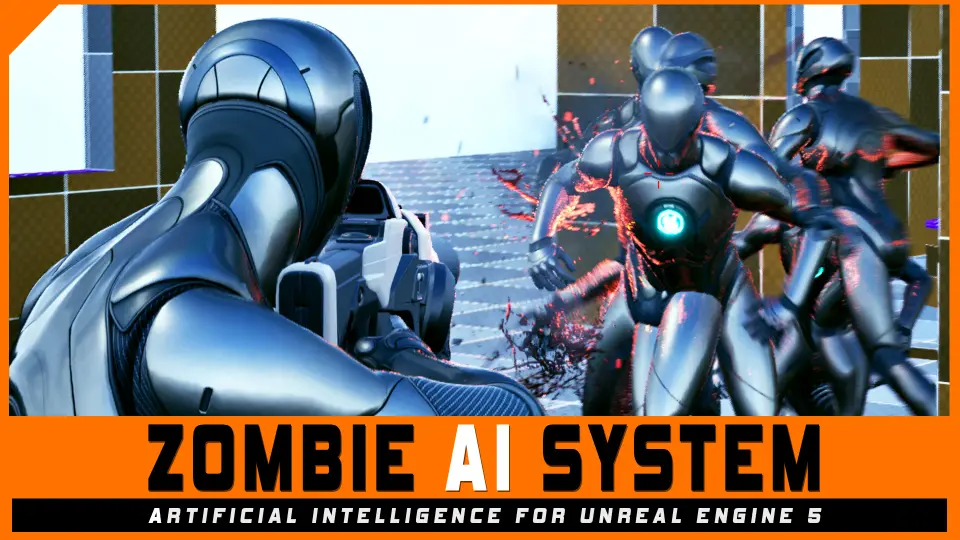
Populating a post-apocalyptic ruin or an isolated horror corridor requires non-player characters that react cleanly to the player's presence. The Zombie AI System supplies a modular foundation intended to place functional, reactive enemies directly into an Unreal Engine level. Instead of assembling behavior trees and sensing routines from scratch, developers can drop these entities straight into an environment and immediately verify how they track, pursue, and engage the player.
Atmospheric horror, survival scenarios, and exploration games rely heavily on how threats inhabit the physical space. A lone wandering threat down an unlit hallway creates a very different pacing dynamic than a pack charging across an open field. Because the system focuses on immediate integration, testing these encounters takes seconds. Level designers can place instances throughout a map to verify sight lines, choke points, and tension curves without stopping to troubleshoot fundamental AI navigation or core event flow.
The package functions entirely without manual programming. Built 100% in Blueprints, the internal logic remains open for immediate visual inspection, allowing developers to inspect how alerts trigger, how states change, and how the underlying network of nodes interacts with the surrounding world.
Camera Perspectives from First-Person to Top-Down Setups
Enemy behavior must adapt to how the player views the action. A system that works well behind a tight first-person camera might fail completely when viewed from an elevated vantage point where navigational quirks become visible. The Zombie AI System is structured to accommodate varied camera presentations, including first-person (FPS), third-person (TPS), and top-down project formats.
In a first-person shooter, tension is defined by close-quarters proximity and sudden aggression. The player's limited peripheral vision requires AI that closes distance deliberately and triggers attacks at readable intervals, giving the player a brief window to react, parry, or evade. Third-person action games shift the focus toward spatial awareness, where the player tracks animations, flanking angles, and closing distances relative to the full character model. Here, clear transitions between idle wanderings and aggressive sprints communicate the exact level of danger.
Top-down survival titles demand predictable pathing across broader, open-plan spaces. When the player commands an expansive view of the battlefield, enemies must maintain consistent movement states so the player can formulate tactical decisions. Because the underlying logic functions independently of camera placement, teams building action games, tactical top-down survival titles, or story-driven horror adventures can apply the same core intelligence without restructuring the character's perception loops.
Configuring the Zombie AI System Blueprint Parameters
Every survival title demands distinct balancing for its adversaries. Some subgenres call for slow, relentless shamblers that absorb high amounts of damage, while others rely on swift, fragile sprinters that overwhelm through sheer speed. The Zombie AI System exposes its essential variables directly in the Blueprint parameters, enabling rapid iteration over character balance without diving into deep node graphs.
Movement profiles represent one of the primary points of configuration. The system supports distinct movement states, including Walk, Run, and Idle. By toggling these states or tuning their corresponding values, an encounter can be dialed in from a classic slow-paced undead walker to an aggressive, modern infection runner. These states determine not only how enemies patrol an empty scene while idle, but also the velocity and urgency with which they close the gap once an alert state initiates.
Combat mechanics require equal precision. The package provides direct adjustments for attack activation timing, allowing creators to balance how long an enemy winds up before a hit registers. Tuning this window dictates whether combat feels deliberate and reactive or sudden and punishing. Paired with attack timing are explicit controls for damage output and health values. Designers can establish low-tier fodder that falls to a single strike, construct durable mini-bosses that pressure the player over prolonged battles, or tune outgoing damage to make every physical strike a catastrophic event for the player character.
Modular Animation and Behavior Logic on the Epic Skeleton
Extending functionality beyond standard archetypes is a standard step in game development. The Zombie AI System uses a modular architecture that adapts to diverse art directions and thematic settings, from modern city streets and cyberpunk alleys to medieval ruins, steampunk facilities, or fantasy dungeons. The underlying intelligence remains decoupled from the specific visual skin applied to the character.
Because the logic maps cleanly to standard Unreal Engine setups, including Animation Blueprints and the standard Epic Skeleton, retargeting and applying custom animations is straightforward. The AI triggers the appropriate movement and combat states, which then drive the corresponding animation blend spaces and montages. If a project requires custom flinch reactions, unique crawling motions, or specialized attack swings, these can be slotted into the existing animation graph without breaking the decision-making rules driving the character.
The system avoids rigid, hard-coded routines in favor of clean componentized logic. If a developer needs to introduce unique environmental triggers, custom sound cues, or secondary state transitions, the Blueprint graph can be expanded directly. New logic branches can link into the existing health and damage calculations, preserving the stability of the core AI while accommodating bespoke gameplay mechanics.
Performance Considerations for Single-Player Games and Beyond
Maintaining a stable frame rate in single-player experiences requires AI routines that run efficiently without claiming excessive processing time. The Zombie AI System is designed specifically for single-player games to ensure optimal performance and behavior consistency. When an encounter involves multiple active enemies navigating a detailed environment, predictable computational overhead prevents micro-stutters during heavy combat sequences.
Behavior consistency is critical for maintaining immersion in single-player titles. An enemy that loses track of a visible target or stumbles unpredictably breaks the suspense needed in horror and survival games. By narrowing the design scope to single-player demands, the logic focuses on rock-solid target acquisition, direct line-of-sight tracking, and immediate attack execution. At the same time, projects that transition into cooperative or network-aware environments can leverage the companion Zombie AI Behaviour setup supporting multiplayer functionality, preserving the core hostile routines across shared sessions.
Implementation Context for Independent Creators
Solo developers and lean indie teams benefit most from this setup because it eliminates the time-consuming step of engineering foundational navigation, perception, and state management. Building an AI framework from the ground up often involves weeks of testing edge cases—resolving stuck states, calibrating pathfinding updates, and wiring health and combat interfaces together.
By starting with a ready-to-use, drag-and-drop toolkit, creators can bypass foundational systems engineering and jump directly into game feel, level composition, and atmospheric design. Whether the end goal is a compact single-player horror demo, a multi-stage survival gauntlet, or an extensive post-apocalyptic adventure, the system provides a dependable, easily modified baseline that keeps production moving forward.
 Artificial Intelli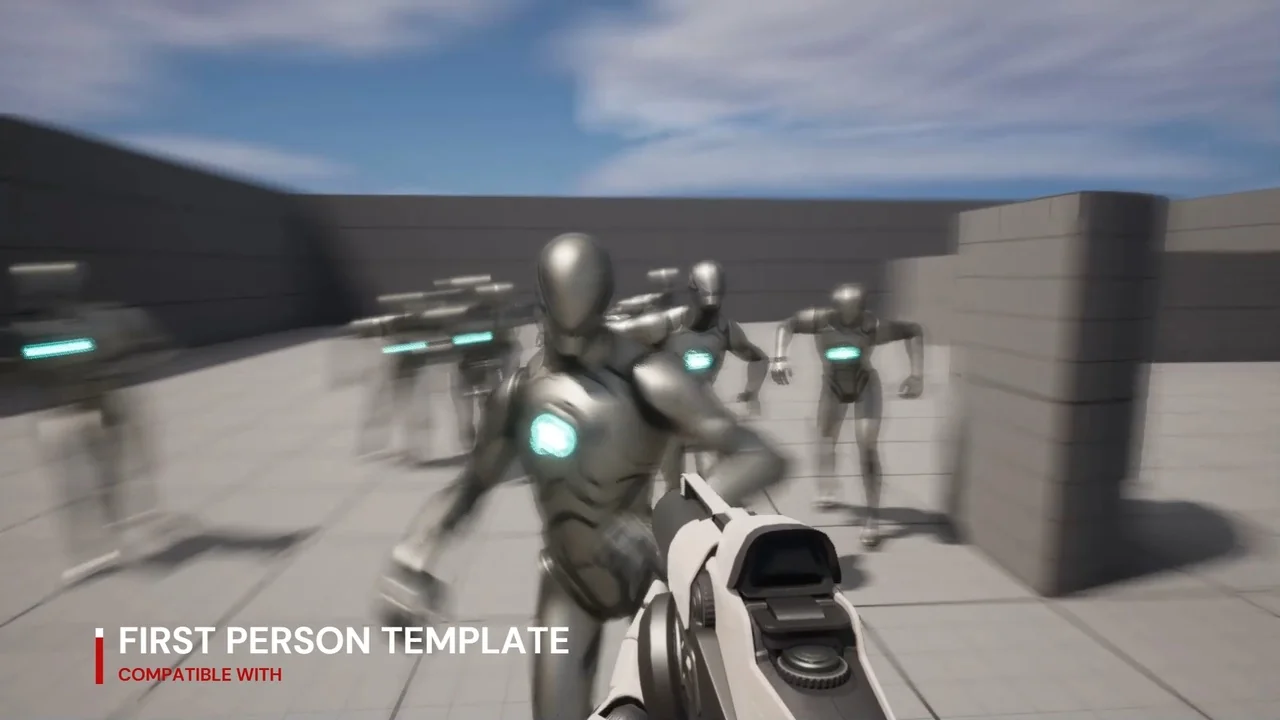
 Artificial Intelli
 RPG
RPG Shooter