"a5ffaf404b9c2b7e"{"id":"1002647","slug":"wwii-weapon-pack-customizable","title":"WWII Weapon Pack (Customizable)","category":"Weapons \u0026 Combat","engine":"5.0+","assetVersion":"","engineVersion":"Engine Version: 5.0+","tag":"Weapons \u0026 Combat","accent":"blue","visual":"mech","summary":"Examine the WWII Weapon Pack featuring 6 customizable guns, blueprint-driven attachments, skin customization, and Lumen-ready rendering in UE5.","platform":"Unreal Engine","indexPolicy":"index","publishedAt":"2026-11-15T06:35:51.485Z","updatedAt":"2026-11-15T06:35:51.485Z","sourceNotes":[],"fileContents":[],"compatibility":["Unreal Engine","Engine Version: 5.0+"],"featuredImage":{"alt":"WWII Weapon Pack (Customizable)","src":"/wp-content/uploads/published/2026/11/947becaa7d6c-2c82e216-0867-4160-a045-a17e590b4410-315a402d71.webp"},"hasDownloadLink":true,"downloads":0,"terms":[{"taxonomy":"category","slug":"weapons-and-combat","name":"Weapons \u0026 Combat"}],"galleryImages":[{"src":"/wp-content/uploads/published/2026/11/10549256ab5e-0a4f509d-58c5-411a-91c0-47a9511b6fbf-a89a1c4617.webp","alt":"WWII Weapon Pack (Customizable)"},{"src":"/wp-content/uploads/published/2026/11/e9434e85f7dc-d03cbd6a-d3b2-47d8-9c29-2ce6f4d151af-d95ab47090.webp","alt":"WWII Weapon Pack (Customizable)"},{"src":"/wp-content/uploads/published/2026/11/307a065649b1-f169c63b-12f3-4686-8522-bb02385aa7d0-1922560cb4.webp","alt":"WWII Weapon Pack (Customizable)"},{"src":"/wp-content/uploads/published/2026/11/28ff7aabd4b6-7494c9cd-6202-4c80-8293-50d313a9e403-c0a329901d.webp","alt":"WWII Weapon Pack (Customizable)"},{"src":"/wp-content/uploads/published/2026/11/eebae726a9c3-51abe663-38f8-4f8f-a857-f628534901ae-6d62fc2e27.webp","alt":"WWII Weapon Pack (Customizable)"},{"src":"/wp-content/uploads/published/2026/11/9e0e977e357c-2e2478c3-575e-44db-945e-5102d5332a20-ded0576a9d.webp","alt":"WWII Weapon Pack (Customizable)"},{"src":"/wp-content/uploads/published/2026/11/edbd5f9a7bb3-5c35aee0-2a27-4d71-a44f-345529b0d25b-3abc145435.webp","alt":"WWII Weapon Pack (Customizable)"},{"src":"/wp-content/uploads/published/2026/11/efc5a08dce4e-6557799b-e345-4156-9100-05cc3d26acbd-7af236ab14.webp","alt":"WWII Weapon Pack (Customizable)"},{"src":"/wp-content/uploads/published/2026/11/b0c638a2c855-dfa7d578-6359-4b98-80f2-d8eab5e44e03-9c551adb62.webp","alt":"WWII Weapon Pack (Customizable)"},{"src":"/wp-content/uploads/published/2026/11/5634c30ac3fe-1c1e283c-78dd-4127-8de7-302f3d9f89b9-d4f5bb7c0b.webp","alt":"WWII Weapon Pack (Customizable)"}],"accessPanel":{"kind":"resource","title":"Get this resource","eyebrow":"Free resource","message":"Download this resource in your browser.","fileName":"Content.7z","safetyNote":"Resources are manually reviewed before listing to improve quality and reduce obvious risks.","actionLabel":"Get this resource","resourceType":"Resource archive","versions":[]},"contentHtml":"\u003ch2\u003eArming Historical Combat with the WWII Weapon Pack\u003c/h2\u003e\u003cp\u003eInfantry engagements in historical military settings hinge heavily on the mechanical fidelity and presence of period-authentic small arms. The WWII Weapon Pack (Customizable) supplies a foundation of six distinct historical guns designed to meet the demands of realistic conflict simulations, covering combat archetypes seen across both World War I and World War II backdrops. Rather than treating weapons as static decorative items, this collection integrates mechanical adjustability and functional versatility directly into Unreal Engine.\u003c/p\u003e\u003cp\u003eHistoric battlegrounds require firearm models that reflect the harsh conditions of trench warfare, industrial combat zones, and open rural theaters. By providing complete firearm profiles equipped for modularity, the asset package establishes a solid framework for games, cinematic historical recreations, and interactive tactical environments that demand authentic military hardware.\u003c/p\u003e\u003ch2\u003eSix Firearm Roles for Realistic Military Encounters\u003c/h2\u003e\u003cp\u003eThe collection delivers six complete guns that span core infantry roles, incorporating key classifications such as revolvers, pistols, shotguns, and assault rifles. Each weapon type represents a distinct tactical discipline, allowing developers to configure balanced loadouts across diverse operational combat roles.\u003c/p\u003e\u003cp\u003eRevolvers and pistols supply essential secondary sidearm options for officers, vehicle crews, and close-quarters backup scenarios. Their compact profiles make them natural choices for high-tension room clearing or emergency sidearm transitions. In contrast, shotguns introduce brutal close-range stopping power, critical for simulating tight trench raids, fortified bunker clearances, and shattered industrial interiors. Rounding out the offensive capabilities, assault rifle configurations deliver sustained frontline firepower suited for intermediate-range skirmishes and mobile squad tactics across open fields or urban defense lines.\u003c/p\u003e\u003cp\u003eCovering these fundamental weapon categories ensures that combat scenarios maintain mechanical diversity without departing from historical authenticity. Whether populating weapon racks, arming opposing infantry forces, or establishing player arsenals, these models supply the necessary visual variety across distinct ballistic archetypes.\u003c/p\u003e\u003ch2\u003eBlueprint-Driven Attachable Parts and Weapon Modularity\u003c/h2\u003e\u003cp\u003eBeyond static meshes, modern action games require runtime weapon alterations and field upgrades. The WWII Weapon Pack incorporates a dedicated Blueprint system specifically engineered to manage attachable parts. This structural logic allows developers to attach, detach, and manage mechanical components on each firearm directly within Unreal Engine.\u003c/p\u003e\u003cp\u003eModular components can be managed cleanly through Blueprint logic, bypassing the need to author bespoke static variations for every weapon iteration. The attachment framework handles the programmatic placement and anchoring of add-on parts, making it possible to configure iron sights, specialized muzzles, alternative grips, or functional equipment tailored to specific tactical requirements. By offloading part connections to an established Blueprint structure, teams can rapidly prototype attachment mechanics, adjust handling profiles, or construct tiered weapon progression trees without manual socket rework.\u003c/p\u003e\u003ch2\u003eSurface Finishes and the Customizable Skin System\u003c/h2\u003e\u003cp\u003eMilitary firearms in extended campaigns rarely retain clean factory finishes. Weapon surfaces continuously interact with mud, oil, friction, moisture, and operational wear. To address visual variety and environmental context, this package provides a customized skin system that modifies firearm surface presentation.\u003c/p\u003e\u003cp\u003eThe skin system enables distinct paint variants, surface finishes, and aesthetic adjustments across the weapon library. In practical game development, this mechanism allows creators to depict weapons suited for different combat environments, ranging from sun-baked Pacific garrisons and snow-dusted European frontlines to muddy trench defenses. Beyond environmental matching, skin flexibility supports gameplay-driven customization, including faction-specific finishes, veteran weapon wear states, or cosmetic progression unlocks for competitive multiplayer modes. Having this customization built natively into the assets prevents repetitive visuals when several players or non-player characters wield the same base gun model on screen simultaneously.\u003c/p\u003e\u003ch2\u003eUnreal Engine 5 Animation and Lumen Rendering\u003c/h2\u003e\u003cp\u003eAuthentic visual performance requires material setups capable of responding dynamically to complex illumination. The assets in the WWII Weapon Pack are built to operate within Unreal Engine 5, demonstrating high physical realism under Lumen global illumination and reflections. Lumen calculates light bounce, specular sheen, and soft shadowing directly off receiver metals, polished wooden stocks, and stamped steel barrels.\u003c/p\u003e\u003cp\u003eVisual verification within scanned environments—such as abandoned industrial factories and rugged rural terrain—demonstrates how these weapon meshes interact with harsh direct sunlight, recessed indoor shadows, and diffuse atmospheric light. The materials pick up ambient bounce from dirt, decayed plaster, and rusted sheet metal, preventing the weapons from appearing disconnected from their surrounding scene.\u003c/p\u003e\u003cp\u003eIn addition to surface fidelity, the collection is prepared for animation. Moving parts, operational actions, and attachable points are structured to accommodate realistic weapon manipulation. Smooth cycling of the bolt, cylinder rotation on revolvers, slide recoil on semi-automatic pistols, and pump actions on shotguns are fundamental for first-person and third-person weapon handling. The assets maintain structural integrity during rapid firing loops, reloads, and equip animations, ensuring that viewmodels hold up under the intense inspection of high-resolution cameras.\u003c/p\u003e\u003ch2\u003ePractical Deployment in Historical Game Pipelines\u003c/h2\u003e\u003cp\u003eProjects focused on historical armed conflict require reliable assets that integrate quickly without demanding custom rigging or complex material rebuilding from scratch. The combination of six defined guns, Blueprint-managed attachments, material skin workflows, and UE5 Lumen readiness addresses both technical and aesthetic needs in one package.\u003c/p\u003e\u003cp\u003eIndependent developers and studio teams working on squad-based historical tactical shooters, single-player period narratives, survival horror set in war-torn landscapes, or historical museum simulations can implement these assets immediately into character inventories. Because the Blueprint and skin systems provide foundational modularity out of the box, production pipelines can concentrate on core gameplay mechanics, mission design, and environmental storytelling rather than building firearm customization logic from the ground up.\u003c/p\u003e\n\n\u003ch2\u003eExplore Similar Assets\u003c/h2\u003e\n\u003cul\u003e\n\u003cli\u003e\u003ca href=\"https://3dcghub.com/sci-fi-weapon-pack-mini/\" rel=\"noopener noreferrer\"\u003eSci-Fi Weapon Pack Mini\u003c/a\u003e\u003c/li\u003e\n\u003cli\u003e\u003ca href=\"https://3dcghub.com/customizable-weapon-pack/\" rel=\"noopener noreferrer\"\u003eCustomizable Weapon Pack\u003c/a\u003e\u003c/li\u003e\n\u003cli\u003e\u003ca href=\"https://3dcghub.com/dynamic-orbs-system/\" rel=\"noopener noreferrer\"\u003eDynamic Orbs System\u003c/a\u003e\u003c/li\u003e\n\u003cli\u003e\u003ca href=\"https://3dcghub.com/mg-15-with-accessories-wwii-german-lmg/\" rel=\"noopener noreferrer\"\u003eMG-15 with Accessories (WWII German LMG)\u003c/a\u003e\u003c/li\u003e\n\u003cli\u003e\u003ca href=\"https://3dcghub.com/spaceship-colony-cruiser/\" rel=\"noopener noreferrer\"\u003eSpaceship Colony Cruiser\u003c/a\u003e\u003c/li\u003e\n\u003c/ul\u003e","contentTextLength":7020,"navigation":{"current":1,"total":4570,"next":{"id":"1002646","slug":"undead-pack","title":"Undead Pack","category":"Characters \u0026 Creatures","platform":"Unreal Engine","updatedAt":"2026-11-15T06:34:55.365Z"}},"relatedResources":[{"id":"1002641","slug":"sci-fi-weapon-pack-mini","title":"Sci-Fi Weapon Pack Mini","category":"Weapons \u0026 Combat","engine":"5.0+","assetVersion":"","engineVersion":"Engine Version: 5.0+","tag":"Weapons \u0026 Combat","accent":"blue","visual":"mech","summary":"Explore the Sci-Fi Weapon Pack Mini, featuring the Ayakashi sniper rifle, Deacon pistol, combat knife, and a customizable color and texture skin system.","platform":"Unreal Engine","indexPolicy":"index","publishedAt":"2026-11-15T06:28:56.634Z","updatedAt":"2026-11-15T06:28:56.634Z","sourceNotes":[],"fileContents":[],"compatibility":["Unreal Engine","Engine Version: 5.0+"],"featuredImage":{"alt":"Sci-Fi Weapon Pack Mini","src":"/wp-content/uploads/published/2026/11/fd0d5d74f458-4c996723-b9d7-4c6b-b630-3501f70c7d7f-c674d2b12e.webp"},"hasDownloadLink":true,"downloads":0},{"id":"1000985","slug":"customizable-weapon-pack","title":"Customizable Weapon Pack","category":"Weapons \u0026 Combat","engine":"5.0+","assetVersion":"","engineVersion":"Engine Version: 5.0+","tag":"Weapons \u0026 Combat","accent":"blue","visual":"mech","summary":"A ready-to-use weapon kit for game projects: 16 guns, 3 knives, 15 attachments, bullet shells, attachment control, and a dynamic skin system.","platform":"Unreal Engine","indexPolicy":"index","publishedAt":"2026-08-18T06:18:19.762Z","updatedAt":"2026-08-18T06:18:19.762Z","sourceNotes":[],"fileContents":[],"compatibility":["Unreal Engine","Engine Version: 5.0+"],"featuredImage":{"alt":"Customizable Weapon Pack","src":"/wp-content/uploads/published/2026/08/89074aea7f72-b60fa695-2cd6-45da-ad40-6d14d32744ef-31f176f09a.webp"},"hasDownloadLink":true,"downloads":7},{"id":"1001232","slug":"dynamic-orbs-system","title":"Dynamic Orbs System","category":"Weapons \u0026 Combat","engine":"5.0+","assetVersion":"","engineVersion":"Engine Version: 5.0+","tag":"Weapons \u0026 Combat","accent":"blue","visual":"mech","summary":"A modular Unreal Engine component designed to visually transfer numeric values, buffs, and stats between actors using customizable particle orbs.","platform":"Unreal Engine","indexPolicy":"index","publishedAt":"2026-09-21T03:37:02.772Z","updatedAt":"2026-09-21T03:37:02.772Z","sourceNotes":[],"fileContents":[],"compatibility":["Unreal Engine","Engine Version: 5.0+"],"featuredImage":{"alt":"Dynamic Orbs System","src":"/wp-content/uploads/published/2026/09/d323897cab65-e4e32857-a652-4a6e-af7f-4d402c634d60-3369cec34f.webp"},"hasDownloadLink":true,"downloads":0}]}
Weapons & Combat
WWII Weapon Pack (Customizable)
Examine the WWII Weapon Pack featuring 6 customizable guns, blueprint-driven attachments, skin customization, and Lumen-ready rendering in UE5.
Arming Historical Combat with the WWII Weapon Pack
Infantry engagements in historical military settings hinge heavily on the mechanical fidelity and presence of period-authentic small arms. The WWII Weapon Pack (Customizable) supplies a foundation of six distinct historical guns designed to meet the demands of realistic conflict simulations, covering combat archetypes seen across both World War I and World War II backdrops. Rather than treating weapons as static decorative items, this collection integrates mechanical adjustability and functional versatility directly into Unreal Engine.
Historic battlegrounds require firearm models that reflect the harsh conditions of trench warfare, industrial combat zones, and open rural theaters. By providing complete firearm profiles equipped for modularity, the asset package establishes a solid framework for games, cinematic historical recreations, and interactive tactical environments that demand authentic military hardware.
Six Firearm Roles for Realistic Military Encounters
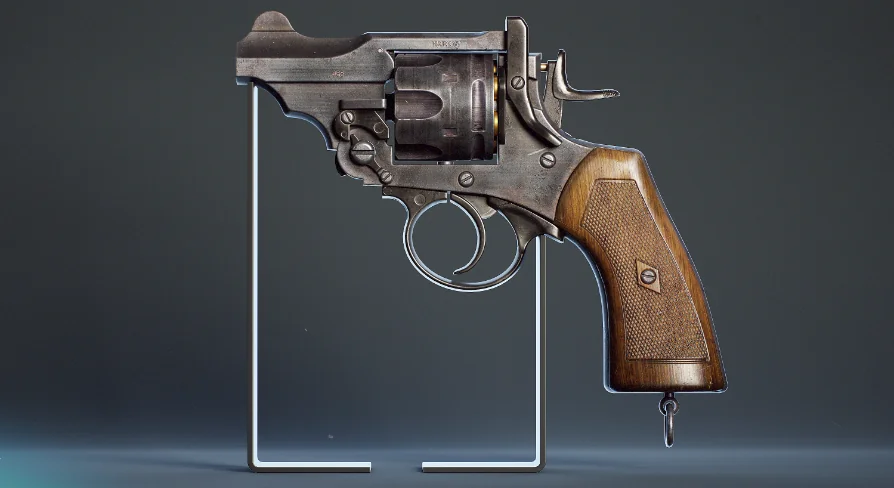
The collection delivers six complete guns that span core infantry roles, incorporating key classifications such as revolvers, pistols, shotguns, and assault rifles. Each weapon type represents a distinct tactical discipline, allowing developers to configure balanced loadouts across diverse operational combat roles.
Revolvers and pistols supply essential secondary sidearm options for officers, vehicle crews, and close-quarters backup scenarios. Their compact profiles make them natural choices for high-tension room clearing or emergency sidearm transitions. In contrast, shotguns introduce brutal close-range stopping power, critical for simulating tight trench raids, fortified bunker clearances, and shattered industrial interiors. Rounding out the offensive capabilities, assault rifle configurations deliver sustained frontline firepower suited for intermediate-range skirmishes and mobile squad tactics across open fields or urban defense lines.
Covering these fundamental weapon categories ensures that combat scenarios maintain mechanical diversity without departing from historical authenticity. Whether populating weapon racks, arming opposing infantry forces, or establishing player arsenals, these models supply the necessary visual variety across distinct ballistic archetypes.
Blueprint-Driven Attachable Parts and Weapon Modularity
Beyond static meshes, modern action games require runtime weapon alterations and field upgrades. The WWII Weapon Pack incorporates a dedicated Blueprint system specifically engineered to manage attachable parts. This structural logic allows developers to attach, detach, and manage mechanical components on each firearm directly within Unreal Engine.
Modular components can be managed cleanly through Blueprint logic, bypassing the need to author bespoke static variations for every weapon iteration. The attachment framework handles the programmatic placement and anchoring of add-on parts, making it possible to configure iron sights, specialized muzzles, alternative grips, or functional equipment tailored to specific tactical requirements. By offloading part connections to an established Blueprint structure, teams can rapidly prototype attachment mechanics, adjust handling profiles, or construct tiered weapon progression trees without manual socket rework.
Surface Finishes and the Customizable Skin System
Military firearms in extended campaigns rarely retain clean factory finishes. Weapon surfaces continuously interact with mud, oil, friction, moisture, and operational wear. To address visual variety and environmental context, this package provides a customized skin system that modifies firearm surface presentation.
The skin system enables distinct paint variants, surface finishes, and aesthetic adjustments across the weapon library. In practical game development, this mechanism allows creators to depict weapons suited for different combat environments, ranging from sun-baked Pacific garrisons and snow-dusted European frontlines to muddy trench defenses. Beyond environmental matching, skin flexibility supports gameplay-driven customization, including faction-specific finishes, veteran weapon wear states, or cosmetic progression unlocks for competitive multiplayer modes. Having this customization built natively into the assets prevents repetitive visuals when several players or non-player characters wield the same base gun model on screen simultaneously.
Unreal Engine 5 Animation and Lumen Rendering
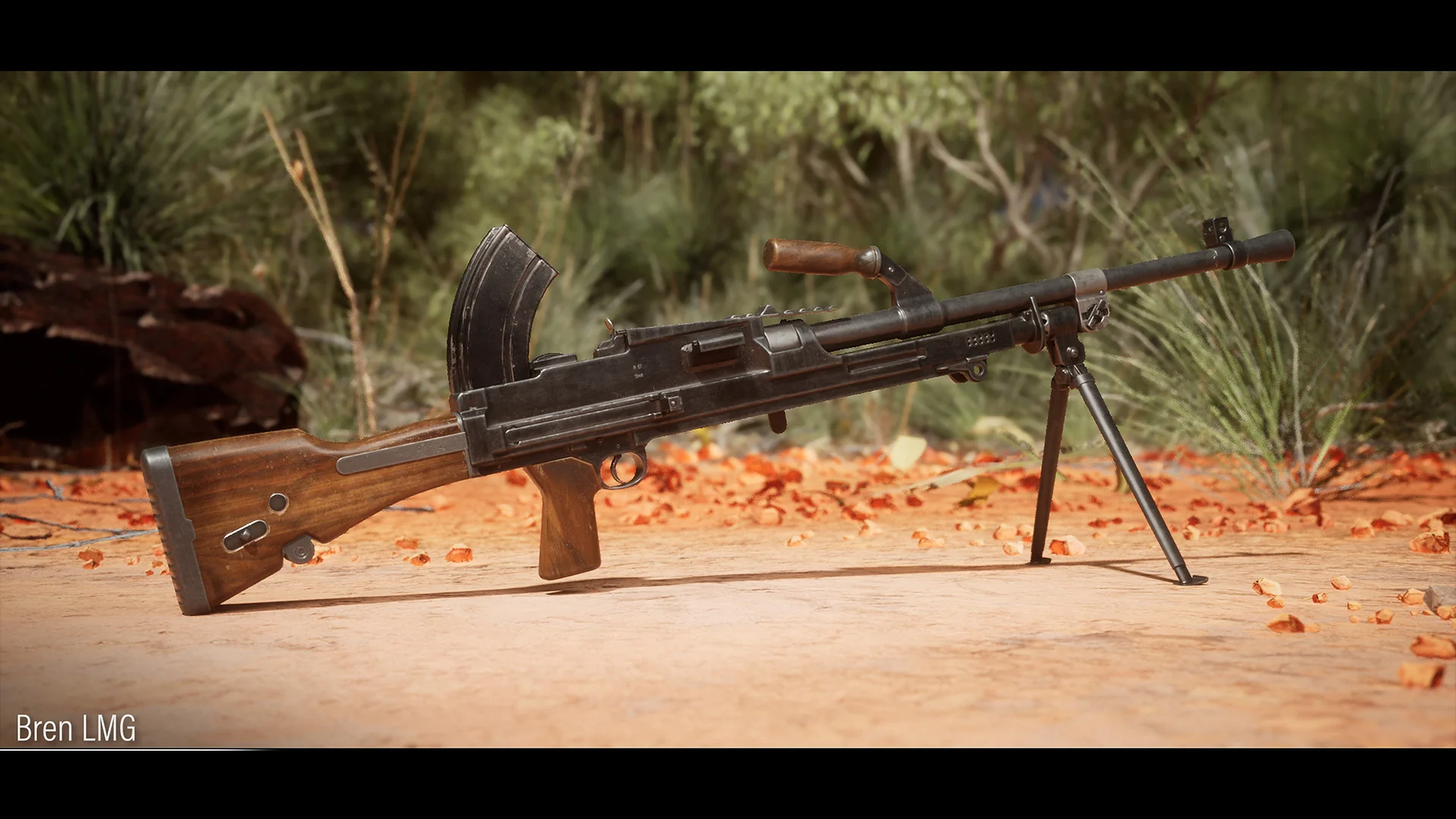
Authentic visual performance requires material setups capable of responding dynamically to complex illumination. The assets in the WWII Weapon Pack are built to operate within Unreal Engine 5, demonstrating high physical realism under Lumen global illumination and reflections. Lumen calculates light bounce, specular sheen, and soft shadowing directly off receiver metals, polished wooden stocks, and stamped steel barrels.
Visual verification within scanned environments—such as abandoned industrial factories and rugged rural terrain—demonstrates how these weapon meshes interact with harsh direct sunlight, recessed indoor shadows, and diffuse atmospheric light. The materials pick up ambient bounce from dirt, decayed plaster, and rusted sheet metal, preventing the weapons from appearing disconnected from their surrounding scene.
In addition to surface fidelity, the collection is prepared for animation. Moving parts, operational actions, and attachable points are structured to accommodate realistic weapon manipulation. Smooth cycling of the bolt, cylinder rotation on revolvers, slide recoil on semi-automatic pistols, and pump actions on shotguns are fundamental for first-person and third-person weapon handling. The assets maintain structural integrity during rapid firing loops, reloads, and equip animations, ensuring that viewmodels hold up under the intense inspection of high-resolution cameras.
Practical Deployment in Historical Game Pipelines
Projects focused on historical armed conflict require reliable assets that integrate quickly without demanding custom rigging or complex material rebuilding from scratch. The combination of six defined guns, Blueprint-managed attachments, material skin workflows, and UE5 Lumen readiness addresses both technical and aesthetic needs in one package.
Independent developers and studio teams working on squad-based historical tactical shooters, single-player period narratives, survival horror set in war-torn landscapes, or historical museum simulations can implement these assets immediately into character inventories. Because the Blueprint and skin systems provide foundational modularity out of the box, production pipelines can concentrate on core gameplay mechanics, mission design, and environmental storytelling rather than building firearm customization logic from the ground up.
 Weapons & Combat
 Weapons & Combat
 Weapons & Combat
 Weapons & Combat