"031373f479d9561a"{"id":"1000266","slug":"virtual-studios-vol-1-scene-1","title":"Virtual Studios Vol 1 Scene 1","category":"Interior","engine":"5.2+","assetVersion":"","engineVersion":"Engine Version: 5.2+","tag":"Interior","accent":"blue","visual":"mech","summary":"A high-quality 3D virtual studio scene optimized for Unreal Engine, featuring Lumen support, Nanite geometry, and PBR materials for real-time virtual production","platform":"Unreal Engine","publishedAt":"2026-07-01T00:47:40.997Z","updatedAt":"2026-07-01T00:47:40.997Z","sourceNotes":[],"fileContents":[],"compatibility":["Unreal Engine","Engine Version: 5.2+"],"featuredImage":{"alt":"Virtual Studios Vol 1 Scene 1","src":"/wp-content/uploads/published/2026/07/f03854c39cd9-88b247e2-1f9b-414f-899a-bb5c9309b8cf-d6def42b70.webp"},"hasDownloadLink":true,"downloads":0,"terms":[{"taxonomy":"category","slug":"interior","name":"Interior"}],"galleryImages":[{"src":"/wp-content/uploads/published/2026/07/71d1ac5a4850-142ab869-20de-44d7-a3f8-fa42c9911b06-6e5c348a4d.webp","alt":"Virtual Studios Vol 1 Scene 1"},{"src":"/wp-content/uploads/published/2026/07/17ed15ad5032-aafff250-cba7-4ec4-ba16-f943024b74ea-03d7f7a71a.webp","alt":"Virtual Studios Vol 1 Scene 1"},{"src":"/wp-content/uploads/published/2026/07/9396e92371f7-a3854937-9690-4284-b43a-75a334a1ce2e-7499346ba2.webp","alt":"Virtual Studios Vol 1 Scene 1"}],"accessPanel":{"kind":"resource","title":"Download this resource","eyebrow":"Free Download","message":"Log in or create a free account to start your download.","fileName":"VirtualStudiosV1S01.7z","safetyNote":"Resources are manually reviewed before listing to improve quality and reduce obvious risks.","actionLabel":"Download Free","resourceType":"Resource archive"},"contentHtml":"\u003cp\u003eStepping into real-time virtual production requires environments built specifically to handle the technical demands of modern broadcasting and virtual reality. Designed as a high-quality 3D interior, this virtual studio serves as a foundation for creators developing television sets, VR experiences, and interactive broadcasts within Unreal Engine. The architecture leans heavily into a modern, photorealistic aesthetic, utilizing specific interior lighting and material configurations to replicate the look and feel of a professional television stage.\u003c/p\u003e \u003ch2\u003eConfiguring the Studio for Real-Time Virtual Production\u003c/h2\u003e \u003cp\u003eEstablishing a virtual television set requires assets that can process complex lighting and reflections without breaking the real-time illusion. This environment is structured to support exactly that, providing a ready-to-use interior architecture that integrates seamlessly into a virtual production pipeline. The layout incorporates essential broadcast elements, including designated TV screens, integrated picture frames, and a vibrant orange color palette that adds a distinct cultural flair to the modern design.\u003c/p\u003e \u003cp\u003eBecause the scene is built for live processing, the technical setup is strictly aligned with modern Unreal Engine rendering standards. The space is populated with physical and ambient light sources, including dedicated spotlights and practical lamps, which are necessary for illuminating subjects against the digital backdrop. The interplay between these light sources and the surrounding architecture forms the core of the studio's photorealistic presentation.\u003c/p\u003e \u003ch2\u003eEnabling Lumen for Dynamic Global Illumination\u003c/h2\u003e \u003cp\u003eAccurate lighting is the most critical component of any television studio, and this environment achieves its realistic look through native support for Lumen in Unreal Engine 5.0 and above. Rather than relying on static, baked lighting, the scene utilizes dynamic global illumination to cast realistic shadows and bounce light naturally across the interior surfaces.\u003c/p\u003e \u003cp\u003eTo fully utilize these rendering capabilities, specific engine configurations must be applied. Lumen is activated directly through the Unreal Engine interface by navigating to the Project Settings. From there, users must access the Rendering category and enable the features located under both Dynamic Global Illumination and Reflections. Once configured, the spotlights and lamps within the studio will interact dynamically with the custom shaders, allowing light to bounce accurately off the modern architecture and generate sparkling highlights across the room.\u003c/p\u003e \u003ch2\u003eNanite Integration and Unreal Engine 5.4 Performance Updates\u003c/h2\u003e \u003cp\u003eWhile the scene maintains strict compatibility with Unreal Engine 5.2, subsequent iterations of the engine bring distinct technical shifts to how the studio geometry is processed. For projects running on Unreal Engine 5.4, the environment has undergone a series of targeted modifications to maximize rendering efficiency and visual fidelity.\u003c/p\u003e \u003cp\u003eThe most significant architectural change in the 5.4 version involves the implementation of Nanite virtualized geometry. Within this updated build, all meshes that do not rely on translucency have been converted to Nanite. This allows the engine to render immense amounts of geometric detail on the solid architectural elements without traditional draw call bottlenecks. Meshes that require translucency remain on the standard rendering path to ensure proper light refraction and visibility.\u003c/p\u003e \u003cp\u003eAlongside the geometry updates, the Unreal Engine 5.4 version includes minor corrections and layout improvements across the scene. Furthermore, all textures and meshes within the studio have been rigorously optimized to guarantee better performance, ensuring the environment remains stable during resource-intensive virtual production tasks.\u003c/p\u003e \u003ch2\u003ePhotorealistic PBR Materials and Custom Shaders\u003c/h2\u003e \u003cp\u003eThe visual believability of the studio interior relies on a comprehensive suite of Physically Based Rendering (PBR) materials. The environment is constructed using a mix of industrial and modern surfaces, prominently featuring metal, plastic, and glass. Custom shaders are deployed to handle the specific reflective and refractive properties of these materials, ensuring they react accurately to the dynamic Lumen lighting.\u003c/p\u003e \u003cp\u003eReflectivity plays a major role in the modern aesthetic of the set. Mirrors are integrated into the studio design, capturing dynamic reflections of the surrounding architecture and light sources. The combination of clear glass, polished metal, and glossy plastic generates a realistic, sparkling effect under the studio's spotlights, elevating the overall photorealism of the television broadcast environment.\u003c/p\u003e \u003ch2\u003eHardware Specifications for Smooth Real-Time Rendering\u003c/h2\u003e \u003cp\u003eProcessing dynamic global illumination, custom shaders, and high-density Nanite meshes in real time requires substantial computing power. To ensure the virtual studio performs reliably during live production or VR applications, a strict set of hardware recommendations has been established.\u003c/p\u003e \u003cp\u003eThe baseline requirement for the operating system is a 64-bit architecture. To manage the complex physics, lighting calculations, and optimized textures without introducing latency, an Intel i7 processor paired with a massive 64 GB of RAM is recommended. On the graphical rendering side, a GeForce RTX 3070 graphics card is advised. This hardware threshold ensures that the GPU can comfortably handle the demands of Lumen reflections, high-resolution PBR materials, and real-time shadows without dropping frames during a live virtual broadcast.\u003c/p\u003e \u003ch2\u003eExpanding the Virtual Studios Vol 1 Ecosystem\u003c/h2\u003e \u003cp\u003eAs a foundational broadcast environment, this specific interior represents the first configuration within a larger modular ecosystem. It originates directly from the broader \"Virtual Studios vol. 1 for UE\" collection, which encompasses a variety of architectural layouts for television and virtual reality applications. \u003c/p\u003e \u003cp\u003eFor creators needing multiple set designs or varied visual themes, the collection expands beyond this initial setup. The series includes several other distinct environments, specifically categorized as Scene 2, Scene 3, Scene 4, and Scene 5. Together, these scenes provide a comprehensive suite of modern, photorealistic locations tailored for those pushing the boundaries of real-time virtual production in Unreal Engine.\u003c/p\u003e\n\n\u003ch2\u003eContinue Browsing Similar Packs\u003c/h2\u003e\n\u003cul\u003e\n\u003cli\u003e\u003ca href=\"https://3dcghub.com/artists-attic-studio-environment/\" title=\"Artist’s Attic Studio Environment\"\u003eArtist’s Attic Studio Environment\u003c/a\u003e\u003c/li\u003e\n\u003cli\u003e\u003ca href=\"https://3dcghub.com/news-studio-environment-for-vr-news-reports-or-backdrops/\" title=\"News Studio - Environment for VR, News Reports or Backdrops\"\u003eNews Studio - Environment for VR, News Reports or Backdrops\u003c/a\u003e\u003c/li\u003e\n\u003cli\u003e\u003ca href=\"https://3dcghub.com/drcg-contemporary-art-virtual-gallery-1-0/\" title=\"DrCG Contemporary Art Virtual Gallery 1.0\"\u003eDrCG Contemporary Art Virtual Gallery 1.0\u003c/a\u003e\u003c/li\u003e\n\u003cli\u003e\u003ca href=\"https://3dcghub.com/modern-apartment-archinteriors-vol-9-scene-5/\" title=\"Modern Apartment - Archinteriors Vol 9 Scene 5\"\u003eModern Apartment - Archinteriors Vol 9 Scene 5\u003c/a\u003e\u003c/li\u003e\n\u003cli\u003e\u003ca href=\"https://3dcghub.com/carpenters-workshop-environment-workshop-prop-pack-carpenter-woodworking-3d/\" title=\"Carpenter\u0026#039;s Workshop Environment ( Workshop Prop Pack Carpenter Woodworking 3d )\"\u003eCarpenter\u0026#039;s Workshop Environment ( Workshop Prop Pack Carpenter Woodworking 3d )\u003c/a\u003e\u003c/li\u003e\n\u003c/ul\u003e","contentTextLength":6666,"navigation":{"current":1084,"total":3223,"previous":{"id":"1000267","slug":"gate-backyard","title":"Gate Backyard","category":"Industrial","platform":"Unreal Engine","updatedAt":"2026-07-01T19:46:17.666Z"},"next":{"id":"1000265","slug":"type-a-star-fighter-with-cockpit-and-arcade-flight","title":"TYPE-A Star Fighter with Cockpit and Arcade Flight","category":"Spacecraft","platform":"Unreal Engine","updatedAt":"2026-07-01T00:45:36.684Z"}},"relatedResources":[{"id":"27418","slug":"artists-attic-studio-environment","title":"Artist’s Attic Studio Environment","category":"Interior","engine":"5.5+","assetVersion":"Engine version: 5.5+","engineVersion":"","tag":"Interior","accent":"blue","visual":"city","summary":"Artist’s Attic Studio Environment is a fully dressed attic interior with a warm, lived-in feel, modular structural pieces, and studio props. It fits scenes that need a cozy, story-rich space for cinematic framing or gameplay.","platform":"Unreal Engine","publishedAt":"2026-04-25T08:27:44.000Z","updatedAt":"2026-04-25T08:27:47.000Z","sourceNotes":[],"fileContents":[],"compatibility":["Unreal Engine","Engine version: 5.5+"],"featuredImage":{"alt":"Artist’s Attic Studio Environment","src":"https://3dcghub.com/wp-content/uploads/2026/04/1fce6996a87b_29a2b5f1-a05c-4f5a-bfc8-78a1ef2046a2.webp"},"hasDownloadLink":true,"downloads":0},{"id":"1000544","slug":"office-interior-archinteriors-vol-1-scene-5","title":"Office Interior - Archinteriors Vol 1 Scene 5","category":"Interior","engine":"4.27,5.0+","assetVersion":"","engineVersion":"Engine Version: 4.27,5.0+","tag":"Interior","accent":"blue","visual":"mech","summary":"Modern office interior scene for Unreal Engine 4.27 and 5.0 featuring RTX raytracing, baked lightmaps, animated cinema cameras, and improved PBR materials.","platform":"Unreal Engine","publishedAt":"2026-07-15T03:59:42.434Z","updatedAt":"2026-07-15T03:59:42.434Z","sourceNotes":[],"fileContents":[],"compatibility":["Unreal Engine","Engine Version: 4.27,5.0+"],"featuredImage":{"alt":"Office Interior - Archinteriors Vol 1 Scene 5","src":"/wp-content/uploads/published/2026/07/660529cf3a61-48dd8f44-522d-4b13-83d0-deb33c85958f-2a3e37f19a.webp"},"hasDownloadLink":true,"downloads":1},{"id":"1000543","slug":"office-interior-archinteriors-vol-1-scene-3","title":"Office Interior - Archinteriors Vol 1 Scene 3","category":"Interior","engine":"4.27,5.0+","assetVersion":"","engineVersion":"Engine Version: 4.27,5.0+","tag":"Interior","accent":"blue","visual":"mech","summary":"A modern office interior scene for Unreal Engine 4.27 and 5.0–5.1 with raytraced reflections, baked lightmaps, animated cinema cameras, and PBR materials with d","platform":"Unreal Engine","publishedAt":"2026-07-15T03:54:10.400Z","updatedAt":"2026-07-15T03:54:10.400Z","sourceNotes":[],"fileContents":[],"compatibility":["Unreal Engine","Engine Version: 4.27,5.0+"],"featuredImage":{"alt":"Office Interior - Archinteriors Vol 1 Scene 3","src":"/wp-content/uploads/published/2026/07/083e091ba01b-73b073f7-ef09-4d62-a281-1675f82403ba-03134ea3ef.webp"},"hasDownloadLink":true,"downloads":1}]}
Interior
Virtual Studios Vol 1 Scene 1
A high-quality 3D virtual studio scene optimized for Unreal Engine, featuring Lumen support, Nanite geometry, and PBR materials for real-time virtual production
Stepping into real-time virtual production requires environments built specifically to handle the technical demands of modern broadcasting and virtual reality. Designed as a high-quality 3D interior, this virtual studio serves as a foundation for creators developing television sets, VR experiences, and interactive broadcasts within Unreal Engine. The architecture leans heavily into a modern, photorealistic aesthetic, utilizing specific interior lighting and material configurations to replicate the look and feel of a professional television stage.
Configuring the Studio for Real-Time Virtual Production
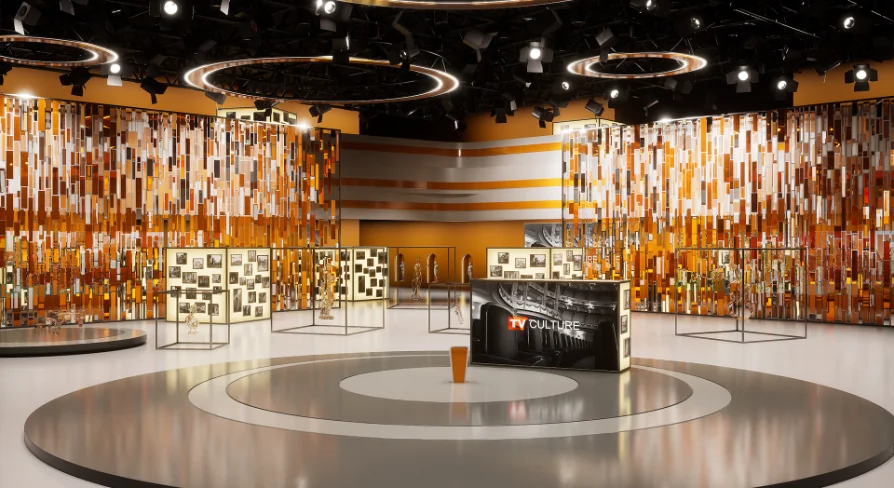
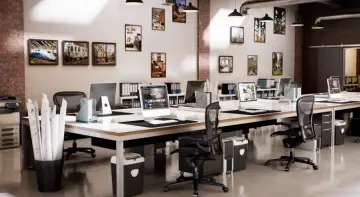
Establishing a virtual television set requires assets that can process complex lighting and reflections without breaking the real-time illusion. This environment is structured to support exactly that, providing a ready-to-use interior architecture that integrates seamlessly into a virtual production pipeline. The layout incorporates essential broadcast elements, including designated TV screens, integrated picture frames, and a vibrant orange color palette that adds a distinct cultural flair to the modern design.
Because the scene is built for live processing, the technical setup is strictly aligned with modern Unreal Engine rendering standards. The space is populated with physical and ambient light sources, including dedicated spotlights and practical lamps, which are necessary for illuminating subjects against the digital backdrop. The interplay between these light sources and the surrounding architecture forms the core of the studio's photorealistic presentation.
Enabling Lumen for Dynamic Global Illumination
Accurate lighting is the most critical component of any television studio, and this environment achieves its realistic look through native support for Lumen in Unreal Engine 5.0 and above. Rather than relying on static, baked lighting, the scene utilizes dynamic global illumination to cast realistic shadows and bounce light naturally across the interior surfaces.
To fully utilize these rendering capabilities, specific engine configurations must be applied. Lumen is activated directly through the Unreal Engine interface by navigating to the Project Settings. From there, users must access the Rendering category and enable the features located under both Dynamic Global Illumination and Reflections. Once configured, the spotlights and lamps within the studio will interact dynamically with the custom shaders, allowing light to bounce accurately off the modern architecture and generate sparkling highlights across the room.
Nanite Integration and Unreal Engine 5.4 Performance Updates
While the scene maintains strict compatibility with Unreal Engine 5.2, subsequent iterations of the engine bring distinct technical shifts to how the studio geometry is processed. For projects running on Unreal Engine 5.4, the environment has undergone a series of targeted modifications to maximize rendering efficiency and visual fidelity.
The most significant architectural change in the 5.4 version involves the implementation of Nanite virtualized geometry. Within this updated build, all meshes that do not rely on translucency have been converted to Nanite. This allows the engine to render immense amounts of geometric detail on the solid architectural elements without traditional draw call bottlenecks. Meshes that require translucency remain on the standard rendering path to ensure proper light refraction and visibility.
Alongside the geometry updates, the Unreal Engine 5.4 version includes minor corrections and layout improvements across the scene. Furthermore, all textures and meshes within the studio have been rigorously optimized to guarantee better performance, ensuring the environment remains stable during resource-intensive virtual production tasks.
Photorealistic PBR Materials and Custom Shaders
The visual believability of the studio interior relies on a comprehensive suite of Physically Based Rendering (PBR) materials. The environment is constructed using a mix of industrial and modern surfaces, prominently featuring metal, plastic, and glass. Custom shaders are deployed to handle the specific reflective and refractive properties of these materials, ensuring they react accurately to the dynamic Lumen lighting.
Reflectivity plays a major role in the modern aesthetic of the set. Mirrors are integrated into the studio design, capturing dynamic reflections of the surrounding architecture and light sources. The combination of clear glass, polished metal, and glossy plastic generates a realistic, sparkling effect under the studio's spotlights, elevating the overall photorealism of the television broadcast environment.
Hardware Specifications for Smooth Real-Time Rendering
Processing dynamic global illumination, custom shaders, and high-density Nanite meshes in real time requires substantial computing power. To ensure the virtual studio performs reliably during live production or VR applications, a strict set of hardware recommendations has been established.
The baseline requirement for the operating system is a 64-bit architecture. To manage the complex physics, lighting calculations, and optimized textures without introducing latency, an Intel i7 processor paired with a massive 64 GB of RAM is recommended. On the graphical rendering side, a GeForce RTX 3070 graphics card is advised. This hardware threshold ensures that the GPU can comfortably handle the demands of Lumen reflections, high-resolution PBR materials, and real-time shadows without dropping frames during a live virtual broadcast.
Expanding the Virtual Studios Vol 1 Ecosystem
As a foundational broadcast environment, this specific interior represents the first configuration within a larger modular ecosystem. It originates directly from the broader "Virtual Studios vol. 1 for UE" collection, which encompasses a variety of architectural layouts for television and virtual reality applications.
For creators needing multiple set designs or varied visual themes, the collection expands beyond this initial setup. The series includes several other distinct environments, specifically categorized as Scene 2, Scene 3, Scene 4, and Scene 5. Together, these scenes provide a comprehensive suite of modern, photorealistic locations tailored for those pushing the boundaries of real-time virtual production in Unreal Engine.
 Interior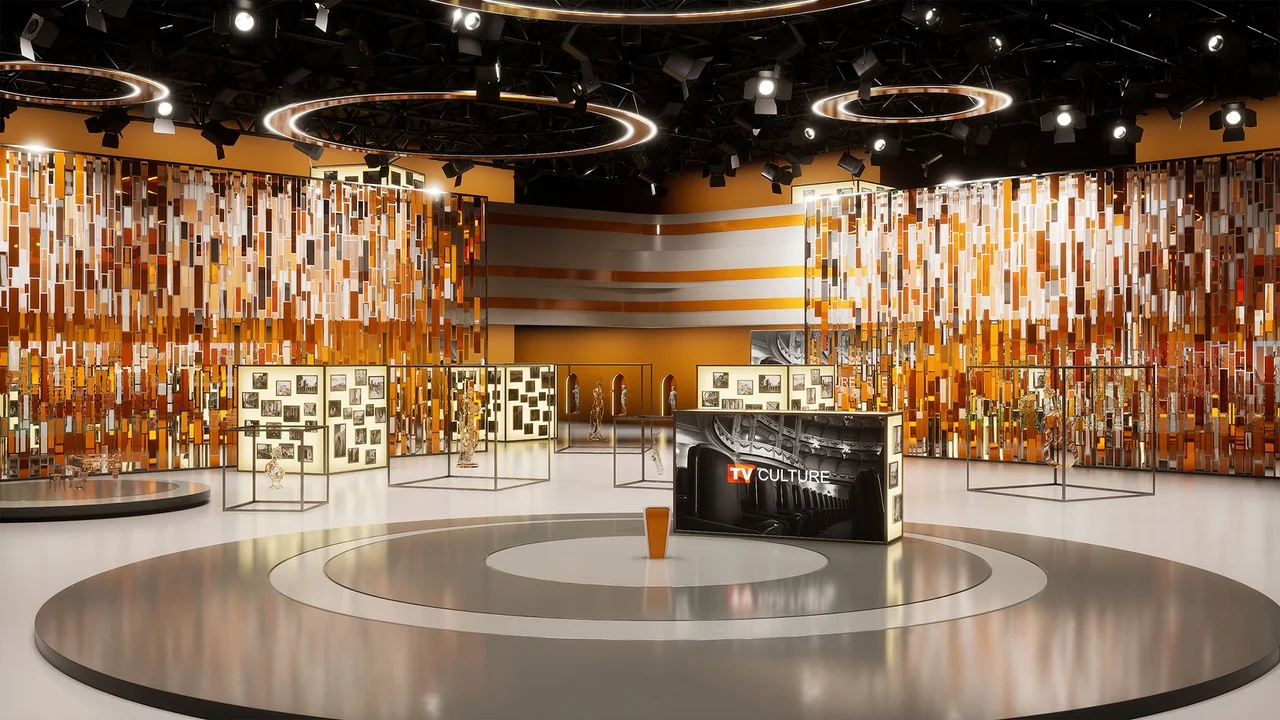
 Interior
 Interior
 Interior