"efaa631e936fd3ee"{"id":"1002237","slug":"tower-defense-template","title":"Tower Defense Template","category":"Platformer","engine":"4.23+,5.0+","assetVersion":"","engineVersion":"Engine Version: 4.23+,5.0+","tag":"Platformer","accent":"blue","visual":"mech","summary":"A 100% Blueprint Tower Defense Template featuring customizable grids, stat-based damage, wave spawns, upgradable units, drop mechanics, and mobile support.","platform":"Unreal Engine","publishedAt":"2026-10-29T15:52:14.225Z","updatedAt":"2026-10-29T15:52:14.225Z","sourceNotes":[],"fileContents":[],"compatibility":["Unreal Engine","Engine Version: 4.23+,5.0+"],"featuredImage":{"alt":"Tower Defense Template","src":"/wp-content/uploads/published/2026/10/bbb64a3f3c39-b0fa5795-77e9-4a43-b060-b443d3324f47-7be01faac1.webp"},"hasDownloadLink":true,"downloads":0,"terms":[{"taxonomy":"category","slug":"platformer","name":"Platformer"}],"galleryImages":[{"src":"/wp-content/uploads/published/2026/10/6e92c9dd8816-ff700feb-aefa-4388-9aef-888c2012e6c8-dbea9af723.webp","alt":"Tower Defense Template"},{"src":"/wp-content/uploads/published/2026/10/ed300fa04341-06c3da83-2a6c-425d-8fc7-56322de82c2d-5f30e3133c.webp","alt":"Tower Defense Template"},{"src":"/wp-content/uploads/published/2026/10/b545d0639026-a32bf82f-429e-4c94-b5ef-304380b0a7d1-b3774297f1.webp","alt":"Tower Defense Template"},{"src":"/wp-content/uploads/published/2026/10/14c9baf7ee83-f2b9925a-0598-40f6-b9f8-468d2897fba3-76a4c55ead.webp","alt":"Tower Defense Template"},{"src":"/wp-content/uploads/published/2026/10/5f92e569cc06-1240f44d-7222-438a-a22b-35ed26e47124-efca2e1af7.webp","alt":"Tower Defense Template"},{"src":"/wp-content/uploads/published/2026/10/40b99423abbc-c9eedfc2-4fe6-47ee-91ca-f19b37ce2dc6-f6d00312a8.webp","alt":"Tower Defense Template"}],"accessPanel":{"kind":"resource","title":"Download this resource","eyebrow":"Free Download","message":"Log in or create a free account to start your download.","fileName":"Tower Defense Template.7z","safetyNote":"Resources are manually reviewed before listing to improve quality and reduce obvious risks.","actionLabel":"Download Free","resourceType":"Resource archive"},"contentHtml":"\u003cp\u003eBuilding a real-time strategy or tower defense title requires several distinct gameplay systems to interact without friction. Unit placement must respect geometric boundaries, defensive structures require reliable targeting and damage calculation, enemy spawners must scale through escalating waves, and interface layers must register user inputs instantly. Tower Defense Template supplies this fundamental gameplay framework entirely within visual scripting, giving developers an operational starting point for strategy mechanics.\u003c/p\u003e \u003ch2\u003eDeploying Defensive Units Across the Customizable Grid\u003c/h2\u003e\n\u003cp\u003eSpatial control forms the baseline of any tower defense project. Players must assess incoming paths, position defensive structures deliberately, and adapt their layouts as wave dynamics evolve. At the center of this workflow is a customizable grid system designed to govern placement logic across game levels.\u003c/p\u003e\n\u003cp\u003eThe grid determines how units anchor to the game world. Because grid parameters can be customized, developers can alter cell sizes, positioning tolerances, and alignment rules to match diverse environment layouts. Whether a level features narrow chokepoints or open plains requiring complex barricade mazes, the grid provides the spatial rules required to prevent overlapping structures and maintain clear defensive lanes.\u003c/p\u003e\n\u003cp\u003eWorking alongside the grid is a unit selection UI that gives players visual command over their deployment decisions. The interface framework utilizes 2D art derived from a foundational UI pack alongside assets from an RPG-oriented UI extension. This establishes a functional graphic interface right away, allowing designers to hook up unit icons, selection states, and placement confirmations directly into the game viewport without needing to generate standalone 2D interface art first.\u003c/p\u003e \u003ch2\u003eStat-Driven Damage Systems and Upgradable Units\u003c/h2\u003e\n\u003cp\u003eStrategy gameplay relies on readable arithmetic. Defensive towers cannot simply deal uniform damage; they need granular parameters such as attack power, range, firing rate, and specialized attributes to create varied tactical roles across a roster.\u003c/p\u003e\n\u003cp\u003eTower Defense Template structures combat through a dedicated damage system based on unit stats. When an attack connects with an incoming enemy, calculations run against the underlying stat profiles of both the attacking tower and the target. This numerical baseline ensures that balancing encounters is a matter of adjusting parameters rather than rewriting combat logic.\u003c/p\u003e\n\u003cp\u003eTo support mid-match progression, the package includes upgradable units. Towers placed on the grid can advance through upgrade tiers, altering their stats and effectiveness in response to player choices. Upgrades can expand reach, increase damage output, or modify how towers engage threats. Because the upgrade flow links directly to the underlying stat system, tier progressions adjust combat values predictably, rewarding players for investing in high-priority sectors on the map.\u003c/p\u003e \u003ch2\u003eConfiguring Enemy Waves and the In-Match Drop System\u003c/h2\u003e\n\u003cp\u003ePacing in defense games depends heavily on how adversaries enter the battlefield. Unpredictable or poorly timed spawns disrupt player strategy, while static single-speed columns make encounters monotonous. The template handles this balance through customizable enemy waves.\u003c/p\u003e\n\u003cp\u003eWave configuration allows creators to tune spawn counts, interval pacing, and enemy composition per assault. Developers can build steadily mounting pressure, staging early skirmishes with light enemies before transitioning into sustained armored rushes. Because the enemy wave spawner is built for modification, designers can structure encounters to test specific tower combinations or demand rapid defensive repositioning.\u003c/p\u003e\n\u003cp\u003eDefeating waves triggers the built-in drop system. When enemies fall to defensive fire, the drop framework can distribute items, currency, or tactical pickups onto the field. This drop mechanic ties the combat loop back into player economy, rewarding efficient kill zones with the resources necessary to fund tower upgrades, unlock advanced units, or construct reinforcements before the subsequent wave arrives.\u003c/p\u003e \u003ch2\u003e100% Blueprint Architecture and Mobile Deployment\u003c/h2\u003e\n\u003cp\u003eAll core functionalities in the template are authored as 100% Blueprints. Visual scripting across every mechanic ensures that developers can inspect, modify, and expand the project without compiling C++ code. The node graphs maintain clear modularity, separating spatial placement, UI handling, wave timing, and stat interactions into distinct layers that can be inspected directly in the editor.\u003c/p\u003e\n\u003cp\u003eThis visual setup also grants practical compatibility with complementary systems, including the Reactive Turn-Based RPG Template. Developers mixing genre conventions—such as blending wave-based defensive mechanics with turn-based tactical encounters—can cross-reference logic routines and reuse data patterns across both frameworks without translation barriers.\u003c/p\u003e\n\u003cp\u003eIn addition to desktop strategy workflows, the template is fully mobile compatible. Touch inputs, viewport scaling, and interface layouts can run effectively on handheld devices, making the package an option for studios targeting mobile marketplaces. The underlying logic runs efficiently within blueprint constraints, keeping overhead low so mobile hardware can maintain fluid frame rates during heavy wave incursions.\u003c/p\u003e \u003ch2\u003eWho Benefits Most From This Setup\u003c/h2\u003e\n\u003cp\u003eSolo developers and prototyping teams gain the most direct value from this package. Implementing a bug-free grid placement system, building an interface that reliably talks to level actors, and constructing an adjustable wave manager often consumes weeks of initial development time before any creative balancing begins. By delivering these interlocking pillars as an operational whole, the template lets creators move straight into map design, unit identity, and encounter balancing.\u003c/p\u003e\n\u003cp\u003eDesigners targeting mobile strategy games will also appreciate the out-of-the-box touch readiness and clean 2D interface integration. The combination of customizable waves, stat-driven damage, and unit upgrades forms a complete core loop ready to be reskinned, expanded, or tailored to bespoke gameplay rules.\u003c/p\u003e\n\n\u003ch2\u003eRelated Resources Worth Checking\u003c/h2\u003e\n\u003cul\u003e\n\u003cli\u003e\u003ca href=\"https://3dcghub.com/advanced-platformer/\" title=\"Advanced Platformer\"\u003eAdvanced Platformer\u003c/a\u003e\u003c/li\u003e\n\u003cli\u003e\u003ca href=\"https://3dcghub.com/endless-runner-creator-v3/\" title=\"Endless Runner Creator V3\"\u003eEndless Runner Creator V3\u003c/a\u003e\u003c/li\u003e\n\u003cli\u003e\u003ca href=\"https://3dcghub.com/push-push-puzzle-2d-kit/\" title=\"Push Push Puzzle 2D Kit\"\u003ePush Push Puzzle 2D Kit\u003c/a\u003e\u003c/li\u003e\n\u003cli\u003e\u003ca href=\"https://3dcghub.com/endless-runner-mega-template/\" title=\"Endless Runner Mega Template\"\u003eEndless Runner Mega Template\u003c/a\u003e\u003c/li\u003e\n\u003cli\u003e\u003ca href=\"https://3dcghub.com/2-5d-platformer-game-template/\" title=\"2.5D Platformer Game Template\"\u003e2.5D Platformer Game Template\u003c/a\u003e\u003c/li\u003e\n\u003c/ul\u003e","contentTextLength":6343,"navigation":{"current":48,"total":4209,"previous":{"id":"1002238","slug":"track-marker-vfx","title":"Track marker vfx.","category":"Variety","platform":"Unreal Engine","updatedAt":"2026-10-29T15:54:03.356Z"},"next":{"id":"1002236","slug":"top-down-post-apocalyptic-props","title":"Top-Down Post-Apocalyptic Props","category":"Vehicles \u0026 Transportation","platform":"Unreal Engine","updatedAt":"2026-10-29T15:43:19.697Z"}},"relatedResources":[{"id":"1001939","slug":"advanced-platformer","title":"Advanced Platformer","category":"Platformer","engine":"4.24+,5.0+","assetVersion":"","engineVersion":"Engine Version: 4.24+,5.0+","tag":"Platformer","accent":"blue","visual":"mech","summary":"Explore the Advanced Platformer blueprint starter pack, featuring moving platforms, simple AI, saving mechanics, and essential configuration menus.","platform":"Unreal Engine","publishedAt":"2026-10-24T11:15:01.946Z","updatedAt":"2026-10-24T11:15:01.946Z","sourceNotes":[],"fileContents":[],"compatibility":["Unreal Engine","Engine Version: 4.24+,5.0+"],"featuredImage":{"alt":"Advanced Platformer","src":"/wp-content/uploads/published/2026/10/f4b4dac38123-30f7b60f-a57e-4723-aecb-b2e33fd33aa6-4c45032697.webp"},"hasDownloadLink":true,"downloads":0},{"id":"11715","slug":"endless-runner-creator-v3","title":"Endless Runner Creator V3","category":"Platformer","engine":"4.26+,5.0+","assetVersion":"Engine version: 4.26+,5.0+","engineVersion":"Asset Version:V3","tag":"Platformer","accent":"blue","visual":"mech","summary":"Build high-performance endless runner games with a flexible system featuring seven unique game types. This optimized engine supports both mobile and desktop platforms with ease.","platform":"Unreal Engine","publishedAt":"2026-03-05T18:18:19.000Z","updatedAt":"2026-04-19T15:48:08.000Z","sourceNotes":[],"fileContents":[],"compatibility":["Unreal Engine","Engine version: 4.26+,5.0+","Asset Version: V3"],"featuredImage":{"alt":"Endless Runner Creator V3","src":"https://3dcghub.com/wp-content/uploads/2026/03/1121ed83-5490-4700-8c2f-5c8bc92844fc.webp"},"hasDownloadLink":true,"downloads":0},{"id":"11723","slug":"push-push-puzzle-2d-kit","title":"Push Push Puzzle 2D Kit","category":"Platformer","engine":"4.26+,5.0+","assetVersion":"Engine version: 4.26+,5.0+","engineVersion":"4.26","tag":"Platformer","accent":"blue","visual":"luts","summary":"Develop your own top-down puzzle games using the Push Push Puzzle 2D Kit. This Blueprint-based template includes interactive tile maps, level select systems, and mobile-ready controls.","platform":"Unreal Engine","publishedAt":"2026-03-05T18:26:28.000Z","updatedAt":"2026-04-19T15:48:07.000Z","sourceNotes":[],"fileContents":[],"compatibility":["Unreal Engine","Engine version: 4.26+,5.0+"],"featuredImage":{"alt":"Push Push Puzzle 2D Kit","src":"https://3dcghub.com/wp-content/uploads/2026/03/d5ab53d3-25a9-4c85-bdbe-69b11295d155.webp"},"hasDownloadLink":true,"downloads":0}]}
Platformer
Tower Defense Template
A 100% Blueprint Tower Defense Template featuring customizable grids, stat-based damage, wave spawns, upgradable units, drop mechanics, and mobile support.
Category:Unreal Engine,PlatformerPlatform: Unreal EngineEngine Version: 4.23+,5.0+Published: Oct 29, 2026
Platformer
Resource overview
Building a real-time strategy or tower defense title requires several distinct gameplay systems to interact without friction. Unit placement must respect geometric boundaries, defensive structures require reliable targeting and damage calculation, enemy spawners must scale through escalating waves, and interface layers must register user inputs instantly. Tower Defense Template supplies this fundamental gameplay framework entirely within visual scripting, giving developers an operational starting point for strategy mechanics.
Deploying Defensive Units Across the Customizable Grid
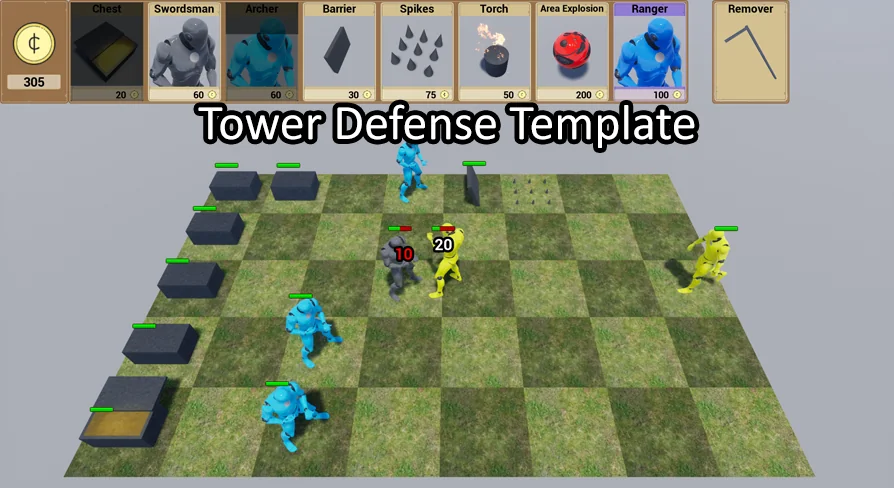
Spatial control forms the baseline of any tower defense project. Players must assess incoming paths, position defensive structures deliberately, and adapt their layouts as wave dynamics evolve. At the center of this workflow is a customizable grid system designed to govern placement logic across game levels.
The grid determines how units anchor to the game world. Because grid parameters can be customized, developers can alter cell sizes, positioning tolerances, and alignment rules to match diverse environment layouts. Whether a level features narrow chokepoints or open plains requiring complex barricade mazes, the grid provides the spatial rules required to prevent overlapping structures and maintain clear defensive lanes.
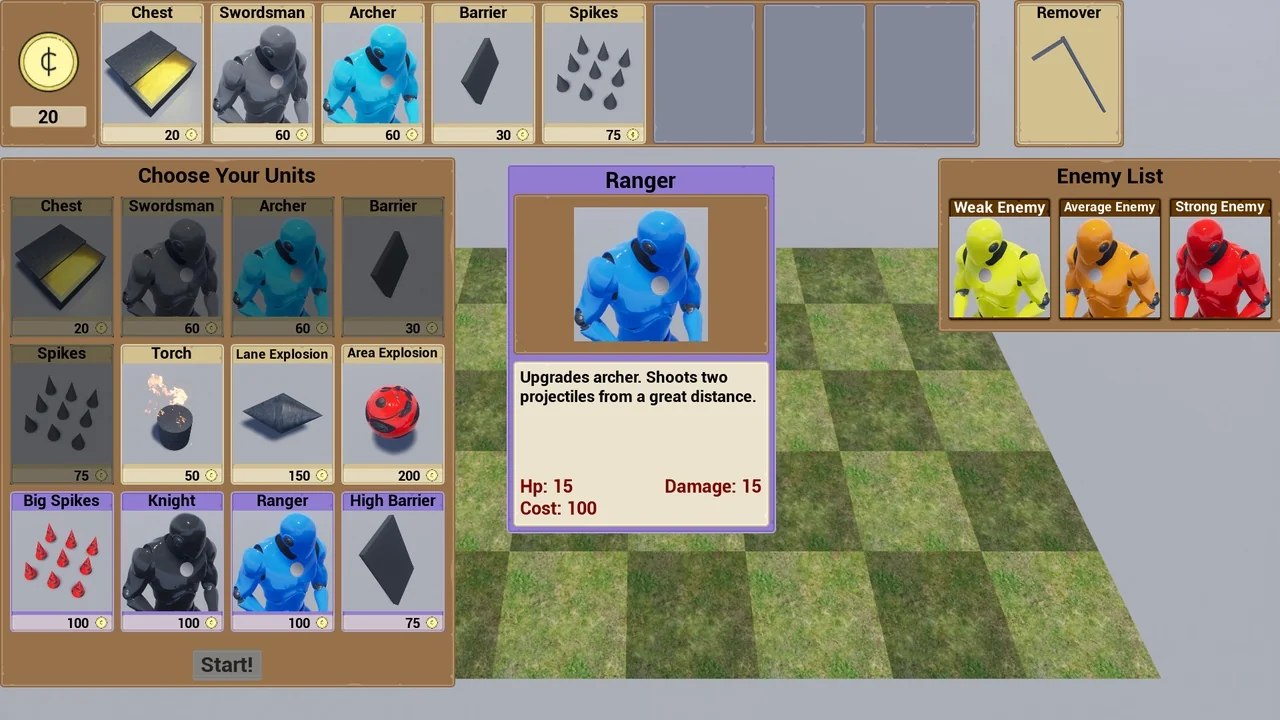
Working alongside the grid is a unit selection UI that gives players visual command over their deployment decisions. The interface framework utilizes 2D art derived from a foundational UI pack alongside assets from an RPG-oriented UI extension. This establishes a functional graphic interface right away, allowing designers to hook up unit icons, selection states, and placement confirmations directly into the game viewport without needing to generate standalone 2D interface art first.
Stat-Driven Damage Systems and Upgradable Units
Strategy gameplay relies on readable arithmetic. Defensive towers cannot simply deal uniform damage; they need granular parameters such as attack power, range, firing rate, and specialized attributes to create varied tactical roles across a roster.
Tower Defense Template structures combat through a dedicated damage system based on unit stats. When an attack connects with an incoming enemy, calculations run against the underlying stat profiles of both the attacking tower and the target. This numerical baseline ensures that balancing encounters is a matter of adjusting parameters rather than rewriting combat logic.
To support mid-match progression, the package includes upgradable units. Towers placed on the grid can advance through upgrade tiers, altering their stats and effectiveness in response to player choices. Upgrades can expand reach, increase damage output, or modify how towers engage threats. Because the upgrade flow links directly to the underlying stat system, tier progressions adjust combat values predictably, rewarding players for investing in high-priority sectors on the map.
Configuring Enemy Waves and the In-Match Drop System
Pacing in defense games depends heavily on how adversaries enter the battlefield. Unpredictable or poorly timed spawns disrupt player strategy, while static single-speed columns make encounters monotonous. The template handles this balance through customizable enemy waves.
Wave configuration allows creators to tune spawn counts, interval pacing, and enemy composition per assault. Developers can build steadily mounting pressure, staging early skirmishes with light enemies before transitioning into sustained armored rushes. Because the enemy wave spawner is built for modification, designers can structure encounters to test specific tower combinations or demand rapid defensive repositioning.
Defeating waves triggers the built-in drop system. When enemies fall to defensive fire, the drop framework can distribute items, currency, or tactical pickups onto the field. This drop mechanic ties the combat loop back into player economy, rewarding efficient kill zones with the resources necessary to fund tower upgrades, unlock advanced units, or construct reinforcements before the subsequent wave arrives.
100% Blueprint Architecture and Mobile Deployment
All core functionalities in the template are authored as 100% Blueprints. Visual scripting across every mechanic ensures that developers can inspect, modify, and expand the project without compiling C++ code. The node graphs maintain clear modularity, separating spatial placement, UI handling, wave timing, and stat interactions into distinct layers that can be inspected directly in the editor.
This visual setup also grants practical compatibility with complementary systems, including the Reactive Turn-Based RPG Template. Developers mixing genre conventions—such as blending wave-based defensive mechanics with turn-based tactical encounters—can cross-reference logic routines and reuse data patterns across both frameworks without translation barriers.
In addition to desktop strategy workflows, the template is fully mobile compatible. Touch inputs, viewport scaling, and interface layouts can run effectively on handheld devices, making the package an option for studios targeting mobile marketplaces. The underlying logic runs efficiently within blueprint constraints, keeping overhead low so mobile hardware can maintain fluid frame rates during heavy wave incursions.
Who Benefits Most From This Setup
Solo developers and prototyping teams gain the most direct value from this package. Implementing a bug-free grid placement system, building an interface that reliably talks to level actors, and constructing an adjustable wave manager often consumes weeks of initial development time before any creative balancing begins. By delivering these interlocking pillars as an operational whole, the template lets creators move straight into map design, unit identity, and encounter balancing.
Designers targeting mobile strategy games will also appreciate the out-of-the-box touch readiness and clean 2D interface integration. The combination of customizable waves, stat-driven damage, and unit upgrades forms a complete core loop ready to be reskinned, expanded, or tailored to bespoke gameplay rules.
 Platformer
 Platformer
 Platformer
 Platformer