"fa182e0cd0a6ea73"{"id":"1001803","slug":"endless-runner-mega-template","title":"Endless Runner Mega Template","category":"Platformer","engine":"5.0+","assetVersion":"","engineVersion":"Engine Version: 5.0+","tag":"Platformer","accent":"blue","visual":"mech","summary":"Explore the Endless Runner Mega Template, featuring procedural generation, character spells, dynamic difficulty scaling, and tickless Blueprint optimization.","platform":"Unreal Engine","publishedAt":"2026-10-21T07:54:58.391Z","updatedAt":"2026-10-21T07:54:58.391Z","sourceNotes":[],"fileContents":[],"compatibility":["Unreal Engine","Engine Version: 5.0+"],"featuredImage":{"alt":"Endless Runner Mega Template","src":"/wp-content/uploads/published/2026/10/ee153be13f3e-99a6af0a-95bb-4bdb-84cf-24cbc1f5debc-5a4dc71c0d.webp"},"hasDownloadLink":true,"downloads":0,"terms":[{"taxonomy":"category","slug":"platformer","name":"Platformer"}],"galleryImages":[{"src":"/wp-content/uploads/published/2026/10/887ac6e1239f-3526bb87-3a89-407f-85a7-599bf187c3ab-32e6f072a3.webp","alt":"Endless Runner Mega Template"},{"src":"/wp-content/uploads/published/2026/10/3f732e05c45d-d19be234-02b6-4608-b494-2ba8df159c87-2e3792df3e.webp","alt":"Endless Runner Mega Template"},{"src":"/wp-content/uploads/published/2026/10/e344d138607c-b3f3dbec-d491-44dc-8f9b-56706f8287ee-ebadc117c8.webp","alt":"Endless Runner Mega Template"},{"src":"/wp-content/uploads/published/2026/10/f2f593ad973c-e856339b-6666-4d26-ae77-6ecabf7dddaf-124478da87.webp","alt":"Endless Runner Mega Template"},{"src":"/wp-content/uploads/published/2026/10/1988060ffd58-336b1d3d-8149-499a-ad1a-dfa906b17f0f-25fbec65cd.webp","alt":"Endless Runner Mega Template"},{"src":"/wp-content/uploads/published/2026/10/df043eec874d-7f3dc8dd-46ce-457d-9df1-b0ba4a85e43a-babd000bb8.webp","alt":"Endless Runner Mega Template"},{"src":"/wp-content/uploads/published/2026/10/ed9a752d607c-b83d88fb-80eb-4d54-9407-ca8b5055f8f7-d9aadece21.webp","alt":"Endless Runner Mega Template"},{"src":"/wp-content/uploads/published/2026/10/6ac50726513a-22caedbd-1872-442b-b14e-56cfb0223b2b-a9e6d4da97.webp","alt":"Endless Runner Mega Template"},{"src":"/wp-content/uploads/published/2026/10/0f1572ae3b6d-edec1622-76a8-4183-96f6-b6173849f1ba-73599b1ea5.webp","alt":"Endless Runner Mega Template"},{"src":"/wp-content/uploads/published/2026/10/985115dcac70-8254b2a2-fbac-450b-8f6e-f5fca34e4916-e1c019a425.webp","alt":"Endless Runner Mega Template"}],"accessPanel":{"kind":"resource","title":"Download this resource","eyebrow":"Free Download","message":"Log in or create a free account to start your download.","fileName":"Endless Runner Mega Template.7z","safetyNote":"Resources are manually reviewed before listing to improve quality and reduce obvious risks.","actionLabel":"Download Free","resourceType":"Resource archive"},"contentHtml":"\u003ch2\u003eCore Architecture of the Endless Runner Mega Template\u003c/h2\u003e\u003cp\u003eThe Endless Runner Mega Template provides a complete framework designed around modular drag-and-drop Blueprints. Instead of restricting players to basic lane-swapping or single-button jumping mechanics, the system provides a dynamic environment where active player inputs dictate survival. Developers can configure and generate diverse gameplay variations in seconds with only a few adjustments inside the editor, making the template accessible to beginners while remaining flexible enough for specialized game designs.\u003c/p\u003e\u003cp\u003eStandard endless runner projects often rely on static, linear loops that test only reflexive timing. This template expands the baseline expectations of the genre by introducing persistent threat layers, varied pacing, and multifaceted character control. Players navigate pathways populated by frequent enemy encounters, interactive items, and environmental hazards that require immediate strategic responses rather than passive dodging.\u003c/p\u003e\u003ch2\u003eActive Combat Spells and Character Abilities\u003c/h2\u003e\u003cp\u003eMovement and survival in this template revolve around an expanded suite of player actions. Rather than merely navigating obstacles, characters possess direct tools to confront and neutralize threats along the running track. Supported abilities include directional dashes, rapid speed boosts, summoned defensive shields, and magical spell casting. Among the specialized actions demonstrated in the framework is the Earth Shock ability, which showcases how localized offensive powers can be deployed on the move to push through hazardous zones.\u003c/p\u003e\u003cp\u003eThese actions provide tactical countermeasures against challenging enemies that spawn along the course. Encounters require active defense or offensive clearing, turning each run into an action-oriented platforming loop. Coupled with responsive character controls, the movement framework balances high-speed traversal with spell usage, allowing characters to mitigate obstacle damage or pierce through dense enemy formations without interrupting the forward momentum of the run.\u003c/p\u003e\u003ch2\u003eProcedural Generation and Actor Lifecycle Management\u003c/h2\u003e\u003cp\u003eWorld building in the template is handled through an automated procedural loop focused on stability and memory efficiency. As the character advances, procedural floor and wall sections instantiate directly in front of the active camera path. Simultaneously, trailing modular tiles that fall behind the player view are systematically purged from memory. This continuous spawning and despawning cycle ensures that infinite runs do not accumulate unnecessary geometry or drive up draw calls.\u003c/p\u003e\u003cp\u003eThis tight lifecycle management also governs gameplay actors and spawned enemies. Non-static assets, hostile units, and interactive items operate with strict, time-limited lifespans. By automatically culling actors once their active window expires or when they exit the playable zone, the template maintains a steady runtime profile free of accumulated actor counts. This predictable allocation helps avoid stutter, hitches, and unexpected memory leaks over extended play sessions.\u003c/p\u003e\u003ch2\u003eTickless Blueprint Optimization and Interface Systems\u003c/h2\u003e\u003cp\u003eA primary architectural distinction of this template is its clean, performance-first visual scripting structure. Standard visual scripting setups often rely heavily on performance-draining nodes that degrade framerates during intensive runtime loops. In this project, Event Tick, Delay, Casting, and Binding nodes are omitted entirely from the core logic.\u003c/p\u003e\u003cp\u003eIn place of continuous per-frame polling and hard reference casting, the template implements high-efficiency alternatives:\u003c/p\u003e\u003cul\u003e\u003cli\u003e\u003cstrong\u003eTimers:\u003c/strong\u003e Replace per-frame tick updates with scheduled, controlled execution intervals that run strictly when needed.\u003c/li\u003e\u003cli\u003e\u003cstrong\u003eBlueprint Interfaces:\u003c/strong\u003e Handle inter-blueprint communication cleanly without creating hard dependency chains, eliminating performance penalties associated with broad object casting.\u003c/li\u003e\u003cli\u003e\u003cstrong\u003eEnumerators (Enums):\u003c/strong\u003e Manage operational states, ability triggers, and track conditions in a structured, readable format.\u003c/li\u003e\u003cli\u003e\u003cstrong\u003eUser Interface (UMG) Widgets:\u003c/strong\u003e Drive score readouts and HUD updates efficiently without relying on expensive property bindings.\u003c/li\u003e\u003c/ul\u003e\u003cp\u003eThe architecture is set up to align cleanly with advanced workflows, including compatibility with the Gameplay Ability System (GAS), yielding a fully optimized, game-ready baseline suitable for production deployments across fantasy, sci-fi, cyberpunk, or modern visual settings.\u003c/p\u003e\u003ch2\u003ePickup Animations and Dynamic Score Progression\u003c/h2\u003e\u003cp\u003eResource collection forms a core pillar of the runtime loop. The framework integrates high-fidelity pickup animations that trigger when players collect coins and other interactive items strewn across the track. These animations deliver immediate visual feedback without interrupting player input or conflicting with active character states like dashing or spell casting.\u003c/p\u003e\u003cp\u003eScore collection directly controls game pacing through a dynamic difficulty progression model. Every run initiates in Easy Mode, presenting accessible obstacle layouts and manageable enemy placement to ease players into the speed of the track. Once a specified threshold of pickups is secured, the logic automatically shifts the session into Hard Mode. This automated transition increases the intensity of the run, introducing faster reaction windows and tighter obstacle sequences based entirely on player performance.\u003c/p\u003e\u003ch2\u003eAsset Utilization and Visual Demonstration Notice\u003c/h2\u003e\u003cp\u003eWhile the template contains all underlying logic, procedural systems, character controls, UMG widgets, and gameplay scripts needed to deploy a functional runner, textures and visual effects showcased in promotional previews are included solely for demonstration purposes. Developers integrate their own art, materials, and VFX packs into the framework to suit their particular aesthetic requirements, whether targeting stylized stone corridors, metallic modern platforming, or sci-fi environments.\u003c/p\u003e\u003cp\u003eWith its modular Blueprint logic, tickless performance standards, and integrated ability suite, the Endless Runner Mega Template provides developers with an extensible platforming foundation capable of running smoothly while supporting intricate player abilities and aggressive dynamic hazards.\u003c/p\u003e\n\n\u003ch2\u003eMore From The Same Workflow\u003c/h2\u003e\n\u003cul\u003e\n\u003cli\u003e\u003ca href=\"https://3dcghub.com/endless-runner-shooter-template/\" title=\"Endless Runner Shooter Template\"\u003eEndless Runner Shooter Template\u003c/a\u003e\u003c/li\u003e\n\u003cli\u003e\u003ca href=\"https://3dcghub.com/endless-runner-creator-v3/\" title=\"Endless Runner Creator V3\"\u003eEndless Runner Creator V3\u003c/a\u003e\u003c/li\u003e\n\u003cli\u003e\u003ca href=\"https://3dcghub.com/cyberpunk-runner/\" title=\"Cyberpunk Runner\"\u003eCyberpunk Runner\u003c/a\u003e\u003c/li\u003e\n\u003cli\u003e\u003ca href=\"https://3dcghub.com/ghouls-mega-bundle/\" title=\"Ghouls Mega Bundle\"\u003eGhouls Mega Bundle\u003c/a\u003e\u003c/li\u003e\n\u003cli\u003e\u003ca href=\"https://3dcghub.com/male-mega-realistic-character-pack-01/\" title=\"Male Mega Realistic Character Pack 01\"\u003eMale Mega Realistic Character Pack 01\u003c/a\u003e\u003c/li\u003e\n\u003c/ul\u003e","contentTextLength":6399,"navigation":{"current":53,"total":3789,"previous":{"id":"1001804","slug":"f3-warrior-girl-scarlett","title":"F3 Warrior Girl Scarlett","category":"Characters \u0026 Creatures","platform":"Unreal Engine","updatedAt":"2026-10-21T07:55:59.371Z"},"next":{"id":"1001802","slug":"easy-atmos","title":"Easy Atmos","category":"Variety","platform":"Unreal Engine","updatedAt":"2026-10-21T07:54:07.654Z"}},"relatedResources":[{"id":"1001577","slug":"endless-runner-shooter-template","title":"Endless Runner Shooter Template","category":"Platformer","engine":"5.2+","assetVersion":"","engineVersion":"Engine Version: 5.2+","tag":"Platformer","accent":"blue","visual":"mech","summary":"Explore the Endless Runner Shooter Template, featuring 100% Blueprints, modular tile generation, runtime gameplay switches, and mobile platform support.","platform":"Unreal Engine","publishedAt":"2026-10-10T08:50:34.218Z","updatedAt":"2026-10-10T08:50:34.218Z","sourceNotes":[],"fileContents":[],"compatibility":["Unreal Engine","Engine Version: 5.2+"],"featuredImage":{"alt":"Endless Runner Shooter Template","src":"/wp-content/uploads/published/2026/10/7b7ad6c5cc25-a602c829-2f1f-4c67-9f93-ea6b656ce80a-fc1f400e9f.webp"},"hasDownloadLink":true,"downloads":0},{"id":"11715","slug":"endless-runner-creator-v3","title":"Endless Runner Creator V3","category":"Platformer","engine":"4.26+,5.0+","assetVersion":"Engine version: 4.26+,5.0+","engineVersion":"Asset Version:V3","tag":"Platformer","accent":"blue","visual":"mech","summary":"Build high-performance endless runner games with a flexible system featuring seven unique game types. This optimized engine supports both mobile and desktop platforms with ease.","platform":"Unreal Engine","publishedAt":"2026-03-05T18:18:19.000Z","updatedAt":"2026-04-19T15:48:08.000Z","sourceNotes":[],"fileContents":[],"compatibility":["Unreal Engine","Engine version: 4.26+,5.0+","Asset Version: V3"],"featuredImage":{"alt":"Endless Runner Creator V3","src":"https://3dcghub.com/wp-content/uploads/2026/03/1121ed83-5490-4700-8c2f-5c8bc92844fc.webp"},"hasDownloadLink":true,"downloads":0},{"id":"1001801","slug":"cyberpunk-runner","title":"Cyberpunk Runner","category":"Characters \u0026 Creatures","engine":"5.0+","assetVersion":"","engineVersion":"Engine Version: 5.0+","tag":"Characters","accent":"blue","visual":"character","summary":"Examine Cyberpunk Runner, featuring modular low-poly character setup, parkour action mechanics, Animationblueprint logic, and Cyber Samurai compatibility.","platform":"Unreal Engine","publishedAt":"2026-10-21T07:53:08.792Z","updatedAt":"2026-10-21T07:53:08.792Z","sourceNotes":[],"fileContents":[],"compatibility":["Unreal Engine","Engine Version: 5.0+"],"featuredImage":{"alt":"Cyberpunk Runner","src":"/wp-content/uploads/published/2026/10/590cf31c5759-0a478f29-7a45-4a7c-b658-0f6e0802b51c-68f029dd72.webp"},"hasDownloadLink":true,"downloads":0}]}
Platformer
Endless Runner Mega Template
Explore the Endless Runner Mega Template, featuring procedural generation, character spells, dynamic difficulty scaling, and tickless Blueprint optimization.
Category:Unreal Engine,PlatformerPlatform: Unreal EngineEngine Version: 5.0+Published: Oct 21, 2026
Platformer
Resource overview
Core Architecture of the Endless Runner Mega Template
The Endless Runner Mega Template provides a complete framework designed around modular drag-and-drop Blueprints. Instead of restricting players to basic lane-swapping or single-button jumping mechanics, the system provides a dynamic environment where active player inputs dictate survival. Developers can configure and generate diverse gameplay variations in seconds with only a few adjustments inside the editor, making the template accessible to beginners while remaining flexible enough for specialized game designs.
Standard endless runner projects often rely on static, linear loops that test only reflexive timing. This template expands the baseline expectations of the genre by introducing persistent threat layers, varied pacing, and multifaceted character control. Players navigate pathways populated by frequent enemy encounters, interactive items, and environmental hazards that require immediate strategic responses rather than passive dodging.
Active Combat Spells and Character Abilities
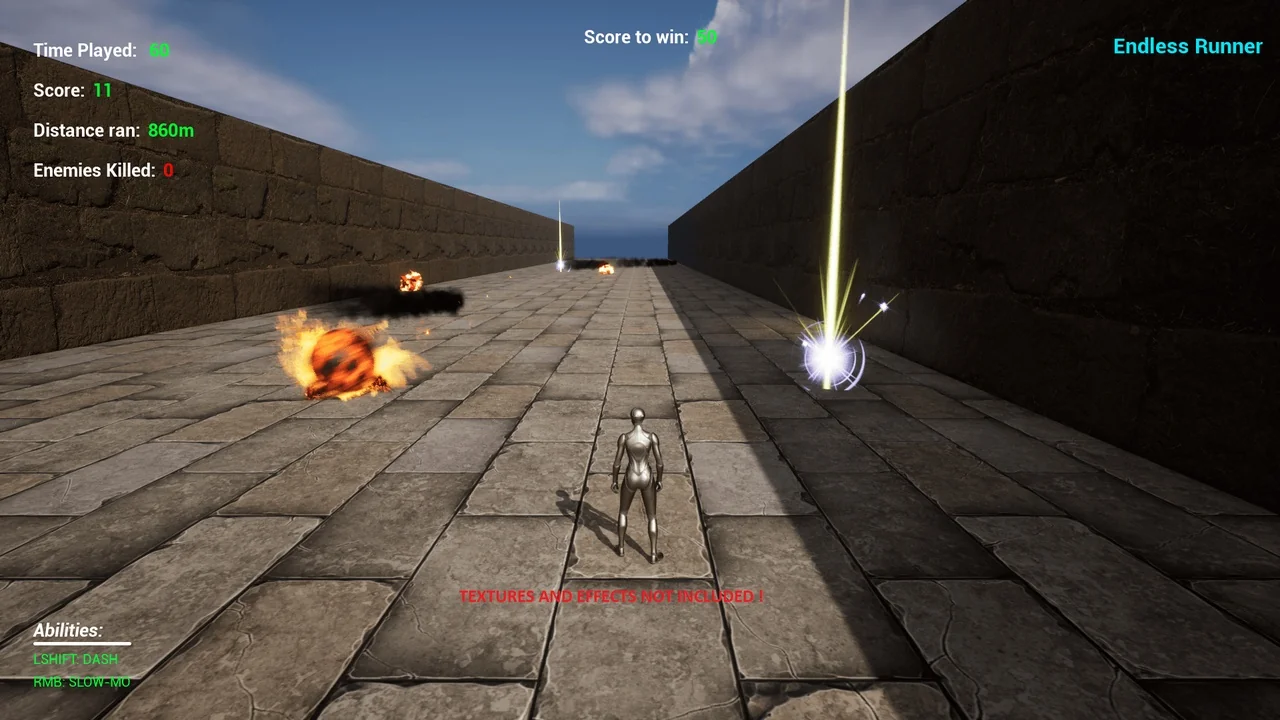
Movement and survival in this template revolve around an expanded suite of player actions. Rather than merely navigating obstacles, characters possess direct tools to confront and neutralize threats along the running track. Supported abilities include directional dashes, rapid speed boosts, summoned defensive shields, and magical spell casting. Among the specialized actions demonstrated in the framework is the Earth Shock ability, which showcases how localized offensive powers can be deployed on the move to push through hazardous zones.
These actions provide tactical countermeasures against challenging enemies that spawn along the course. Encounters require active defense or offensive clearing, turning each run into an action-oriented platforming loop. Coupled with responsive character controls, the movement framework balances high-speed traversal with spell usage, allowing characters to mitigate obstacle damage or pierce through dense enemy formations without interrupting the forward momentum of the run.
Procedural Generation and Actor Lifecycle Management
World building in the template is handled through an automated procedural loop focused on stability and memory efficiency. As the character advances, procedural floor and wall sections instantiate directly in front of the active camera path. Simultaneously, trailing modular tiles that fall behind the player view are systematically purged from memory. This continuous spawning and despawning cycle ensures that infinite runs do not accumulate unnecessary geometry or drive up draw calls.
This tight lifecycle management also governs gameplay actors and spawned enemies. Non-static assets, hostile units, and interactive items operate with strict, time-limited lifespans. By automatically culling actors once their active window expires or when they exit the playable zone, the template maintains a steady runtime profile free of accumulated actor counts. This predictable allocation helps avoid stutter, hitches, and unexpected memory leaks over extended play sessions.
Tickless Blueprint Optimization and Interface Systems
A primary architectural distinction of this template is its clean, performance-first visual scripting structure. Standard visual scripting setups often rely heavily on performance-draining nodes that degrade framerates during intensive runtime loops. In this project, Event Tick, Delay, Casting, and Binding nodes are omitted entirely from the core logic.
In place of continuous per-frame polling and hard reference casting, the template implements high-efficiency alternatives:
Timers: Replace per-frame tick updates with scheduled, controlled execution intervals that run strictly when needed.
Blueprint Interfaces: Handle inter-blueprint communication cleanly without creating hard dependency chains, eliminating performance penalties associated with broad object casting.
Enumerators (Enums): Manage operational states, ability triggers, and track conditions in a structured, readable format.
User Interface (UMG) Widgets: Drive score readouts and HUD updates efficiently without relying on expensive property bindings.
The architecture is set up to align cleanly with advanced workflows, including compatibility with the Gameplay Ability System (GAS), yielding a fully optimized, game-ready baseline suitable for production deployments across fantasy, sci-fi, cyberpunk, or modern visual settings.
Pickup Animations and Dynamic Score Progression
Resource collection forms a core pillar of the runtime loop. The framework integrates high-fidelity pickup animations that trigger when players collect coins and other interactive items strewn across the track. These animations deliver immediate visual feedback without interrupting player input or conflicting with active character states like dashing or spell casting.
Score collection directly controls game pacing through a dynamic difficulty progression model. Every run initiates in Easy Mode, presenting accessible obstacle layouts and manageable enemy placement to ease players into the speed of the track. Once a specified threshold of pickups is secured, the logic automatically shifts the session into Hard Mode. This automated transition increases the intensity of the run, introducing faster reaction windows and tighter obstacle sequences based entirely on player performance.
Asset Utilization and Visual Demonstration Notice
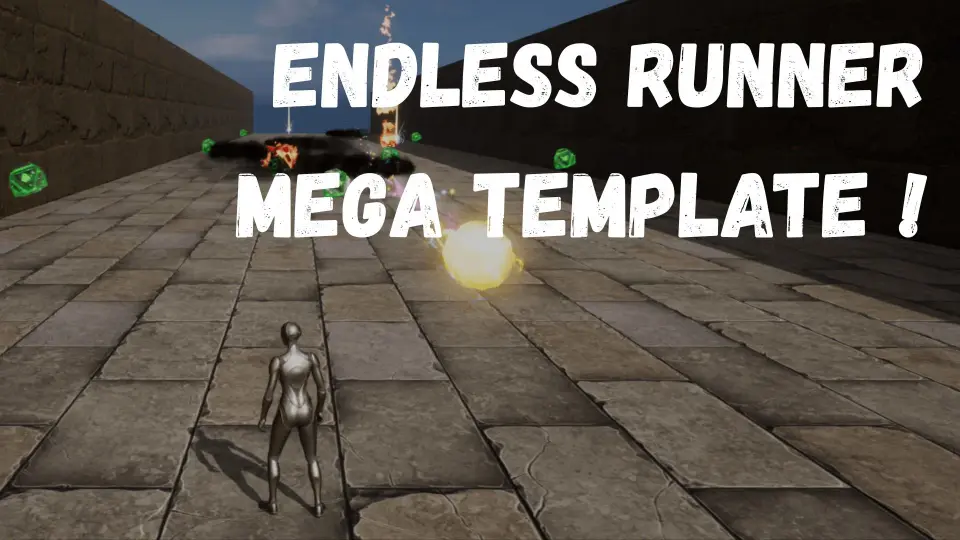
While the template contains all underlying logic, procedural systems, character controls, UMG widgets, and gameplay scripts needed to deploy a functional runner, textures and visual effects showcased in promotional previews are included solely for demonstration purposes. Developers integrate their own art, materials, and VFX packs into the framework to suit their particular aesthetic requirements, whether targeting stylized stone corridors, metallic modern platforming, or sci-fi environments.
With its modular Blueprint logic, tickless performance standards, and integrated ability suite, the Endless Runner Mega Template provides developers with an extensible platforming foundation capable of running smoothly while supporting intricate player abilities and aggressive dynamic hazards.
 Platformer
 Platformer
 Platformer
 Characters