"fa182e0cd0a6ea73"{"id":"1001801","slug":"cyberpunk-runner","title":"Cyberpunk Runner","category":"Characters \u0026 Creatures","engine":"5.0+","assetVersion":"","engineVersion":"Engine Version: 5.0+","tag":"Characters","accent":"blue","visual":"character","summary":"Examine Cyberpunk Runner, featuring modular low-poly character setup, parkour action mechanics, Animationblueprint logic, and Cyber Samurai compatibility.","platform":"Unreal Engine","publishedAt":"2026-10-21T07:53:08.792Z","updatedAt":"2026-10-21T07:53:08.792Z","sourceNotes":[],"fileContents":[],"compatibility":["Unreal Engine","Engine Version: 5.0+"],"featuredImage":{"alt":"Cyberpunk Runner","src":"/wp-content/uploads/published/2026/10/590cf31c5759-0a478f29-7a45-4a7c-b658-0f6e0802b51c-68f029dd72.webp"},"hasDownloadLink":true,"downloads":0,"terms":[{"taxonomy":"category","slug":"characters-and-creatures","name":"Characters \u0026 Creatures"}],"galleryImages":[{"src":"/wp-content/uploads/published/2026/10/2ec9e24293f5-4c1a064f-90e4-4638-918a-46aa97906427-d806739eb9.webp","alt":"Cyberpunk Runner"},{"src":"/wp-content/uploads/published/2026/10/d54f970be184-65a41b12-67e8-4dfd-9143-83f8bd9b7c57-834869be16.webp","alt":"Cyberpunk Runner"},{"src":"/wp-content/uploads/published/2026/10/2d336a9aff10-63e506da-493b-4143-966a-3f0116bdcc8b-8f93594d95.webp","alt":"Cyberpunk Runner"},{"src":"/wp-content/uploads/published/2026/10/89eccd398c7c-54ea4c66-3ace-49bd-9364-7a51b8e91bb5-6ac07a165a.webp","alt":"Cyberpunk Runner"},{"src":"/wp-content/uploads/published/2026/10/ca276fa568b3-6ea12952-e27d-48e7-ad02-5b0c7c0d14dc-53a86b3bc0.webp","alt":"Cyberpunk Runner"}],"accessPanel":{"kind":"resource","title":"Download this resource","eyebrow":"Free Download","message":"Log in or create a free account to start your download.","fileName":"Content.7z","safetyNote":"Resources are manually reviewed before listing to improve quality and reduce obvious risks.","actionLabel":"Download Free","resourceType":"Resource archive"},"contentHtml":"\u003ch2\u003eReal-Time Parkour and Action Across Cyberpunk Runner\u003c/h2\u003e\n\u003cp\u003eRapid traversal defines high-intensity environments where verticality, neon-lit corridors, and industrial infrastructure collide. Cyberpunk Runner establishes an action-oriented setup tailored for momentum-driven gameplay. Rather than relying on simple directional movement, the asset emphasizes parkour mechanics, allowing characters to vault, navigate obstructions, and bridge gaps across urban layouts. The inclusion of responsive movement dynamics bridges the gap between raw player input and grounded physical interaction, making dynamic locomotion central to the character's presence.\u003c/p\u003e\n\u003cp\u003eFast-paced settings require agility that accommodates sudden changes in velocity. The parkour elements within the package support fluidity during high-speed runs, wall interactions, and ledge recovery. By connecting fluid action transitions directly to character movement, the setup prevents abrupt halts in momentum. Developers building games around athletic traversal can leverage these mechanics to construct rooftop pursuits, subterranean escape sequences, and multi-tier obstacle courses without having to invent parkour logic from the ground up.\u003c/p\u003e \u003ch2\u003eAnimationblueprint Structure and Script Integration\u003c/h2\u003e\n\u003cp\u003eAt the technical core of the system lies a dedicated Animationblueprint working alongside project scripting. Controlling an agile character demands precise state machine organization, particularly when blending between running cycles, directional shifts, jumps, and combat postures. The Animationblueprint manages these transitions, resolving complex blend spaces so that the character model reacts appropriately whether moving at full sprint, decelerating into cover, or shifting into an offensive stance.\u003c/p\u003e\n\u003cp\u003eComplementing the animation graph, the accompanying script elements dictate the underlying mechanical logic. When a character approaches a jump boundary or obstacle, the scripts evaluate input states and environmental thresholds to execute the proper parkour response. This coordinated pipeline between scripts and animation blueprints reduces the friction typically involved in synchronizing visual animations with gameplay physics. Game systems can query current traversal states directly, ensuring that camera shakes, sound cues, and stamina checks fire in exact harmony with the on-screen character motion.\u003c/p\u003e \u003ch2\u003eModular Lowpoly Asset Design and Technology Styling\u003c/h2\u003e\n\u003cp\u003eCyberpunk Runner pairs realistic aesthetic intentions with lowpoly modeling discipline. In complex scenes filled with volumetric lighting, reflective shaders, and heavy post-processing, low-poly geometry ensures that character assets do not consume unnecessary frame budgets. The geometry remains clean and optimized, prioritizing well-placed edge loops around joints to avoid mesh pinching during intense parkour contortions and rapid blade swings.\u003c/p\u003e\n\u003cp\u003eThe visual execution leans into advanced technology themes, capturing the rugged, synthetic essence of futuristic street operatives. Modular assembly allows individual pieces of the character model to be adjusted, separated, or swapped depending on level requirements or scene context. Modular setups are essential for teams producing variable enemy types or progressive character upgrades, as distinct parts can be mixed without breaking underlying rig alignments or introducing clipping artifacts.\u003c/p\u003e \u003ch2\u003eCyber Ninja Character Mechanics with Sword Combat\u003c/h2\u003e\n\u003cp\u003eTraversing a cybernetic city requires defensive capability as much as raw speed. The character incorporates a cyber ninja motif, utilizing a sword as its principal accessory. This inclusion moves the asset beyond a pure navigation puppet into an integrated combat-and-traversal package. The sword fits naturally into offensive actions, transitioning smoothly from high-speed running into decisive melee engagement.\u003c/p\u003e\n\u003cp\u003eIntegrating melee weapons into a movement-heavy character requires dependable socket placement and synchronized motion data. The sword remains firmly planted in the character's tactical loop, whether sheathed during heavy parkour climbs or drawn during high-speed encounters. This mechanical identity suits projects demanding fast tactical decision-making, where jumping over an obstacle and delivering an immediate slash occur in a single continuous sequence.\u003c/p\u003e \u003ch2\u003eCyber Samurai Compatibility and Workflow Scope\u003c/h2\u003e\n\u003cp\u003eInteroperability remains a key consideration when expanding character rosters or integrating related mechanical systems. Cyberpunk Runner features direct compatibility with Cyber Samurai, establishing a shared structural foundation across both assets. This compatibility simplifies asset consolidation, allowing animation states, skeletal rigging expectations, and stylistic components to align across complementary character setups.\u003c/p\u003e\n\u003cp\u003eFor development teams working across multiple cybernetic archetypes, having mutual compatibility with Cyber Samurai minimizes the overhead of setting up separate retargeting profiles or rebuilding control scripts. The combined ecosystem provides a cohesive approach to modular, action-heavy character production, giving developers a practical foundation for building high-speed futuristic gameplay.\u003c/p\u003e\n\n\u003ch2\u003eMore From The Same Workflow\u003c/h2\u003e\n\u003cul\u003e\n\u003cli\u003e\u003ca href=\"https://3dcghub.com/cyberpunk-goth-nun-raven/\" title=\"Cyberpunk Goth Nun - Raven\"\u003eCyberpunk Goth Nun - Raven\u003c/a\u003e\u003c/li\u003e\n\u003cli\u003e\u003ca href=\"https://3dcghub.com/cyberpunk-metalhead/\" title=\"Cyberpunk Metalhead\"\u003eCyberpunk Metalhead\u003c/a\u003e\u003c/li\u003e\n\u003cli\u003e\u003ca href=\"https://3dcghub.com/a-c-s-u-mantis/\" title=\"A.C.S.U. \u0026quot;MANTIS\u0026quot;\"\u003eA.C.S.U. \u0026quot;MANTIS\u0026quot;\u003c/a\u003e\u003c/li\u003e\n\u003cli\u003e\u003ca href=\"https://3dcghub.com/cyberpunk-street-boy/\" title=\"Cyberpunk Street Boy\"\u003eCyberpunk Street Boy\u003c/a\u003e\u003c/li\u003e\n\u003cli\u003e\u003ca href=\"https://3dcghub.com/cyberpunk-girl-2/\" title=\"Cyberpunk Girl\"\u003eCyberpunk Girl\u003c/a\u003e\u003c/li\u003e\n\u003c/ul\u003e","contentTextLength":5312,"navigation":{"current":55,"total":3789,"previous":{"id":"1001802","slug":"easy-atmos","title":"Easy Atmos","category":"Variety","platform":"Unreal Engine","updatedAt":"2026-10-21T07:54:07.654Z"},"next":{"id":"1001800","slug":"cyberpunk-goth-nun-raven","title":"Cyberpunk Goth Nun - Raven","category":"Characters \u0026 Creatures","platform":"Unreal Engine","updatedAt":"2026-10-21T07:52:45.839Z"}},"relatedResources":[{"id":"1001800","slug":"cyberpunk-goth-nun-raven","title":"Cyberpunk Goth Nun - Raven","category":"Characters \u0026 Creatures","engine":"5.1+","assetVersion":"","engineVersion":"Engine Version: 5.1+","tag":"Characters","accent":"blue","visual":"character","summary":"Explore Cyberpunk Goth Nun - Raven for Unreal Engine 5, featuring over 200 ARKit morphs, dynamic physics blueprints, and full Control Rig support.","platform":"Unreal Engine","publishedAt":"2026-10-21T07:52:45.839Z","updatedAt":"2026-10-21T07:52:45.839Z","sourceNotes":[],"fileContents":[],"compatibility":["Unreal Engine","Engine Version: 5.1+"],"featuredImage":{"alt":"Cyberpunk Goth Nun - Raven","src":"/wp-content/uploads/published/2026/10/a4e89e597aec-3340779f-a2e9-424e-b229-809bb83f351b-62d0f9d877.webp"},"hasDownloadLink":true,"downloads":0},{"id":"2166","slug":"cyberpunk-metalhead","title":"Cyberpunk Metalhead","category":"Characters \u0026 Creatures","engine":"5.0+","assetVersion":"Engine version: 5.0+","engineVersion":"4.20","tag":"Characters","accent":"blue","visual":"character","summary":"Enhance your project with the Cyberpunk Metalhead, a game-ready 3D character featuring PBR textures. Perfect for action-adventure and shooter games.","platform":"Unreal Engine","publishedAt":"2026-02-07T08:08:25.000Z","updatedAt":"2026-04-19T15:58:06.000Z","sourceNotes":[],"fileContents":[],"compatibility":["Unreal Engine","Engine version: 5.0+"],"featuredImage":{"alt":"Cyberpunk Metalhead","src":"https://3dcghub.com/wp-content/uploads/2026/02/4b03dcde-8f61-4005-8d62-e73fb77669da.webp"},"hasDownloadLink":true,"downloads":1},{"id":"1452","slug":"a-c-s-u-mantis","title":"A.C.S.U. \"MANTIS\"","category":"Characters \u0026 Creatures","engine":"5.0+","assetVersion":"Engine version: 5.0+","engineVersion":"4.24","tag":"Characters","accent":"blue","visual":"character","summary":"Enhance your sci-fi game with the A.C.S.U. Mantis, a high-quality robotic soldier for Unreal Engine. Features 4K textures, multiple skins, and UE4 rigging.","platform":"Unreal Engine","publishedAt":"2026-02-06T18:30:12.000Z","updatedAt":"2026-04-19T15:58:10.000Z","sourceNotes":[],"fileContents":[],"compatibility":["Unreal Engine","Engine version: 5.0+"],"featuredImage":{"alt":"A.C.S.U. \"MANTIS\"","src":"https://3dcghub.com/wp-content/uploads/2026/02/86641504-ab89-4ac8-9178-076398f52dd9.webp"},"hasDownloadLink":true,"downloads":0}]}
Characters
Cyberpunk Runner
Examine Cyberpunk Runner, featuring modular low-poly character setup, parkour action mechanics, Animationblueprint logic, and Cyber Samurai compatibility.
Real-Time Parkour and Action Across Cyberpunk Runner
Rapid traversal defines high-intensity environments where verticality, neon-lit corridors, and industrial infrastructure collide. Cyberpunk Runner establishes an action-oriented setup tailored for momentum-driven gameplay. Rather than relying on simple directional movement, the asset emphasizes parkour mechanics, allowing characters to vault, navigate obstructions, and bridge gaps across urban layouts. The inclusion of responsive movement dynamics bridges the gap between raw player input and grounded physical interaction, making dynamic locomotion central to the character's presence.
Fast-paced settings require agility that accommodates sudden changes in velocity. The parkour elements within the package support fluidity during high-speed runs, wall interactions, and ledge recovery. By connecting fluid action transitions directly to character movement, the setup prevents abrupt halts in momentum. Developers building games around athletic traversal can leverage these mechanics to construct rooftop pursuits, subterranean escape sequences, and multi-tier obstacle courses without having to invent parkour logic from the ground up.
Animationblueprint Structure and Script Integration
At the technical core of the system lies a dedicated Animationblueprint working alongside project scripting. Controlling an agile character demands precise state machine organization, particularly when blending between running cycles, directional shifts, jumps, and combat postures. The Animationblueprint manages these transitions, resolving complex blend spaces so that the character model reacts appropriately whether moving at full sprint, decelerating into cover, or shifting into an offensive stance.
Complementing the animation graph, the accompanying script elements dictate the underlying mechanical logic. When a character approaches a jump boundary or obstacle, the scripts evaluate input states and environmental thresholds to execute the proper parkour response. This coordinated pipeline between scripts and animation blueprints reduces the friction typically involved in synchronizing visual animations with gameplay physics. Game systems can query current traversal states directly, ensuring that camera shakes, sound cues, and stamina checks fire in exact harmony with the on-screen character motion.
Modular Lowpoly Asset Design and Technology Styling
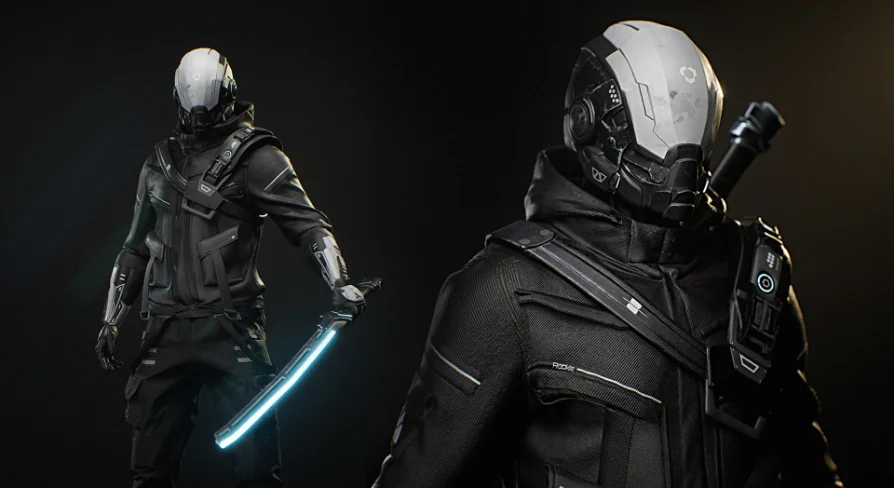
Cyberpunk Runner pairs realistic aesthetic intentions with lowpoly modeling discipline. In complex scenes filled with volumetric lighting, reflective shaders, and heavy post-processing, low-poly geometry ensures that character assets do not consume unnecessary frame budgets. The geometry remains clean and optimized, prioritizing well-placed edge loops around joints to avoid mesh pinching during intense parkour contortions and rapid blade swings.
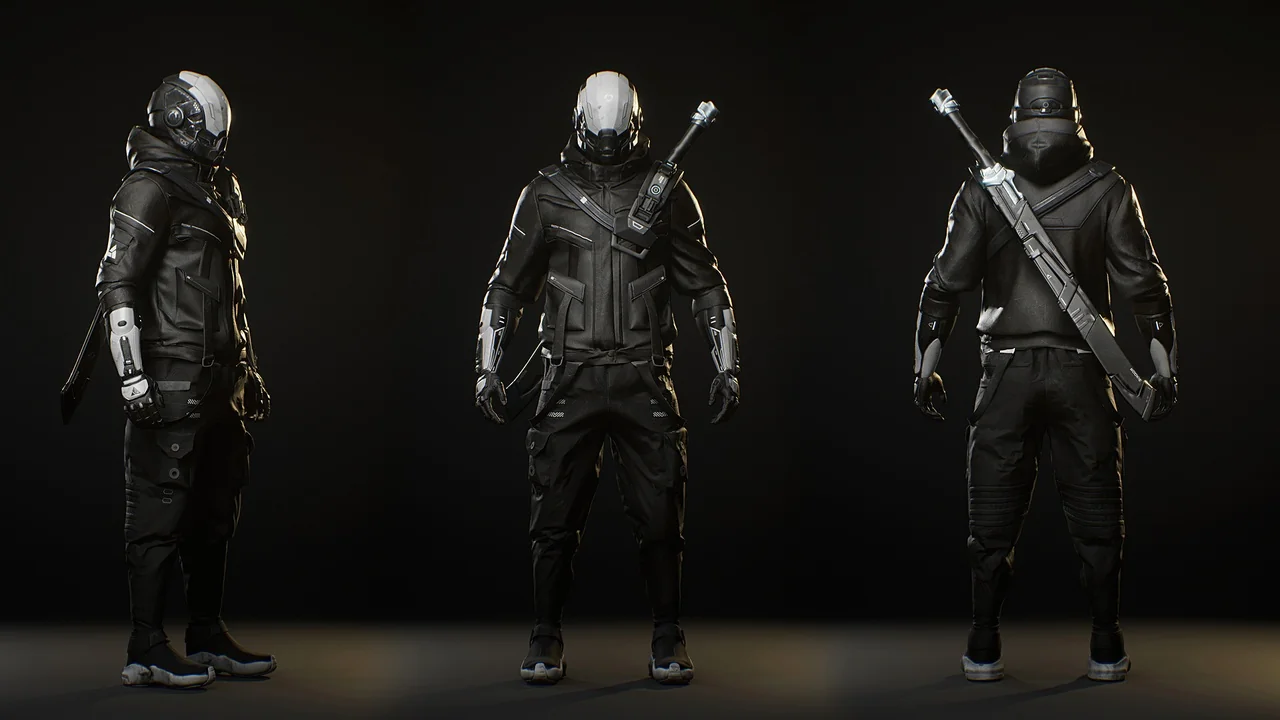
The visual execution leans into advanced technology themes, capturing the rugged, synthetic essence of futuristic street operatives. Modular assembly allows individual pieces of the character model to be adjusted, separated, or swapped depending on level requirements or scene context. Modular setups are essential for teams producing variable enemy types or progressive character upgrades, as distinct parts can be mixed without breaking underlying rig alignments or introducing clipping artifacts.
Cyber Ninja Character Mechanics with Sword Combat
Traversing a cybernetic city requires defensive capability as much as raw speed. The character incorporates a cyber ninja motif, utilizing a sword as its principal accessory. This inclusion moves the asset beyond a pure navigation puppet into an integrated combat-and-traversal package. The sword fits naturally into offensive actions, transitioning smoothly from high-speed running into decisive melee engagement.
Integrating melee weapons into a movement-heavy character requires dependable socket placement and synchronized motion data. The sword remains firmly planted in the character's tactical loop, whether sheathed during heavy parkour climbs or drawn during high-speed encounters. This mechanical identity suits projects demanding fast tactical decision-making, where jumping over an obstacle and delivering an immediate slash occur in a single continuous sequence.
Cyber Samurai Compatibility and Workflow Scope
Interoperability remains a key consideration when expanding character rosters or integrating related mechanical systems. Cyberpunk Runner features direct compatibility with Cyber Samurai, establishing a shared structural foundation across both assets. This compatibility simplifies asset consolidation, allowing animation states, skeletal rigging expectations, and stylistic components to align across complementary character setups.
For development teams working across multiple cybernetic archetypes, having mutual compatibility with Cyber Samurai minimizes the overhead of setting up separate retargeting profiles or rebuilding control scripts. The combined ecosystem provides a cohesive approach to modular, action-heavy character production, giving developers a practical foundation for building high-speed futuristic gameplay.
 Characters
 Characters
 Characters
 Characters