"efaa631e936fd3ee"{"id":"1002236","slug":"top-down-post-apocalyptic-props","title":"Top-Down Post-Apocalyptic Props","category":"Vehicles \u0026 Transportation","engine":"4.26+,5.0+","assetVersion":"","engineVersion":"Engine Version: 4.26+,5.0+","tag":"Vehicles","accent":"blue","visual":"mech","summary":"Examine Top-Down Post-Apocalyptic Props, featuring 341 stylized lowpoly assets covering city props, military hardware, vegetation, vehicles, and lab gear.","platform":"Unreal Engine","publishedAt":"2026-10-29T15:43:19.697Z","updatedAt":"2026-10-29T15:43:19.697Z","sourceNotes":[],"fileContents":[],"compatibility":["Unreal Engine","Engine Version: 4.26+,5.0+"],"featuredImage":{"alt":"Top-Down Post-Apocalyptic Props","src":"/wp-content/uploads/published/2026/10/89407e0541d4-8c964e54-f7fe-4946-8c77-a44e815a8a22-c57d61cbdd.webp"},"hasDownloadLink":true,"downloads":0,"terms":[{"taxonomy":"category","slug":"vehicles-and-transportation","name":"Vehicles \u0026 Transportation"}],"galleryImages":[{"src":"/wp-content/uploads/published/2026/10/9707d13a7c28-8f8a2632-8688-44d4-82fc-0dccb5c2544e-34ed6128e7.webp","alt":"Top-Down Post-Apocalyptic Props"},{"src":"/wp-content/uploads/published/2026/10/478cf575e78a-0f5a530d-0681-4503-95c4-1d16d474dc7b-bfa0a16a89.webp","alt":"Top-Down Post-Apocalyptic Props"},{"src":"/wp-content/uploads/published/2026/10/06726a7ec013-20d43126-7ca9-4844-8172-f00b5d09fe0e-724ee2507c.webp","alt":"Top-Down Post-Apocalyptic Props"},{"src":"/wp-content/uploads/published/2026/10/015741791ce3-47e9eda7-97ca-478a-a603-eadfd222bff8-b87276063b.webp","alt":"Top-Down Post-Apocalyptic Props"},{"src":"/wp-content/uploads/published/2026/10/36ec9e7f296f-9676d980-7806-4247-a2ed-aa229f87a102-b0cff4aca6.webp","alt":"Top-Down Post-Apocalyptic Props"},{"src":"/wp-content/uploads/published/2026/10/6a2347d7a206-5597c6a8-d66b-43a8-ab05-6fa6c169f5ef-8badcd386a.webp","alt":"Top-Down Post-Apocalyptic Props"},{"src":"/wp-content/uploads/published/2026/10/44747fc8a573-34ab5bc4-122c-4973-966a-9ccfb9390f2c-cd7393c709.webp","alt":"Top-Down Post-Apocalyptic Props"},{"src":"/wp-content/uploads/published/2026/10/763e7b8b39ea-2bb399d9-d47d-4eb9-970d-4aabcdaa109c-bfe7659e99.webp","alt":"Top-Down Post-Apocalyptic Props"},{"src":"/wp-content/uploads/published/2026/10/a7dc93aec041-4c5ce15b-b25e-4f2d-8c8c-32a4c1b98ba7-6215e0dc53.webp","alt":"Top-Down Post-Apocalyptic Props"}],"accessPanel":{"kind":"resource","title":"Download this resource","eyebrow":"Free Download","message":"Log in or create a free account to start your download.","fileName":"Content.7z","safetyNote":"Resources are manually reviewed before listing to improve quality and reduce obvious risks.","actionLabel":"Download Free","resourceType":"Resource archive"},"contentHtml":"\u003ch2\u003eSetting Up Ruined Streets with City Props\u003c/h2\u003e\n\u003cp\u003eUrban decay forms the backbone of post-collapse environments, particularly in camera setups positioned high above the ground where ground-level clutter defines walkable paths and tactical cover. Within Top-Down Post-Apocalyptic Props, the city props category represents the largest single group in the collection, providing 135 individual items. These objects supply the street-level detritus necessary to turn empty road networks into convincing historical remnants of an evacuation or sudden collapse.\u003c/p\u003e\n\u003cp\u003eBecause top-down perspectives rely heavily on clear silhouettes against flat terrain, street clutter must read instantly without visually overwhelming gameplay navigation. The 135 city objects accommodate open crossroads, littered avenues, and dense urban choke points. When populating avenues, scattering varied items breaks up repetitive road surfaces, giving players visual landmarks to track their movement across an otherwise desolate grid.\u003c/p\u003e\n\u003cp\u003eThese pieces also function as immediate physical barriers. Placing clusters along sidewalk edges or across road intersections restricts player movement, channels foot traffic into ambushes, or frames specific access corridors toward objectives. The stylized, lowpoly art direction ensures that even dense concentrations of street debris remain clean and readable from a high camera angle.\u003c/p\u003e \u003ch2\u003eFortifying Zones with Military Objects and Construction Elements\u003c/h2\u003e\n\u003cp\u003eSurviving factions in post-apocalyptic settings consistently repurpose heavy infrastructure and combat supplies to secure territory. The collection addresses defensive outposts and barricaded strongholds through 43 military objects paired with 20 modular construction elements. Together, these 63 assets allow creators to build convincing security perimeters, improvised encampments, and fortified entry points.\u003c/p\u003e\n\u003cp\u003eThe 43 military objects provide the specialized gear needed to indicate sudden mobilization or entrenched defense forces. Checkpoints, perimeter markers, and supply caches can be assembled outside compound entrances or around sensitive drop zones. In games featuring base-building or tactical combat, these items naturally indicate faction territory, ammunition reserves, or contested operational zones.\u003c/p\u003e\n\u003cp\u003eThe 20 construction elements introduce structural flexibility. Because these parts feature modular design, they can be snapped or aligned into compound perimeters, temporary barricades, and reinforced walkways. Rather than relying entirely on pre-assembled structures, developers can use these construction pieces to customize the footprint of a survivor bastion, repair breached perimeter walls, or erect watch platforms overlooking hazardous terrain.\u003c/p\u003e \u003ch2\u003eQuarantine and Research Scenes with Laboratory Objects\u003c/h2\u003e\n\u003cp\u003eOutbreak origins, bioweapon incidents, and scientific expeditions are central motifs in post-collapse narratives. With 66 laboratory objects included, the pack accommodates field research outposts, temporary decontamination stations, and hazardous quarantine zones set up directly in the outdoor world.\u003c/p\u003e\n\u003cp\u003eOutdoor laboratory setups present unique environmental storytelling opportunities. Instead of confining scientific apparatus to sterile indoor rooms, these 66 pieces let developers stage open-air test sites, biological containment failures, and makeshift analysis camps amidst wilderness or ruined streets. High-angle cameras benefit from distinct equipment shapes, such as test rigs, specimen containment units, and monitoring hardware, which clearly stand out against natural terrain.\u003c/p\u003e\n\u003cp\u003eThese laboratory items also provide context for missions and objectives. A player tasked with recovering data or retrieving biochemical samples can easily identify an abandoned research workstation within a larger map zone. The lowpoly aesthetic maintains uniform detail across every beaker, crate, and technical terminal, preserving visual harmony with surrounding city and military assets.\u003c/p\u003e \u003ch2\u003eOvergrown Groundwork Using Vegetation Assets\u003c/h2\u003e\n\u003cp\u003eA post-apocalyptic environment rarely remains purely industrial; abandoned structures inevitably surrender to nature. The pack includes 66 vegetation assets featuring grass, tree, and stump models, capturing the visual balance between urban decay and environmental reclamation.\u003c/p\u003e\n\u003cp\u003eTree models provide essential vertical variation in top-down layouts. While low-lying clutter dictates pathing, trees establish height layers that cast distinct silhouettes and interrupt the player's line of sight. Grouping multiple trees creates dense, impassable thickets at the boundaries of playable space, framing playable combat arenas without requiring artificial boundary walls.\u003c/p\u003e\n\u003cp\u003eStump and grass assets serve a ground-level purpose. Grass meshes soften the sharp visual seams where asphalt surfaces, sidewalk slabs, and dirt paths intersect, lending an authentic weathered quality to abandoned towns. Meanwhile, stumps act as natural stepping stones, cover positions, or harvested resource indicators in survival-focused gameplay loops. This strong emphasis on nature assets ensures that rural roads, forest research sites, and reclaimed parklands feel cohesive alongside built infrastructure.\u003c/p\u003e \u003ch2\u003eVehicles as Cover and Pathing Blockades\u003c/h2\u003e\n\u003cp\u003eVehicular wreckage is an indispensable component of post-apocalyptic staging, representing failed escapes, sudden pileups, or improvised street barricades. The package provides 11 distinct vehicles suited for street placement, convoy staging, and defensive perimeter layout.\u003c/p\u003e\n\u003cp\u003eIn top-down survival titles, a vehicle is rarely just set dressing; it serves as a primary hard cover asset against projectile fire and visual line-of-sight checks. The 11 vehicles in this set can be lined up across multi-lane avenues to simulate traffic jams caused during initial panic, or positioned near military outposts as disabled supply transports. Their lowpoly silhouettes make their footprint immediately readable, helping players determine whether an obstacle can be traversed, vaulted, or used for cover during an encounter.\u003c/p\u003e \u003ch2\u003eVisual Integration and Target Developers\u003c/h2\u003e\n\u003cp\u003eEvery piece across the total 341 assets is modeled in a cohesive stylized, lowpoly aesthetic. This visual direction prioritizes crisp geometric reads, clean planar surfaces, and simplified detail over complex micro-texturing, making the assets performant for scenes requiring high density on screen. For developers looking to inject immediate grimness into their locations, the asset collection is noted as compatible with Horror Collection: Blood [1000+ textures], allowing teams to overlay extensive gore and splatters directly onto city roads, military barricades, or laboratory equipment.\u003c/p\u003e\n\u003cp\u003eThis library is tailored specifically for creators building top-down action RPGs, isometric survival titles, real-time strategy games, or tactical squad shooters. Teams needing to rapidly prototype or produce expansive outdoor wastelands without spending weeks modeling individual street debris, containment gear, and foliage will find the exact pieces needed to bring desolate outdoor zones to life.\u003c/p\u003e\n\n\u003ch2\u003eExplore Similar Assets\u003c/h2\u003e\n\u003cul\u003e\n\u003cli\u003e\u003ca href=\"https://3dcghub.com/dystopia-airship/\" title=\"Dystopia Airship\"\u003eDystopia Airship\u003c/a\u003e\u003c/li\u003e\n\u003cli\u003e\u003ca href=\"https://3dcghub.com/post-apocalyptic-desert/\" title=\"Post Apocalyptic Desert\"\u003ePost Apocalyptic Desert\u003c/a\u003e\u003c/li\u003e\n\u003cli\u003e\u003ca href=\"https://3dcghub.com/ultimate-fishing-megapack/\" title=\"Ultimate Fishing Megapack\"\u003eUltimate Fishing Megapack\u003c/a\u003e\u003c/li\u003e\n\u003cli\u003e\u003ca href=\"https://3dcghub.com/polygon-apocalypse-wasteland/\" title=\"POLYGON - Apocalypse Wasteland\"\u003ePOLYGON - Apocalypse Wasteland\u003c/a\u003e\u003c/li\u003e\n\u003cli\u003e\u003ca href=\"https://3dcghub.com/postapo-car-wrecks-vol-01/\" title=\"PostApo Car Wrecks vol. 01\"\u003ePostApo Car Wrecks vol. 01\u003c/a\u003e\u003c/li\u003e\n\u003c/ul\u003e","contentTextLength":7211,"navigation":{"current":49,"total":4209,"previous":{"id":"1002237","slug":"tower-defense-template","title":"Tower Defense Template","category":"Platformer","platform":"Unreal Engine","updatedAt":"2026-10-29T15:52:14.225Z"},"next":{"id":"1002235","slug":"top-down-kit-shooter","title":"Top down Kit : Shooter","category":"Shooter","platform":"Unreal Engine","updatedAt":"2026-10-29T15:42:02.875Z"}},"relatedResources":[{"id":"28621","slug":"dystopia-airship","title":"Dystopia Airship","category":"Vehicles \u0026 Transportation","engine":"4.26+,5.0+","assetVersion":"Engine version: 4.26+,5.0+","engineVersion":"","tag":"Vehicles","accent":"blue","visual":"mech","summary":"Dystopia Airship gives teams a ready-made flying vehicle for space, adventure, and dark fantasy scenes without starting from a static prop. It combines a rigged model, 10 animations, weapons, lighting, and a fabric physics banner in a single aircraft package.","platform":"Unreal Engine","publishedAt":"2026-05-17T15:03:32.000Z","updatedAt":"2026-05-17T15:03:33.000Z","sourceNotes":[],"fileContents":[],"compatibility":["Unreal Engine","Engine version: 4.26+,5.0+"],"featuredImage":{"alt":"Dystopia Airship","src":"https://3dcghub.com/wp-content/uploads/2026/05/b944786bd85b_d10d2c26-6d39-456d-97ca-043adc12e653.webp"},"hasDownloadLink":true,"downloads":1},{"id":"1001064","slug":"post-apocalyptic-desert","title":"Post Apocalyptic Desert","category":"Apocalyptic / Post-apocalyptic","engine":"4.26+,5.0+","assetVersion":"","engineVersion":"Engine Version: 4.26+,5.0+","tag":"Apocalyptic","accent":"blue","visual":"mech","summary":"Post Apocalyptic Desert is a Unreal Engine desert environment with a drivable vehicle, extensive props and foliage, advanced materials, plus Nanite/Lumen suppor","platform":"Unreal Engine","publishedAt":"2026-09-03T15:10:50.530Z","updatedAt":"2026-09-03T15:10:50.530Z","sourceNotes":[],"fileContents":[],"compatibility":["Unreal Engine","Engine Version: 4.26+,5.0+"],"featuredImage":{"alt":"Post Apocalyptic Desert","src":"/wp-content/uploads/published/2026/09/c03aaff5c58e-a4df247e-4355-4450-95e8-7efd4f43611d-aba4e12f2c.webp"},"hasDownloadLink":true,"downloads":0},{"id":"1000031","slug":"ultimate-fishing-megapack","title":"Ultimate Fishing Megapack","category":"Vehicles \u0026 Transportation","engine":"4.27,5.0+","assetVersion":"","engineVersion":"4.27,5.0+","tag":"Vehicles","accent":"blue","visual":"mech","summary":"Construct realistic waterside environments with the Ultimate Fishing Megapack, featuring nearly 100 optimized props, docks, boats, and animated fish.","platform":"Unreal Engine","publishedAt":"2026-05-21T08:50:01.340Z","updatedAt":"2026-05-21T08:50:01.340Z","sourceNotes":[],"fileContents":[],"compatibility":["Unreal Engine","Engine version: 4.27,5.0+"],"featuredImage":{"alt":"Ultimate Fishing Megapack","src":"/wp-content/uploads/published/2026/05/385613305c7b-5e6e75d1-c272-4ce1-a0b3-57baaa2ad21b-09101b7b29.webp"},"hasDownloadLink":true,"downloads":0}]}
Vehicles
Top-Down Post-Apocalyptic Props
Examine Top-Down Post-Apocalyptic Props, featuring 341 stylized lowpoly assets covering city props, military hardware, vegetation, vehicles, and lab gear.
Urban decay forms the backbone of post-collapse environments, particularly in camera setups positioned high above the ground where ground-level clutter defines walkable paths and tactical cover. Within Top-Down Post-Apocalyptic Props, the city props category represents the largest single group in the collection, providing 135 individual items. These objects supply the street-level detritus necessary to turn empty road networks into convincing historical remnants of an evacuation or sudden collapse.
Because top-down perspectives rely heavily on clear silhouettes against flat terrain, street clutter must read instantly without visually overwhelming gameplay navigation. The 135 city objects accommodate open crossroads, littered avenues, and dense urban choke points. When populating avenues, scattering varied items breaks up repetitive road surfaces, giving players visual landmarks to track their movement across an otherwise desolate grid.
These pieces also function as immediate physical barriers. Placing clusters along sidewalk edges or across road intersections restricts player movement, channels foot traffic into ambushes, or frames specific access corridors toward objectives. The stylized, lowpoly art direction ensures that even dense concentrations of street debris remain clean and readable from a high camera angle.
Fortifying Zones with Military Objects and Construction Elements
Surviving factions in post-apocalyptic settings consistently repurpose heavy infrastructure and combat supplies to secure territory. The collection addresses defensive outposts and barricaded strongholds through 43 military objects paired with 20 modular construction elements. Together, these 63 assets allow creators to build convincing security perimeters, improvised encampments, and fortified entry points.
The 43 military objects provide the specialized gear needed to indicate sudden mobilization or entrenched defense forces. Checkpoints, perimeter markers, and supply caches can be assembled outside compound entrances or around sensitive drop zones. In games featuring base-building or tactical combat, these items naturally indicate faction territory, ammunition reserves, or contested operational zones.
The 20 construction elements introduce structural flexibility. Because these parts feature modular design, they can be snapped or aligned into compound perimeters, temporary barricades, and reinforced walkways. Rather than relying entirely on pre-assembled structures, developers can use these construction pieces to customize the footprint of a survivor bastion, repair breached perimeter walls, or erect watch platforms overlooking hazardous terrain.
Quarantine and Research Scenes with Laboratory Objects
Outbreak origins, bioweapon incidents, and scientific expeditions are central motifs in post-collapse narratives. With 66 laboratory objects included, the pack accommodates field research outposts, temporary decontamination stations, and hazardous quarantine zones set up directly in the outdoor world.
Outdoor laboratory setups present unique environmental storytelling opportunities. Instead of confining scientific apparatus to sterile indoor rooms, these 66 pieces let developers stage open-air test sites, biological containment failures, and makeshift analysis camps amidst wilderness or ruined streets. High-angle cameras benefit from distinct equipment shapes, such as test rigs, specimen containment units, and monitoring hardware, which clearly stand out against natural terrain.
These laboratory items also provide context for missions and objectives. A player tasked with recovering data or retrieving biochemical samples can easily identify an abandoned research workstation within a larger map zone. The lowpoly aesthetic maintains uniform detail across every beaker, crate, and technical terminal, preserving visual harmony with surrounding city and military assets.
Overgrown Groundwork Using Vegetation Assets
A post-apocalyptic environment rarely remains purely industrial; abandoned structures inevitably surrender to nature. The pack includes 66 vegetation assets featuring grass, tree, and stump models, capturing the visual balance between urban decay and environmental reclamation.
Tree models provide essential vertical variation in top-down layouts. While low-lying clutter dictates pathing, trees establish height layers that cast distinct silhouettes and interrupt the player's line of sight. Grouping multiple trees creates dense, impassable thickets at the boundaries of playable space, framing playable combat arenas without requiring artificial boundary walls.
Stump and grass assets serve a ground-level purpose. Grass meshes soften the sharp visual seams where asphalt surfaces, sidewalk slabs, and dirt paths intersect, lending an authentic weathered quality to abandoned towns. Meanwhile, stumps act as natural stepping stones, cover positions, or harvested resource indicators in survival-focused gameplay loops. This strong emphasis on nature assets ensures that rural roads, forest research sites, and reclaimed parklands feel cohesive alongside built infrastructure.
Vehicles as Cover and Pathing Blockades
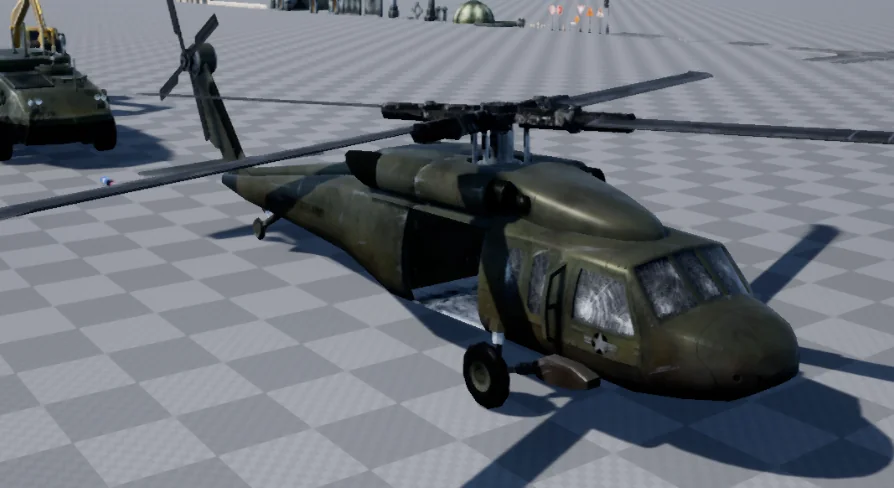
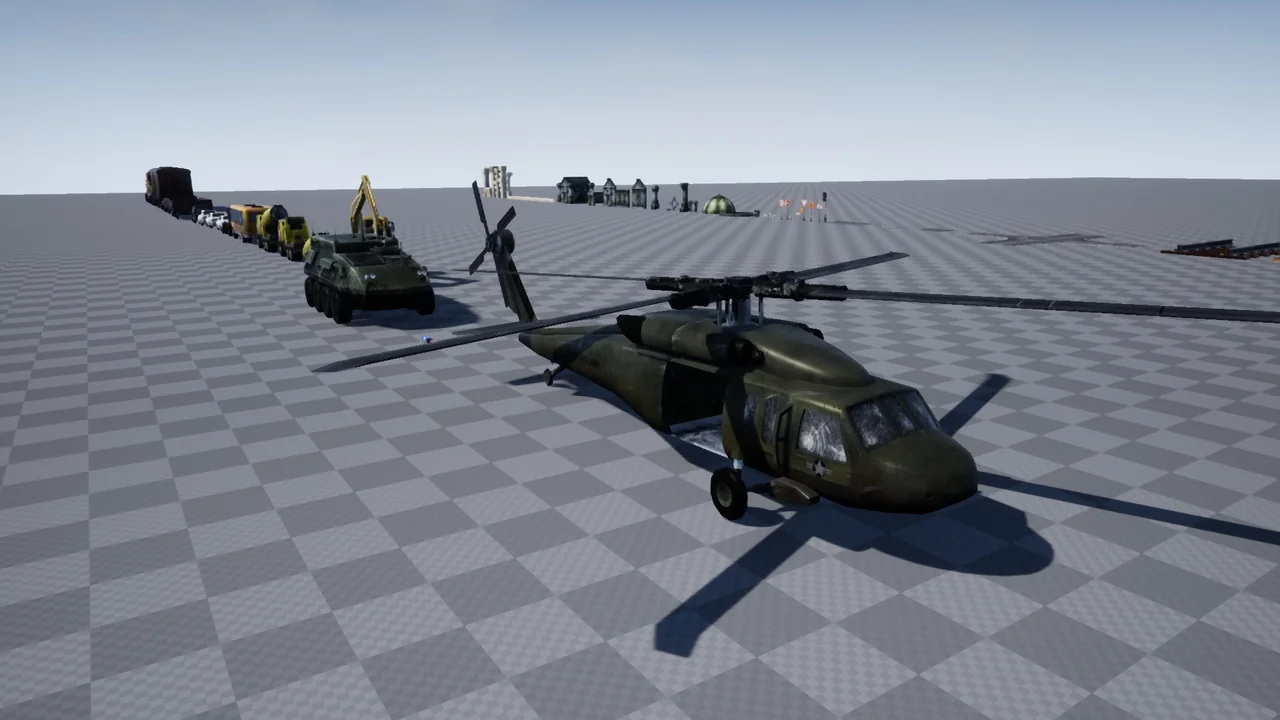
Vehicular wreckage is an indispensable component of post-apocalyptic staging, representing failed escapes, sudden pileups, or improvised street barricades. The package provides 11 distinct vehicles suited for street placement, convoy staging, and defensive perimeter layout.
In top-down survival titles, a vehicle is rarely just set dressing; it serves as a primary hard cover asset against projectile fire and visual line-of-sight checks. The 11 vehicles in this set can be lined up across multi-lane avenues to simulate traffic jams caused during initial panic, or positioned near military outposts as disabled supply transports. Their lowpoly silhouettes make their footprint immediately readable, helping players determine whether an obstacle can be traversed, vaulted, or used for cover during an encounter.
Visual Integration and Target Developers
Every piece across the total 341 assets is modeled in a cohesive stylized, lowpoly aesthetic. This visual direction prioritizes crisp geometric reads, clean planar surfaces, and simplified detail over complex micro-texturing, making the assets performant for scenes requiring high density on screen. For developers looking to inject immediate grimness into their locations, the asset collection is noted as compatible with Horror Collection: Blood [1000+ textures], allowing teams to overlay extensive gore and splatters directly onto city roads, military barricades, or laboratory equipment.
This library is tailored specifically for creators building top-down action RPGs, isometric survival titles, real-time strategy games, or tactical squad shooters. Teams needing to rapidly prototype or produce expansive outdoor wastelands without spending weeks modeling individual street debris, containment gear, and foliage will find the exact pieces needed to bring desolate outdoor zones to life.
 Vehicles
 Vehicles
 Apocalyptic
 Vehicles