"7e6fc58c410f2894"{"id":"1001670","slug":"threedee-airport-asset-pack","title":"ThreeDee Airport Asset Pack","category":"Game Development Resource","engine":"4.22+,5.0+","assetVersion":"","engineVersion":"Engine Version: 4.22+,5.0+","tag":"Game Development R","accent":"blue","visual":"mech","summary":"Examine the ThreeDee Airport Asset Pack, featuring realistic ground crew handling equipment crafted for VR experiences, first-person games, and training.","platform":"Unreal Engine","publishedAt":"2026-10-13T15:14:04.568Z","updatedAt":"2026-10-13T15:14:04.568Z","sourceNotes":[],"fileContents":[],"compatibility":["Unreal Engine","Engine Version: 4.22+,5.0+"],"featuredImage":{"alt":"ThreeDee Airport Asset Pack","src":"/wp-content/uploads/published/2026/10/081000758bb2-aceec396-22a6-4fca-9845-478dd6269402-62bbf1b151.webp"},"hasDownloadLink":true,"downloads":0,"terms":[],"galleryImages":[{"src":"/wp-content/uploads/published/2026/10/ed8a21b50711-c97f99b5-25d7-4a0c-a8ce-1f708fb9db82-1cc367f673.webp","alt":"ThreeDee Airport Asset Pack"},{"src":"/wp-content/uploads/published/2026/10/0240f3c090d2-b41add55-6da0-4082-b57b-2c5e5b624889-2097a858e1.webp","alt":"ThreeDee Airport Asset Pack"},{"src":"/wp-content/uploads/published/2026/10/0550f8833274-2ce88df3-6e17-4de2-9fa3-0e9e34ba8829-da553e467f.webp","alt":"ThreeDee Airport Asset Pack"},{"src":"/wp-content/uploads/published/2026/10/c279c6af70c4-7fcfebdc-e1a0-4231-ae77-e7c3eae90cfe-37de47370f.webp","alt":"ThreeDee Airport Asset Pack"},{"src":"/wp-content/uploads/published/2026/10/45621353dee0-cb3e9477-c6ca-4f8d-9dfb-6774ed3e9c56-440bad3cdf.webp","alt":"ThreeDee Airport Asset Pack"},{"src":"/wp-content/uploads/published/2026/10/d4220e1d89fe-b13b0291-0cba-410a-81ba-f9182bb5b9b3-064df346f6.webp","alt":"ThreeDee Airport Asset Pack"},{"src":"/wp-content/uploads/published/2026/10/5d9c80404972-2bf507ff-e205-48d6-95ab-b95a316776a8-d84731770b.webp","alt":"ThreeDee Airport Asset Pack"},{"src":"/wp-content/uploads/published/2026/10/1a0327c74617-2b273e59-9b8e-4299-ab46-6d3f242c63bb-1d31bd3be2.webp","alt":"ThreeDee Airport Asset Pack"}],"accessPanel":{"kind":"resource","title":"Download this resource","eyebrow":"Free Download","message":"Log in or create a free account to start your download.","fileName":"Content.7z","safetyNote":"Resources are manually reviewed before listing to improve quality and reduce obvious risks.","actionLabel":"Download Free","resourceType":"Resource archive"},"contentHtml":"\u003ch2\u003eGround Crew Handling Equipment on the Civilian Apron\u003c/h2\u003e\u003cp\u003eModern civilian airports depend on a dense ecosystem of specialized machinery and gear the moment an aircraft turns off the taxiway and enters a designated stand. The ThreeDee Airport Asset Pack concentrates on this precise operational window, supplying the wide variety of objects required to service an aeroplane immediately after parking. Rather than attempting to catalog every square kilometer of a commercial airfield, the collection directs its attention toward the ramp, where ground personnel perform turnaround tasks, connect ground support systems, and manage the aircraft perimeter.\u003c/p\u003e\u003cp\u003eStaging an authentic commercial apron requires items that look functional, weathered, and purpose-built for apron operations. Placing ground crew equipment around a parked airliner establishes an authentic working atmosphere where safety protocols and maintenance routines feel active. The props in this collection reflect the daily operational life of a busy hub, capturing the industrial utilities, towing apparatus, access gear, and servicing units that surround civil flights during passenger deplaning and baggage offloading.\u003c/p\u003e\u003ch2\u003eFidelity for VR Experiences and First-Person Cameras\u003c/h2\u003e\u003cp\u003eVirtual reality environments and first-person perspective games introduce strict demands on asset quality. In standard flight simulators or third-person flight games, ground hardware is typically viewed from several hundred feet in the air or through a cockpit window at high speed, allowing developers to rely on simplified meshes. When an interactive project puts the user directly on the asphalt at eye level, low-fidelity props immediately compromise visual immersion.\u003c/p\u003e\u003cp\u003eSignificant crafting effort was invested in this pack to ensure the individual objects hold up under close-range examination. In a VR headset, players can lean forward, walk around support trailers, inspect hitching mechanisms, and examine the dials, wheels, and protective frames of ground servicing machinery. The models retain clean, realistic surfaces and proportional mechanical construction when viewed from mere inches away. This level of scrutiny makes the collection suitable for projects where the camera is anchored to a human avatar walking across the tarmac.\u003c/p\u003e\u003ch2\u003eSingular Assets Versus Terminal and Aeroplane Backdrops\u003c/h2\u003e\u003cp\u003eA key structural aspect of the pack is the intentional division between foreground utility props and large-scale environmental framing. The singular assets—the individual ground crew tools, support machinery, and handling items—are built with the intricate surface definitions required for direct interaction. By contrast, the included terminal architecture and the airplane are deliberately intended to serve as backdrop objects.\u003c/p\u003e\u003cp\u003eThese backdrop elements lack the high-density micro-details present on the singular props, serving instead to establish scale, define the horizon, and close off sightlines across the airfield. Treating the terminal building and the aircraft exterior as environmental background pieces allows developers to construct large, cohesive civilian airport vistas without over-allocating geometric budgets to giant surfaces that users are not meant to inspect from arm's length. The aircraft sits in the stand to provide context for the ground handling gear clustered beneath its wings and fuselage, while the terminal exterior frames the tarmac edge.\u003c/p\u003e\u003ch2\u003eRealistic Training Scenarios for Aircraft Ground Handling\u003c/h2\u003e\u003cp\u003eAirport operations demand rigorous safety standards, and real-time interactive simulations have become standard tools for workforce preparation. Because the pack carries realistic styling and centers on post-parking workflows, it directly supports the creation of training simulations where trainees learn to identify, position, and navigate around ground crew equipment.\u003c/p\u003e\u003cp\u003eTraining modules based on aircraft turnarounds require believable spatial arrangements. Ground personnel must navigate chocks, power units, tow bars, carts, and safety markers without obstructing aircraft movement or violating ramp safety zones. Incorporating detailed singular handling models allows simulation designers to build interactive procedures where trainees inspect equipment before departure, practice equipment staging rules, or identify safety hazards on an active ramp.\u003c/p\u003e\u003ch2\u003eProject Suitability for Airfield Simulations\u003c/h2\u003e\u003cp\u003eThe collection serves developers who need immediate ground-level authenticity without modeling an entire fleet of industrial ramp machinery from scratch. Projects focused on flight simulation ground crew roles, airport security patrols, first-person narrative scenes set on an apron, or VR maintenance drills gain the most from this specific allocation of detail. By providing high-fidelity ground handling props supported by background-scale airliners and terminal geometry, the pack delivers the visual density required for convincing tarmac scenes.\u003c/p\u003e\n\n\u003ch2\u003eMore From The Same Workflow\u003c/h2\u003e\n\u003cul\u003e\n\u003cli\u003e\u003ca href=\"https://3dcghub.com/military-airport-military-base-military-props-military/\" title=\"Military Airport (Military Base, Military Props, Military )\"\u003eMilitary Airport (Military Base, Military Props, Military )\u003c/a\u003e\u003c/li\u003e\n\u003cli\u003e\u003ca href=\"https://3dcghub.com/airport-terminal-interior/\" title=\"Airport Terminal Interior\"\u003eAirport Terminal Interior\u003c/a\u003e\u003c/li\u003e\n\u003cli\u003e\u003ca href=\"https://3dcghub.com/airport-set-vol2/\" title=\"Airport Set Vol2\"\u003eAirport Set Vol2\u003c/a\u003e\u003c/li\u003e\n\u003cli\u003e\u003ca href=\"https://3dcghub.com/airport-set-vol1/\" title=\"Airport Set Vol1\"\u003eAirport Set Vol1\u003c/a\u003e\u003c/li\u003e\n\u003cli\u003e\u003ca href=\"https://3dcghub.com/sci-fi-interior-04/\" title=\"Sci-Fi Interior 04\"\u003eSci-Fi Interior 04\u003c/a\u003e\u003c/li\u003e\n\u003c/ul\u003e","contentTextLength":5086,"navigation":{"current":12,"total":3618,"previous":{"id":"1001671","slug":"tribal-totem","title":"Tribal totem","category":"Tools, Objects \u0026 Decor","platform":"Unreal Engine","updatedAt":"2026-10-13T15:15:53.151Z"},"next":{"id":"1001669","slug":"stylized-lost-island","title":"Stylized Lost Island","category":"Fantasy","platform":"Unreal Engine","updatedAt":"2026-10-13T15:12:03.566Z"}},"relatedResources":[{"id":"9296","slug":"military-airport-military-base-military-props-military","title":"Military Airport (Military Base, Military Props, Military )","category":"Military / Warzone","engine":"4.26+,5.0+","assetVersion":"Engine version: 4.26+,5.0+","engineVersion":"4.26","tag":"Military / Warzone","accent":"blue","visual":"city","summary":"Create immersive military environments with the Military Airport pack. This collection includes high-quality assets, tileable materials, and pre-built assemblies for games and cinematics.","platform":"Unreal Engine","publishedAt":"2026-03-01T16:23:02.000Z","updatedAt":"2026-04-19T15:51:15.000Z","sourceNotes":[],"fileContents":[],"compatibility":["Unreal Engine","Engine version: 4.26+,5.0+"],"featuredImage":{"alt":"Military Airport (Military Base, Military Props, Military )","src":"https://3dcghub.com/wp-content/uploads/2026/03/249ef659-e8fb-4065-8032-a77ad2ae28a4.webp"},"hasDownloadLink":true,"downloads":0},{"id":"1001045","slug":"airport-terminal-interior","title":"Airport Terminal Interior","category":"Apocalyptic / Post-apocalyptic","engine":"5.1+","assetVersion":"","engineVersion":"Engine Version: 5.1+","tag":"Apocalyptic","accent":"blue","visual":"mech","summary":"An Unreal Engine 5 airport terminal environment featuring over 250 modular assets, advanced master materials, Lumen lighting, and blueprint-driven controls for","platform":"Unreal Engine","publishedAt":"2026-08-27T15:15:18.323Z","updatedAt":"2026-08-27T15:15:18.323Z","sourceNotes":[],"fileContents":[],"compatibility":["Unreal Engine","Engine Version: 5.1+"],"featuredImage":{"alt":"Airport Terminal Interior","src":"/wp-content/uploads/published/2026/08/40189474eb31-0b21dda8-4ad5-440c-89b8-46954fb7eb3a-71576db436.webp"},"hasDownloadLink":true,"downloads":0},{"id":"1000419","slug":"airport-set-vol2","title":"Airport Set Vol2","category":"Office","engine":"5.1+","assetVersion":"","engineVersion":"Engine Version: 5.1+","tag":"Office","accent":"blue","visual":"mech","summary":"A modular airport pack featuring Nanite-supported facility assets, including security checkpoints, FIDS, terminal seating, and baggage claim props.","platform":"Unreal Engine","publishedAt":"2026-07-09T17:18:18.154Z","updatedAt":"2026-07-09T17:18:18.154Z","sourceNotes":[],"fileContents":[],"compatibility":["Unreal Engine","Engine Version: 5.1+"],"featuredImage":{"alt":"Airport Set Vol2","src":"/wp-content/uploads/published/2026/07/1c7f56ccdec4-c60f33d6-d446-4a19-bd8c-5394497ddf1b-65be55e217.webp"},"hasDownloadLink":true,"downloads":0}]}
Game Development R
ThreeDee Airport Asset Pack
Examine the ThreeDee Airport Asset Pack, featuring realistic ground crew handling equipment crafted for VR experiences, first-person games, and training.
Category:Unreal EnginePlatform: Unreal EngineEngine Version: 4.22+,5.0+Published: Oct 13, 2026
Game Development R
Resource overview
Ground Crew Handling Equipment on the Civilian Apron
Modern civilian airports depend on a dense ecosystem of specialized machinery and gear the moment an aircraft turns off the taxiway and enters a designated stand. The ThreeDee Airport Asset Pack concentrates on this precise operational window, supplying the wide variety of objects required to service an aeroplane immediately after parking. Rather than attempting to catalog every square kilometer of a commercial airfield, the collection directs its attention toward the ramp, where ground personnel perform turnaround tasks, connect ground support systems, and manage the aircraft perimeter.
Staging an authentic commercial apron requires items that look functional, weathered, and purpose-built for apron operations. Placing ground crew equipment around a parked airliner establishes an authentic working atmosphere where safety protocols and maintenance routines feel active. The props in this collection reflect the daily operational life of a busy hub, capturing the industrial utilities, towing apparatus, access gear, and servicing units that surround civil flights during passenger deplaning and baggage offloading.
Fidelity for VR Experiences and First-Person Cameras
Virtual reality environments and first-person perspective games introduce strict demands on asset quality. In standard flight simulators or third-person flight games, ground hardware is typically viewed from several hundred feet in the air or through a cockpit window at high speed, allowing developers to rely on simplified meshes. When an interactive project puts the user directly on the asphalt at eye level, low-fidelity props immediately compromise visual immersion.
Significant crafting effort was invested in this pack to ensure the individual objects hold up under close-range examination. In a VR headset, players can lean forward, walk around support trailers, inspect hitching mechanisms, and examine the dials, wheels, and protective frames of ground servicing machinery. The models retain clean, realistic surfaces and proportional mechanical construction when viewed from mere inches away. This level of scrutiny makes the collection suitable for projects where the camera is anchored to a human avatar walking across the tarmac.
Singular Assets Versus Terminal and Aeroplane Backdrops
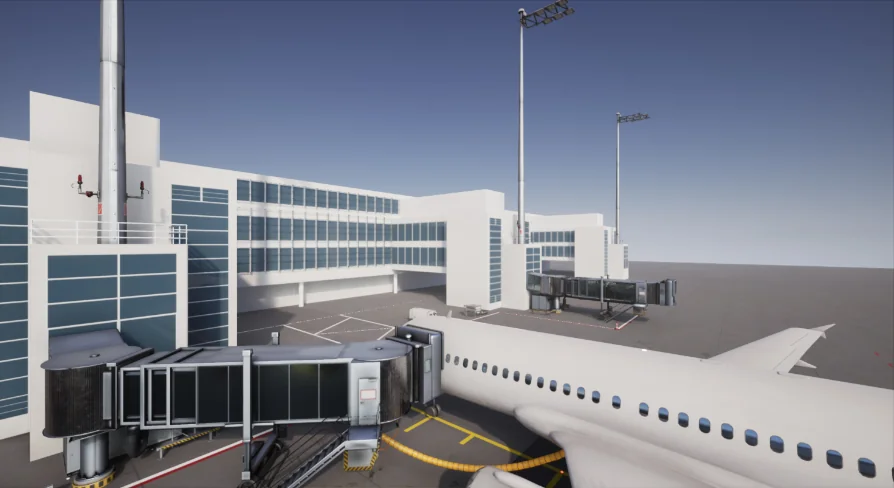
A key structural aspect of the pack is the intentional division between foreground utility props and large-scale environmental framing. The singular assets—the individual ground crew tools, support machinery, and handling items—are built with the intricate surface definitions required for direct interaction. By contrast, the included terminal architecture and the airplane are deliberately intended to serve as backdrop objects.
These backdrop elements lack the high-density micro-details present on the singular props, serving instead to establish scale, define the horizon, and close off sightlines across the airfield. Treating the terminal building and the aircraft exterior as environmental background pieces allows developers to construct large, cohesive civilian airport vistas without over-allocating geometric budgets to giant surfaces that users are not meant to inspect from arm's length. The aircraft sits in the stand to provide context for the ground handling gear clustered beneath its wings and fuselage, while the terminal exterior frames the tarmac edge.
Realistic Training Scenarios for Aircraft Ground Handling
Airport operations demand rigorous safety standards, and real-time interactive simulations have become standard tools for workforce preparation. Because the pack carries realistic styling and centers on post-parking workflows, it directly supports the creation of training simulations where trainees learn to identify, position, and navigate around ground crew equipment.
Training modules based on aircraft turnarounds require believable spatial arrangements. Ground personnel must navigate chocks, power units, tow bars, carts, and safety markers without obstructing aircraft movement or violating ramp safety zones. Incorporating detailed singular handling models allows simulation designers to build interactive procedures where trainees inspect equipment before departure, practice equipment staging rules, or identify safety hazards on an active ramp.
Project Suitability for Airfield Simulations
The collection serves developers who need immediate ground-level authenticity without modeling an entire fleet of industrial ramp machinery from scratch. Projects focused on flight simulation ground crew roles, airport security patrols, first-person narrative scenes set on an apron, or VR maintenance drills gain the most from this specific allocation of detail. By providing high-fidelity ground handling props supported by background-scale airliners and terminal geometry, the pack delivers the visual density required for convincing tarmac scenes.
 Game Development R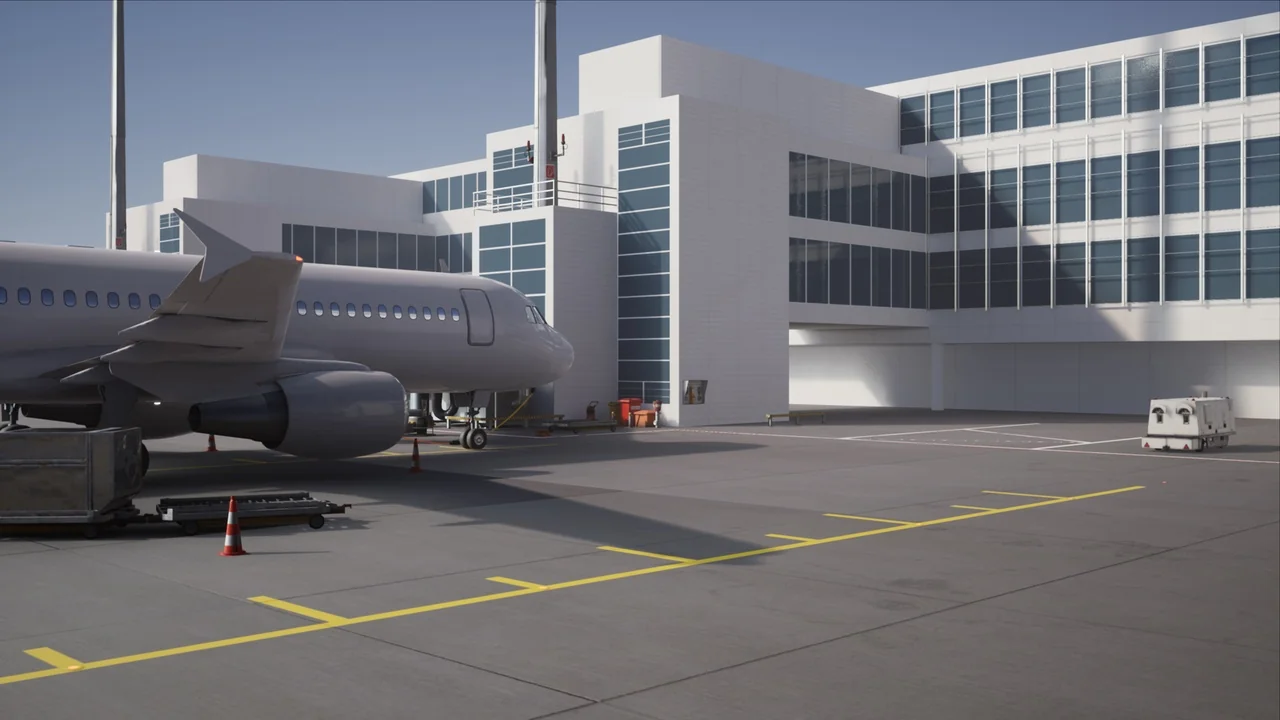
 Military / Warzone
 Apocalyptic
 Office