"efaa631e936fd3ee"{"id":"1002205","slug":"soviet-truck-zil-pack","title":"Soviet truck Zil Pack","category":"Cars \u0026 Trucks","engine":"4.26+,5.0+","assetVersion":"","engineVersion":"Engine Version: 4.26+,5.0+","tag":"Cars \u0026 Trucks","accent":"blue","visual":"mech","summary":"Explore the Soviet truck Zil Pack featuring realistic ZIL-130, ZIL-131, and ZIL-133 models tailored for post-apocalyptic and tourist environments.","platform":"Unreal Engine","publishedAt":"2026-10-29T14:48:48.374Z","updatedAt":"2026-10-29T14:48:48.374Z","sourceNotes":[],"fileContents":[],"compatibility":["Unreal Engine","Engine Version: 4.26+,5.0+"],"featuredImage":{"alt":"Soviet truck Zil Pack","src":"/wp-content/uploads/published/2026/10/16bf700dfc60-1eb821e3-e27a-4432-ba83-a58763c04110-385db1b8cf.webp"},"hasDownloadLink":true,"downloads":0,"terms":[{"taxonomy":"category","slug":"cars-and-trucks","name":"Cars \u0026 Trucks"}],"galleryImages":[{"src":"/wp-content/uploads/published/2026/10/3d52ead68024-be2daf86-9349-4ae0-bdf3-755ac18fcbee-3391e3458b.webp","alt":"Soviet truck Zil Pack"},{"src":"/wp-content/uploads/published/2026/10/5a73b6859c80-464c11bc-7294-4ac9-bb78-cc44cf74503f-36a93ec252.webp","alt":"Soviet truck Zil Pack"},{"src":"/wp-content/uploads/published/2026/10/095d945f9d3f-2d1e60c7-dae9-4513-a035-ede21cb6d11f-2c82aeb1f4.webp","alt":"Soviet truck Zil Pack"},{"src":"/wp-content/uploads/published/2026/10/37cd762f0796-434b72f3-c999-41ee-8a3d-0035ee809853-d76ec456fa.webp","alt":"Soviet truck Zil Pack"},{"src":"/wp-content/uploads/published/2026/10/bb10a60d27b6-dd04c44c-2ab3-4923-a5c1-88cd971e96cf-572cf8e1fe.webp","alt":"Soviet truck Zil Pack"},{"src":"/wp-content/uploads/published/2026/10/fead812811fd-ffffe7bd-71e2-4395-930f-47fa70dc806d-84d7c8453b.webp","alt":"Soviet truck Zil Pack"},{"src":"/wp-content/uploads/published/2026/10/87700e109088-8d3383b8-40e4-47b6-97de-a8f0826d4ed8-f2223db07c.webp","alt":"Soviet truck Zil Pack"},{"src":"/wp-content/uploads/published/2026/10/055492fb25be-549c9b37-ad18-4afc-87b6-7526e1a7097a-61b2d9cf0f.webp","alt":"Soviet truck Zil Pack"},{"src":"/wp-content/uploads/published/2026/10/f0b403354f65-6bbf8d15-1d22-4734-a638-6968d7f1ceaf-070fc7913f.webp","alt":"Soviet truck Zil Pack"},{"src":"/wp-content/uploads/published/2026/10/c3dd801936b5-2b94f143-4d4b-42a6-ae71-8a27e5f1c697-5051ea631c.webp","alt":"Soviet truck Zil Pack"}],"accessPanel":{"kind":"resource","title":"Download this resource","eyebrow":"Free Download","message":"Log in or create a free account to start your download.","fileName":"Content.7z","safetyNote":"Resources are manually reviewed before listing to improve quality and reduce obvious risks.","actionLabel":"Download Free","resourceType":"Resource archive"},"contentHtml":"\u003ch2\u003eGrounding Post-Apocalyptic and Tourist Environments\u003c/h2\u003e\u003cp\u003eDepicting abandoned zones, hazardous transit routes, or remote Eastern European landscapes requires heavy machinery that looks capable of enduring severe neglect. The Soviet truck Zil Pack serves precisely these settings, supplying realistic utility vehicles tailored for harsh post-apocalyptic scenes and rugged tourist transit scenarios. The visual identity of classic Russian commercial engineering carries distinct cultural weight, making these trucks effective centerpieces for checkpoint blockades, convoy ambushes, or weathered roadside scatter.\u003c/p\u003e\u003cp\u003eBecause the package approaches vehicle design through a grounded, utilitarian lens, each variant reflects the utilitarian durability associated with Soviet-era automotive design. The aesthetic bridges the gap between historical operations and catastrophic aftermaths, allowing level designers to populate wilderness trails, disaster perimeters, or makeshift survival camps without breaking visual believability.\u003c/p\u003e\u003ch2\u003eLineup Breakdown: From ZIL-130 Utility to the ZIL-131 FireTruck\u003c/h2\u003e\u003cp\u003eThe collection supplies five distinct configurations, giving creators enough variety to avoid repetitive asset placement throughout large maps. Included in the pack are:\u003c/p\u003e\u003cul\u003e\u003cli\u003e\u003cstrong\u003eZIL-130:\u003c/strong\u003e The quintessential medium-duty workhorse, standard for municipal and industrial hauling.\u003c/li\u003e\u003cli\u003e\u003cstrong\u003eZIL-131:\u003c/strong\u003e A multi-purpose, all-terrain military chassis equipped for rough, off-road conditions.\u003c/li\u003e\u003cli\u003e\u003cstrong\u003eZIL-133:\u003c/strong\u003e A stretched, three-axle heavy-duty hauler built for expanded load capacity.\u003c/li\u003e\u003cli\u003e\u003cstrong\u003eEmergency ZIL-130:\u003c/strong\u003e A specialized service variant fitted for urgent public utility response.\u003c/li\u003e\u003cli\u003e\u003cstrong\u003eZIL-131 FireTruck:\u003c/strong\u003e An emergency vehicle equipped with dedicated firefighting apparatus and distinctive service bodywork.\u003c/li\u003e\u003c/ul\u003e\u003cp\u003eBy including civilian utility, multi-axle freight, and emergency response trims like the ZIL-131 FireTruck, the package allows varied narrative framing across a single scene. A crashed emergency vehicle can sit beside a barricade formed by a ZIL-133, while standard ZIL-130 models rust in forgotten depot lots.\u003c/p\u003e\u003ch2\u003eInterior Economy and the Ultra Low-Poly Driver Cabin\u003c/h2\u003e\u003cp\u003eWhile the exteriors prioritize realistic staging and authentic silhouettes, the structural density shifts dramatically once stepping inside the vehicle. The driver cabin is built with ultra low-poly geometry and mapped with reduced textures and meshes. This targeted optimization keeps the interior profile lightweight, preventing unnecessary polygon counts on areas that environmental cameras rarely inspect up close.\u003c/p\u003e\u003cp\u003eThis design choice creates a clear functional boundary. Outside, the trucks preserve recognizable mechanical silhouettes suitable for third-person cameras, environmental dioramas, and overhead rendering. Inside, the stripped-down driver cabin ensures that multiple vehicles can populate a busy scene without consuming excessive rendering budgets on complex steering wheels, gauges, or seat geometry.\u003c/p\u003e\u003ch2\u003eStatic Prop Foundation and Drivable Vehicle Potential\u003c/h2\u003e\u003cp\u003eThe models were originally conceived as static prop objects, oriented toward world dressing and environmental storytelling. In their baseline state, they function as parked, abandoned, or wrecked assets ready to ground an apocalyptic highway or industrial zone. Wheels, chassis, and bodywork are organized to sit directly within set pieces without demanding immediate rigging overhead.\u003c/p\u003e\u003cp\u003eEven so, the assets leave the door open for interactive gameplay. Creators with the technical skills to rig running gear, animate suspensions, and bind physics components can convert these static shells into drivable vehicles. Because the base geometry remains low poly and modular, technical artists can separate components, weight-paint wheels, and integrate them into custom vehicle mechanics or driving game systems.\u003c/p\u003e\u003ch2\u003eManaging Uncompressed Textures and Customization Pipelines\u003c/h2\u003e\u003cp\u003eA notable technical characteristic of this pack is its heavy document footprint. Rather than pre-baking aggressive texture compression into the download, the textures were deliberately left uncompressed. While this increases overall project storage requirements out of the box, it provides unadulterated available details for direct texture editing.\u003c/p\u003e\u003cp\u003eWorking with raw, uncompressed source maps enables artists to apply custom dirt coats, change unit numbers, paint custom emergency liveries, or integrate personal wear patterns without fighting existing compression artifacts. Once bespoke adjustments are complete, developers can compress and downscale the resolution to suit their project's exact target platform, platform memory budget, and streaming preferences.\u003c/p\u003e\u003ch2\u003eWho Benefits Most from the Zil Collection\u003c/h2\u003e\u003cp\u003eEnvironmental artists building survival horror, disaster-response, or post-Soviet atmospheric titles will gain immediate value from the authentic vehicle lineup. The availability of distinct variants like the ZIL-130, ZIL-133, and ZIL-131 FireTruck enables coherent world-building without relying on repetitive generic props. Simultaneously, technical designers looking for customizable truck meshes receive clean, uncompressed texture sets and lightweight cabin geometry that can be adapted for driving systems whenever interactive mechanics are required.\u003c/p\u003e\n\n\u003ch2\u003eContinue Browsing Similar Packs\u003c/h2\u003e\n\u003cul\u003e\n\u003cli\u003e\u003ca href=\"https://3dcghub.com/physics-based-destructible-vehicle-trailer/\" title=\"Physics-Based Destructible Vehicle Trailer\"\u003ePhysics-Based Destructible Vehicle Trailer\u003c/a\u003e\u003c/li\u003e\n\u003cli\u003e\u003ca href=\"https://3dcghub.com/abandoned-service-garage-vol-4-vehicles-and-service-machines/\" title=\"Abandoned Service Garage - VOL.4 - Vehicles and Service Machines\"\u003eAbandoned Service Garage - VOL.4 - Vehicles and Service Machines\u003c/a\u003e\u003c/li\u003e\n\u003cli\u003e\u003ca href=\"https://3dcghub.com/abandoned-city-props-pack/\" title=\"Abandoned City Props Pack\"\u003eAbandoned City Props Pack\u003c/a\u003e\u003c/li\u003e\n\u003cli\u003e\u003ca href=\"https://3dcghub.com/postapo-car-wrecks-vol-01/\" title=\"PostApo Car Wrecks vol. 01\"\u003ePostApo Car Wrecks vol. 01\u003c/a\u003e\u003c/li\u003e\n\u003cli\u003e\u003ca href=\"https://3dcghub.com/vehicles-vol-9-future-cars-low-poly/\" title=\"Vehicles VOL.9- Future Cars (Low Poly)\"\u003eVehicles VOL.9- Future Cars (Low Poly)\u003c/a\u003e\u003c/li\u003e\n\u003c/ul\u003e","contentTextLength":5442,"navigation":{"current":80,"total":4209,"previous":{"id":"1002206","slug":"space-explosion-pack","title":"Space Explosion Pack","category":"Game Development Resource","platform":"Unreal Engine","updatedAt":"2026-10-29T14:49:52.434Z"},"next":{"id":"1002204","slug":"sofas-and-pillows-vol-1","title":"Sofas and pillows vol. 1","category":"Buildings \u0026 Architecture","platform":"Unreal Engine","updatedAt":"2026-10-29T14:47:41.922Z"}},"relatedResources":[{"id":"1002141","slug":"physics-based-destructible-vehicle-trailer","title":"Physics-Based Destructible Vehicle Trailer","category":"Cars \u0026 Trucks","engine":"4.26+,5.0+","assetVersion":"","engineVersion":"Engine Version: 4.26+,5.0+","tag":"Cars \u0026 Trucks","accent":"blue","visual":"mech","summary":"Examine the Physics-Based Destructible Vehicle Trailer, featuring 4K textures, constraint physics, modular damage states, and vehicle hitching.","platform":"Unreal Engine","publishedAt":"2026-10-29T09:47:10.086Z","updatedAt":"2026-10-29T09:47:10.086Z","sourceNotes":[],"fileContents":[],"compatibility":["Unreal Engine","Engine Version: 4.26+,5.0+"],"featuredImage":{"alt":"Physics-Based Destructible Vehicle Trailer","src":"/wp-content/uploads/published/2026/10/e233c32bf3a2-f0ff114e-ca10-47ce-ad8c-d88e68c33e02-5a540ff59a.webp"},"hasDownloadLink":true,"downloads":0},{"id":"1000417","slug":"abandoned-service-garage-vol-4-vehicles-and-service-machines","title":"Abandoned Service Garage - VOL.4 - Vehicles and Service Machines","category":"Cars \u0026 Trucks","engine":"4.26+,5.0+","assetVersion":"","engineVersion":"Engine Version: 4.26+,5.0+","tag":"Cars \u0026 Trucks","accent":"blue","visual":"mech","summary":"Explore the technical setup of Abandoned Service Garage - VOL.4, featuring Unreal Engine assets, vehicles, machinery, and a customized master material system.","platform":"Unreal Engine","publishedAt":"2026-07-08T21:45:16.576Z","updatedAt":"2026-07-08T21:45:16.576Z","sourceNotes":[],"fileContents":[],"compatibility":["Unreal Engine","Engine Version: 4.26+,5.0+"],"featuredImage":{"alt":"Abandoned Service Garage - VOL.4 - Vehicles and Service Machines","src":"/wp-content/uploads/published/2026/07/5ee6bf34b6e6-1a3b6f7e-3f8a-45fc-a351-7c7546eac482-a42bc5cdcd.webp"},"hasDownloadLink":true,"downloads":3},{"id":"4953","slug":"abandoned-city-props-pack","title":"Abandoned City Props Pack","category":"Cars \u0026 Trucks","engine":"4.26+,5.0+","assetVersion":"Engine version: 4.26+,5.0+","engineVersion":"4.24","tag":"Cars \u0026 Trucks","accent":"blue","visual":"city","summary":"Enhance your game world with the Abandoned City Props Pack. Get realistic, low-poly 3D models of cars, buses, and barriers for post-apocalyptic environments.","platform":"Unreal Engine","publishedAt":"2026-02-14T17:09:53.000Z","updatedAt":"2026-04-19T15:57:02.000Z","sourceNotes":[],"fileContents":[],"compatibility":["Unreal Engine","Engine version: 4.26+,5.0+"],"featuredImage":{"alt":"Abandoned City Props Pack","src":"https://3dcghub.com/wp-content/uploads/2026/02/1b09e297-c734-4477-be5a-cbe5c6479483.webp"},"hasDownloadLink":true,"downloads":1}]}
Cars & Trucks
Soviet truck Zil Pack
Explore the Soviet truck Zil Pack featuring realistic ZIL-130, ZIL-131, and ZIL-133 models tailored for post-apocalyptic and tourist environments.
Grounding Post-Apocalyptic and Tourist Environments
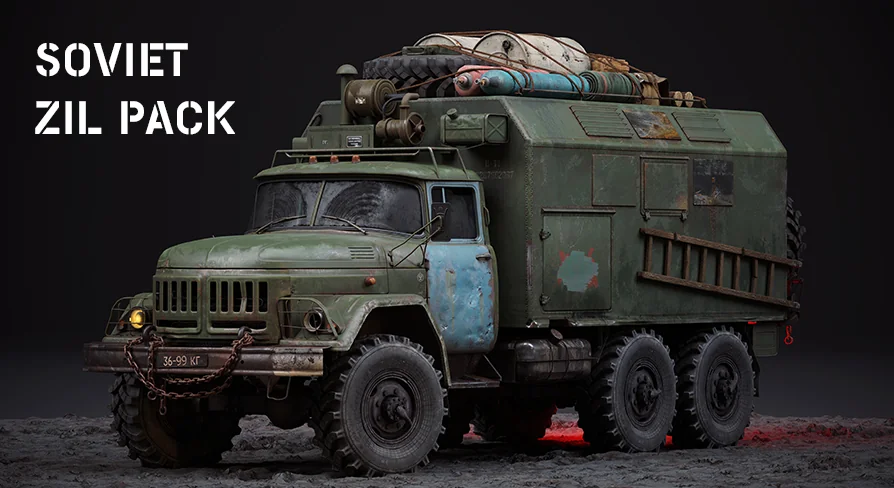
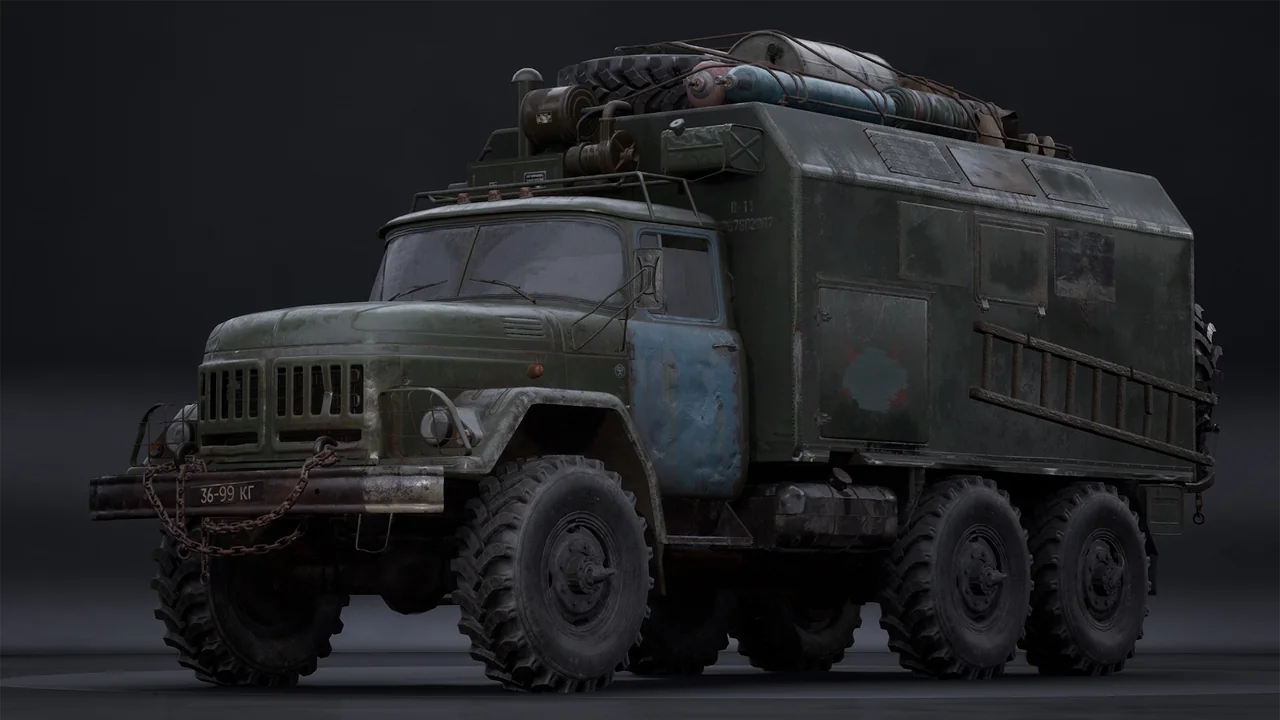
Depicting abandoned zones, hazardous transit routes, or remote Eastern European landscapes requires heavy machinery that looks capable of enduring severe neglect. The Soviet truck Zil Pack serves precisely these settings, supplying realistic utility vehicles tailored for harsh post-apocalyptic scenes and rugged tourist transit scenarios. The visual identity of classic Russian commercial engineering carries distinct cultural weight, making these trucks effective centerpieces for checkpoint blockades, convoy ambushes, or weathered roadside scatter.
Because the package approaches vehicle design through a grounded, utilitarian lens, each variant reflects the utilitarian durability associated with Soviet-era automotive design. The aesthetic bridges the gap between historical operations and catastrophic aftermaths, allowing level designers to populate wilderness trails, disaster perimeters, or makeshift survival camps without breaking visual believability.
Lineup Breakdown: From ZIL-130 Utility to the ZIL-131 FireTruck
The collection supplies five distinct configurations, giving creators enough variety to avoid repetitive asset placement throughout large maps. Included in the pack are:
ZIL-130: The quintessential medium-duty workhorse, standard for municipal and industrial hauling.
ZIL-131: A multi-purpose, all-terrain military chassis equipped for rough, off-road conditions.
ZIL-133: A stretched, three-axle heavy-duty hauler built for expanded load capacity.
Emergency ZIL-130: A specialized service variant fitted for urgent public utility response.
ZIL-131 FireTruck: An emergency vehicle equipped with dedicated firefighting apparatus and distinctive service bodywork.
By including civilian utility, multi-axle freight, and emergency response trims like the ZIL-131 FireTruck, the package allows varied narrative framing across a single scene. A crashed emergency vehicle can sit beside a barricade formed by a ZIL-133, while standard ZIL-130 models rust in forgotten depot lots.
Interior Economy and the Ultra Low-Poly Driver Cabin
While the exteriors prioritize realistic staging and authentic silhouettes, the structural density shifts dramatically once stepping inside the vehicle. The driver cabin is built with ultra low-poly geometry and mapped with reduced textures and meshes. This targeted optimization keeps the interior profile lightweight, preventing unnecessary polygon counts on areas that environmental cameras rarely inspect up close.
This design choice creates a clear functional boundary. Outside, the trucks preserve recognizable mechanical silhouettes suitable for third-person cameras, environmental dioramas, and overhead rendering. Inside, the stripped-down driver cabin ensures that multiple vehicles can populate a busy scene without consuming excessive rendering budgets on complex steering wheels, gauges, or seat geometry.
Static Prop Foundation and Drivable Vehicle Potential
The models were originally conceived as static prop objects, oriented toward world dressing and environmental storytelling. In their baseline state, they function as parked, abandoned, or wrecked assets ready to ground an apocalyptic highway or industrial zone. Wheels, chassis, and bodywork are organized to sit directly within set pieces without demanding immediate rigging overhead.
Even so, the assets leave the door open for interactive gameplay. Creators with the technical skills to rig running gear, animate suspensions, and bind physics components can convert these static shells into drivable vehicles. Because the base geometry remains low poly and modular, technical artists can separate components, weight-paint wheels, and integrate them into custom vehicle mechanics or driving game systems.
Managing Uncompressed Textures and Customization Pipelines
A notable technical characteristic of this pack is its heavy document footprint. Rather than pre-baking aggressive texture compression into the download, the textures were deliberately left uncompressed. While this increases overall project storage requirements out of the box, it provides unadulterated available details for direct texture editing.
Working with raw, uncompressed source maps enables artists to apply custom dirt coats, change unit numbers, paint custom emergency liveries, or integrate personal wear patterns without fighting existing compression artifacts. Once bespoke adjustments are complete, developers can compress and downscale the resolution to suit their project's exact target platform, platform memory budget, and streaming preferences.
Who Benefits Most from the Zil Collection
Environmental artists building survival horror, disaster-response, or post-Soviet atmospheric titles will gain immediate value from the authentic vehicle lineup. The availability of distinct variants like the ZIL-130, ZIL-133, and ZIL-131 FireTruck enables coherent world-building without relying on repetitive generic props. Simultaneously, technical designers looking for customizable truck meshes receive clean, uncompressed texture sets and lightweight cabin geometry that can be adapted for driving systems whenever interactive mechanics are required.
 Cars & Trucks
 Cars & Trucks
 Cars & Trucks
 Cars & Trucks