"efaa631e936fd3ee"{"id":"1002199","slug":"shooter-simplified-ai","title":"Shooter Simplified AI","category":"Weapons \u0026 Combat","engine":"5.3+","assetVersion":"","engineVersion":"Engine Version: 5.3+","tag":"Weapons \u0026 Combat","accent":"blue","visual":"mech","summary":"Shooter Simplified AI provides drag-and-drop Blueprint enemies, AI Perception for sight, hearing, and damage, and four modular behavior trees.","platform":"Unreal Engine","publishedAt":"2026-10-29T14:42:40.371Z","updatedAt":"2026-10-29T14:42:40.371Z","sourceNotes":[],"fileContents":[],"compatibility":["Unreal Engine","Engine Version: 5.3+"],"featuredImage":{"alt":"Shooter Simplified AI","src":"/wp-content/uploads/published/2026/10/8b3dba363e7e-457252f0-dc3c-425d-96fb-eda9700ce111-c775dcab1b.webp"},"hasDownloadLink":true,"downloads":0,"terms":[{"taxonomy":"category","slug":"weapons-and-combat","name":"Weapons \u0026 Combat"}],"galleryImages":[{"src":"/wp-content/uploads/published/2026/10/3e51137bfe12-471288fc-911a-4a56-807f-ec17e4757934-b5493641e6.webp","alt":"Shooter Simplified AI"},{"src":"/wp-content/uploads/published/2026/10/d2ba9c9213cd-3674fa82-8fd1-4b68-933a-e706c25a3985-54fbc9a55a.webp","alt":"Shooter Simplified AI"},{"src":"/wp-content/uploads/published/2026/10/e4a8ecb32357-34689c7b-658d-4f00-a7eb-93e405cb9186-59f7d4e019.webp","alt":"Shooter Simplified AI"}],"accessPanel":{"kind":"resource","title":"Download this resource","eyebrow":"Free Download","message":"Log in or create a free account to start your download.","fileName":"Shooter Simplified AI.7z","safetyNote":"Resources are manually reviewed before listing to improve quality and reduce obvious risks.","actionLabel":"Download Free","resourceType":"Resource archive"},"contentHtml":"\u003ch2\u003eDrag-and-Drop Implementation and Rapid Project Setup\u003c/h2\u003e\n\u003cp\u003eIntegrating hostile artificial intelligence into a combat environment often involves establishing intricate controller logic, state networks, and target evaluation systems before a single character can move. Shooter Simplified AI bypasses complex foundational setup through a workflow built to have functional AI operating inside a project within minutes. The core package supplies ready-to-use example AI characters that drop directly into existing scenes, instantly functioning without requiring developers to wire base navigation routines or build decision loops from scratch.\u003c/p\u003e\n\u003cp\u003eThe drag-and-drop configuration addresses the practical requirements of early prototyping and rapid iterative staging. Instead of spending production cycles configuring blackboards, controller assignments, and sensing components individually, developers place the premade combatants directly into levels. This workflow establishes an immediate baseline for combat testing, allowing level designers and gameplay programmers to test cover placements, combat distances, and encounter pacing as soon as actors are placed within the scene bounds.\u003c/p\u003e \u003ch2\u003eAI Perception System Through Sight, Hearing, and Damage\u003c/h2\u003e\n\u003cp\u003eAt the center of target acquisition and tactical awareness lies the AI Perception System, utilizing three distinct sensory channels: Sight, Hearing, and Damage. Rather than relying on simple distance checks or continuous line-of-trace loops, the AI uses these specialized perception vectors to monitor the environment and react dynamically to changes around them.\u003c/p\u003e\n\u003cp\u003eSight acts as the primary sensory stimulus for target detection, giving enemies visual cones to locate player characters, track target movement, and re-evaluate engagement when sight lines break. When players step into an active visual arc, the perception pipeline processes the visual stimuli, updating target priorities and driving transitions into direct engagement states.\u003c/p\u003e\n\u003cp\u003eHearing provides situational awareness when line-of-sight is missing or compromised. Sound stimuli generated across the environment allow enemies to acknowledge weapon discharges, footsteps, or environmental disturbances, redirecting focus toward origin coordinates without requiring direct visual confirmation. This creates depth during stealth or tactical engagements, as audio cues force the AI to investigate suspicious locations.\u003c/p\u003e\n\u003cp\u003eDamage perception functions as an immediate reactive switch. When struck by incoming attacks, the AI identifies the impact and the aggressor, instantly breaking passive routines to address direct threats. Even if an attack originates outside the active visual arc or beyond standard hearing ranges, the damage channel registers the event, preventing the AI from remaining passive while taking hits.\u003c/p\u003e \u003ch2\u003eThe Main AI Behavior Tree and Extended Tree Architecture\u003c/h2\u003e\n\u003cp\u003eDecision-making within Shooter Simplified AI is organized through a tiered architecture consisting of one Main AI Behavior Tree and three extended behavior trees. The Main AI Behavior Tree acts as the tactical trunk, handling global status checks, target registration, core movement logic, and transition rules between awareness states. By centralizing basic enemy intelligence within this core tree, shared decision logic remains isolated and organized in a single location.\u003c/p\u003e\n\u003cp\u003eBranching out from this foundation, the asset delivers three specialized behavior tree variations, each tuned for specific combat functions:\u003c/p\u003e\n\u003cul\u003e\n\u003cli\u003e\u003cstrong\u003eGuard:\u003c/strong\u003e A behavior profile structured around position defense, territory control, and localized area response when sensory thresholds are crossed.\u003c/li\u003e\n\u003cli\u003e\u003cstrong\u003eAssault:\u003c/strong\u003e An offensive behavior profile that drives aggressive closing maneuvers, active target tracking, and persistent pressure against opponents.\u003c/li\u003e\n\u003cli\u003e\u003cstrong\u003ePath Assault:\u003c/strong\u003e A specialized route-following assault variation designed to advance along predetermined corridors or waypoints while staying ready to engage targets along the path.\u003c/li\u003e\n\u003c/ul\u003e\n\u003cp\u003eThis tiered tree hierarchy ensures that extending enemy varieties does not require reconstructing the decision matrix. By inheriting logic from the primary tree and assigning specific sub-trees, developers can deploy varied tactical archetypes across an encounter without logic duplication.\u003c/p\u003e \u003ch2\u003eBlueprint Enemy Integration and Metahuman Compatibility\u003c/h2\u003e\n\u003cp\u003eConstructed entirely with scripts and Blueprint assets, the framework keeps gameplay logic transparent and modifiable. Developers working directly inside the visual scripting environment can examine the node structures, adjust sensory thresholds, or add custom gameplay events without dealing with compiled C++ code. The Blueprint layout makes it straightforward to adjust behavior variables, tweak task branches, and integrate unique sound or visual cues into existing perception events.\u003c/p\u003e\n\u003cp\u003eIn addition to standard enemy types, the package lists verified compatibility with Aisling — Fiery Realistic Metahuman. High-fidelity character rigs often present integration hurdles due to skeletal scales, animation pipelines, and performance overhead. Verified compatibility ensures that advanced character assets such as Aisling can run using the underlying Shooter Simplified AI logic, providing high-end character visuals alongside reactive Blueprint-driven combat systems.\u003c/p\u003e \u003ch2\u003eEvaluating Functional Mechanics in the Demo Game\u003c/h2\u003e\n\u003cp\u003eTo inspect the system in action before restructuring project code, developers can run the included demo game. The standalone demo environment demonstrates every active feature, from sight and hearing sensory triggers to state switching across the Guard, Assault, and Path Assault behavior branches.\u003c/p\u003e\n\u003cp\u003eObserving the AI within a working playable space provides practical insight into how the three perception channels interplay during live combat. Seeing an AI switch from passive patrol to damage response, or pivot from audio detection into an aggressive assault run, reveals the exact operational balance of the behavior trees. This hands-on preview allows developers to benchmark behavior timing, sense ranges, and tactical flow against their own project requirements before moving assets into active production.\u003c/p\u003e\n\n\u003ch2\u003eExplore Similar Assets\u003c/h2\u003e\n\u003cul\u003e\n\u003cli\u003e\u003ca href=\"https://3dcghub.com/multiplayer-shooter-template-with-ai/\" title=\"Multiplayer Shooter Template With AI\"\u003eMultiplayer Shooter Template With AI\u003c/a\u003e\u003c/li\u003e\n\u003cli\u003e\u003ca href=\"https://3dcghub.com/plug-and-play-shooter-ai/\" title=\"Plug and Play Shooter AI\"\u003ePlug and Play Shooter AI\u003c/a\u003e\u003c/li\u003e\n\u003cli\u003e\u003ca href=\"https://3dcghub.com/sci-fi-assault-rifle-m4/\" title=\"SCI-FI ASSAULT RIFLE - M4\"\u003eSCI-FI ASSAULT RIFLE - M4\u003c/a\u003e\u003c/li\u003e\n\u003cli\u003e\u003ca href=\"https://3dcghub.com/ai-shooter/\" title=\"AI Shooter\"\u003eAI Shooter\u003c/a\u003e\u003c/li\u003e\n\u003cli\u003e\u003ca href=\"https://3dcghub.com/multiplayer-tps-basic/\" title=\"Multiplayer TPS Basic\"\u003eMultiplayer TPS Basic\u003c/a\u003e\u003c/li\u003e\n\u003c/ul\u003e","contentTextLength":6273,"navigation":{"current":86,"total":4209,"previous":{"id":"1002200","slug":"simple-capture-the-flag","title":"Simple Capture The Flag","category":"Network \u0026 Multiplayer","platform":"Unreal Engine","updatedAt":"2026-10-29T14:44:10.264Z"},"next":{"id":"1002198","slug":"server-room-kit","title":"Server Room Kit","category":"Electronics \u0026 Technology","platform":"Unreal Engine","updatedAt":"2026-10-29T14:42:10.246Z"}},"relatedResources":[{"id":"1001143","slug":"multiplayer-shooter-template-with-ai","title":"Multiplayer Shooter Template With AI","category":"Weapons \u0026 Combat","engine":"5.0+","assetVersion":"","engineVersion":"Engine Version: 5.0+","tag":"Weapons \u0026 Combat","accent":"blue","visual":"mech","summary":"Multiplayer Shooter Template With AI delivers full network replication, custom sensory AI, dynamic radar capture, and direct MetaHuman skeleton compatibility.","platform":"Unreal Engine","publishedAt":"2026-09-09T05:42:58.481Z","updatedAt":"2026-09-09T05:42:58.481Z","sourceNotes":[],"fileContents":[],"compatibility":["Unreal Engine","Engine Version: 5.0+"],"featuredImage":{"alt":"Multiplayer Shooter Template With AI","src":"/wp-content/uploads/published/2026/09/f9ce64bcb73f-d891bb99-f96d-4bc3-b423-edb9bcc0bf46-4cce92b723.webp"},"hasDownloadLink":true,"downloads":0},{"id":"1002144","slug":"plug-and-play-shooter-ai","title":"Plug and Play Shooter AI","category":"Gameplay Features","engine":"5.1+","assetVersion":"","engineVersion":"Engine Version: 5.1+","tag":"Gameplay Features","accent":"blue","visual":"mech","summary":"Explore Plug and Play Shooter AI, an easy-to-use combat AI system featuring multiplayer replication, 8 behaviors, sensory detection, and team battle mechanics.","platform":"Unreal Engine","publishedAt":"2026-10-29T09:49:02.781Z","updatedAt":"2026-10-29T09:49:02.781Z","sourceNotes":[],"fileContents":[],"compatibility":["Unreal Engine","Engine Version: 5.1+"],"featuredImage":{"alt":"Plug and Play Shooter AI","src":"/wp-content/uploads/published/2026/10/3949e381120d-eef9a93f-524d-4da1-b202-cfd3acc825b0-d4f0dde1a7.webp"},"hasDownloadLink":true,"downloads":0},{"id":"1000334","slug":"sci-fi-assault-rifle-m4","title":"SCI-FI ASSAULT RIFLE - M4","category":"Weapons \u0026 Combat","engine":"5.4+","assetVersion":"","engineVersion":"Engine Version: 5.4+","tag":"Weapons \u0026 Combat","accent":"blue","visual":"mech","summary":"A low-poly, realistic sci-fi M4 assault rifle designed for first-person and third-person cyberpunk shooters, part of a broader compatible weapon ecosystem.","platform":"Unreal Engine","publishedAt":"2026-07-05T07:31:39.843Z","updatedAt":"2026-07-05T07:31:39.843Z","sourceNotes":[],"fileContents":[],"compatibility":["Unreal Engine","Engine Version: 5.4+"],"featuredImage":{"alt":"SCI-FI ASSAULT RIFLE - M4","src":"/wp-content/uploads/published/2026/07/b1263001e652-37cdaedf-1521-4988-8307-bd07703b7281-2fd6c4669c.webp"},"hasDownloadLink":true,"downloads":0}]}
Weapons & Combat
Shooter Simplified AI
Shooter Simplified AI provides drag-and-drop Blueprint enemies, AI Perception for sight, hearing, and damage, and four modular behavior trees.
Drag-and-Drop Implementation and Rapid Project Setup
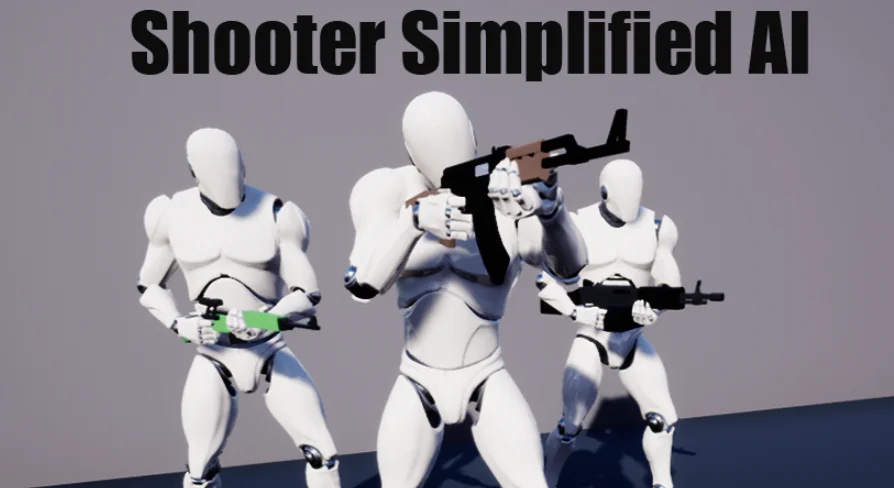
Integrating hostile artificial intelligence into a combat environment often involves establishing intricate controller logic, state networks, and target evaluation systems before a single character can move. Shooter Simplified AI bypasses complex foundational setup through a workflow built to have functional AI operating inside a project within minutes. The core package supplies ready-to-use example AI characters that drop directly into existing scenes, instantly functioning without requiring developers to wire base navigation routines or build decision loops from scratch.
The drag-and-drop configuration addresses the practical requirements of early prototyping and rapid iterative staging. Instead of spending production cycles configuring blackboards, controller assignments, and sensing components individually, developers place the premade combatants directly into levels. This workflow establishes an immediate baseline for combat testing, allowing level designers and gameplay programmers to test cover placements, combat distances, and encounter pacing as soon as actors are placed within the scene bounds.
AI Perception System Through Sight, Hearing, and Damage
At the center of target acquisition and tactical awareness lies the AI Perception System, utilizing three distinct sensory channels: Sight, Hearing, and Damage. Rather than relying on simple distance checks or continuous line-of-trace loops, the AI uses these specialized perception vectors to monitor the environment and react dynamically to changes around them.
Sight acts as the primary sensory stimulus for target detection, giving enemies visual cones to locate player characters, track target movement, and re-evaluate engagement when sight lines break. When players step into an active visual arc, the perception pipeline processes the visual stimuli, updating target priorities and driving transitions into direct engagement states.
Hearing provides situational awareness when line-of-sight is missing or compromised. Sound stimuli generated across the environment allow enemies to acknowledge weapon discharges, footsteps, or environmental disturbances, redirecting focus toward origin coordinates without requiring direct visual confirmation. This creates depth during stealth or tactical engagements, as audio cues force the AI to investigate suspicious locations.
Damage perception functions as an immediate reactive switch. When struck by incoming attacks, the AI identifies the impact and the aggressor, instantly breaking passive routines to address direct threats. Even if an attack originates outside the active visual arc or beyond standard hearing ranges, the damage channel registers the event, preventing the AI from remaining passive while taking hits.
The Main AI Behavior Tree and Extended Tree Architecture
Decision-making within Shooter Simplified AI is organized through a tiered architecture consisting of one Main AI Behavior Tree and three extended behavior trees. The Main AI Behavior Tree acts as the tactical trunk, handling global status checks, target registration, core movement logic, and transition rules between awareness states. By centralizing basic enemy intelligence within this core tree, shared decision logic remains isolated and organized in a single location.
Branching out from this foundation, the asset delivers three specialized behavior tree variations, each tuned for specific combat functions:
Guard: A behavior profile structured around position defense, territory control, and localized area response when sensory thresholds are crossed.
Assault: An offensive behavior profile that drives aggressive closing maneuvers, active target tracking, and persistent pressure against opponents.
Path Assault: A specialized route-following assault variation designed to advance along predetermined corridors or waypoints while staying ready to engage targets along the path.
This tiered tree hierarchy ensures that extending enemy varieties does not require reconstructing the decision matrix. By inheriting logic from the primary tree and assigning specific sub-trees, developers can deploy varied tactical archetypes across an encounter without logic duplication.
Blueprint Enemy Integration and Metahuman Compatibility
Constructed entirely with scripts and Blueprint assets, the framework keeps gameplay logic transparent and modifiable. Developers working directly inside the visual scripting environment can examine the node structures, adjust sensory thresholds, or add custom gameplay events without dealing with compiled C++ code. The Blueprint layout makes it straightforward to adjust behavior variables, tweak task branches, and integrate unique sound or visual cues into existing perception events.
In addition to standard enemy types, the package lists verified compatibility with Aisling — Fiery Realistic Metahuman. High-fidelity character rigs often present integration hurdles due to skeletal scales, animation pipelines, and performance overhead. Verified compatibility ensures that advanced character assets such as Aisling can run using the underlying Shooter Simplified AI logic, providing high-end character visuals alongside reactive Blueprint-driven combat systems.
Evaluating Functional Mechanics in the Demo Game
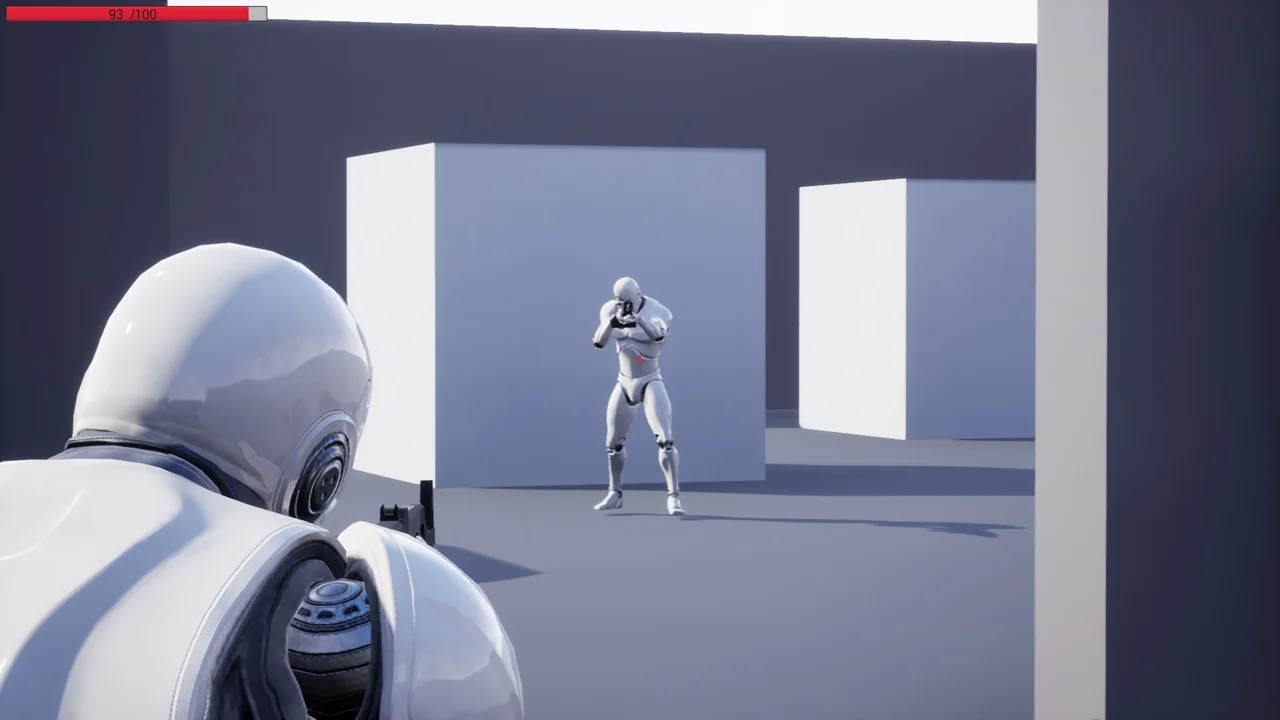
To inspect the system in action before restructuring project code, developers can run the included demo game. The standalone demo environment demonstrates every active feature, from sight and hearing sensory triggers to state switching across the Guard, Assault, and Path Assault behavior branches.
Observing the AI within a working playable space provides practical insight into how the three perception channels interplay during live combat. Seeing an AI switch from passive patrol to damage response, or pivot from audio detection into an aggressive assault run, reveals the exact operational balance of the behavior trees. This hands-on preview allows developers to benchmark behavior timing, sense ranges, and tactical flow against their own project requirements before moving assets into active production.
 Weapons & Combat
 Weapons & Combat
 Gameplay Features
 Weapons & Combat