"efaa631e936fd3ee"{"id":"1002189","slug":"sci-fi-shrine-props-vol-2","title":"Sci-Fi Shrine props VOL 2","category":"Religious","engine":"4.26+,5.0+","assetVersion":"","engineVersion":"Engine Version: 4.26+,5.0+","tag":"Religious","accent":"blue","visual":"mech","summary":"Examine Sci-Fi Shrine props VOL 2, featuring Substance Painter PBR textures and thematic stone carving assets designed for alien temple environments.","platform":"Unreal Engine","publishedAt":"2026-10-29T14:30:58.638Z","updatedAt":"2026-10-29T14:30:58.638Z","sourceNotes":[],"fileContents":[],"compatibility":["Unreal Engine","Engine Version: 4.26+,5.0+"],"featuredImage":{"alt":"Sci-Fi Shrine props VOL 2","src":"/wp-content/uploads/published/2026/10/f949a99b5b1b-0591418b-f8ed-46e9-a7fb-24256222afba-c80803fe40.webp"},"hasDownloadLink":true,"downloads":0,"terms":[{"taxonomy":"category","slug":"religious","name":"Religious"}],"galleryImages":[{"src":"/wp-content/uploads/published/2026/10/2087c2396a9a-2216e82c-6fc0-41cf-9bbb-12567631df2f-87cf9cff14.webp","alt":"Sci-Fi Shrine props VOL 2"},{"src":"/wp-content/uploads/published/2026/10/c9ae265ca530-5551bc20-d8d1-4c53-86d6-e6071e631479-4820471d99.webp","alt":"Sci-Fi Shrine props VOL 2"},{"src":"/wp-content/uploads/published/2026/10/61705183602d-f4045b45-4fec-4be3-a5c9-3d0f33804467-68743e9f98.webp","alt":"Sci-Fi Shrine props VOL 2"},{"src":"/wp-content/uploads/published/2026/10/c6298211397c-fb24e276-b6dd-4cb6-9e71-6f9f9443fefb-d8584e72c2.webp","alt":"Sci-Fi Shrine props VOL 2"},{"src":"/wp-content/uploads/published/2026/10/848bf5050237-6155e9d2-843d-4b1b-8c76-5a0a421eb423-0b81d39872.webp","alt":"Sci-Fi Shrine props VOL 2"},{"src":"/wp-content/uploads/published/2026/10/a2a3b5c890e5-a61e79c6-22b0-4554-950f-da99b22c34ab-68c67f49d5.webp","alt":"Sci-Fi Shrine props VOL 2"},{"src":"/wp-content/uploads/published/2026/10/f129c9d94b01-21b80289-9903-4c8d-86ac-873532f40844-a6285780a2.webp","alt":"Sci-Fi Shrine props VOL 2"},{"src":"/wp-content/uploads/published/2026/10/6ed5d007d6aa-530db822-873e-4c85-89dd-20a9a1d1dc54-7ad686933a.webp","alt":"Sci-Fi Shrine props VOL 2"},{"src":"/wp-content/uploads/published/2026/10/e0c17903bca7-6fa80533-ba1b-426d-ae3e-a593abc09fbf-ba197b3520.webp","alt":"Sci-Fi Shrine props VOL 2"}],"accessPanel":{"kind":"resource","title":"Download this resource","eyebrow":"Free Download","message":"Log in or create a free account to start your download.","fileName":"Content.7z","safetyNote":"Resources are manually reviewed before listing to improve quality and reduce obvious risks.","actionLabel":"Download Free","resourceType":"Resource archive"},"contentHtml":"\u003ch2\u003eStone Carving and Alien Temple Architecture\u003c/h2\u003e\n\u003cp\u003eMonolithic structures and sacred alien architecture demand a distinct balance between ancient masonry and futuristic engineering. Sci-Fi Shrine props VOL 2 establishes that atmosphere through environmental elements designed around temple layouts, monumental stone carvings, walls, and ceremonial shrines. When constructing an extraterrestrial sanctuary or an alien church interior, focal monuments and carved walls guide player orientation and reinforce world-building. Placing heavy, carved stone props alongside technological temple fittings creates a sense of forgotten civilizations or advanced extraterrestrial cultures whose reverence takes tangible physical form.\u003c/p\u003e\n\u003cp\u003eThe thematic scope centers heavily on stone, carving, monument, church, temple, alien, and wall elements. In practice, this allows world builders to assemble cohesive ritual chambers, defensive ceremonial enclosures, or isolated alien shrines situated across desolate planetary terrains. Dividing large interior spaces requires heavy architectural dividers. The wall and carving assets fulfill this need by defining corridors, perimeter borders, and sanctum thresholds, while standalone shrine monuments serve as anchors for lighting, narrative interactions, or central gameplay encounters.\u003c/p\u003e \u003ch2\u003eSubstance Painter Texture Pipeline and Surface Definition\u003c/h2\u003e\n\u003cp\u003eSurface treatment across Sci-Fi Shrine props VOL 2 originates directly from Substance Painter, establishing an authentic Physically Based Rendering workflow. Texturing stone monuments and alien devices requires nuanced surface variance, particularly when stone carving intersects with refined sci-fi materials. The authored texture stack covers all essential surface properties:\u003c/p\u003e\n\u003cul\u003e \u003cli\u003e\u003cstrong\u003eBaseColor:\u003c/strong\u003e Establishes the foundational albedo, capturing the tonal variance of alien stone, structural masonry, and integrated decorative trims.\u003c/li\u003e \u003cli\u003e\u003cstrong\u003eNormal:\u003c/strong\u003e Encodes high-frequency surface detail, translating intricate carving depths, stone fractures, and technical panel bevels onto the geometry.\u003c/li\u003e \u003cli\u003e\u003cstrong\u003eRoughness:\u003c/strong\u003e Manages environmental micro-facet reflection, separating dry, porous carved rock from polished alien inlays or metallic shrine surfaces.\u003c/li\u003e \u003cli\u003e\u003cstrong\u003eMetalness:\u003c/strong\u003e Defines raw non-dielectric versus dielectric zones, dictating which segments of the shrine infrastructure read as exposed metallic components.\u003c/li\u003e \u003cli\u003e\u003cstrong\u003eAmbient Occlusion (AO):\u003c/strong\u003e Supplies pre-calculated contact shadowing within deep relief carvings, structural wall crevices, and recessed shrine alcoves.\u003c/li\u003e \u003cli\u003e\u003cstrong\u003eEmissive:\u003c/strong\u003e Delivers self-illuminating patterns across the shrine props, simulating powered alien glyphs, internal power cores, or ritualistic lighting.\u003c/li\u003e\n\u003c/ul\u003e \u003ch2\u003eChannel Behavior Across Emissive and PBR Material Layers\u003c/h2\u003e\n\u003cp\u003eThe interaction between the normal, ambient occlusion, and roughness maps dictates how these shrine props react to dynamic level lighting. Because alien shrines frequently inhabit dim subterranean chambers, cavernous temples, or atmospheric alien plains, the surface response to direct and indirect illumination is paramount. Deeply carved stone motifs rely on the normal map to catch grazing directional light, while the ambient occlusion channel ensures crevices remain grounded in shadow even under soft global illumination.\u003c/p\u003e\n\u003cp\u003eEmissive data introduces an active technical dimension to an otherwise ancient stone aesthetic. In an alien temple context, glowing channels can signify active energy grids, sacred runes, or technological interfaces integrated into carved stone pillars. Modulating the emissive input within a scene shader allows environment artists to transition shrines between dormant and awakened states, providing clear visual cues during exploration or narrative sequences without requiring mesh swaps.\u003c/p\u003e \u003ch2\u003eUnreal Engine Preview and Material Graph Implementation\u003c/h2\u003e\n\u003cp\u003eWith verified Unreal Engine preview implementation, integrating the texture sets into standard material graphs follows an established, straightforward setup. The BaseColor map connects straight to the diffuse albedo input, while the normal texture drives tangent space vectors to render detailed relief across the prop geometry. Because the maps originate in Substance Painter, roughness and metalness align cleanly with standard PBR shading models, avoiding unexpected sheen or unnatural reflectivity across stone and metal surfaces.\u003c/p\u003e\n\u003cp\u003eAmbient occlusion maps can be utilized directly in material shading networks or combined into composite utility masks depending on the performance requirements of the target project. Multiplying the ambient occlusion into indirect lighting inputs accentuates the carved relief work of the monuments and walls. The emissive texture maps seamlessly to the emissive color node, where scalar parameters can multiply output intensity, enabling artists to tune the bloom and luminance of glowing carvings to match existing level exposure.\u003c/p\u003e \u003ch2\u003eIntegration within Lost Alien Worlds Asset Packs\u003c/h2\u003e\n\u003cp\u003eSci-Fi Shrine props VOL 2 functions as part of the broader Lost Alien Worlds 30 asset packs ecosystem. Developing expansive extraterrestrial environments requires cohesive art direction across multiple structural tiers. Combining these shrine props with wider biome, ruin, and landscape kits from the Lost Alien Worlds collection guarantees stylistic continuity from exterior planet surfaces to interior temple monuments.\u003c/p\u003e\n\u003cp\u003eWhether assembling an expansive extraterrestrial church, configuring boundary walls for an ancient alien necropolis, or placing a single carved monument atop an isolated cliffside, the pack supplies grounded, PBR-ready props designed to sit naturally within larger extraterrestrial scenes.\u003c/p\u003e\n\n\u003ch2\u003eExplore Similar Assets\u003c/h2\u003e\n\u003cul\u003e\n\u003cli\u003e\u003ca href=\"https://3dcghub.com/sci-fi-survey-drones/\" title=\"Sci-fi Survey Drones\"\u003eSci-fi Survey Drones\u003c/a\u003e\u003c/li\u003e\n\u003cli\u003e\u003ca href=\"https://3dcghub.com/modular-sci-fi-interior/\" title=\"Modular Sci-Fi Interior\"\u003eModular Sci-Fi Interior\u003c/a\u003e\u003c/li\u003e\n\u003cli\u003e\u003ca href=\"https://3dcghub.com/scifi-corridor-environment/\" title=\"SciFi Corridor Environment\"\u003eSciFi Corridor Environment\u003c/a\u003e\u003c/li\u003e\n\u003cli\u003e\u003ca href=\"https://3dcghub.com/sci-fi-interior-pack/\" title=\"Sci-Fi Interior Pack\"\u003eSci-Fi Interior Pack\u003c/a\u003e\u003c/li\u003e\n\u003cli\u003e\u003ca href=\"https://3dcghub.com/sci-fi-space-soldier-female/\" title=\"Sci Fi Space Soldier Female\"\u003eSci Fi Space Soldier Female\u003c/a\u003e\u003c/li\u003e\n\u003c/ul\u003e","contentTextLength":5745,"navigation":{"current":96,"total":4209,"previous":{"id":"1002190","slug":"sci-fi-shrine-props-vol-5","title":"Sci-Fi Shrine props VOL 5","category":"Tools, Objects \u0026 Decor","platform":"Unreal Engine","updatedAt":"2026-10-29T14:32:35.429Z"},"next":{"id":"1002188","slug":"sci-fi-shrine-props-vol-1","title":"Sci-Fi Shrine Props VOL 1","category":"Buildings \u0026 Architecture","platform":"Unreal Engine","updatedAt":"2026-10-29T14:29:58.761Z"}},"relatedResources":[{"id":"3439","slug":"sci-fi-survey-drones","title":"Sci-fi Survey Drones","category":"Characters \u0026 Creatures","engine":"4.25+,5.0+","assetVersion":"","engineVersion":"Engine Version: 4.25+,5.0+","tag":"Characters","accent":"blue","visual":"character","summary":"Enhance your AAA game with these 3 high-quality sci-fi surveillance drones. Features include sonar scan VFX, follow systems, and full Blueprint integration.","platform":"Unreal Engine","publishedAt":"2026-02-09T07:19:42.000Z","updatedAt":"2026-10-28T12:37:24.933Z","sourceNotes":[],"fileContents":[],"compatibility":["Unreal Engine","Engine Version: 4.25+,5.0+"],"featuredImage":{"alt":"Sci-fi Survey Drones","src":"https://3dcghub.com/wp-content/uploads/2026/02/b0dca7aa-dcbf-4d85-b515-4ca30dc2465d.webp"},"hasDownloadLink":true,"downloads":2},{"id":"1001680","slug":"modular-sci-fi-interior","title":"Modular Sci-Fi Interior","category":"Sci-Fi","engine":"4.26+,5.0+","assetVersion":"","engineVersion":"Engine Version: 4.26+,5.0+","tag":"Sci-Fi","accent":"blue","visual":"mech","summary":"Build AAA spaceship corridors, engineering bays, and laboratories with Modular Sci-Fi Interior, featuring 68 compatible parts and customizable materials.","platform":"Unreal Engine","publishedAt":"2026-10-13T15:31:32.670Z","updatedAt":"2026-10-13T15:31:32.670Z","sourceNotes":[],"fileContents":[],"compatibility":["Unreal Engine","Engine Version: 4.26+,5.0+"],"featuredImage":{"alt":"Modular Sci-Fi Interior","src":"/wp-content/uploads/published/2026/10/5f742de1385a-81f27987-eea8-4083-8247-e2f32ed77b80-110aed85b4.webp"},"hasDownloadLink":true,"downloads":1},{"id":"1001665","slug":"scifi-corridor-environment","title":"SciFi Corridor Environment","category":"Sci-Fi","engine":"4.20+,5.0+","assetVersion":"","engineVersion":"Engine Version: 4.20+,5.0+","tag":"Sci-Fi","accent":"blue","visual":"city","summary":"Explore the SciFi Corridor Environment, a modular lowpoly level scene built for current gen games with customizable PBR materials and prop compatibility.","platform":"Unreal Engine","publishedAt":"2026-10-13T15:05:15.324Z","updatedAt":"2026-10-13T15:05:15.324Z","sourceNotes":[],"fileContents":[],"compatibility":["Unreal Engine","Engine Version: 4.20+,5.0+"],"featuredImage":{"alt":"SciFi Corridor Environment","src":"/wp-content/uploads/published/2026/10/522388a562b7-365997bb-848d-475f-be61-3d69c5e3307e-42292051e6.webp"},"hasDownloadLink":true,"downloads":1}]}
Religious
Sci-Fi Shrine props VOL 2
Examine Sci-Fi Shrine props VOL 2, featuring Substance Painter PBR textures and thematic stone carving assets designed for alien temple environments.
Category:Unreal Engine,ReligiousPlatform: Unreal EngineEngine Version: 4.26+,5.0+Published: Oct 29, 2026
Religious
Resource overview
Stone Carving and Alien Temple Architecture
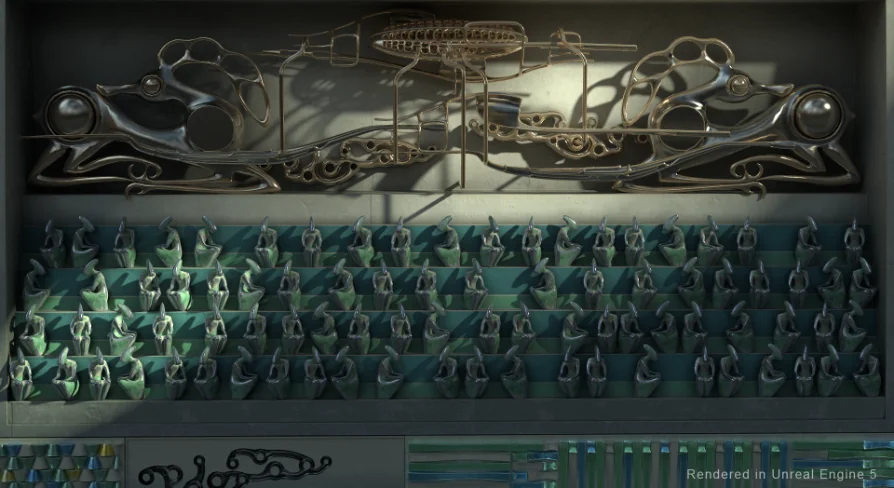
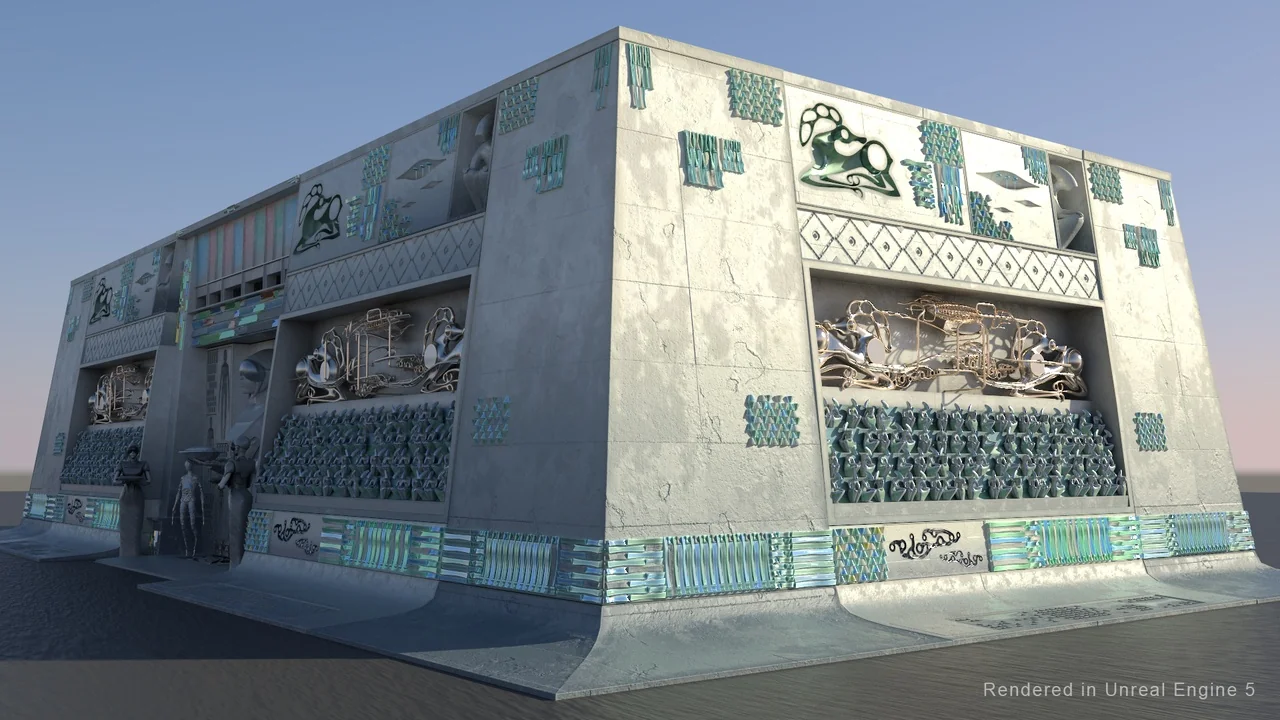
Monolithic structures and sacred alien architecture demand a distinct balance between ancient masonry and futuristic engineering. Sci-Fi Shrine props VOL 2 establishes that atmosphere through environmental elements designed around temple layouts, monumental stone carvings, walls, and ceremonial shrines. When constructing an extraterrestrial sanctuary or an alien church interior, focal monuments and carved walls guide player orientation and reinforce world-building. Placing heavy, carved stone props alongside technological temple fittings creates a sense of forgotten civilizations or advanced extraterrestrial cultures whose reverence takes tangible physical form.
The thematic scope centers heavily on stone, carving, monument, church, temple, alien, and wall elements. In practice, this allows world builders to assemble cohesive ritual chambers, defensive ceremonial enclosures, or isolated alien shrines situated across desolate planetary terrains. Dividing large interior spaces requires heavy architectural dividers. The wall and carving assets fulfill this need by defining corridors, perimeter borders, and sanctum thresholds, while standalone shrine monuments serve as anchors for lighting, narrative interactions, or central gameplay encounters.
Substance Painter Texture Pipeline and Surface Definition
Surface treatment across Sci-Fi Shrine props VOL 2 originates directly from Substance Painter, establishing an authentic Physically Based Rendering workflow. Texturing stone monuments and alien devices requires nuanced surface variance, particularly when stone carving intersects with refined sci-fi materials. The authored texture stack covers all essential surface properties:
BaseColor: Establishes the foundational albedo, capturing the tonal variance of alien stone, structural masonry, and integrated decorative trims.
Normal: Encodes high-frequency surface detail, translating intricate carving depths, stone fractures, and technical panel bevels onto the geometry.
Roughness: Manages environmental micro-facet reflection, separating dry, porous carved rock from polished alien inlays or metallic shrine surfaces.
Metalness: Defines raw non-dielectric versus dielectric zones, dictating which segments of the shrine infrastructure read as exposed metallic components.
Ambient Occlusion (AO): Supplies pre-calculated contact shadowing within deep relief carvings, structural wall crevices, and recessed shrine alcoves.
Emissive: Delivers self-illuminating patterns across the shrine props, simulating powered alien glyphs, internal power cores, or ritualistic lighting.
Channel Behavior Across Emissive and PBR Material Layers
The interaction between the normal, ambient occlusion, and roughness maps dictates how these shrine props react to dynamic level lighting. Because alien shrines frequently inhabit dim subterranean chambers, cavernous temples, or atmospheric alien plains, the surface response to direct and indirect illumination is paramount. Deeply carved stone motifs rely on the normal map to catch grazing directional light, while the ambient occlusion channel ensures crevices remain grounded in shadow even under soft global illumination.
Emissive data introduces an active technical dimension to an otherwise ancient stone aesthetic. In an alien temple context, glowing channels can signify active energy grids, sacred runes, or technological interfaces integrated into carved stone pillars. Modulating the emissive input within a scene shader allows environment artists to transition shrines between dormant and awakened states, providing clear visual cues during exploration or narrative sequences without requiring mesh swaps.
Unreal Engine Preview and Material Graph Implementation
With verified Unreal Engine preview implementation, integrating the texture sets into standard material graphs follows an established, straightforward setup. The BaseColor map connects straight to the diffuse albedo input, while the normal texture drives tangent space vectors to render detailed relief across the prop geometry. Because the maps originate in Substance Painter, roughness and metalness align cleanly with standard PBR shading models, avoiding unexpected sheen or unnatural reflectivity across stone and metal surfaces.
Ambient occlusion maps can be utilized directly in material shading networks or combined into composite utility masks depending on the performance requirements of the target project. Multiplying the ambient occlusion into indirect lighting inputs accentuates the carved relief work of the monuments and walls. The emissive texture maps seamlessly to the emissive color node, where scalar parameters can multiply output intensity, enabling artists to tune the bloom and luminance of glowing carvings to match existing level exposure.
Integration within Lost Alien Worlds Asset Packs
Sci-Fi Shrine props VOL 2 functions as part of the broader Lost Alien Worlds 30 asset packs ecosystem. Developing expansive extraterrestrial environments requires cohesive art direction across multiple structural tiers. Combining these shrine props with wider biome, ruin, and landscape kits from the Lost Alien Worlds collection guarantees stylistic continuity from exterior planet surfaces to interior temple monuments.
Whether assembling an expansive extraterrestrial church, configuring boundary walls for an ancient alien necropolis, or placing a single carved monument atop an isolated cliffside, the pack supplies grounded, PBR-ready props designed to sit naturally within larger extraterrestrial scenes.
 Religious
 Characters
 Sci-Fi
 Sci-Fi