"7e6fc58c410f2894"{"id":"1001662","slug":"sci-fi-modular-hangars-location","title":"Sci-Fi Modular Hangars Location","category":"Sci-Fi","engine":"4.20+,5.0+","assetVersion":"","engineVersion":"Engine Version: 4.20+,5.0+","tag":"Sci-Fi","accent":"blue","visual":"mech","summary":"Build planetary space bases and aircraft hangars with modular tiles, PBR texture sets, and optimized models spanning 150 to 4000 triangles.","platform":"Unreal Engine","publishedAt":"2026-10-13T14:53:42.538Z","updatedAt":"2026-10-13T14:53:42.538Z","sourceNotes":[],"fileContents":[],"compatibility":["Unreal Engine","Engine Version: 4.20+,5.0+"],"featuredImage":{"alt":"Sci-Fi Modular Hangars Location","src":"/wp-content/uploads/published/2026/10/db8fa4e22236-8a0a5874-c91a-4949-bf0d-27d2b0dafc41-e2f68a6d9f.webp"},"hasDownloadLink":true,"downloads":0,"terms":[{"taxonomy":"category","slug":"sci-fi","name":"Sci-Fi"}],"galleryImages":[{"src":"/wp-content/uploads/published/2026/10/37e60a556067-142e9009-8984-41a8-86cc-252b5adc2943-e6e41be378.webp","alt":"Sci-Fi Modular Hangars Location"},{"src":"/wp-content/uploads/published/2026/10/bd8fbfa21a2f-ca1ed88a-fa52-4717-8728-9006f1fffbfe-8fa5df442b.webp","alt":"Sci-Fi Modular Hangars Location"},{"src":"/wp-content/uploads/published/2026/10/0c8ed0d95c31-847863d6-ac97-4a69-aa61-2d211457b37d-c58e85b6c4.webp","alt":"Sci-Fi Modular Hangars Location"},{"src":"/wp-content/uploads/published/2026/10/5720403db2ab-80640e6e-5560-4cef-97d7-8be6385c6de7-1ff053e3bc.webp","alt":"Sci-Fi Modular Hangars Location"},{"src":"/wp-content/uploads/published/2026/10/e0c613461c20-20cd2839-b292-4e1a-86bf-1051fc226fce-c4f5c0fc32.webp","alt":"Sci-Fi Modular Hangars Location"},{"src":"/wp-content/uploads/published/2026/10/7ff3cc2e72a2-15b54520-d0ca-4929-97d0-96c502ff56c8-386487840b.webp","alt":"Sci-Fi Modular Hangars Location"},{"src":"/wp-content/uploads/published/2026/10/36a8abdf1338-81d56eed-a27c-4c8f-8de9-dc583b4b3df5-aa6e42698a.webp","alt":"Sci-Fi Modular Hangars Location"},{"src":"/wp-content/uploads/published/2026/10/5092938cfd91-45b40e01-7c9e-43db-9822-0c7a4a4628b5-109008ae91.webp","alt":"Sci-Fi Modular Hangars Location"},{"src":"/wp-content/uploads/published/2026/10/b0b225d9afca-08f83976-e400-4c79-adc1-c58177cb8515-3f9ce7130b.webp","alt":"Sci-Fi Modular Hangars Location"}],"accessPanel":{"kind":"resource","title":"Download this resource","eyebrow":"Free Download","message":"Log in or create a free account to start your download.","fileName":"Content.7z","safetyNote":"Resources are manually reviewed before listing to improve quality and reduce obvious risks.","actionLabel":"Download Free","resourceType":"Resource archive"},"contentHtml":"\u003ch2\u003eAligning Modular Tiles and Geometry Pivots on the Grid\u003c/h2\u003e\n\u003cp\u003eAssembling complex architectural layouts begins with predictable origin points. In Sci-Fi Modular Hangars Location, every asset features its pivot positioned in logical places of the geometry to simplify modular snapping. Floor tiles, interior wall sections, and exterior facade pieces line up directly against adjacent modules without requiring manual offset adjustments or rotational corrections during placement.\u003c/p\u003e\n\u003cp\u003eThis pivot arrangement drastically accelerates the initial blockout phase. Interior wall tiles match seamlessly with corner transitions, while exterior shells lock cleanly against adjoining perimeter pieces. Because structural pieces connect along uniform grid coordinates, constructing vast interior chambers or dividing wide hangar floors into separate functional staging bays remains clean and consistent.\u003c/p\u003e\n\u003cp\u003eThe system also accommodates mixed indoor-outdoor layouts. Outer planetary structures often require seamless passages between pressurized interiors and open external terrain. By keeping pivot points predictably anchored to structural boundary edges, exterior wall tiles form flush seals with surrounding cliff boundaries and open aircraft platforms without visible mesh gaps.\u003c/p\u003e \u003ch2\u003eStructuring Sci-Fi Hangars and Outer Planet Space Bases\u003c/h2\u003e\n\u003cp\u003eThe collection supplies specialized assets to construct extensive sci-fi installations, ranging from functional aircraft hangars to remote outposts stationed on barren planetary surfaces. Structural components include dedicated floor tiles, interior and exterior wall panels, and distinct functional landmarks such as a specialized heli pad for landing craft.\u003c/p\u003e\n\u003cp\u003eSecondary props provide critical context across industrial and defensive installations. Builders can assemble perimeter cordons using protective barriers, route perimeter lighting with industrial lamppost assets, and establish telecommunication links using exterior antenna towers. These architectural and industrial elements combine into cohesive sci-fi facility layouts where navigation routes feel purposeful.\u003c/p\u003e\n\u003cp\u003eFor scenarios requiring dedicated transport hubs, landing pads and open bay zones allow direct staging for incoming spacecraft. Interior wall units can form secure control stations or personnel airlocks, while heavy structural beams frame massive vehicle storage spaces. The varied modular selection easily covers the functional needs of deep-space research installations, remote colonial hubs, and high-tech military airfields.\u003c/p\u003e \u003ch2\u003ePolycount Scaling from 150 to 4000 Tris\u003c/h2\u003e\n\u003cp\u003eReal-time performance relies heavily on asset density management, particularly in scenes with overlapping structures. Meshes in Sci-Fi Modular Hangars Location feature triangle counts ranging from 150 to 4000 tris per model. Every asset is optimized and hand-tweaked to eliminate unnecessary geometry while preserving the sharp, hard-surface contours demanded by sci-fi architecture.\u003c/p\u003e\n\u003cp\u003eSmaller environmental props, basic perimeter barriers, and simple flat floor tiles populate the low end of the budget near 150 triangles. These low-poly counts allow wide surface planes and repetitive perimeter fences to be placed across hundreds of meters without consuming excess polygon processing headroom.\u003c/p\u003e\n\u003cp\u003eHigher-density meshes approaching 4000 triangles are reserved for complex silhouettes, including angular cliff terrain chunks, multi-faceted antenna arrays, and intricate wall segments with mechanical surface insets. This focused distribution keeps structural assets clean and silhouetted while ensuring that dense exterior landscapes and complex indoor hangars run reliably within standard runtime limits.\u003c/p\u003e \u003ch2\u003eMaterial Definition Across 30 PBR Texture Sets\u003c/h2\u003e\n\u003cp\u003eVisual fidelity across the environment relies on Physically-Based Rendering standards. The package provides 30 dedicated texture sets, with texture map resolutions ranging from 512x512 up to 4096x4096. This scalable resolution spread ensures that large architectural spans retain high surface clarity, while smaller decorative fixtures operate efficiently on lighter memory footprints.\u003c/p\u003e\n\u003cp\u003eEvery surface treatment incorporates six distinct texture channels to ensure realistic interaction under dynamic light setups:\u003c/p\u003e\n\u003cul\u003e\n\u003cli\u003e\u003cstrong\u003eBase Color:\u003c/strong\u003e Defines raw albedo values, surface paint, panel tinting, and base physical material coloration.\u003c/li\u003e\n\u003cli\u003e\u003cstrong\u003eNormal Map:\u003c/strong\u003e Conveys micro-reliefs, recessed seams, surface rivets, and structural plate bevels without adding polygonal overhead.\u003c/li\u003e\n\u003cli\u003e\u003cstrong\u003eRoughness:\u003c/strong\u003e Manages variable glossiness across weathered metals, matte composite panels, and smooth structural glass.\u003c/li\u003e\n\u003cli\u003e\u003cstrong\u003eMetalness:\u003c/strong\u003e Dictates the reflective conductor properties of unpainted alloys, industrial framework beams, and mechanical components.\u003c/li\u003e\n\u003cli\u003e\u003cstrong\u003eAmbient Occlusion (AO):\u003c/strong\u003e Enforces natural contact shadows inside seams, tight crevices, and structural module corners.\u003c/li\u003e\n\u003cli\u003e\u003cstrong\u003eIllumination:\u003c/strong\u003e Supplies emissive channels for glowing terminal readouts, indicator lighting, navigation beacons, and illuminated lamppost heads.\u003c/li\u003e\n\u003c/ul\u003e\n\u003cp\u003eThe interaction of these combined maps gives hangar surfaces realistic scuffs, industrial coatings, and metallic sheens that react naturally as players shift their point of view or move beneath facility searchlights.\u003c/p\u003e \u003ch2\u003eExterior Staging with Cliffs, Landing Pads, and Vessel Assets\u003c/h2\u003e\n\u003cp\u003eSpace base environments rarely exist on flat planes alone. Sci-Fi Modular Hangars Location includes natural cliff assets to build rugged surrounding geography, isolating outposts inside craters or canyon ridges. These natural cliff meshes interface directly with artificial retaining walls and structural flooring to suggest an installation carved into an alien planetary landscape.\u003c/p\u003e\n\u003cp\u003eLanding zones bridge the terrain with facility interiors. A dedicated heli pad mesh acts as a functional centerpiece for exterior aprons, accommodating arrivals and departures. Furthermore, the kit maintains direct compatibility with the Cargo Ship Container Ship - low poly asset, allowing level designers to populate hangar floors, docking cradles, or open flight lines with heavy freight vehicles.\u003c/p\u003e\n\u003cp\u003eArranging these combined elements creates layered exterior compositions. An outer defense line marked by modular barriers and tall communication antennas can frame an aircraft pad, while the sheer faces of the cliff assets loom immediately behind the hangar entrances, emphasizing the hostile scale of an outer-planet environment.\u003c/p\u003e \u003ch2\u003eTechnical Suitability for First-Person Level Design\u003c/h2\u003e\n\u003cp\u003eBecause the collection is tailored for first-person shooter (FPS) games, spatial dimensions match close-quarters exploration requirements. Hallways, doorway modules, and hangar clearance heights accommodate first-person perspective cameras without clipping walls or creating awkward sightline distortions. Hand-tweaked surfaces guarantee that bevels, floor seams, and wall panels hold up to close visual scrutiny when players walk alongside them.\u003c/p\u003e\n\u003cp\u003eLevel designers working on tactical combat scenarios benefit from clear sightlines and modular cover options. Wall turns, barrier positions, and hangar support structures can be placed to create distinct combat chokepoints, flanking paths, and vantage posts. With comprehensive texture maps, low-poly computational footprints, and clean modular pivot points, Sci-Fi Modular Hangars Location delivers a versatile toolset for staging real-time science fiction levels.\u003c/p\u003e\n\n\u003ch2\u003eMore From The Same Workflow\u003c/h2\u003e\n\u003cul\u003e\n\u003cli\u003e\u003ca href=\"https://3dcghub.com/sci-fi-modular-environment/\" title=\"Sci-Fi Modular Environment\"\u003eSci-Fi Modular Environment\u003c/a\u003e\u003c/li\u003e\n\u003cli\u003e\u003ca href=\"https://3dcghub.com/sci-fi-interior-pack/\" title=\"Sci-Fi Interior Pack\"\u003eSci-Fi Interior Pack\u003c/a\u003e\u003c/li\u003e\n\u003cli\u003e\u003ca href=\"https://3dcghub.com/modular-cyberpunk-city-asset-pack/\" title=\"Modular CyberPunk City Asset Pack\"\u003eModular CyberPunk City Asset Pack\u003c/a\u003e\u003c/li\u003e\n\u003cli\u003e\u003ca href=\"https://3dcghub.com/mega-sci-fi-city-package/\" title=\"Mega Sci-Fi City Package\"\u003eMega Sci-Fi City Package\u003c/a\u003e\u003c/li\u003e\n\u003cli\u003e\u003ca href=\"https://3dcghub.com/scifi-industrial-level-kit-2-0/\" title=\"SciFi/Industrial Level Kit 2.0\"\u003eSciFi/Industrial Level Kit 2.0\u003c/a\u003e\u003c/li\u003e\n\u003c/ul\u003e","contentTextLength":7489,"navigation":{"current":20,"total":3618,"previous":{"id":"1001663","slug":"sci-fi-urban-pack","title":"Sci-Fi Urban Pack","category":"Sci-Fi","platform":"Unreal Engine","updatedAt":"2026-10-13T14:54:42.148Z"},"next":{"id":"1001661","slug":"sci-fi-modular-environment","title":"Sci-Fi Modular Environment","category":"Sci-Fi","platform":"Unreal Engine","updatedAt":"2026-10-13T14:50:51.624Z"}},"relatedResources":[{"id":"1001680","slug":"modular-sci-fi-interior","title":"Modular Sci-Fi Interior","category":"Sci-Fi","engine":"4.26+,5.0+","assetVersion":"","engineVersion":"Engine Version: 4.26+,5.0+","tag":"Sci-Fi","accent":"blue","visual":"mech","summary":"Build AAA spaceship corridors, engineering bays, and laboratories with Modular Sci-Fi Interior, featuring 68 compatible parts and customizable materials.","platform":"Unreal Engine","publishedAt":"2026-10-13T15:31:32.670Z","updatedAt":"2026-10-13T15:31:32.670Z","sourceNotes":[],"fileContents":[],"compatibility":["Unreal Engine","Engine Version: 4.26+,5.0+"],"featuredImage":{"alt":"Modular Sci-Fi Interior","src":"/wp-content/uploads/published/2026/10/5f742de1385a-81f27987-eea8-4083-8247-e2f32ed77b80-110aed85b4.webp"},"hasDownloadLink":true,"downloads":0},{"id":"1001665","slug":"scifi-corridor-environment","title":"SciFi Corridor Environment","category":"Sci-Fi","engine":"4.20+,5.0+","assetVersion":"","engineVersion":"Engine Version: 4.20+,5.0+","tag":"Sci-Fi","accent":"blue","visual":"city","summary":"Explore the SciFi Corridor Environment, a modular lowpoly level scene built for current gen games with customizable PBR materials and prop compatibility.","platform":"Unreal Engine","publishedAt":"2026-10-13T15:05:15.324Z","updatedAt":"2026-10-13T15:05:15.324Z","sourceNotes":[],"fileContents":[],"compatibility":["Unreal Engine","Engine Version: 4.20+,5.0+"],"featuredImage":{"alt":"SciFi Corridor Environment","src":"/wp-content/uploads/published/2026/10/522388a562b7-365997bb-848d-475f-be61-3d69c5e3307e-42292051e6.webp"},"hasDownloadLink":true,"downloads":0},{"id":"1001663","slug":"sci-fi-urban-pack","title":"Sci-Fi Urban Pack","category":"Sci-Fi","engine":"4.21+,5.0+","assetVersion":"","engineVersion":"Engine Version: 4.21+,5.0+","tag":"Sci-Fi","accent":"blue","visual":"mech","summary":"Explore Sci-Fi Urban Pack, a modular low-poly kit featuring a two-texture building system, day and night built lighting, and customizable city props.","platform":"Unreal Engine","publishedAt":"2026-10-13T14:54:42.148Z","updatedAt":"2026-10-13T14:54:42.148Z","sourceNotes":[],"fileContents":[],"compatibility":["Unreal Engine","Engine Version: 4.21+,5.0+"],"featuredImage":{"alt":"Sci-Fi Urban Pack","src":"/wp-content/uploads/published/2026/10/ea04bdf6f824-c5fc1227-3b25-416d-b69c-09903d848b5a-5c16af7374.webp"},"hasDownloadLink":true,"downloads":0}]}
Sci-Fi
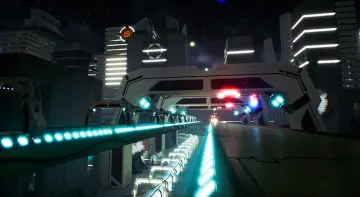
Sci-Fi Modular Hangars Location
Build planetary space bases and aircraft hangars with modular tiles, PBR texture sets, and optimized models spanning 150 to 4000 triangles.
Category:Unreal Engine,Sci-FiPlatform: Unreal EngineEngine Version: 4.20+,5.0+Published: Oct 13, 2026
Sci-Fi
Resource overview
Aligning Modular Tiles and Geometry Pivots on the Grid
Assembling complex architectural layouts begins with predictable origin points. In Sci-Fi Modular Hangars Location, every asset features its pivot positioned in logical places of the geometry to simplify modular snapping. Floor tiles, interior wall sections, and exterior facade pieces line up directly against adjacent modules without requiring manual offset adjustments or rotational corrections during placement.
This pivot arrangement drastically accelerates the initial blockout phase. Interior wall tiles match seamlessly with corner transitions, while exterior shells lock cleanly against adjoining perimeter pieces. Because structural pieces connect along uniform grid coordinates, constructing vast interior chambers or dividing wide hangar floors into separate functional staging bays remains clean and consistent.
The system also accommodates mixed indoor-outdoor layouts. Outer planetary structures often require seamless passages between pressurized interiors and open external terrain. By keeping pivot points predictably anchored to structural boundary edges, exterior wall tiles form flush seals with surrounding cliff boundaries and open aircraft platforms without visible mesh gaps.
Structuring Sci-Fi Hangars and Outer Planet Space Bases
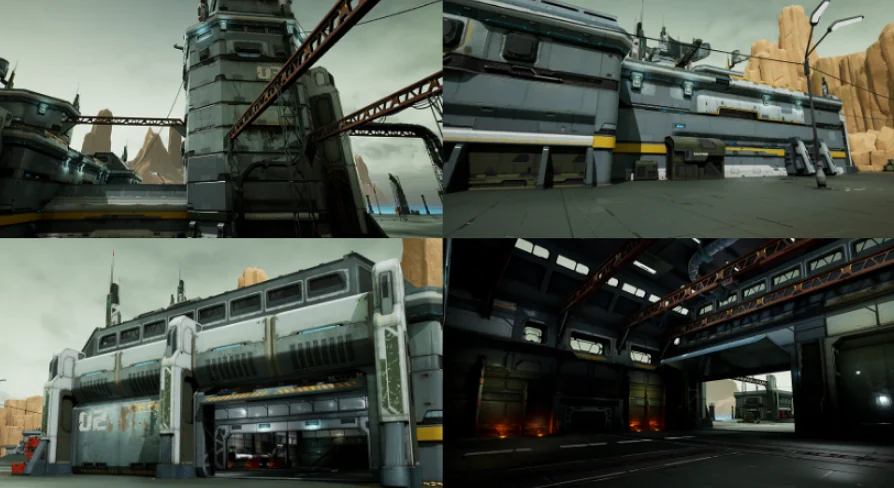
The collection supplies specialized assets to construct extensive sci-fi installations, ranging from functional aircraft hangars to remote outposts stationed on barren planetary surfaces. Structural components include dedicated floor tiles, interior and exterior wall panels, and distinct functional landmarks such as a specialized heli pad for landing craft.
Secondary props provide critical context across industrial and defensive installations. Builders can assemble perimeter cordons using protective barriers, route perimeter lighting with industrial lamppost assets, and establish telecommunication links using exterior antenna towers. These architectural and industrial elements combine into cohesive sci-fi facility layouts where navigation routes feel purposeful.
For scenarios requiring dedicated transport hubs, landing pads and open bay zones allow direct staging for incoming spacecraft. Interior wall units can form secure control stations or personnel airlocks, while heavy structural beams frame massive vehicle storage spaces. The varied modular selection easily covers the functional needs of deep-space research installations, remote colonial hubs, and high-tech military airfields.
Polycount Scaling from 150 to 4000 Tris
Real-time performance relies heavily on asset density management, particularly in scenes with overlapping structures. Meshes in Sci-Fi Modular Hangars Location feature triangle counts ranging from 150 to 4000 tris per model. Every asset is optimized and hand-tweaked to eliminate unnecessary geometry while preserving the sharp, hard-surface contours demanded by sci-fi architecture.
Smaller environmental props, basic perimeter barriers, and simple flat floor tiles populate the low end of the budget near 150 triangles. These low-poly counts allow wide surface planes and repetitive perimeter fences to be placed across hundreds of meters without consuming excess polygon processing headroom.
Higher-density meshes approaching 4000 triangles are reserved for complex silhouettes, including angular cliff terrain chunks, multi-faceted antenna arrays, and intricate wall segments with mechanical surface insets. This focused distribution keeps structural assets clean and silhouetted while ensuring that dense exterior landscapes and complex indoor hangars run reliably within standard runtime limits.
Material Definition Across 30 PBR Texture Sets
Visual fidelity across the environment relies on Physically-Based Rendering standards. The package provides 30 dedicated texture sets, with texture map resolutions ranging from 512x512 up to 4096x4096. This scalable resolution spread ensures that large architectural spans retain high surface clarity, while smaller decorative fixtures operate efficiently on lighter memory footprints.
Every surface treatment incorporates six distinct texture channels to ensure realistic interaction under dynamic light setups:
Base Color: Defines raw albedo values, surface paint, panel tinting, and base physical material coloration.
Normal Map: Conveys micro-reliefs, recessed seams, surface rivets, and structural plate bevels without adding polygonal overhead.
Roughness: Manages variable glossiness across weathered metals, matte composite panels, and smooth structural glass.
Metalness: Dictates the reflective conductor properties of unpainted alloys, industrial framework beams, and mechanical components.
Illumination: Supplies emissive channels for glowing terminal readouts, indicator lighting, navigation beacons, and illuminated lamppost heads.
The interaction of these combined maps gives hangar surfaces realistic scuffs, industrial coatings, and metallic sheens that react naturally as players shift their point of view or move beneath facility searchlights.
Exterior Staging with Cliffs, Landing Pads, and Vessel Assets
Space base environments rarely exist on flat planes alone. Sci-Fi Modular Hangars Location includes natural cliff assets to build rugged surrounding geography, isolating outposts inside craters or canyon ridges. These natural cliff meshes interface directly with artificial retaining walls and structural flooring to suggest an installation carved into an alien planetary landscape.
Landing zones bridge the terrain with facility interiors. A dedicated heli pad mesh acts as a functional centerpiece for exterior aprons, accommodating arrivals and departures. Furthermore, the kit maintains direct compatibility with the Cargo Ship Container Ship - low poly asset, allowing level designers to populate hangar floors, docking cradles, or open flight lines with heavy freight vehicles.
Arranging these combined elements creates layered exterior compositions. An outer defense line marked by modular barriers and tall communication antennas can frame an aircraft pad, while the sheer faces of the cliff assets loom immediately behind the hangar entrances, emphasizing the hostile scale of an outer-planet environment.
Technical Suitability for First-Person Level Design
Because the collection is tailored for first-person shooter (FPS) games, spatial dimensions match close-quarters exploration requirements. Hallways, doorway modules, and hangar clearance heights accommodate first-person perspective cameras without clipping walls or creating awkward sightline distortions. Hand-tweaked surfaces guarantee that bevels, floor seams, and wall panels hold up to close visual scrutiny when players walk alongside them.
Level designers working on tactical combat scenarios benefit from clear sightlines and modular cover options. Wall turns, barrier positions, and hangar support structures can be placed to create distinct combat chokepoints, flanking paths, and vantage posts. With comprehensive texture maps, low-poly computational footprints, and clean modular pivot points, Sci-Fi Modular Hangars Location delivers a versatile toolset for staging real-time science fiction levels.
 Sci-Fi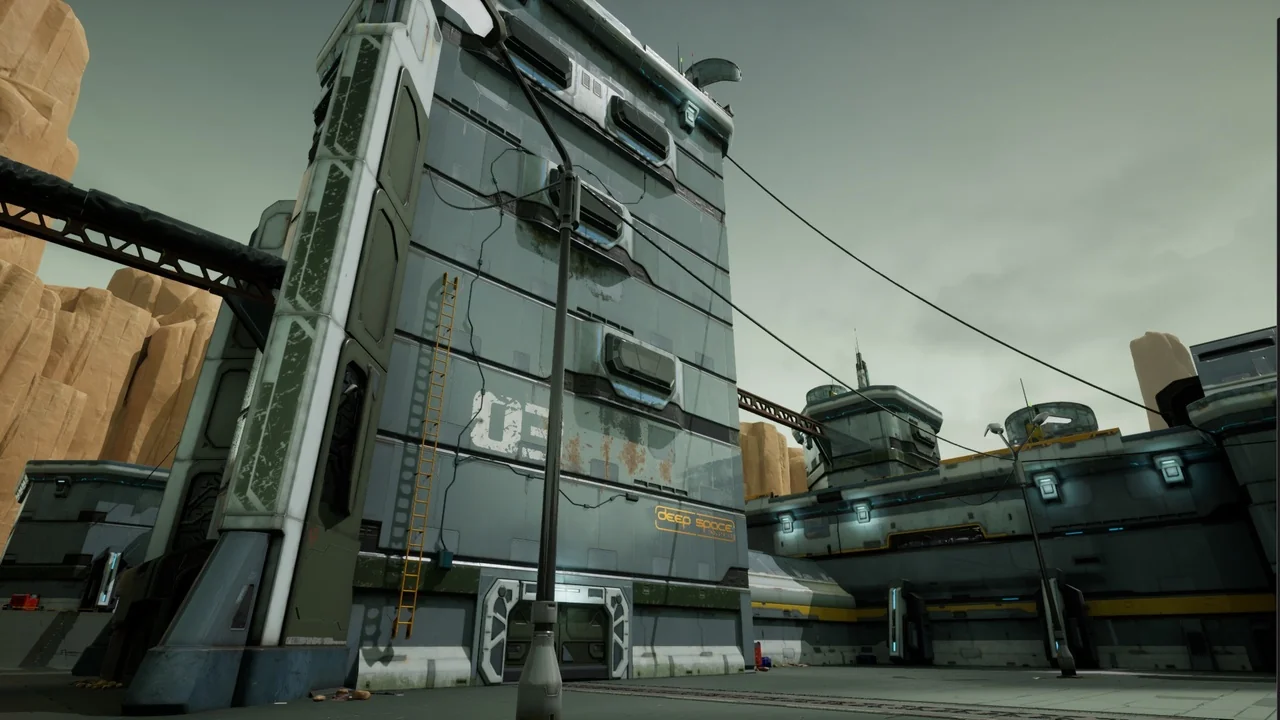
 Sci-Fi
 Sci-Fi
 Sci-Fi