"c14ff6bd758dadb1"{"id":"1001756","slug":"sci-fi-character-03-yakuza","title":"Sci-Fi Character 03 (Yakuza)","category":"Characters \u0026 Creatures","engine":"4.26+,5.0+","assetVersion":"","engineVersion":"Engine Version: 4.26+,5.0+","tag":"Characters","accent":"blue","visual":"character","summary":"Examine Sci-Fi Character 03 (Yakuza), featuring full and split meshes, a huge sword, PBR textures, and compatibility with 56 creature animations.","platform":"Unreal Engine","publishedAt":"2026-10-20T03:00:59.681Z","updatedAt":"2026-10-20T03:00:59.681Z","sourceNotes":[],"fileContents":[],"compatibility":["Unreal Engine","Engine Version: 4.26+,5.0+"],"featuredImage":{"alt":"Sci-Fi Character 03 (Yakuza)","src":"/wp-content/uploads/published/2026/10/421f7f52f08a-e52ba41a-1877-41de-b707-a8f2702caed2-29b0020e53.webp"},"hasDownloadLink":true,"downloads":0,"terms":[{"taxonomy":"category","slug":"characters-and-creatures","name":"Characters \u0026 Creatures"}],"galleryImages":[{"src":"/wp-content/uploads/published/2026/10/4023ae04b739-93477167-5831-48a6-93fa-9efdcdfe51e5-51521a4943.webp","alt":"Sci-Fi Character 03 (Yakuza)"},{"src":"/wp-content/uploads/published/2026/10/0b117a1a3460-f615e1b6-90f6-43e5-a003-22b3632c9c10-3b5978d9ea.webp","alt":"Sci-Fi Character 03 (Yakuza)"},{"src":"/wp-content/uploads/published/2026/10/6358e65be746-74c3fa4f-27ff-4a1a-9132-0386cff74042-ba8d30ca9e.webp","alt":"Sci-Fi Character 03 (Yakuza)"}],"accessPanel":{"kind":"resource","title":"Download this resource","eyebrow":"Free Download","message":"Log in or create a free account to start your download.","fileName":"Content.7z","safetyNote":"Resources are manually reviewed before listing to improve quality and reduce obvious risks.","actionLabel":"Download Free","resourceType":"Resource archive"},"contentHtml":"\u003ch2\u003eDeploying the Yakuza Archetype in Sci-Fi and Horror RPGs\u003c/h2\u003e\n\u003cp\u003eFuturistic crime syndicates, cybernetic back-alleys, and grim sci-fi corridors demand combatants that communicate immediate lethality. Sci-Fi Character 03 (Yakuza) fills this niche as an imposing melee fighter intended for speculative fiction and dark action titles. As the third entry in the Sci-Fi series, the character bridges the gap between traditional underworld archetypes and speculative high-tech aesthetics, making it a natural fit for encounters in neon-lit slums, dystopian corporate headquarters, or decrepit industrial facilities.\u003c/p\u003e\n\u003cp\u003eHorror and role-playing games frequently require distinctive humanoid adversaries that break away from generic soldiers or standard security forces. The visual presence of a syndicate enforcer operating in a speculative or horror environment establishes an instant narrative tone. In role-playing encounters, this character functions effectively as an elite enforcer, a specialized mini-boss, or a ruthless faction lieutenant guarding critical objectives. The crossover between criminal sci-fi styling and horror tags allows the model to inhabit settings where bio-mechanical experiments, corporate hit squads, or infected syndicate members hunt the player through confined environments.\u003c/p\u003e \u003ch2\u003eMesh Architecture: Full Mesh and Split Body Parts\u003c/h2\u003e\n\u003cp\u003eCharacter setup in real-time game engines often requires a balance between seamless rendering and modular utility. Sci-Fi Character 03 (Yakuza) approaches this requirement by offering two distinct mesh configurations: a unified full mesh and an exploded set of split body parts. Having access to both structures gives technical artists and game designers flexibility depending on the specific mechanical demands of the project.\u003c/p\u003e\n\u003cp\u003eThe split body parts layout serves multiple production purposes in action and horror game development:\u003c/p\u003e\n\u003cul\u003e\n\u003cli\u003e\u003cstrong\u003eDismemberment and Combat Feedback:\u003c/strong\u003e Horror and visceral melee titles can trigger structural breaks along the segmented limbs when heavy damage or slashing attacks register, bypassing the need for real-time procedural mesh slicing.\u003c/li\u003e\n\u003cli\u003e\u003cstrong\u003eEquipment Swapping and Modular Customization:\u003c/strong\u003e Distinct torso, arm, and leg segments permit developers to swap components, toggle cybernetic replacements, or layer equipment without having to rebuild the underlying skeletal asset.\u003c/li\u003e\n\u003cli\u003e\u003cstrong\u003eOcclusion Culling and Performance Optimization:\u003c/strong\u003e Hiding body sections that sit underneath secondary armor pieces prevents internal geometry from drawing, conserving pixel shading resources and preventing clipping artifacts.\u003c/li\u003e\n\u003c/ul\u003e\n\u003cp\u003eWhen modular fragmentation is not required, the full mesh provides a clean, continuous character model. This configuration minimizes draw call overhead and guarantees seamless vertex normal continuity across the joints, ideal for cutscenes, standard enemy mobs, or cinematic dialogue sequences.\u003c/p\u003e \u003ch2\u003eLowpoly PBR Standards and the Huge Sword Weapon Setup\u003c/h2\u003e\n\u003cp\u003ePerformance budgeting remains crucial for games featuring crowded environments, intensive visual effects, or fast-paced combat encounters. Structured through a lowpoly framework, the model keeps polygon counts manageable so that multiple character instances can populate a scene without exhausting hardware limits. Surface definition is preserved through a modern Physically Based Rendering (PBR) pipeline, ensuring that metallic reflections, rough fabric surfaces, and synthetic materials interact naturally with dynamic lighting engines, volumetric fog, and ambient scene reflections.\u003c/p\u003e\n\u003cp\u003eA primary defining element of Sci-Fi Character 03 (Yakuza) is the huge sword included as its signature weapon. In action game systems, massive blades require specific handling regarding weapon sockets, attack trails, and hit-detection collision boxes. The proportion of the weapon signals heavy, deliberate attacks, wide cleaving hitboxes, and high-impact stagger mechanics. Whether used for sweeping crowd-control attacks against multiple targets or slow, devastating overhead strikes that players must dodge, the scale of the sword immediately informs player expectations regarding rhythm and timing.\u003c/p\u003e \u003ch2\u003eAnimationblueprint Integration and 56 Animations For Creatures\u003c/h2\u003e\n\u003cp\u003eBringing a skeletal model into an active gameplay state relies on robust rigging, scripting hooks, and animation state management. Sci-Fi Character 03 (Yakuza) is engineered to interface directly with animation blueprints, allowing technical animators to construct complex locomotion blend spaces, attack montages, hit reactions, and death sequences using native engine state machines. Integration with character scripts ensures that weapon attachment, damage calculations, and state switches link smoothly with the game's core framework.\u003c/p\u003e\n\u003cp\u003eA notable technical dimension of this asset is its verified compatibility with 56 Animations For Creatures. While humanoid combatants often rely on standard military or martial arts animation sets, creature-oriented animations introduce an entirely different movement vocabulary. Applying creature motion dynamics to a humanoid yakuza character unlocks distinctive gameplay behaviors:\u003c/p\u003e\n\u003cul\u003e\n\u003cli\u003e\u003cstrong\u003eUncanny and Feral Stances:\u003c/strong\u003e Cybernetically augmented or chemically altered syndicate fighters can adopt low, predatory stances that emphasize unnatural agility and menace.\u003c/li\u003e\n\u003cli\u003e\u003cstrong\u003eAggressive Lunges and Flanking Moves:\u003c/strong\u003e Non-standard attack arcs and lunges derived from creature locomotion sets make melee encounters unpredictable for players accustomed to typical human fencing patterns.\u003c/li\u003e\n\u003cli\u003e\u003cstrong\u003eHorror-Infused Behavioral States:\u003c/strong\u003e In survival horror contexts, creature animations transform the model into an unsettling hunter that stalks, scuttles, or charges with erratic physical pacing.\u003c/li\u003e\n\u003c/ul\u003e \u003ch2\u003eProduction Roles Suited for Sci-Fi Character 03\u003c/h2\u003e\n\u003cp\u003eIndependent developers, small combat design teams, and technical artists working on dark action RPGs or speculative horror projects benefit most from this package. Because the asset includes both modular mesh configurations, a signature weapon, PBR texturing, and blueprint-ready logic, it eliminates the lengthy pipeline of modeling, skinning, and segmenting a melee enemy from scratch. Teams looking to deploy an intimidating, heavy-hitting swordsman with unconventional animation capabilities will find this character ready to integrate into active combat prototypes and polished level encounters alike.\u003c/p\u003e\n\n\u003ch2\u003eExplore Similar Assets\u003c/h2\u003e\n\u003cul\u003e\n\u003cli\u003e\u003ca href=\"https://3dcghub.com/sci-fi-space-soldier-female/\" title=\"Sci Fi Space Soldier Female\"\u003eSci Fi Space Soldier Female\u003c/a\u003e\u003c/li\u003e\n\u003cli\u003e\u003ca href=\"https://3dcghub.com/sci-fi-heavy-bot/\" title=\"Sci Fi Heavy Bot\"\u003eSci Fi Heavy Bot\u003c/a\u003e\u003c/li\u003e\n\u003cli\u003e\u003ca href=\"https://3dcghub.com/special-forces-ski-fi-soldier/\" title=\"Special forces ski-fi soldier\"\u003eSpecial forces ski-fi soldier\u003c/a\u003e\u003c/li\u003e\n\u003cli\u003e\u003ca href=\"https://3dcghub.com/sci-fi-robot/\" title=\"Sci Fi Robot\"\u003eSci Fi Robot\u003c/a\u003e\u003c/li\u003e\n\u003cli\u003e\u003ca href=\"https://3dcghub.com/sci-fi-quick-sand-worm/\" title=\"SCI FI: QUICK SAND WORM\"\u003eSCI FI: QUICK SAND WORM\u003c/a\u003e\u003c/li\u003e\n\u003c/ul\u003e","contentTextLength":6439,"navigation":{"current":27,"total":3719,"previous":{"id":"1001757","slug":"sci-fi-character-06-necromancer","title":"Sci-Fi Character 06 (Necromancer)","category":"Characters \u0026 Creatures","platform":"Unreal Engine","updatedAt":"2026-10-20T03:02:03.751Z"},"next":{"id":"1001755","slug":"runtime-load-fbx","title":"Runtime Load FBX","category":"Engine Tools","platform":"Unreal Engine","updatedAt":"2026-10-20T03:00:02.880Z"}},"relatedResources":[{"id":"1001659","slug":"sci-fi-space-soldier-female","title":"Sci Fi Space Soldier Female","category":"Characters \u0026 Creatures","engine":"4.16+,5.0+","assetVersion":"","engineVersion":"Engine Version: 4.16+,5.0+","tag":"Characters","accent":"blue","visual":"character","summary":"Sci Fi Space Soldier Female features 2 model versions, 2 LOD levels at 29K and 10K triangles, Epic skeleton rigging, and customizable multi-tone materials.","platform":"Unreal Engine","publishedAt":"2026-10-13T14:48:21.104Z","updatedAt":"2026-10-13T14:48:21.104Z","sourceNotes":[],"fileContents":[],"compatibility":["Unreal Engine","Engine Version: 4.16+,5.0+"],"featuredImage":{"alt":"Sci Fi Space Soldier Female","src":"/wp-content/uploads/published/2026/10/c9df1964c209-c1a5eaa9-4d71-4521-b647-674811bda59b-9cb1722b78.webp"},"hasDownloadLink":true,"downloads":0},{"id":"1001359","slug":"sci-fi-heavy-bot","title":"Sci Fi Heavy Bot","category":"Characters \u0026 Creatures","engine":"4.20+,5.0+","assetVersion":"","engineVersion":"Engine Version: 4.20+,5.0+","tag":"Characters","accent":"blue","visual":"character","summary":"Detailed technical analysis of the Sci Fi Heavy Bot, covering its 96k tris mesh, 4 LODs, custom chest-cam animation blueprint, and master materials.","platform":"Unreal Engine","publishedAt":"2026-10-04T10:28:57.469Z","updatedAt":"2026-10-04T10:28:57.469Z","sourceNotes":[],"fileContents":[],"compatibility":["Unreal Engine","Engine Version: 4.20+,5.0+"],"featuredImage":{"alt":"Sci Fi Heavy Bot","src":"/wp-content/uploads/published/2026/10/462460a0f91b-48d09a92-6278-4e17-a733-8f6587d4f7b8-972be6e73f.webp"},"hasDownloadLink":true,"downloads":0},{"id":"1000887","slug":"special-forces-ski-fi-soldier","title":"Special forces ski-fi soldier","category":"Characters \u0026 Creatures","engine":"4.26+,5.0+","assetVersion":"","engineVersion":"Engine Version: 4.26+,5.0+","tag":"Characters","accent":"blue","visual":"character","summary":"Low-poly sci-fi special forces soldier with respirator, rigged and skinned for Mannequin, includes auto rifle and baton, scalable 4K–1K textures.","platform":"Unreal Engine","publishedAt":"2026-08-05T18:03:28.977Z","updatedAt":"2026-08-05T18:03:28.977Z","sourceNotes":[],"fileContents":[],"compatibility":["Unreal Engine","Engine Version: 4.26+,5.0+"],"featuredImage":{"alt":"Special forces ski-fi soldier","src":"/wp-content/uploads/published/2026/08/8c9441f8d0d4-6bc53af4-1679-467b-8856-52c5905a0e67-9459541a09.webp"},"hasDownloadLink":true,"downloads":5}]}
Characters
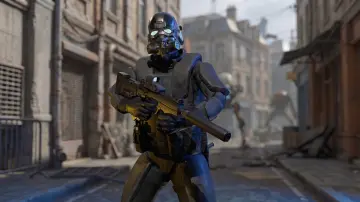
Sci-Fi Character 03 (Yakuza)
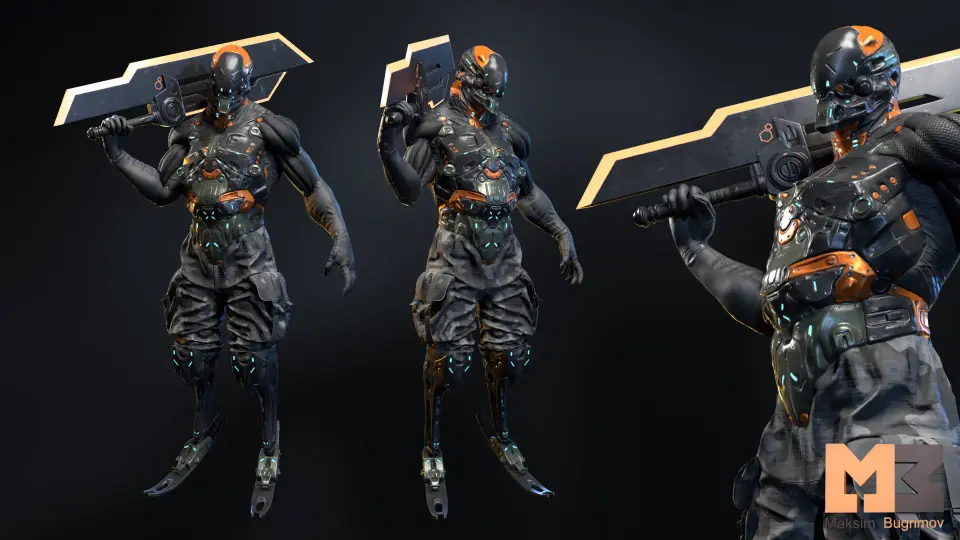
Examine Sci-Fi Character 03 (Yakuza), featuring full and split meshes, a huge sword, PBR textures, and compatibility with 56 creature animations.
Deploying the Yakuza Archetype in Sci-Fi and Horror RPGs
Futuristic crime syndicates, cybernetic back-alleys, and grim sci-fi corridors demand combatants that communicate immediate lethality. Sci-Fi Character 03 (Yakuza) fills this niche as an imposing melee fighter intended for speculative fiction and dark action titles. As the third entry in the Sci-Fi series, the character bridges the gap between traditional underworld archetypes and speculative high-tech aesthetics, making it a natural fit for encounters in neon-lit slums, dystopian corporate headquarters, or decrepit industrial facilities.
Horror and role-playing games frequently require distinctive humanoid adversaries that break away from generic soldiers or standard security forces. The visual presence of a syndicate enforcer operating in a speculative or horror environment establishes an instant narrative tone. In role-playing encounters, this character functions effectively as an elite enforcer, a specialized mini-boss, or a ruthless faction lieutenant guarding critical objectives. The crossover between criminal sci-fi styling and horror tags allows the model to inhabit settings where bio-mechanical experiments, corporate hit squads, or infected syndicate members hunt the player through confined environments.
Mesh Architecture: Full Mesh and Split Body Parts
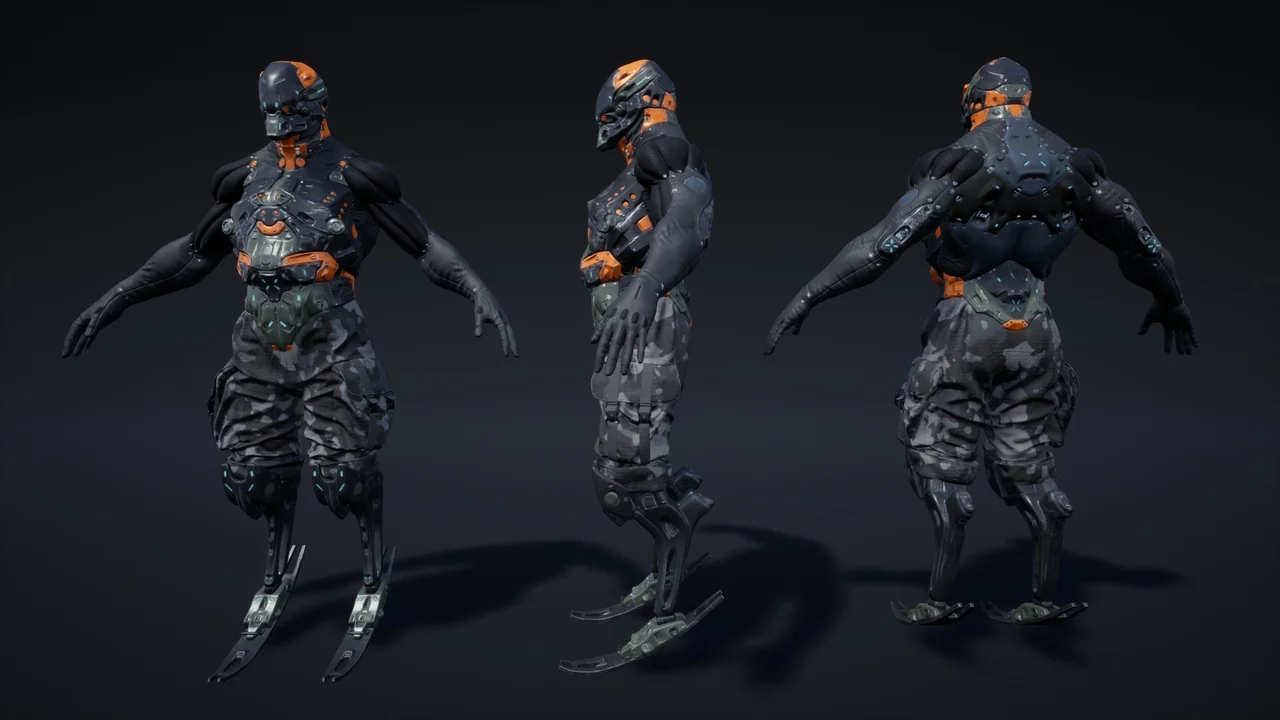
Character setup in real-time game engines often requires a balance between seamless rendering and modular utility. Sci-Fi Character 03 (Yakuza) approaches this requirement by offering two distinct mesh configurations: a unified full mesh and an exploded set of split body parts. Having access to both structures gives technical artists and game designers flexibility depending on the specific mechanical demands of the project.
The split body parts layout serves multiple production purposes in action and horror game development:
Dismemberment and Combat Feedback: Horror and visceral melee titles can trigger structural breaks along the segmented limbs when heavy damage or slashing attacks register, bypassing the need for real-time procedural mesh slicing.
Equipment Swapping and Modular Customization: Distinct torso, arm, and leg segments permit developers to swap components, toggle cybernetic replacements, or layer equipment without having to rebuild the underlying skeletal asset.
Occlusion Culling and Performance Optimization: Hiding body sections that sit underneath secondary armor pieces prevents internal geometry from drawing, conserving pixel shading resources and preventing clipping artifacts.
When modular fragmentation is not required, the full mesh provides a clean, continuous character model. This configuration minimizes draw call overhead and guarantees seamless vertex normal continuity across the joints, ideal for cutscenes, standard enemy mobs, or cinematic dialogue sequences.
Lowpoly PBR Standards and the Huge Sword Weapon Setup
Performance budgeting remains crucial for games featuring crowded environments, intensive visual effects, or fast-paced combat encounters. Structured through a lowpoly framework, the model keeps polygon counts manageable so that multiple character instances can populate a scene without exhausting hardware limits. Surface definition is preserved through a modern Physically Based Rendering (PBR) pipeline, ensuring that metallic reflections, rough fabric surfaces, and synthetic materials interact naturally with dynamic lighting engines, volumetric fog, and ambient scene reflections.
A primary defining element of Sci-Fi Character 03 (Yakuza) is the huge sword included as its signature weapon. In action game systems, massive blades require specific handling regarding weapon sockets, attack trails, and hit-detection collision boxes. The proportion of the weapon signals heavy, deliberate attacks, wide cleaving hitboxes, and high-impact stagger mechanics. Whether used for sweeping crowd-control attacks against multiple targets or slow, devastating overhead strikes that players must dodge, the scale of the sword immediately informs player expectations regarding rhythm and timing.
Animationblueprint Integration and 56 Animations For Creatures
Bringing a skeletal model into an active gameplay state relies on robust rigging, scripting hooks, and animation state management. Sci-Fi Character 03 (Yakuza) is engineered to interface directly with animation blueprints, allowing technical animators to construct complex locomotion blend spaces, attack montages, hit reactions, and death sequences using native engine state machines. Integration with character scripts ensures that weapon attachment, damage calculations, and state switches link smoothly with the game's core framework.
A notable technical dimension of this asset is its verified compatibility with 56 Animations For Creatures. While humanoid combatants often rely on standard military or martial arts animation sets, creature-oriented animations introduce an entirely different movement vocabulary. Applying creature motion dynamics to a humanoid yakuza character unlocks distinctive gameplay behaviors:
Uncanny and Feral Stances: Cybernetically augmented or chemically altered syndicate fighters can adopt low, predatory stances that emphasize unnatural agility and menace.
Aggressive Lunges and Flanking Moves: Non-standard attack arcs and lunges derived from creature locomotion sets make melee encounters unpredictable for players accustomed to typical human fencing patterns.
Horror-Infused Behavioral States: In survival horror contexts, creature animations transform the model into an unsettling hunter that stalks, scuttles, or charges with erratic physical pacing.
Production Roles Suited for Sci-Fi Character 03
Independent developers, small combat design teams, and technical artists working on dark action RPGs or speculative horror projects benefit most from this package. Because the asset includes both modular mesh configurations, a signature weapon, PBR texturing, and blueprint-ready logic, it eliminates the lengthy pipeline of modeling, skinning, and segmenting a melee enemy from scratch. Teams looking to deploy an intimidating, heavy-hitting swordsman with unconventional animation capabilities will find this character ready to integrate into active combat prototypes and polished level encounters alike.
 Characters
 Characters
 Characters
 Characters