"efaa631e936fd3ee"{"id":"1002181","slug":"rugged-landscape","title":"Rugged Landscape","category":"Mountain","engine":"4.19+,5.0+","assetVersion":"","engineVersion":"Engine Version: 4.19+,5.0+","tag":"Mountain","accent":"blue","visual":"city","summary":"Rugged Landscape provides high-density mountain terrain featuring 1x1 meter vertex spacing, distance tessellation, and custom landscape shader functions.","platform":"Unreal Engine","publishedAt":"2026-10-29T14:22:59.019Z","updatedAt":"2026-10-29T14:22:59.019Z","sourceNotes":[],"fileContents":[],"compatibility":["Unreal Engine","Engine Version: 4.19+,5.0+"],"featuredImage":{"alt":"Rugged Landscape","src":"/wp-content/uploads/published/2026/10/88db452cc9aa-b65393b5-0f31-46a2-b63a-ff77297220ef-e300535f16.webp"},"hasDownloadLink":true,"downloads":0,"terms":[{"taxonomy":"category","slug":"mountain","name":"Mountain"}],"galleryImages":[{"src":"/wp-content/uploads/published/2026/10/a1e53061762d-08d0aac8-5265-4353-b8b7-d742e279d3ca-ca856a408d.webp","alt":"Rugged Landscape"},{"src":"/wp-content/uploads/published/2026/10/af188990f0d6-36d29622-028a-425d-bcc6-97aa5b7b3b46-7be7328a87.webp","alt":"Rugged Landscape"},{"src":"/wp-content/uploads/published/2026/10/0cfd9a968558-4467ef55-d463-42f0-9752-3638748ca3aa-c968152f3e.webp","alt":"Rugged Landscape"},{"src":"/wp-content/uploads/published/2026/10/9b33dde35899-a90e6c03-300c-46dc-9cac-c1f387b36ad8-2630f5421c.webp","alt":"Rugged Landscape"},{"src":"/wp-content/uploads/published/2026/10/02ffa4375a81-c7356d76-0733-4259-ab36-d2d63bdf2b73-62d547c227.webp","alt":"Rugged Landscape"},{"src":"/wp-content/uploads/published/2026/10/d3c35494781d-c1467609-db90-4859-8ae1-2e36b2970ac7-5a6b11efbe.webp","alt":"Rugged Landscape"},{"src":"/wp-content/uploads/published/2026/10/023190f42723-2039d82b-4ab5-4a67-bce7-86d31c828439-d10423e428.webp","alt":"Rugged Landscape"}],"accessPanel":{"kind":"resource","title":"Download this resource","eyebrow":"Free Download","message":"Log in or create a free account to start your download.","fileName":"Content.7z","safetyNote":"Resources are manually reviewed before listing to improve quality and reduce obvious risks.","actionLabel":"Download Free","resourceType":"Resource archive"},"contentHtml":"\u003ch2\u003eRugged Mountain Geometry with 1x1 Meter Vertex Density\u003c/h2\u003e\u003cp\u003eVast terrain systems often face a direct trade-off between physical scale and close-up fidelity. Rugged Landscape targets open outdoor environments by establishing a uniform 1x1 meter vertex density across its playable terrain. At this grid spacing, physical elevation changes remain sharp enough to delineate rocky outcrops, dry mountain shelves, and steep gullies without requiring hand-modeled collision meshes for basic contour changes. Footing remains readable underfoot, matching the steep inclines and natural erosion tracks typical of dry, mountainous backdrops.\u003c/p\u003e\u003cp\u003eHigh grid resolution across large scale levels demands disciplined geometry management. By anchoring the playable area to a 1x1 meter baseline, the terrain retains precise localized contours while allowing surrounding horizons to stretch toward distant mountain silhouettes. This setup provides the foundational physical mesh needed to anchor detailed multi-layer texturing across broad valleys and steep slopes alike.\u003c/p\u003e\u003ch2\u003eHeightmap Layer Blending and Distance-Based Landscape Tessellation\u003c/h2\u003e\u003cp\u003eMaterial distribution relies on heightmap-based layer blending rather than simple linear alpha mixing. By evaluating height data stored inside texture masks, the material transitions naturally between rocky surfaces, gravel, and packed dry earth. Instead of soft, unnatural dissolves between different ground types, rock peaks push upward through lower sediment layers first. Pebbles, scree, and coarser aggregate settle into crevices before covering higher ridges, mirroring natural geological deposits.\u003c/p\u003e\u003cp\u003eTo support this height-driven detail without overwhelming rendering pipelines, the package incorporates distance-based landscape tessellation alongside a displacement fade function. Near the camera viewpoint, tessellation subdivides the 1x1 meter mesh to physically displace geometry along normal paths, giving genuine depth to stones, fissures, and surface roughness. As the viewing distance increases toward middle distances, displacement fade smooths the physical extrusion out, passing surface definition entirely over to standard normal and ambient occlusion maps. This keeps memory footprints and vertex counts predictable while preserving tactile depth where player perspective demands it.\u003c/p\u003e\u003ch2\u003eCustom Plug-and-Play Shading Functions\u003c/h2\u003e\u003cp\u003eThe terrain shader framework is modular, driven by a series of plug-and-play functions that plug directly into the master landscape material. These modular nodes handle specific technical tasks that keep large ground surfaces from looking repetitive across wide distances:\u003c/p\u003e\u003cul\u003e\u003cli\u003e\u003cstrong\u003eGlobal Normal Variation:\u003c/strong\u003e Breaks up macro-scale tiling artifacts across massive mountain faces by layering low-frequency normal adjustments over localized tile sets.\u003c/li\u003e\u003cli\u003e\u003cstrong\u003eDistance Tessellation and Displacement Fade:\u003c/strong\u003e Modulates surface displacement based on camera range to prevent vertex overhead in the far distance.\u003c/li\u003e\u003cli\u003e\u003cstrong\u003eDistance Fade:\u003c/strong\u003e Smooths texture transitions, mip behavior, and color maps at specified radius thresholds.\u003c/li\u003e\u003cli\u003e\u003cstrong\u003eMask Modifier:\u003c/strong\u003e Adjusts mask contrast, clipping thresholds, and blend priorities across individual paint layers.\u003c/li\u003e\u003cli\u003e\u003cstrong\u003eCloud Panner:\u003c/strong\u003e Animates directional atmospheric noise to sweep overhead shadows across the terrain surface.\u003c/li\u003e\u003cli\u003e\u003cstrong\u003eMixer:\u003c/strong\u003e Combines separate material channels, surface properties, and procedural color shifts before outputting into the primary material attributes.\u003c/li\u003e\u003c/ul\u003e\u003cp\u003eThese modular functions feed into accessible material instance parameters. Artists can modify contrast thresholds, layer balances, and visual weight on a per-instance basis without rebuilding the underlying shader graphs. Surface customization remains flexible, accommodating deep, rugged canyons, barren sun-bleached summits, or wind-swept outdoor basins.\u003c/p\u003e\u003ch2\u003eAtmospheric Depth Through Dynamic Cloud Shadows and Ambient Occlusion\u003c/h2\u003e\u003cp\u003eLighting over massive outdoor levels requires visual variation to prevent broad fields of dry ground from looking flat under direct sun. Rugged Landscape incorporates dynamic cloud shadows driven by the cloud panner node. These shadows project moving cloud cover directly across mountainsides and valleys, introducing shifting patterns of light and shade that emphasize topographic relief. As the cloud patterns track across the terrain, they highlight elevation changes that might otherwise blend into uniform sunlight.\u003c/p\u003e\u003cp\u003eComplementing this moving shadow system is large-scale landscape ambient occlusion. This feature deepens self-shadowing inside massive ravines, crevice bases, and underneath sheer drop-offs where standard micro-scale ambient occlusion maps fail to register broad geographic occlusion. This gives distinct spatial separation between towering mountain formations and the deeper valley floors running between them.\u003c/p\u003e\u003ch2\u003eTerrain Painting and Background Mesh Integration\u003c/h2\u003e\u003cp\u003eLevel assembly relies on native landscape paint layers, allowing creators to paint individual rock, dirt, and slope properties directly onto the surface using standard brush workflows. Because the material leverages heightmap blending and custom mask modifiers, hand-painted paths and natural erosion paths blend together without creating harsh transitional seams.\u003c/p\u003e\u003cp\u003eTo solve the challenge of rendering distant horizons without inflating playable terrain costs, the package includes background meshes. These meshes surround the active 1x1 meter grid, providing the visual impression of an expansive world stretching toward distant mountain ranges. The background meshes match the color profiles, rock formations, and dry mountain character of the foreground ground surface, enabling panoramic vistas that remain consistent from any vantage point. The combination of background geometry, paintable surface layers, and dynamic environmental shadow nodes gives environment artists a cohesive toolkit for constructing massive, rugged natural environments.\u003c/p\u003e\n\n\u003ch2\u003eContinue Browsing Similar Packs\u003c/h2\u003e\n\u003cul\u003e\n\u003cli\u003e\u003ca href=\"https://3dcghub.com/brushify-floating-islands/\" title=\"Brushify - Floating Islands\"\u003eBrushify - Floating Islands\u003c/a\u003e\u003c/li\u003e\n\u003cli\u003e\u003ca href=\"https://3dcghub.com/eastern-iceland-landscape/\" title=\"Eastern Iceland Landscape\"\u003eEastern Iceland Landscape\u003c/a\u003e\u003c/li\u003e\n\u003cli\u003e\u003ca href=\"https://3dcghub.com/arctic-base/\" title=\"Arctic Base\"\u003eArctic Base\u003c/a\u003e\u003c/li\u003e\n\u003cli\u003e\u003ca href=\"https://3dcghub.com/brushify-cliffs-pack/\" title=\"Brushify - Cliffs Pack\"\u003eBrushify - Cliffs Pack\u003c/a\u003e\u003c/li\u003e\n\u003cli\u003e\u003ca href=\"https://3dcghub.com/brushify-volcano-pack/\" title=\"Brushify Volcano Pack\"\u003eBrushify Volcano Pack\u003c/a\u003e\u003c/li\u003e\n\u003c/ul\u003e","contentTextLength":6010,"navigation":{"current":104,"total":4209,"previous":{"id":"1002182","slug":"ruins-constructor","title":"Ruins constructor","category":"Game Development Resource","platform":"Unreal Engine","updatedAt":"2026-10-29T14:23:51.657Z"},"next":{"id":"1002180","slug":"rpg-fantasy-crystals-kit","title":"RPG Fantasy Crystals KIT","category":"Tools, Objects \u0026 Decor","platform":"Unreal Engine","updatedAt":"2026-10-29T14:22:11.011Z"}},"relatedResources":[{"id":"1001396","slug":"brushify-floating-islands","title":"Brushify - Floating Islands","category":"Mountain","engine":"4.26+,5.0+","assetVersion":"","engineVersion":"Engine Version: 4.26+,5.0+","tag":"Mountain","accent":"blue","visual":"mech","summary":"Build suspended fantasy and alien terrains in Unreal Engine 5 using Brushify - Floating Islands, featuring modular prefabs and an auto landscape material.","platform":"Unreal Engine","publishedAt":"2026-10-04T17:50:49.947Z","updatedAt":"2026-10-04T17:50:49.947Z","sourceNotes":[],"fileContents":[],"compatibility":["Unreal Engine","Engine Version: 4.26+,5.0+"],"featuredImage":{"alt":"Brushify - Floating Islands","src":"/wp-content/uploads/published/2026/10/97bf9d1cfb82-0c60deb5-50e3-43cf-ba20-c0da89d406a6-4050f9c2e1.webp"},"hasDownloadLink":true,"downloads":1},{"id":"1001136","slug":"eastern-iceland-landscape","title":"Eastern Iceland Landscape","category":"Mountain","engine":"4.26+,5.0+","assetVersion":"","engineVersion":"Engine Version: 4.26+,5.0+","tag":"Mountain","accent":"blue","visual":"city","summary":"A 64 square kilometer terrain with 1x1 m vertex density, volumetric 3D clouds, dynamic cloud shadows, and layered material controls for realistic outdoor scenes","platform":"Unreal Engine","publishedAt":"2026-09-09T03:20:31.567Z","updatedAt":"2026-09-09T03:20:31.567Z","sourceNotes":[],"fileContents":[],"compatibility":["Unreal Engine","Engine Version: 4.26+,5.0+"],"featuredImage":{"alt":"Eastern Iceland Landscape","src":"/wp-content/uploads/published/2026/09/ffd4b4699908-7793c3ec-35c9-4cc6-b06d-962d5f6ccb4e-89f3513491.webp"},"hasDownloadLink":true,"downloads":1},{"id":"1000940","slug":"brushify-cliffs-pack","title":"Brushify - Cliffs Pack","category":"Mountain","engine":"4.26+,5.0+","assetVersion":"","engineVersion":"Engine Version: 4.26+,5.0+","tag":"Mountain","accent":"blue","visual":"mech","summary":"Modular cliff meshes, a ready-made UE5 level, and a landscape auto material with 11 biomes. Nanite and Lumen compatible, updated for UE 5.4.","platform":"Unreal Engine","publishedAt":"2026-08-10T03:37:26.959Z","updatedAt":"2026-08-10T03:37:26.959Z","sourceNotes":[],"fileContents":[],"compatibility":["Unreal Engine","Engine Version: 4.26+,5.0+"],"featuredImage":{"alt":"Brushify - Cliffs Pack","src":"/wp-content/uploads/published/2026/08/fe870353c1f3-7dce15fb-52a6-4abc-b664-addba31eee03-1f036ffba2.webp"},"hasDownloadLink":true,"downloads":1}]}
Mountain
Rugged Landscape
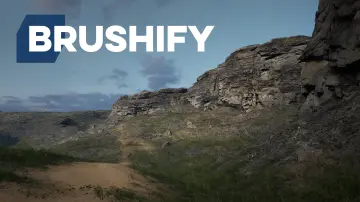
Rugged Landscape provides high-density mountain terrain featuring 1x1 meter vertex spacing, distance tessellation, and custom landscape shader functions.
Category:Unreal Engine,MountainPlatform: Unreal EngineEngine Version: 4.19+,5.0+Published: Oct 29, 2026
Mountain
Resource overview
Rugged Mountain Geometry with 1x1 Meter Vertex Density
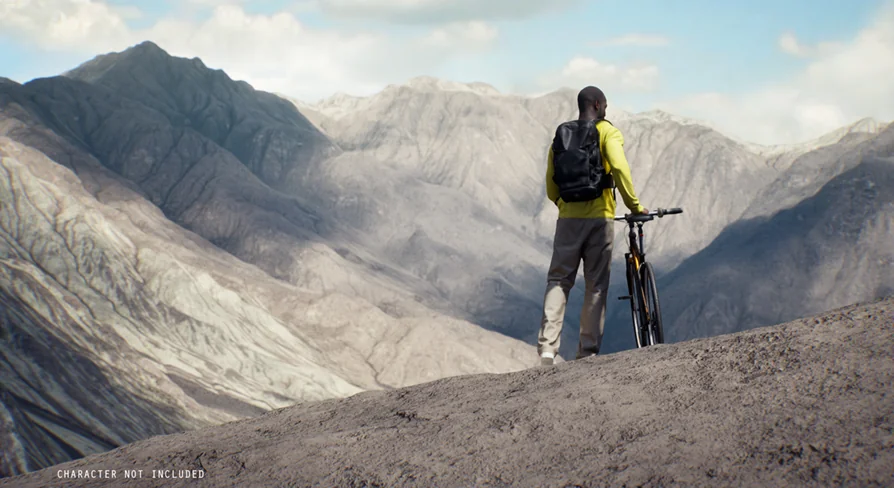
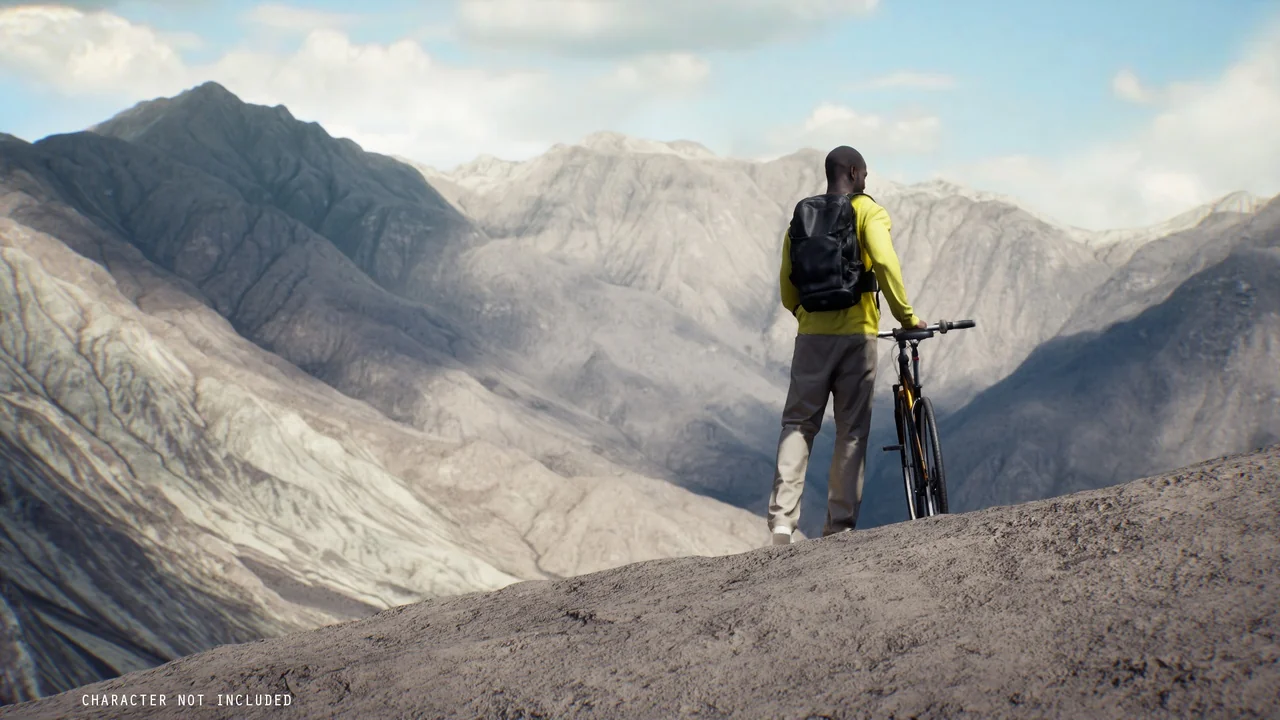
Vast terrain systems often face a direct trade-off between physical scale and close-up fidelity. Rugged Landscape targets open outdoor environments by establishing a uniform 1x1 meter vertex density across its playable terrain. At this grid spacing, physical elevation changes remain sharp enough to delineate rocky outcrops, dry mountain shelves, and steep gullies without requiring hand-modeled collision meshes for basic contour changes. Footing remains readable underfoot, matching the steep inclines and natural erosion tracks typical of dry, mountainous backdrops.
High grid resolution across large scale levels demands disciplined geometry management. By anchoring the playable area to a 1x1 meter baseline, the terrain retains precise localized contours while allowing surrounding horizons to stretch toward distant mountain silhouettes. This setup provides the foundational physical mesh needed to anchor detailed multi-layer texturing across broad valleys and steep slopes alike.
Heightmap Layer Blending and Distance-Based Landscape Tessellation
Material distribution relies on heightmap-based layer blending rather than simple linear alpha mixing. By evaluating height data stored inside texture masks, the material transitions naturally between rocky surfaces, gravel, and packed dry earth. Instead of soft, unnatural dissolves between different ground types, rock peaks push upward through lower sediment layers first. Pebbles, scree, and coarser aggregate settle into crevices before covering higher ridges, mirroring natural geological deposits.
To support this height-driven detail without overwhelming rendering pipelines, the package incorporates distance-based landscape tessellation alongside a displacement fade function. Near the camera viewpoint, tessellation subdivides the 1x1 meter mesh to physically displace geometry along normal paths, giving genuine depth to stones, fissures, and surface roughness. As the viewing distance increases toward middle distances, displacement fade smooths the physical extrusion out, passing surface definition entirely over to standard normal and ambient occlusion maps. This keeps memory footprints and vertex counts predictable while preserving tactile depth where player perspective demands it.
Custom Plug-and-Play Shading Functions
The terrain shader framework is modular, driven by a series of plug-and-play functions that plug directly into the master landscape material. These modular nodes handle specific technical tasks that keep large ground surfaces from looking repetitive across wide distances:
Global Normal Variation: Breaks up macro-scale tiling artifacts across massive mountain faces by layering low-frequency normal adjustments over localized tile sets.
Distance Tessellation and Displacement Fade: Modulates surface displacement based on camera range to prevent vertex overhead in the far distance.
Distance Fade: Smooths texture transitions, mip behavior, and color maps at specified radius thresholds.
Mask Modifier: Adjusts mask contrast, clipping thresholds, and blend priorities across individual paint layers.
Cloud Panner: Animates directional atmospheric noise to sweep overhead shadows across the terrain surface.
Mixer: Combines separate material channels, surface properties, and procedural color shifts before outputting into the primary material attributes.
These modular functions feed into accessible material instance parameters. Artists can modify contrast thresholds, layer balances, and visual weight on a per-instance basis without rebuilding the underlying shader graphs. Surface customization remains flexible, accommodating deep, rugged canyons, barren sun-bleached summits, or wind-swept outdoor basins.
Atmospheric Depth Through Dynamic Cloud Shadows and Ambient Occlusion
Lighting over massive outdoor levels requires visual variation to prevent broad fields of dry ground from looking flat under direct sun. Rugged Landscape incorporates dynamic cloud shadows driven by the cloud panner node. These shadows project moving cloud cover directly across mountainsides and valleys, introducing shifting patterns of light and shade that emphasize topographic relief. As the cloud patterns track across the terrain, they highlight elevation changes that might otherwise blend into uniform sunlight.
Complementing this moving shadow system is large-scale landscape ambient occlusion. This feature deepens self-shadowing inside massive ravines, crevice bases, and underneath sheer drop-offs where standard micro-scale ambient occlusion maps fail to register broad geographic occlusion. This gives distinct spatial separation between towering mountain formations and the deeper valley floors running between them.
Terrain Painting and Background Mesh Integration
Level assembly relies on native landscape paint layers, allowing creators to paint individual rock, dirt, and slope properties directly onto the surface using standard brush workflows. Because the material leverages heightmap blending and custom mask modifiers, hand-painted paths and natural erosion paths blend together without creating harsh transitional seams.
To solve the challenge of rendering distant horizons without inflating playable terrain costs, the package includes background meshes. These meshes surround the active 1x1 meter grid, providing the visual impression of an expansive world stretching toward distant mountain ranges. The background meshes match the color profiles, rock formations, and dry mountain character of the foreground ground surface, enabling panoramic vistas that remain consistent from any vantage point. The combination of background geometry, paintable surface layers, and dynamic environmental shadow nodes gives environment artists a cohesive toolkit for constructing massive, rugged natural environments.
 Mountain
 Mountain
 Mountain
 Mountain