"7066dd76da796369"{"id":"1000135","slug":"rpg-monster-wave-2-polyart","title":"RPG Monster Wave 2 Polyart","category":"Creatures","engine":"Version details listed","assetVersion":"Original Unity version: 2020.3.44","engineVersion":"","tag":"Creatures","accent":"cyan","visual":"character","summary":"A low poly set of 10 RPG enemy monsters with 150+ animations, 512 textures, mobile-focused optimization, and support for Built-in, URP, and HDRP.","platform":"Unity","publishedAt":"2026-06-12T07:35:29.720Z","updatedAt":"2026-06-12T07:35:29.720Z","sourceNotes":[],"fileContents":[],"compatibility":["Unity","Original Unity version: 2020.3.44"],"featuredImage":{"alt":"RPG Monster Wave 2 Polyart","src":"/wp-content/uploads/published/2026/06/65462d26c6bd-b8baebed-e1b2-4915-872e-e1ab0ad6f1ef-1280x720-stretch-11caab7021.webp"},"hasDownloadLink":true,"downloads":4,"terms":[{"taxonomy":"category","slug":"unity-3d-characters-creatures","name":"Creatures"}],"galleryImages":[{"src":"/wp-content/uploads/published/2026/06/e2a8d695405b-e50ea64e-a284-46ee-aa91-e3a756711afd-scaled-789ca05e08.webp","alt":"RPG Monster Wave 2 Polyart"},{"src":"/wp-content/uploads/published/2026/06/5c433f88ca19-cf0256ac-a9c9-4377-a040-c3bae858bc26-scaled-32ca5e7c80.webp","alt":"RPG Monster Wave 2 Polyart"},{"src":"/wp-content/uploads/published/2026/06/a871e4d76133-f79d62c0-568b-4328-9547-284d42db80e0-scaled-75a170fa6a.webp","alt":"RPG Monster Wave 2 Polyart"},{"src":"/wp-content/uploads/published/2026/06/0bb132459d51-724de734-4ac1-4232-b75f-11e59217f694-scaled-2387e46c9c.webp","alt":"RPG Monster Wave 2 Polyart"},{"src":"/wp-content/uploads/published/2026/06/a9302a32d848-e60ca46c-ed87-4d4c-af70-9e53eaff0be6-scaled-0bb52add0c.webp","alt":"RPG Monster Wave 2 Polyart"},{"src":"/wp-content/uploads/published/2026/06/f9634c0e1212-6e49df76-d167-488a-a2f5-a4cca737c903-scaled-a4741c147e.webp","alt":"RPG Monster Wave 2 Polyart"},{"src":"/wp-content/uploads/published/2026/06/88d7bb38712c-6f03cfdf-944a-4295-b156-b2ee1f68d54a-scaled-4f63958e3c.webp","alt":"RPG Monster Wave 2 Polyart"},{"src":"/wp-content/uploads/published/2026/06/a493009bb3e7-4e289199-cf56-493c-9ae4-04815713c552-scaled-97085434a4.webp","alt":"RPG Monster Wave 2 Polyart"},{"src":"/wp-content/uploads/published/2026/06/0627350ca851-c321c0b9-ff5d-423b-85cd-c5fa685115c0-scaled-1a2a1d1f21.webp","alt":"RPG Monster Wave 2 Polyart"},{"src":"/wp-content/uploads/published/2026/06/4d684851e7dc-ba1e5260-eb2e-4b4f-8278-51c5bbc301c0-scaled-012010761f.webp","alt":"RPG Monster Wave 2 Polyart"}],"accessPanel":{"kind":"resource","title":"Download this resource","eyebrow":"Free Download","message":"Log in or create a free account to start your download.","fileName":"RPG Monster Wave 2 Polyart.7z","safetyNote":"Resources are manually reviewed before listing to improve quality and reduce obvious risks.","actionLabel":"Download Free","resourceType":"Resource archive"},"contentHtml":"\u003cp\u003eBattlefields, dungeon corridors, and encounter rooms are where \u003cstrong\u003eRPG Monster Wave 2 Polyart\u003c/strong\u003e Makes the most immediate sense. This second wave of RPG monsters brings together 10 unique enemy characters with a clear low poly style, giving developers a ready-made set of opponents that can be summoned back into combat-heavy scenes. The visual identity stays lightweight and cohesive, which makes the pack especially suitable for projects that need multiple enemy types on screen without drifting away from a unified look.\u003c/p\u003e \u003cp\u003eThe collection is presented as a lightweight character set suited to game projects from mobile to PC desktop, with a particular emphasis on mobile RPG, TPS, and top-down action development. That positioning says a lot about how the monsters can be used. They fit naturally into enemy wave structures, arena encounters, roaming dungeon patrols, and repeated combat scenarios where visual clarity and quick recognition matter as much as style.\u003c/p\u003e \u003ch2\u003eRPG Monster Wave 2 Polyart in battlefields and dungeons\u003c/h2\u003e\n\u003cp\u003eThe set is focused on 10 distinct enemy monsters rather than minor variations of the same base model. That gives encounter design more room to breathe. A Black Knight can occupy the role of an armored frontline threat, while creatures such as the Beholder, Chest Monster, Crab Monster, Flying Demon, Lizard Warrior, Rat Assassin, Specter, Werewolf, and Worm Monster broaden the visual range of possible fights. Even without adding any extra lore, the names alone suggest a useful spread of silhouettes and combat moods for dungeon and battlefield scenes.\u003c/p\u003e \u003cp\u003eBecause the pack is framed around monsters waiting to be summoned into battlefields or dungeons, it works well for projects that need reusable enemy rosters instead of one-off showcase characters. A top-down action game can place these monsters in successive rooms or waves. A mobile RPG can rotate them across quests and stages. A TPS can use them as readable combat targets across different map layouts. The consistency of the PolyArt style helps all of those uses feel like they belong to the same game world.\u003c/p\u003e \u003cp\u003eThe low poly count is an important part of that identity. The monsters are not pushing toward realism; they are leaning into a stylized, efficient look that can support regular gameplay use. In practical scene building, that often matters more than sheer detail. Enemies need to animate clearly, read quickly at a distance, and stay manageable when several appear at once.\u003c/p\u003e \u003ch2\u003e10 unique enemy monsters with room for varied encounter design\u003c/h2\u003e\n\u003cp\u003eThe package includes these 10 characters:\u003c/p\u003e\n\u003cul\u003e\n\u003cli\u003eBlack Knight\u003c/li\u003e\n\u003cli\u003eBeholder\u003c/li\u003e\n\u003cli\u003eChest Monster\u003c/li\u003e\n\u003cli\u003eCrab Monster\u003c/li\u003e\n\u003cli\u003eFlying Demon\u003c/li\u003e\n\u003cli\u003eLizard Warrior\u003c/li\u003e\n\u003cli\u003eRat Assassin\u003c/li\u003e\n\u003cli\u003eSpecter\u003c/li\u003e\n\u003cli\u003eWerewolf\u003c/li\u003e\n\u003cli\u003eWorm Monster\u003c/li\u003e\n\u003c/ul\u003e \u003cp\u003eThe triangle counts stay relatively compact across the set, reinforcing its lightweight approach. Black Knight comes in at 5313 tris, Beholder at 2015, Chest Monster at 1783, Crab Monster at 3108, Flying Demon at 6410, Lizard Warrior at 6482, Rat Assassin at 3577, Specter at 2858, Werewolf at 7103, and Worm Monster at 2250. Those numbers show a useful range: some enemies stay very lean, while the larger or more elaborate creatures still remain within a restrained scope for low poly characters.\u003c/p\u003e \u003cp\u003eThat range can help when assigning enemy roles across a project. Smaller or simpler monsters can populate routine encounters, while higher-triangle characters like the Werewolf, Lizard Warrior, and Flying Demon can stand out more strongly in tougher fights. The set does not need to rely on one visual formula; it already contains enemies that feel suited to different combat spaces and pacing.\u003c/p\u003e \u003cp\u003eThe two shield-capable fighters also stand apart mechanically. Black Knight and Lizard Warrior include Defend and Defend Get Hit animations, which gives them a more guarded combat profile than the rest of the cast. For developers planning enemy archetypes, that extra animation coverage can help distinguish armored or defensive opponents from fast attackers, ambushers, or monsters that exist mainly to pressure the player through movement and offense.\u003c/p\u003e \u003ch2\u003eMore than 150 animations across the monster roster\u003c/h2\u003e\n\u003cp\u003eAnimation coverage is one of the stronger practical points here. The set includes more than 150 animations for the 10 monsters, with a list that supports both idle presentation and active combat behavior. Each character includes 2 idle animations, 2 to 4 attack animations, Die, Dizzy, GetHit, Sense Something, Taunting, Victory, Walk in 4 directions, and Run Forward. Black Knight and Lizard Warrior also receive Defend and Defend Get Hit.\u003c/p\u003e \u003cp\u003eThis matters for encounter design because the monsters are not limited to a single attack and a single idle loop. Two idle animations allow enemies to feel less static while waiting in place or patrolling. Multiple attacks provide a broader combat rhythm. Sense Something animations are especially useful for transition moments, such as when a creature notices the player, shifts from passive to alert, or reacts before a fight fully starts. Taunting and Victory add expressive beats that can be used before or after combat exchanges, while Dizzy and GetHit help sell interruption and damage states.\u003c/p\u003e \u003cp\u003eThe inclusion of four-direction walk animations is also notable for developers working with top-down or isometric perspectives, since directional movement matters more in those camera setups than it might in narrower side-view uses. Run Forward fills the faster chase role, and the death animation closes the loop for combat encounters. Altogether, the animation list supports enemies that do more than simply stand, attack once, and disappear.\u003c/p\u003e \u003ch2\u003eLow poly, one 512x512 texture, and a shared atlas workflow\u003c/h2\u003e\n\u003cp\u003eThe pack is optimized for mobile games and keeps its texture setup lean. All monsters use one 512x512 texture, and the character set uses a 512x512 texture atlas for all 10 characters. Release changes also moved the textures and UVs toward a more optimized state, with all textures now at 512 x 512 and only two main textures in use: Albedo and Emission.\u003c/p\u003e \u003cp\u003eFrom a workflow perspective, that compact texture approach supports the pack’s lightweight direction. A single shared atlas across the full roster helps preserve a consistent visual finish between different enemy types. It also makes the set feel like one family of creatures rather than a pile of unrelated assets. For developers targeting mobile hardware, the optimization focus is clearly part of the package’s identity rather than an afterthought.\u003c/p\u003e \u003cp\u003eThere is also a Mask Tint Shader for color customization, provided for Standard, URP, and HDRP. That gives room to adjust colors without stepping away from the existing style. In practice, color variation can be useful when the same enemy type appears in different stages, factions, or dungeon themes. Since the shader support is explicitly provided across those rendering paths, the pack leaves some space for visual variation while keeping the core models and textures consistent.\u003c/p\u003e \u003ch2\u003eSRP HD/URP support and shader coverage across pipelines\u003c/h2\u003e\n\u003cp\u003eRender pipeline support is spelled out clearly. SRP HD and URP are 100% supported at 12.1.7. The package also includes Standard PBR, Mask Tint, URP, and HDRP shaders. Compatibility notes list Built-in, HDRP, and URP for Unity 2020.3.44f1, with the original Unity version also given as 2020.3.44.\u003c/p\u003e \u003cp\u003eThose technical details matter most for teams that need the monsters to sit inside an existing Unity pipeline without rebuilding the material setup from scratch. Since the shader coverage spans Standard, URP, and HDRP, the pack is not locked to a single rendering path. A project already working in Built-in can place the creatures into current scenes, while teams using URP or HDRP have support stated for those pipelines as well.\u003c/p\u003e \u003cp\u003eThe package size is listed at 77.3 MB with an asset count of 250. That number does not change what the monsters are, but it does reinforce that this is more than a tiny sample set. There is enough material here to support a usable enemy roster beyond one-character insert.\u003c/p\u003e \u003ch2\u003eWho gets the most from these PolyArt monsters\u003c/h2\u003e\n\u003cp\u003eThis set is most useful for developers and artists who need a compact enemy lineup with immediate gameplay value. Mobile RPG projects are a natural fit because the characters are optimized for mobile games and share a lightweight texture setup. Top-down action games also stand to benefit from the four-direction walk coverage and the clear, stylized silhouettes. TPS projects can use the same roster when they need readable enemies that carry more personality than anonymous placeholders.\u003c/p\u003e \u003cp\u003eThe strongest case for \u003cstrong\u003eRPG Monster Wave 2 Polyart\u003c/strong\u003e Is not extreme technical complexity. It is the combination of 10 unique monsters, low poly efficiency, broad animation coverage, a shared atlas, and multi-pipeline shader support. For teams that want dungeon and battlefield enemies ready for repeated gameplay use, that combination is where the pack lands best.\u003c/p\u003e\n\n\u003ch2\u003eExplore Similar Assets\u003c/h2\u003e\n\u003cul\u003e\n\u003cli\u003e\u003ca href=\"https://3dcghub.com/bomber-bug-explosive-insect-monster-fantasy-rpg/\" title=\"Bomber Bug - Explosive Insect Monster - Fantasy RPG\"\u003eBomber Bug - Explosive Insect Monster - Fantasy RPG\u003c/a\u003e\u003c/li\u003e\n\u003cli\u003e\u003ca href=\"https://3dcghub.com/slime-rpg-character-monster-fantasy-rpg/\" title=\"Slime RPG Character Monster - Fantasy RPG\"\u003eSlime RPG Character Monster - Fantasy RPG\u003c/a\u003e\u003c/li\u003e\n\u003cli\u003e\u003ca href=\"https://3dcghub.com/flying-eye-character-pack-fantasy-rpg/\" title=\"Flying Eye Character Pack - Fantasy RPG\"\u003eFlying Eye Character Pack - Fantasy RPG\u003c/a\u003e\u003c/li\u003e\n\u003cli\u003e\u003ca href=\"https://3dcghub.com/rpg-fantasy-monster-bundle-2-4-characters-fantasy-rpg/\" title=\"RPG Fantasy Monster Bundle #2 - 4 Characters Fantasy RPG\"\u003eRPG Fantasy Monster Bundle #2 - 4 Characters Fantasy RPG\u003c/a\u003e\u003c/li\u003e\n\u003cli\u003e\u003ca href=\"https://3dcghub.com/cobra-snake-pack-pbr-fantasy-rpg/\" title=\"Cobra Snake Pack PBR - Fantasy RPG\"\u003eCobra Snake Pack PBR - Fantasy RPG\u003c/a\u003e\u003c/li\u003e\n\u003c/ul\u003e","contentTextLength":9118,"navigation":{"current":2032,"total":4016,"previous":{"id":"1000136","slug":"shadersource-tropical-ocean-tool","title":"SHADERSOURCE - Tropical Ocean Tool","category":"Ocean","platform":"Unreal Engine","updatedAt":"2026-06-12T07:50:40.444Z"},"next":{"id":"1000134","slug":"rain-effects","title":"Rain Effects","category":"Weather","platform":"Unreal Engine","updatedAt":"2026-06-12T07:28:51.718Z"}},"relatedResources":[{"id":"18669","slug":"bomber-bug-explosive-insect-monster-fantasy-rpg","title":"Bomber Bug - Explosive Insect Monster - Fantasy RPG","category":"Creatures","engine":"Original Unity version: 2021.3.45","assetVersion":"Original Unity version: 2021.3.45","engineVersion":"Asset Version:4.3.1","tag":"Creatures","accent":"cyan","visual":"character","summary":"Enhance your game with the Bomber Bug, a versatile and explosive insect monster designed for fantasy and sci-fi projects. This PBR asset features deep customization options, including removable parts and mesh morphing.","platform":"Unity","publishedAt":"2026-03-19T16:26:20.000Z","updatedAt":"2026-04-19T15:43:01.000Z","sourceNotes":[],"fileContents":[],"compatibility":["Unity","Original Unity version: 2021.3.45","Asset Version: 4.3.1"],"featuredImage":{"alt":"Bomber Bug - Explosive Insect Monster - Fantasy RPG","src":"https://3dcghub.com/wp-content/uploads/2026/03/2f4bf69cf57b_64de8d1e-6de2-4565-97b1-3549d9b61316_1280x720_stretch.webp"},"hasDownloadLink":true,"downloads":0},{"id":"20556","slug":"slime-rpg-character-monster-fantasy-rpg","title":"Slime RPG Character Monster - Fantasy RPG","category":"Creatures","engine":"Original Unity version: 2021.3.45","assetVersion":"Original Unity version: 2021.3.45","engineVersion":"Asset Version:4.3.1","tag":"Creatures","accent":"cyan","visual":"character","summary":"The Slime RPG Character Monster provides a customizable take on a classic role-playing enemy. Designed for Unity, the pack includes realistic animations and texture variations to create unique slime types like metal and stone.","platform":"Unity","publishedAt":"2026-03-24T14:34:38.000Z","updatedAt":"2026-04-19T15:42:58.000Z","sourceNotes":[],"fileContents":[],"compatibility":["Unity","Original Unity version: 2021.3.45","Asset Version: 4.3.1"],"featuredImage":{"alt":"Slime RPG Character Monster - Fantasy RPG","src":"https://3dcghub.com/wp-content/uploads/2026/03/c8e2b023b825_a6d4568f-f5d4-4031-8354-3ff80a004e2b_1280x720_stretch.webp"},"hasDownloadLink":true,"downloads":0},{"id":"20437","slug":"flying-eye-character-pack-fantasy-rpg","title":"Flying Eye Character Pack - Fantasy RPG","category":"Creatures","engine":"Original Unity version: 2021.3.45","assetVersion":"Original Unity version: 2021.3.45","engineVersion":"Asset Version:4.3.1","tag":"Creatures","accent":"cyan","visual":"character","summary":"The Flying Eye Character Pack provides a customizable, animated monster for RPG environments, featuring distinct combat mechanics like laser beams and detailed mesh morphing through blend shapes.","platform":"Unity","publishedAt":"2026-03-24T13:47:52.000Z","updatedAt":"2026-04-19T15:43:01.000Z","sourceNotes":[],"fileContents":[],"compatibility":["Unity","Original Unity version: 2021.3.45","Asset Version: 4.3.1"],"featuredImage":{"alt":"Flying Eye Character Pack - Fantasy RPG","src":"https://3dcghub.com/wp-content/uploads/2026/03/610df80eb55a_c8f223ce-bbeb-4192-9e05-227be18692b7_1280x720_stretch.webp"},"hasDownloadLink":true,"downloads":0}]}
Creatures
RPG Monster Wave 2 Polyart
A low poly set of 10 RPG enemy monsters with 150+ animations, 512 textures, mobile-focused optimization, and support for Built-in, URP, and HDRP.
Category:Unity,CreaturesPlatform: UnityOriginal Unity version: 2020.3.44Published: Jun 12, 2026
Creatures
Resource overview
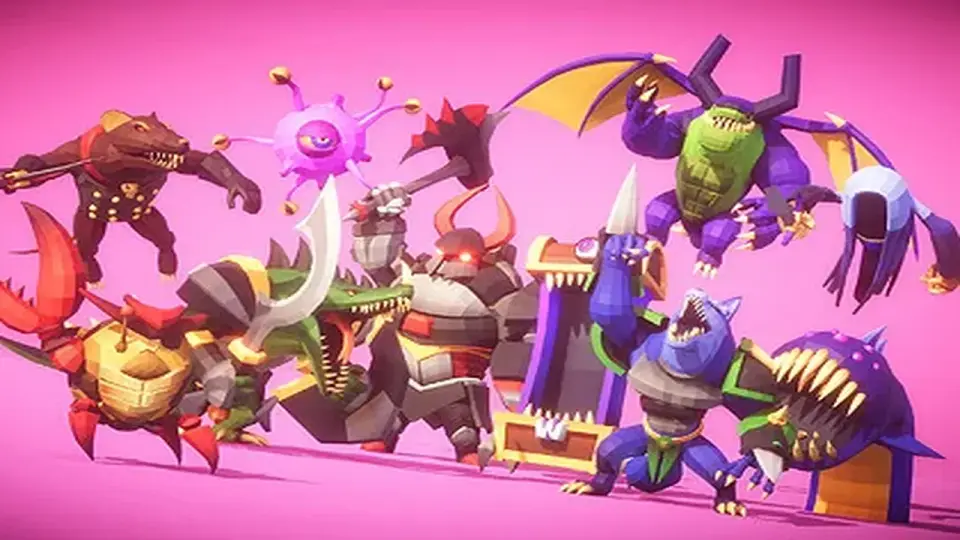
Battlefields, dungeon corridors, and encounter rooms are where RPG Monster Wave 2 Polyart Makes the most immediate sense. This second wave of RPG monsters brings together 10 unique enemy characters with a clear low poly style, giving developers a ready-made set of opponents that can be summoned back into combat-heavy scenes. The visual identity stays lightweight and cohesive, which makes the pack especially suitable for projects that need multiple enemy types on screen without drifting away from a unified look.
The collection is presented as a lightweight character set suited to game projects from mobile to PC desktop, with a particular emphasis on mobile RPG, TPS, and top-down action development. That positioning says a lot about how the monsters can be used. They fit naturally into enemy wave structures, arena encounters, roaming dungeon patrols, and repeated combat scenarios where visual clarity and quick recognition matter as much as style.
RPG Monster Wave 2 Polyart in battlefields and dungeons
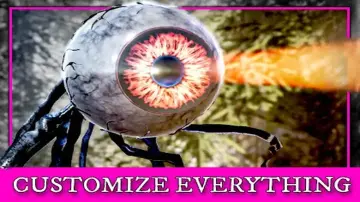
The set is focused on 10 distinct enemy monsters rather than minor variations of the same base model. That gives encounter design more room to breathe. A Black Knight can occupy the role of an armored frontline threat, while creatures such as the Beholder, Chest Monster, Crab Monster, Flying Demon, Lizard Warrior, Rat Assassin, Specter, Werewolf, and Worm Monster broaden the visual range of possible fights. Even without adding any extra lore, the names alone suggest a useful spread of silhouettes and combat moods for dungeon and battlefield scenes.
Because the pack is framed around monsters waiting to be summoned into battlefields or dungeons, it works well for projects that need reusable enemy rosters instead of one-off showcase characters. A top-down action game can place these monsters in successive rooms or waves. A mobile RPG can rotate them across quests and stages. A TPS can use them as readable combat targets across different map layouts. The consistency of the PolyArt style helps all of those uses feel like they belong to the same game world.
The low poly count is an important part of that identity. The monsters are not pushing toward realism; they are leaning into a stylized, efficient look that can support regular gameplay use. In practical scene building, that often matters more than sheer detail. Enemies need to animate clearly, read quickly at a distance, and stay manageable when several appear at once.
10 unique enemy monsters with room for varied encounter design
The package includes these 10 characters:
Black Knight
Beholder
Chest Monster
Crab Monster
Flying Demon
Lizard Warrior
Rat Assassin
Specter
Werewolf
Worm Monster
The triangle counts stay relatively compact across the set, reinforcing its lightweight approach. Black Knight comes in at 5313 tris, Beholder at 2015, Chest Monster at 1783, Crab Monster at 3108, Flying Demon at 6410, Lizard Warrior at 6482, Rat Assassin at 3577, Specter at 2858, Werewolf at 7103, and Worm Monster at 2250. Those numbers show a useful range: some enemies stay very lean, while the larger or more elaborate creatures still remain within a restrained scope for low poly characters.
That range can help when assigning enemy roles across a project. Smaller or simpler monsters can populate routine encounters, while higher-triangle characters like the Werewolf, Lizard Warrior, and Flying Demon can stand out more strongly in tougher fights. The set does not need to rely on one visual formula; it already contains enemies that feel suited to different combat spaces and pacing.
The two shield-capable fighters also stand apart mechanically. Black Knight and Lizard Warrior include Defend and Defend Get Hit animations, which gives them a more guarded combat profile than the rest of the cast. For developers planning enemy archetypes, that extra animation coverage can help distinguish armored or defensive opponents from fast attackers, ambushers, or monsters that exist mainly to pressure the player through movement and offense.
More than 150 animations across the monster roster
Animation coverage is one of the stronger practical points here. The set includes more than 150 animations for the 10 monsters, with a list that supports both idle presentation and active combat behavior. Each character includes 2 idle animations, 2 to 4 attack animations, Die, Dizzy, GetHit, Sense Something, Taunting, Victory, Walk in 4 directions, and Run Forward. Black Knight and Lizard Warrior also receive Defend and Defend Get Hit.
This matters for encounter design because the monsters are not limited to a single attack and a single idle loop. Two idle animations allow enemies to feel less static while waiting in place or patrolling. Multiple attacks provide a broader combat rhythm. Sense Something animations are especially useful for transition moments, such as when a creature notices the player, shifts from passive to alert, or reacts before a fight fully starts. Taunting and Victory add expressive beats that can be used before or after combat exchanges, while Dizzy and GetHit help sell interruption and damage states.
The inclusion of four-direction walk animations is also notable for developers working with top-down or isometric perspectives, since directional movement matters more in those camera setups than it might in narrower side-view uses. Run Forward fills the faster chase role, and the death animation closes the loop for combat encounters. Altogether, the animation list supports enemies that do more than simply stand, attack once, and disappear.
Low poly, one 512x512 texture, and a shared atlas workflow
The pack is optimized for mobile games and keeps its texture setup lean. All monsters use one 512x512 texture, and the character set uses a 512x512 texture atlas for all 10 characters. Release changes also moved the textures and UVs toward a more optimized state, with all textures now at 512 x 512 and only two main textures in use: Albedo and Emission.
From a workflow perspective, that compact texture approach supports the pack’s lightweight direction. A single shared atlas across the full roster helps preserve a consistent visual finish between different enemy types. It also makes the set feel like one family of creatures rather than a pile of unrelated assets. For developers targeting mobile hardware, the optimization focus is clearly part of the package’s identity rather than an afterthought.
There is also a Mask Tint Shader for color customization, provided for Standard, URP, and HDRP. That gives room to adjust colors without stepping away from the existing style. In practice, color variation can be useful when the same enemy type appears in different stages, factions, or dungeon themes. Since the shader support is explicitly provided across those rendering paths, the pack leaves some space for visual variation while keeping the core models and textures consistent.
SRP HD/URP support and shader coverage across pipelines
Render pipeline support is spelled out clearly. SRP HD and URP are 100% supported at 12.1.7. The package also includes Standard PBR, Mask Tint, URP, and HDRP shaders. Compatibility notes list Built-in, HDRP, and URP for Unity 2020.3.44f1, with the original Unity version also given as 2020.3.44.
Those technical details matter most for teams that need the monsters to sit inside an existing Unity pipeline without rebuilding the material setup from scratch. Since the shader coverage spans Standard, URP, and HDRP, the pack is not locked to a single rendering path. A project already working in Built-in can place the creatures into current scenes, while teams using URP or HDRP have support stated for those pipelines as well.
The package size is listed at 77.3 MB with an asset count of 250. That number does not change what the monsters are, but it does reinforce that this is more than a tiny sample set. There is enough material here to support a usable enemy roster beyond one-character insert.
Who gets the most from these PolyArt monsters
This set is most useful for developers and artists who need a compact enemy lineup with immediate gameplay value. Mobile RPG projects are a natural fit because the characters are optimized for mobile games and share a lightweight texture setup. Top-down action games also stand to benefit from the four-direction walk coverage and the clear, stylized silhouettes. TPS projects can use the same roster when they need readable enemies that carry more personality than anonymous placeholders.
The strongest case for RPG Monster Wave 2 Polyart Is not extreme technical complexity. It is the combination of 10 unique monsters, low poly efficiency, broad animation coverage, a shared atlas, and multi-pipeline shader support. For teams that want dungeon and battlefield enemies ready for repeated gameplay use, that combination is where the pack lands best.
 Creatures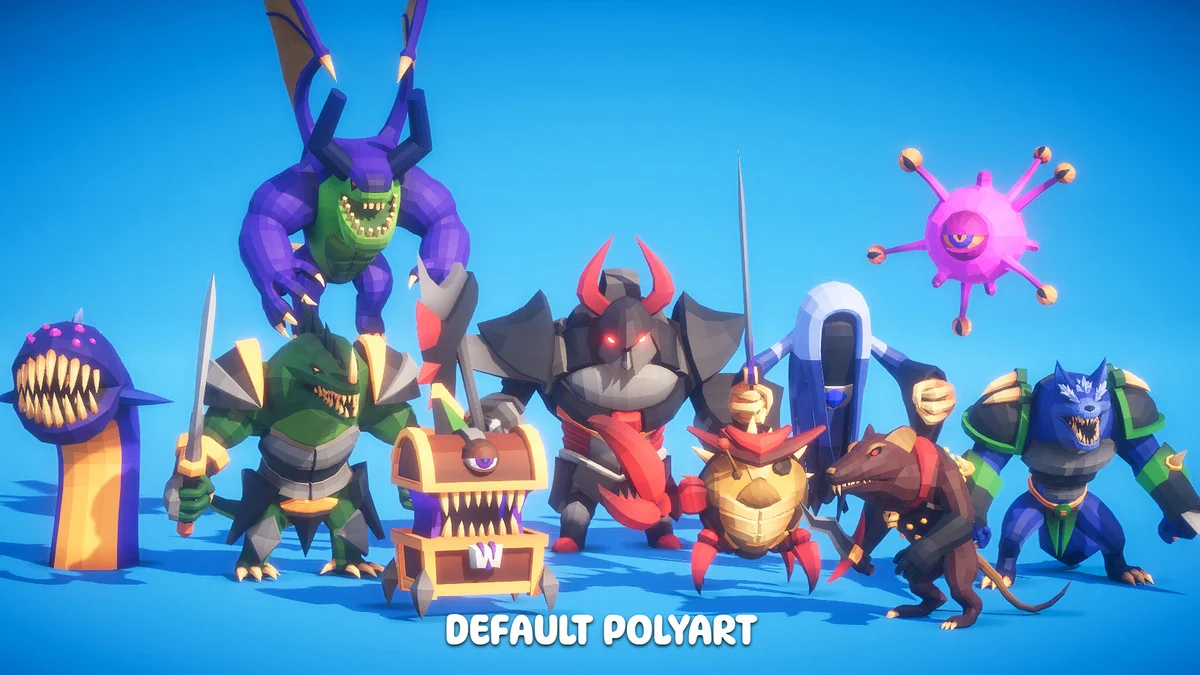
 Creatures
 Creatures
 Creatures