"a19e0535960bd083"{"id":"1002081","slug":"replicated-drivable-rc-car-blueprint","title":"Replicated Drivable RC Car (Blueprint)","category":"Vehicles \u0026 Transportation","engine":"5.0+","assetVersion":"","engineVersion":"Engine Version: 5.0+","tag":"Vehicles","accent":"blue","visual":"mech","summary":"Explore the Replicated Drivable RC Car Blueprint, featuring fully rigged skeletal meshes, bone scale integrity, color material parameters, and VoIP support.","platform":"Unreal Engine","publishedAt":"2026-10-26T15:50:47.654Z","updatedAt":"2026-10-26T15:50:47.654Z","sourceNotes":[],"fileContents":[],"compatibility":["Unreal Engine","Engine Version: 5.0+"],"featuredImage":{"alt":"Replicated Drivable RC Car (Blueprint)","src":"/wp-content/uploads/published/2026/10/9812b44c9454-0b4bfd06-0230-4573-8df6-b954f12d503d-86b6a7726b.webp"},"hasDownloadLink":true,"downloads":0,"terms":[{"taxonomy":"category","slug":"vehicles-and-transportation","name":"Vehicles \u0026 Transportation"}],"galleryImages":[{"src":"/wp-content/uploads/published/2026/10/cc3f22b320f2-9c2b3dad-c4fd-4788-a224-98cc6e80854f-03bd163869.webp","alt":"Replicated Drivable RC Car (Blueprint)"},{"src":"/wp-content/uploads/published/2026/10/2513c073e8f1-33874fc2-d69d-4285-8a6a-13dd157fa4eb-ea1b945c3c.webp","alt":"Replicated Drivable RC Car (Blueprint)"},{"src":"/wp-content/uploads/published/2026/10/2a0b98edd5af-e3a76c24-ae9b-45c5-a61f-843bef899b81-c4c550613b.webp","alt":"Replicated Drivable RC Car (Blueprint)"},{"src":"/wp-content/uploads/published/2026/10/b0ee774c4db9-2dd6d515-349c-4b79-b5fa-a442493890e6-3437b4f2b2.webp","alt":"Replicated Drivable RC Car (Blueprint)"},{"src":"/wp-content/uploads/published/2026/10/a1caeb8f95c4-74068649-ec39-4616-90f5-98579973d1ad-46910b660c.webp","alt":"Replicated Drivable RC Car (Blueprint)"},{"src":"/wp-content/uploads/published/2026/10/279793f57495-fa21814a-e9aa-4848-86bd-daf75d9e922f-1c4afc17e2.webp","alt":"Replicated Drivable RC Car (Blueprint)"},{"src":"/wp-content/uploads/published/2026/10/b9140457d553-e83a49cd-703c-48fc-a5ef-73c12138d308-bef04961dc.webp","alt":"Replicated Drivable RC Car (Blueprint)"}],"accessPanel":{"kind":"resource","title":"Download this resource","eyebrow":"Free Download","message":"Log in or create a free account to start your download.","fileName":"Replicated Drivable RC Car (Blueprint).7z","safetyNote":"Resources are manually reviewed before listing to improve quality and reduce obvious risks.","actionLabel":"Download Free","resourceType":"Resource archive"},"contentHtml":"\u003ch2\u003eDeploying the Replicated Blueprint Architecture\u003c/h2\u003e\n\u003cp\u003eIntegrating a functional vehicle into a networked multiplayer session often presents complex challenges with client-server synchronization, input responsiveness, and transform updates. The Replicated Drivable RC Car Blueprint establishes a functional network pipeline from the moment it is dropped into a level. Built specifically to handle vehicle replication, the underlying scripting synchronizes driving states, steering angles, and spatial coordinates across both server authorities and connected clients without requiring manual network wiring.\u003c/p\u003e\n\u003cp\u003eBecause the car functions out of the box as a ready-to-drive entity, developers bypass the labor-intensive initial configuration phase typically needed for drivable actors. Input commands dispatch through replicated functions, ensuring that local driver inputs mirror accurately on remote screens while managing the low-latency corrections necessary for high-speed remote-controlled movement. The Blueprint architecture encapsulates the simulation mechanics, enabling developers to test local handling and multiplayer interactions without having to rebuild vehicle movement logic from scratch.\u003c/p\u003e \u003ch2\u003eRigged Skeletal Meshes with Correct Bone Naming and Bone Scales\u003c/h2\u003e\n\u003cp\u003eVehicle physics and mechanical animation rely heavily on proper skeletal hierarchy and clean joint transformations. The RC car model utilizes a fully rigged skeletal mesh built strictly with correct bone naming and verified bone scales. In many real-time vehicle setups, non-uniform bone scaling or arbitrary joint hierarchies can trigger severe simulation errors, such as collapsed wheel geometry, inverted suspension physics, or distorted mesh components under active physics constraints.\u003c/p\u003e\n\u003cp\u003eBy enforcing standardized bone scales and precise naming conventions, the asset ensures that vehicle wheels, chassis pivots, and rotational hubs align predictably with vehicle physics solvers. Wheel bones rotate and articulate cleanly around their intended axes, maintaining stability during tight cornering, abrupt braking, and aggressive terrain traversal. This attention to underlying skeletal structure also simplifies future animation passes or custom rigging extensions, as technical artists can link custom mechanical logic directly to well-defined bone targets without needing to re-import or re-rig the core FBX structure.\u003c/p\u003e \u003ch2\u003eMaterial Parameters for Vehicle Color Customization\u003c/h2\u003e\n\u003cp\u003eVisual variety is essential for multiplayer scenarios where multiple RC cars occupy the same track, arena, or sandbox space. The asset addresses visual flexibility through exposed material parameters dedicated to vehicle color. Instead of requiring developers to paint and export individual texture maps for every distinct vehicle iteration, color properties are driven directly by underlying material nodes.\u003c/p\u003e\n\u003cp\u003eThis parameter-based workflow enables rapid runtime adjustments and streamlined asset management. Teams can create lightweight Material Instances to deploy an entire fleet of visually distinct RC cars, setting unique paint colors for specific teams, players, or vehicle classes with zero texture memory overhead. Developers can also hook into these exposed scalar or vector parameters directly through the vehicle Blueprint, dynamically altering color schemes during match play, livery selection screens, or damage states.\u003c/p\u003e \u003ch2\u003eDynamic Voice Chat System Integration and Pack Ecosystem\u003c/h2\u003e\n\u003cp\u003eBeyond vehicle driving physics and visual setup, the asset features verified compatibility with the Dynamic Voice Chat System (VoIP). In multiplayer production environments, pairing interactive vehicles with spatialized audio communication opens direct design opportunities for gameplay mechanics like remote scouting, remote audio transmission, or localized proximity banter. Because the Blueprint functions alongside VoIP systems, spatial voice attenuation can track the position of the RC car or the remote operator without encountering architectural conflicts in audio channel assignment.\u003c/p\u003e\n\u003cp\u003eThe RC car is also available as part of the broader Replicated Drivable Vehicles Pack. This relationship ensures structural and logical parity with a wider collection of vehicle types. Projects that expand from compact remote-controlled rovers to full-sized drivable machines can rely on shared architectural patterns across vehicle classes, maintaining consistency across player controllers, input mappings, and replication handling.\u003c/p\u003e \u003ch2\u003eMultiplayer Simulation and Production Readiness\u003c/h2\u003e\n\u003cp\u003eBalancing realistic simulation with multiplayer performance requires careful optimization across both visual fidelity and physics load. The RC car features a low-poly asset profile that reduces draw call pressure and vertex processing overhead. This lightweight geometric footprint is particularly advantageous in scenarios featuring high vehicle counts, split-screen modes, or constrained hardware targets.\u003c/p\u003e\n\u003cp\u003eCombined with its realistic driving scripts and simulation-focused mechanical behavior, the asset fits naturally into diverse genres ranging from competitive mini-racers to sandbox minigames and remote reconnaissance tools. The self-contained Blueprint architecture, combined with clean bone hierarchies and exposed color parameters, establishes a reliable, production-ready foundation that minimizes technical maintenance throughout development.\u003c/p\u003e\n\n\u003ch2\u003eContinue Browsing Similar Packs\u003c/h2\u003e\n\u003cul\u003e\n\u003cli\u003e\u003ca href=\"https://3dcghub.com/scifi-cyber-car-2/\" title=\"SciFi Cyber Car 2\"\u003eSciFi Cyber Car 2\u003c/a\u003e\u003c/li\u003e\n\u003cli\u003e\u003ca href=\"https://3dcghub.com/military-boat-rigged-bp-controllable-w-skins-military-boat-boats-soldier/\" title=\"Military Boat - Rigged/BP Controllable W/Skins ( Military Boat Boats Soldier )\"\u003eMilitary Boat - Rigged/BP Controllable W/Skins ( Military Boat Boats Soldier )\u003c/a\u003e\u003c/li\u003e\n\u003cli\u003e\u003ca href=\"https://3dcghub.com/scifi-grasshopper-mono-bike/\" title=\"SciFi Grasshopper Mono Bike\"\u003eSciFi Grasshopper Mono Bike\u003c/a\u003e\u003c/li\u003e\n\u003cli\u003e\u003ca href=\"https://3dcghub.com/replicated-drivable-gokart-blueprint/\" title=\"Replicated Drivable Gokart (Blueprint)\"\u003eReplicated Drivable Gokart (Blueprint)\u003c/a\u003e\u003c/li\u003e\n\u003cli\u003e\u003ca href=\"https://3dcghub.com/drivable-retro-car-farton/\" title=\"Drivable retro car \u0026quot;Farton\u0026quot;\"\u003eDrivable retro car \u0026quot;Farton\u0026quot;\u003c/a\u003e\u003c/li\u003e\n\u003c/ul\u003e","contentTextLength":5585,"navigation":{"current":10,"total":4026,"previous":{"id":"1002082","slug":"urban-props-vol-2","title":"Urban Props Vol. 2","category":"Industrial","platform":"Unreal Engine","updatedAt":"2026-10-26T15:51:41.228Z"},"next":{"id":"1002080","slug":"museum-and-gallery-archinteriors-vol-10-scene-2","title":"Museum and Gallery - Archinteriors Vol 10 Scene 2","category":"Buildings \u0026 Architecture","platform":"Unreal Engine","updatedAt":"2026-10-26T15:49:41.447Z"}},"relatedResources":[{"id":"5206","slug":"scifi-cyber-car-2","title":"SciFi Cyber Car 2","category":"Vehicles \u0026 Transportation","engine":"5.3+","assetVersion":"Engine version: 5.3+","engineVersion":"4.20","tag":"Vehicles","accent":"blue","visual":"luts","summary":"Enhance your cyberpunk world with SciFi Cyber Car 2. This drivable Unreal Engine 5 vehicle features 4K PBR textures, complex suspension, and full customization.","platform":"Unreal Engine","publishedAt":"2026-02-14T18:13:17.000Z","updatedAt":"2026-04-19T15:57:00.000Z","sourceNotes":[],"fileContents":[],"compatibility":["Unreal Engine","Engine version: 5.3+"],"featuredImage":{"alt":"SciFi Cyber Car 2","src":"https://3dcghub.com/wp-content/uploads/2026/02/619e2cb8-67d3-4783-b648-f090ced80b72.webp"},"hasDownloadLink":true,"downloads":0},{"id":"28204","slug":"military-boat-rigged-bp-controllable-w-skins-military-boat-boats-soldier","title":"Military Boat - Rigged/BP Controllable W/Skins ( Military Boat Boats Soldier )","category":"Vehicles \u0026 Transportation","engine":"4.26+,5.0+","assetVersion":"Engine version: 4.26+,5.0+","engineVersion":"","tag":"Vehicles","accent":"blue","visual":"audio","summary":"Military Boat – Rigged/BP Controllable W/Skins brings a drivable military watercraft into Unreal Engine with a setup that already includes assets, maps, and materials. Its rigged and Blueprint-based structure gives artists and developers a clear starting po...","platform":"Unreal Engine","publishedAt":"2026-05-06T13:56:55.000Z","updatedAt":"2026-05-06T13:56:56.000Z","sourceNotes":[],"fileContents":[],"compatibility":["Unreal Engine","Engine version: 4.26+,5.0+"],"featuredImage":{"alt":"Military Boat - Rigged/BP Controllable W/Skins ( Military Boat Boats Soldier )","src":"https://3dcghub.com/wp-content/uploads/2026/05/293c1dc006da_32830d07-e5b5-4939-b7ff-4caf04bcfd06.webp"},"hasDownloadLink":true,"downloads":2},{"id":"5223","slug":"scifi-grasshopper-mono-bike","title":"SciFi Grasshopper Mono Bike","category":"Vehicles \u0026 Transportation","engine":"4.27,5.0+","assetVersion":"Engine version: 4.27,5.0+","engineVersion":"4.26","tag":"Vehicles","accent":"blue","visual":"city","summary":"Enhance your game with the SciFi Grasshopper Mono Bike. Features drivable blueprints, high-res textures, and customizable materials for Unreal Engine.","platform":"Unreal Engine","publishedAt":"2026-02-14T18:16:43.000Z","updatedAt":"2026-04-19T15:56:59.000Z","sourceNotes":[],"fileContents":[],"compatibility":["Unreal Engine","Engine version: 4.27,5.0+"],"featuredImage":{"alt":"SciFi Grasshopper Mono Bike","src":"https://3dcghub.com/wp-content/uploads/2026/02/08ab6918-9a2f-467d-b55a-ab9e65dd1194.webp"},"hasDownloadLink":true,"downloads":0}]}
Vehicles
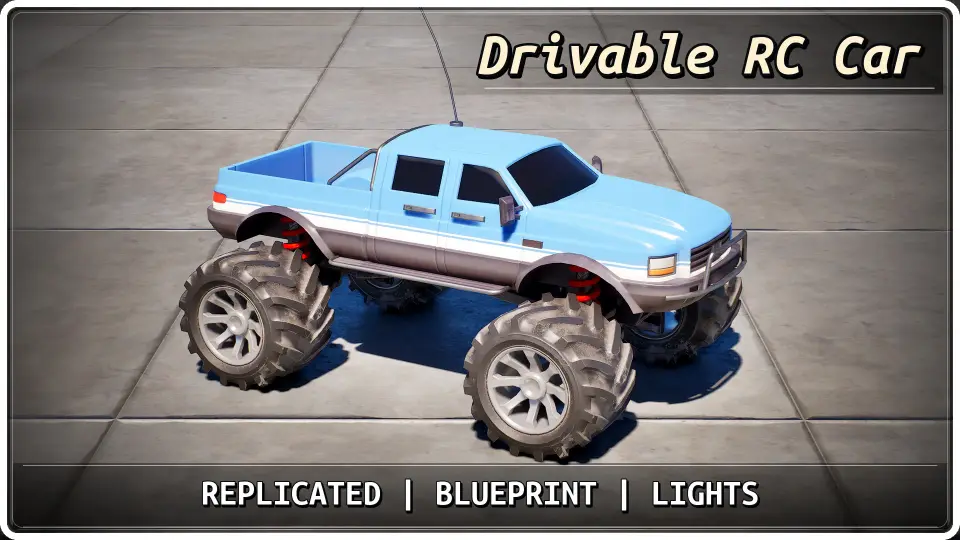
Replicated Drivable RC Car (Blueprint)
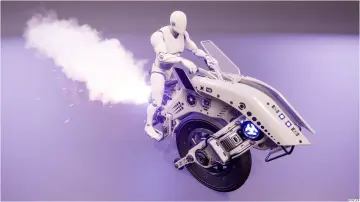
Explore the Replicated Drivable RC Car Blueprint, featuring fully rigged skeletal meshes, bone scale integrity, color material parameters, and VoIP support.
Integrating a functional vehicle into a networked multiplayer session often presents complex challenges with client-server synchronization, input responsiveness, and transform updates. The Replicated Drivable RC Car Blueprint establishes a functional network pipeline from the moment it is dropped into a level. Built specifically to handle vehicle replication, the underlying scripting synchronizes driving states, steering angles, and spatial coordinates across both server authorities and connected clients without requiring manual network wiring.
Because the car functions out of the box as a ready-to-drive entity, developers bypass the labor-intensive initial configuration phase typically needed for drivable actors. Input commands dispatch through replicated functions, ensuring that local driver inputs mirror accurately on remote screens while managing the low-latency corrections necessary for high-speed remote-controlled movement. The Blueprint architecture encapsulates the simulation mechanics, enabling developers to test local handling and multiplayer interactions without having to rebuild vehicle movement logic from scratch.
Rigged Skeletal Meshes with Correct Bone Naming and Bone Scales
Vehicle physics and mechanical animation rely heavily on proper skeletal hierarchy and clean joint transformations. The RC car model utilizes a fully rigged skeletal mesh built strictly with correct bone naming and verified bone scales. In many real-time vehicle setups, non-uniform bone scaling or arbitrary joint hierarchies can trigger severe simulation errors, such as collapsed wheel geometry, inverted suspension physics, or distorted mesh components under active physics constraints.
By enforcing standardized bone scales and precise naming conventions, the asset ensures that vehicle wheels, chassis pivots, and rotational hubs align predictably with vehicle physics solvers. Wheel bones rotate and articulate cleanly around their intended axes, maintaining stability during tight cornering, abrupt braking, and aggressive terrain traversal. This attention to underlying skeletal structure also simplifies future animation passes or custom rigging extensions, as technical artists can link custom mechanical logic directly to well-defined bone targets without needing to re-import or re-rig the core FBX structure.
Material Parameters for Vehicle Color Customization
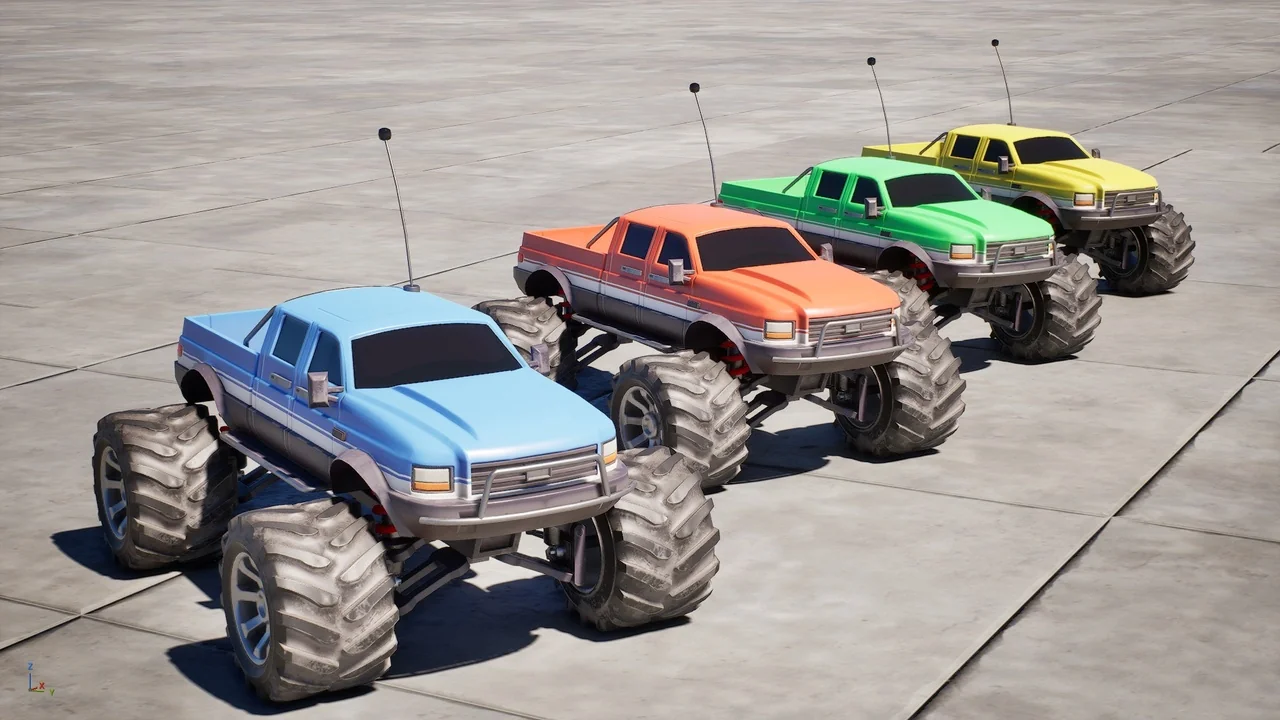
Visual variety is essential for multiplayer scenarios where multiple RC cars occupy the same track, arena, or sandbox space. The asset addresses visual flexibility through exposed material parameters dedicated to vehicle color. Instead of requiring developers to paint and export individual texture maps for every distinct vehicle iteration, color properties are driven directly by underlying material nodes.
This parameter-based workflow enables rapid runtime adjustments and streamlined asset management. Teams can create lightweight Material Instances to deploy an entire fleet of visually distinct RC cars, setting unique paint colors for specific teams, players, or vehicle classes with zero texture memory overhead. Developers can also hook into these exposed scalar or vector parameters directly through the vehicle Blueprint, dynamically altering color schemes during match play, livery selection screens, or damage states.
Dynamic Voice Chat System Integration and Pack Ecosystem
Beyond vehicle driving physics and visual setup, the asset features verified compatibility with the Dynamic Voice Chat System (VoIP). In multiplayer production environments, pairing interactive vehicles with spatialized audio communication opens direct design opportunities for gameplay mechanics like remote scouting, remote audio transmission, or localized proximity banter. Because the Blueprint functions alongside VoIP systems, spatial voice attenuation can track the position of the RC car or the remote operator without encountering architectural conflicts in audio channel assignment.
The RC car is also available as part of the broader Replicated Drivable Vehicles Pack. This relationship ensures structural and logical parity with a wider collection of vehicle types. Projects that expand from compact remote-controlled rovers to full-sized drivable machines can rely on shared architectural patterns across vehicle classes, maintaining consistency across player controllers, input mappings, and replication handling.
Multiplayer Simulation and Production Readiness
Balancing realistic simulation with multiplayer performance requires careful optimization across both visual fidelity and physics load. The RC car features a low-poly asset profile that reduces draw call pressure and vertex processing overhead. This lightweight geometric footprint is particularly advantageous in scenarios featuring high vehicle counts, split-screen modes, or constrained hardware targets.
Combined with its realistic driving scripts and simulation-focused mechanical behavior, the asset fits naturally into diverse genres ranging from competitive mini-racers to sandbox minigames and remote reconnaissance tools. The self-contained Blueprint architecture, combined with clean bone hierarchies and exposed color parameters, establishes a reliable, production-ready foundation that minimizes technical maintenance throughout development.
 Vehicles
 Vehicles
 Vehicles
 Vehicles