"95ccd6d7c96110f6"{"id":"1002459","slug":"rbots","title":"Rbots","category":"Characters \u0026 Creatures","engine":"4.22+,5.0+","assetVersion":"","engineVersion":"Engine Version: 4.22+,5.0+","tag":"Characters","accent":"blue","visual":"character","summary":"Examine the technical layout, Animation Blueprint integration, lowpoly design, and Infrod vehicle compatibility of the Rbots character asset.","platform":"Unreal Engine","indexPolicy":"index","publishedAt":"2026-11-11T08:46:36.988Z","updatedAt":"2026-11-11T08:46:36.988Z","sourceNotes":[],"fileContents":[],"compatibility":["Unreal Engine","Engine Version: 4.22+,5.0+"],"featuredImage":{"alt":"Rbots","src":"/wp-content/uploads/published/2026/11/2ce5ba208131-671db710-d84c-4668-8b84-f35229dfe69b-a406273b61.webp"},"hasDownloadLink":true,"downloads":0,"terms":[{"taxonomy":"category","slug":"characters-and-creatures","name":"Characters \u0026 Creatures"}],"galleryImages":[{"src":"/wp-content/uploads/published/2026/11/25e0da3d01a7-3e6c0639-3369-4316-ac5d-b256c341c7c1-18f5aa8940.webp","alt":"Rbots"},{"src":"/wp-content/uploads/published/2026/11/74e56f8464b6-6009bca6-bbc7-4092-9ea8-680ade2e36b0-fcf1744ea5.webp","alt":"Rbots"},{"src":"/wp-content/uploads/published/2026/11/6fbfc12dff8f-20297580-e349-47af-9c67-7e636fef76df-d46be72854.webp","alt":"Rbots"},{"src":"/wp-content/uploads/published/2026/11/9394177388eb-89043117-2de6-4534-b63a-8c97d61884c1-150b1619b4.webp","alt":"Rbots"},{"src":"/wp-content/uploads/published/2026/11/f872a76993ad-58149cb3-73c3-4f7a-b9e8-e17f6ad717a5-207ccae965.webp","alt":"Rbots"},{"src":"/wp-content/uploads/published/2026/11/a08e86069de3-c4b7c222-2cc8-4838-9779-46fb52fc16ba-3d888861a8.webp","alt":"Rbots"},{"src":"/wp-content/uploads/published/2026/11/0cbd592f9319-7a610e77-267e-4e13-8244-292e8ff51323-932979ed36.webp","alt":"Rbots"},{"src":"/wp-content/uploads/published/2026/11/b66f88ad3e2e-f9e30864-8dfe-4274-ac36-9d86ebd9ea70-a71979b343.webp","alt":"Rbots"},{"src":"/wp-content/uploads/published/2026/11/ae66d0c781b8-72344eef-2b39-4e0b-915f-22dc6bcdf471-bcd4c4b309.webp","alt":"Rbots"}],"accessPanel":{"kind":"resource","title":"Get this resource","eyebrow":"Free resource","message":"Download this resource in your browser.","fileName":"Content.7z","safetyNote":"Resources are manually reviewed before listing to improve quality and reduce obvious risks.","actionLabel":"Get this resource","resourceType":"Resource archive","versions":[]},"contentHtml":"\u003ch2\u003eImplementing Rbots into Real-Time Character Pipelines\u003c/h2\u003e\n\u003cp\u003eDeploying a robotic character in an active game environment requires a clean path between static geometry and responsive motion. The Rbots package establishes this bridge by combining lowpoly mesh design with a dedicated Animation Blueprint and underlying script logic. Because the asset is explicitly configured as an animated character rather than an inert decorative prop, setup revolves around connecting the provided Animation Blueprint to character movement components and controller input systems.\u003c/p\u003e\n\u003cp\u003eLowpoly geometry inherently streamlines performance, keeping draw calls and vertex counts manageable across dense scenes or hardware with restricted processing budgets. In high-density settings where multiple mechanized units populate an area simultaneously, this lightweight surface density avoids the performance bottlenecks associated with sub-millimeter high-poly bakes. The aesthetic embraces angular mechanical surfaces that read clearly under dynamic lighting while retaining clean silhouette definition. Because the character comes wired with an Animation Blueprint, locomotion states, idle poses, and mechanical state shifts do not require building state machines completely from scratch. Developers can plug existing animation sets or retarget complementary motion sequences directly into the established node tree.\u003c/p\u003e \u003ch2\u003eMechanical Identity: Electro Systems and Furnace Machine Attributes\u003c/h2\u003e\n\u003cp\u003eThe visual and functional thematic identity of the character model draws on electro and furnace design motifs. Rather than standard clean-room android aesthetics, these identifiers point toward heavy-duty, heat-bearing industrial automation. A furnace-themed machine implies internal combustion, smelting roles, thermal exhaust considerations, or high-temperature factory tasks, while electro categorization points toward integrated power distribution, circuit-driven utilities, and visible electrical components across the chassis.\u003c/p\u003e\n\u003cp\u003eThese combined themes fit distinct environmental contexts:\u003c/p\u003e\n\u003cul\u003e\n\u003cli\u003eIndustrial facilities, smelters, and automated metallurgical plants requiring hazardous-duty automations.\u003c/li\u003e\n\u003cli\u003ePost-apocalyptic workshops where heavy machinery relies on crude electrical junctions and furnace-driven power generation.\u003c/li\u003e\n\u003cli\u003eFuturistic survival games where robotic enemies or companions double as mobile heating units or energy converters.\u003c/li\u003e\n\u003cli\u003eStylized combat arenas featuring specialized elemental or mechanical robot archetypes.\u003c/li\u003e\n\u003c/ul\u003e\n\u003cp\u003eThe contrast between thermal furnace operations and electrical system traits gives the lowpoly chassis distinct character markers. Hard edges separate functional compartments, allowing different material segments to reflect heat treatment, insulated cabling, or conductive plating across the robot body without needing hyper-dense surface micro-geometry.\u003c/p\u003e \u003ch2\u003eCustomization Logic and Scripted Functionality in Rbots\u003c/h2\u003e\n\u003cp\u003eModularity stands out as a core design priority through explicit customizable and script tagging. A customizable robotic entity allows creators to tailor both functional behaviors and visual variants to fit specific gameplay requirements. Having integrated scripting alongside mesh data ensures that mechanical interactions, component swapping, or gameplay events can be triggered through unified logic.\u003c/p\u003e\n\u003cp\u003eScripting within a character framework typically manages state management, procedural transformations, or socket-based equipment handling. When paired with a dedicated Animation Blueprint, scripts handle logic checks—such as determining whether an electrical charge is active, toggling furnace-related states, or activating operational routines—while the Animation Blueprint translates those status flags into fluid kinematic adjustments. This separation of mechanical logic from skeletal transformation keeps runtime behavior predictable and simple to debug when expanding project mechanics.\u003c/p\u003e\n\u003cp\u003eThe customizable structure also benefits projects requiring multiple robotic tiers or roles derived from the same foundational asset. By altering script parameters or swapping modular surfaces supported by the lowpoly mesh, teams can spawn diverse industrial worker drones, defensive electro-sentinels, or specialized maintenance bots without authoring entirely separate character codebases for each variation.\u003c/p\u003e \u003ch2\u003eIntegrating Rbots with Driveable Car Infrod\u003c/h2\u003e\n\u003cp\u003eA notable technical capability of the package is verified compatibility with the Driveable Car Infrod system. Vehicles in interactive engines often present integration hurdles for robotic characters, particularly concerning seating sockets, steering wheel synchronization, hand placement, and entering or exiting transitions. Compatibility with the Infrod vehicle framework indicates that the robot is architected to interface cleanly with existing vehicle rigs.\u003c/p\u003e\n\u003cp\u003eAchieving smooth integration between an automated character and a vehicle system involves aligning the Animation Blueprint with vehicle input controllers. When the character enters the vehicle, the Animation Blueprint can transition from walking or running states into seated steering postures, pedal controls, or dashboard monitoring animations supported by the Infrod architecture. Because both assets share structural alignment, developers avoid the complex process of manually restructuring skeletal hierarchies or re-authoring bone transforms just to seat the mechanical driver securely behind the wheel.\u003c/p\u003e\n\u003cp\u003eThis cross-asset capability broadens production scope, enabling scenarios where robotic units navigate open terrain in ground vehicles, transport industrial materials across automated compounds, or engage in vehicle-based combat sequences without secondary rig adjustments.\u003c/p\u003e \u003ch2\u003eCommunity Support, Tutorials, and Implementation Resources\u003c/h2\u003e\n\u003cp\u003eNavigating setup steps and expanding the functionality of the asset is backed by dedicated support channels organized by the creator. A dedicated demonstration video showcasing the Rbot asset in action provides direct visual reference for how animations play out, how the lowpoly geometry interacts with motion controllers, and how its mechanical features present during execution.\u003c/p\u003e\n\u003cp\u003eFor ongoing implementation assistance, community interactions are concentrated in a Discord group that distributes news, project bonuses, tutorials, and direct technical answers. Access to targeted tutorials simplifies resolving integration queries, particularly regarding Animation Blueprint linking, script modifications, or vehicle seat rigging. The presence of community-driven support channels ensures that developers encountering pipeline issues or seeking guidance on tailoring the customizable properties have a direct route to technical resources and ongoing development updates across the creator's broader catalog.\u003c/p\u003e\n\n\u003ch2\u003eExplore Similar Assets\u003c/h2\u003e\n\u003cul\u003e\n\u003cli\u003e\u003ca href=\"https://3dcghub.com/cyberpunk-street-boy/\" rel=\"noopener noreferrer\"\u003eCyberpunk Street Boy\u003c/a\u003e\u003c/li\u003e\n\u003cli\u003e\u003ca href=\"https://3dcghub.com/samantha-cyberpunk-girl/\" rel=\"noopener noreferrer\"\u003eSamantha - Cyberpunk girl\u003c/a\u003e\u003c/li\u003e\n\u003cli\u003e\u003ca href=\"https://3dcghub.com/samurai-ichiro/\" rel=\"noopener noreferrer\"\u003eSamurai Ichiro\u003c/a\u003e\u003c/li\u003e\n\u003cli\u003e\u003ca href=\"https://3dcghub.com/druid-werewolf/\" rel=\"noopener noreferrer\"\u003eDruid WereWolf\u003c/a\u003e\u003c/li\u003e\n\u003cli\u003e\u003ca href=\"https://3dcghub.com/japanese-insect-pack/\" rel=\"noopener noreferrer\"\u003eJapanese Insect Pack\u003c/a\u003e\u003c/li\u003e\n\u003c/ul\u003e","contentTextLength":6873,"navigation":{"current":6,"total":4387,"previous":{"id":"1002460","slug":"biotech-rogue","title":"Biotech - Rogue","category":"Characters \u0026 Creatures","platform":"Unreal Engine","updatedAt":"2026-11-11T08:47:38.898Z"},"next":{"id":"1002458","slug":"mech-biped","title":"MECH BIPED","category":"Characters \u0026 Creatures","platform":"Unreal Engine","updatedAt":"2026-11-11T08:45:43.128Z"}},"relatedResources":[{"id":"1001777","slug":"cyberpunk-street-boy","title":"Cyberpunk Street Boy","category":"Characters \u0026 Creatures","engine":"4.25+,5.0+","assetVersion":"","engineVersion":"Engine Version: 4.25+,5.0+","tag":"Characters","accent":"blue","visual":"character","summary":"Examine Cyberpunk Street Boy, featuring modular cybernetic design, PBR materials, facial morph targets, sword combat, and Animation Blueprint support.","platform":"Unreal Engine","indexPolicy":"index","publishedAt":"2026-10-20T03:25:10.457Z","updatedAt":"2026-10-20T03:25:10.457Z","sourceNotes":[],"fileContents":[],"compatibility":["Unreal Engine","Engine Version: 4.25+,5.0+"],"featuredImage":{"alt":"Cyberpunk Street Boy","src":"/wp-content/uploads/published/2026/10/52f458aff286-02fd65ac-9315-4dbb-b5bb-521bead39c80-4b9bde6c52.webp"},"hasDownloadLink":true,"downloads":1},{"id":"1002185","slug":"samantha-cyberpunk-girl","title":"Samantha - Cyberpunk girl","category":"Characters \u0026 Creatures","engine":"4.22+,5.0+","assetVersion":"","engineVersion":"Engine Version: 4.22+,5.0+","tag":"Characters","accent":"blue","visual":"character","summary":"Integrate Samantha - Cyberpunk girl with single mesh geometry, 5 texture sets, socketed hair physics, and Undead Prisoners Pack compatibility.","platform":"Unreal Engine","indexPolicy":"index","publishedAt":"2026-10-29T14:26:36.100Z","updatedAt":"2026-10-29T14:26:36.100Z","sourceNotes":[],"fileContents":[],"compatibility":["Unreal Engine","Engine Version: 4.22+,5.0+"],"featuredImage":{"alt":"Samantha - Cyberpunk girl","src":"/wp-content/uploads/published/2026/10/81f7b6daaaa0-98828ec8-c6de-40c2-b9f1-8e79ad1227d0-7b6a58a401.webp"},"hasDownloadLink":true,"downloads":0},{"id":"1002417","slug":"samurai-ichiro","title":"Samurai Ichiro","category":"Characters \u0026 Creatures","engine":"4.22+,5.0+","assetVersion":"","engineVersion":"Engine Version: 4.22+,5.0+","tag":"Characters","accent":"blue","visual":"character","summary":"Explore Samurai Ichiro, a modular character for Unreal Engine featuring 31 interchangeable parts, cloth physics, ARKit facial morphs, and Epic Skeleton v4.","platform":"Unreal Engine","indexPolicy":"index","publishedAt":"2026-11-10T13:38:03.315Z","updatedAt":"2026-11-10T13:38:03.315Z","sourceNotes":[],"fileContents":[],"compatibility":["Unreal Engine","Engine Version: 4.22+,5.0+"],"featuredImage":{"alt":"Samurai Ichiro","src":"https://media.fab.com/image_previews/gallery_images/b608b4d2-db53-48b8-905d-fef150e77617/95c2b24e-7a2d-4663-97f3-e173b1fced37.png"},"hasDownloadLink":true,"downloads":0}]}
Characters
Rbots
Examine the technical layout, Animation Blueprint integration, lowpoly design, and Infrod vehicle compatibility of the Rbots character asset.
Implementing Rbots into Real-Time Character Pipelines
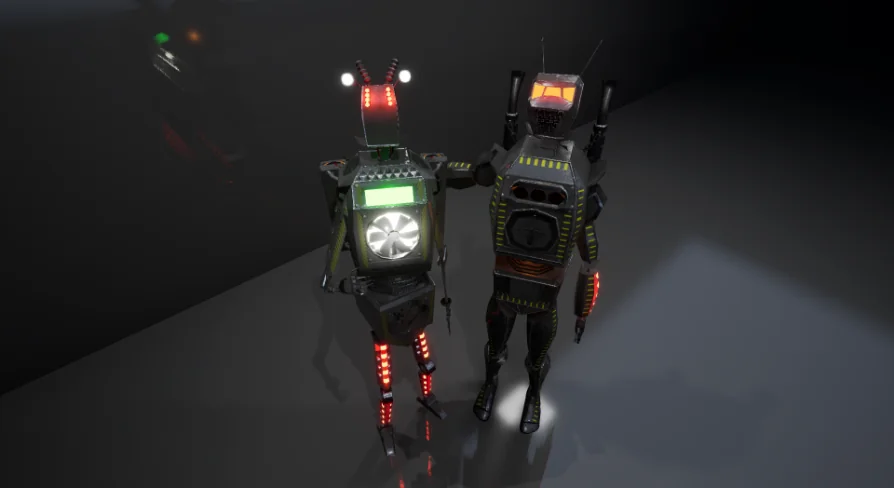
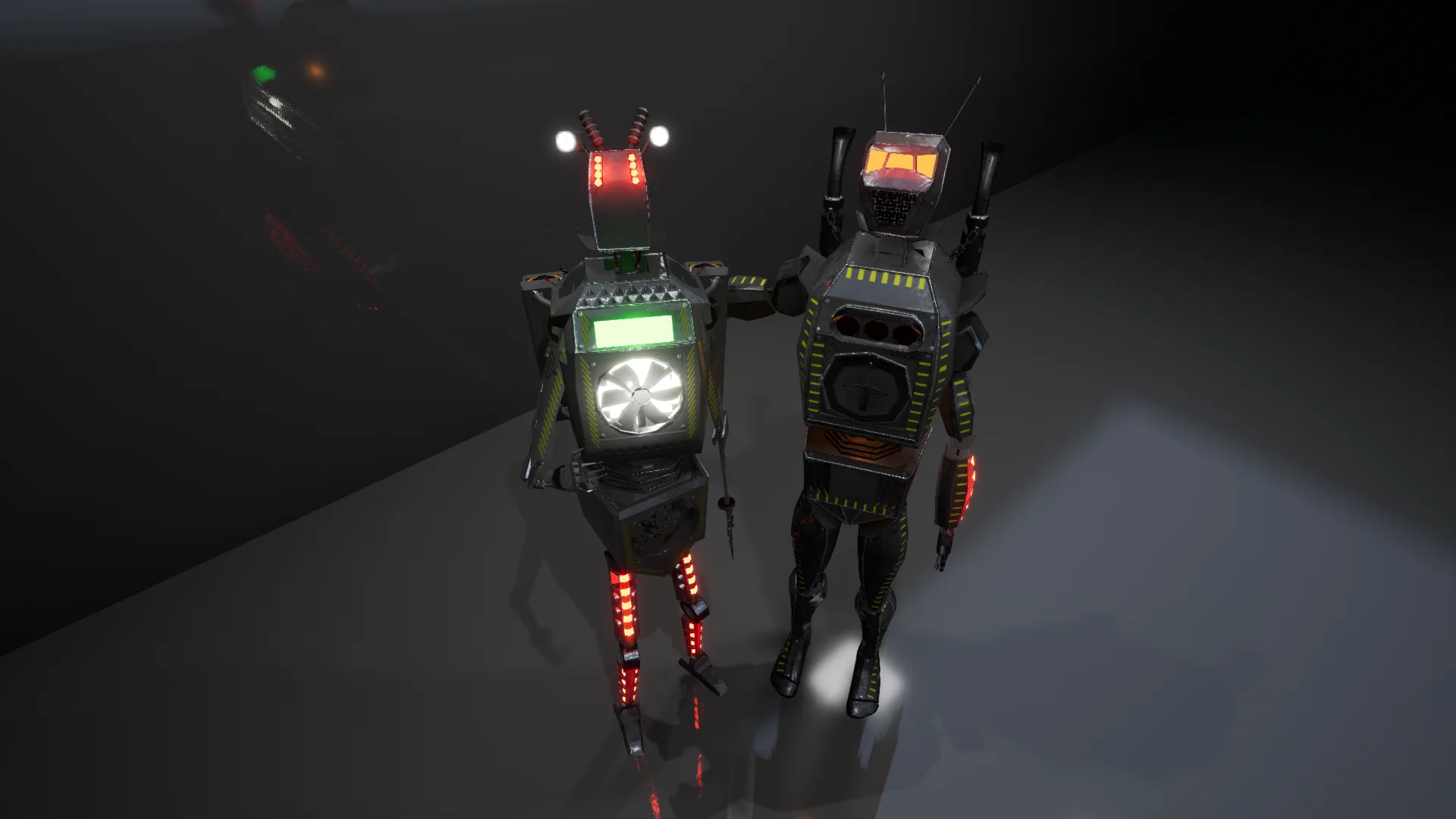
Deploying a robotic character in an active game environment requires a clean path between static geometry and responsive motion. The Rbots package establishes this bridge by combining lowpoly mesh design with a dedicated Animation Blueprint and underlying script logic. Because the asset is explicitly configured as an animated character rather than an inert decorative prop, setup revolves around connecting the provided Animation Blueprint to character movement components and controller input systems.
Lowpoly geometry inherently streamlines performance, keeping draw calls and vertex counts manageable across dense scenes or hardware with restricted processing budgets. In high-density settings where multiple mechanized units populate an area simultaneously, this lightweight surface density avoids the performance bottlenecks associated with sub-millimeter high-poly bakes. The aesthetic embraces angular mechanical surfaces that read clearly under dynamic lighting while retaining clean silhouette definition. Because the character comes wired with an Animation Blueprint, locomotion states, idle poses, and mechanical state shifts do not require building state machines completely from scratch. Developers can plug existing animation sets or retarget complementary motion sequences directly into the established node tree.
Mechanical Identity: Electro Systems and Furnace Machine Attributes
The visual and functional thematic identity of the character model draws on electro and furnace design motifs. Rather than standard clean-room android aesthetics, these identifiers point toward heavy-duty, heat-bearing industrial automation. A furnace-themed machine implies internal combustion, smelting roles, thermal exhaust considerations, or high-temperature factory tasks, while electro categorization points toward integrated power distribution, circuit-driven utilities, and visible electrical components across the chassis.
These combined themes fit distinct environmental contexts:
Industrial facilities, smelters, and automated metallurgical plants requiring hazardous-duty automations.
Post-apocalyptic workshops where heavy machinery relies on crude electrical junctions and furnace-driven power generation.
Futuristic survival games where robotic enemies or companions double as mobile heating units or energy converters.
Stylized combat arenas featuring specialized elemental or mechanical robot archetypes.
The contrast between thermal furnace operations and electrical system traits gives the lowpoly chassis distinct character markers. Hard edges separate functional compartments, allowing different material segments to reflect heat treatment, insulated cabling, or conductive plating across the robot body without needing hyper-dense surface micro-geometry.
Customization Logic and Scripted Functionality in Rbots
Modularity stands out as a core design priority through explicit customizable and script tagging. A customizable robotic entity allows creators to tailor both functional behaviors and visual variants to fit specific gameplay requirements. Having integrated scripting alongside mesh data ensures that mechanical interactions, component swapping, or gameplay events can be triggered through unified logic.
Scripting within a character framework typically manages state management, procedural transformations, or socket-based equipment handling. When paired with a dedicated Animation Blueprint, scripts handle logic checks—such as determining whether an electrical charge is active, toggling furnace-related states, or activating operational routines—while the Animation Blueprint translates those status flags into fluid kinematic adjustments. This separation of mechanical logic from skeletal transformation keeps runtime behavior predictable and simple to debug when expanding project mechanics.
The customizable structure also benefits projects requiring multiple robotic tiers or roles derived from the same foundational asset. By altering script parameters or swapping modular surfaces supported by the lowpoly mesh, teams can spawn diverse industrial worker drones, defensive electro-sentinels, or specialized maintenance bots without authoring entirely separate character codebases for each variation.
Integrating Rbots with Driveable Car Infrod
A notable technical capability of the package is verified compatibility with the Driveable Car Infrod system. Vehicles in interactive engines often present integration hurdles for robotic characters, particularly concerning seating sockets, steering wheel synchronization, hand placement, and entering or exiting transitions. Compatibility with the Infrod vehicle framework indicates that the robot is architected to interface cleanly with existing vehicle rigs.
Achieving smooth integration between an automated character and a vehicle system involves aligning the Animation Blueprint with vehicle input controllers. When the character enters the vehicle, the Animation Blueprint can transition from walking or running states into seated steering postures, pedal controls, or dashboard monitoring animations supported by the Infrod architecture. Because both assets share structural alignment, developers avoid the complex process of manually restructuring skeletal hierarchies or re-authoring bone transforms just to seat the mechanical driver securely behind the wheel.
This cross-asset capability broadens production scope, enabling scenarios where robotic units navigate open terrain in ground vehicles, transport industrial materials across automated compounds, or engage in vehicle-based combat sequences without secondary rig adjustments.
Community Support, Tutorials, and Implementation Resources
Navigating setup steps and expanding the functionality of the asset is backed by dedicated support channels organized by the creator. A dedicated demonstration video showcasing the Rbot asset in action provides direct visual reference for how animations play out, how the lowpoly geometry interacts with motion controllers, and how its mechanical features present during execution.
For ongoing implementation assistance, community interactions are concentrated in a Discord group that distributes news, project bonuses, tutorials, and direct technical answers. Access to targeted tutorials simplifies resolving integration queries, particularly regarding Animation Blueprint linking, script modifications, or vehicle seat rigging. The presence of community-driven support channels ensures that developers encountering pipeline issues or seeking guidance on tailoring the customizable properties have a direct route to technical resources and ongoing development updates across the creator's broader catalog.
 Characters
 Characters
 Characters
 Characters