"ddd0e3fb95b0aec2"{"id":"1000393","slug":"power-plugs-and-sockets-system","title":"Power Plugs And Sockets System","category":"Gameplay Features","engine":"5.3+","assetVersion":"","engineVersion":"Engine Version: 5.3+","tag":"Gameplay Features","accent":"blue","visual":"mech","summary":"A Blueprint-driven system that adds realism to interactive environments by requiring an actor's cord to be connected to a socket before it can be used.","platform":"Unreal Engine","publishedAt":"2026-07-07T15:01:55.308Z","updatedAt":"2026-07-07T15:01:55.308Z","sourceNotes":[],"fileContents":[],"compatibility":["Unreal Engine","Engine Version: 5.3+"],"featuredImage":{"alt":"Power Plugs And Sockets System","src":"/wp-content/uploads/published/2026/07/6e8e0c4f1631-276ee683-e40e-4f91-8e46-1071066b5996-c97943d271.webp"},"hasDownloadLink":true,"downloads":0,"terms":[{"taxonomy":"category","slug":"gameplay-features","name":"Gameplay Features"}],"galleryImages":[{"src":"/wp-content/uploads/published/2026/07/b8f5b15ea6ba-072aaed9-35bd-4b5c-9c13-1a056b8cee69-e0a58e5ea4.webp","alt":"Power Plugs And Sockets System"},{"src":"/wp-content/uploads/published/2026/07/3fefbb0dbd1d-0b94bbaf-cf5f-4d00-bb4c-18ddb2ce516b-7b619436ce.webp","alt":"Power Plugs And Sockets System"},{"src":"/wp-content/uploads/published/2026/07/f315b8522fc0-3abdeff3-2e4d-4374-89cd-8402436c98dd-4661764b7e.webp","alt":"Power Plugs And Sockets System"},{"src":"/wp-content/uploads/published/2026/07/6af9248d1be2-d2a9a94c-f8dc-48f9-808b-9306d31c8b28-7337e2e918.webp","alt":"Power Plugs And Sockets System"},{"src":"/wp-content/uploads/published/2026/07/9836d63a0c38-98dc4beb-ea6f-446e-bdf0-c11c798f39a5-8f11d0b636.webp","alt":"Power Plugs And Sockets System"},{"src":"/wp-content/uploads/published/2026/07/579c98bcaaec-d4a34e31-e51a-461a-99de-c1ad49ab749c-7eb10d22db.webp","alt":"Power Plugs And Sockets System"},{"src":"/wp-content/uploads/published/2026/07/863ab703e504-669633f5-c299-47f1-ad22-b6cd11d792c9-1c56a0ed1a.webp","alt":"Power Plugs And Sockets System"}],"accessPanel":{"kind":"resource","title":"Download this resource","eyebrow":"Free Download","message":"Log in or create a free account to start your download.","fileName":"Power Plugs And Sockets System.7z","safetyNote":"Resources are manually reviewed before listing to improve quality and reduce obvious risks.","actionLabel":"Download Free","resourceType":"Resource archive"},"contentHtml":"\u003ch2\u003eEstablishing Prerequisites for Interactive Objects\u003c/h2\u003e\n\u003cp\u003eStandard interactive environments often struggle with logical physical prerequisites, allowing players to activate devices without accounting for their power source. Bypassing these physical realities can break immersion in games that otherwise strive for high fidelity and grounded environmental mechanics.\u003c/p\u003e\n\u003cp\u003eThe Power Plugs And Sockets System addresses this specific workflow problem by introducing a rigid condition for object interactivity. Instead of allowing immediate activation of an electronic prop, the system requires a physical cord connection between a plug and an outlet. By enforcing this prerequisite, developers can transform basic props into grounded interactive elements that obey the rules of real-world electricity. The asset fundamentally shifts how a player approaches a space, demanding that they account for the localized power supply before attempting to use a specific actor. This reliance on physical infrastructure prevents the environment from feeling like a collection of floating, disconnected interactions.\u003c/p\u003e \u003ch2\u003eRestricting Actor Activation Through Cord Connections\u003c/h2\u003e\n\u003cp\u003eThe core mechanic of this package centers on conditional interaction states governed by a network of plugs and sockets. It actively restricts an actor's usability until the correct physical requirements are completely satisfied within the scene.\u003c/p\u003e\n\u003cp\u003eWhen integrated into a project, the system ensures that a designated actor remains completely inert until its specific cord is successfully connected to an available socket. This Blueprint-driven logic handles the underlying state changes, flipping the actor from a dormant object to a fully interactive one only when the electricity flow is established. Because the framework manages these connections dynamically, developers can build complex spaces where finding, routing, or managing power through various outlets becomes a central part of navigating the level. The dependency on a physical cord connection means that players cannot simply trigger events from across the room; they must engage directly with the electrical hardware provided.\u003c/p\u003e \u003ch2\u003eEnhancing Scene Realism with Grounded Electricity Mechanics\u003c/h2\u003e\n\u003cp\u003eEnvironments that require physical power connections inherently feel more realistic and immersive to navigate. The act of manually supplying electricity adds a tactile, deliberate layer to the overall world design.\u003c/p\u003e\n\u003cp\u003eUtilizing this system allows level designers to construct scenarios that directly mirror real-world logic, where devices are tethered to their physical environments by cords. Whether developing a tense survival scenario where power outlets are scarce or a detailed simulation that demands methodical setup procedures, the inclusion of functional sockets and plugs grounds the player's actions in reality. The realistic approach to electricity ensures that the environment pushes back against the player, requiring them to engage with the architecture of the room rather than just the objects placed within it. This interactive friction transforms mundane actions into deliberate gameplay choices, enhancing the immersive qualities of the project.\u003c/p\u003e \u003ch2\u003eStreamlining Integration with the Blueprint Setup\u003c/h2\u003e\n\u003cp\u003eDespite the logical complexity of managing dependent power states across multiple actors, the underlying Blueprint framework is built heavily around easy setup.\u003c/p\u003e\n\u003cp\u003eDevelopers looking to implement these mechanics do not need to build the interaction dependencies from scratch or write complex state-management code. The provided system simplifies the process of assigning cords, plugs, and sockets to existing actors in a custom project. By utilizing the structured Blueprint design, creators can rapidly convert static meshes into fully dependent electrical devices without manually defining the conditional logic for every single interactive object. This streamlined workflow allows for rapid iteration across large levels that feature numerous interactive components, ensuring that the realistic mechanics do not introduce massive technical overhead during the development phase.\u003c/p\u003e \u003ch2\u003eNavigating the Provided Tutorials and Documentation\u003c/h2\u003e\n\u003cp\u003eAdopting a new interactivity framework requires clear pathways for migration and implementation into ongoing project architectures.\u003c/p\u003e\n\u003cp\u003eTo facilitate this process, the system includes a comprehensive suite of learning materials and integration guides tailored for developers. A video overview provides a high-level look at the mechanics in action, while detailed documentation outlines the specific parameters and variables of the Blueprints. For hands-on testing and immediate context, developers can explore a playable demo to understand exactly how the plug and socket interactions feel in real-time gameplay. When it is time to move the system into an active production environment, the included integration and migration tutorial ensures that the setup transitions smoothly into custom projects, minimizing downtime and troubleshooting.\u003c/p\u003e \u003ch2\u003ePositioning the System in Interactive Productions\u003c/h2\u003e\n\u003cp\u003eA dedicated plug and socket mechanic is highly specialized, serving projects that prioritize environmental interaction over fast-paced, automated action.\u003c/p\u003e\n\u003cp\u003eThis system is best suited for immersive sims, puzzle games, or detailed technical simulations where the tactile manipulation of the environment is a primary focus of the design. By requiring an actor to be physically plugged into an outlet before it can be used, the package provides a ready-made framework for electricity-based logic and realistic problem-solving. It fits seamlessly into production pipelines that need to add a layer of grounded interactivity without dedicating extensive engineering time to custom power-dependency scripts. Ultimately, it gives developers a reliable tool to make their virtual environments feel physically connected and mechanically sound.\u003c/p\u003e\n\n\u003ch2\u003eExplore Similar Assets\u003c/h2\u003e\n\u003cul\u003e\n\u003cli\u003e\u003ca href=\"https://3dcghub.com/dismemberment-kit-v2/\" title=\"Dismemberment Kit V2\"\u003eDismemberment Kit V2\u003c/a\u003e\u003c/li\u003e\n\u003cli\u003e\u003ca href=\"https://3dcghub.com/smart-cable-connector/\" title=\"Smart Cable Connector\"\u003eSmart Cable Connector\u003c/a\u003e\u003c/li\u003e\n\u003cli\u003e\u003ca href=\"https://3dcghub.com/multiplayer-object-throwing-system/\" title=\"Multiplayer Object Throwing System\"\u003eMultiplayer Object Throwing System\u003c/a\u003e\u003c/li\u003e\n\u003cli\u003e\u003ca href=\"https://3dcghub.com/cinematic-cutscene-system/\" title=\"Cinematic Cutscene System\"\u003eCinematic Cutscene System\u003c/a\u003e\u003c/li\u003e\n\u003cli\u003e\u003ca href=\"https://3dcghub.com/project-sunrise-interaction-dialogue-quest-system/\" title=\"Project Sunrise - Interaction, Dialogue \u0026amp; Quest System\"\u003eProject Sunrise - Interaction, Dialogue \u0026amp; Quest System\u003c/a\u003e\u003c/li\u003e\n\u003c/ul\u003e","contentTextLength":6043,"navigation":{"current":1257,"total":3511,"previous":{"id":"1000394","slug":"procedural-forest","title":"Procedural Forest","category":"Forest \u0026 Jungle","platform":"Unreal Engine","updatedAt":"2026-07-07T15:13:16.744Z"},"next":{"id":"1000392","slug":"polygon-pirate-pack","title":"POLYGON - Pirate Pack","category":"Island","platform":"Unreal Engine","updatedAt":"2026-07-07T14:55:33.242Z"}},"relatedResources":[{"id":"1000926","slug":"player-electricity-system","title":"Player Electricity System","category":"Gameplay Features","engine":"5.3+","assetVersion":"","engineVersion":"Engine Version: 5.3+","tag":"Gameplay Features","accent":"blue","visual":"city","summary":"Multiplayer electricity system for Unreal with 17 devices, snapping/non-snapping cable placement, device stats, and a customizable power info panel.","platform":"Unreal Engine","publishedAt":"2026-08-08T05:30:11.296Z","updatedAt":"2026-08-08T05:30:11.296Z","sourceNotes":[],"fileContents":[],"compatibility":["Unreal Engine","Engine Version: 5.3+"],"featuredImage":{"alt":"Player Electricity System","src":"/wp-content/uploads/published/2026/08/66f20ad90c0b-482f52d2-e85d-4762-9833-86d8a5b94442-9dc0b04e2b.webp"},"hasDownloadLink":true,"downloads":3},{"id":"1000865","slug":"player-farming-system","title":"Player Farming System","category":"Gameplay Features","engine":"5.3+","assetVersion":"","engineVersion":"Engine Version: 5.3+","tag":"Gameplay Features","accent":"blue","visual":"mech","summary":"Multiplayer farming Blueprint with plant stats, growth stages, sickness, socket placement, 7 plants, 3 tools, 3 planters, Survival Game Kit V2.","platform":"Unreal Engine","publishedAt":"2026-08-05T06:42:26.659Z","updatedAt":"2026-08-05T06:42:26.659Z","sourceNotes":[],"fileContents":[],"compatibility":["Unreal Engine","Engine Version: 5.3+"],"featuredImage":{"alt":"Player Farming System","src":"/wp-content/uploads/published/2026/08/41a79560e065-b4125912-9555-45fb-b37f-36aeb529a75e-d4ec89e558.webp"},"hasDownloadLink":true,"downloads":2},{"id":"1001034","slug":"hyper-scalable-interaction-system-v4","title":"Hyper Scalable Interaction System v4","category":"Gameplay Features","engine":"5.7+","assetVersion":"Asset Version: v4","engineVersion":"Engine Version: 5.7+","tag":"Gameplay Features","accent":"blue","visual":"mech","summary":"Plug-and-play interaction for any Unreal Engine actor with prompts, progress bars, conditions, and network replication for Adventure, RPG, Co-op, and Simulation","platform":"Unreal Engine","publishedAt":"2026-08-25T11:18:18.819Z","updatedAt":"2026-08-25T11:18:18.819Z","sourceNotes":[],"fileContents":[],"compatibility":["Unreal Engine","Asset Version: v4","Engine Version: 5.7+"],"featuredImage":{"alt":"Hyper Scalable Interaction System v4","src":"/wp-content/uploads/published/2026/08/7bc00c753bb2-66597fe3-a933-47a3-b023-6e95ce537263-e5174f5999.webp"},"hasDownloadLink":true,"downloads":1}]}
Gameplay Features
Power Plugs And Sockets System
A Blueprint-driven system that adds realism to interactive environments by requiring an actor's cord to be connected to a socket before it can be used.
Establishing Prerequisites for Interactive Objects
Standard interactive environments often struggle with logical physical prerequisites, allowing players to activate devices without accounting for their power source. Bypassing these physical realities can break immersion in games that otherwise strive for high fidelity and grounded environmental mechanics.
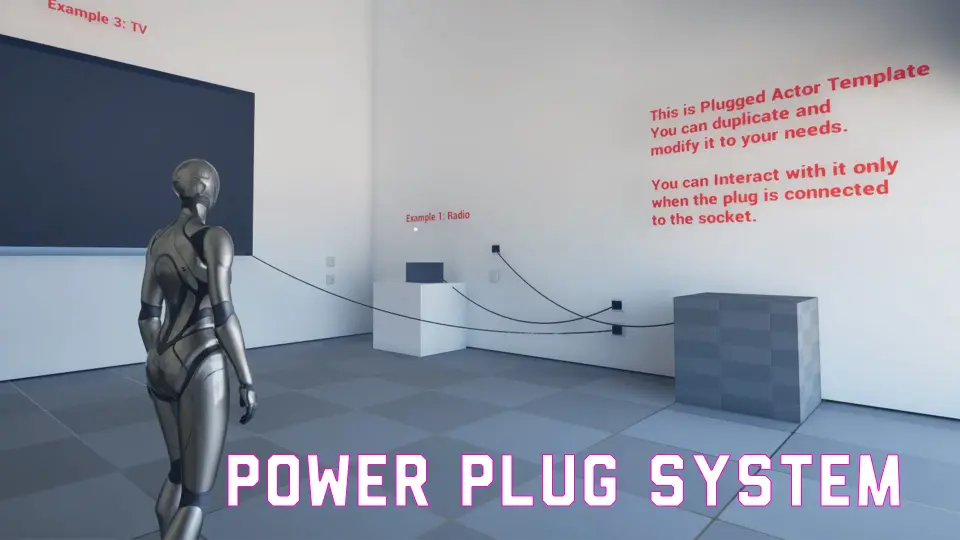
The Power Plugs And Sockets System addresses this specific workflow problem by introducing a rigid condition for object interactivity. Instead of allowing immediate activation of an electronic prop, the system requires a physical cord connection between a plug and an outlet. By enforcing this prerequisite, developers can transform basic props into grounded interactive elements that obey the rules of real-world electricity. The asset fundamentally shifts how a player approaches a space, demanding that they account for the localized power supply before attempting to use a specific actor. This reliance on physical infrastructure prevents the environment from feeling like a collection of floating, disconnected interactions.
Restricting Actor Activation Through Cord Connections
The core mechanic of this package centers on conditional interaction states governed by a network of plugs and sockets. It actively restricts an actor's usability until the correct physical requirements are completely satisfied within the scene.
When integrated into a project, the system ensures that a designated actor remains completely inert until its specific cord is successfully connected to an available socket. This Blueprint-driven logic handles the underlying state changes, flipping the actor from a dormant object to a fully interactive one only when the electricity flow is established. Because the framework manages these connections dynamically, developers can build complex spaces where finding, routing, or managing power through various outlets becomes a central part of navigating the level. The dependency on a physical cord connection means that players cannot simply trigger events from across the room; they must engage directly with the electrical hardware provided.
Enhancing Scene Realism with Grounded Electricity Mechanics
Environments that require physical power connections inherently feel more realistic and immersive to navigate. The act of manually supplying electricity adds a tactile, deliberate layer to the overall world design.
Utilizing this system allows level designers to construct scenarios that directly mirror real-world logic, where devices are tethered to their physical environments by cords. Whether developing a tense survival scenario where power outlets are scarce or a detailed simulation that demands methodical setup procedures, the inclusion of functional sockets and plugs grounds the player's actions in reality. The realistic approach to electricity ensures that the environment pushes back against the player, requiring them to engage with the architecture of the room rather than just the objects placed within it. This interactive friction transforms mundane actions into deliberate gameplay choices, enhancing the immersive qualities of the project.
Streamlining Integration with the Blueprint Setup
Despite the logical complexity of managing dependent power states across multiple actors, the underlying Blueprint framework is built heavily around easy setup.
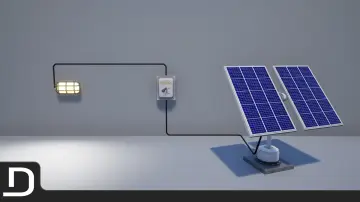
Developers looking to implement these mechanics do not need to build the interaction dependencies from scratch or write complex state-management code. The provided system simplifies the process of assigning cords, plugs, and sockets to existing actors in a custom project. By utilizing the structured Blueprint design, creators can rapidly convert static meshes into fully dependent electrical devices without manually defining the conditional logic for every single interactive object. This streamlined workflow allows for rapid iteration across large levels that feature numerous interactive components, ensuring that the realistic mechanics do not introduce massive technical overhead during the development phase.
Navigating the Provided Tutorials and Documentation
Adopting a new interactivity framework requires clear pathways for migration and implementation into ongoing project architectures.
To facilitate this process, the system includes a comprehensive suite of learning materials and integration guides tailored for developers. A video overview provides a high-level look at the mechanics in action, while detailed documentation outlines the specific parameters and variables of the Blueprints. For hands-on testing and immediate context, developers can explore a playable demo to understand exactly how the plug and socket interactions feel in real-time gameplay. When it is time to move the system into an active production environment, the included integration and migration tutorial ensures that the setup transitions smoothly into custom projects, minimizing downtime and troubleshooting.
Positioning the System in Interactive Productions
A dedicated plug and socket mechanic is highly specialized, serving projects that prioritize environmental interaction over fast-paced, automated action.
This system is best suited for immersive sims, puzzle games, or detailed technical simulations where the tactile manipulation of the environment is a primary focus of the design. By requiring an actor to be physically plugged into an outlet before it can be used, the package provides a ready-made framework for electricity-based logic and realistic problem-solving. It fits seamlessly into production pipelines that need to add a layer of grounded interactivity without dedicating extensive engineering time to custom power-dependency scripts. Ultimately, it gives developers a reliable tool to make their virtual environments feel physically connected and mechanically sound.
 Gameplay Features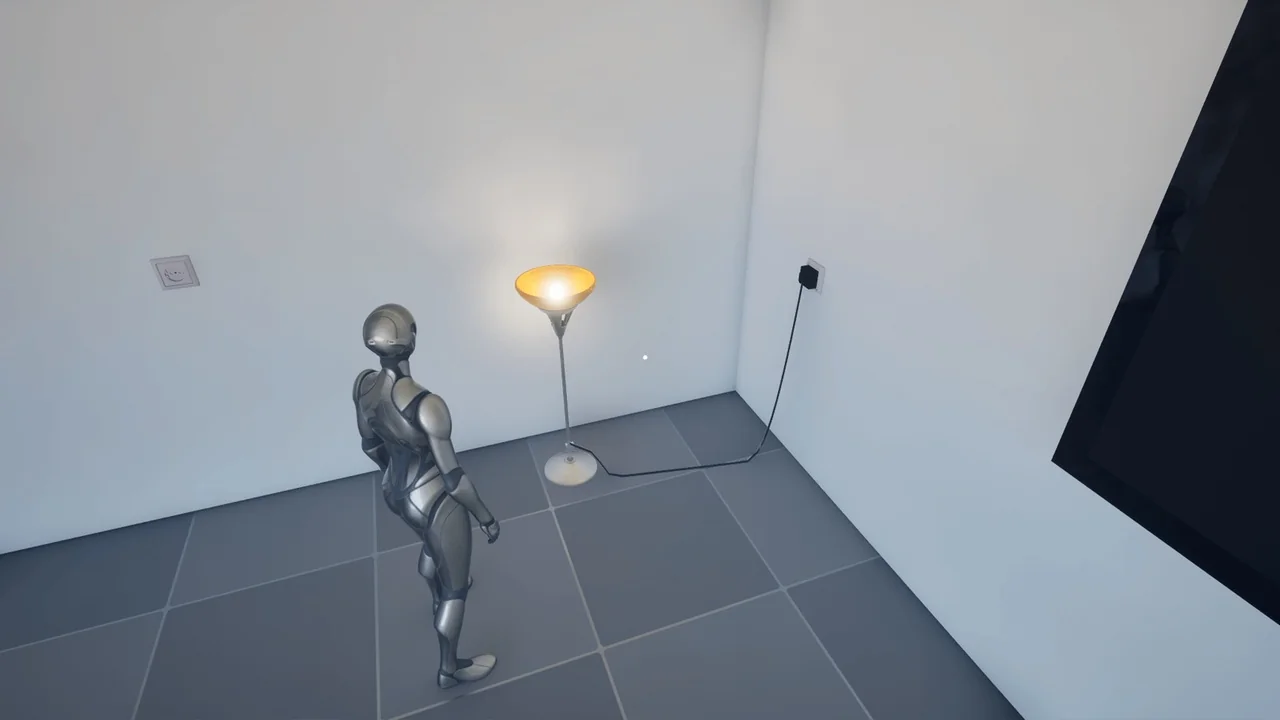
 Gameplay Features
 Gameplay Features
 Gameplay Features