"bf0aee18c0cf03b0"{"id":"1002152","slug":"post-soviet-pipes-and-vents","title":"Post Soviet Pipes and Vents","category":"Components","engine":"4.26+,5.0+","assetVersion":"","engineVersion":"Engine Version: 4.26+,5.0+","tag":"Components","accent":"blue","visual":"mech","summary":"Explore Post Soviet Pipes and Vents, a prop pack created for the Twin Soul demo featuring realistic weariness for horror, shooter, and adventure games.","platform":"Unreal Engine","publishedAt":"2026-10-29T09:55:59.627Z","updatedAt":"2026-10-29T09:55:59.627Z","sourceNotes":[],"fileContents":[],"compatibility":["Unreal Engine","Engine Version: 4.26+,5.0+"],"featuredImage":{"alt":"Post Soviet Pipes and Vents","src":"/wp-content/uploads/published/2026/10/383aea4fac40-778817d0-e5d4-48ad-b4bc-c1ca850796ad-95553ac58e.webp"},"hasDownloadLink":true,"downloads":0,"terms":[{"taxonomy":"category","slug":"components","name":"Components"}],"galleryImages":[{"src":"/wp-content/uploads/published/2026/10/67a1a8f70d01-912f95fd-d1a5-41b5-ba51-87074d5af3bf-b9b4eb879d.webp","alt":"Post Soviet Pipes and Vents"}],"accessPanel":{"kind":"resource","title":"Download this resource","eyebrow":"Free Download","message":"Log in or create a free account to start your download.","fileName":"Post Soviet Pipes and Vents.7z","safetyNote":"Resources are manually reviewed before listing to improve quality and reduce obvious risks.","actionLabel":"Download Free","resourceType":"Resource archive"},"contentHtml":"\u003cp\u003ePopulating an interior with infrastructure requires careful placement of utility runs that look structurally logical rather than decorative. Incorporating heating circuits, air distribution networks, and plumbing conduits into level geometry provides natural lines of sight and believable interior boundaries. The Post Soviet Pipes and Vents collection addresses this stage of world-building by supplying functional lowpoly elements designed to fit together under a coherent architectural logic, grounding player navigation inside enclosed settings.\u003c/p\u003e \u003ch2\u003eIntegrating Soviet Pipes and Vents into Level Architecture\u003c/h2\u003e\n\u003cp\u003ePlumbing and air ducts dictate how a real-world facility operates, and mapping those systems through a virtual space immediately conveys building purpose. Running horizontal pipe segments along corridor walls or anchoring vertical risers into floor corners establishes an authentic utility network. These elements turn bare walls into working systems, suggesting the presence of boiler rooms, basement pumps, or central heating plants located just outside the playable boundary.\u003c/p\u003e\n\u003cp\u003eHeaters and radiators included in the collection anchor perimeter zones below windows and along shared residential partitions. Rather than scattering random clutter, placing a heater next to connected pipe fittings reinforces structural cohesion. Overhead ductwork can be routed across ceiling junctions to break up empty headroom, frame doorways, or draw attention to traversal paths. Because all objects share a single design philosophy, connecting ventilation runs to pipe conduits maintains visual integrity without conflicting proportions or discordant modeling standards.\u003c/p\u003e \u003ch2\u003eTwin Soul Game Demo Lineage and Aesthetic Cohesion\u003c/h2\u003e\n\u003cp\u003eThe collection was developed for the Twin Soul game demo, where environmental storytelling and psychological tension depend on believable spaces. That production origin ensures the props are not speculative art pieces; they were built to solve specific layout challenges in an active production pipeline. Every piece adheres to a unified style, eliminating the visual friction that occurs when assembling assets from disparate creators.\u003c/p\u003e\n\u003cp\u003eUniformity in scale, silhouette, and surface quality allows level artists to build dense mechanical clusters without drawing unintended visual focus. In a production setting, having heaters, vents, and pipe assemblies match in material treatment speeds up scene construction. Artists can draft utility corridors, service basements, and institutional hallways confident that adjacent modular elements will read as parts of the exact same facility.\u003c/p\u003e \u003ch2\u003eSurface Weariness and Dilapidation in Scene Staging\u003c/h2\u003e\n\u003cp\u003eThe visual signature of this collection is defined by slight weariness and dilapidation. Unlike clean industrial models that look fresh from a factory floor, these props carry signs of prolonged use, age, and maintenance neglect. The distress is kept balanced: it signals history without tipping into complete ruin or structural collapse.\u003c/p\u003e\n\u003cp\u003eThis balance makes the props versatile for ongoing narratives where an environment is still functional yet degrading. The subtle wear reflects the reality of communal infrastructure where coats of paint layer over old metal, surfaces collect grime, and joints show minor oxidation. This subdued decay supports environmental storytelling without overpowering narrative moments or competing with gameplay-critical props. When directional lights or flashlights hit these surfaces, the realistic wear provides authentic texture breakups across pipes and radiator grilles.\u003c/p\u003e \u003ch2\u003eDeployment across Horror, Adventure, and Shooter Genres\u003c/h2\u003e\n\u003cp\u003eThe visual tone directly serves AAA-tier productions within horror, adventure, and shooter categories. Each genre leverages utility infrastructure to solve distinct design challenges:\u003c/p\u003e\n\u003cul\u003e \u003cli\u003e\u003cstrong\u003eHorror Projects:\u003c/strong\u003e The worn aesthetic matches the claustrophobic dread required in survival horror. Low-hanging vents and rusted pipe networks cast irregular shadows, frame tight camera angles, and reinforce the feeling of being trapped inside a decaying institutional complex.\u003c/li\u003e \u003cli\u003e\u003cstrong\u003eAdventure Titles:\u003c/strong\u003e Realistic fixtures ground exploratory gameplay in authentic Soviet-era spaces. Heaters, wall vents, and pipe valves serve as logical environmental markers, helping players orient themselves through sprawling residential flats or abandoned administrative wings.\u003c/li\u003e \u003cli\u003e\u003cstrong\u003eShooters:\u003c/strong\u003e Industrial corridors and utility basements require clear cover points and silhouette readability. Lowpoly conduit clusters provide structural framing around combat arenas, establishing choke points and flanking routes while keeping performance budgets stable during intensive encounters.\u003c/li\u003e\n\u003c/ul\u003e \u003ch2\u003eLowpoly Construction and Post Soviet Hostel Compatibility\u003c/h2\u003e\n\u003cp\u003eBuilt as lowpoly assets, the collection preserves performance budgets while maintaining the fidelity required for AAA presentation standards. Efficient geometry ensures that long hallways lined with multiple radiators, branching overhead ducts, and extensive plumbing runs can be rendered smoothly without excessive polygon overhead. This lowpoly balance makes the props well suited for dense instancing across large levels.\u003c/p\u003e\n\u003cp\u003eThe pack is fully compatible with the Post Soviet Hostel environment, allowing seamless expansion of residential flats, communal washrooms, and service rooms. Combining these utility fixtures with hostel architecture yields a complete, cohesive depiction of Eastern European communal living, where exposed plumbing and vintage heating units are defining characteristics of daily domestic spaces.\u003c/p\u003e\n\n\u003ch2\u003eRelated Resources Worth Checking\u003c/h2\u003e\n\u003cul\u003e\n\u003cli\u003e\u003ca href=\"https://3dcghub.com/industrial-pipes/\" title=\"Industrial Pipes\"\u003eIndustrial Pipes\u003c/a\u003e\u003c/li\u003e\n\u003cli\u003e\u003ca href=\"https://3dcghub.com/post-soviet-kitchen/\" title=\"Post Soviet Kitchen\"\u003ePost Soviet Kitchen\u003c/a\u003e\u003c/li\u003e\n\u003cli\u003e\u003ca href=\"https://3dcghub.com/post-soviet-hostel/\" title=\"Post Soviet Hostel\"\u003ePost Soviet Hostel\u003c/a\u003e\u003c/li\u003e\n\u003cli\u003e\u003ca href=\"https://3dcghub.com/soviet-post-soviet-abandoned-world/\" title=\"Soviet/Post Soviet Abandoned World.\"\u003eSoviet/Post Soviet Abandoned World.\u003c/a\u003e\u003c/li\u003e\n\u003cli\u003e\u003ca href=\"https://3dcghub.com/post-soviet-flat/\" title=\"Post Soviet Flat\"\u003ePost Soviet Flat\u003c/a\u003e\u003c/li\u003e\n\u003c/ul\u003e","contentTextLength":5673,"navigation":{"current":58,"total":4135,"previous":{"id":"1002153","slug":"post-soviet-souvenirs","title":"Post Soviet Souvenirs","category":"Tools, Objects \u0026 Decor","platform":"Unreal Engine","updatedAt":"2026-10-29T09:56:51.207Z"},"next":{"id":"1002151","slug":"post-process-toolkit","title":"Post Process Toolkit","category":"Art \u0026 Traditional","platform":"Unreal Engine","updatedAt":"2026-10-29T09:55:20.482Z"}},"relatedResources":[{"id":"1002062","slug":"industrial-pipes","title":"Industrial Pipes","category":"Components","engine":"4.26+,5.0+","assetVersion":"","engineVersion":"Engine Version: 4.26+,5.0+","tag":"Components","accent":"blue","visual":"mech","summary":"Modular industrial pipes package featuring PBR-textures for assembling realistic pipelines, conduits, and utility systems in 3D environments.","platform":"Unreal Engine","publishedAt":"2026-10-26T15:20:52.971Z","updatedAt":"2026-10-26T15:20:52.971Z","sourceNotes":[],"fileContents":[],"compatibility":["Unreal Engine","Engine Version: 4.26+,5.0+"],"featuredImage":{"alt":"Industrial Pipes","src":"/wp-content/uploads/published/2026/10/e95b27a8a89d-8c50050d-60e7-4463-badf-1e7f0d68140e-f0f69d7622.webp"},"hasDownloadLink":true,"downloads":0},{"id":"1002153","slug":"post-soviet-souvenirs","title":"Post Soviet Souvenirs","category":"Tools, Objects \u0026 Decor","engine":"4.18+,5.0+","assetVersion":"","engineVersion":"Engine Version: 4.18+,5.0+","tag":"Tools","accent":"blue","visual":"mech","summary":"Examine the Post Soviet Souvenirs prop pack, developed for the Twin Soul demo to bring realistic wear and AAA fidelity to horror, adventure, and shooter scenes.","platform":"Unreal Engine","publishedAt":"2026-10-29T09:56:51.207Z","updatedAt":"2026-10-29T09:56:51.207Z","sourceNotes":[],"fileContents":[],"compatibility":["Unreal Engine","Engine Version: 4.18+,5.0+"],"featuredImage":{"alt":"Post Soviet Souvenirs","src":"/wp-content/uploads/published/2026/10/2b9e0d366bd2-ae110d77-071f-4421-bea8-b13b16563bb2-2dfaf47b5f.webp"},"hasDownloadLink":true,"downloads":1},{"id":"1001394","slug":"post-soviet-kitchen","title":"Post Soviet Kitchen","category":"Interior","engine":"4.15+,5.0+","assetVersion":"","engineVersion":"Engine Version: 4.15+,5.0+","tag":"Interior","accent":"blue","visual":"mech","summary":"Construct authentic, low-poly domestic interiors with Post Soviet Kitchen, featuring modular parts, centimeter-scale props, and realistic PBR wear.","platform":"Unreal Engine","publishedAt":"2026-10-04T17:17:29.857Z","updatedAt":"2026-10-04T17:17:29.857Z","sourceNotes":[],"fileContents":[],"compatibility":["Unreal Engine","Engine Version: 4.15+,5.0+"],"featuredImage":{"alt":"Post Soviet Kitchen","src":"/wp-content/uploads/published/2026/10/73dae7cfc5ee-e9552f87-02fd-45ee-ac04-af2044f54c63-bc89d0e776.webp"},"hasDownloadLink":true,"downloads":3}]}
Components
Post Soviet Pipes and Vents
Explore Post Soviet Pipes and Vents, a prop pack created for the Twin Soul demo featuring realistic weariness for horror, shooter, and adventure games.
Category:Unreal Engine,ComponentsPlatform: Unreal EngineEngine Version: 4.26+,5.0+Published: Oct 29, 2026
Components
Resource overview
Populating an interior with infrastructure requires careful placement of utility runs that look structurally logical rather than decorative. Incorporating heating circuits, air distribution networks, and plumbing conduits into level geometry provides natural lines of sight and believable interior boundaries. The Post Soviet Pipes and Vents collection addresses this stage of world-building by supplying functional lowpoly elements designed to fit together under a coherent architectural logic, grounding player navigation inside enclosed settings.
Integrating Soviet Pipes and Vents into Level Architecture
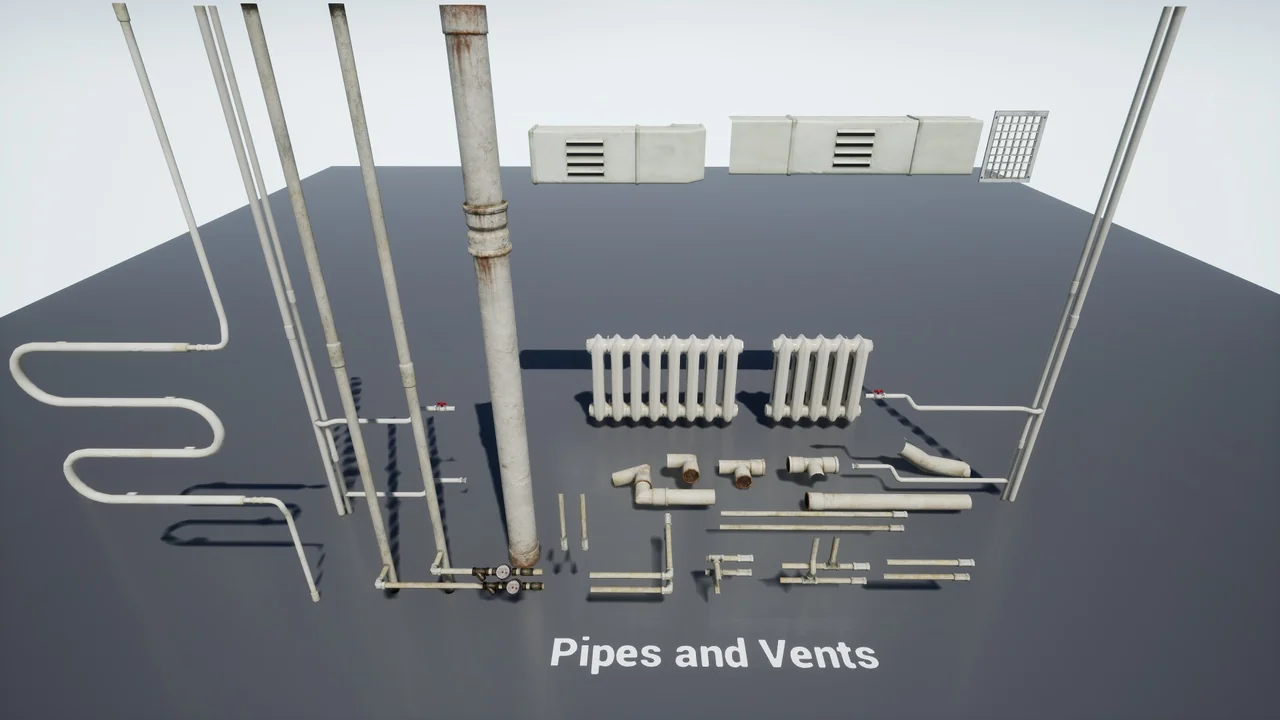
Plumbing and air ducts dictate how a real-world facility operates, and mapping those systems through a virtual space immediately conveys building purpose. Running horizontal pipe segments along corridor walls or anchoring vertical risers into floor corners establishes an authentic utility network. These elements turn bare walls into working systems, suggesting the presence of boiler rooms, basement pumps, or central heating plants located just outside the playable boundary.
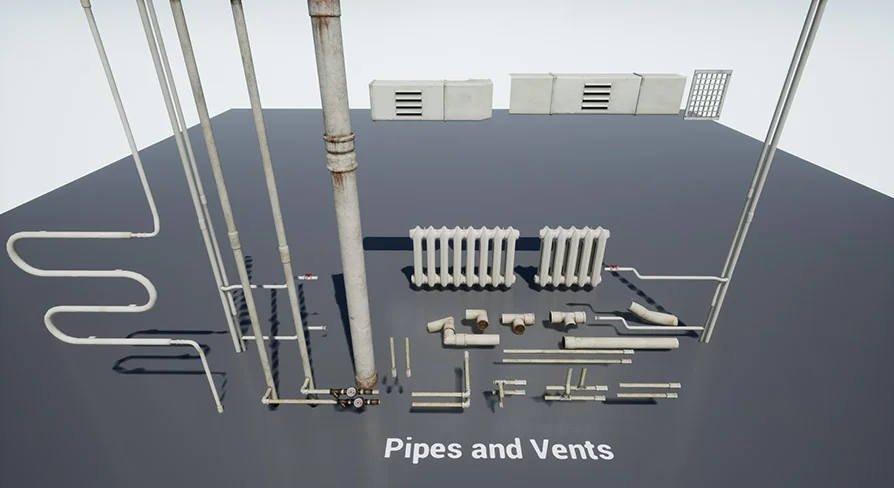
Heaters and radiators included in the collection anchor perimeter zones below windows and along shared residential partitions. Rather than scattering random clutter, placing a heater next to connected pipe fittings reinforces structural cohesion. Overhead ductwork can be routed across ceiling junctions to break up empty headroom, frame doorways, or draw attention to traversal paths. Because all objects share a single design philosophy, connecting ventilation runs to pipe conduits maintains visual integrity without conflicting proportions or discordant modeling standards.
Twin Soul Game Demo Lineage and Aesthetic Cohesion
The collection was developed for the Twin Soul game demo, where environmental storytelling and psychological tension depend on believable spaces. That production origin ensures the props are not speculative art pieces; they were built to solve specific layout challenges in an active production pipeline. Every piece adheres to a unified style, eliminating the visual friction that occurs when assembling assets from disparate creators.
Uniformity in scale, silhouette, and surface quality allows level artists to build dense mechanical clusters without drawing unintended visual focus. In a production setting, having heaters, vents, and pipe assemblies match in material treatment speeds up scene construction. Artists can draft utility corridors, service basements, and institutional hallways confident that adjacent modular elements will read as parts of the exact same facility.
Surface Weariness and Dilapidation in Scene Staging
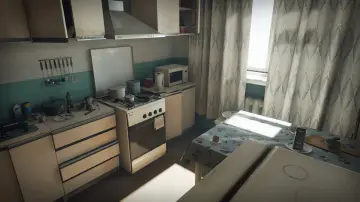
The visual signature of this collection is defined by slight weariness and dilapidation. Unlike clean industrial models that look fresh from a factory floor, these props carry signs of prolonged use, age, and maintenance neglect. The distress is kept balanced: it signals history without tipping into complete ruin or structural collapse.
This balance makes the props versatile for ongoing narratives where an environment is still functional yet degrading. The subtle wear reflects the reality of communal infrastructure where coats of paint layer over old metal, surfaces collect grime, and joints show minor oxidation. This subdued decay supports environmental storytelling without overpowering narrative moments or competing with gameplay-critical props. When directional lights or flashlights hit these surfaces, the realistic wear provides authentic texture breakups across pipes and radiator grilles.
Deployment across Horror, Adventure, and Shooter Genres
The visual tone directly serves AAA-tier productions within horror, adventure, and shooter categories. Each genre leverages utility infrastructure to solve distinct design challenges:
Horror Projects: The worn aesthetic matches the claustrophobic dread required in survival horror. Low-hanging vents and rusted pipe networks cast irregular shadows, frame tight camera angles, and reinforce the feeling of being trapped inside a decaying institutional complex.
Adventure Titles: Realistic fixtures ground exploratory gameplay in authentic Soviet-era spaces. Heaters, wall vents, and pipe valves serve as logical environmental markers, helping players orient themselves through sprawling residential flats or abandoned administrative wings.
Shooters: Industrial corridors and utility basements require clear cover points and silhouette readability. Lowpoly conduit clusters provide structural framing around combat arenas, establishing choke points and flanking routes while keeping performance budgets stable during intensive encounters.
Lowpoly Construction and Post Soviet Hostel Compatibility
Built as lowpoly assets, the collection preserves performance budgets while maintaining the fidelity required for AAA presentation standards. Efficient geometry ensures that long hallways lined with multiple radiators, branching overhead ducts, and extensive plumbing runs can be rendered smoothly without excessive polygon overhead. This lowpoly balance makes the props well suited for dense instancing across large levels.
The pack is fully compatible with the Post Soviet Hostel environment, allowing seamless expansion of residential flats, communal washrooms, and service rooms. Combining these utility fixtures with hostel architecture yields a complete, cohesive depiction of Eastern European communal living, where exposed plumbing and vintage heating units are defining characteristics of daily domestic spaces.
 Components
 Components
 Tools
 Interior