"7977b3847c3127c7"{"id":"1000391","slug":"planes-in-the-sky","title":"Planes in the Sky","category":"Procedural Systems","engine":"4.26+,5.0+","assetVersion":"","engineVersion":"Engine Version: 4.26+,5.0+","tag":"Procedural Systems","accent":"blue","visual":"mech","summary":"A procedural blueprint system featuring lowpoly plane meshes, contrails, lights, and audio, optimized to run up to 1500 background aircraft at 60 FPS.","platform":"Unreal Engine","publishedAt":"2026-07-07T14:47:18.340Z","updatedAt":"2026-07-07T14:47:18.340Z","sourceNotes":[],"fileContents":[],"compatibility":["Unreal Engine","Engine Version: 4.26+,5.0+"],"featuredImage":{"alt":"Planes in the Sky","src":"/wp-content/uploads/published/2026/07/b10b9901ab67-b31ad692-ab5a-4615-903b-49006e05fe2c-1f0a8194d6.webp"},"hasDownloadLink":true,"downloads":0,"terms":[{"taxonomy":"category","slug":"procedural-systems","name":"Procedural Systems"}],"galleryImages":[{"src":"/wp-content/uploads/published/2026/07/1fb69933b46b-37835ea0-4d93-4ebd-a9fe-4329ca976907-a03a239a7c.webp","alt":"Planes in the Sky"},{"src":"/wp-content/uploads/published/2026/07/b3b13aa45fac-4fd40b90-f9f4-453f-aeaf-2888104b5b3f-5dfd7c3a08.webp","alt":"Planes in the Sky"},{"src":"/wp-content/uploads/published/2026/07/776ae8f59780-243e8491-930c-448f-9aef-27d87180937f-a8f547e7c2.webp","alt":"Planes in the Sky"},{"src":"/wp-content/uploads/published/2026/07/f67f56d108a8-b16b7069-5327-425a-bfd8-aca1b290d483-d72bc08326.webp","alt":"Planes in the Sky"},{"src":"/wp-content/uploads/published/2026/07/a2b2f9f93e2e-1f49451b-989c-492d-b63f-bceb1e0c3a57-96a57f9b34.webp","alt":"Planes in the Sky"},{"src":"/wp-content/uploads/published/2026/07/f72cdb8d5492-f70fd3ec-4a53-46a9-a327-b3f596a04ebe-7559837232.webp","alt":"Planes in the Sky"},{"src":"/wp-content/uploads/published/2026/07/7d2f69f2e00e-897fda6a-5d5f-4e67-a71f-61749d8f279f-97a90e61a9.webp","alt":"Planes in the Sky"},{"src":"/wp-content/uploads/published/2026/07/ab6bca52deba-df246eb1-ddec-43d1-9f1f-e5198319944c-d50d719c4d.webp","alt":"Planes in the Sky"},{"src":"/wp-content/uploads/published/2026/07/0ef3cc7efe87-cf5814e2-2e69-49df-aaa4-78a9a700a0d4-03e71345b1.webp","alt":"Planes in the Sky"},{"src":"/wp-content/uploads/published/2026/07/60a072af9b03-6b9957fd-04fe-47e4-ab97-da7fa08795e1-ce51469bea.webp","alt":"Planes in the Sky"}],"accessPanel":{"kind":"resource","title":"Download this resource","eyebrow":"Free Download","message":"Log in or create a free account to start your download.","fileName":"Content.7z","safetyNote":"Resources are manually reviewed before listing to improve quality and reduce obvious risks.","actionLabel":"Download Free","resourceType":"Resource archive"},"contentHtml":"\u003ch2\u003eLowpoly Plane Meshes and Blueprint Foundation\u003c/h2\u003e\n\u003cp\u003ePlanes in the Sky is structured through a centralized procedural blueprint designed to populate 3D environments with active aircraft. The foundation of the package relies on two distinct plane meshes engineered with optimized lowpoly geometry. By keeping the polygon count strictly managed, these aircraft are structured specifically to serve as background elements rather than up-close, foreground hero assets. Alongside the standard in-flight models, the package includes variations of the meshes equipped with extended landing gear, accommodating different stages of flight simulation or lower-altitude visualization.\u003c/p\u003e\n\u003cp\u003eThe visual style is supported by physically based rendering (PBR) workflows, allowing the assets to integrate into modern visualization pipelines. The inclusion of both modern and retro design tags indicates a versatile approach to the aircraft aesthetics, ensuring the models can fit into various historical or contemporary skies. The core blueprint acts as the deployment mechanism for these meshes, handling the procedural logic required to spawn the aircraft and dictate their movement without requiring manual animation or keyframing from the environment artist.\u003c/p\u003e\n\u003ch2\u003eContrails, Lights, and Audio Integration\u003c/h2\u003e\n\u003cp\u003eTo ensure the lowpoly meshes register as convincing background elements, the blueprint pairs the aircraft with a suite of dynamic sensory systems. As the planes move procedurally across the level, they generate contrails. These vapor trails trace the flight paths across the sky, leaving a lingering visual footprint that helps establish active airways above the primary environment. This is particularly effective for wide, open outdoor scenes where the skybox occupies a significant portion of the screen space.\u003c/p\u003e\n\u003cp\u003eBeyond the contrails, the aircraft are equipped with integrated lighting systems. These lights provide crucial visibility markers, ensuring the planes remain active visual elements regardless of the environmental lighting conditions or the time of day depicted in the scene. Rounding out the simulation is the inclusion of dedicated sound elements. The audio components ensure that the aircraft contribute to the ambient soundscape of the level, matching the visual presence of the planes with appropriate realistic flight acoustics.\u003c/p\u003e\n\u003ch2\u003eProcedural Flight Mechanics and Airway Generation\u003c/h2\u003e\n\u003cp\u003eThe workflow of the blueprint prioritizes rapid deployment, specifically designed to fill an environment's sky with realistic planes in approximately five seconds. This speed is achieved through the procedural script that drives the entire system. Once the blueprint is added to a level, it immediately begins managing the flight mechanics, calculating realistic trajectories and speeds for the airborne units.\u003c/p\u003e\n\u003cp\u003eBecause the system is procedurally generated, it eliminates the need for artists to manually plot splines or script individual flight paths for every single aircraft. The planes realistically fly in the sky autonomously. This airway simulation acts as a self-contained background module, providing continuous movement and life to the upper atmosphere of a project while the development focus remains on the playable area or main architectural visualization below.\u003c/p\u003e\n\u003ch2\u003ePerformance Optimization and 60 FPS Benchmarks\u003c/h2\u003e\n\u003cp\u003eThe defining technical characteristic of Planes in the Sky is its extreme optimization and minimal impact on overall system performance. The combination of lowpoly geometry and a streamlined procedural script allows the system to scale massively. Under stress testing, the blueprint can run up to 1500 planes simultaneously while maintaining a stable 60 frames per second. This benchmark demonstrates the efficiency of the underlying code and the lightweight nature of the meshes.\u003c/p\u003e\n\u003cp\u003eIn practical application, an environment rarely requires this volume of air traffic. The system is designed with the understanding that a typical level usually needs no more than 10 planes to create a convincing, realistic sky. Because the architecture can comfortably handle 1500 units, running the recommended 10 planes requires a nearly undetectable fraction of the project's processing budget. This leaves the CPU and GPU overhead completely free for complex foreground elements, dense architectural models, or high-fidelity lighting systems.\u003c/p\u003e\n\u003ch2\u003eApplication in Archviz and Industrial Environments\u003c/h2\u003e\n\u003cp\u003eThe procedural airway system directly supports architectural visualization (Archviz) and industrial environment projects. In these specific workflows, the primary focus is heavily concentrated on ground-level structures, urban planning, or industrial complexes. However, a static sky can often make a high-fidelity simulation feel artificial or disconnected. By introducing autonomous, realistic flight paths into the background, the environment gains a layer of kinetic energy that enhances the overall realism.\u003c/p\u003e\n\u003cp\u003eWhether simulating a bustling modern cityscape, an industrial logistics hub, or an open-air architectural concept, the blueprint provides a plug-and-play solution for background skies. The inclusion of landing gear variations further allows the system to be adapted for environments situated near simulated airstrips or flight corridors. Ultimately, the package provides a highly optimized, procedural method for activating the sky, ensuring that background airways can be populated instantly without sacrificing the performance required by the main scene.\u003c/p\u003e\n\n\u003ch2\u003eMore From The Same Workflow\u003c/h2\u003e\n\u003cul\u003e\n\u003cli\u003e\u003ca href=\"https://3dcghub.com/ultra-dynamic-sky/\" title=\"Ultra Dynamic Sky\"\u003eUltra Dynamic Sky\u003c/a\u003e\u003c/li\u003e\n\u003cli\u003e\u003ca href=\"https://3dcghub.com/planetarium-planet-blueprint/\" title=\"Planetarium Planet Blueprint\"\u003ePlanetarium Planet Blueprint\u003c/a\u003e\u003c/li\u003e\n\u003cli\u003e\u003ca href=\"https://3dcghub.com/infinity-weather/\" title=\"Infinity Weather\"\u003eInfinity Weather\u003c/a\u003e\u003c/li\u003e\n\u003cli\u003e\u003ca href=\"https://3dcghub.com/shadersource-procedural-water-foliage-tool/\" title=\"SHADERSOURCE - Procedural Water Foliage Tool\"\u003eSHADERSOURCE - Procedural Water Foliage Tool\u003c/a\u003e\u003c/li\u003e\n\u003cli\u003e\u003ca href=\"https://3dcghub.com/rain-thunder-system/\" title=\"Rain Thunder System\"\u003eRain Thunder System\u003c/a\u003e\u003c/li\u003e\n\u003c/ul\u003e","contentTextLength":5601,"navigation":{"current":1258,"total":3510,"previous":{"id":"1000392","slug":"polygon-pirate-pack","title":"POLYGON - Pirate Pack","category":"Island","platform":"Unreal Engine","updatedAt":"2026-07-07T14:55:33.242Z"},"next":{"id":"1000390","slug":"pirate-girl-2","title":"Pirate Girl","category":"Characters \u0026 Creatures","platform":"Unreal Engine","updatedAt":"2026-07-07T14:41:04.455Z"}},"relatedResources":[{"id":"11609","slug":"ultra-dynamic-sky","title":"Ultra Dynamic Sky","category":"Procedural Systems","engine":"Aseet Version:8.6b - 9.6","assetVersion":"Engine version: 5.1+","engineVersion":"Aseet Version:8.6b - 9.6","tag":"Procedural Systems","accent":"blue","visual":"character","summary":"Ultra Dynamic Sky offers a comprehensive and natural sky system designed for flexibility and speed. It features a full weather system, customizable volumetric clouds, and real-world celestial simulation.","platform":"Unreal Engine","publishedAt":"2026-03-05T18:00:27.000Z","updatedAt":"2026-07-08T21:45:49.541Z","sourceNotes":[],"fileContents":[],"compatibility":["Unreal Engine","Engine version: 5.1+","Aseet Version:8.6b - 9.6"],"featuredImage":{"alt":"Ultra Dynamic Sky","src":"https://3dcghub.com/wp-content/uploads/2026/03/cbacfeb0-4619-459c-8c69-eaffc8dda72c.webp"},"hasDownloadLink":true,"downloads":11},{"id":"1000925","slug":"planet-generator-planets-creator","title":"Planet Generator / Planets Creator","category":"Procedural Systems","engine":"Version details listed","assetVersion":"","engineVersion":"","tag":"Procedural Systems","accent":"blue","visual":"mech","summary":"Unreal Engine 5 planet generator with 45+ customization options, starry sky blueprint, ocean and atmosphere color settings, orbital rings, and adjustable rotati","platform":"Unreal Engine","publishedAt":"2026-08-08T05:23:41.932Z","updatedAt":"2026-08-08T05:23:41.932Z","sourceNotes":[],"fileContents":[],"compatibility":["Unreal Engine"],"featuredImage":{"alt":"Planet Generator / Planets Creator","src":"/wp-content/uploads/published/2026/08/6fdeca4e025f-5f9590c8-cc86-4c56-b7bb-5e2ad9112f2f-1a8c9a0333.webp"},"hasDownloadLink":true,"downloads":1},{"id":"11498","slug":"planetarium-planet-blueprint","title":"Planetarium Planet Blueprint","category":"Procedural Systems","engine":"5.3+","assetVersion":"Engine version: 5.3+","engineVersion":"4.10","tag":"Procedural Systems","accent":"blue","visual":"audio","summary":"Build professional space environments using the Planetarium Planet Blueprint. This package includes a Master Blueprint for Earth-like planets and a distortion-free Universe Blueprint for high-end visuals.","platform":"Unreal Engine","publishedAt":"2026-03-05T17:34:45.000Z","updatedAt":"2026-04-19T15:48:11.000Z","sourceNotes":[],"fileContents":[],"compatibility":["Unreal Engine"],"featuredImage":{"alt":"Planetarium Planet Blueprint","src":"https://3dcghub.com/wp-content/uploads/2026/03/d4965acba71a_7cd4301a-264c-4fba-adfd-2fae49b12bee.webp"},"hasDownloadLink":true,"downloads":0}]}
Procedural Systems
Planes in the Sky
A procedural blueprint system featuring lowpoly plane meshes, contrails, lights, and audio, optimized to run up to 1500 background aircraft at 60 FPS.
Planes in the Sky is structured through a centralized procedural blueprint designed to populate 3D environments with active aircraft. The foundation of the package relies on two distinct plane meshes engineered with optimized lowpoly geometry. By keeping the polygon count strictly managed, these aircraft are structured specifically to serve as background elements rather than up-close, foreground hero assets. Alongside the standard in-flight models, the package includes variations of the meshes equipped with extended landing gear, accommodating different stages of flight simulation or lower-altitude visualization.
The visual style is supported by physically based rendering (PBR) workflows, allowing the assets to integrate into modern visualization pipelines. The inclusion of both modern and retro design tags indicates a versatile approach to the aircraft aesthetics, ensuring the models can fit into various historical or contemporary skies. The core blueprint acts as the deployment mechanism for these meshes, handling the procedural logic required to spawn the aircraft and dictate their movement without requiring manual animation or keyframing from the environment artist.
Contrails, Lights, and Audio Integration
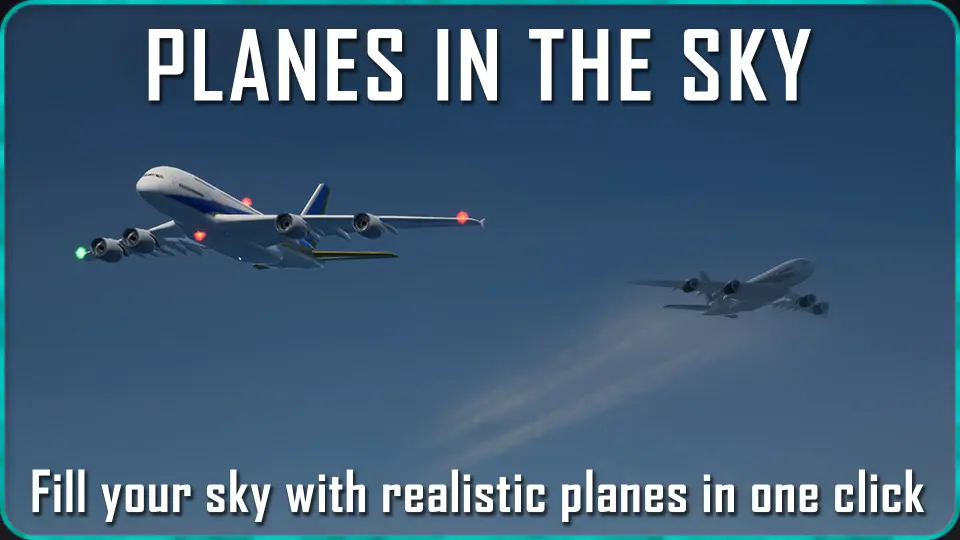
To ensure the lowpoly meshes register as convincing background elements, the blueprint pairs the aircraft with a suite of dynamic sensory systems. As the planes move procedurally across the level, they generate contrails. These vapor trails trace the flight paths across the sky, leaving a lingering visual footprint that helps establish active airways above the primary environment. This is particularly effective for wide, open outdoor scenes where the skybox occupies a significant portion of the screen space.
Beyond the contrails, the aircraft are equipped with integrated lighting systems. These lights provide crucial visibility markers, ensuring the planes remain active visual elements regardless of the environmental lighting conditions or the time of day depicted in the scene. Rounding out the simulation is the inclusion of dedicated sound elements. The audio components ensure that the aircraft contribute to the ambient soundscape of the level, matching the visual presence of the planes with appropriate realistic flight acoustics.
Procedural Flight Mechanics and Airway Generation
The workflow of the blueprint prioritizes rapid deployment, specifically designed to fill an environment's sky with realistic planes in approximately five seconds. This speed is achieved through the procedural script that drives the entire system. Once the blueprint is added to a level, it immediately begins managing the flight mechanics, calculating realistic trajectories and speeds for the airborne units.
Because the system is procedurally generated, it eliminates the need for artists to manually plot splines or script individual flight paths for every single aircraft. The planes realistically fly in the sky autonomously. This airway simulation acts as a self-contained background module, providing continuous movement and life to the upper atmosphere of a project while the development focus remains on the playable area or main architectural visualization below.
Performance Optimization and 60 FPS Benchmarks
The defining technical characteristic of Planes in the Sky is its extreme optimization and minimal impact on overall system performance. The combination of lowpoly geometry and a streamlined procedural script allows the system to scale massively. Under stress testing, the blueprint can run up to 1500 planes simultaneously while maintaining a stable 60 frames per second. This benchmark demonstrates the efficiency of the underlying code and the lightweight nature of the meshes.
In practical application, an environment rarely requires this volume of air traffic. The system is designed with the understanding that a typical level usually needs no more than 10 planes to create a convincing, realistic sky. Because the architecture can comfortably handle 1500 units, running the recommended 10 planes requires a nearly undetectable fraction of the project's processing budget. This leaves the CPU and GPU overhead completely free for complex foreground elements, dense architectural models, or high-fidelity lighting systems.
Application in Archviz and Industrial Environments
The procedural airway system directly supports architectural visualization (Archviz) and industrial environment projects. In these specific workflows, the primary focus is heavily concentrated on ground-level structures, urban planning, or industrial complexes. However, a static sky can often make a high-fidelity simulation feel artificial or disconnected. By introducing autonomous, realistic flight paths into the background, the environment gains a layer of kinetic energy that enhances the overall realism.
Whether simulating a bustling modern cityscape, an industrial logistics hub, or an open-air architectural concept, the blueprint provides a plug-and-play solution for background skies. The inclusion of landing gear variations further allows the system to be adapted for environments situated near simulated airstrips or flight corridors. Ultimately, the package provides a highly optimized, procedural method for activating the sky, ensuring that background airways can be populated instantly without sacrificing the performance required by the main scene.
 Procedural Systems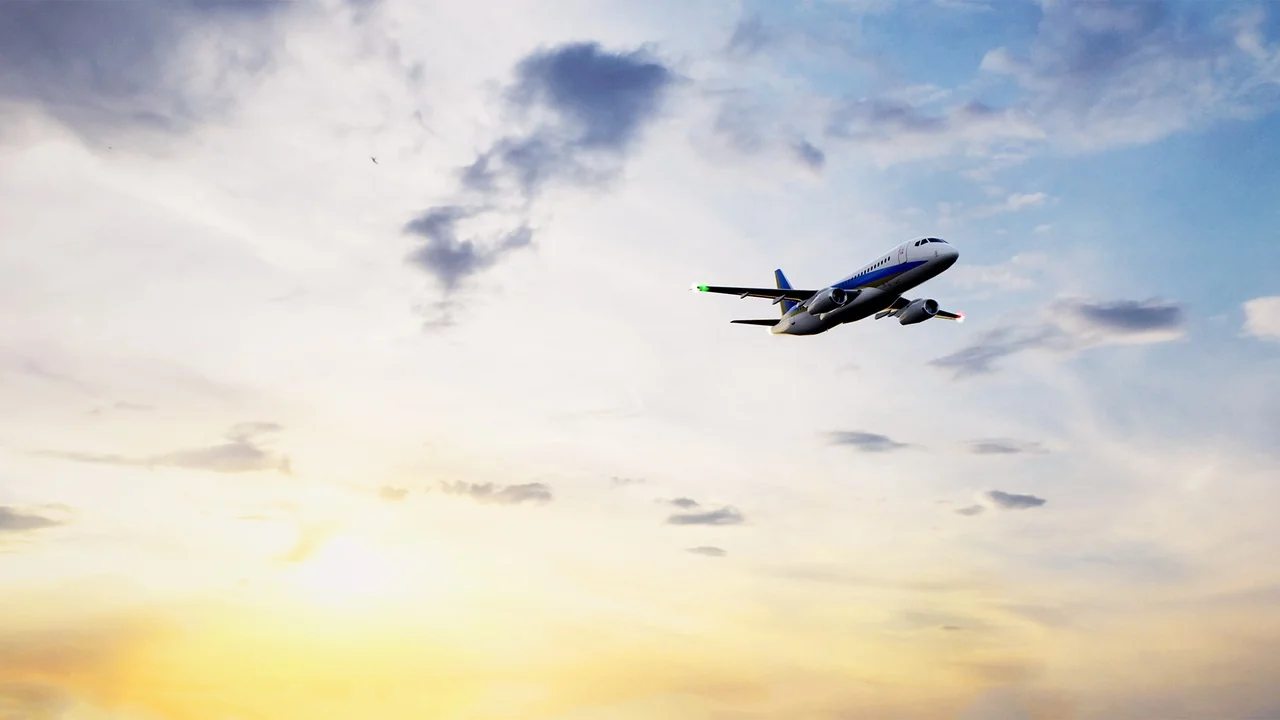
 Procedural Systems
 Procedural Systems
 Procedural Systems