"0148f1904a9b0d16"{"id":"1002615","slug":"pbr-creature-hunter","title":"PBR Creature Hunter","category":"Characters \u0026 Creatures","engine":"4.18+,5.0+","assetVersion":"","engineVersion":"Engine Version: 4.18+,5.0+","tag":"Characters","accent":"blue","visual":"character","summary":"A close look at PBR Creature Hunter, exploring its lowpoly design, PBR materials, Animationblueprint setup, and implementation across shooter, fantasy, and horr","platform":"Unreal Engine","indexPolicy":"index","publishedAt":"2026-11-14T09:10:13.472Z","updatedAt":"2026-11-14T09:10:13.472Z","sourceNotes":[],"fileContents":[],"compatibility":["Unreal Engine","Engine Version: 4.18+,5.0+"],"featuredImage":{"alt":"PBR Creature Hunter","src":"/wp-content/uploads/published/2026/11/379f40729dd3-cc347c24-a7d6-4f4f-815e-f9b720d8468e-a4eb788a07.webp"},"hasDownloadLink":true,"downloads":0,"terms":[{"taxonomy":"category","slug":"characters-and-creatures","name":"Characters \u0026 Creatures"}],"galleryImages":[{"src":"/wp-content/uploads/published/2026/11/cf6c2e9065be-6ef5e0fe-e4c7-4272-b92a-fe10be0b4c64-dcc446a54f.webp","alt":"PBR Creature Hunter"},{"src":"/wp-content/uploads/published/2026/11/45350d0de089-b0bc04d2-5115-4087-b34b-16f2c437c50f-f7e844f11f.webp","alt":"PBR Creature Hunter"},{"src":"/wp-content/uploads/published/2026/11/1b42d21ad201-0175845f-da87-4ce8-988b-22437e02fc21-968abcf841.webp","alt":"PBR Creature Hunter"},{"src":"/wp-content/uploads/published/2026/11/cdd27a255ba1-6e839574-4389-47ae-87fd-9700a324c208-9cf5641b0d.webp","alt":"PBR Creature Hunter"}],"accessPanel":{"kind":"resource","title":"Get this resource","eyebrow":"Free resource","message":"Download this resource in your browser.","fileName":"Content.7z","safetyNote":"Resources are manually reviewed before listing to improve quality and reduce obvious risks.","actionLabel":"Get this resource","resourceType":"Resource archive","versions":[]},"contentHtml":"\u003cp\u003eHostile entities define the pacing, tension, and moment-to-moment challenge in action-driven video games. When an environment calls for an aggressive, stalking threat, the nature of the model dictates how players perceive risk. PBR Creature Hunter steps directly into this role, presenting a monster configuration crafted to fit a wide spectrum of gameplay settings. By bridging the structural needs of fast-paced shooters, atmospheric fantasy dungeons, and claustrophobic horror spaces, the asset serves as a functional combatant capable of immediate integration into dynamic play spaces.\u003c/p\u003e \u003ch2\u003eEncounter Scenarios for the Creature Hunter\u003c/h2\u003e\n\u003cp\u003eAdapting a single antagonist across distinct narrative styles requires visual flexibility. In shooter scenarios, enemies must communicate clear silhouettes, distinct movement profiles, and identifiable threat levels even during chaotic firefights. The asset delivers an adversary ready to pressure the player across varied firing lanes, whether charging head-on to break defensive lines or patrolling perimeter routes to flank entrenched squads.\u003c/p\u003e\n\u003cp\u003eTransporting that same entity into a fantasy framework shifts the mechanical context. Instead of reacting to gunfire, the beast operates amid magical hazards, underground catacombs, or ancient ruins. Here, the creature functions as a predatory inhabitant or summoned monstrosity. Its physical presence carries enough organic ferocity to fit seamlessly into legendary landscapes where melee combat, evasion, and environmental traps dictate survival.\u003c/p\u003e\n\u003cp\u003eHorror projects leverage the monster through shadow, suspense, and abrupt escalation. Survival horror titles depend heavily on how an entity looks when partially obscured by flickering lights, volumetric fog, or tight corridor corners. The grotesque, predatory demeanor of the creature allows developers to stage sudden ambushes, prolonged stalker encounters, or high-stakes evasion sequences where the player lacks the firepower to engage in direct combat.\u003c/p\u003e \u003ch2\u003eBalancing Lowpoly Mesh Geometry with PBR Shading\u003c/h2\u003e\n\u003cp\u003eReal-time rendering balances visual fidelity against raw rendering overhead. Built as a lowpoly asset, the model emphasizes efficient geometric distribution. Keeping edge counts restrained allows modern engines to process multiple instances on screen simultaneously without bogging down the draw-call budget or overwhelming geometry processing pipelines.\u003c/p\u003e\n\u003cp\u003eA lower polygon count does not come at the expense of surface depth. The integration of physically based rendering (PBR) workflows ensures the creature reacts accurately to dynamic lighting conditions. Light bounces across organic surfaces with proper roughness values, metallic highlights, and realistic diffuse falloff. Whether illuminated by muzzle flashes in a dark corridor, the warm glow of fantasy torches, or ambient horror moonlight, the material responses maintain visual continuity throughout changing scene lighting.\u003c/p\u003e\n\u003cp\u003eThis balance between lowpoly structure and PBR materials is crucial for scenes containing swarms or recurring enemy variants. Running several instances of an enemy in an open arena or narrow hallway demands tight control over computational overhead, making the asset an efficient option for performance-critical scenarios.\u003c/p\u003e \u003ch2\u003eAnimationblueprint Logic and Creature Locomotion\u003c/h2\u003e\n\u003cp\u003eA static model only carries a fraction of an enemy's menace; natural, fluid articulation is what convinces the player of imminent danger. The package includes high-quality animations supported by an Animationblueprint to handle state management directly inside the engine. This structural inclusion eliminates the need to build foundational locomotion trees from scratch.\u003c/p\u003e\n\u003cp\u003eThe Animationblueprint governs how the monster shifts between basic idling, active pursuit, directional turns, attacks, and hit reactions. Having these movement systems pre-wired guarantees smooth transitions between states, avoiding awkward popping or unnatural snapping during rapid gameplay shifts. Players notice when a creature slides or stutters while changing direction, and having a dedicated animation graph preserves immersion during frantic combat.\u003c/p\u003e\n\u003cp\u003eAlongside the animation framework, the package provides dedicated script elements. These scripts serve as the mechanical link between the raw character asset and game logic. They provide entry points for handling character state variables, triggering specific animations based on game events, or synchronizing physical collision with attack swings.\u003c/p\u003e \u003ch2\u003eFPS Devices and Runtime Performance\u003c/h2\u003e\n\u003cp\u003eHardware targeting forms a decisive factor when assembling enemy encounters. The asset explicitly accounts for compatibility with FPS devices, establishing suitability for configurations where frame rates, responsive input, and rendering efficiency take precedence. First-person shooter scenarios require consistent, high-frame-rate rendering to ensure weapon handling and camera motion feel precise.\u003c/p\u003e\n\u003cp\u003eBy pairing lightweight lowpoly geometry with targeted scripts and an integrated Animationblueprint, the asset minimizes runtime CPU and GPU bottlenecks. It executes clean collision calculations, manages state blending without excessive script overhead, and draws quickly in forward or deferred rendering paths. This efficiency benefits developers who must optimize their titles across varied hardware profiles while sustaining smooth frame timing during heavy enemy waves.\u003c/p\u003e \u003ch2\u003eImplementation and Genre Adaptability\u003c/h2\u003e\n\u003cp\u003eSetting up an enemy asset often stalls when systems must be gathered from disparate tools. Because PBR Creature Hunter consolidates the visual mesh, PBR textures, animation graph, and underlying script logic into a unified setup, deployment moves rapidly from testing sandbox to active level design. Level designers can drop the monster into combat volumes, link its behavioral triggers to navigation meshes, and evaluate encounter difficulty without rebuilding core locomotion.\u003c/p\u003e\n\u003cp\u003eThe convergence of lowpoly efficiency, complete animation control, and broad thematic relevance makes the asset a practical choice for independent creators, small teams, and rapid prototyping workflows. Whether filling out the ranks of a fantasy dungeon horde, stalking survival horror basements, or serving as an agile target in a fast-paced action shooter, the asset provides the required technical and visual foundation to sustain compelling combat encounters.\u003c/p\u003e\n\n\u003ch2\u003eRelated Resources Worth Checking\u003c/h2\u003e\n\u003cul\u003e\n\u003cli\u003e\u003ca href=\"https://3dcghub.com/mushroom-monster-pack-pbr/\" rel=\"noopener noreferrer\"\u003eMushroom Monster Pack PBR\u003c/a\u003e\u003c/li\u003e\n\u003cli\u003e\u003ca href=\"https://3dcghub.com/dragons-pack-pbr/\" rel=\"noopener noreferrer\"\u003eDragons Pack PBR\u003c/a\u003e\u003c/li\u003e\n\u003cli\u003e\u003ca href=\"https://3dcghub.com/crab-animated-creature/\" rel=\"noopener noreferrer\"\u003eCrab - Animated Creature\u003c/a\u003e\u003c/li\u003e\n\u003cli\u003e\u003ca href=\"https://3dcghub.com/bloodthirsty-beetle/\" rel=\"noopener noreferrer\"\u003eBloodthirsty Beetle\u003c/a\u003e\u003c/li\u003e\n\u003cli\u003e\u003ca href=\"https://3dcghub.com/dinosaur-mosasaurus-sea-monster-series-4/\" rel=\"noopener noreferrer\"\u003eDinosaur Mosasaurus - Sea Monster Series 4\u003c/a\u003e\u003c/li\u003e\n\u003c/ul\u003e","contentTextLength":6527,"navigation":{"current":26,"total":4543,"previous":{"id":"1002616","slug":"stylized-rogue","title":"Stylized rogue","category":"Characters \u0026 Creatures","platform":"Unreal Engine","updatedAt":"2026-11-14T09:11:01.826Z"},"next":{"id":"1002614","slug":"arachnid-boss","title":"Arachnid Boss","category":"Characters \u0026 Creatures","platform":"Unreal Engine","updatedAt":"2026-11-14T09:09:20.446Z"}},"relatedResources":[{"id":"1002551","slug":"mushroom-monster-pack-pbr","title":"Mushroom Monster Pack PBR","category":"Characters \u0026 Creatures","engine":"4.26+,5.0+","assetVersion":"","engineVersion":"Engine Version: 4.26+,5.0+","tag":"Characters","accent":"blue","visual":"character","summary":"Explore the Mushroom Monster Pack PBR, featuring rigged animations, 30 morph targets, 9 texture variants, Substance customization, and audio.","platform":"Unreal Engine","indexPolicy":"index","publishedAt":"2026-11-13T10:04:14.578Z","updatedAt":"2026-11-13T10:04:14.578Z","sourceNotes":[],"fileContents":[],"compatibility":["Unreal Engine","Engine Version: 4.26+,5.0+"],"featuredImage":{"alt":"Mushroom Monster Pack PBR","src":"/wp-content/uploads/published/2026/11/d7d8072a8c88-491e2cc5-7246-4ed0-a58e-d7c143dda8c7-91e9c83b0d.webp"},"hasDownloadLink":true,"downloads":0},{"id":"1002553","slug":"dragons-pack-pbr","title":"Dragons Pack PBR","category":"Characters \u0026 Creatures","engine":"4.26+,5.0+","assetVersion":"","engineVersion":"Engine Version: 4.26+,5.0+","tag":"Characters","accent":"blue","visual":"character","summary":"A modular dragon character with three heads, four backs, two tails, morphable meshes, land and air animations, riding gear, and texture customization.","platform":"Unreal Engine","indexPolicy":"index","publishedAt":"2026-11-13T10:44:04.939Z","updatedAt":"2026-11-13T10:44:04.939Z","sourceNotes":[],"fileContents":[],"compatibility":["Unreal Engine","Engine Version: 4.26+,5.0+"],"featuredImage":{"alt":"Dragons Pack PBR","src":"/wp-content/uploads/published/2026/11/3da1c57f3803-c7f49a80-8d53-4c2e-a37d-b60a8158091b-4055ba50f8.webp"},"hasDownloadLink":true,"downloads":0},{"id":"1001992","slug":"crab-animated-creature","title":"Crab - Animated Creature","category":"Characters \u0026 Creatures","engine":"4.26+,5.0+","assetVersion":"","engineVersion":"Engine Version: 4.26+,5.0+","tag":"Characters","accent":"blue","visual":"character","summary":"Examine the Crab - Animated Creature asset, featuring 16k tris geometry, 4k PBR textures across five distinct color schemes, and over 20 locomotion and combat a","platform":"Unreal Engine","indexPolicy":"index","publishedAt":"2026-10-26T12:10:39.424Z","updatedAt":"2026-10-26T12:10:39.424Z","sourceNotes":[],"fileContents":[],"compatibility":["Unreal Engine","Engine Version: 4.26+,5.0+"],"featuredImage":{"alt":"Crab - Animated Creature","src":"/wp-content/uploads/published/2026/10/f46bd33bd8db-097dce17-fd07-43fe-a30c-81259b9b58f5-ad8f184b42.webp"},"hasDownloadLink":true,"downloads":0}]}
Characters
PBR Creature Hunter
A close look at PBR Creature Hunter, exploring its lowpoly design, PBR materials, Animationblueprint setup, and implementation across shooter, fantasy, and horr
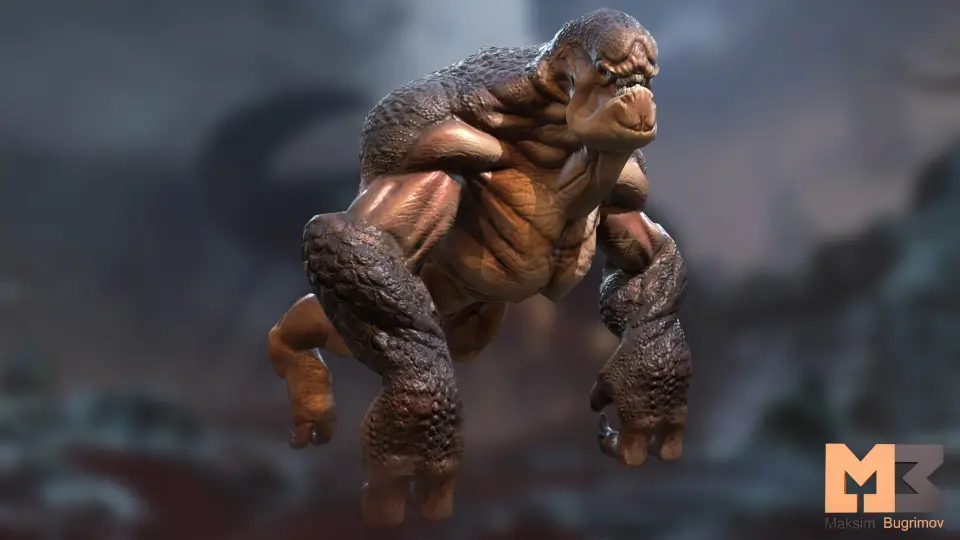
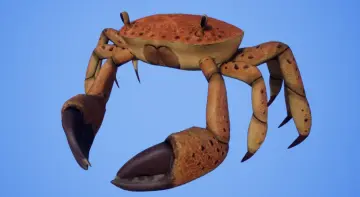
Hostile entities define the pacing, tension, and moment-to-moment challenge in action-driven video games. When an environment calls for an aggressive, stalking threat, the nature of the model dictates how players perceive risk. PBR Creature Hunter steps directly into this role, presenting a monster configuration crafted to fit a wide spectrum of gameplay settings. By bridging the structural needs of fast-paced shooters, atmospheric fantasy dungeons, and claustrophobic horror spaces, the asset serves as a functional combatant capable of immediate integration into dynamic play spaces.
Encounter Scenarios for the Creature Hunter
Adapting a single antagonist across distinct narrative styles requires visual flexibility. In shooter scenarios, enemies must communicate clear silhouettes, distinct movement profiles, and identifiable threat levels even during chaotic firefights. The asset delivers an adversary ready to pressure the player across varied firing lanes, whether charging head-on to break defensive lines or patrolling perimeter routes to flank entrenched squads.
Transporting that same entity into a fantasy framework shifts the mechanical context. Instead of reacting to gunfire, the beast operates amid magical hazards, underground catacombs, or ancient ruins. Here, the creature functions as a predatory inhabitant or summoned monstrosity. Its physical presence carries enough organic ferocity to fit seamlessly into legendary landscapes where melee combat, evasion, and environmental traps dictate survival.
Horror projects leverage the monster through shadow, suspense, and abrupt escalation. Survival horror titles depend heavily on how an entity looks when partially obscured by flickering lights, volumetric fog, or tight corridor corners. The grotesque, predatory demeanor of the creature allows developers to stage sudden ambushes, prolonged stalker encounters, or high-stakes evasion sequences where the player lacks the firepower to engage in direct combat.
Balancing Lowpoly Mesh Geometry with PBR Shading
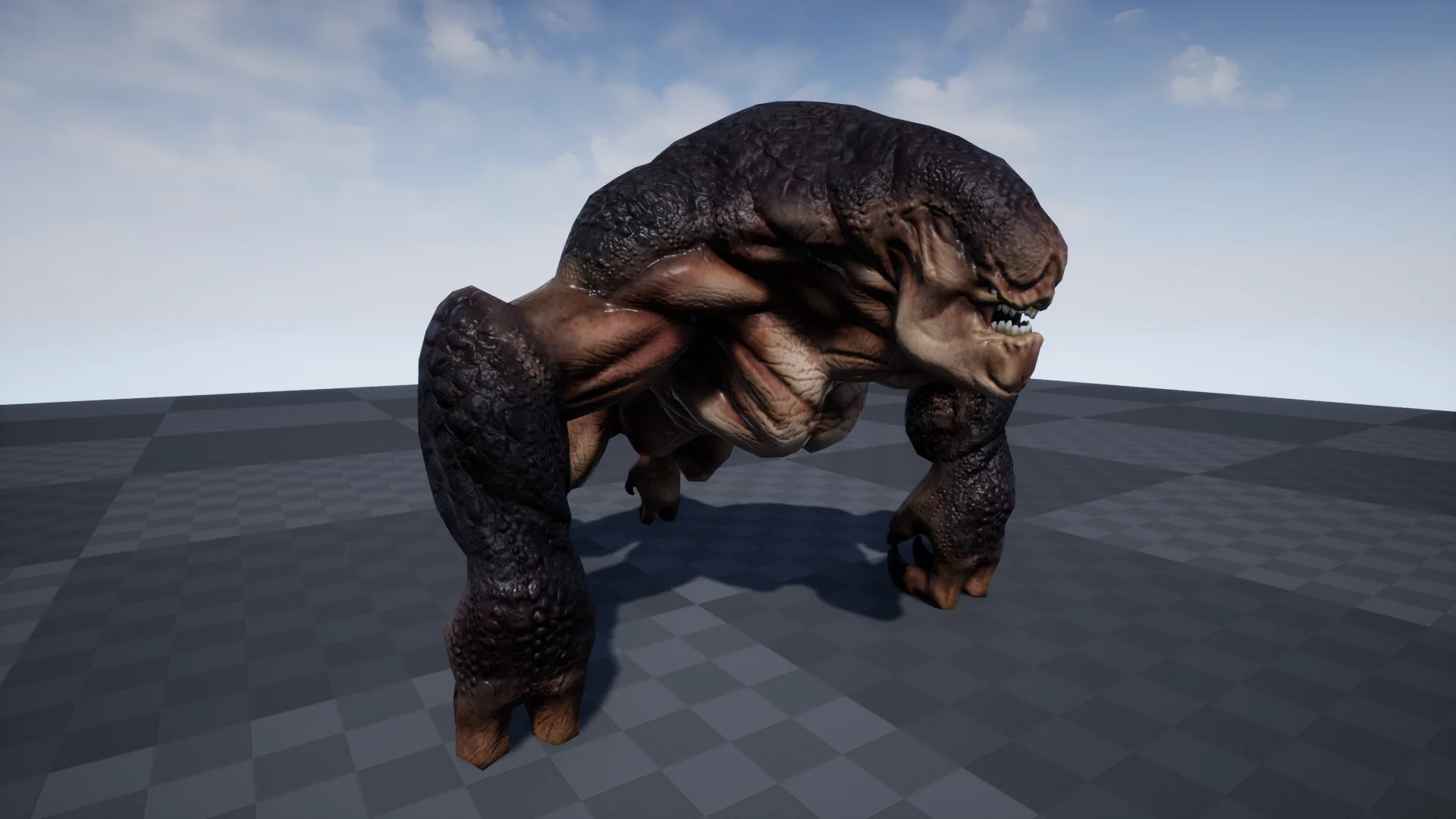
Real-time rendering balances visual fidelity against raw rendering overhead. Built as a lowpoly asset, the model emphasizes efficient geometric distribution. Keeping edge counts restrained allows modern engines to process multiple instances on screen simultaneously without bogging down the draw-call budget or overwhelming geometry processing pipelines.
A lower polygon count does not come at the expense of surface depth. The integration of physically based rendering (PBR) workflows ensures the creature reacts accurately to dynamic lighting conditions. Light bounces across organic surfaces with proper roughness values, metallic highlights, and realistic diffuse falloff. Whether illuminated by muzzle flashes in a dark corridor, the warm glow of fantasy torches, or ambient horror moonlight, the material responses maintain visual continuity throughout changing scene lighting.
This balance between lowpoly structure and PBR materials is crucial for scenes containing swarms or recurring enemy variants. Running several instances of an enemy in an open arena or narrow hallway demands tight control over computational overhead, making the asset an efficient option for performance-critical scenarios.
Animationblueprint Logic and Creature Locomotion
A static model only carries a fraction of an enemy's menace; natural, fluid articulation is what convinces the player of imminent danger. The package includes high-quality animations supported by an Animationblueprint to handle state management directly inside the engine. This structural inclusion eliminates the need to build foundational locomotion trees from scratch.
The Animationblueprint governs how the monster shifts between basic idling, active pursuit, directional turns, attacks, and hit reactions. Having these movement systems pre-wired guarantees smooth transitions between states, avoiding awkward popping or unnatural snapping during rapid gameplay shifts. Players notice when a creature slides or stutters while changing direction, and having a dedicated animation graph preserves immersion during frantic combat.
Alongside the animation framework, the package provides dedicated script elements. These scripts serve as the mechanical link between the raw character asset and game logic. They provide entry points for handling character state variables, triggering specific animations based on game events, or synchronizing physical collision with attack swings.
FPS Devices and Runtime Performance
Hardware targeting forms a decisive factor when assembling enemy encounters. The asset explicitly accounts for compatibility with FPS devices, establishing suitability for configurations where frame rates, responsive input, and rendering efficiency take precedence. First-person shooter scenarios require consistent, high-frame-rate rendering to ensure weapon handling and camera motion feel precise.
By pairing lightweight lowpoly geometry with targeted scripts and an integrated Animationblueprint, the asset minimizes runtime CPU and GPU bottlenecks. It executes clean collision calculations, manages state blending without excessive script overhead, and draws quickly in forward or deferred rendering paths. This efficiency benefits developers who must optimize their titles across varied hardware profiles while sustaining smooth frame timing during heavy enemy waves.
Implementation and Genre Adaptability
Setting up an enemy asset often stalls when systems must be gathered from disparate tools. Because PBR Creature Hunter consolidates the visual mesh, PBR textures, animation graph, and underlying script logic into a unified setup, deployment moves rapidly from testing sandbox to active level design. Level designers can drop the monster into combat volumes, link its behavioral triggers to navigation meshes, and evaluate encounter difficulty without rebuilding core locomotion.
The convergence of lowpoly efficiency, complete animation control, and broad thematic relevance makes the asset a practical choice for independent creators, small teams, and rapid prototyping workflows. Whether filling out the ranks of a fantasy dungeon horde, stalking survival horror basements, or serving as an agile target in a fast-paced action shooter, the asset provides the required technical and visual foundation to sustain compelling combat encounters.
 Characters
 Characters
 Characters
 Characters