"72afc5f8a809d018"{"id":"1002138","slug":"particle-shockwave","title":"Particle ShockWave","category":"Spells \u0026 Combat","engine":"5.2+","assetVersion":"","engineVersion":"Engine Version: 5.2+","tag":"Spells \u0026 Combat","accent":"blue","visual":"mech","summary":"Examine Particle ShockWave, featuring Circle and Floor type Niagara shock waves, integrated distortion VFX, and exposed color and radius controls.","platform":"Unreal Engine","publishedAt":"2026-10-29T09:40:23.023Z","updatedAt":"2026-10-29T09:40:23.023Z","sourceNotes":[],"fileContents":[],"compatibility":["Unreal Engine","Engine Version: 5.2+"],"featuredImage":{"alt":"Particle ShockWave","src":"/wp-content/uploads/published/2026/10/d3e09e66a0b4-a5bb9694-daca-4e13-af29-e78b300adbc0-61770466e4.webp"},"hasDownloadLink":true,"downloads":0,"terms":[{"taxonomy":"category","slug":"spells-and-combat","name":"Spells \u0026 Combat"}],"galleryImages":[{"src":"/wp-content/uploads/published/2026/10/2fadc5838aad-1ac7fa72-07ca-4221-9541-70de92e2568a-9b57f858de.webp","alt":"Particle ShockWave"},{"src":"/wp-content/uploads/published/2026/10/a0e935d8ab9a-73930a88-8312-4c30-bebc-224324bfe535-cceb3f874b.webp","alt":"Particle ShockWave"},{"src":"/wp-content/uploads/published/2026/10/f2b0aa9c11ce-eef5f5ae-fc73-4818-965d-e68eb62c49ea-85e8035542.webp","alt":"Particle ShockWave"},{"src":"/wp-content/uploads/published/2026/10/ef6841c2e09c-9f7c694d-af88-4f8b-8838-04a935d11a9f-935db7ee52.webp","alt":"Particle ShockWave"},{"src":"/wp-content/uploads/published/2026/10/cee8c5b8e5be-ced70975-f13c-46c4-b9b5-1350a905e170-99edc2cd7b.webp","alt":"Particle ShockWave"},{"src":"/wp-content/uploads/published/2026/10/5f07547682ab-7bf81476-a5a6-4245-8342-2e3ff7238e49-80831107b0.webp","alt":"Particle ShockWave"},{"src":"/wp-content/uploads/published/2026/10/e4c3870d9b3d-543ed643-d64d-4cab-be22-18cea3d7b3af-7a556740e3.webp","alt":"Particle ShockWave"},{"src":"/wp-content/uploads/published/2026/10/a3e9be73a690-882527da-3fd8-4c21-aefe-a5c8614651cd-bccd99a7f5.webp","alt":"Particle ShockWave"},{"src":"/wp-content/uploads/published/2026/10/bbf1ceda598c-9c952bfd-8e97-47ba-b42a-051cd9436b63-84e88ff396.webp","alt":"Particle ShockWave"}],"accessPanel":{"kind":"resource","title":"Download this resource","eyebrow":"Free Download","message":"Log in or create a free account to start your download.","fileName":"Content.7z","safetyNote":"Resources are manually reviewed before listing to improve quality and reduce obvious risks.","actionLabel":"Download Free","resourceType":"Resource archive"},"contentHtml":"\u003cp\u003eA sudden release of energy transforms the readability of action inside a game scene. Whether rendering an explosive detonation in a ruined courtyard or framing an arcane release during an intense combat encounter, rapid concussive ripples tell the player exactly when and where force has collided with the environment. Particle ShockWave addresses these impact moments through dedicated Niagara particle assets tailored for high-energy dispersion across surfaces and open air.\u003c/p\u003e \u003ch2\u003eCircle and Floor Type Shock Waves for Dynamic Scene Placement\u003c/h2\u003e\n\u003cp\u003eExplosions and kinetic impacts rarely interact with space in identical patterns. Particle ShockWave accounts for spatial context by dividing its effects into distinct layout forms: Circle Type shock waves and Floor Type shock waves. This split addresses the structural geometry of where an impact originates and how its energy should disperse relative to surrounding meshes.\u003c/p\u003e \u003cp\u003eThe Circle Type layout provides omnidirectional projection. Spherical or radial in its spatial profile, this configuration functions effectively for mid-air ruptures, aerial spell detonations, projectile collisions, and zero-gravity concussive events. When a projectile strikes an enemy mid-jump or detonates mid-flight, a horizontal ring fails to capture the true spherical dispersion of the blast. The Circle Type fills that volumetric requirement, expanding outward uniformly to deliver a readable sense of kinetic force regardless of camera orientation or terrain slope.\u003c/p\u003e \u003cp\u003eThe Floor Type shock wave is structured specifically for surface contact. When a heavy character strikes the ground, an artillery shell impacts terrain, or an area-of-effect ability discharges at character feet, the force travels horizontally across the ground plane. The Floor Type hugs surfaces to communicate friction, terrain interaction, and localized outward displacement. By separating floor-based ground waves from aerial circular pulses, the asset package provides visual solutions matching the physical logic of specific collisions without requiring technical restructuring of the core emitters.\u003c/p\u003e \u003ch2\u003eDistortion VFX and Refractive Impact Waves\u003c/h2\u003e\n\u003cp\u003eParticle effects that rely solely on opaque textures or additive glow often look like illuminated sprites rather than authentic pressure waves. Every emitter in Particle ShockWave integrates Distortion VFX. This optical warping fundamentally alters how the effect interacts with the rendered scene behind it.\u003c/p\u003e \u003cp\u003eDistortion simulates the physical reality of a shock front: rapid changes in air pressure that bend light and refract the surrounding environment. As the wave expands, pixels behind the leading edge warp and displace. The background geometry, character silhouettes, foliage, and ambient lighting twist momentarily, producing an immediate sensation of violent atmospheric displacement. This refractive property allows the shock wave to establish physical presence even when its color opacity is dialed low.\u003c/p\u003e \u003cp\u003eBecause all shock waves across both Circle and Floor types carry this distortion component, creators can construct effects that blend seamlessly into both fantasy and realistic art directions. In a realistic context, clean distortion without heavy colored particles yields an authentic supersonic pressure wavefront or blast displacement. In a fantasy context, pairing high refractive distortion with luminous magical elements elevates the perceptual weight of spellcraft, making an impact look physically dangerous rather than purely ornamental.\u003c/p\u003e \u003ch2\u003eExposed Niagara System Parameters: Color and Radius\u003c/h2\u003e\n\u003cp\u003eAdapting particle assets across different combat tiers often fails when emitters require digging into deep module stacks to alter basic values. Particle ShockWave resolves this through exposed parameters exposed directly within the Niagara System, primarily targeting color selection and shock wave radius.\u003c/p\u003e \u003cp\u003eThe exposed radius parameter enables direct control over scale and operational range. An ability designed as a quick, localized foot-stomp can share the exact underlying Niagara asset as a catastrophic boss-level arena burst simply by adjusting the radius. Small radius values yield sharp, concentrated ripples suitable for weapon parries, rapid-fire strikes, or micro-explosions. Expanding the radius allows the shock wave to sweep across broad combat arenas, establishing large-scale boundary markers or major environmental detonation fronts.\u003c/p\u003e \u003cp\u003eColor exposure provides instant thematic alignment. Because the color input is exposed at the system level, the asset shifts effortlessly across gameplay elements:\u003c/p\u003e\n\u003cul\u003e \u003cli\u003eElectric blues, icy whites, or arcane violets for magical spells and dimensional rifts.\u003c/li\u003e \u003cli\u003eFiery ambers, smoky oranges, and deep reds for combustible materials and incendiary blasts.\u003c/li\u003e \u003cli\u003eNeutral, transparent tints highlighting purely the distortion layer for realistic concussive blasts and shockwaves.\u003c/li\u003e \u003cli\u003eVibrant greens or toxic hues for status-effect explosions and elemental hazards.\u003c/li\u003e\n\u003c/ul\u003e\n\u003cp\u003eBy adjusting these values directly on the instance, project artists can maintain visual consistency across an entire catalog of abilities without duplicating underlying emitter systems.\u003c/p\u003e \u003ch2\u003eIntegration with Mage Staffs 3D Meshes and VFX\u003c/h2\u003e\n\u003cp\u003eBeyond isolated deployment, Particle ShockWave maintains compatibility with Mage Staffs 3D meshes and VFX. Weapon-based spellcasting demands synchronicity between the weapon prop, the cast point, and the resulting ground or aerial release. The connection between these resources establishes a coherent pipeline for fantasy spell combat.\u003c/p\u003e \u003cp\u003eWhen combined with mage staff props, the shock wave assets provide the direct gameplay feedback needed for staff strikes and ground-slam abilities. A mage striking the ground with a staff tip triggers the Floor Type shock wave directly beneath the weapon head, sending a refractive wave expanding out to denote the spell's effective range. Similarly, charging an attack at the crystal head or ornament of a staff utilizes the Circle Type shock wave as an energy discharge effect, signaling spell release before the projectile travels forward. This practical pairing bridges static mesh weapon design with dynamic particle reaction.\u003c/p\u003e \u003ch2\u003eProject Suitability Across Realistic and Fantasy Pipelines\u003c/h2\u003e\n\u003cp\u003eParticle ShockWave serves productions requiring responsive, readable concussive visuals built on modern particle architecture. Its technical construction inside Unreal Engine's Niagara framework ensures that runtime performance scales alongside dynamic customization. Developers building fantasy RPGs benefit from the exposed color controls and staff weapon synergies, while projects grounded in realistic physics or action combat gain immediate utility from the dedicated distortion refraction and distinct floor-to-air dispersion types.\u003c/p\u003e\n\n\u003ch2\u003eContinue Browsing Similar Packs\u003c/h2\u003e\n\u003cul\u003e\n\u003cli\u003e\u003ca href=\"https://3dcghub.com/kyshotfx02/\" title=\"KYshotFX02\"\u003eKYshotFX02\u003c/a\u003e\u003c/li\u003e\n\u003cli\u003e\u003ca href=\"https://3dcghub.com/shield-vfx-v2/\" title=\"Shield VFX v2\"\u003eShield VFX v2\u003c/a\u003e\u003c/li\u003e\n\u003cli\u003e\u003ca href=\"https://3dcghub.com/ethereal-tentacle-fx/\" title=\"Ethereal Tentacle FX\"\u003eEthereal Tentacle FX\u003c/a\u003e\u003c/li\u003e\n\u003cli\u003e\u003ca href=\"https://3dcghub.com/nature-vfx-with-vine-growth/\" title=\"Nature VFX with Vine Growth\"\u003eNature VFX with Vine Growth\u003c/a\u003e\u003c/li\u003e\n\u003cli\u003e\u003ca href=\"https://3dcghub.com/cosmic-vfx/\" title=\"Cosmic VFX\"\u003eCosmic VFX\u003c/a\u003e\u003c/li\u003e\n\u003c/ul\u003e","contentTextLength":6861,"navigation":{"current":37,"total":4100,"previous":{"id":"1002139","slug":"phoenyx-anim-pack-1","title":"Phoenyx Anim Pack 1","category":"Variety","platform":"Unreal Engine","updatedAt":"2026-10-29T09:40:57.660Z"},"next":{"id":"1002137","slug":"park-life-mocap-pack","title":"Park Life - MoCap Pack","category":"Gestures","platform":"Unreal Engine","updatedAt":"2026-10-29T09:39:34.073Z"}},"relatedResources":[{"id":"16386","slug":"kyshotfx02","title":"KYshotFX02","category":"Spells \u0026 Combat","engine":"4.26+,5.0+","assetVersion":"Engine version: 4.26+,5.0+","engineVersion":"4.20","tag":"Spells \u0026 Combat","accent":"blue","visual":"city","summary":"Enhance your game's combat visuals with the KYshotFX02 asset pack. This collection features a variety of shot, hit, and shockwave effects designed for dynamic gameplay and optimized performance.","platform":"Unreal Engine","publishedAt":"2026-03-12T17:01:24.000Z","updatedAt":"2026-04-19T15:44:34.000Z","sourceNotes":[],"fileContents":[],"compatibility":["Unreal Engine","Engine version: 4.26+,5.0+"],"featuredImage":{"alt":"KYshotFX02","src":"https://3dcghub.com/wp-content/uploads/2026/03/d7eb8dd1-cf8f-4844-a2ca-cc1fa98ee17a.webp"},"hasDownloadLink":true,"downloads":1},{"id":"1001600","slug":"shield-vfx-v2","title":"Shield VFX v2","category":"Spells \u0026 Combat","engine":"5.2+","assetVersion":"","engineVersion":"Engine Version: 5.2+","tag":"Spells \u0026 Combat","accent":"blue","visual":"mech","summary":"Explore Shield VFX v2, featuring 25 shield variations, 15 hit particle types, customizable meshes, Blueprint HP systems, and material damage reactions.","platform":"Unreal Engine","publishedAt":"2026-10-10T16:21:55.338Z","updatedAt":"2026-10-10T16:21:55.338Z","sourceNotes":[],"fileContents":[],"compatibility":["Unreal Engine","Engine Version: 5.2+"],"featuredImage":{"alt":"Shield VFX v2","src":"/wp-content/uploads/published/2026/10/3bd3bade1d15-b18e6b08-47d1-4cb6-8606-d737d073332c-43ca36ab24.webp"},"hasDownloadLink":true,"downloads":1},{"id":"1000819","slug":"ethereal-tentacle-fx","title":"Ethereal Tentacle FX","category":"Spells \u0026 Combat","engine":"5.0+","assetVersion":"","engineVersion":"Engine Version: 5.0+","tag":"Spells \u0026 Combat","accent":"blue","visual":"mech","summary":"Ethereal Tentacle FX delivers Unreal Engine Niagara particle systems with caustic light functions, attachable to characters for trailing visual effects in fanta","platform":"Unreal Engine","publishedAt":"2026-07-31T11:34:05.168Z","updatedAt":"2026-07-31T11:39:17.799Z","sourceNotes":[],"fileContents":[],"compatibility":["Unreal Engine","Engine Version: 5.0+"],"featuredImage":{"alt":"Ethereal Tentacle FX","src":"/wp-content/uploads/published/2026/07/45d414d7d2d2-5f5b070f-ac3d-4cc0-b7d4-ee031e37c0c7-3335b3d28d.webp"},"hasDownloadLink":true,"downloads":3}]}
Spells & Combat
Particle ShockWave
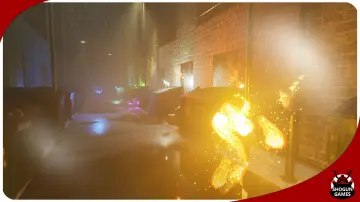
Examine Particle ShockWave, featuring Circle and Floor type Niagara shock waves, integrated distortion VFX, and exposed color and radius controls.
A sudden release of energy transforms the readability of action inside a game scene. Whether rendering an explosive detonation in a ruined courtyard or framing an arcane release during an intense combat encounter, rapid concussive ripples tell the player exactly when and where force has collided with the environment. Particle ShockWave addresses these impact moments through dedicated Niagara particle assets tailored for high-energy dispersion across surfaces and open air.
Circle and Floor Type Shock Waves for Dynamic Scene Placement
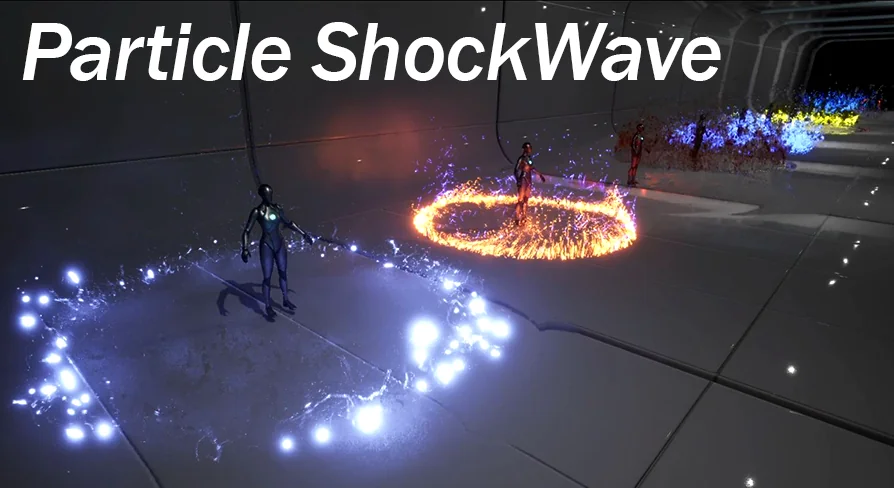
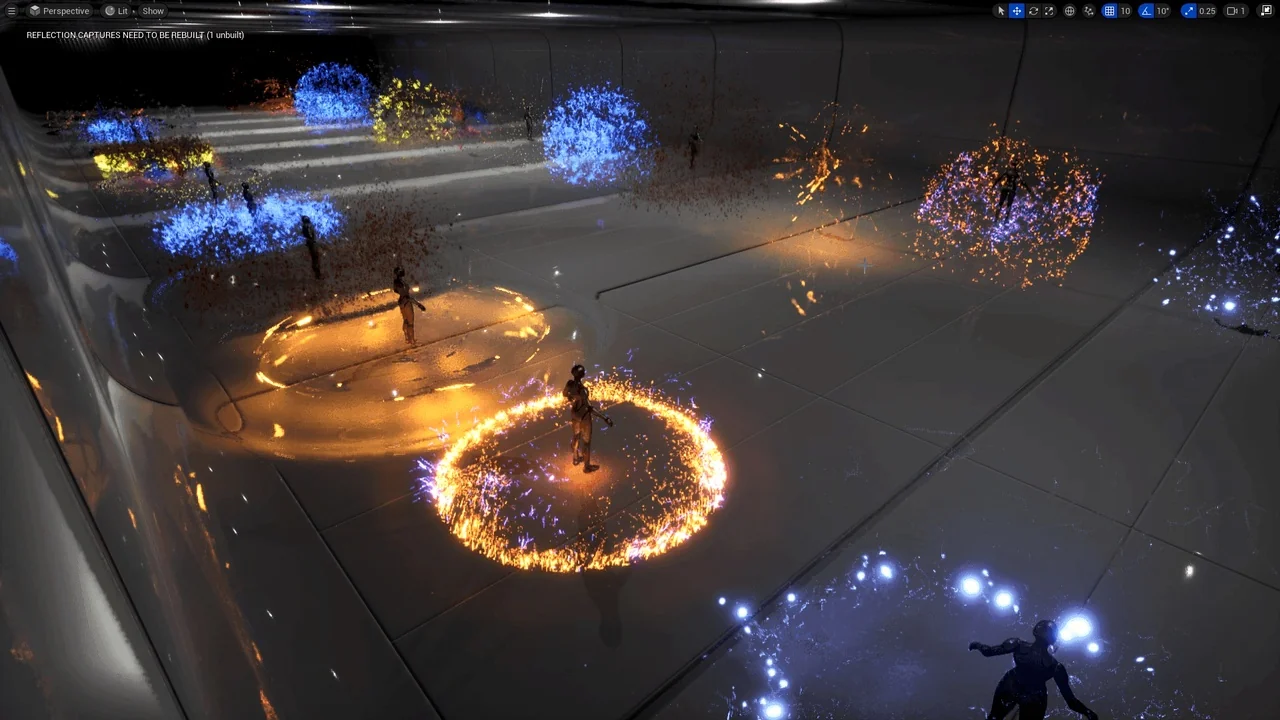
Explosions and kinetic impacts rarely interact with space in identical patterns. Particle ShockWave accounts for spatial context by dividing its effects into distinct layout forms: Circle Type shock waves and Floor Type shock waves. This split addresses the structural geometry of where an impact originates and how its energy should disperse relative to surrounding meshes.
The Circle Type layout provides omnidirectional projection. Spherical or radial in its spatial profile, this configuration functions effectively for mid-air ruptures, aerial spell detonations, projectile collisions, and zero-gravity concussive events. When a projectile strikes an enemy mid-jump or detonates mid-flight, a horizontal ring fails to capture the true spherical dispersion of the blast. The Circle Type fills that volumetric requirement, expanding outward uniformly to deliver a readable sense of kinetic force regardless of camera orientation or terrain slope.
The Floor Type shock wave is structured specifically for surface contact. When a heavy character strikes the ground, an artillery shell impacts terrain, or an area-of-effect ability discharges at character feet, the force travels horizontally across the ground plane. The Floor Type hugs surfaces to communicate friction, terrain interaction, and localized outward displacement. By separating floor-based ground waves from aerial circular pulses, the asset package provides visual solutions matching the physical logic of specific collisions without requiring technical restructuring of the core emitters.
Distortion VFX and Refractive Impact Waves
Particle effects that rely solely on opaque textures or additive glow often look like illuminated sprites rather than authentic pressure waves. Every emitter in Particle ShockWave integrates Distortion VFX. This optical warping fundamentally alters how the effect interacts with the rendered scene behind it.
Distortion simulates the physical reality of a shock front: rapid changes in air pressure that bend light and refract the surrounding environment. As the wave expands, pixels behind the leading edge warp and displace. The background geometry, character silhouettes, foliage, and ambient lighting twist momentarily, producing an immediate sensation of violent atmospheric displacement. This refractive property allows the shock wave to establish physical presence even when its color opacity is dialed low.
Because all shock waves across both Circle and Floor types carry this distortion component, creators can construct effects that blend seamlessly into both fantasy and realistic art directions. In a realistic context, clean distortion without heavy colored particles yields an authentic supersonic pressure wavefront or blast displacement. In a fantasy context, pairing high refractive distortion with luminous magical elements elevates the perceptual weight of spellcraft, making an impact look physically dangerous rather than purely ornamental.
Exposed Niagara System Parameters: Color and Radius
Adapting particle assets across different combat tiers often fails when emitters require digging into deep module stacks to alter basic values. Particle ShockWave resolves this through exposed parameters exposed directly within the Niagara System, primarily targeting color selection and shock wave radius.
The exposed radius parameter enables direct control over scale and operational range. An ability designed as a quick, localized foot-stomp can share the exact underlying Niagara asset as a catastrophic boss-level arena burst simply by adjusting the radius. Small radius values yield sharp, concentrated ripples suitable for weapon parries, rapid-fire strikes, or micro-explosions. Expanding the radius allows the shock wave to sweep across broad combat arenas, establishing large-scale boundary markers or major environmental detonation fronts.
Color exposure provides instant thematic alignment. Because the color input is exposed at the system level, the asset shifts effortlessly across gameplay elements:
Electric blues, icy whites, or arcane violets for magical spells and dimensional rifts.
Fiery ambers, smoky oranges, and deep reds for combustible materials and incendiary blasts.
Neutral, transparent tints highlighting purely the distortion layer for realistic concussive blasts and shockwaves.
Vibrant greens or toxic hues for status-effect explosions and elemental hazards.
By adjusting these values directly on the instance, project artists can maintain visual consistency across an entire catalog of abilities without duplicating underlying emitter systems.
Integration with Mage Staffs 3D Meshes and VFX
Beyond isolated deployment, Particle ShockWave maintains compatibility with Mage Staffs 3D meshes and VFX. Weapon-based spellcasting demands synchronicity between the weapon prop, the cast point, and the resulting ground or aerial release. The connection between these resources establishes a coherent pipeline for fantasy spell combat.
When combined with mage staff props, the shock wave assets provide the direct gameplay feedback needed for staff strikes and ground-slam abilities. A mage striking the ground with a staff tip triggers the Floor Type shock wave directly beneath the weapon head, sending a refractive wave expanding out to denote the spell's effective range. Similarly, charging an attack at the crystal head or ornament of a staff utilizes the Circle Type shock wave as an energy discharge effect, signaling spell release before the projectile travels forward. This practical pairing bridges static mesh weapon design with dynamic particle reaction.
Project Suitability Across Realistic and Fantasy Pipelines
Particle ShockWave serves productions requiring responsive, readable concussive visuals built on modern particle architecture. Its technical construction inside Unreal Engine's Niagara framework ensures that runtime performance scales alongside dynamic customization. Developers building fantasy RPGs benefit from the exposed color controls and staff weapon synergies, while projects grounded in realistic physics or action combat gain immediate utility from the dedicated distortion refraction and distinct floor-to-air dispersion types.
 Spells & Combat
 Spells & Combat
 Spells & Combat
 Spells & Combat