"6c6413bef81af556"{"id":"1000819","slug":"ethereal-tentacle-fx","title":"Ethereal Tentacle FX","category":"Spells \u0026 Combat","engine":"5.0+","assetVersion":"","engineVersion":"Engine Version: 5.0+","tag":"Spells \u0026 Combat","accent":"blue","visual":"mech","summary":"Ethereal Tentacle FX delivers Unreal Engine Niagara particle systems with caustic light functions, attachable to characters for trailing visual effects in fanta","platform":"Unreal Engine","publishedAt":"2026-07-31T11:34:05.168Z","updatedAt":"2026-07-31T11:39:17.799Z","sourceNotes":[],"fileContents":[],"compatibility":["Unreal Engine","Engine Version: 5.0+"],"featuredImage":{"alt":"Ethereal Tentacle FX","src":"/wp-content/uploads/published/2026/07/45d414d7d2d2-5f5b070f-ac3d-4cc0-b7d4-ee031e37c0c7-3335b3d28d.webp"},"hasDownloadLink":true,"downloads":3,"terms":[{"taxonomy":"category","slug":"spells-and-combat","name":"Spells \u0026 Combat"}],"galleryImages":[{"src":"/wp-content/uploads/published/2026/07/f917672a9f45-2a53830f-089d-4aed-a09d-da1c57ccac5d-ea181b51e9.webp","alt":"Ethereal Tentacle FX"},{"src":"/wp-content/uploads/published/2026/07/cd6378f81fcc-5ad2ed0f-46dd-4906-89b5-7dff880333fa-0a99bc7080.webp","alt":"Ethereal Tentacle FX"},{"src":"/wp-content/uploads/published/2026/07/0c5fe4d37c82-65bdb229-8d50-449d-a14b-ba8c048bf1a7-92e631d5ff.webp","alt":"Ethereal Tentacle FX"},{"src":"/wp-content/uploads/published/2026/07/08b69676179c-75fc4c2f-9d6d-4549-8a80-403f48d189a7-1b9fab5f72.webp","alt":"Ethereal Tentacle FX"},{"src":"/wp-content/uploads/published/2026/07/cb146331ab95-ca3ae1ca-67e2-4178-b282-0736872627df-24463fa068.webp","alt":"Ethereal Tentacle FX"},{"src":"/wp-content/uploads/published/2026/07/d258d5e247b1-cb4ceb7e-17bb-46d7-ac9e-f25009339a58-bc4046da5d.webp","alt":"Ethereal Tentacle FX"}],"accessPanel":{"kind":"resource","title":"Download this resource","eyebrow":"Free Download","message":"Log in or create a free account to start your download.","fileName":"Content.7z","safetyNote":"Resources are manually reviewed before listing to improve quality and reduce obvious risks.","actionLabel":"Download Free","resourceType":"Resource archive"},"contentHtml":"\u003cp\u003eBuilding atmosphere in a fantasy or supernatural scene often comes down to how light and movement interact. \u003cem\u003eEthereal Tentacle FX\u003c/em\u003e is a collection of Unreal Engine Niagara Particle Systems designed to address exactly that intersection. The package centers on tentacle-shaped visual effects that emit their own light through a Caustic Light Function, meaning each particle system does more than render a shape—it actively paints light across nearby surfaces with shifting, water-like patterns. For environments involving spirits, ghosts, entities, or otherworldly energy, this dual behavior of form-plus-illumination gives scenes a sense that the effect belongs in the space rather than floating on top of it.\u003c/p\u003e\n\n\u003ch2\u003eNiagara Systems Built for Attachment\u003c/h2\u003e\n\u003cp\u003eThe core mechanic of the package is attachment. Each Niagara System in \u003cem\u003eEthereal Tentacle FX\u003c/em\u003e can be attached to a Character or a moving object. When attached, the particle system generates a trail-like effect that follows the path of the parent object. This opens possibilities across several production scenarios. A Character moving through a corridor can leave behind a luminous tentacle wake. A floating entity can have ethereal appendages trailing its motion. A projectile or vehicle can pull a colorful, light-emitting tail behind it during traversal. The trail behavior is a direct consequence of how the Niagara System is structured, not a separate feature that needs manual setup—the effect is designed to read as a continuous extension of whatever carries it.\u003c/p\u003e\n\n\u003cp\u003eBecause the tentacles emit light using a Caustic Light Function, the trail does not simply glow in isolation. The Caustic function simulates the rippling, layered light patterns seen on the floor of a swimming pool or the interior of a cave with reflective water. When a tentacle trail passes over geometry, the moving light distorts and dances across surfaces, giving the impression that the entity leaving the trail exists as a source of physical illumination. This makes the system practical not only for character-driven drama but also for environmental moments where light behavior matters—corridor reveals, underwater passages, dark ritual chambers, or any space where adding a sense of supernatural presence depends on light shifting believably.\u003c/p\u003e\n\n\u003ch2\u003eColor and Entity Spectrum\u003c/h2\u003e\n\u003cp\u003eThe tags associated with the package—\u003cem\u003eSystem\u003c/em\u003e, \u003cem\u003eTail\u003c/em\u003e, \u003cem\u003eTentacle\u003c/em\u003e, \u003cem\u003eVisual\u003c/em\u003e, \u003cem\u003eColorful\u003c/em\u003e, \u003cem\u003eEffect\u003c/em\u003e, \u003cem\u003eNiagara\u003c/em\u003e, \u003cem\u003eVisualEffect\u003c/em\u003e, \u003cem\u003eFantasy\u003c/em\u003e, \u003cem\u003eGhost\u003c/em\u003e, \u003cem\u003eWing\u003c/em\u003e, \u003cem\u003eSpirit\u003c/em\u003e, \u003cem\u003eFire\u003c/em\u003e, \u003cem\u003eParticle\u003c/em\u003e, and \u003cem\u003eEntity\u003c/em\u003e—give a sense of how broadly the systems can be applied. The presence of \u003cem\u003eWing\u003c/em\u003e, \u003cem\u003eGhost\u003c/em\u003e, \u003cem\u003eSpirit\u003c/em\u003e, and \u003cem\u003eEntity\u003c/em\u003e as keywords suggests that the tentacle effect reads as a versatile building block for non-human forms. A wing could trail feathers made of light. A ghost could leave behind tendrils of spectral energy. A spirit entity could have tentacles of colored fire pulling behind it. The word \u003cem\u003eColorful\u003c/em\u003e indicates that the visual palette of the systems is not locked to a single hue; production teams can expect variation in how the effects radiate, which gives room to match different scene moods without needing entirely new particle work for each color direction.\u003c/p\u003e\n\n\u003ch3\u003eFire, Particle, and Entity Relevance\u003c/h3\u003e\n\u003cp\u003eThe inclusion of \u003cem\u003eFire\u003c/em\u003e among the tags points toward uses beyond purely watery or ghostly themes. A Caustic Light Function on a fire-tagged particle system suggests the system can be configured or re-themed for flame-adjacent visuals—displaced light, shifting color, organic motion. While the word \"tentacle\" carries a specific biological association, the underlying particle logic—strands of moving visual data that emit patterned light—has a structural similarity to flame, energy ribbons, or spiritual discharges. This means the asset is positioned less as a single-mood effect and more as a flexible Niagara toolkit for effects that need organic, flowing, light-emitting motion.\u003c/p\u003e\n\n\u003ch2\u003eCustomization Through User Variables\u003c/h2\u003e\n\u003cp\u003eAll Niagara FX systems in the package expose User Variables for customization. This is a production-relevant detail because it determines whether the effects serve as finished presets or as starting points. When User Variables are exposed, Technical Artists and designers can adjust parameters directly without opening the full Niagara Graph or rebuilding the system from scratch. This matters for iteration speed. A designer working on a Level can tweak how the trail behaves, shift color values, or adjust light intensity to fit a specific scene mood without breaking the system or relying on the original creator.\u003c/p\u003e\n\n\u003cp\u003eThe presence of User Variables also implies that the tentacle systems are intended to be adapted across multiple use cases rather than locked to a single look. The same base system could be tuned for a slow, heavy spirit in a swampy level and then re-attached to a fast-moving aerial entity with different parameter values. The customization layer keeps the package flexible enough to serve as a resource across different departments—VFX Artists can use the systems as finished effects, while Level Designers and Technical Artists can treat them as configurable building blocks that fit within wider visual systems.\u003c/p\u003e\n\n\u003ch2\u003eWhere Ethereal Tentacle FX Fits in Production\u003c/h2\u003e\n\u003cp\u003eIn a real production workflow, this package sits in a useful middle ground between complete scene dressing and raw particle components. The effects come with built-in light behavior, which means attaching the Niagara System to a character immediately produces a visible, lit result rather than a flat particle stream that still needs light rigging. For scenes involving fantasy combat, scripted encounters, or environmental storytelling with supernatural presence, this reduces the number of steps between placing an effect and seeing it interact with the world. A Character equipped with an ethereal tentacle trail will cast caustic light onto walls, floors, and nearby objects as it moves, which gives the moment weight without separate light actors or manual animation work.\u003c/p\u003e\n\n\u003cp\u003eThe trail-like behavior tied to attachment also means the systems are practical for gameplay-driven moments, not just cinematic cuts. A boss entering a room can carry tentacle effects that drag behind its movement. A player character under a spell effect can leave a colorful wake that communicates a status change. A vehicle or projectile moving through a level can pull a glowing tail that reads clearly even at speed. Because the effect is driven by attaching the Niagara System to a moving parent, production teams do not need to hand-animate tentacle paths or synchronize particle timing with character motion frame by frame—the system inherits motion from the object it follows.\u003c/p\u003e\n\n\u003ch2\u003ePractical Takeaway\u003c/h2\u003e\n\u003cp\u003e\u003cem\u003eEthereal Tentacle FX\u003c/em\u003e is best understood as an attachable, light-emitting Niagara toolkit built for Unreal Engine scenes that need flowing, colorful, organic motion paired with caustic light behavior. The combination of trail mechanics via attachment, Caustic Light Functions, and User Variables gives it relevance across fantasy, ghost, spirit, and entity work. Projects that need supernatural trails with believable light interaction can use the systems directly through attachment and then tune parameters to match scene mood, relying on the exposed variables to adjust how the tentacles move, look, and illuminate without rebuilding the particle logic.\u003c/p\u003e\n\n\u003ch2\u003eExplore Similar Assets\u003c/h2\u003e\n\u003cul\u003e\n\u003cli\u003e\u003ca href=\"https://3dcghub.com/ultra-fx-warrior/\" title=\"Ultra FX : Warrior\"\u003eUltra FX : Warrior\u003c/a\u003e\u003c/li\u003e\n\u003cli\u003e\u003ca href=\"https://3dcghub.com/nova-fx/\" title=\"Nova FX\"\u003eNova FX\u003c/a\u003e\u003c/li\u003e\n\u003cli\u003e\u003ca href=\"https://3dcghub.com/dash-fx/\" title=\"Dash FX\"\u003eDash FX\u003c/a\u003e\u003c/li\u003e\n\u003cli\u003e\u003ca href=\"https://3dcghub.com/aura-niagara-fx/\" title=\"Aura Niagara FX\"\u003eAura Niagara FX\u003c/a\u003e\u003c/li\u003e\n\u003cli\u003e\u003ca href=\"https://3dcghub.com/shield-fx-responsive/\" title=\"Shield FX Responsive\"\u003eShield FX Responsive\u003c/a\u003e\u003c/li\u003e\n\u003c/ul\u003e","contentTextLength":7402,"navigation":{"current":404,"total":3140,"previous":{"id":"1000821","slug":"unreal-engine-5-rts-game-real-time-strategy","title":"Unreal Engine 5: RTS game (Real Time Strategy)","category":"Unreal Engine","platform":"Unreal Engine","updatedAt":"2026-07-31T11:47:18.818Z"},"next":{"id":"1000820","slug":"euphoria-close-combat","title":"Euphoria - Close Combat","category":"Gameplay Features","platform":"Unreal Engine","updatedAt":"2026-07-31T11:39:00.360Z"}},"relatedResources":[{"id":"16252","slug":"dash-fx","title":"Dash FX","category":"Spells \u0026 Combat","engine":"5.0+","assetVersion":"Engine version: 5.0+","engineVersion":"4.27","tag":"Spells \u0026 Combat","accent":"blue","visual":"audio","summary":"Enhance your character's mobility with Dash FX, a collection of 20 high-speed Niagara effects. This asset pack includes dash, blink, and teleport variations designed for easy Blueprint integration.","platform":"Unreal Engine","publishedAt":"2026-03-12T16:33:16.000Z","updatedAt":"2026-04-19T15:44:35.000Z","sourceNotes":[],"fileContents":[],"compatibility":["Unreal Engine","Engine version: 5.0+"],"featuredImage":{"alt":"Dash FX","src":"https://3dcghub.com/wp-content/uploads/2026/03/c467c0fc-029d-4c65-825b-c844375a9537.webp"},"hasDownloadLink":true,"downloads":1},{"id":"16800","slug":"ultra-fx-warrior","title":"Ultra FX : Warrior","category":"Spells \u0026 Combat","engine":"5.0+","assetVersion":"Engine version: 5.0+","engineVersion":"5.0","tag":"Spells \u0026 Combat","accent":"blue","visual":"character","summary":"Ultra FX : Warrior is a comprehensive collection of over 30 Niagara system effects designed for combat-focused characters. This pack includes a wide variety of warrior-themed abilities ranging from heavy strikes to elemental slashes.","platform":"Unreal Engine","publishedAt":"2026-03-12T17:59:08.000Z","updatedAt":"2026-04-19T15:43:42.000Z","sourceNotes":[],"fileContents":[],"compatibility":["Unreal Engine","Engine version: 5.0+"],"featuredImage":{"alt":"Ultra FX : Warrior","src":"https://3dcghub.com/wp-content/uploads/2026/03/8be23208-611f-4139-923c-658494e1e5a7.webp"},"hasDownloadLink":true,"downloads":1},{"id":"16167","slug":"aura-niagara-fx","title":"Aura Niagara FX","category":"Spells \u0026 Combat","engine":"5.0+","assetVersion":"Engine version: 5.0+","engineVersion":"4.26","tag":"Spells \u0026 Combat","accent":"blue","visual":"audio","summary":"Enhance your character designs with Aura Niagara FX, a collection of 15 optimized visual effects. Designed for seamless movement, these looping particles are perfect for fantasy and superhero projects.","platform":"Unreal Engine","publishedAt":"2026-03-12T16:22:37.000Z","updatedAt":"2026-04-19T15:44:36.000Z","sourceNotes":[],"fileContents":[],"compatibility":["Unreal Engine","Engine version: 5.0+"],"featuredImage":{"alt":"Aura Niagara FX","src":"https://3dcghub.com/wp-content/uploads/2026/03/70bc6cf3-26e5-4c89-b93c-ab57a4ce50aa.webp"},"hasDownloadLink":true,"downloads":0}]}
Spells & Combat
Ethereal Tentacle FX
Ethereal Tentacle FX delivers Unreal Engine Niagara particle systems with caustic light functions, attachable to characters for trailing visual effects in fanta
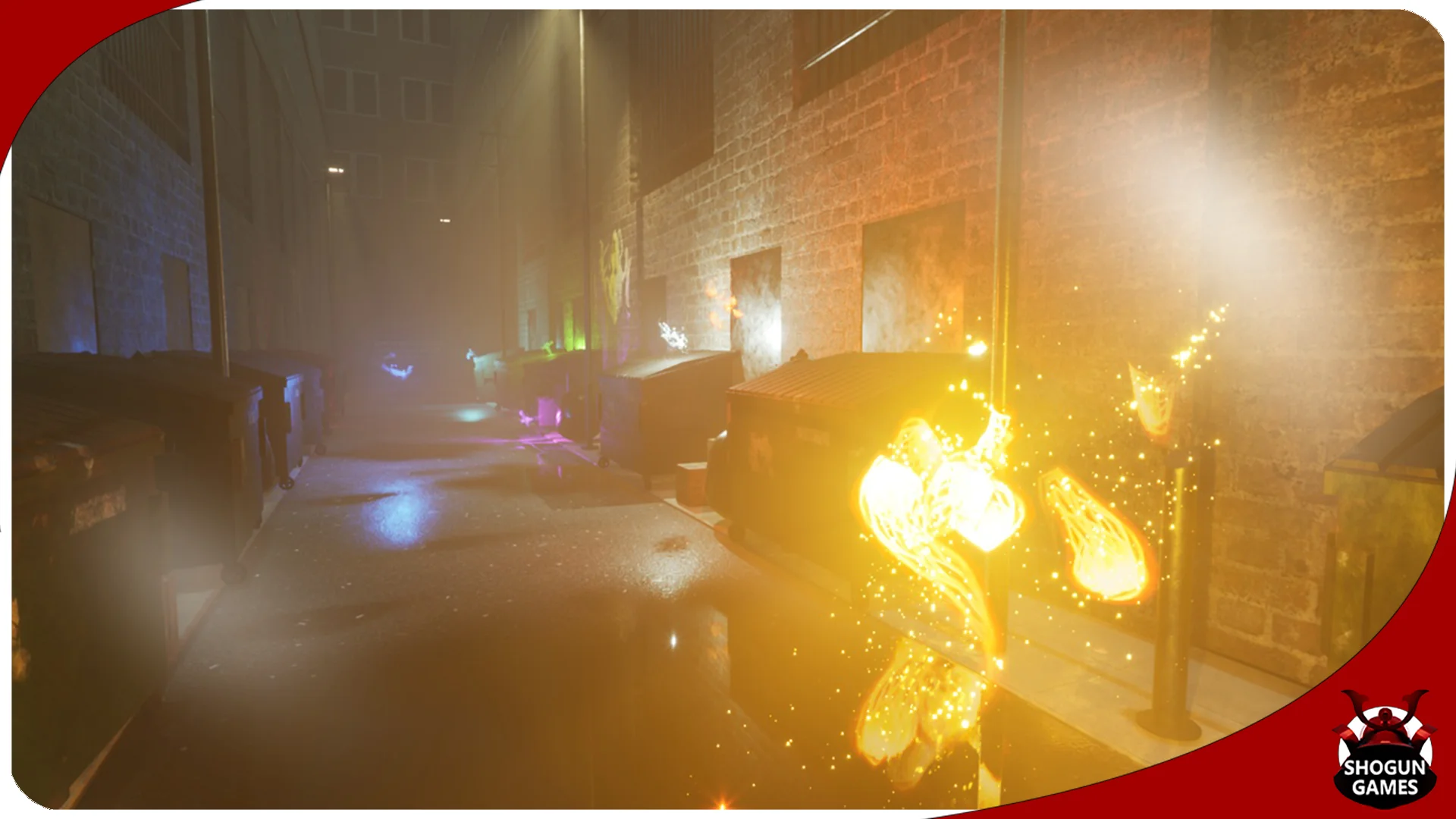
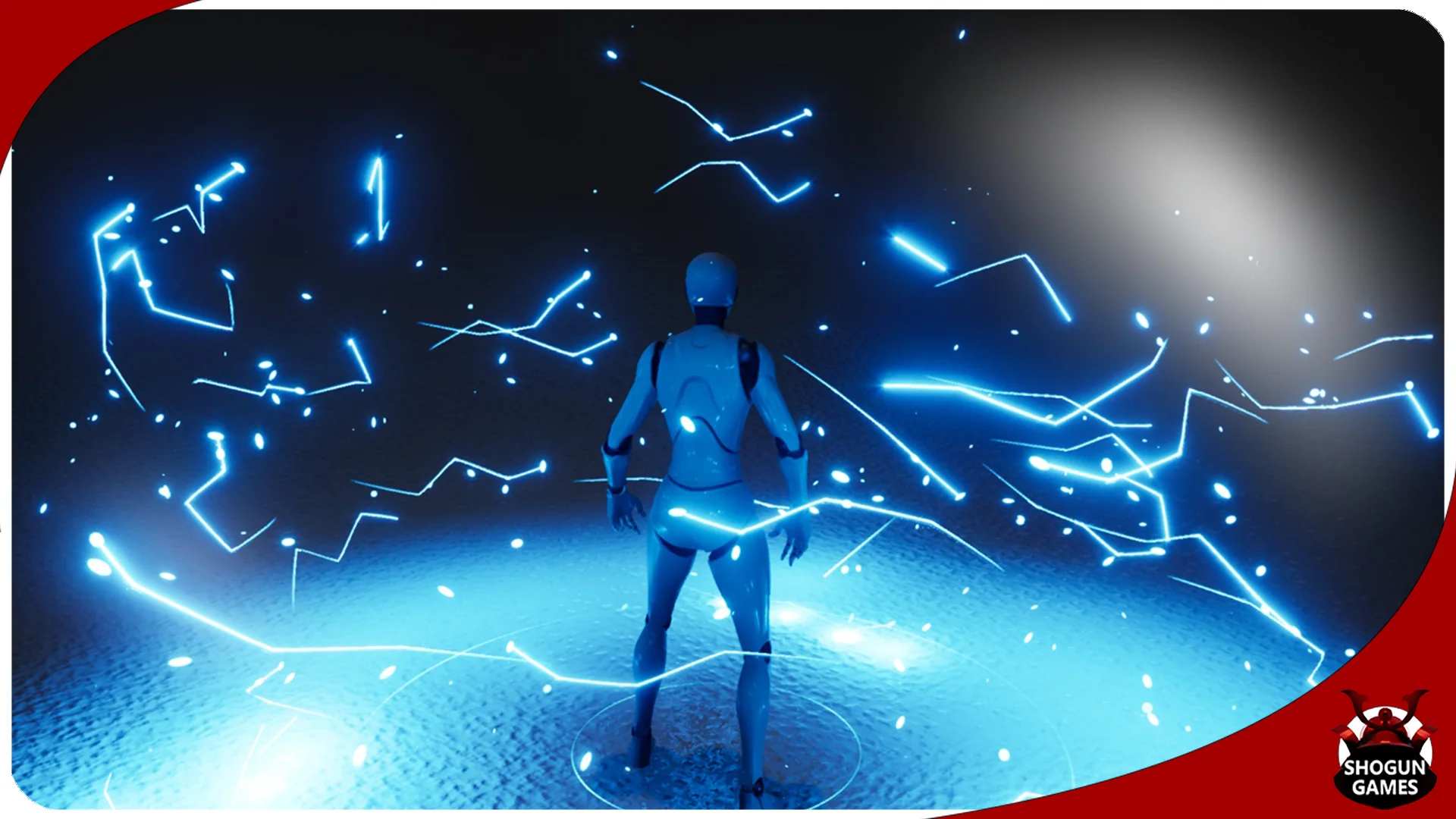
Building atmosphere in a fantasy or supernatural scene often comes down to how light and movement interact. Ethereal Tentacle FX is a collection of Unreal Engine Niagara Particle Systems designed to address exactly that intersection. The package centers on tentacle-shaped visual effects that emit their own light through a Caustic Light Function, meaning each particle system does more than render a shape—it actively paints light across nearby surfaces with shifting, water-like patterns. For environments involving spirits, ghosts, entities, or otherworldly energy, this dual behavior of form-plus-illumination gives scenes a sense that the effect belongs in the space rather than floating on top of it.
Niagara Systems Built for Attachment
The core mechanic of the package is attachment. Each Niagara System in Ethereal Tentacle FX can be attached to a Character or a moving object. When attached, the particle system generates a trail-like effect that follows the path of the parent object. This opens possibilities across several production scenarios. A Character moving through a corridor can leave behind a luminous tentacle wake. A floating entity can have ethereal appendages trailing its motion. A projectile or vehicle can pull a colorful, light-emitting tail behind it during traversal. The trail behavior is a direct consequence of how the Niagara System is structured, not a separate feature that needs manual setup—the effect is designed to read as a continuous extension of whatever carries it.
Because the tentacles emit light using a Caustic Light Function, the trail does not simply glow in isolation. The Caustic function simulates the rippling, layered light patterns seen on the floor of a swimming pool or the interior of a cave with reflective water. When a tentacle trail passes over geometry, the moving light distorts and dances across surfaces, giving the impression that the entity leaving the trail exists as a source of physical illumination. This makes the system practical not only for character-driven drama but also for environmental moments where light behavior matters—corridor reveals, underwater passages, dark ritual chambers, or any space where adding a sense of supernatural presence depends on light shifting believably.
Color and Entity Spectrum
The tags associated with the package—System, Tail, Tentacle, Visual, Colorful, Effect, Niagara, VisualEffect, Fantasy, Ghost, Wing, Spirit, Fire, Particle, and Entity—give a sense of how broadly the systems can be applied. The presence of Wing, Ghost, Spirit, and Entity as keywords suggests that the tentacle effect reads as a versatile building block for non-human forms. A wing could trail feathers made of light. A ghost could leave behind tendrils of spectral energy. A spirit entity could have tentacles of colored fire pulling behind it. The word Colorful indicates that the visual palette of the systems is not locked to a single hue; production teams can expect variation in how the effects radiate, which gives room to match different scene moods without needing entirely new particle work for each color direction.
Fire, Particle, and Entity Relevance
The inclusion of Fire among the tags points toward uses beyond purely watery or ghostly themes. A Caustic Light Function on a fire-tagged particle system suggests the system can be configured or re-themed for flame-adjacent visuals—displaced light, shifting color, organic motion. While the word "tentacle" carries a specific biological association, the underlying particle logic—strands of moving visual data that emit patterned light—has a structural similarity to flame, energy ribbons, or spiritual discharges. This means the asset is positioned less as a single-mood effect and more as a flexible Niagara toolkit for effects that need organic, flowing, light-emitting motion.
Customization Through User Variables
All Niagara FX systems in the package expose User Variables for customization. This is a production-relevant detail because it determines whether the effects serve as finished presets or as starting points. When User Variables are exposed, Technical Artists and designers can adjust parameters directly without opening the full Niagara Graph or rebuilding the system from scratch. This matters for iteration speed. A designer working on a Level can tweak how the trail behaves, shift color values, or adjust light intensity to fit a specific scene mood without breaking the system or relying on the original creator.
The presence of User Variables also implies that the tentacle systems are intended to be adapted across multiple use cases rather than locked to a single look. The same base system could be tuned for a slow, heavy spirit in a swampy level and then re-attached to a fast-moving aerial entity with different parameter values. The customization layer keeps the package flexible enough to serve as a resource across different departments—VFX Artists can use the systems as finished effects, while Level Designers and Technical Artists can treat them as configurable building blocks that fit within wider visual systems.
Where Ethereal Tentacle FX Fits in Production
In a real production workflow, this package sits in a useful middle ground between complete scene dressing and raw particle components. The effects come with built-in light behavior, which means attaching the Niagara System to a character immediately produces a visible, lit result rather than a flat particle stream that still needs light rigging. For scenes involving fantasy combat, scripted encounters, or environmental storytelling with supernatural presence, this reduces the number of steps between placing an effect and seeing it interact with the world. A Character equipped with an ethereal tentacle trail will cast caustic light onto walls, floors, and nearby objects as it moves, which gives the moment weight without separate light actors or manual animation work.
The trail-like behavior tied to attachment also means the systems are practical for gameplay-driven moments, not just cinematic cuts. A boss entering a room can carry tentacle effects that drag behind its movement. A player character under a spell effect can leave a colorful wake that communicates a status change. A vehicle or projectile moving through a level can pull a glowing tail that reads clearly even at speed. Because the effect is driven by attaching the Niagara System to a moving parent, production teams do not need to hand-animate tentacle paths or synchronize particle timing with character motion frame by frame—the system inherits motion from the object it follows.
Practical Takeaway
Ethereal Tentacle FX is best understood as an attachable, light-emitting Niagara toolkit built for Unreal Engine scenes that need flowing, colorful, organic motion paired with caustic light behavior. The combination of trail mechanics via attachment, Caustic Light Functions, and User Variables gives it relevance across fantasy, ghost, spirit, and entity work. Projects that need supernatural trails with believable light interaction can use the systems directly through attachment and then tune parameters to match scene mood, relying on the exposed variables to adjust how the tentacles move, look, and illuminate without rebuilding the particle logic.
 Spells & Combat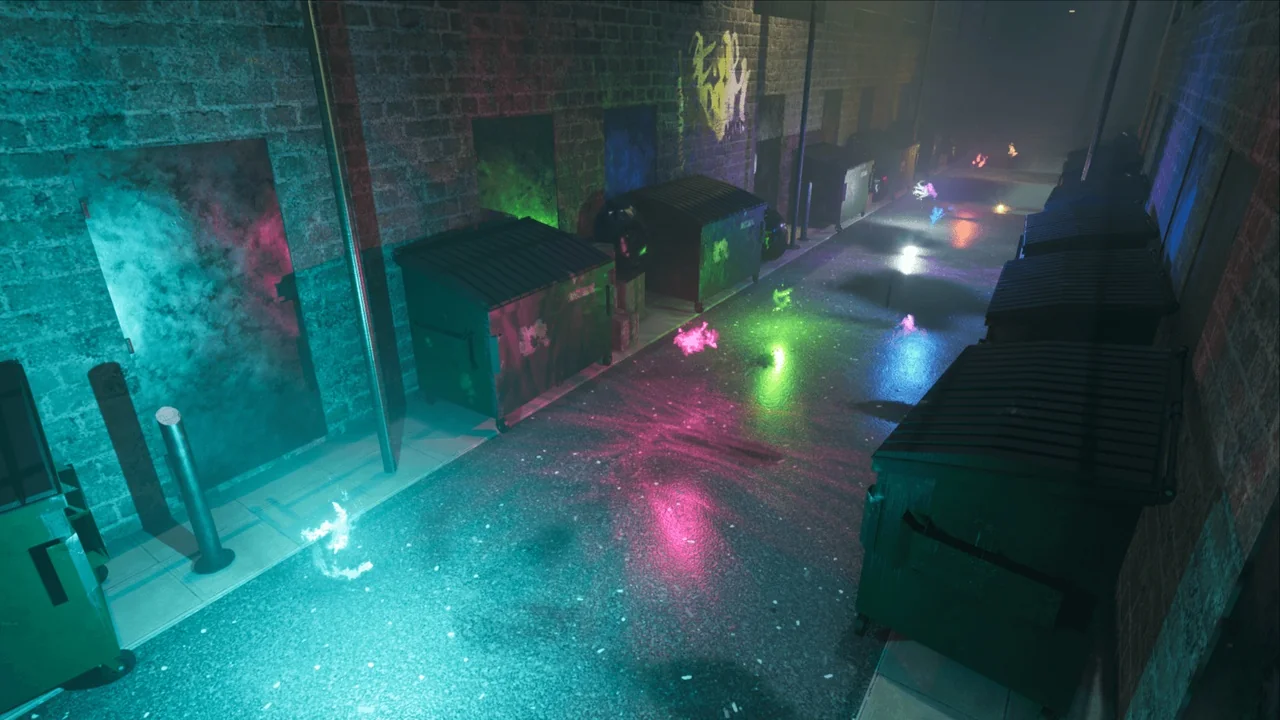
 Spells & Combat
 Spells & Combat
 Spells & Combat