"400d583ceda30eb5"{"id":"1001615","slug":"ocean-ology-nextgen-ocean-water-fluid-fft-simulation-rendering","title":"Ocean ology NextGen ( Ocean Water Fluid FFT Simulation Rendering )","category":"Engine Tools","engine":"5.5","assetVersion":"Asset Version: 1.1.0","engineVersion":"Engine Version: 5.5","tag":"Engine Tools","accent":"blue","visual":"mech","summary":"Explore Oceanology NextGen, featuring C++ FFT spectral waves, mathematical surf simulations, and high-end coastal physics for Unreal Engine.","platform":"Unreal Engine","publishedAt":"2026-10-11T01:44:11.199Z","updatedAt":"2026-10-11T01:44:11.199Z","sourceNotes":[],"fileContents":[],"compatibility":["Unreal Engine","Asset Version: 1.1.0","Engine Version: 5.5"],"featuredImage":{"alt":"Ocean ology NextGen ( Ocean Water Fluid FFT Simulation Rendering )","src":"/wp-content/uploads/published/2026/10/03e1b6d66284-f145cb8e-9d88-494a-a740-6fa443e94a4b-fafec814f9.webp"},"hasDownloadLink":true,"downloads":0,"terms":[{"taxonomy":"category","slug":"engine-tools-tools-and-plugins","name":"Engine Tools"}],"galleryImages":[{"src":"/wp-content/uploads/published/2026/10/a40377eeae5b-1dc02715-9ada-4877-90df-e7f58e6f2c61-155650684b.webp","alt":"Ocean ology NextGen ( Ocean Water Fluid FFT Simulation Rendering )"},{"src":"/wp-content/uploads/published/2026/10/24d62463e000-89e0edb6-11d6-4d61-9a35-ce2b3f13bd5c-19bb4a2665.webp","alt":"Ocean ology NextGen ( Ocean Water Fluid FFT Simulation Rendering )"},{"src":"/wp-content/uploads/published/2026/10/7d3746aa166f-d09499a8-e970-4fa8-be4a-3f5d75b617df-303eb673f6.webp","alt":"Ocean ology NextGen ( Ocean Water Fluid FFT Simulation Rendering )"},{"src":"/wp-content/uploads/published/2026/10/e652eae35b0d-48cc5cea-62bb-438b-b7b9-0279266d43d4-365e0610de.webp","alt":"Ocean ology NextGen ( Ocean Water Fluid FFT Simulation Rendering )"},{"src":"/wp-content/uploads/published/2026/10/ed78f673709c-31bb0c14-6e75-4966-b517-eef885d4a4a6-f7973e193f.webp","alt":"Ocean ology NextGen ( Ocean Water Fluid FFT Simulation Rendering )"},{"src":"/wp-content/uploads/published/2026/10/4dc8ad44c3c3-62c17f82-4db5-405a-b90f-1adda4046648-d1b43e1f6b.webp","alt":"Ocean ology NextGen ( Ocean Water Fluid FFT Simulation Rendering )"},{"src":"/wp-content/uploads/published/2026/10/9296432c07d1-c66aacea-71a7-4e0e-a4a7-b1749dc1aae8-812b0cc346.webp","alt":"Ocean ology NextGen ( Ocean Water Fluid FFT Simulation Rendering )"},{"src":"/wp-content/uploads/published/2026/10/9e365e527d60-5f9bb27e-f25a-4487-8b18-098c557062d3-0ad54d3ce9.webp","alt":"Ocean ology NextGen ( Ocean Water Fluid FFT Simulation Rendering )"},{"src":"/wp-content/uploads/published/2026/10/e06a1047db7f-bfd6127d-2ceb-473c-9160-ead575853678-e27ef7f306.webp","alt":"Ocean ology NextGen ( Ocean Water Fluid FFT Simulation Rendering )"},{"src":"/wp-content/uploads/published/2026/10/93fac8e233d0-fb9a7bfa-9851-4fcc-94c7-7f4afc5c23c4-d3e0c78e59.webp","alt":"Ocean ology NextGen ( Ocean Water Fluid FFT Simulation Rendering )"}],"accessPanel":{"kind":"resource","title":"Download this resource","eyebrow":"Free Download","message":"Log in or create a free account to start your download.","fileName":"Ocean ology NextGen ( Ocean Water Fluid FFT Simulation Rendering ).7z","safetyNote":"Resources are manually reviewed before listing to improve quality and reduce obvious risks.","actionLabel":"Download Free","resourceType":"Resource archive"},"contentHtml":"\u003ch2\u003eResolving Dynamic Ocean Surfaces with Spectral Simulation\u003c/h2\u003e\u003cp\u003eStandard animated ocean planes frequently fall short when productions require authentic offshore physical behavior, continuous weather transitions, and true wave displacement.\u003c/p\u003e\u003cp\u003eOceanology NextGen resolves these limitations by treating open water as a real-time physical simulation rather than a collection of looped surface materials. Developing over seven years of production iteration, the system uses pure C++ execution to drive frequency-domain wave calculations for cinematic scenes and AAA games. By combining Fast Fourier Transform (FFT) algorithms with Gerstner wave displacement modeling, it captures the irregular, chaotic motion of open water while maintaining precise wave heights. Climate-based wave dynamics allow water behavior to adjust to surrounding environmental weather systems, while built-in Beaufort scale integration enables artists to shift from glassy calm to severe storm swells using a single global parameter.\u003c/p\u003e\u003ch2\u003eMathematical Surf Waves and Coastal Water Mechanics\u003c/h2\u003e\u003cp\u003eSimulating the transition between deep ocean swells and shallow breaking shorelines has historically presented one of the most stubborn bottlenecks in real-time water development.\u003c/p\u003e\u003cp\u003eNextGen introduces a mathematical surf wave system designed to simulate shoreline mechanics through mathematical formulas rather than canned skeletal animations. Swells approaching the coast undergo real-time shallow water transformation, where wave velocity and height adapt dynamically to the underlying landscape depth. The formula-driven surf system causes waves to peak, pitch forward, barrel, and collapse naturally against shorelines. Coastal boundaries interact with the fluid volume through dynamic coastline simulation and wave refraction physics. These interactions generate flow-based foam driven by actual current velocity, accompanied by wave crest splash effects that emit physics-triggered particles whenever rough conditions cause waves to break violently.\u003c/p\u003e\u003ch2\u003eSubsurface Optics and Volumetric Lighting Systems\u003c/h2\u003e\u003cp\u003eConvincing aquatic rendering requires optical fidelity both above the waterline and throughout the submerged column.\u003c/p\u003e\u003cp\u003eThe system provides an integrated underwater post-process suite that simulates real physical water properties, including volumetric fog, depth-dependent caustics, hydrostatic pressure effects, and spectral color absorption gradients. Volumetric displacement god rays project downward through the surface, bending and shifting in sync with the live displacement of surface waves. At the surface level, dynamic cloud shadows track overhead atmospheric conditions to darken water patches in real time. A 24-hour day and night cycle with time-lapse preview tools accommodates continuous lighting shifts, while Niagara particle systems anchor directly to moving wave geometry to keep spray, foam, and mist aligned with the simulated water surface.\u003c/p\u003e\u003ch2\u003eC++ Quadtree Tessellation and World Partition Native Scaling\u003c/h2\u003e\u003cp\u003eManaging extensive water volumes in massive environments demands aggressive spatial optimization to protect rendering budgets.\u003c/p\u003e\u003cp\u003eSurface meshes are dynamically tessellated using a pure C++ quadtree system that allocates polygon density relative to camera distance, maintaining sharp surface displacement close to the view while conserving performance at the horizon. The architecture works natively with Unreal Engine 5 World Partition streaming, allowing large open worlds to load and unload landscape cells without interrupting the simulation. Runtime Virtual Texture (RVT) integration enables live terrain-to-water interactions without requiring pre-baked texture passes. Multi-instance support permits multiple oceans, lakes, and specialized coastal bodies to coexist in a single level, each operating on independent physics and rendering settings. Synchronizing these vast surfaces across network sessions is handled through optimized network replication routines built for multiplayer environments.\u003c/p\u003e\u003ch2\u003eActor Components, Gameplay Mechanics, and Production Integration\u003c/h2\u003e\u003cp\u003eMoving water from an aesthetic backdrop to an interactive gameplay element requires low-friction integration with characters, vehicles, and surrounding environmental toolsets.\u003c/p\u003e\u003cp\u003eNextGen provides dedicated actor components for ocean, lake, and coastal configurations, paired with fully documented C++ source code and ready-to-test example maps. Gameplay interaction is supported through displacement physics volumes that provide buoyant forces tied directly to wave movement. Characters can utilize advanced swimming mechanics complete with procedural locomotion, stamina management, diving transitions, and underwater bubble trails. Audio triggers react dynamically to ocean intensity and local wave positions to play matching soundscapes. Projects can toggle between photorealistic rendering and stylized art directions like toon or anime visuals using Data Asset presets. Because the spectral solver is engineered for maximum visual fidelity, target hardware centers on high-end GPUs in the class of the RTX 3080 and RTX 4070 or above, with mid-range optimizations currently under development. Productions targeting broader hardware can utilize Oceanology Legacy, while inland water networks can be completed using Riverology to simulate flow-based river currents, procedural waterfalls, and rapids alongside external integrations like Sky Creator, Fluid Ninja LIVE, NWH Dynamic Water Physics 2, and Swim Component plugins.\u003c/p\u003e\n\n\u003ch2\u003eMore From The Same Workflow\u003c/h2\u003e\n\u003cul\u003e\n\u003cli\u003e\u003ca href=\"https://3dcghub.com/dynamic-real-water/\" title=\"Dynamic Real Water\"\u003eDynamic Real Water\u003c/a\u003e\u003c/li\u003e\n\u003cli\u003e\u003ca href=\"https://3dcghub.com/uiws-unified-interactive-water-system/\" title=\"UIWS - Unified Interactive Water System\"\u003eUIWS - Unified Interactive Water System\u003c/a\u003e\u003c/li\u003e\n\u003cli\u003e\u003ca href=\"https://3dcghub.com/easy-waterscape-realtime-ocean-and-water-system/\" title=\"Easy Waterscape - Realtime Ocean \u0026amp; Water System\"\u003eEasy Waterscape - Realtime Ocean \u0026amp; Water System\u003c/a\u003e\u003c/li\u003e\n\u003cli\u003e\u003ca href=\"https://3dcghub.com/interactive-water-ocean-and-swim-systems/\" title=\"Interactive Water, Ocean and Swim Systems\"\u003eInteractive Water, Ocean and Swim Systems\u003c/a\u003e\u003c/li\u003e\n\u003cli\u003e\u003ca href=\"https://3dcghub.com/prismatiscape-interaction-plugin/\" title=\"Prismatiscape Interaction Plugin\"\u003ePrismatiscape Interaction Plugin\u003c/a\u003e\u003c/li\u003e\n\u003c/ul\u003e","contentTextLength":5678,"navigation":{"current":3,"total":3555,"previous":{"id":"1001616","slug":"paris-fontaine-saint-michel","title":"Paris - Fontaine Saint-Michel","category":"Cities","platform":"Unreal Engine","updatedAt":"2026-10-11T01:44:58.746Z"},"next":{"id":"1001614","slug":"menu-system-pro-by-moonville","title":"Menu System Pro by Moonville","category":"UI Kits / HUDs","platform":"Unreal Engine","updatedAt":"2026-10-11T01:43:28.810Z"}},"relatedResources":[{"id":"13883","slug":"dynamic-real-water","title":"Dynamic Real Water","category":"Engine Tools","engine":"5.8","assetVersion":"Asset Version: 2.0","engineVersion":"Engine Version: 5.8","tag":"Engine Tools","accent":"blue","visual":"mech","summary":"Enhance your Unreal Engine 5 environments with Dynamic Real Water, a high-performance FFT simulation plugin. It offers realistic wave dynamics, advanced buoyancy physics, and seamless replication for multiplayer projects.","platform":"Unreal Engine","publishedAt":"2026-03-11T10:30:53.000Z","updatedAt":"2026-10-07T10:02:19.555Z","sourceNotes":[],"fileContents":[],"compatibility":["Unreal Engine","Asset Version: 2.0","Engine Version: 5.8"],"featuredImage":{"alt":"Dynamic Real Water","src":"https://3dcghub.com/wp-content/uploads/2026/03/8532c421-bf8f-4903-bbfc-9e94a063892e.webp"},"hasDownloadLink":true,"downloads":3},{"id":"14724","slug":"uiws-unified-interactive-water-system","title":"UIWS - Unified Interactive Water System","category":"Engine Tools","engine":"4.25 - 4.27,5.0 - 5.7","assetVersion":"Engine version: 4.25 - 4.27,5.0 - 5.7","engineVersion":"Asset Version:1.11 - 1.18","tag":"Engine Tools","accent":"blue","visual":"character","summary":"Enhance your Unreal Engine 4 projects with UIWS - Unified Interactive Water System. This powerful plugin offers real-time fluid interaction, caustic reflections, and easy setup for beautiful, dynamic water bodies.","platform":"Unreal Engine","publishedAt":"2026-03-11T19:07:27.000Z","updatedAt":"2026-04-19T15:45:41.000Z","sourceNotes":[],"fileContents":[],"compatibility":["Unreal Engine","Engine version: 4.25 - 4.27,5.0 - 5.7","Asset Version: 1.11 - 1.18"],"featuredImage":{"alt":"UIWS - Unified Interactive Water System","src":"https://3dcghub.com/wp-content/uploads/2026/03/89d02958-c237-4e09-b3ae-50ccff59c316.webp"},"hasDownloadLink":true,"downloads":1},{"id":"1000768","slug":"easy-waterscape-realtime-ocean-and-water-system","title":"Easy Waterscape - Realtime Ocean \u0026 Water System","category":"Engine Tools","engine":"5.7+","assetVersion":"","engineVersion":"Engine Version: 5.7+","tag":"Engine Tools","accent":"blue","visual":"mech","summary":"Realtime FFT ocean simulation for Unreal Engine 5.7+. Drop-in Blueprint actor with Tessendorf waves, dynamic foam, buoyancy, and one-click coastlines.","platform":"Unreal Engine","publishedAt":"2026-07-28T17:20:25.391Z","updatedAt":"2026-07-28T17:23:14.846Z","sourceNotes":[],"fileContents":[],"compatibility":["Unreal Engine","Engine Version: 5.7+"],"featuredImage":{"alt":"Easy Waterscape - Realtime Ocean \u0026 Water System","src":"/wp-content/uploads/published/2026/07/d797b32e1cc0-1b72c960-d366-480e-89b3-2397a4e066bd-788359d934.webp"},"hasDownloadLink":true,"downloads":7}]}
Resolving Dynamic Ocean Surfaces with Spectral Simulation
Standard animated ocean planes frequently fall short when productions require authentic offshore physical behavior, continuous weather transitions, and true wave displacement.
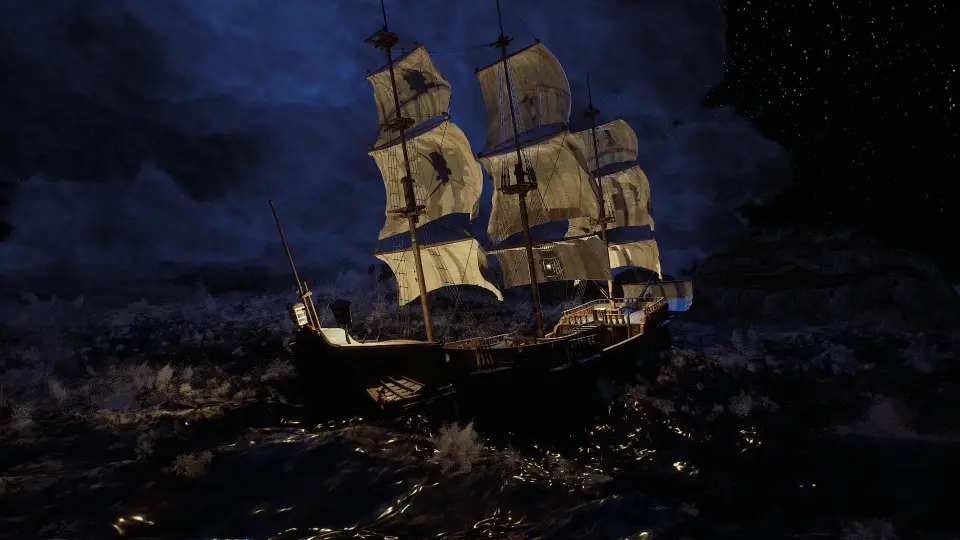
Oceanology NextGen resolves these limitations by treating open water as a real-time physical simulation rather than a collection of looped surface materials. Developing over seven years of production iteration, the system uses pure C++ execution to drive frequency-domain wave calculations for cinematic scenes and AAA games. By combining Fast Fourier Transform (FFT) algorithms with Gerstner wave displacement modeling, it captures the irregular, chaotic motion of open water while maintaining precise wave heights. Climate-based wave dynamics allow water behavior to adjust to surrounding environmental weather systems, while built-in Beaufort scale integration enables artists to shift from glassy calm to severe storm swells using a single global parameter.
Mathematical Surf Waves and Coastal Water Mechanics
Simulating the transition between deep ocean swells and shallow breaking shorelines has historically presented one of the most stubborn bottlenecks in real-time water development.
NextGen introduces a mathematical surf wave system designed to simulate shoreline mechanics through mathematical formulas rather than canned skeletal animations. Swells approaching the coast undergo real-time shallow water transformation, where wave velocity and height adapt dynamically to the underlying landscape depth. The formula-driven surf system causes waves to peak, pitch forward, barrel, and collapse naturally against shorelines. Coastal boundaries interact with the fluid volume through dynamic coastline simulation and wave refraction physics. These interactions generate flow-based foam driven by actual current velocity, accompanied by wave crest splash effects that emit physics-triggered particles whenever rough conditions cause waves to break violently.
Subsurface Optics and Volumetric Lighting Systems
Convincing aquatic rendering requires optical fidelity both above the waterline and throughout the submerged column.
The system provides an integrated underwater post-process suite that simulates real physical water properties, including volumetric fog, depth-dependent caustics, hydrostatic pressure effects, and spectral color absorption gradients. Volumetric displacement god rays project downward through the surface, bending and shifting in sync with the live displacement of surface waves. At the surface level, dynamic cloud shadows track overhead atmospheric conditions to darken water patches in real time. A 24-hour day and night cycle with time-lapse preview tools accommodates continuous lighting shifts, while Niagara particle systems anchor directly to moving wave geometry to keep spray, foam, and mist aligned with the simulated water surface.
C++ Quadtree Tessellation and World Partition Native Scaling
Managing extensive water volumes in massive environments demands aggressive spatial optimization to protect rendering budgets.
Surface meshes are dynamically tessellated using a pure C++ quadtree system that allocates polygon density relative to camera distance, maintaining sharp surface displacement close to the view while conserving performance at the horizon. The architecture works natively with Unreal Engine 5 World Partition streaming, allowing large open worlds to load and unload landscape cells without interrupting the simulation. Runtime Virtual Texture (RVT) integration enables live terrain-to-water interactions without requiring pre-baked texture passes. Multi-instance support permits multiple oceans, lakes, and specialized coastal bodies to coexist in a single level, each operating on independent physics and rendering settings. Synchronizing these vast surfaces across network sessions is handled through optimized network replication routines built for multiplayer environments.
Actor Components, Gameplay Mechanics, and Production Integration
Moving water from an aesthetic backdrop to an interactive gameplay element requires low-friction integration with characters, vehicles, and surrounding environmental toolsets.
NextGen provides dedicated actor components for ocean, lake, and coastal configurations, paired with fully documented C++ source code and ready-to-test example maps. Gameplay interaction is supported through displacement physics volumes that provide buoyant forces tied directly to wave movement. Characters can utilize advanced swimming mechanics complete with procedural locomotion, stamina management, diving transitions, and underwater bubble trails. Audio triggers react dynamically to ocean intensity and local wave positions to play matching soundscapes. Projects can toggle between photorealistic rendering and stylized art directions like toon or anime visuals using Data Asset presets. Because the spectral solver is engineered for maximum visual fidelity, target hardware centers on high-end GPUs in the class of the RTX 3080 and RTX 4070 or above, with mid-range optimizations currently under development. Productions targeting broader hardware can utilize Oceanology Legacy, while inland water networks can be completed using Riverology to simulate flow-based river currents, procedural waterfalls, and rapids alongside external integrations like Sky Creator, Fluid Ninja LIVE, NWH Dynamic Water Physics 2, and Swim Component plugins.
 Engine Tools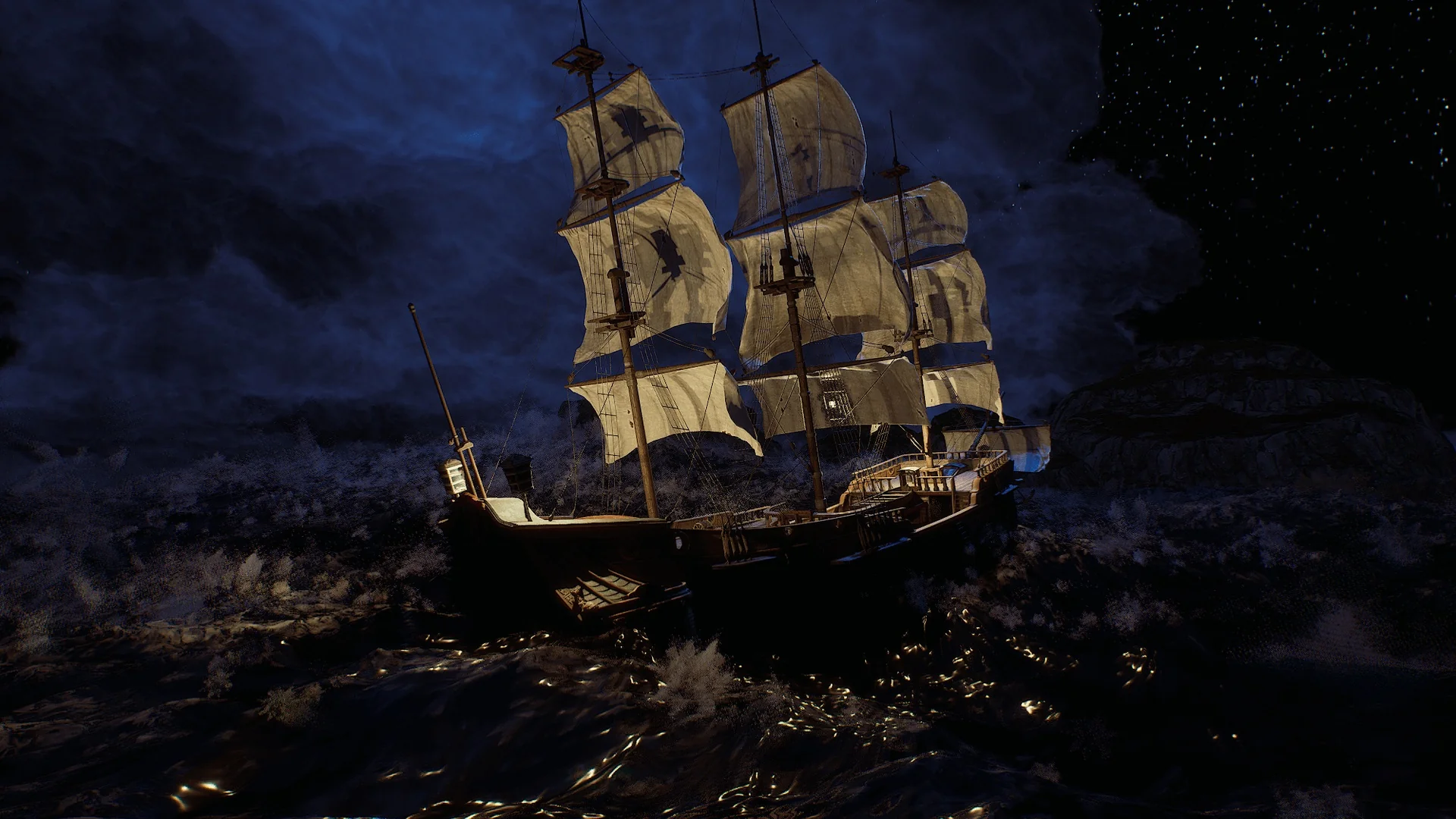
 Engine Tools
 Engine Tools
 Engine Tools