"7e6fc58c410f2894"{"id":"1000473","slug":"ocean-floor-pack-high-quality-environment","title":"Ocean Floor Pack / High Quality Environment","category":"Aquatic","engine":"4.26+,5.0+","assetVersion":"","engineVersion":"Engine Version: 4.26+,5.0+","tag":"Aquatic","accent":"blue","visual":"city","summary":"PBR underwater environment pack with modular props, custom adjustable materials, Lumen and raytracing support for Unreal Engine 4.26 through 5.7.","platform":"Unreal Engine","publishedAt":"2026-07-11T18:33:09.820Z","updatedAt":"2026-07-11T18:33:09.820Z","sourceNotes":[],"fileContents":[],"compatibility":["Unreal Engine","Engine Version: 4.26+,5.0+"],"featuredImage":{"alt":"Ocean Floor Pack / High Quality Environment","src":"/wp-content/uploads/published/2026/07/4e02d86d2636-0273b0a2-336d-44f8-bbd7-01a49baf6909-8dc01e3fcc.webp"},"hasDownloadLink":true,"downloads":0,"terms":[{"taxonomy":"category","slug":"aquatic","name":"Aquatic"}],"galleryImages":[{"src":"/wp-content/uploads/published/2026/07/d22bbd578df7-37ded662-54b0-4dec-9c6c-6f670ca26f53-88adfd5818.webp","alt":"Ocean Floor Pack / High Quality Environment"},{"src":"/wp-content/uploads/published/2026/07/a4163099992b-59660295-9e97-4e2a-bcac-8b3463f8144f-8338feb352.webp","alt":"Ocean Floor Pack / High Quality Environment"},{"src":"/wp-content/uploads/published/2026/07/63a23aec0206-f5fcf453-303f-403d-ae75-b860fb44fc69-80907569b5.webp","alt":"Ocean Floor Pack / High Quality Environment"},{"src":"/wp-content/uploads/published/2026/07/ab35e274e494-8367fa27-8f28-419f-8e49-a0b7dccbc468-90dcb5a1ac.webp","alt":"Ocean Floor Pack / High Quality Environment"},{"src":"/wp-content/uploads/published/2026/07/8936eb18c798-9335a99d-d3d3-478d-a90b-9b89b419c96e-d4db63066e.webp","alt":"Ocean Floor Pack / High Quality Environment"},{"src":"/wp-content/uploads/published/2026/07/6a2e3f86b569-a34911d4-efd1-44e7-9db0-451680a55d49-954bb86248.webp","alt":"Ocean Floor Pack / High Quality Environment"},{"src":"/wp-content/uploads/published/2026/07/7bc4a5b912ae-a8c6c55e-be05-41f3-a720-4be757840b8c-b464cdefd4.webp","alt":"Ocean Floor Pack / High Quality Environment"},{"src":"/wp-content/uploads/published/2026/07/707bd8baf7b4-8f4e6ba7-ea9e-4ced-96d0-5415cd47212e-995fd2cda1.webp","alt":"Ocean Floor Pack / High Quality Environment"},{"src":"/wp-content/uploads/published/2026/07/4d360d7abf7f-2586576d-bf0b-42e3-a1d9-9d14570946c6-06e348cb98.webp","alt":"Ocean Floor Pack / High Quality Environment"},{"src":"/wp-content/uploads/published/2026/07/7758ddc5cef0-77743b0c-bbf7-4b23-be19-1b729d742113-14021b4cb8.webp","alt":"Ocean Floor Pack / High Quality Environment"}],"accessPanel":{"kind":"resource","title":"Download this resource","eyebrow":"Free Download","message":"Log in or create a free account to start your download.","fileName":"Content.7z","safetyNote":"Resources are manually reviewed before listing to improve quality and reduce obvious risks.","actionLabel":"Download Free","resourceType":"Resource archive"},"contentHtml":"\u003cp\u003eUnderwater scenes demand a careful balance between visual fidelity and rendering cost. Water, lighting, and marine props all compete for performance overhead, and projects targeting different quality tiers need assets that can stretch across those demands without rework. Ocean Floor Pack arrives as a solution positioned squarely at that intersection, built in a PBR pipeline and described as suitable for both AAA-quality productions and projects where optimization and performance take priority.\u003c/p\u003e\u003cp\u003eThe package spans a broad engine compatibility range, covering Unreal Engine 4.26 and 4.27 as well as versions 5.0 through 5.7. That spread means studios moving from last-generation pipelines into Unreal 5 can adopt the same seabed kit without rebuilding materials or re-importing geometry at each major version boundary.\u003c/p\u003e\u003ch2\u003eWhat the Ocean Floor Pack delivers\u003c/h2\u003e\u003cp\u003eThis is an environment package rather than a single_prop collection with no coherent setting. Every included element ties into an underwater seabed context, which means the props, materials, and lighting presets are built to read as part of one continuous ocean floor rather than as disconnected library pieces. The tagging attached to the package reinforces that focus: diving, underwater, seabed, sea, water, ocean, sealife, and marine animals are all named explicitly.\u003c/p\u003e\u003cp\u003eOn the rendering side, the pack is marked for Lumen and raytracing, placing it firmly in the UE5 real-time lighting workflow. Lighting is called out as a tag alongside Lumen, which suggests the materials and surfaces are tuned to respond to dynamic global illumination rather than relying on baked-only workflows. For teams building real-time cinematics or playable underwater levels, this is relevant because it lets the seabed props react naturally to moving light sources, volumetric god rays, or depth-based color absorption without manual mask painting.\u003c/p\u003e\u003ch2\u003eAdjustable materials across every prop\u003c/h2\u003e\u003cp\u003eOne of the structural details that separates this pack from static prop dumps is the material system. Every prop included in the Ocean Floor Pack uses a custom material that allows adjustment. The provided rationale is direct: this enables variations and combinations. Rather than shipping one shader per object and locking artists into fixed appearances, the creator has built the props around a shared material framework that exposes parameters for tweaking.\u003c/p\u003e\u003cp\u003eThat approach has a concrete workflow payoff. If a scene needs a slightly different coral tint, a darker stone variant, or a worn shell surface, the adjustment happens inside the material instance rather than requiring a new texture set. For environment teams composing large seabed areas, the ability to derive visual variety from a single material foundation cuts down on texture memory and import overhead while still producing readable differentiation across the floor. The modular tag attached to the pack aligns with this—composing larger sections from adjustable, repeatable parts is exactly the workflow that modular environment kits are built to support.\u003c/p\u003e\u003ch3\u003eFitting the Ocean Floor Pack into a seabed level\u003c/h2\u003e\u003cp\u003eThe tags paint a clear picture of the scene types this package is meant to populate. Animal life is represented through fish, shark, and raytracing-adjacent marine elements—rays, fish, and sharks are all called out individually. Seashell appears as its own tag, suggesting smaller decorative props for floor dressing. The combination of lowpoly and photorealistic as tags points to a pack that is aware of both ends of the fidelity spectrum and tries to serve both.\u003c/p\u003e\u003cp\u003eLevel design work is explicitly referenced. The presence of \"level\" as a tag, alongside \"fantasy,\" indicates the props and environment pieces can be assembled into a playable space rather than only used for static renders. For underwater diving sequences, exploration levels, or cinematic establishing shots of a seabed, the modular props give level artists something to build with directly—floor tiles, rock formations, coral structures, and scattered shells that populate the ground plane without needing custom modeling from scratch.\u003c/p\u003e\u003ch2\u003ePBR pipeline and visual quality targets\u003c/h2\u003e\u003cp\u003eThe pack is built in a PBR pipeline, which defines how the surfaces are authored and how they respond to light. Physically based rendering means the materials use metalness, roughness, and albedo values that behave predictably under different lighting setups. For an underwater environment, that predictability is especially relevant: light behaves differently at depth, and PBR materials respond to color filtering and attenuation in a way that non-PBR shaders often do not. A photorealistic target is named alongside the PBR pipeline, so the intended visual quality ceiling is high-fidelity realism rather than stylization.\u003c/p\u003e\u003cp\u003eAt the same time, the lowpoly tag signals that the geometry is not locked to dense meshes. Projects with tighter frame budgets—or mobile and VR underwater scenes where polycount matters—can still work with the props without being forced into AAA-grade mesh density. This is where the pack's stated dual suitability for AAA and performance-focused projects becomes grounded in the actual asset characteristics rather than just marketing language.\u003c/p\u003e\u003ch3\u003eLighting, Lumen, and raytracing on the seabed\u003c/h2\u003e\u003cp\u003eLighting is one of the harder problems in underwater scene construction. At depth, direct light breaks up, bounces across surfaces in complex ways, and gradually loses color. The pack's Lumen and raytracing tags indicate the materials and workflow are set up to take advantage of Unreal 5's real-time GI and reflection systems. On a seabed, raytraced reflections matter for wet surfaces, polished shells, and any metallic or glossy element resting on the floor. Lumen support means those surfaces respond to indirect light bouncing off nearby terrain rather than requiring manual lightmap UVs or baked GI probes.\u003c/p\u003e\u003cp\u003eFor Unreal 4.26 and 4.27 users, the pack still functions, but the Lumen advantage is exclusive to the 5.0+ range. Teams still shipping on 4.27 can use the props with traditional lighting pipelines, while those on 5.1 through 5.7 gain access to the full real-time lighting feature set the tags describe.\u003c/p\u003e\u003ch2\u003ePractical takeaway\u003c/h2\u003e\u003cp\u003eFor teams building underwater content in Unreal Engine—from diving gameplay sections to cinematic seabed establishing shots—Ocean Floor Pack offers a modular, PBR-based foundation with custom adjustable materials, props tagged for marine life from fish to sharks, and compatibility that spans UE 4.26 into the UE 5.x series. The adjustable material system is the detail most worth noting for production use: it is what lets a single prop set produce the visual variation needed to fill an ocean floor without multiplying texture costs at the same rate.\u003c/p\u003e\n\n\u003ch2\u003eExplore Similar Assets\u003c/h2\u003e\n\u003cul\u003e\n\u003cli\u003e\u003ca href=\"https://3dcghub.com/ocean-floor-environment/\" title=\"Ocean Floor Environment\"\u003eOcean Floor Environment\u003c/a\u003e\u003c/li\u003e\n\u003cli\u003e\u003ca href=\"https://3dcghub.com/ocean-environment-pack/\" title=\"Ocean Environment Pack\"\u003eOcean Environment Pack\u003c/a\u003e\u003c/li\u003e\n\u003cli\u003e\u003ca href=\"https://3dcghub.com/ship-frigate/\" title=\"Ship Frigate\"\u003eShip Frigate\u003c/a\u003e\u003c/li\u003e\n\u003cli\u003e\u003ca href=\"https://3dcghub.com/ocean-monster-fish-pack-part-2-underwater-creatures-fish-low-poly-11/\" title=\"Ocean Monster Fish Pack - Part 2 - Underwater Creatures - Fish low poly - #11\"\u003eOcean Monster Fish Pack - Part 2 - Underwater Creatures - Fish low poly - #11\u003c/a\u003e\u003c/li\u003e\n\u003cli\u003e\u003ca href=\"https://3dcghub.com/shader-world-plugin-procedural-terrain-oceans-foliage-gpu-accelerated/\" title=\"Shader World Plugin : Procedural Terrain, Oceans, Foliage, GPU-accelerated\"\u003eShader World Plugin : Procedural Terrain, Oceans, Foliage, GPU-accelerated\u003c/a\u003e\u003c/li\u003e\n\u003c/ul\u003e","contentTextLength":6984,"navigation":{"current":1285,"total":3618,"previous":{"id":"1000474","slug":"oil-refinery-pack","title":"Oil Refinery Pack","category":"Buildings \u0026 Architecture","platform":"Unreal Engine","updatedAt":"2026-07-11T18:37:51.055Z"},"next":{"id":"1000472","slug":"ocean-floor-environment","title":"Ocean Floor Environment","category":"Aquatic","platform":"Unreal Engine","updatedAt":"2026-07-11T18:23:23.992Z"}},"relatedResources":[{"id":"1001071","slug":"underwater-world-modular-underwater-stylized-underwater-ocean-sea","title":"Underwater World - Modular Underwater - Stylized Underwater - Ocean - Sea","category":"Aquatic","engine":"5.1+","assetVersion":"","engineVersion":"Engine Version: 5.1+","tag":"Aquatic","accent":"blue","visual":"mech","summary":"Stylized underwater environment kit with modular pieces, color-adjustable foliage, coral blueprints, ocean floor material, and VFX for JRPG/MMO worlds.","platform":"Unreal Engine","publishedAt":"2026-09-03T17:16:49.746Z","updatedAt":"2026-09-03T17:16:49.746Z","sourceNotes":[],"fileContents":[],"compatibility":["Unreal Engine","Engine Version: 5.1+"],"featuredImage":{"alt":"Underwater World - Modular Underwater - Stylized Underwater - Ocean - Sea","src":"/wp-content/uploads/published/2026/09/d13197e9332c-b95e10df-a732-4a72-b4b9-db379972cb8f-da5ad2b3cf.webp"},"hasDownloadLink":true,"downloads":1},{"id":"1000472","slug":"ocean-floor-environment","title":"Ocean Floor Environment","category":"Aquatic","engine":"4.26+,5.0+","assetVersion":"","engineVersion":"Engine Version: 4.26+,5.0+","tag":"Aquatic","accent":"blue","visual":"city","summary":"Underwater environment with tessellated rocks, paintable vegetation, parallax terrain, skeletal eel animations, and particle-based fish schools built for Unreal","platform":"Unreal Engine","publishedAt":"2026-07-11T18:23:23.992Z","updatedAt":"2026-07-11T18:23:23.992Z","sourceNotes":[],"fileContents":[],"compatibility":["Unreal Engine","Engine Version: 4.26+,5.0+"],"featuredImage":{"alt":"Ocean Floor Environment","src":"/wp-content/uploads/published/2026/07/5585cf498eb1-57cb393f-cf6a-4c31-98a0-038a19e471e6-fbf4795892.webp"},"hasDownloadLink":true,"downloads":0},{"id":"14579","slug":"shader-world-plugin-procedural-terrain-oceans-foliage-gpu-accelerated","title":"Shader World Plugin : Procedural Terrain, Oceans, Foliage, GPU-accelerated","category":"Engine Tools","engine":"4.27,5.0 - 5.4","assetVersion":"Engine version: 4.27,5.0 - 5.4","engineVersion":"4.26","tag":"Engine Tools","accent":"blue","visual":"character","summary":"Shader World Plugin offers a high-performance alternative to native Unreal Engine landscapes, utilizing GPU acceleration for real-time world generation. It supports massive scales and is fully editable within packaged games.","platform":"Unreal Engine","publishedAt":"2026-03-11T18:34:57.000Z","updatedAt":"2026-04-19T15:45:44.000Z","sourceNotes":[],"fileContents":[],"compatibility":["Unreal Engine","Engine version: 4.27,5.0 - 5.4"],"featuredImage":{"alt":"Shader World Plugin : Procedural Terrain, Oceans, Foliage, GPU-accelerated","src":"https://3dcghub.com/wp-content/uploads/2026/03/0922900f-bc2e-416c-a177-0cef84bcdbc8.webp"},"hasDownloadLink":true,"downloads":0}]}
Aquatic
Ocean Floor Pack / High Quality Environment
PBR underwater environment pack with modular props, custom adjustable materials, Lumen and raytracing support for Unreal Engine 4.26 through 5.7.
Underwater scenes demand a careful balance between visual fidelity and rendering cost. Water, lighting, and marine props all compete for performance overhead, and projects targeting different quality tiers need assets that can stretch across those demands without rework. Ocean Floor Pack arrives as a solution positioned squarely at that intersection, built in a PBR pipeline and described as suitable for both AAA-quality productions and projects where optimization and performance take priority.
The package spans a broad engine compatibility range, covering Unreal Engine 4.26 and 4.27 as well as versions 5.0 through 5.7. That spread means studios moving from last-generation pipelines into Unreal 5 can adopt the same seabed kit without rebuilding materials or re-importing geometry at each major version boundary.
What the Ocean Floor Pack delivers
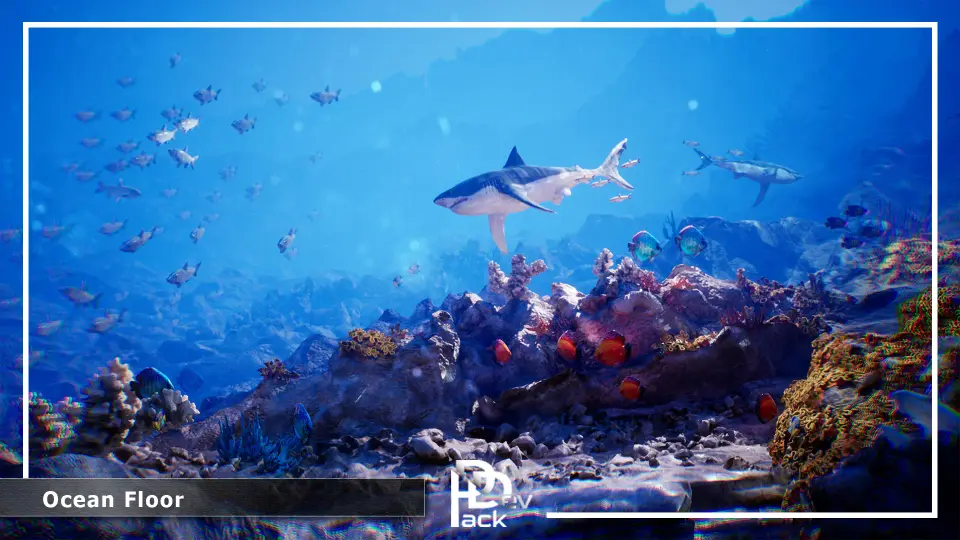
This is an environment package rather than a single_prop collection with no coherent setting. Every included element ties into an underwater seabed context, which means the props, materials, and lighting presets are built to read as part of one continuous ocean floor rather than as disconnected library pieces. The tagging attached to the package reinforces that focus: diving, underwater, seabed, sea, water, ocean, sealife, and marine animals are all named explicitly.
On the rendering side, the pack is marked for Lumen and raytracing, placing it firmly in the UE5 real-time lighting workflow. Lighting is called out as a tag alongside Lumen, which suggests the materials and surfaces are tuned to respond to dynamic global illumination rather than relying on baked-only workflows. For teams building real-time cinematics or playable underwater levels, this is relevant because it lets the seabed props react naturally to moving light sources, volumetric god rays, or depth-based color absorption without manual mask painting.
Adjustable materials across every prop
One of the structural details that separates this pack from static prop dumps is the material system. Every prop included in the Ocean Floor Pack uses a custom material that allows adjustment. The provided rationale is direct: this enables variations and combinations. Rather than shipping one shader per object and locking artists into fixed appearances, the creator has built the props around a shared material framework that exposes parameters for tweaking.
That approach has a concrete workflow payoff. If a scene needs a slightly different coral tint, a darker stone variant, or a worn shell surface, the adjustment happens inside the material instance rather than requiring a new texture set. For environment teams composing large seabed areas, the ability to derive visual variety from a single material foundation cuts down on texture memory and import overhead while still producing readable differentiation across the floor. The modular tag attached to the pack aligns with this—composing larger sections from adjustable, repeatable parts is exactly the workflow that modular environment kits are built to support.
Fitting the Ocean Floor Pack into a seabed level
The tags paint a clear picture of the scene types this package is meant to populate. Animal life is represented through fish, shark, and raytracing-adjacent marine elements—rays, fish, and sharks are all called out individually. Seashell appears as its own tag, suggesting smaller decorative props for floor dressing. The combination of lowpoly and photorealistic as tags points to a pack that is aware of both ends of the fidelity spectrum and tries to serve both.
Level design work is explicitly referenced. The presence of "level" as a tag, alongside "fantasy," indicates the props and environment pieces can be assembled into a playable space rather than only used for static renders. For underwater diving sequences, exploration levels, or cinematic establishing shots of a seabed, the modular props give level artists something to build with directly—floor tiles, rock formations, coral structures, and scattered shells that populate the ground plane without needing custom modeling from scratch.
PBR pipeline and visual quality targets
The pack is built in a PBR pipeline, which defines how the surfaces are authored and how they respond to light. Physically based rendering means the materials use metalness, roughness, and albedo values that behave predictably under different lighting setups. For an underwater environment, that predictability is especially relevant: light behaves differently at depth, and PBR materials respond to color filtering and attenuation in a way that non-PBR shaders often do not. A photorealistic target is named alongside the PBR pipeline, so the intended visual quality ceiling is high-fidelity realism rather than stylization.
At the same time, the lowpoly tag signals that the geometry is not locked to dense meshes. Projects with tighter frame budgets—or mobile and VR underwater scenes where polycount matters—can still work with the props without being forced into AAA-grade mesh density. This is where the pack's stated dual suitability for AAA and performance-focused projects becomes grounded in the actual asset characteristics rather than just marketing language.
Lighting, Lumen, and raytracing on the seabed
Lighting is one of the harder problems in underwater scene construction. At depth, direct light breaks up, bounces across surfaces in complex ways, and gradually loses color. The pack's Lumen and raytracing tags indicate the materials and workflow are set up to take advantage of Unreal 5's real-time GI and reflection systems. On a seabed, raytraced reflections matter for wet surfaces, polished shells, and any metallic or glossy element resting on the floor. Lumen support means those surfaces respond to indirect light bouncing off nearby terrain rather than requiring manual lightmap UVs or baked GI probes.
For Unreal 4.26 and 4.27 users, the pack still functions, but the Lumen advantage is exclusive to the 5.0+ range. Teams still shipping on 4.27 can use the props with traditional lighting pipelines, while those on 5.1 through 5.7 gain access to the full real-time lighting feature set the tags describe.
Practical takeaway
For teams building underwater content in Unreal Engine—from diving gameplay sections to cinematic seabed establishing shots—Ocean Floor Pack offers a modular, PBR-based foundation with custom adjustable materials, props tagged for marine life from fish to sharks, and compatibility that spans UE 4.26 into the UE 5.x series. The adjustable material system is the detail most worth noting for production use: it is what lets a single prop set produce the visual variation needed to fill an ocean floor without multiplying texture costs at the same rate.
 Aquatic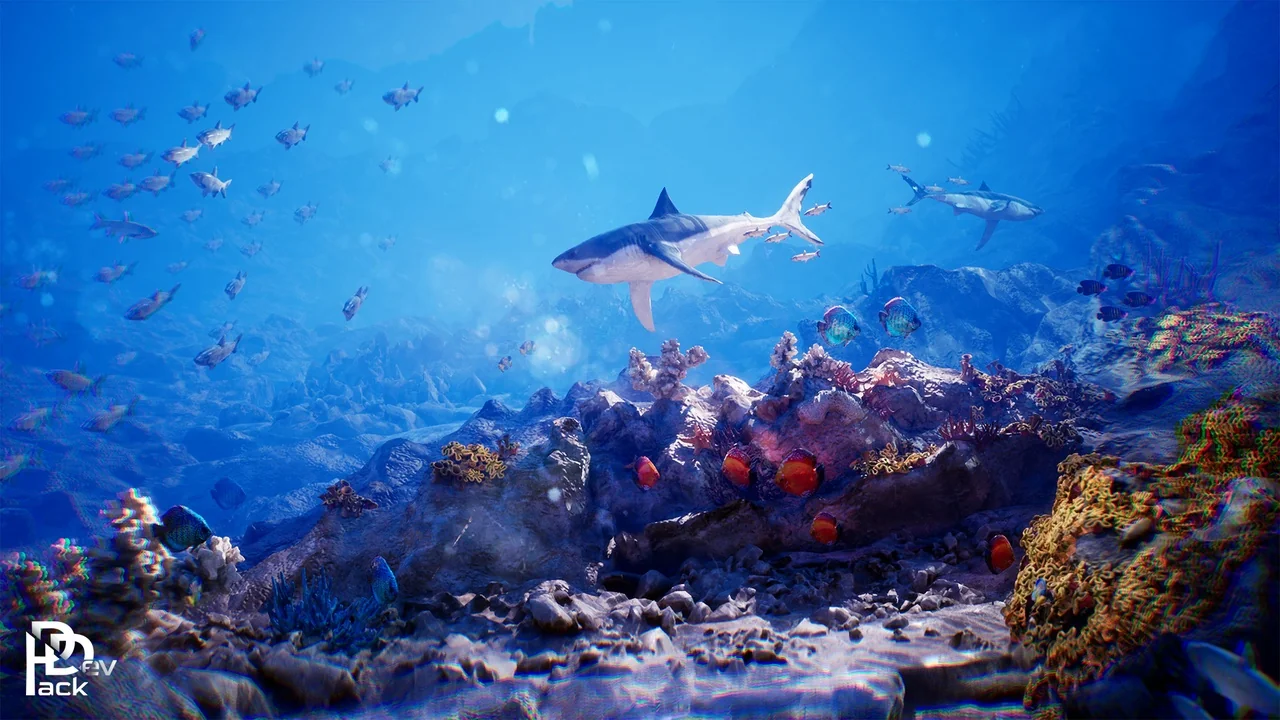
 Aquatic
 Aquatic
 Engine Tools