"a338a1d501976271"{"id":"1001355","slug":"nature-materials-ice","title":"Nature Materials Ice","category":"Cities","engine":"4.15+,5.0+","assetVersion":"","engineVersion":"Engine Version: 4.15+,5.0+","tag":"Cities","accent":"blue","visual":"luts","summary":"Examine the technical parameters, depth clouds, bump offset, and distance blending features available in the Nature Materials Ice shader system.","platform":"Unreal Engine","publishedAt":"2026-10-04T10:24:11.372Z","updatedAt":"2026-10-04T10:24:11.372Z","sourceNotes":[],"fileContents":[],"compatibility":["Unreal Engine","Engine Version: 4.15+,5.0+"],"featuredImage":{"alt":"Nature Materials Ice","src":"/wp-content/uploads/published/2026/10/180cc8364e7b-d9c98a66-c1d3-4d80-9a44-5ae55aa4ac0d-a2f5b5eb7d.webp"},"hasDownloadLink":true,"downloads":0,"terms":[{"taxonomy":"category","slug":"cities","name":"Cities"}],"galleryImages":[{"src":"/wp-content/uploads/published/2026/10/674f2c33954d-9b631143-3d7d-4e77-8e44-1770d17e435a-a839cdb71f.webp","alt":"Nature Materials Ice"},{"src":"/wp-content/uploads/published/2026/10/b5c2ff7903e6-13eabd94-4894-47dc-89b1-4db61dbaba56-95f37139af.webp","alt":"Nature Materials Ice"},{"src":"/wp-content/uploads/published/2026/10/8a1380adec98-3d8e2e9b-d03f-47c3-b84e-27cbd01bc5c8-4121fc5b29.webp","alt":"Nature Materials Ice"},{"src":"/wp-content/uploads/published/2026/10/488b460fb72b-be9d1fa0-5d65-43c3-832b-1770ccb26422-8050fd99d4.webp","alt":"Nature Materials Ice"},{"src":"/wp-content/uploads/published/2026/10/bfeb1bb37563-9632f699-ee14-4061-ab5d-7c75129badac-178784cc9d.webp","alt":"Nature Materials Ice"},{"src":"/wp-content/uploads/published/2026/10/85c709f956b6-32e2f6b0-dbee-44db-b121-dcfaa0b2be50-5747ee1839.webp","alt":"Nature Materials Ice"},{"src":"/wp-content/uploads/published/2026/10/aba0a501258e-1817ab10-8e70-453c-a7be-ccf7e3dce421-3063d57ea7.webp","alt":"Nature Materials Ice"}],"accessPanel":{"kind":"resource","title":"Download this resource","eyebrow":"Free Download","message":"Log in or create a free account to start your download.","fileName":"Content.7z","safetyNote":"Resources are manually reviewed before listing to improve quality and reduce obvious risks.","actionLabel":"Download Free","resourceType":"Resource archive"},"contentHtml":"\u003ch2\u003eConfiguring Surface Response in Nature Materials Ice\u003c/h2\u003e\u003cp\u003eConstructing believable frozen surfaces requires careful handling of how light touches the exterior before penetrating into the body of the material. Nature Materials Ice approaches this by exposing distinct controls over the exterior layer, allowing environmental artists to establish the foundational characteristics of the ice sheet or frozen object. The base texture serves as the primary canvas, dictating the immediate look of the surface grain and initial light distribution.\u003c/p\u003e\u003cp\u003eArtists can directly influence this baseline through dedicated brightness, color, and desaturation controls. Adjusting brightness shifts the ice from dense, dark Arctic floes to highly reflective, sun-bleached sheets. Tint controls allow the introduction of deep glacial blues, brackish lake greens, or neutral crystalline white. For scenes demanding cold, dead winter tones, the desaturation parameter strips warm or overly vibrant values out of the base texture, grounding the material in harsh, low-temperature palettes. An overall intensity setting ties these factors together, letting you balance the final exterior tone against the surrounding ambient lighting of the level.\u003c/p\u003e\u003ch2\u003eInternal Depth Textures, Bump Offset, and Fractures\u003c/h2\u003e\u003cp\u003eIce rarely reads as a flat, single-layer slab. Authentic ice relies heavily on the illusion of physical volume, where fractures, trapped air, and suspended particulates sit below the exterior plane. The shader tackles this subsurface structure by separating depth textures from the surface level, driving interior cracks and structural imperfections through a dedicated bump offset system.\u003c/p\u003e\u003cp\u003eBump offset creates an illusion of parallax depth without modifying physical geometry. By shifting the coordinates of the depth texture relative to the camera view, cracks appear embedded deep inside the volume rather than painted onto the geometry face. This internal layer comes equipped with its own brightness and color adjustments, allowing the embedded fractures to read differently from the surface. You can brighten deep fractures to simulate internal light scattering across shattered facets, or darken them to suggest deep, murky water lying underneath thick lake ice.\u003c/p\u003e\u003ch2\u003eLayering Depth Cloud Textures and Color Variation\u003c/h2\u003e\u003cp\u003eBeyond distinct structural cracks, frozen water typically contains diffuse interior formations, often referred to as clouding or milky ice. Nature Materials Ice includes dedicated depth cloud textures that work alongside the bump offset crack networks to establish volumetric variance.\u003c/p\u003e\u003cp\u003eThe depth cloud system includes specific parameters for cloud intensity and coloration. By modifying depth cloud colors independently from both the base surface and the primary depth textures, you can create multi-toned transitions throughout the material. High cloud intensity creates frosted, opaque ice blocks where visibility into the core is obscured by dense micro-bubbles. Lowering the intensity opens up the material, revealing clear channels between internal cloud banks. Modifying the cloud color makes it possible to simulate mineral impurities, trapped sediment, or localized freezing stages that occur naturally in frozen environments.\u003c/p\u003e\u003ch2\u003eSurface Definition via Normals, Macro Normals, and Refraction\u003c/h2\u003e\u003cp\u003eThe transition between clear visibility and obscured depth is governed by surface relief and optical distortion. To control how the exterior boundary interacts with scene lighting, Nature Materials Ice incorporates a tiered normal system alongside refractive calculations.\u003c/p\u003e\u003cp\u003eStandard normals govern high-frequency surface detail, such as subtle scuffs, fine ripples, and edge chipping. Tiling parameters allow these micro-details to scale cleanly across meshes of varying dimensions. To prevent the visible repetition that commonly plagues sprawling exterior surfaces like frozen rivers or broad frozen courtyards, the shader integrates macro normals. Macro normals introduce broad, low-frequency surface waves across large spans, breaking up the regular specular patterns generated by primary normal tiling.\u003c/p\u003e\u003cp\u003eRefraction parameters control how the surface bends light passing through into the depth layers. Tuning refraction determines whether interior cracks and underlying surfaces appear sharply defined or heavily warped by uneven ice thickness. This bending effect reinforces the physical feeling of an organic, frozen mass over a simple textured mesh.\u003c/p\u003e\u003ch2\u003eDistance Blending and Inspection Across Demonstration Maps\u003c/h2\u003e\u003cp\u003eLarge-scale winter scenes often suffer from visual noise or harsh tiling lines when expansive ice planes extend toward the horizon. Nature Materials Ice includes a blending feature specifically tuned to improve visual stability at great distances from the surface. As the viewing position pulls back, the shader softens high-frequency transitions and adjusts the visual weight of depth elements, preventing pixel shimmering and maintaining a cohesive surface read across wide vistas.\u003c/p\u003e\u003cp\u003eTo assist with setup and calibration, the package supplies two dedicated test environments: an overview map and an example map. The overview map acts as an inspection space, laying out the material iterations and exposing how individual parameters behave in isolated conditions. The example map presents the shader working directly within a level context, demonstrating how distance blending, refraction, and lighting interact across situated meshes. Example content from Unreal Engine 4 is provided purely for demonstration purposes to establish practical scene framing, while modular integration extends to kits such as Modular SciFi: Engineer Hallways Vol. 2 for instances where frozen conditions must be introduced into structural interiors.\u003c/p\u003e\n\n\u003ch2\u003eRelated Resources Worth Checking\u003c/h2\u003e\n\u003cul\u003e\n\u003cli\u003e\u003ca href=\"https://3dcghub.com/ice-world/\" title=\"Ice World\"\u003eIce World\u003c/a\u003e\u003c/li\u003e\n\u003cli\u003e\u003ca href=\"https://3dcghub.com/ice-cool/\" title=\"Ice Cool\"\u003eIce Cool\u003c/a\u003e\u003c/li\u003e\n\u003cli\u003e\u003ca href=\"https://3dcghub.com/modular-seaside-town/\" title=\"Modular Seaside Town\"\u003eModular Seaside Town\u003c/a\u003e\u003c/li\u003e\n\u003cli\u003e\u003ca href=\"https://3dcghub.com/ancient-towns/\" title=\"Ancient Towns\"\u003eAncient Towns\u003c/a\u003e\u003c/li\u003e\n\u003cli\u003e\u003ca href=\"https://3dcghub.com/advanced-water-material/\" title=\"Advanced Water Material\"\u003eAdvanced Water Material\u003c/a\u003e\u003c/li\u003e\n\u003c/ul\u003e","contentTextLength":5839,"navigation":{"current":47,"total":3338,"previous":{"id":"1001356","slug":"polygon-nightclubs","title":"POLYGON - Nightclubs","category":"Cities","platform":"Unreal Engine","updatedAt":"2026-10-04T10:24:46.503Z"},"next":{"id":"1001354","slug":"modular-underground-environment","title":"Modular Underground Environment","category":"Sci-Fi","platform":"Unreal Engine","updatedAt":"2026-10-04T10:22:21.557Z"}},"relatedResources":[{"id":"12818","slug":"ice-world","title":"Ice World","category":"Nature \u0026 Terrain","engine":"5.1+","assetVersion":"Engine version: 5.1+","engineVersion":"4.14","tag":"Nature \u0026 Terrain","accent":"blue","visual":"luts","summary":"Ice World provides a comprehensive library of ice materials designed for lakes, rivers, and standard lit models. This asset pack features advanced shaders that remove tiling and offer deep customization for realistic or stylized winter scenes.","platform":"Unreal Engine","publishedAt":"2026-03-09T17:38:04.000Z","updatedAt":"2026-04-19T15:46:36.000Z","sourceNotes":[],"fileContents":[],"compatibility":["Unreal Engine","Engine version: 5.1+"],"featuredImage":{"alt":"Ice World","src":"https://3dcghub.com/wp-content/uploads/2026/03/59b80838-ea0a-4fe4-b1cf-79456bfdbe76.webp"},"hasDownloadLink":true,"downloads":0},{"id":"17603","slug":"ice-cool","title":"Ice Cool","category":"Weather","engine":"4.26+,5.0+","assetVersion":"Engine version: 4.26+,5.0+","engineVersion":"4.18","tag":"Weather","accent":"blue","visual":"character","summary":"Enhance your cold-weather environments with Ice Cool, a versatile master material designed for high-performance ice rendering. From icebergs to icicles, this tool provides deep cracks and advanced translucency.","platform":"Unreal Engine","publishedAt":"2026-03-13T14:59:11.000Z","updatedAt":"2026-04-19T15:43:30.000Z","sourceNotes":[],"fileContents":[],"compatibility":["Unreal Engine","Engine version: 4.26+,5.0+"],"featuredImage":{"alt":"Ice Cool","src":"https://3dcghub.com/wp-content/uploads/2026/03/95d3c457-60ba-48b1-a791-311800085067.webp"},"hasDownloadLink":true,"downloads":0},{"id":"1000384","slug":"modular-seaside-town","title":"Modular Seaside Town","category":"Cities","engine":"4.26+,5.0+","assetVersion":"","engineVersion":"Engine Version: 4.26+,5.0+","tag":"Cities","accent":"blue","visual":"mech","summary":"A collection of stylized, modular brick and wood structures featuring customizable shaders, vertex paintable weathering, and translucent water surfaces.","platform":"Unreal Engine","publishedAt":"2026-07-07T08:43:02.678Z","updatedAt":"2026-07-07T08:43:02.678Z","sourceNotes":[],"fileContents":[],"compatibility":["Unreal Engine","Engine Version: 4.26+,5.0+"],"featuredImage":{"alt":"Modular Seaside Town","src":"/wp-content/uploads/published/2026/07/ed61494c2ca9-32de6340-6873-44a1-87fe-144005c12c63-97f014c81f.webp"},"hasDownloadLink":true,"downloads":0}]}
Cities
Nature Materials Ice
Examine the technical parameters, depth clouds, bump offset, and distance blending features available in the Nature Materials Ice shader system.
Category:Unreal Engine,CitiesPlatform: Unreal EngineEngine Version: 4.15+,5.0+Published: Oct 4, 2026
Cities
Resource overview
Configuring Surface Response in Nature Materials Ice
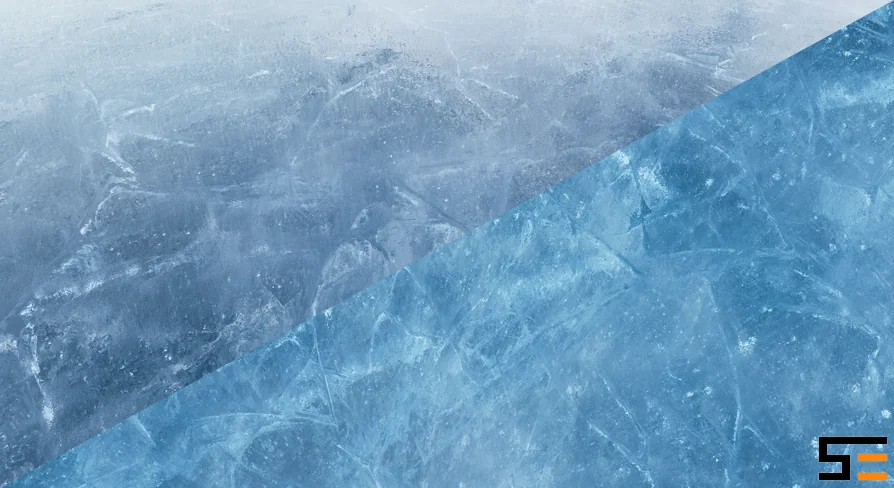
Constructing believable frozen surfaces requires careful handling of how light touches the exterior before penetrating into the body of the material. Nature Materials Ice approaches this by exposing distinct controls over the exterior layer, allowing environmental artists to establish the foundational characteristics of the ice sheet or frozen object. The base texture serves as the primary canvas, dictating the immediate look of the surface grain and initial light distribution.
Artists can directly influence this baseline through dedicated brightness, color, and desaturation controls. Adjusting brightness shifts the ice from dense, dark Arctic floes to highly reflective, sun-bleached sheets. Tint controls allow the introduction of deep glacial blues, brackish lake greens, or neutral crystalline white. For scenes demanding cold, dead winter tones, the desaturation parameter strips warm or overly vibrant values out of the base texture, grounding the material in harsh, low-temperature palettes. An overall intensity setting ties these factors together, letting you balance the final exterior tone against the surrounding ambient lighting of the level.
Internal Depth Textures, Bump Offset, and Fractures
Ice rarely reads as a flat, single-layer slab. Authentic ice relies heavily on the illusion of physical volume, where fractures, trapped air, and suspended particulates sit below the exterior plane. The shader tackles this subsurface structure by separating depth textures from the surface level, driving interior cracks and structural imperfections through a dedicated bump offset system.
Bump offset creates an illusion of parallax depth without modifying physical geometry. By shifting the coordinates of the depth texture relative to the camera view, cracks appear embedded deep inside the volume rather than painted onto the geometry face. This internal layer comes equipped with its own brightness and color adjustments, allowing the embedded fractures to read differently from the surface. You can brighten deep fractures to simulate internal light scattering across shattered facets, or darken them to suggest deep, murky water lying underneath thick lake ice.
Layering Depth Cloud Textures and Color Variation
Beyond distinct structural cracks, frozen water typically contains diffuse interior formations, often referred to as clouding or milky ice. Nature Materials Ice includes dedicated depth cloud textures that work alongside the bump offset crack networks to establish volumetric variance.
The depth cloud system includes specific parameters for cloud intensity and coloration. By modifying depth cloud colors independently from both the base surface and the primary depth textures, you can create multi-toned transitions throughout the material. High cloud intensity creates frosted, opaque ice blocks where visibility into the core is obscured by dense micro-bubbles. Lowering the intensity opens up the material, revealing clear channels between internal cloud banks. Modifying the cloud color makes it possible to simulate mineral impurities, trapped sediment, or localized freezing stages that occur naturally in frozen environments.
Surface Definition via Normals, Macro Normals, and Refraction
The transition between clear visibility and obscured depth is governed by surface relief and optical distortion. To control how the exterior boundary interacts with scene lighting, Nature Materials Ice incorporates a tiered normal system alongside refractive calculations.
Standard normals govern high-frequency surface detail, such as subtle scuffs, fine ripples, and edge chipping. Tiling parameters allow these micro-details to scale cleanly across meshes of varying dimensions. To prevent the visible repetition that commonly plagues sprawling exterior surfaces like frozen rivers or broad frozen courtyards, the shader integrates macro normals. Macro normals introduce broad, low-frequency surface waves across large spans, breaking up the regular specular patterns generated by primary normal tiling.
Refraction parameters control how the surface bends light passing through into the depth layers. Tuning refraction determines whether interior cracks and underlying surfaces appear sharply defined or heavily warped by uneven ice thickness. This bending effect reinforces the physical feeling of an organic, frozen mass over a simple textured mesh.
Distance Blending and Inspection Across Demonstration Maps
Large-scale winter scenes often suffer from visual noise or harsh tiling lines when expansive ice planes extend toward the horizon. Nature Materials Ice includes a blending feature specifically tuned to improve visual stability at great distances from the surface. As the viewing position pulls back, the shader softens high-frequency transitions and adjusts the visual weight of depth elements, preventing pixel shimmering and maintaining a cohesive surface read across wide vistas.
To assist with setup and calibration, the package supplies two dedicated test environments: an overview map and an example map. The overview map acts as an inspection space, laying out the material iterations and exposing how individual parameters behave in isolated conditions. The example map presents the shader working directly within a level context, demonstrating how distance blending, refraction, and lighting interact across situated meshes. Example content from Unreal Engine 4 is provided purely for demonstration purposes to establish practical scene framing, while modular integration extends to kits such as Modular SciFi: Engineer Hallways Vol. 2 for instances where frozen conditions must be introduced into structural interiors.
 Cities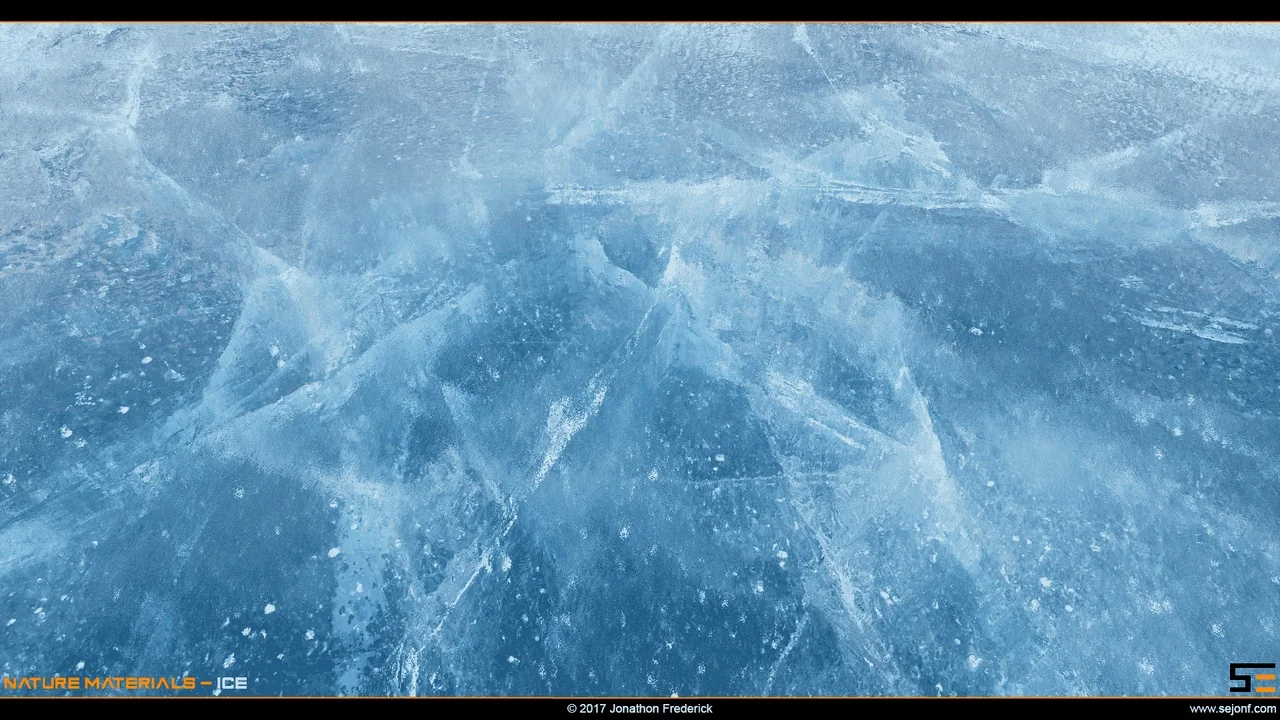
 Nature & Terrain
 Weather
 Cities