"c68a05d5e51405b3"{"id":"1000619","slug":"multiplayer-in-unreal-with-gas-and-aws-dedicated-servers","title":"Multiplayer in Unreal with GAS and AWS Dedicated Servers","category":"Unreal Engine","engine":"File Content: video + English subtitles","assetVersion":"Video Language: English","engineVersion":"File Content: video + English subtitles","tag":"Unreal Engine","accent":"blue","visual":"mech","summary":"Build a MOBA in Unreal Engine using the Gameplay Ability System, AI behavior, inventory mechanics, and AWS-hosted dedicated servers across 62 hours of training.","platform":"Unreal Engine","publishedAt":"2026-07-21T02:25:55.632Z","updatedAt":"2026-07-21T02:25:55.632Z","sourceNotes":[],"fileContents":[],"compatibility":["Unreal Engine","Video Language: English","File Content: video + English subtitles"],"featuredImage":{"alt":"Multiplayer in Unreal with GAS and AWS Dedicated Servers","src":"/wp-content/uploads/published/2026/07/12409786a092-6659883-2e04-2-96e10435f1.webp"},"hasDownloadLink":true,"downloads":2,"terms":[{"taxonomy":"category","slug":"tutoriallibrary-unrealengine","name":"Unreal Engine"}],"galleryImages":[],"accessPanel":{"kind":"video-resource","title":"Download this video resource","eyebrow":"Free Download","message":"Log in or create a free account to start your download.","fileName":"Multiplayer in Unreal with GAS and AWS Dedicated Servers.7z","safetyNote":"Resources are manually reviewed before listing to improve quality and reduce obvious risks.","actionLabel":"Download Free","resourceType":"Video download"},"contentHtml":"\u003cp\u003eA multiplayer online battle arena demands layers of interconnected logic: responsive character control, a fluid ability framework, intelligent enemy behavior, and a backend robust enough to host player sessions. The course Multiplayer in Unreal with GAS and AWS Dedicated Servers tackles these layers by guiding developers through the creation of a MOBA built entirely within Unreal Engine, paired with cloud-hosted infrastructure on Amazon Web Services.\u003c/p\u003e \u003ch2\u003eBuilding a MOBA Foundation with the Gameplay Ability System\u003c/h2\u003e \u003cp\u003eThe development path begins with fundamental character movement control and animations. Once the baseline character is operational, the course moves directly into integrating the Gameplay Ability System (GAS), a framework within Unreal Engine that governs ability execution, attribute modification, and gameplay effects. The curriculum devotes substantial time to implementing specific, combat-oriented abilities. Developers learn to construct a Combo Ability, an Upper Cut Ability, a Ground Blast Ability, a Storm Core ability, a Lazer Ability, and a Black Hole Ability.\u003c/p\u003e \u003cp\u003eThese mechanics are not implemented in isolation. The training dedicates a section to GAS optimization, teaching how to keep the ability system performant even as the game scales. Following that, the instruction shifts toward character level, stats, and the underlying systems that drive attributes based on those values. This stats framework feeds directly into ability upgrading, allowing developers to create progression systems where character attributes scale alongside player advancement.\u003c/p\u003e \u003ch2\u003eDesigning Enemy AI and Core MOBA Mechanics\u003c/h2\u003e \u003cp\u003eA MOBA requires more than player-controlled heroes; it needs a living environment populated by non-player entities. The curriculum addresses this by walking through the creation of minions utilizing Unreal Engine's AI Perception and Behavior systems. This gives developers the tools to build minions that can sense their surroundings and react accordingly.\u003c/p\u003e \u003cp\u003eMatch flow is established through structured death, respawn, and team setups. Before players ever enter a battle, they navigate a Lobby system and undergo Hero Selection. The course breaks down how to render a headshot of the character for UI purposes, adding a visual layer that connects the backend selection logic to the player's screen.\u003c/p\u003e \u003ch3\u003eThe Shop System and Inventory Framework\u003c/h3\u003e \u003cp\u003eBeyond combat, the course details the creation of a comprehensive inventory and shop system. This introduces meta-game progression typical of the MOBA genre, where players acquire items during a match. To support this interface and others, the training covers the setup of basic UI widgets. An ability gauge widget is also implemented, giving players a clear visual readout of their available resources.\u003c/p\u003e \u003ch2\u003eFrom Local Client to AWS Dedicated Server Packaging\u003c/h2\u003e \u003cp\u003eTransitioning a game from a local development environment to a live multiplayer architecture requires a distinct set of technical steps. The course devotes its later modules entirely to dedicated server packaging, containerization, and cloud deployment. Developers test dedicated server packaging and connection processes before moving into user login and session creation requests.\u003c/p\u003e \u003cp\u003eA significant focus is placed on Epic Online Services, adapting the game to leverage this framework for handling player identity and matchmaking backend. The course teaches how to set up a Server Coordinator and handle Session Orchestration. This bridges the gap between the client requesting to play and the server scaling to meet that demand.\u003c/p\u003e \u003cp\u003eThe pipeline then moves into the physical deployment phase. The training covers server and client packaging alongside containerization. Finally, developers learn the procedures for server deployment on AWS, completing the loop from raw project files to a functioning cloud-hosted multiplayer environment.\u003c/p\u003e \u003ch2\u003eExpanding the Hero Roster and Code Structure\u003c/h2\u003e \u003cp\u003eWhile the early modules focus on foundational mechanics, the curriculum later introduces another character equipped with a ranged attack. This expansion serves as a practical lesson in diversifying hero kits without dismantling the underlying framework established earlier in the course.\u003c/p\u003e \u003cp\u003eBeneath the visible gameplay mechanics, the instruction specifically targets game developers looking to improve their code quality and structure with C++. The 62 hours and 24 minutes of content push toward a deep, engine-level comprehension of how the Gameplay Ability System operates within the broader context of Unreal Engine, rather than treating it as an isolated toolset.\u003c/p\u003e \u003cp\u003eWith an intermediate skill level requirement, this course is aimed at game developers who need to structure solid multiplayer games, set up functional dedicated servers, and adapt to modern multiplayer service layers.\u003c/p\u003e\n\n\u003ch2\u003eExplore Similar Assets\u003c/h2\u003e\n\u003cul\u003e\n\u003cli\u003e\u003ca href=\"https://3dcghub.com/unreal-engine-5-blueprints-multiplayer-crash-course/\" title=\"Unreal Engine 5 Blueprints Multiplayer CRASH COURSE\"\u003eUnreal Engine 5 Blueprints Multiplayer CRASH COURSE\u003c/a\u003e\u003c/li\u003e\n\u003cli\u003e\u003ca href=\"https://3dcghub.com/unreal-engine-5-c-multiplayer-crash-course/\" title=\"Unreal Engine 5 C++ Multiplayer CRASH COURSE\"\u003eUnreal Engine 5 C++ Multiplayer CRASH COURSE\u003c/a\u003e\u003c/li\u003e\n\u003cli\u003e\u003ca href=\"https://3dcghub.com/master-unreal-engine-5-build-any-game-with-blueprint-and-c/\" title=\"Master Unreal Engine 5: Build Any Game with Blueprint \u0026amp; C++\"\u003eMaster Unreal Engine 5: Build Any Game with Blueprint \u0026amp; C++\u003c/a\u003e\u003c/li\u003e\n\u003cli\u003e\u003ca href=\"https://3dcghub.com/unreal-engine-5-advanced-lobby-system/\" title=\"Unreal Engine 5: Advanced Lobby System\"\u003eUnreal Engine 5: Advanced Lobby System\u003c/a\u003e\u003c/li\u003e\n\u003cli\u003e\u003ca href=\"https://3dcghub.com/advanced-unreal-engine-5-multiplayer-gameplay-programming/\" title=\"Advanced Unreal Engine 5 Multiplayer Gameplay Programming\"\u003eAdvanced Unreal Engine 5 Multiplayer Gameplay Programming\u003c/a\u003e\u003c/li\u003e\n\u003c/ul\u003e","contentTextLength":5061,"navigation":{"current":1386,"total":3860,"previous":{"id":"1000620","slug":"environment-art-in-unreal-engine-and-blender","title":"Environment Art in Unreal Engine \u0026 Blender","category":"Unreal Engine","platform":"Unreal Engine","updatedAt":"2026-07-21T08:02:27.443Z"},"next":{"id":"1000618","slug":"hero-character-voices-warrior-voice-pack","title":"Hero Character Voices: Warrior Voice Pack","category":"Dialogue","platform":"Unreal Engine","updatedAt":"2026-07-20T23:31:16.995Z"}},"relatedResources":[{"id":"1000696","slug":"unreal-engine-5-gameplay-ability-system-gas-crash-course","title":"Unreal Engine 5 Gameplay Ability System (GAS) Crash Course","category":"Unreal Engine","engine":"File Content: video + English subtitles","assetVersion":"Video Language: English","engineVersion":"File Content: video + English subtitles","tag":"Unreal Engine","accent":"blue","visual":"mech","summary":"An intermediate Unreal Engine 5 course teaching the Gameplay Ability System for multiplayer and single player games, covering attributes, combat, and effects.","platform":"Unreal Engine","publishedAt":"2026-07-23T15:15:12.089Z","updatedAt":"2026-07-23T15:15:12.089Z","sourceNotes":[],"fileContents":[],"compatibility":["Unreal Engine","Video Language: English","File Content: video + English subtitles"],"featuredImage":{"alt":"Unreal Engine 5 Gameplay Ability System (GAS) Crash Course","src":"/wp-content/uploads/published/2026/07/07e55957c115-6844963-5aba-2-e0a165ac1a.webp"},"hasDownloadLink":true,"downloads":0},{"id":"1000214","slug":"unreal-engine-5-blueprints-multiplayer-crash-course","title":"Unreal Engine 5 Blueprints Multiplayer CRASH COURSE","category":"Unreal Engine","engine":"File Content: video + English subtitles","assetVersion":"Video Language: English","engineVersion":"File Content: video + English subtitles","tag":"Unreal Engine","accent":"blue","visual":"mech","summary":"Learn the fundamentals of Unreal Engine 5 multiplayer using only Blueprints. Master core classes, actor replication, remote events, and server travel.","platform":"Unreal Engine","publishedAt":"2026-06-26T07:24:35.770Z","updatedAt":"2026-06-26T07:24:35.770Z","sourceNotes":[],"fileContents":[],"compatibility":["Unreal Engine","Video Language: English","File Content: video + English subtitles"],"featuredImage":{"alt":"Unreal Engine 5 Blueprints Multiplayer CRASH COURSE","src":"/wp-content/uploads/published/2026/06/9b9325b5d62d-6693935-504d-a99d3ddea4.webp"},"hasDownloadLink":true,"downloads":1},{"id":"1001158","slug":"unreal-engine-5-multiplayer-prop-hunt-game-smartpoly","title":"Unreal Engine 5 Multiplayer Prop Hunt Game - SmartPoly","category":"Unreal Engine","engine":"File Content: video + English subtitles","assetVersion":"Video Language: English","engineVersion":"File Content: video + English subtitles","tag":"Unreal Engine","accent":"blue","visual":"mech","summary":"Build a cross-platform multiplayer Prop Hunt game for PC and Android in Unreal Engine using Blueprint Interfaces, replicated mechanics, and touch controls.","platform":"Unreal Engine","publishedAt":"2026-09-11T02:18:19.834Z","updatedAt":"2026-09-11T02:18:19.834Z","sourceNotes":[],"fileContents":[],"compatibility":["Unreal Engine","Video Language: English","File Content: video + English subtitles"],"featuredImage":{"alt":"Unreal Engine 5 Multiplayer Prop Hunt Game - SmartPoly","src":"/wp-content/uploads/published/2026/09/3fde1311282a-indrtgg7t1cqfhudrloy-coursebanner-ad218f1168.webp"},"hasDownloadLink":true,"downloads":1}]}
Unreal Engine
Multiplayer in Unreal with GAS and AWS Dedicated Servers
Build a MOBA in Unreal Engine using the Gameplay Ability System, AI behavior, inventory mechanics, and AWS-hosted dedicated servers across 62 hours of training.
Category:Unreal EnginePlatform: Unreal EngineVideo Language: EnglishFile Content: video + English subtitlesPublished: Jul 21, 2026
Unreal Engine
Resource overview
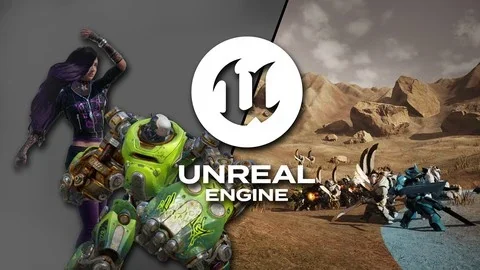
A multiplayer online battle arena demands layers of interconnected logic: responsive character control, a fluid ability framework, intelligent enemy behavior, and a backend robust enough to host player sessions. The course Multiplayer in Unreal with GAS and AWS Dedicated Servers tackles these layers by guiding developers through the creation of a MOBA built entirely within Unreal Engine, paired with cloud-hosted infrastructure on Amazon Web Services.
Building a MOBA Foundation with the Gameplay Ability System
The development path begins with fundamental character movement control and animations. Once the baseline character is operational, the course moves directly into integrating the Gameplay Ability System (GAS), a framework within Unreal Engine that governs ability execution, attribute modification, and gameplay effects. The curriculum devotes substantial time to implementing specific, combat-oriented abilities. Developers learn to construct a Combo Ability, an Upper Cut Ability, a Ground Blast Ability, a Storm Core ability, a Lazer Ability, and a Black Hole Ability.
These mechanics are not implemented in isolation. The training dedicates a section to GAS optimization, teaching how to keep the ability system performant even as the game scales. Following that, the instruction shifts toward character level, stats, and the underlying systems that drive attributes based on those values. This stats framework feeds directly into ability upgrading, allowing developers to create progression systems where character attributes scale alongside player advancement.
Designing Enemy AI and Core MOBA Mechanics
A MOBA requires more than player-controlled heroes; it needs a living environment populated by non-player entities. The curriculum addresses this by walking through the creation of minions utilizing Unreal Engine's AI Perception and Behavior systems. This gives developers the tools to build minions that can sense their surroundings and react accordingly.
Match flow is established through structured death, respawn, and team setups. Before players ever enter a battle, they navigate a Lobby system and undergo Hero Selection. The course breaks down how to render a headshot of the character for UI purposes, adding a visual layer that connects the backend selection logic to the player's screen.
The Shop System and Inventory Framework
Beyond combat, the course details the creation of a comprehensive inventory and shop system. This introduces meta-game progression typical of the MOBA genre, where players acquire items during a match. To support this interface and others, the training covers the setup of basic UI widgets. An ability gauge widget is also implemented, giving players a clear visual readout of their available resources.
From Local Client to AWS Dedicated Server Packaging
Transitioning a game from a local development environment to a live multiplayer architecture requires a distinct set of technical steps. The course devotes its later modules entirely to dedicated server packaging, containerization, and cloud deployment. Developers test dedicated server packaging and connection processes before moving into user login and session creation requests.
A significant focus is placed on Epic Online Services, adapting the game to leverage this framework for handling player identity and matchmaking backend. The course teaches how to set up a Server Coordinator and handle Session Orchestration. This bridges the gap between the client requesting to play and the server scaling to meet that demand.
The pipeline then moves into the physical deployment phase. The training covers server and client packaging alongside containerization. Finally, developers learn the procedures for server deployment on AWS, completing the loop from raw project files to a functioning cloud-hosted multiplayer environment.
Expanding the Hero Roster and Code Structure
While the early modules focus on foundational mechanics, the curriculum later introduces another character equipped with a ranged attack. This expansion serves as a practical lesson in diversifying hero kits without dismantling the underlying framework established earlier in the course.
Beneath the visible gameplay mechanics, the instruction specifically targets game developers looking to improve their code quality and structure with C++. The 62 hours and 24 minutes of content push toward a deep, engine-level comprehension of how the Gameplay Ability System operates within the broader context of Unreal Engine, rather than treating it as an isolated toolset.
With an intermediate skill level requirement, this course is aimed at game developers who need to structure solid multiplayer games, set up functional dedicated servers, and adapt to modern multiplayer service layers.
 Unreal Engine
 Unreal Engine
 Unreal Engine
 Unreal Engine