"a338a1d501976271"{"id":"1001387","slug":"melee-weapons","title":"Melee Weapons","category":"Melee","engine":"4.16+,5.0+","assetVersion":"","engineVersion":"Engine Version: 4.16+,5.0+","tag":"Melee","accent":"blue","visual":"mech","summary":"Equip Unreal Engine projects with 62 modern melee weapons featuring blunt clubs, tactical blades, improvised tools, skeletal meshes, and custom collision.","platform":"Unreal Engine","publishedAt":"2026-10-04T15:24:09.024Z","updatedAt":"2026-10-04T15:24:09.024Z","sourceNotes":[],"fileContents":[],"compatibility":["Unreal Engine","Engine Version: 4.16+,5.0+"],"featuredImage":{"alt":"Melee Weapons","src":"/wp-content/uploads/published/2026/10/79b88897d7cc-5edcfe6c-de18-419a-b74d-c91cd7c26c34-314d2da733.webp"},"hasDownloadLink":true,"downloads":0,"terms":[{"taxonomy":"category","slug":"melee","name":"Melee"}],"galleryImages":[{"src":"/wp-content/uploads/published/2026/10/cbc1b2b5a3b9-ef02926c-0d01-4b14-ae53-8d9942b5ad6e-cb3c1a63f7.webp","alt":"Melee Weapons"},{"src":"/wp-content/uploads/published/2026/10/0fd9d5b030fb-265c890d-0e23-4a36-b83b-9286d021cf03-753cf990dd.webp","alt":"Melee Weapons"},{"src":"/wp-content/uploads/published/2026/10/0aee02d7ca2e-c57eb08c-328d-475a-82f5-dda1e420e02f-ea80b572ec.webp","alt":"Melee Weapons"},{"src":"/wp-content/uploads/published/2026/10/7e349483643b-82e8af82-4778-4781-95b7-510d5db7c8a7-98bf34e9fd.webp","alt":"Melee Weapons"},{"src":"/wp-content/uploads/published/2026/10/cf324209e15d-8e3c19fc-6e5d-4d8c-9f26-990936d403de-08b38a3efc.webp","alt":"Melee Weapons"},{"src":"/wp-content/uploads/published/2026/10/26f68f84f9a5-30dd8a11-34fc-4f9f-8465-d072c9ac3503-052a2f07ac.webp","alt":"Melee Weapons"},{"src":"/wp-content/uploads/published/2026/10/31bec4994176-4831e8bd-2593-49bd-9539-2dee34e11a13-375bc027bd.webp","alt":"Melee Weapons"},{"src":"/wp-content/uploads/published/2026/10/0766b03a65b1-d9faee59-370b-4d9c-a3e4-66aadc45fdaa-19d5a406e5.webp","alt":"Melee Weapons"}],"accessPanel":{"kind":"resource","title":"Download this resource","eyebrow":"Free Download","message":"Log in or create a free account to start your download.","fileName":"Content.7z","safetyNote":"Resources are manually reviewed before listing to improve quality and reduce obvious risks.","actionLabel":"Download Free","resourceType":"Resource archive"},"contentHtml":"\u003cp\u003eClose-quarters combat spaces require physical believability, whether an encounter takes place in an abandoned metro tunnel, a barricaded safe house, or an urban battle royale hot zone. Visualizing desperation and violence in modern survival settings depends heavily on the gear characters wield. The Melee Weapons collection delivers 62 unique modern melee weapons tailored for survival gameplay, zombie apocalypse scenarios, and high-impact action shooters in Unreal Engine.\u003c/p\u003e \u003ch2\u003eThe 62 Unique Modern Melee Weapons Roster\u003c/h2\u003e\n\u003cp\u003eCombat pacing in survival games hinges on weapon variety and tier progression. Scavengers rarely begin an encounter with specialized tactical hardware; they make do with whatever lies within arm's reach. To reflect this progression, the asset library spans four distinct functional categories: improvised salvage, heavy blunt implements, practical utility tools, and dedicated edged weapons.\u003c/p\u003e \u003cp\u003eImprovised survival items form the foundation of early-game looting or low-tier civilian defense. Rather than dedicated martial armaments, these assets represent everyday objects turned lethal. Artists and gameplay designers can outfit actors or environmental prop spawners with items such as:\u003c/p\u003e\n\u003cul\u003e \u003cli\u003eRough masonry bricks and heavy throwing rocks\u003c/li\u003e \u003cli\u003eIndustrial metal pipes and utility crowbars\u003c/li\u003e \u003cli\u003eWorkshop screwdrivers adapted into piercing implements\u003c/li\u003e \u003cli\u003eBilliard pool cues repurposed as lightweight reach weapons\u003c/li\u003e\n\u003c/ul\u003e \u003cp\u003eStepping upward in kinetic impact, the blunt and heavy weapons grouping introduces implements built for concussive force. These items fit naturally in the hands of heavy melee enemies, security factions, or athletic survivors who rely on momentum. This selection includes standard wooden or aluminum baseball bats, lethal spiked bat variants, heavy two-handed sledgehammers, golf clubs, composite hockey sticks, riot control batons, and specialized tactical door rams built for breaching and blunt force.\u003c/p\u003e \u003cp\u003eAxes and heavy outdoor tools bridge the gap between wilderness survival gear and brutal combat utility. These items provide appropriate visual weight for resource-gathering animations, barricade destruction, or close-range execution mechanics. The tool lineup includes dedicated fire department axes, compact camping hatchets, utility shovels, agricultural pitchforks, and various heavy mechanical tools alongside motorized hazard options like the chainsaw.\u003c/p\u003e \u003cp\u003eFor stealth combat loops, tactical loadouts, and agile character builds, the collection supplies an extensive array of knives and tactical blades. These smaller weapons fit easily into tight weapon slots, covert sheath sockets, and swift animation sets:\u003c/p\u003e\n\u003cul\u003e \u003cli\u003eGeneral-purpose hunting knives and broad-blade survival machetes\u003c/li\u003e \u003cli\u003eArticulated butterfly knives and pocket folding knives\u003c/li\u003e \u003cli\u003eMakeshift prison-style shivs fashioned from scrap\u003c/li\u003e \u003cli\u003eSpecialized throwing stars, tactical kunai, and compact palm knives\u003c/li\u003e\n\u003c/ul\u003e \u003ch2\u003eSkeletal and Static Mesh Implementations in Unreal Engine\u003c/h2\u003e\n\u003cp\u003eIntegrating weapons into an interactive title requires distinct technical setups depending on whether an item is being swung by an animated character, sitting on a store shelf, or tumbling across the pavement as physics-driven loot. The Melee Weapons pack solves this dual-purpose requirement by providing both skeletal mesh and static mesh versions for its items.\u003c/p\u003e \u003cp\u003eSkeletal meshes are prepped specifically for character attachment. Attaching a weapon directly to a character skeleton’s hand socket—such as \u003ccode\u003eWeapon_r\u003c/code\u003e Or \u003ccode\u003eHand_l_socket\u003c/code\u003e—allows the asset to inherit rotation and movement data during complex swing, thrust, and parry animations. Weapons with moving parts or hinge requirements, like butterfly knives and folding blades, benefit directly from skeletal joint hierarchies that can be manipulated inside Unreal Engine animation blueprints or state machines.\u003c/p\u003e \u003cp\u003eStatic meshes fulfill the secondary pipeline necessary for environmental art, inventory placement, and physics-driven pickups. Placing a static crowbar on a workbench or scattering loose bricks across an alleyway avoids the computational overhead of skeletal evaluations. When a player defeats an AI combatant or drops an item from their inventory, game systems can swap the equipped skeletal asset into its corresponding static mesh representation, engaging real-time physics simulation without unneeded skeletal transform calculations.\u003c/p\u003e \u003ch2\u003eReal-Time Collision and LOD Optimization\u003c/h2\u003e\n\u003cp\u003eFast-paced combat mechanics fall apart if mesh geometry lacks appropriate physics bounds or causes rendering bottlenecks during crowded encounters. Each asset in this collection is constructed with clean, intentional topology, avoiding unnecessary polygon density while preserving crisp silhouettes when viewed up close.\u003c/p\u003e \u003cp\u003eReal-time optimization relies heavily on the integrated Level of Detail (LOD) chains included with the meshes. In a multiplayer shooter or a dense zombie horde scenario, rendering dozens of high-detail weapons held by charging AI combatants can quickly drain GPU frame budgets. The LOD configurations automatically step down geometric complexity as distances increase from the camera, ensuring background enemies do not trigger rendering penalties reserved for the player's immediate view.\u003c/p\u003e \u003cp\u003eCollision hulls are pre-configured to ensure that physical interactions function right out of the box. Precise collision boundaries are vital for several gameplay tasks:\u003c/p\u003e\n\u003cul\u003e \u003cli\u003eGenerating reliable trace hits when calculating melee attack vectors against enemy hurtboxes\u003c/li\u003e \u003cli\u003eEnabling realistic bounce and tumbling properties when items are thrown or dropped onto hard terrain\u003c/li\u003e \u003cli\u003ePreventing weapons from clipping or falling through floor geometry during physics ragdoll deaths\u003c/li\u003e \u003cli\u003eSupporting line-of-sight interaction queries for player pickup prompts and loot highlights\u003c/li\u003e\n\u003c/ul\u003e \u003ch2\u003eWorkflow Applications in Survival and Action Systems\u003c/h2\u003e\n\u003cp\u003eThe visual language of these weapons utilizes realistic, post-apocalyptic PBR texturing, giving surfaces the weathered, worn characteristics typical of used survival gear. Metal edges show wear, wooden handles exhibit dirt and grain, and improvised materials reflect rough handling. This aesthetic cohesion makes the assets versatile across multiple camera configurations.\u003c/p\u003e \u003cp\u003eIn first-person camera views, the high-fidelity texturing and clean topology hold up under tight field-of-view inspection directly in front of the lens. The player can see the individual details of a folding knife or the rough surface of a pipe during blocking and striking animations. In third-person perspective setups, the distinct physical profiles of the larger weapons—like the sledgehammer, fire axe, and hockey stick—maintain distinct readable silhouettes against varied backgrounds, allowing players to immediately identify what weapon an approaching enemy or teammate carries.\u003c/p\u003e \u003cp\u003eThese assets integrate smoothly into overarching survival frameworks alongside companion gear sets like modern firearms packs, survival supply kits, and skeletal props. By configuring these 62 weapons across modular inventory grids, procedural loot spawners, and AI weapon pools, developers can flesh out the aggressive, tactile end of their game's combat encounters.\u003c/p\u003e\n\n\u003ch2\u003eContinue Browsing Similar Packs\u003c/h2\u003e\n\u003cul\u003e\n\u003cli\u003e\u003ca href=\"https://3dcghub.com/axe/\" title=\"Axe\"\u003eAxe\u003c/a\u003e\u003c/li\u003e\n\u003cli\u003e\u003ca href=\"https://3dcghub.com/post-apocalyptic-melee-weapons-vol-1-post-apocalyptic-apo-survival-weapon/\" title=\"Post Apocalyptic Melee Weapons VOL.1 ( Post Apocalyptic Apo Survival Weapon )\"\u003ePost Apocalyptic Melee Weapons VOL.1 ( Post Apocalyptic Apo Survival Weapon )\u003c/a\u003e\u003c/li\u003e\n\u003cli\u003e\u003ca href=\"https://3dcghub.com/post-apocalyptic-melee-weapons-vol-2-post-apocalyptic-melee-weapons-weapon-old/\" title=\"Post Apocalyptic Melee Weapons VOL.2 (Post Apocalyptic Melee Weapons Weapon Old)\"\u003ePost Apocalyptic Melee Weapons VOL.2 (Post Apocalyptic Melee Weapons Weapon Old)\u003c/a\u003e\u003c/li\u003e\n\u003cli\u003e\u003ca href=\"https://3dcghub.com/post-apocalyptic-melee-weapons/\" title=\"Post Apocalyptic Melee Weapons\"\u003ePost Apocalyptic Melee Weapons\u003c/a\u003e\u003c/li\u003e\n\u003cli\u003e\u003ca href=\"https://3dcghub.com/10-fantasy-stylish-weapon/\" title=\"10 Fantasy Stylish Weapon\"\u003e10 Fantasy Stylish Weapon\u003c/a\u003e\u003c/li\u003e\n\u003c/ul\u003e","contentTextLength":7360,"navigation":{"current":14,"total":3338,"previous":{"id":"1001388","slug":"restaurant-american-restaurant-cafe-diner-retro-diner-kitchen-restaurant","title":"Restaurant (American Restaurant, Cafe, Diner, Retro Diner, Kitchen, Restaurant)","category":"Interior","platform":"Unreal Engine","updatedAt":"2026-10-04T15:27:34.804Z"},"next":{"id":"1001386","slug":"rome-fantasy-pack-ii-2","title":"Rome Fantasy Pack II","category":"Fantasy","platform":"Unreal Engine","updatedAt":"2026-10-04T15:21:42.183Z"}},"relatedResources":[{"id":"5429","slug":"axe","title":"Axe","category":"Melee","engine":"4.26+,5.0+","assetVersion":"Engine version: 4.26+,5.0+","engineVersion":"4.25","tag":"Melee","accent":"blue","visual":"mech","summary":"Upgrade your game with 5 high-quality modern axes. These Unreal Engine assets feature LODs and collision, perfect for survival and action-adventure titles.","platform":"Unreal Engine","publishedAt":"2026-02-15T15:06:39.000Z","updatedAt":"2026-04-19T15:56:56.000Z","sourceNotes":[],"fileContents":[],"compatibility":["Unreal Engine","Engine version: 4.26+,5.0+"],"featuredImage":{"alt":"Axe","src":"https://3dcghub.com/wp-content/uploads/2026/02/73c6715e-2b9e-4b8c-bdc2-9e7786bbdcf9.webp"},"hasDownloadLink":true,"downloads":0},{"id":"1000927","slug":"post-apocalyptic-melee-weapons-vol-1-post-apocalyptic-apo-survival-weapon","title":"Post Apocalyptic Melee Weapons VOL.1 ( Post Apocalyptic Apo Survival Weapon )","category":"Weapons \u0026 Combat","engine":"4.26+,5.0+","assetVersion":"","engineVersion":"Engine Version: 4.26+,5.0+","tag":"Weapons \u0026 Combat","accent":"blue","visual":"mech","summary":"Post-apocalyptic melee weapon collection for Unreal Engine with hammers, axes, spears, saws, and knives, compatible with ULAT for natural scene population.","platform":"Unreal Engine","publishedAt":"2026-08-09T15:18:38.769Z","updatedAt":"2026-08-09T15:18:38.769Z","sourceNotes":[],"fileContents":[],"compatibility":["Unreal Engine","Engine Version: 4.26+,5.0+"],"featuredImage":{"alt":"Post Apocalyptic Melee Weapons VOL.1 ( Post Apocalyptic Apo Survival Weapon )","src":"/wp-content/uploads/published/2026/08/e5b741a626d5-ab6a97f0-31e1-40d8-8f0e-08a4e5a5dd79-962a84501d.webp"},"hasDownloadLink":true,"downloads":0},{"id":"28100","slug":"post-apocalyptic-melee-weapons-vol-2-post-apocalyptic-melee-weapons-weapon-old","title":"Post Apocalyptic Melee Weapons VOL.2 (Post Apocalyptic Melee Weapons Weapon Old)","category":"Weapons \u0026 Combat","engine":"4.26+,5.0+","assetVersion":"Engine version: 4.26+,5.0+","engineVersion":"","tag":"Weapons \u0026 Combat","accent":"blue","visual":"city","summary":"Post Apocalyptic Melee Weapons VOL.2 brings together the pictured assets, maps, and materials in an Unreal Engine project. Its stated focus is realistic AAA-quality visuals, with compatibility noted for the Ultimate Level Art Tool.","platform":"Unreal Engine","publishedAt":"2026-05-04T08:21:39.000Z","updatedAt":"2026-05-04T08:21:40.000Z","sourceNotes":[],"fileContents":[],"compatibility":["Unreal Engine","Engine version: 4.26+,5.0+"],"featuredImage":{"alt":"Post Apocalyptic Melee Weapons VOL.2 (Post Apocalyptic Melee Weapons Weapon Old)","src":"https://3dcghub.com/wp-content/uploads/2026/05/1f2485f883aa_16c8546e-3b13-454e-bb27-7b23a3cbdac7.webp"},"hasDownloadLink":true,"downloads":0}]}
Melee
Melee Weapons
Equip Unreal Engine projects with 62 modern melee weapons featuring blunt clubs, tactical blades, improvised tools, skeletal meshes, and custom collision.
Category:Unreal Engine,MeleePlatform: Unreal EngineEngine Version: 4.16+,5.0+Published: Oct 4, 2026
Melee
Resource overview
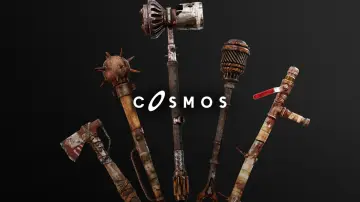
Close-quarters combat spaces require physical believability, whether an encounter takes place in an abandoned metro tunnel, a barricaded safe house, or an urban battle royale hot zone. Visualizing desperation and violence in modern survival settings depends heavily on the gear characters wield. The Melee Weapons collection delivers 62 unique modern melee weapons tailored for survival gameplay, zombie apocalypse scenarios, and high-impact action shooters in Unreal Engine.
The 62 Unique Modern Melee Weapons Roster
Combat pacing in survival games hinges on weapon variety and tier progression. Scavengers rarely begin an encounter with specialized tactical hardware; they make do with whatever lies within arm's reach. To reflect this progression, the asset library spans four distinct functional categories: improvised salvage, heavy blunt implements, practical utility tools, and dedicated edged weapons.
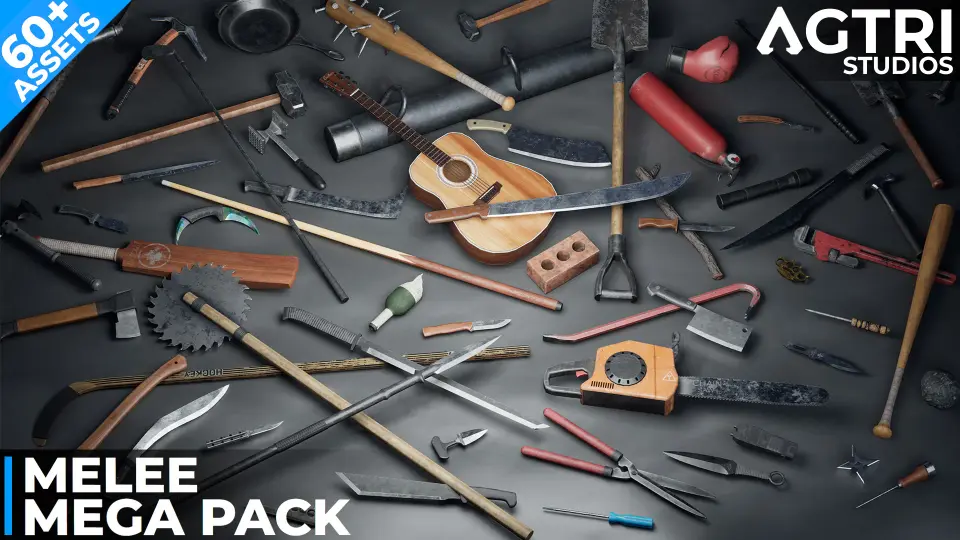
Improvised survival items form the foundation of early-game looting or low-tier civilian defense. Rather than dedicated martial armaments, these assets represent everyday objects turned lethal. Artists and gameplay designers can outfit actors or environmental prop spawners with items such as:
Rough masonry bricks and heavy throwing rocks
Industrial metal pipes and utility crowbars
Workshop screwdrivers adapted into piercing implements
Billiard pool cues repurposed as lightweight reach weapons
Stepping upward in kinetic impact, the blunt and heavy weapons grouping introduces implements built for concussive force. These items fit naturally in the hands of heavy melee enemies, security factions, or athletic survivors who rely on momentum. This selection includes standard wooden or aluminum baseball bats, lethal spiked bat variants, heavy two-handed sledgehammers, golf clubs, composite hockey sticks, riot control batons, and specialized tactical door rams built for breaching and blunt force.
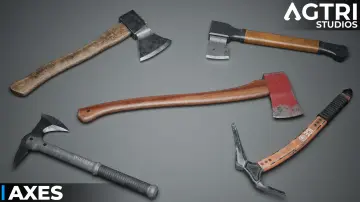
Axes and heavy outdoor tools bridge the gap between wilderness survival gear and brutal combat utility. These items provide appropriate visual weight for resource-gathering animations, barricade destruction, or close-range execution mechanics. The tool lineup includes dedicated fire department axes, compact camping hatchets, utility shovels, agricultural pitchforks, and various heavy mechanical tools alongside motorized hazard options like the chainsaw.
For stealth combat loops, tactical loadouts, and agile character builds, the collection supplies an extensive array of knives and tactical blades. These smaller weapons fit easily into tight weapon slots, covert sheath sockets, and swift animation sets:
General-purpose hunting knives and broad-blade survival machetes
Articulated butterfly knives and pocket folding knives
Makeshift prison-style shivs fashioned from scrap
Specialized throwing stars, tactical kunai, and compact palm knives
Skeletal and Static Mesh Implementations in Unreal Engine
Integrating weapons into an interactive title requires distinct technical setups depending on whether an item is being swung by an animated character, sitting on a store shelf, or tumbling across the pavement as physics-driven loot. The Melee Weapons pack solves this dual-purpose requirement by providing both skeletal mesh and static mesh versions for its items.
Skeletal meshes are prepped specifically for character attachment. Attaching a weapon directly to a character skeleton’s hand socket—such as Weapon_r Or Hand_l_socket—allows the asset to inherit rotation and movement data during complex swing, thrust, and parry animations. Weapons with moving parts or hinge requirements, like butterfly knives and folding blades, benefit directly from skeletal joint hierarchies that can be manipulated inside Unreal Engine animation blueprints or state machines.
Static meshes fulfill the secondary pipeline necessary for environmental art, inventory placement, and physics-driven pickups. Placing a static crowbar on a workbench or scattering loose bricks across an alleyway avoids the computational overhead of skeletal evaluations. When a player defeats an AI combatant or drops an item from their inventory, game systems can swap the equipped skeletal asset into its corresponding static mesh representation, engaging real-time physics simulation without unneeded skeletal transform calculations.
Real-Time Collision and LOD Optimization
Fast-paced combat mechanics fall apart if mesh geometry lacks appropriate physics bounds or causes rendering bottlenecks during crowded encounters. Each asset in this collection is constructed with clean, intentional topology, avoiding unnecessary polygon density while preserving crisp silhouettes when viewed up close.
Real-time optimization relies heavily on the integrated Level of Detail (LOD) chains included with the meshes. In a multiplayer shooter or a dense zombie horde scenario, rendering dozens of high-detail weapons held by charging AI combatants can quickly drain GPU frame budgets. The LOD configurations automatically step down geometric complexity as distances increase from the camera, ensuring background enemies do not trigger rendering penalties reserved for the player's immediate view.
Collision hulls are pre-configured to ensure that physical interactions function right out of the box. Precise collision boundaries are vital for several gameplay tasks:
Generating reliable trace hits when calculating melee attack vectors against enemy hurtboxes
Enabling realistic bounce and tumbling properties when items are thrown or dropped onto hard terrain
Preventing weapons from clipping or falling through floor geometry during physics ragdoll deaths
Supporting line-of-sight interaction queries for player pickup prompts and loot highlights
Workflow Applications in Survival and Action Systems
The visual language of these weapons utilizes realistic, post-apocalyptic PBR texturing, giving surfaces the weathered, worn characteristics typical of used survival gear. Metal edges show wear, wooden handles exhibit dirt and grain, and improvised materials reflect rough handling. This aesthetic cohesion makes the assets versatile across multiple camera configurations.
In first-person camera views, the high-fidelity texturing and clean topology hold up under tight field-of-view inspection directly in front of the lens. The player can see the individual details of a folding knife or the rough surface of a pipe during blocking and striking animations. In third-person perspective setups, the distinct physical profiles of the larger weapons—like the sledgehammer, fire axe, and hockey stick—maintain distinct readable silhouettes against varied backgrounds, allowing players to immediately identify what weapon an approaching enemy or teammate carries.
These assets integrate smoothly into overarching survival frameworks alongside companion gear sets like modern firearms packs, survival supply kits, and skeletal props. By configuring these 62 weapons across modular inventory grids, procedural loot spawners, and AI weapon pools, developers can flesh out the aggressive, tactile end of their game's combat encounters.
 Melee
Melee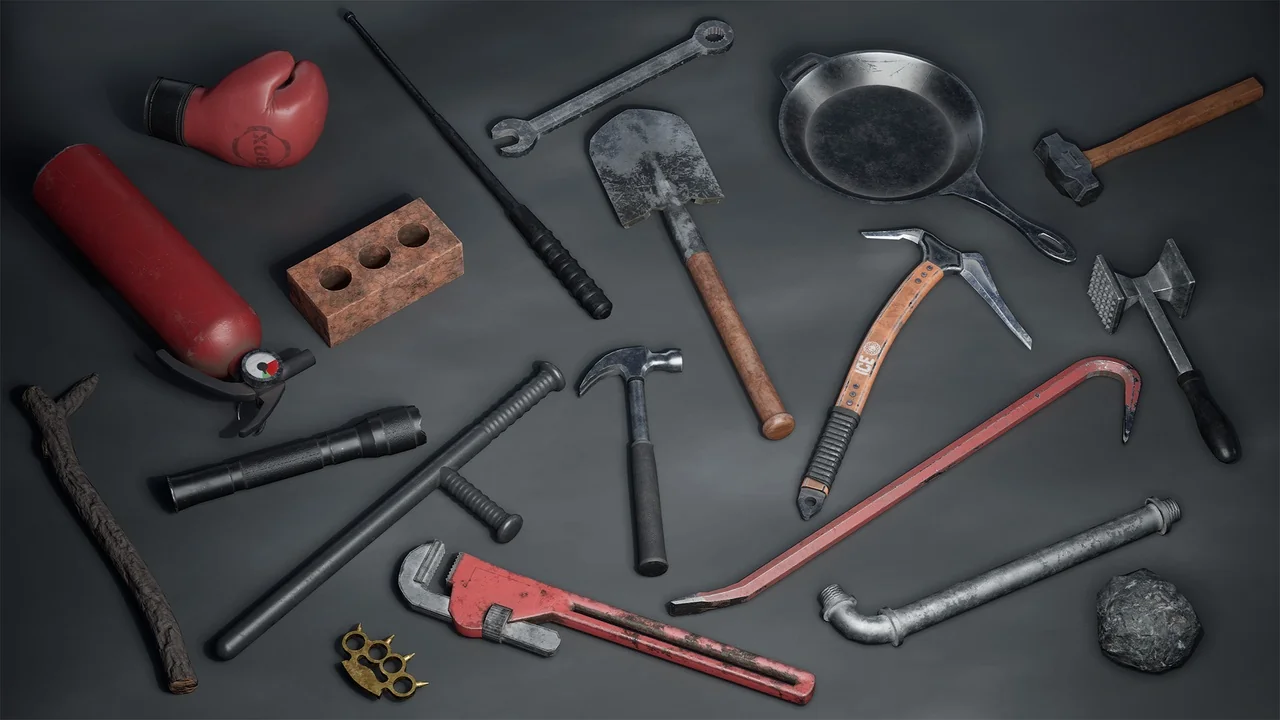
 Melee
Melee Weapons & Combat
 Weapons & Combat