"5da73d49ff33a5b1"{"id":"1002390","slug":"liam-lowpoly-character","title":"Liam - Lowpoly Character","category":"Characters \u0026 Creatures","engine":"5.0+","assetVersion":"","engineVersion":"Engine Version: 5.0+","tag":"Characters","accent":"blue","visual":"character","summary":"Deploy Liam, a low-poly stylized character for Unreal Engine featuring modular customization, animation blueprints, and morph targets for speech.","platform":"Unreal Engine","indexPolicy":"index","publishedAt":"2026-11-10T04:08:29.849Z","updatedAt":"2026-11-10T04:08:29.849Z","sourceNotes":[],"fileContents":[],"compatibility":["Unreal Engine","Engine Version: 5.0+"],"featuredImage":{"alt":"Liam - Lowpoly Character","src":"/wp-content/uploads/published/2026/11/dc86502c523e-948d13b8-1c72-48c3-8616-2d1a2921c995-627ee9d5f6.webp"},"hasDownloadLink":true,"downloads":0,"terms":[{"taxonomy":"category","slug":"characters-and-creatures","name":"Characters \u0026 Creatures"}],"galleryImages":[{"src":"/wp-content/uploads/published/2026/11/13fe9469e0ee-6c431443-1c6c-4b0f-9665-88301742e9a3-188df79671.webp","alt":"Liam - Lowpoly Character"},{"src":"/wp-content/uploads/published/2026/11/89431fb43357-2f4df3fb-0318-4460-990e-8dadb39d6a58-6b4251dbb3.webp","alt":"Liam - Lowpoly Character"},{"src":"/wp-content/uploads/published/2026/11/0d7ba4a15bc4-d1975dc6-5f1c-48bd-a675-6ff95e19cecd-78fd795a93.webp","alt":"Liam - Lowpoly Character"},{"src":"/wp-content/uploads/published/2026/11/ec5ffb6097a1-ae1b939d-279c-4ee6-abc5-99b7f3c13999-d7998637fa.webp","alt":"Liam - Lowpoly Character"},{"src":"/wp-content/uploads/published/2026/11/092f74de7c3e-9b349327-2e33-49ba-a6c1-1dd39f1bc06a-b4d2c3b16f.webp","alt":"Liam - Lowpoly Character"}],"accessPanel":{"kind":"resource","title":"Get this resource","eyebrow":"Free resource","message":"Download this resource in your browser.","fileName":"Content.7z","safetyNote":"Resources are manually reviewed before listing to improve quality and reduce obvious risks.","actionLabel":"Get this resource","resourceType":"Resource archive","versions":[]},"contentHtml":"\u003ch2\u003eTargeting Mobile and Desktop Realities with Liam\u003c/h2\u003e\u003cp\u003eConstructing projects in Unreal Engine that target both mobile devices and desktop hardware presents a recurring challenge: maintaining high performance without sacrificing visual identity. In stylized role-playing games, top-down tactics games, and lightweight action adventures, scene geometry directly impacts draw calls, memory limits, and overall frame timing. Liam operates exclusively within the Unreal Engine environment, addressing these platform-specific performance boundaries through a low-poly, stylized art style.\u003c/p\u003e\u003cp\u003eStylized visuals do not rely on dense micro-polygon counts or complex multi-layer materials to communicate form. Instead, clean silhouettes, distinct proportions, and readable profiles take precedence. On mobile screens where visual clarity can degrade on smaller displays, simplified geometric contours keep player characters instantly recognizable against backgrounds. On desktop hardware, low-poly aesthetics offer a crisp, intentional artistic direction that runs at high frame rates. Deploying the Liam character set allows developers to maintain a single visual pipeline across desktop and handheld builds without needing separate low-detail and high-detail mesh passes for differing hardware profiles.\u003c/p\u003e\u003ch2\u003eStandalone Versus Modular Architecture in the Liam Package\u003c/h2\u003e\u003cp\u003eWorkflow demands shift dramatically across different phases of production. The Liam package addresses these shifts by providing two distinct character approaches: standalone characters and a modular character system.\u003c/p\u003e\u003cp\u003eStandalone characters serve scenarios where immediate implementation is essential. During rapid prototyping, mechanic testing, or the placement of ambient non-player characters, importing a fully consolidated mesh saves valuable setup time. Standalone options eliminate the extra steps of combining separate body parts or resolving mesh seams. A developer can drag a character directly into a test level, attach simple movement parameters, and assess game feel, scale, and camera framing immediately.\u003c/p\u003e\u003cp\u003eThe modular characters introduce a simple customization system intended for deeper gameplay roles. When a project requires player avatars with progressive visual upgrades, varying civilian crowds, or enemy tiers with differentiated gear, modularity becomes essential. Rather than forcing complex rigging work onto the developer, the simple customization system keeps part swapping straightforward within Unreal Engine. Modular pieces can be fitted together to generate visual variety across multiple actors while sharing the same underlying visual identity. This pairing of standalone and modular variants accommodates both high-speed prototyping and production-level customization needs.\u003c/p\u003e\u003ch2\u003eMorph Targets for Speech and Emotion Dynamics\u003c/h2\u003e\u003cp\u003eLow-poly faces frequently suffer from emotional rigidity. When characters lack moving facial geometry, narrative depth must be carried entirely through body language or external interface portraits. The Liam character set circumvents this limitation by including morph targets on characters configured with eyes and mouths.\u003c/p\u003e\u003cp\u003eThese morph targets address two core performance tasks: emotional expression and speech generation. By including dedicated blend shapes for facial geometry, the character can transition between distinct emotional states such as happiness, surprise, or anger. In dialogue sequences, the morph targets map to phonemes or visemes, allowing the mouth geometry to form spoken words in synchronization with audio tracks or subtitles.\u003c/p\u003e\u003cp\u003eWithin Unreal Engine, morph targets integrate cleanly into existing animation pipelines. They can be triggered through curve tracks embedded inside Animation Sequences, managed via Anim Montages, or adjusted directly through gameplay variables. Because morph targets alter vertex positions without requiring complex facial bone hierarchies, they avoid the runtime performance hit of dense skeletal skinning calculations. This lightweight approach keeps facial speech and emotional responses accessible on mobile GPUs that might otherwise struggle with multi-bone facial rigs.\u003c/p\u003e\u003ch2\u003eAnimation Blueprints and Script Integration\u003c/h2\u003e\u003cp\u003eA character mesh requires dedicated logic to function smoothly inside an interactive world. Liam includes scripts alongside a dedicated Animation Blueprint to bridge the gap between static geometry and gameplay execution within Unreal Engine.\u003c/p\u003e\u003cp\u003eThe Animation Blueprint handles the state machine logic necessary to drive character locomotion. It evaluates gameplay parameters—such as movement speed, jump state, falling velocity, and directional inputs—and computes the correct blend between resting stances, running loops, and airborne states. Because this system is set up directly inside Unreal Engine, developers avoid the time-consuming process of manually linking bones, retargeting basic blend spaces, or configuring state transition conditions from zero.\u003c/p\u003e\u003cp\u003eSupplementary scripts assist with character management and runtime logic. In modular setups, scripts streamline the assembly and swapping of parts, ensuring that modular pieces remain properly attached to the primary skeletal hierarchy without visual detachment during fast-paced movements. Having functional Animation Blueprints and script support out of the box minimizes technical hurdles, allowing creators to move directly to refining gameplay balance, narrative pacing, and camera tuning.\u003c/p\u003e\u003ch2\u003eVisual Cohesion Alongside Stylized Tree Environments\u003c/h2\u003e\u003cp\u003eCharacter models cannot exist in isolation; they must fit the tone, scale, and lighting behavior of the world around them. Liam shares direct aesthetic compatibility with natural landscape elements, including Stylized Tree assets.\u003c/p\u003e\u003cp\u003eWhen low-poly characters are placed in photorealistic or overly textured environments, the resulting contrast breaks scene immersion. Conversely, pairing Liam with stylized foliage, trees, and environment props establishes a unified visual register. Light bounces consistently across planar surfaces, shadows cast with clean geometric edges, and colors blend without clashing surface frequencies. This compatibility matters across diverse camera perspectives, whether tracking tight behind the character in a third-person view or pulled back into an overhead perspective typical of mobile management and adventure titles.\u003c/p\u003e\u003ch2\u003eDevelopers and Pipelines Matching the Liam Character Set\u003c/h2\u003e\u003cp\u003eThe technical structure of Liam makes it particularly useful for independent developers, small production teams, and creators targeting cross-platform mobile and desktop titles in Unreal Engine. Solo developers who lack dedicated character riggers benefit from having functional Animation Blueprints and ready-to-use standalone models that function immediately upon import.\u003c/p\u003e\u003cp\u003eTeams building games with character customization loops find practical value in the modular configuration and its simple customization system. Rather than modeling and weight-painting multiple complete characters, developers can combine modular parts to populate towns, assemble factions, or construct custom player characters. Furthermore, projects that prioritize narrative engagement benefit from the morph targets included for speech and emotion, providing facial expression capabilities that remain light on hardware resources.\u003c/p\u003e\n\n\u003ch2\u003eMore From The Same Workflow\u003c/h2\u003e\n\u003cul\u003e\n\u003cli\u003e\u003ca href=\"https://3dcghub.com/cyber-ninja/\" rel=\"noopener noreferrer\"\u003eCyber Ninja\u003c/a\u003e\u003c/li\u003e\n\u003cli\u003e\u003ca href=\"https://3dcghub.com/character-captain/\" rel=\"noopener noreferrer\"\u003eCharacter Captain\u003c/a\u003e\u003c/li\u003e\n\u003cli\u003e\u003ca href=\"https://3dcghub.com/medical-worker-01/\" rel=\"noopener noreferrer\"\u003eMedical Worker 01\u003c/a\u003e\u003c/li\u003e\n\u003cli\u003e\u003ca href=\"https://3dcghub.com/npc-zombies/\" rel=\"noopener noreferrer\"\u003eNPC Zombies\u003c/a\u003e\u003c/li\u003e\n\u003cli\u003e\u003ca href=\"https://3dcghub.com/post-apocalypse-girl/\" rel=\"noopener noreferrer\"\u003ePost Apocalypse Girl\u003c/a\u003e\u003c/li\u003e\n\u003c/ul\u003e","contentTextLength":7403,"navigation":{"current":30,"total":4340,"previous":{"id":"1002391","slug":"mechanic-girl","title":"Mechanic Girl","category":"Humans","platform":"Unreal Engine","updatedAt":"2026-11-10T04:16:59.332Z"},"next":{"id":"1002389","slug":"lady-biker","title":"Lady Biker","category":"Characters \u0026 Creatures","platform":"Unreal Engine","updatedAt":"2026-11-10T04:06:44.585Z"}},"relatedResources":[{"id":"1002379","slug":"cyber-ninja","title":"Cyber Ninja","category":"Characters \u0026 Creatures","engine":"5.0+","assetVersion":"","engineVersion":"Engine Version: 5.0+","tag":"Characters","accent":"blue","visual":"character","summary":"A technical look at implementing the futuristic Cyber Ninja asset, featuring PBR textures, lowpoly optimization, sword mechanics, and Animationblueprint logic.","platform":"Unreal Engine","indexPolicy":"index","publishedAt":"2026-11-10T03:55:24.127Z","updatedAt":"2026-11-10T03:55:24.127Z","sourceNotes":[],"fileContents":[],"compatibility":["Unreal Engine","Engine Version: 5.0+"],"featuredImage":{"alt":"Cyber Ninja","src":"/wp-content/uploads/published/2026/11/dbf1c2b04a7d-3147ee0f-93a2-48af-a6c9-db507391f80a-7a2d57a9ad.webp"},"hasDownloadLink":true,"downloads":0},{"id":"1002310","slug":"character-captain","title":"Character Captain","category":"Characters \u0026 Creatures","engine":"4.18+,5.0+","assetVersion":"","engineVersion":"Engine Version: 4.18+,5.0+","tag":"Characters","accent":"blue","visual":"character","summary":"Character Captain is a lowpoly NPC captain for sea-themed games, with script and Animation Blueprint tags plus a compatibility note for 56 creature animations.","platform":"Unreal Engine","indexPolicy":"index","publishedAt":"2026-11-06T06:13:00.506Z","updatedAt":"2026-11-06T06:13:00.506Z","sourceNotes":[],"fileContents":[],"compatibility":["Unreal Engine","Engine Version: 4.18+,5.0+"],"featuredImage":{"alt":"Character Captain","src":"/wp-content/uploads/published/2026/11/66d000342486-6d157691-6795-48a1-9a2d-ec6f288e887a-66c06219fb.webp"},"hasDownloadLink":true,"downloads":0},{"id":"1001352","slug":"medical-worker-01","title":"Medical Worker 01","category":"Characters \u0026 Creatures","engine":"4.18+,5.0+","assetVersion":"","engineVersion":"Engine Version: 4.18+,5.0+","tag":"Characters","accent":"blue","visual":"character","summary":"Deploy Medical Worker 01 into apocalyptic and quarantine scenes. Features Epic skeleton compatibility, customizable colors, mobile materials, and lowpoly optimi","platform":"Unreal Engine","indexPolicy":"index","publishedAt":"2026-10-04T10:21:26.511Z","updatedAt":"2026-10-04T10:21:26.511Z","sourceNotes":[],"fileContents":[],"compatibility":["Unreal Engine","Engine Version: 4.18+,5.0+"],"featuredImage":{"alt":"Medical Worker 01","src":"/wp-content/uploads/published/2026/10/69c21328187c-883e8750-efa8-4fb2-852c-8deb03de9660-4a37c564cd.webp"},"hasDownloadLink":true,"downloads":0}]}
Characters
Liam - Lowpoly Character
Deploy Liam, a low-poly stylized character for Unreal Engine featuring modular customization, animation blueprints, and morph targets for speech.
Constructing projects in Unreal Engine that target both mobile devices and desktop hardware presents a recurring challenge: maintaining high performance without sacrificing visual identity. In stylized role-playing games, top-down tactics games, and lightweight action adventures, scene geometry directly impacts draw calls, memory limits, and overall frame timing. Liam operates exclusively within the Unreal Engine environment, addressing these platform-specific performance boundaries through a low-poly, stylized art style.
Stylized visuals do not rely on dense micro-polygon counts or complex multi-layer materials to communicate form. Instead, clean silhouettes, distinct proportions, and readable profiles take precedence. On mobile screens where visual clarity can degrade on smaller displays, simplified geometric contours keep player characters instantly recognizable against backgrounds. On desktop hardware, low-poly aesthetics offer a crisp, intentional artistic direction that runs at high frame rates. Deploying the Liam character set allows developers to maintain a single visual pipeline across desktop and handheld builds without needing separate low-detail and high-detail mesh passes for differing hardware profiles.
Standalone Versus Modular Architecture in the Liam Package
Workflow demands shift dramatically across different phases of production. The Liam package addresses these shifts by providing two distinct character approaches: standalone characters and a modular character system.
Standalone characters serve scenarios where immediate implementation is essential. During rapid prototyping, mechanic testing, or the placement of ambient non-player characters, importing a fully consolidated mesh saves valuable setup time. Standalone options eliminate the extra steps of combining separate body parts or resolving mesh seams. A developer can drag a character directly into a test level, attach simple movement parameters, and assess game feel, scale, and camera framing immediately.
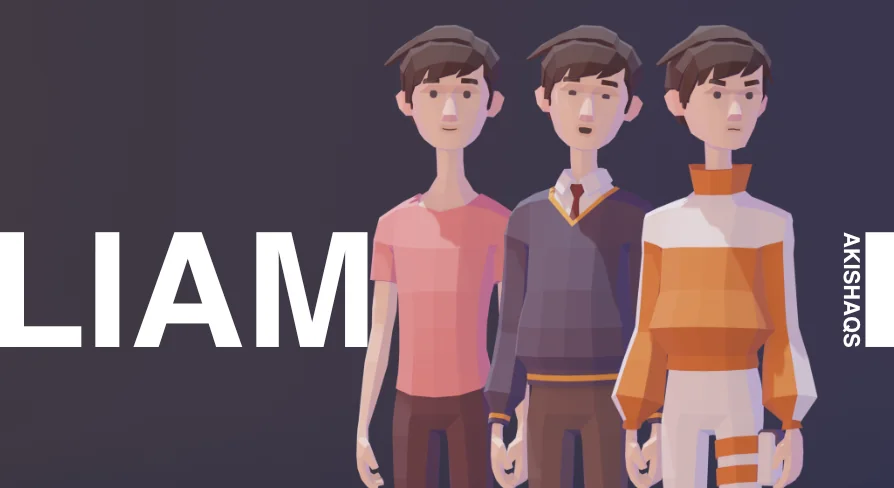
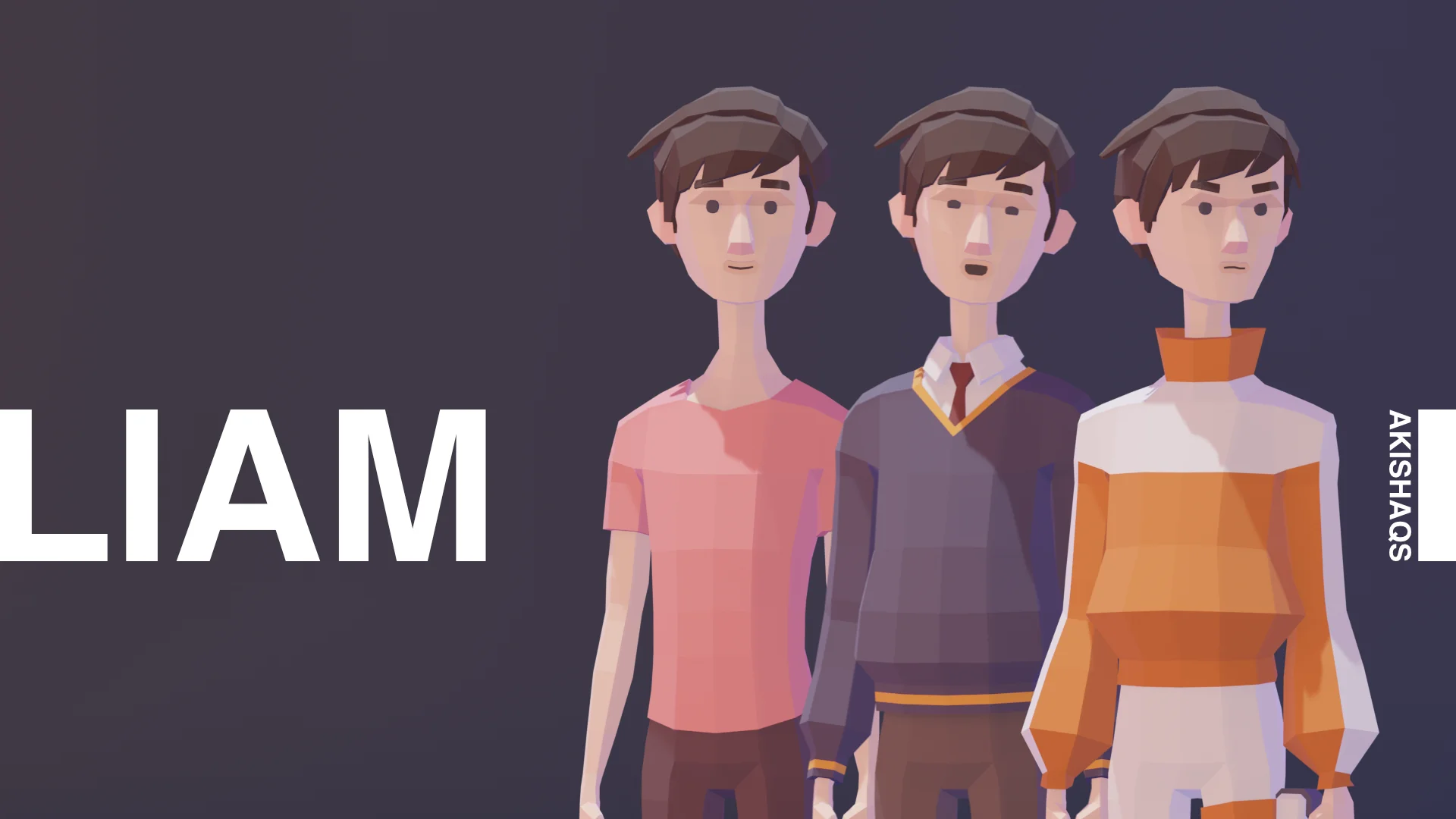
The modular characters introduce a simple customization system intended for deeper gameplay roles. When a project requires player avatars with progressive visual upgrades, varying civilian crowds, or enemy tiers with differentiated gear, modularity becomes essential. Rather than forcing complex rigging work onto the developer, the simple customization system keeps part swapping straightforward within Unreal Engine. Modular pieces can be fitted together to generate visual variety across multiple actors while sharing the same underlying visual identity. This pairing of standalone and modular variants accommodates both high-speed prototyping and production-level customization needs.
Morph Targets for Speech and Emotion Dynamics
Low-poly faces frequently suffer from emotional rigidity. When characters lack moving facial geometry, narrative depth must be carried entirely through body language or external interface portraits. The Liam character set circumvents this limitation by including morph targets on characters configured with eyes and mouths.
These morph targets address two core performance tasks: emotional expression and speech generation. By including dedicated blend shapes for facial geometry, the character can transition between distinct emotional states such as happiness, surprise, or anger. In dialogue sequences, the morph targets map to phonemes or visemes, allowing the mouth geometry to form spoken words in synchronization with audio tracks or subtitles.
Within Unreal Engine, morph targets integrate cleanly into existing animation pipelines. They can be triggered through curve tracks embedded inside Animation Sequences, managed via Anim Montages, or adjusted directly through gameplay variables. Because morph targets alter vertex positions without requiring complex facial bone hierarchies, they avoid the runtime performance hit of dense skeletal skinning calculations. This lightweight approach keeps facial speech and emotional responses accessible on mobile GPUs that might otherwise struggle with multi-bone facial rigs.
Animation Blueprints and Script Integration
A character mesh requires dedicated logic to function smoothly inside an interactive world. Liam includes scripts alongside a dedicated Animation Blueprint to bridge the gap between static geometry and gameplay execution within Unreal Engine.
The Animation Blueprint handles the state machine logic necessary to drive character locomotion. It evaluates gameplay parameters—such as movement speed, jump state, falling velocity, and directional inputs—and computes the correct blend between resting stances, running loops, and airborne states. Because this system is set up directly inside Unreal Engine, developers avoid the time-consuming process of manually linking bones, retargeting basic blend spaces, or configuring state transition conditions from zero.
Supplementary scripts assist with character management and runtime logic. In modular setups, scripts streamline the assembly and swapping of parts, ensuring that modular pieces remain properly attached to the primary skeletal hierarchy without visual detachment during fast-paced movements. Having functional Animation Blueprints and script support out of the box minimizes technical hurdles, allowing creators to move directly to refining gameplay balance, narrative pacing, and camera tuning.
Visual Cohesion Alongside Stylized Tree Environments
Character models cannot exist in isolation; they must fit the tone, scale, and lighting behavior of the world around them. Liam shares direct aesthetic compatibility with natural landscape elements, including Stylized Tree assets.
When low-poly characters are placed in photorealistic or overly textured environments, the resulting contrast breaks scene immersion. Conversely, pairing Liam with stylized foliage, trees, and environment props establishes a unified visual register. Light bounces consistently across planar surfaces, shadows cast with clean geometric edges, and colors blend without clashing surface frequencies. This compatibility matters across diverse camera perspectives, whether tracking tight behind the character in a third-person view or pulled back into an overhead perspective typical of mobile management and adventure titles.
Developers and Pipelines Matching the Liam Character Set
The technical structure of Liam makes it particularly useful for independent developers, small production teams, and creators targeting cross-platform mobile and desktop titles in Unreal Engine. Solo developers who lack dedicated character riggers benefit from having functional Animation Blueprints and ready-to-use standalone models that function immediately upon import.
Teams building games with character customization loops find practical value in the modular configuration and its simple customization system. Rather than modeling and weight-painting multiple complete characters, developers can combine modular parts to populate towns, assemble factions, or construct custom player characters. Furthermore, projects that prioritize narrative engagement benefit from the morph targets included for speech and emotion, providing facial expression capabilities that remain light on hardware resources.
 Characters
 Characters
 Characters
 Characters