"7e6fc58c410f2894"{"id":"1001641","slug":"landfill","title":"Landfill","category":"Industrial","engine":"4.19+,5.0+","assetVersion":"","engineVersion":"Engine Version: 4.19+,5.0+","tag":"Industrial","accent":"blue","visual":"mech","summary":"Examine the Landfill environment pack, featuring photogrammetry junk piles, garbage, bricks, foliage, snow particle FX, and organic caves compatibility.","platform":"Unreal Engine","publishedAt":"2026-10-13T02:25:34.093Z","updatedAt":"2026-10-13T02:25:34.093Z","sourceNotes":[],"fileContents":[],"compatibility":["Unreal Engine","Engine Version: 4.19+,5.0+"],"featuredImage":{"alt":"Landfill","src":"/wp-content/uploads/published/2026/10/5650d4cd0b35-cd99c30f-46ba-4bc4-8c76-3df372380cd3-7cf8ccba75.webp"},"hasDownloadLink":true,"downloads":0,"terms":[{"taxonomy":"category","slug":"industrial","name":"Industrial"}],"galleryImages":[{"src":"/wp-content/uploads/published/2026/10/361fad281387-22836dc3-20f8-4ff2-92e0-ad0a72fec11e-8a152ea77d.webp","alt":"Landfill"},{"src":"/wp-content/uploads/published/2026/10/f18bf8553efd-a1c3d453-600d-4733-9da4-25e3fd9d35cd-0c65c8c9be.webp","alt":"Landfill"},{"src":"/wp-content/uploads/published/2026/10/6d5065c27d94-715f313d-7378-44db-8a05-9e7195c4ba51-e0165aa8a2.webp","alt":"Landfill"},{"src":"/wp-content/uploads/published/2026/10/b6063ee5201b-5c4a18c5-a438-49f1-823b-b3ae313d030c-7fd02ae243.webp","alt":"Landfill"},{"src":"/wp-content/uploads/published/2026/10/98e6e2f3210f-ef851ddf-8413-4110-8fc6-a1c7e35d6316-ca58b2246d.webp","alt":"Landfill"},{"src":"/wp-content/uploads/published/2026/10/dde4aa461889-ece4998c-5feb-4e85-a4df-785932fe5945-4ee24d4107.webp","alt":"Landfill"},{"src":"/wp-content/uploads/published/2026/10/e4f57826a1ee-fef1662a-108a-4bf4-a2e0-f1e45cdb77a7-77ff8ec8c7.webp","alt":"Landfill"},{"src":"/wp-content/uploads/published/2026/10/726e48f94043-bbff0f21-be95-40ed-8a25-8811c976a11b-5d78d7be30.webp","alt":"Landfill"},{"src":"/wp-content/uploads/published/2026/10/608bb4697f59-c6b77728-a576-4643-b821-338500cdded6-ea21507930.webp","alt":"Landfill"}],"accessPanel":{"kind":"resource","title":"Download this resource","eyebrow":"Free Download","message":"Log in or create a free account to start your download.","fileName":"Content.7z","safetyNote":"Resources are manually reviewed before listing to improve quality and reduce obvious risks.","actionLabel":"Download Free","resourceType":"Resource archive"},"contentHtml":"\u003ch2\u003eAssembling Landfill Grounds and Structural Debris\u003c/h2\u003e\u003cp\u003eSetting up an abandoned or post-apocalyptic level begins with establishing foundational topography before dressing fine surface details. In the Landfill environment, assembly starts with the placement of heavy junk piles and primary garbage deposits. These large debris mounds serve as topographical barriers, sightline blockers, and natural boundary lines across an outdoor level. Positioning massive trash heaps at natural gathering points, such as trenches, roadsides, or perimeter fences, establishes a believable layout where industrial and municipal waste has accumulated over extended periods.\u003c/p\u003e\u003cp\u003eOnce the broader boundaries are defined using the largest garbage formations, structural debris fills the interstitial spaces. Scattered bricks provide the visual context of structural collapse, industrial demolition, or decaying infrastructure. Placing bricks along the edges of larger junk piles softens the transition between concentrated heaps of waste and open ground. The mix of broken masonry and dirty, irregular refuse grounds the entire scene in realism, preventing flat terrain surfaces from appearing artificially clean or uniform.\u003c/p\u003e\u003ch2\u003ePhotogrammetry Fidelity Across Dirty Surface Meshes\u003c/h2\u003e\u003cp\u003eThe visual strength of the environment relies on photogrammetry asset capture. Real-world surfaces possess subtle irregularities, asymmetric wear, and intricate textural shifts that are difficult to reproduce artificially. Because the garbage, junk piles, and debris derive from photogrammetric scans, the geometry and surface texturing carry authentic signs of weathering, physical damage, and accumulation of dirt.\u003c/p\u003e\u003cp\u003eWhen working with photogrammetry-based debris in level design, variation in rotation, scale, and clustering prevents repetitive patterns. Small adjustments to the orientation of junk piles reveal distinct silhouettes from different vantage points. The photorealistic surfaces respond naturally to environmental lighting, making the dirty, post-apocalyptic aesthetic convincing whether viewed from a distance across an expansive wasteland or examined closely during direct player traversal.\u003c/p\u003e\u003ch2\u003eFoliage and Plant Scatter Across Abandoned Wastelands\u003c/h2\u003e\u003cp\u003eA realistic landfill scene rarely consists solely of inorganic refuse. Plant life inevitably intrudes upon neglected spaces, signaling elapsed time and environmental abandonment. Layering foliage and plant assets directly into the crevices of junk piles breaks up hard, angular waste silhouettes with organic variation.\u003c/p\u003e\u003cp\u003eWeeds and resilient plants naturally flourish where moisture collects along the borders of trash heaps and brick piles. Distributing foliage around the bases of debris mounds anchors the assets into the landscape, making the garbage appear embedded in the soil rather than floating on top of the terrain mesh. Combining organic greenery with dirty refuse reinforces the post-apocalyptic theme, illustrating how nature reclaims industrial dumping grounds once human maintenance has ceased.\u003c/p\u003e\u003ch2\u003eAtmospheric Integration With Snow Particle FX\u003c/h2\u003e\u003cp\u003eAtmospheric effects alter the emotional tone and visual temperature of a scene. The Landfill package includes snow particle FX, allowing developers to convert a standard derelict dumping ground into a harsh, freezing wasteland. Particle systems introduce motion and volumetric depth to an otherwise static collection of rubbish and masonry.\u003c/p\u003e\u003cp\u003eImplementing snow particle FX requires balancing density against ground visibility. Drifting snow falling over dirty garbage piles and cold bricks establishes a desolate, biting climate. The presence of falling snow complements the muted color palettes typical of photogrammetry refuse, reinforcing the feeling of isolation and environmental hostility. Particle motion drifting across sharp brick edges and irregular trash contours emphasizes scene depth across wide-angle exterior camera angles.\u003c/p\u003e\u003ch2\u003eOrganic Caves Compatibility and Subterranean Transitions\u003c/h2\u003e\u003cp\u003eThe utility of the Landfill environment extends beyond open-air surface levels through compatibility with organic caves. Linking above-ground waste fields with natural underground caverns creates compelling narrative and visual transitions in level design.\u003c/p\u003e\u003cp\u003ePositioning junk piles, garbage scatters, and loose bricks around cave entrances or ceiling sinkholes simulates illicit subterranean dumping, structural cave-ins, or debris washed underground through erosion. Inside cave mouths, tapering the distribution of plant foliage while maintaining scattered bricks and garbage mounds creates a logical progression from the overgrown exterior into dark, subterranean recesses. This compatibility allows designers to build continuous gameplay routes that travel from snow-covered surface landfills directly into rugged cavern systems without aesthetic clashes.\u003c/p\u003e\u003ch2\u003eStaging Workflow for Environmental Dressing\u003c/h2\u003e\u003cp\u003eAchieving a cohesive result across an entire level requires a structured asset placement pass. Beginning with macro terrain blocking ensures that gameplay paths remain legible despite the dense visual noise of dirty refuse.\u003c/p\u003e\u003cul\u003e\u003cli\u003eBlock out primary pathways, elevation shifts, and line-of-sight occluders using major junk piles.\u003c/li\u003e\u003cli\u003eLayer secondary detail using loose garbage clusters and brick scatters along travel edges and terrain creases.\u003c/li\u003e\u003cli\u003eEmbed plants and foliage into sheltered pockets around trash mounds to indicate time and natural reclamation.\u003c/li\u003e\u003cli\u003eActivate the snow particle FX to tie the assets together with environmental movement and a cold, desolate climate.\u003c/li\u003e\u003cli\u003eBlend surface debris toward cavern mouths when interfacing with organic caves for subterranean transitions.\u003c/li\u003e\u003c/ul\u003e\u003cp\u003eAdhering to this tiered dressing procedure keeps photogrammetry debris legible and organized, turning chaotic waste elements into a deliberate, atmospheric game environment.\u003c/p\u003e\n\n\u003ch2\u003eExplore Similar Assets\u003c/h2\u003e\n\u003cul\u003e\n\u003cli\u003e\u003ca href=\"https://3dcghub.com/industrial-factory-factory-warehouse-industrial-factory-modular-factory/\" title=\"Industrial Factory (Factory, Warehouse, Industrial Factory, Modular Factory)\"\u003eIndustrial Factory (Factory, Warehouse, Industrial Factory, Modular Factory)\u003c/a\u003e\u003c/li\u003e\n\u003cli\u003e\u003ca href=\"https://3dcghub.com/quarry-cliffs/\" title=\"Quarry Cliffs\"\u003eQuarry Cliffs\u003c/a\u003e\u003c/li\u003e\n\u003cli\u003e\u003ca href=\"https://3dcghub.com/urban-underground/\" title=\"Urban Underground\"\u003eUrban Underground\u003c/a\u003e\u003c/li\u003e\n\u003cli\u003e\u003ca href=\"https://3dcghub.com/electrical-substation-34-assets/\" title=\"Electrical Substation / 34 Assets\"\u003eElectrical Substation / 34 Assets\u003c/a\u003e\u003c/li\u003e\n\u003cli\u003e\u003ca href=\"https://3dcghub.com/factory-warehouse-interior-modular-pack/\" title=\"Factory/Warehouse Interior Modular Pack\"\u003eFactory/Warehouse Interior Modular Pack\u003c/a\u003e\u003c/li\u003e\n\u003c/ul\u003e","contentTextLength":6005,"navigation":{"current":42,"total":3618,"previous":{"id":"1001642","slug":"light-warrior","title":"Light Warrior","category":"Characters \u0026 Creatures","platform":"Unreal Engine","updatedAt":"2026-10-13T02:26:09.285Z"},"next":{"id":"1001640","slug":"inventory-for-battle-royale-v1-1","title":"Inventory for Battle Royale v1.1","category":"Gameplay Features","platform":"Unreal Engine","updatedAt":"2026-10-13T02:22:40.598Z"}},"relatedResources":[{"id":"1001480","slug":"industrial-factory-factory-warehouse-industrial-factory-modular-factory","title":"Industrial Factory (Factory, Warehouse, Industrial Factory, Modular Factory)","category":"Industrial","engine":"5.3+","assetVersion":"","engineVersion":"Engine Version: 5.3+","tag":"Industrial","accent":"blue","visual":"mech","summary":"Explore the Industrial Factory modular environment pack featuring enterable buildings, PCG tools, pipe splines, photorealistic foliage, and Lumen support.","platform":"Unreal Engine","publishedAt":"2026-10-08T08:48:14.024Z","updatedAt":"2026-10-08T08:48:14.024Z","sourceNotes":[],"fileContents":[],"compatibility":["Unreal Engine","Engine Version: 5.3+"],"featuredImage":{"alt":"Industrial Factory (Factory, Warehouse, Industrial Factory, Modular Factory)","src":"/wp-content/uploads/published/2026/10/8695f35bdde3-414ac376-dfdd-4242-b070-6fc74e11ac78-0894952941.webp"},"hasDownloadLink":true,"downloads":0},{"id":"1001446","slug":"quarry-cliffs","title":"Quarry Cliffs","category":"Industrial","engine":"4.16+,5.0+","assetVersion":"","engineVersion":"Engine Version: 4.16+,5.0+","tag":"Industrial","accent":"blue","visual":"mech","summary":"Quarry Cliffs features realistic modular 360-degree cliff meshes, 4k textures, world-space detail overlays, 4-stage LODs, and rubble piles.","platform":"Unreal Engine","publishedAt":"2026-10-08T00:46:36.484Z","updatedAt":"2026-10-08T00:46:36.484Z","sourceNotes":[],"fileContents":[],"compatibility":["Unreal Engine","Engine Version: 4.16+,5.0+"],"featuredImage":{"alt":"Quarry Cliffs","src":"/wp-content/uploads/published/2026/10/af0a7623b60e-53eeaf76-2755-4e22-b6e6-4d081a4d816c-9bdf8b14cb.webp"},"hasDownloadLink":true,"downloads":0},{"id":"1001400","slug":"urban-underground","title":"Urban Underground","category":"Industrial","engine":"4.15+,5.0+","assetVersion":"","engineVersion":"Engine Version: 4.15+,5.0+","tag":"Industrial","accent":"blue","visual":"mech","summary":"Explore Urban Underground, a fully modular subway station construction set featuring assembly documentation, time lapse guides, and pack compatibility.","platform":"Unreal Engine","publishedAt":"2026-10-04T17:55:46.662Z","updatedAt":"2026-10-04T17:55:46.662Z","sourceNotes":[],"fileContents":[],"compatibility":["Unreal Engine","Engine Version: 4.15+,5.0+"],"featuredImage":{"alt":"Urban Underground","src":"/wp-content/uploads/published/2026/10/cb4afa49262c-46ff451d-5b03-429a-bb31-1819730a81f5-13299a2b6d.webp"},"hasDownloadLink":true,"downloads":1}]}
Industrial
Landfill
Examine the Landfill environment pack, featuring photogrammetry junk piles, garbage, bricks, foliage, snow particle FX, and organic caves compatibility.
Category:Unreal Engine,IndustrialPlatform: Unreal EngineEngine Version: 4.19+,5.0+Published: Oct 13, 2026
Industrial
Resource overview
Assembling Landfill Grounds and Structural Debris
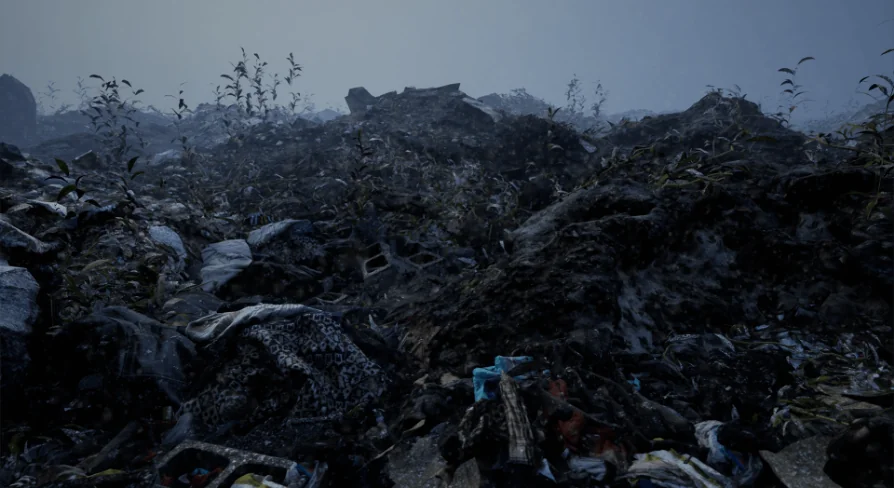
Setting up an abandoned or post-apocalyptic level begins with establishing foundational topography before dressing fine surface details. In the Landfill environment, assembly starts with the placement of heavy junk piles and primary garbage deposits. These large debris mounds serve as topographical barriers, sightline blockers, and natural boundary lines across an outdoor level. Positioning massive trash heaps at natural gathering points, such as trenches, roadsides, or perimeter fences, establishes a believable layout where industrial and municipal waste has accumulated over extended periods.
Once the broader boundaries are defined using the largest garbage formations, structural debris fills the interstitial spaces. Scattered bricks provide the visual context of structural collapse, industrial demolition, or decaying infrastructure. Placing bricks along the edges of larger junk piles softens the transition between concentrated heaps of waste and open ground. The mix of broken masonry and dirty, irregular refuse grounds the entire scene in realism, preventing flat terrain surfaces from appearing artificially clean or uniform.
Photogrammetry Fidelity Across Dirty Surface Meshes
The visual strength of the environment relies on photogrammetry asset capture. Real-world surfaces possess subtle irregularities, asymmetric wear, and intricate textural shifts that are difficult to reproduce artificially. Because the garbage, junk piles, and debris derive from photogrammetric scans, the geometry and surface texturing carry authentic signs of weathering, physical damage, and accumulation of dirt.
When working with photogrammetry-based debris in level design, variation in rotation, scale, and clustering prevents repetitive patterns. Small adjustments to the orientation of junk piles reveal distinct silhouettes from different vantage points. The photorealistic surfaces respond naturally to environmental lighting, making the dirty, post-apocalyptic aesthetic convincing whether viewed from a distance across an expansive wasteland or examined closely during direct player traversal.
Foliage and Plant Scatter Across Abandoned Wastelands
A realistic landfill scene rarely consists solely of inorganic refuse. Plant life inevitably intrudes upon neglected spaces, signaling elapsed time and environmental abandonment. Layering foliage and plant assets directly into the crevices of junk piles breaks up hard, angular waste silhouettes with organic variation.
Weeds and resilient plants naturally flourish where moisture collects along the borders of trash heaps and brick piles. Distributing foliage around the bases of debris mounds anchors the assets into the landscape, making the garbage appear embedded in the soil rather than floating on top of the terrain mesh. Combining organic greenery with dirty refuse reinforces the post-apocalyptic theme, illustrating how nature reclaims industrial dumping grounds once human maintenance has ceased.
Atmospheric Integration With Snow Particle FX
Atmospheric effects alter the emotional tone and visual temperature of a scene. The Landfill package includes snow particle FX, allowing developers to convert a standard derelict dumping ground into a harsh, freezing wasteland. Particle systems introduce motion and volumetric depth to an otherwise static collection of rubbish and masonry.
Implementing snow particle FX requires balancing density against ground visibility. Drifting snow falling over dirty garbage piles and cold bricks establishes a desolate, biting climate. The presence of falling snow complements the muted color palettes typical of photogrammetry refuse, reinforcing the feeling of isolation and environmental hostility. Particle motion drifting across sharp brick edges and irregular trash contours emphasizes scene depth across wide-angle exterior camera angles.
Organic Caves Compatibility and Subterranean Transitions
The utility of the Landfill environment extends beyond open-air surface levels through compatibility with organic caves. Linking above-ground waste fields with natural underground caverns creates compelling narrative and visual transitions in level design.
Positioning junk piles, garbage scatters, and loose bricks around cave entrances or ceiling sinkholes simulates illicit subterranean dumping, structural cave-ins, or debris washed underground through erosion. Inside cave mouths, tapering the distribution of plant foliage while maintaining scattered bricks and garbage mounds creates a logical progression from the overgrown exterior into dark, subterranean recesses. This compatibility allows designers to build continuous gameplay routes that travel from snow-covered surface landfills directly into rugged cavern systems without aesthetic clashes.
Staging Workflow for Environmental Dressing
Achieving a cohesive result across an entire level requires a structured asset placement pass. Beginning with macro terrain blocking ensures that gameplay paths remain legible despite the dense visual noise of dirty refuse.
Block out primary pathways, elevation shifts, and line-of-sight occluders using major junk piles.
Layer secondary detail using loose garbage clusters and brick scatters along travel edges and terrain creases.
Embed plants and foliage into sheltered pockets around trash mounds to indicate time and natural reclamation.
Activate the snow particle FX to tie the assets together with environmental movement and a cold, desolate climate.
Blend surface debris toward cavern mouths when interfacing with organic caves for subterranean transitions.
Adhering to this tiered dressing procedure keeps photogrammetry debris legible and organized, turning chaotic waste elements into a deliberate, atmospheric game environment.
 Industrial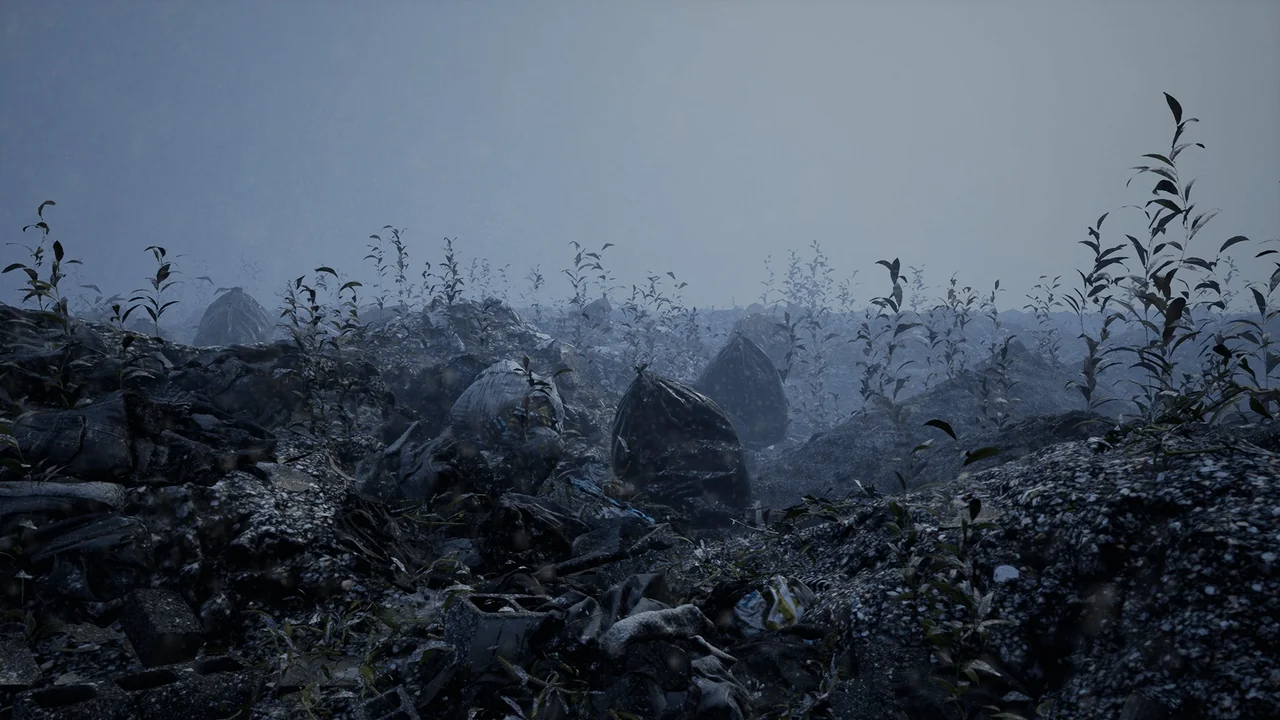
 Industrial
 Industrial
 Industrial