"177e4e4394b9ce1f"{"id":"1001610","slug":"interior-bundle-sci-fi-modular-futuristic","title":"INTERIOR BUNDLE SCI-FI MODULAR FUTURISTIC","category":"Sci-Fi","engine":"4.27+,5.0+","assetVersion":"","engineVersion":"Engine Version: 4.27+,5.0+","tag":"Sci-Fi","accent":"blue","visual":"mech","summary":"Explore the modular environments of INTERIOR BUNDLE SCI-FI MODULAR FUTURISTIC, featuring four detailed sci-fi interior projects with PBR texturing.","platform":"Unreal Engine","publishedAt":"2026-10-10T16:48:58.499Z","updatedAt":"2026-10-10T16:48:58.499Z","sourceNotes":[],"fileContents":[],"compatibility":["Unreal Engine","Engine Version: 4.27+,5.0+"],"featuredImage":{"alt":"INTERIOR BUNDLE SCI-FI MODULAR FUTURISTIC","src":"/wp-content/uploads/published/2026/10/a8cce0a46013-0a7e6765-25b9-4e92-960c-86166140d03f-fd83ce3b0e.webp"},"hasDownloadLink":true,"downloads":0,"terms":[{"taxonomy":"category","slug":"sci-fi","name":"Sci-Fi"}],"galleryImages":[{"src":"/wp-content/uploads/published/2026/10/2561215aaed8-650cb8d9-8d71-4ff4-a19d-d822f634bc51-76e57c5e35.webp","alt":"INTERIOR BUNDLE SCI-FI MODULAR FUTURISTIC"},{"src":"/wp-content/uploads/published/2026/10/bcbb8c019720-413e3b84-1d9e-438f-b006-fddf1c933a5e-299467b5a1.webp","alt":"INTERIOR BUNDLE SCI-FI MODULAR FUTURISTIC"},{"src":"/wp-content/uploads/published/2026/10/3eaefcc1ccfb-5bf27a5a-09b8-4a81-9066-302d90a8a274-82217335e1.webp","alt":"INTERIOR BUNDLE SCI-FI MODULAR FUTURISTIC"},{"src":"/wp-content/uploads/published/2026/10/68b1af4bd4aa-480fe1d0-b473-438e-abc9-83797d2a6522-431874c684.webp","alt":"INTERIOR BUNDLE SCI-FI MODULAR FUTURISTIC"},{"src":"/wp-content/uploads/published/2026/10/79ca322c56a1-4a668e4f-5e19-431d-9e3d-7b6eace66f40-c519dee1f1.webp","alt":"INTERIOR BUNDLE SCI-FI MODULAR FUTURISTIC"},{"src":"/wp-content/uploads/published/2026/10/09159eb549f0-ea3c71b8-7d10-4011-bbcc-d05aa20c6608-754829fba5.webp","alt":"INTERIOR BUNDLE SCI-FI MODULAR FUTURISTIC"},{"src":"/wp-content/uploads/published/2026/10/0e4bd9ee401b-cb5490f5-49b3-404f-9ca6-833b6100e9c8-dc237e4478.webp","alt":"INTERIOR BUNDLE SCI-FI MODULAR FUTURISTIC"},{"src":"/wp-content/uploads/published/2026/10/5f43da5bd095-b6669805-4204-4c01-8761-ea36449facc6-cb02c77231.webp","alt":"INTERIOR BUNDLE SCI-FI MODULAR FUTURISTIC"},{"src":"/wp-content/uploads/published/2026/10/d9b105f6de33-02247586-702c-43aa-87d1-cbae8a0ff89c-0d39259a50.webp","alt":"INTERIOR BUNDLE SCI-FI MODULAR FUTURISTIC"},{"src":"/wp-content/uploads/published/2026/10/255aa550f3d3-77d303af-308d-4251-9e88-5004a37a14fe-f384e7d063.webp","alt":"INTERIOR BUNDLE SCI-FI MODULAR FUTURISTIC"}],"accessPanel":{"kind":"resource","title":"Download this resource","eyebrow":"Free Download","message":"Log in or create a free account to start your download.","fileName":"INTERIOR BUNDLE SCI-FI MODULAR FUTURISTIC.7z","safetyNote":"Resources are manually reviewed before listing to improve quality and reduce obvious risks.","actionLabel":"Download Free","resourceType":"Resource archive"},"contentHtml":"\u003ch2\u003eFour Distinct Modular Futuristic Sci-Fi Interior Environments\u003c/h2\u003e\n\u003cp\u003eAssembling convincing futuristic complexes often demands a wide range of specialized architectural components beyond one repeating room style. INTERIOR BUNDLE SCI-FI MODULAR FUTURISTIC addresses this by combining four distinct interior projects into a single asset collection: a Weapon Center, a Futuristic Sci Fi Laboratory, an operational Terminal, and an expansive Library. Each of these settings addresses a different functional sector of an advanced facility, allowing worldbuilders to construct sprawling, multi-purpose complexes without departing from a unified aesthetic language.\u003c/p\u003e\n\u003cp\u003eThe environments represent critical operational wings found in spaceborne outposts, planetary research centers, and high-tech defense compounds. Rather than locking artists into fixed room templates, the entire framework is built from individual modular pieces. Walls, floors, support beams, and bulkheads can be snapped together and recombined to fit custom floor plans, long transit corridors, multi-tiered security chambers, or compact containment cells.\u003c/p\u003e \u003ch2\u003eThe Weapon Center and Terminal Layouts\u003c/h2\u003e\n\u003cp\u003eThe Weapon Center project provides the structural and prop foundation for armories, tactical briefing rooms, and security staging posts. Its modular geometry supports configurations tailored to firearm storage, heavy equipment bays, and defensive staging zones. Designers working on tactical shooters or base-building gameplay can use these modules to establish high-security checkpoints, firing ranges, or robot maintenance nooks where defensive gear and munitions are processed.\u003c/p\u003e\n\u003cp\u003eContrasting with the fortified, military tone of the armory, the Terminal project focuses on logistical flow and transportation hubs. Its modules form the halls, reception spaces, and boarding concourses typical of orbital transport centers, planetary stations, or high-density transit arteries. Long pathways can be segmented with structural archways, while wide-open staging areas can function as primary hubs connecting various wings of a larger level. The modularity of the Terminal components makes it straightforward to scale hallways from narrow maintenance access tunnels up to grand passenger concourses.\u003c/p\u003e \u003ch2\u003eScientific Modules: Futuristic Sci Fi Laboratory and Library\u003c/h2\u003e\n\u003cp\u003eThe research-oriented half of the bundle pivots to scientific inquiry, data preservation, and technological diagnostics. The Futuristic Sci Fi Laboratory supplies the structural components and scientific hardware needed to build clinical research facilities, experimental containment zones, and cleanrooms. Because the collection shares stylistic compatibility with Medical Clinic and Laboratory environments, this wing readily serves as a diagnostic ward, an advanced surgical bay, or a biotechnology testing center.\u003c/p\u003e\n\u003cp\u003eTo support the data-gathering themes of the laboratory, the Library project provides specialized modules for high-tech archival spaces and digital repository hubs. Sci-fi libraries serve as visual centers for data banks, terminal arrays, and research consoles. Combining library modules with laboratory pieces allows level creators to transition naturally from experimental benches to quiet study spaces and terminal-heavy intelligence vaults. The interaction between these two environments creates a grounded workflow for storytelling in scientific stations, secret deep-space projects, or medical research hubs.\u003c/p\u003e \u003ch2\u003ePBR Textures, Resolution Scaling, and Decal Detailing\u003c/h2\u003e\n\u003cp\u003eSurface treatment across all four projects relies on physically based rendering (PBR) materials, ensuring that metals, glass, painted panels, and plastics respond accurately to dynamic lighting schemes. The asset pipeline separates texture resolutions based on prop dimensions to balance visual fidelity against rendering overhead:\u003c/p\u003e\n\u003cul\u003e \u003cli\u003e\u003cstrong\u003eLarge Props:\u003c/strong\u003e Textured at 4096\u0026times;4096 resolution, capturing fine surface breaks, seams, and structural finishes on major architectural pieces, large machinery, and structural walls.\u003c/li\u003e \u003cli\u003e\u003cstrong\u003eSmall Props:\u003c/strong\u003e Textured at 2048\u0026times;2048 resolution, retaining crisp edge fidelity and surface detail on tabletop gear, handheld equipment, and smaller interior fittings without excessive memory consumption.\u003c/li\u003e\n\u003c/ul\u003e\n\u003cp\u003eTo break up repeating surfaces across modular structures, the collection includes a generous supply of decals. Decals can be stamped directly onto bulkheads, floors, and machinery to display technical markings, hazard stripes, operational guidelines, and localized surface weathering. This decal pass allows artists to customize sterile modular walls into aged, heavily trafficked workspaces without modifying the underlying base geometry or master textures.\u003c/p\u003e \u003ch2\u003eDrag-and-Drop Material Instances with Exposed Parameters\u003c/h2\u003e\n\u003cp\u003eRapid iteration is supported through a library of preconfigured material instances. These instances feature a drag-and-drop workflow, allowing designers to quickly assign varied looks across walls, machinery, and props. Rather than locking users into a single color palette, the material instances expose functional parameters for controlled customization.\u003c/p\u003e\n\u003cp\u003eAdjusting these exposed parameters enables real-time tuning of surface values. An artist can shift tint values to establish visual faction distinctions, distinguish separate wings of a medical clinic or laboratory by color-coding door frames, or alter surface roughness to reflect varying states of cleanliness across the installation. This parametric approach prevents rooms built from the same modular kit from feeling identical, giving level artists direct control over environmental storytelling.\u003c/p\u003e \u003ch2\u003eKinetic Set Dressing with Moving Doors and Hatches\u003c/h2\u003e\n\u003cp\u003eStatic environments can feel lifeless, especially in interactive sci-fi settings where containment and access control are core mechanics. Every door and hatch within the bundle arrives pre-configured and ready to be moved into open and closed positions. These interactive points serve multiple production needs across game design and cinematic staging:\u003c/p\u003e\n\u003cul\u003e \u003cli\u003e\u003cstrong\u003eLevel Gating:\u003c/strong\u003e Hatches and sliding doors provide natural barriers for player progression, lock-down sequences, or streaming boundaries between level sectors.\u003c/li\u003e \u003cli\u003e\u003cstrong\u003eMechanical Authenticity:\u003c/strong\u003e Functional bulkheads and ventilation hatches allow developers to create functional airlocks, maintenance crawlspaces, and defensive blast shields.\u003c/li\u003e \u003cli\u003e\u003cstrong\u003eCinematic Staging:\u003c/strong\u003e Rigged moving apertures enable scripted reveals, timed emergency decompressions, or environmental breaches during narrative sequences.\u003c/li\u003e\n\u003c/ul\u003e\n\u003cp\u003eBecause the moving pieces are already configured for translation or rotation, designers avoid the manual setup usually needed to separate sub-meshes, adjust pivots, and prepare hinges for scripting.\u003c/p\u003e \u003ch2\u003eProject Suitability and Architectural Integration\u003c/h2\u003e\n\u003cp\u003eINTERIOR BUNDLE SCI-FI MODULAR FUTURISTIC fits productions requiring clean, structurally sound high-tech architecture. Whether assembling an armory sector for a sci-fi shooter, a sprawling transit station in a metaverse world, or an isolated laboratory complex featuring medical research facilities, the four included sub-themes offer the modular components, PBR fidelity, and mechanical functionality necessary to bring intricate interior scenes to life.\u003c/p\u003e\n\n\u003ch2\u003eExplore Similar Assets\u003c/h2\u003e\n\u003cul\u003e\n\u003cli\u003e\u003ca href=\"https://3dcghub.com/4-in-1-modular-research-facility-mega-bundle-2025/\" title=\"4 IN 1 Modular Research Facility / Mega Bundle 2025\"\u003e4 IN 1 Modular Research Facility / Mega Bundle 2025\u003c/a\u003e\u003c/li\u003e\n\u003cli\u003e\u003ca href=\"https://3dcghub.com/scifi-industrial-level-kit-2-0/\" title=\"SciFi/Industrial Level Kit 2.0\"\u003eSciFi/Industrial Level Kit 2.0\u003c/a\u003e\u003c/li\u003e\n\u003cli\u003e\u003ca href=\"https://3dcghub.com/sci-fi-creatures-cryo-capsules-room-2/\" title=\"Sci-Fi Creatures Cryo Capsules Room 2\"\u003eSci-Fi Creatures Cryo Capsules Room 2\u003c/a\u003e\u003c/li\u003e\n\u003cli\u003e\u003ca href=\"https://3dcghub.com/modular-sci-fi-station/\" title=\"Modular Sci-Fi Station\"\u003eModular Sci-Fi Station\u003c/a\u003e\u003c/li\u003e\n\u003cli\u003e\u003ca href=\"https://3dcghub.com/city-skyline-restaurant-and-piano-bar/\" title=\"City Skyline Restaurant \u0026amp; Piano Bar\"\u003eCity Skyline Restaurant \u0026amp; Piano Bar\u003c/a\u003e\u003c/li\u003e\n\u003c/ul\u003e","contentTextLength":7387,"navigation":{"current":4,"total":3551,"previous":{"id":"1001611","slug":"modular-sci-fi-interior-bundle","title":"Modular Sci-Fi Interior Bundle","category":"Sci-Fi","platform":"Unreal Engine","updatedAt":"2026-10-10T16:52:22.366Z"},"next":{"id":"1001609","slug":"utopia-house","title":"UTOPIA HOUSE","category":"Fantasy","platform":"Unreal Engine","updatedAt":"2026-10-10T16:33:51.767Z"}},"relatedResources":[{"id":"1001420","slug":"4-in-1-modular-research-facility-mega-bundle-2025","title":"4 IN 1 Modular Research Facility / Mega Bundle 2025","category":"Sci-Fi","engine":"4.24+,5.0+","assetVersion":"","engineVersion":"Engine Version: 4.24+,5.0+","tag":"Sci-Fi","accent":"blue","visual":"mech","summary":"Explore the 4 IN 1 Modular Research Facility Mega Bundle 2025, bringing together four modular underground research, military, and storage environment packs.","platform":"Unreal Engine","publishedAt":"2026-10-06T14:59:43.264Z","updatedAt":"2026-10-06T14:59:43.264Z","sourceNotes":[],"fileContents":[],"compatibility":["Unreal Engine","Engine Version: 4.24+,5.0+"],"featuredImage":{"alt":"4 IN 1 Modular Research Facility / Mega Bundle 2025","src":"/wp-content/uploads/published/2026/10/419ff5595e81-6877c9c0-7c4a-4126-b0a5-e89d6dfc79e3-68fa712658.webp"},"hasDownloadLink":true,"downloads":1},{"id":"1001611","slug":"modular-sci-fi-interior-bundle","title":"Modular Sci-Fi Interior Bundle","category":"Sci-Fi","engine":"4.16+,5.0+","assetVersion":"","engineVersion":"Engine Version: 4.16+,5.0+","tag":"Sci-Fi","accent":"blue","visual":"mech","summary":"Construct customizable space stations, laboratories, and spaceship corridors with the Modular Sci-Fi Interior Bundle for first- and third-person titles.","platform":"Unreal Engine","publishedAt":"2026-10-10T16:52:22.366Z","updatedAt":"2026-10-10T16:52:22.366Z","sourceNotes":[],"fileContents":[],"compatibility":["Unreal Engine","Engine Version: 4.16+,5.0+"],"featuredImage":{"alt":"Modular Sci-Fi Interior Bundle","src":"/wp-content/uploads/published/2026/10/81d32b12d680-4610f984-1719-40af-8cc4-4102c28d383d-9cd4d74b8f.webp"},"hasDownloadLink":true,"downloads":0},{"id":"1001555","slug":"scifi-industrial-level-kit-2-0","title":"SciFi/Industrial Level Kit 2.0","category":"Sci-Fi","engine":"4.19+,5.0+","assetVersion":"","engineVersion":"Engine Version: 4.19+,5.0+","tag":"Sci-Fi","accent":"blue","visual":"mech","summary":"SciFi/Industrial Level Kit 2.0 delivers over 1500 modular meshes and Blueprints with PBR/IBL lighting and multi-resolution textures for sci-fi environments.","platform":"Unreal Engine","publishedAt":"2026-10-10T03:45:25.139Z","updatedAt":"2026-10-10T03:45:25.139Z","sourceNotes":[],"fileContents":[],"compatibility":["Unreal Engine","Engine Version: 4.19+,5.0+"],"featuredImage":{"alt":"SciFi/Industrial Level Kit 2.0","src":"/wp-content/uploads/published/2026/10/21759bf57f6e-da6da6ce-23c5-402b-8cc5-45bd1e8ecea9-a2e57d98d6.webp"},"hasDownloadLink":true,"downloads":0}]}
Sci-Fi
INTERIOR BUNDLE SCI-FI MODULAR FUTURISTIC
Explore the modular environments of INTERIOR BUNDLE SCI-FI MODULAR FUTURISTIC, featuring four detailed sci-fi interior projects with PBR texturing.
Category:Unreal Engine,Sci-FiPlatform: Unreal EngineEngine Version: 4.27+,5.0+Published: Oct 10, 2026
Sci-Fi
Resource overview
Four Distinct Modular Futuristic Sci-Fi Interior Environments
Assembling convincing futuristic complexes often demands a wide range of specialized architectural components beyond one repeating room style. INTERIOR BUNDLE SCI-FI MODULAR FUTURISTIC addresses this by combining four distinct interior projects into a single asset collection: a Weapon Center, a Futuristic Sci Fi Laboratory, an operational Terminal, and an expansive Library. Each of these settings addresses a different functional sector of an advanced facility, allowing worldbuilders to construct sprawling, multi-purpose complexes without departing from a unified aesthetic language.
The environments represent critical operational wings found in spaceborne outposts, planetary research centers, and high-tech defense compounds. Rather than locking artists into fixed room templates, the entire framework is built from individual modular pieces. Walls, floors, support beams, and bulkheads can be snapped together and recombined to fit custom floor plans, long transit corridors, multi-tiered security chambers, or compact containment cells.
The Weapon Center and Terminal Layouts
The Weapon Center project provides the structural and prop foundation for armories, tactical briefing rooms, and security staging posts. Its modular geometry supports configurations tailored to firearm storage, heavy equipment bays, and defensive staging zones. Designers working on tactical shooters or base-building gameplay can use these modules to establish high-security checkpoints, firing ranges, or robot maintenance nooks where defensive gear and munitions are processed.
Contrasting with the fortified, military tone of the armory, the Terminal project focuses on logistical flow and transportation hubs. Its modules form the halls, reception spaces, and boarding concourses typical of orbital transport centers, planetary stations, or high-density transit arteries. Long pathways can be segmented with structural archways, while wide-open staging areas can function as primary hubs connecting various wings of a larger level. The modularity of the Terminal components makes it straightforward to scale hallways from narrow maintenance access tunnels up to grand passenger concourses.
Scientific Modules: Futuristic Sci Fi Laboratory and Library
The research-oriented half of the bundle pivots to scientific inquiry, data preservation, and technological diagnostics. The Futuristic Sci Fi Laboratory supplies the structural components and scientific hardware needed to build clinical research facilities, experimental containment zones, and cleanrooms. Because the collection shares stylistic compatibility with Medical Clinic and Laboratory environments, this wing readily serves as a diagnostic ward, an advanced surgical bay, or a biotechnology testing center.
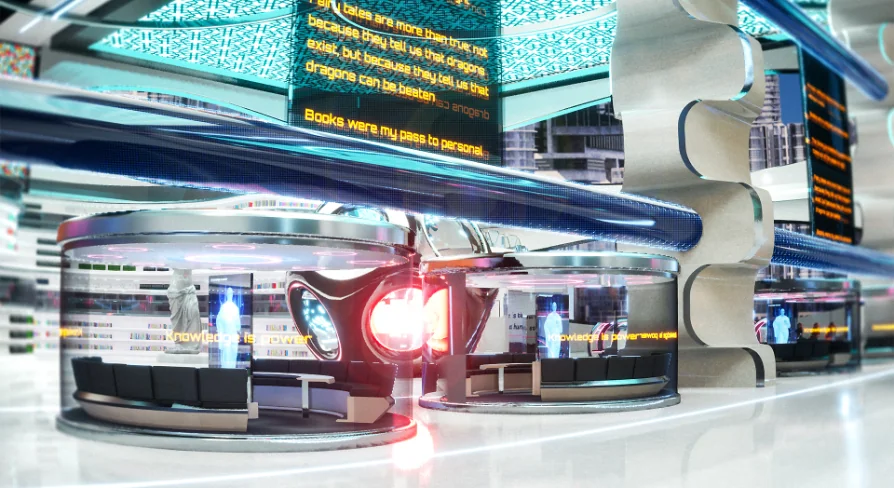
To support the data-gathering themes of the laboratory, the Library project provides specialized modules for high-tech archival spaces and digital repository hubs. Sci-fi libraries serve as visual centers for data banks, terminal arrays, and research consoles. Combining library modules with laboratory pieces allows level creators to transition naturally from experimental benches to quiet study spaces and terminal-heavy intelligence vaults. The interaction between these two environments creates a grounded workflow for storytelling in scientific stations, secret deep-space projects, or medical research hubs.
PBR Textures, Resolution Scaling, and Decal Detailing
Surface treatment across all four projects relies on physically based rendering (PBR) materials, ensuring that metals, glass, painted panels, and plastics respond accurately to dynamic lighting schemes. The asset pipeline separates texture resolutions based on prop dimensions to balance visual fidelity against rendering overhead:
Large Props: Textured at 4096×4096 resolution, capturing fine surface breaks, seams, and structural finishes on major architectural pieces, large machinery, and structural walls.
Small Props: Textured at 2048×2048 resolution, retaining crisp edge fidelity and surface detail on tabletop gear, handheld equipment, and smaller interior fittings without excessive memory consumption.
To break up repeating surfaces across modular structures, the collection includes a generous supply of decals. Decals can be stamped directly onto bulkheads, floors, and machinery to display technical markings, hazard stripes, operational guidelines, and localized surface weathering. This decal pass allows artists to customize sterile modular walls into aged, heavily trafficked workspaces without modifying the underlying base geometry or master textures.
Drag-and-Drop Material Instances with Exposed Parameters
Rapid iteration is supported through a library of preconfigured material instances. These instances feature a drag-and-drop workflow, allowing designers to quickly assign varied looks across walls, machinery, and props. Rather than locking users into a single color palette, the material instances expose functional parameters for controlled customization.
Adjusting these exposed parameters enables real-time tuning of surface values. An artist can shift tint values to establish visual faction distinctions, distinguish separate wings of a medical clinic or laboratory by color-coding door frames, or alter surface roughness to reflect varying states of cleanliness across the installation. This parametric approach prevents rooms built from the same modular kit from feeling identical, giving level artists direct control over environmental storytelling.
Kinetic Set Dressing with Moving Doors and Hatches
Static environments can feel lifeless, especially in interactive sci-fi settings where containment and access control are core mechanics. Every door and hatch within the bundle arrives pre-configured and ready to be moved into open and closed positions. These interactive points serve multiple production needs across game design and cinematic staging:
Level Gating: Hatches and sliding doors provide natural barriers for player progression, lock-down sequences, or streaming boundaries between level sectors.
Mechanical Authenticity: Functional bulkheads and ventilation hatches allow developers to create functional airlocks, maintenance crawlspaces, and defensive blast shields.
Cinematic Staging: Rigged moving apertures enable scripted reveals, timed emergency decompressions, or environmental breaches during narrative sequences.
Because the moving pieces are already configured for translation or rotation, designers avoid the manual setup usually needed to separate sub-meshes, adjust pivots, and prepare hinges for scripting.
Project Suitability and Architectural Integration
INTERIOR BUNDLE SCI-FI MODULAR FUTURISTIC fits productions requiring clean, structurally sound high-tech architecture. Whether assembling an armory sector for a sci-fi shooter, a sprawling transit station in a metaverse world, or an isolated laboratory complex featuring medical research facilities, the four included sub-themes offer the modular components, PBR fidelity, and mechanical functionality necessary to bring intricate interior scenes to life.
 Sci-Fi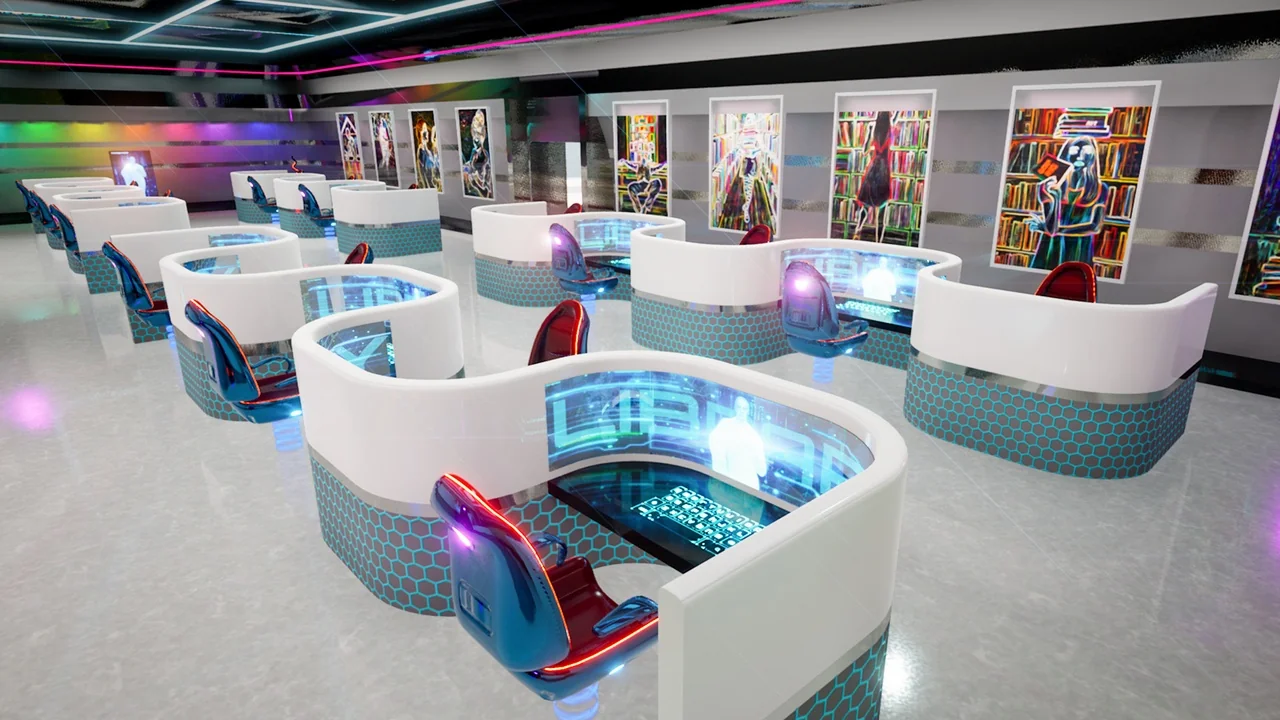
 Sci-Fi
 Sci-Fi
 Sci-Fi