"4481da9c895ef786"{"id":"1000300","slug":"hospital-animations","title":"Hospital Animations","category":"Variety","engine":"5.3+","assetVersion":"","engineVersion":"Engine Version: 5.3+","tag":"Variety","accent":"blue","visual":"animation","summary":"A high-quality motion capture animation package featuring routine doctor's appointments, emergency CPR, stretcher transport, and injection treatments.","platform":"Unreal Engine","publishedAt":"2026-07-03T18:16:23.749Z","updatedAt":"2026-07-03T18:16:23.749Z","sourceNotes":[],"fileContents":[],"compatibility":["Unreal Engine","Engine Version: 5.3+"],"featuredImage":{"alt":"Hospital Animations","src":"/wp-content/uploads/published/2026/07/4511d2168b98-2f57d7b2-665f-4934-a0b5-5cd38344f642-dc0176e84c.webp"},"hasDownloadLink":true,"downloads":1,"terms":[{"taxonomy":"category","slug":"variety-animations","name":"Variety"}],"galleryImages":[{"src":"/wp-content/uploads/published/2026/07/72a856d9795b-fd28ee6f-ec35-4e9e-a40f-9f7c031dc476-e0b3f206cd.webp","alt":"Hospital Animations"},{"src":"/wp-content/uploads/published/2026/07/caad9d6dacee-70fad60c-9fec-4357-8f07-cfa5ea31693c-b4433c297a.webp","alt":"Hospital Animations"},{"src":"/wp-content/uploads/published/2026/07/ca87ed61883d-dc442bd2-cc97-4cb9-80e7-de700df7c643-832f31a2f1.webp","alt":"Hospital Animations"},{"src":"/wp-content/uploads/published/2026/07/cb2807b1b414-867b96dc-5b7d-47c4-8612-f60dc90c10ee-c5b37b0bb3.webp","alt":"Hospital Animations"},{"src":"/wp-content/uploads/published/2026/07/65d2119fc087-d9e9a4d0-e33c-45f1-b633-d8b4d486ca5e-0113a5f619.webp","alt":"Hospital Animations"},{"src":"/wp-content/uploads/published/2026/07/a263239bc189-1fe562aa-5861-454f-b96d-e2140ce55683-25db0227e2.webp","alt":"Hospital Animations"},{"src":"/wp-content/uploads/published/2026/07/e41f23b0cc7f-0f94314c-91ef-4730-9435-2b0195834d37-62aa985b01.webp","alt":"Hospital Animations"}],"accessPanel":{"kind":"resource","title":"Download this resource","eyebrow":"Free Download","message":"Log in or create a free account to start your download.","fileName":"Content.7z","safetyNote":"Resources are manually reviewed before listing to improve quality and reduce obvious risks.","actionLabel":"Download Free","resourceType":"Resource archive"},"contentHtml":"\u003ch2\u003eIntegrating Medical Motion Capture Data\u003c/h2\u003e\n\u003cp\u003eImplementing the Hospital Animations collection involves mapping high-quality motion capture data onto 3D character rigs. Designed to populate clinical environments, this data replaces generic idle states with highly specific, occupation-focused movements. When importing these sequences, developers are working with raw motion capture that retains the natural weight, pacing, and physical nuances of actual human actors performing medical tasks. The primary setup involves assigning these sequences to appropriate character classes, specifically designating models as doctors, nurses, and patients. Because the package relies on motion capture rather than hand-keyed animation, the resulting movements provide a grounded, realistic look suitable for high-fidelity hospital levels. Implementing these animations requires aligning the interaction points between the medical practitioner and the patient, ensuring that actions like checking a heartbeat or administering an injection line up correctly within the 3D space.\u003c/p\u003e\n\u003ch2\u003eStructuring Routine Doctor’s Appointments\u003c/h2\u003e\n\u003cp\u003eFor non-emergency clinical settings, the package provides a suite of animations dedicated to routine doctor’s appointments. These motions are essential for building out examination rooms, clinics, or general practitioner offices. Developers can sequence these animations to create full narrative loops for NPCs or interactive cutscenes for main characters. A core component of this routine care includes the stethoscope animations. The motion capture data dictates the precise arm movements and posture required for a doctor to listen to a patient's chest or back using a stethoscope. This is a highly specific action that requires the character rig to mimic focused, deliberate listening while interacting closely with another character model.\u003c/p\u003e\n\u003cp\u003eTo complement the physical examination, the package includes administrative motions. Animations for recording patient complaints allow a doctor or nurse character to take notes or input data while interacting with a patient. Following the diagnosis phase, developers can trigger the prescription-writing animations. By chaining the complaint-recording, stethoscope-listening, and prescription-writing sequences together, a developer can create a continuous, believable loop of a complete medical consultation without relying on repetitive, generic gestures.\u003c/p\u003e\n\u003ch2\u003eExecuting Emergency Procedures and CPR\u003c/h2\u003e\n\u003cp\u003eWhile routine appointments populate the calm areas of a hospital, the package also includes motion capture data for critical, high-stakes medical scenarios. These emergency procedures are tailored for trauma centers, emergency rooms, or field medic situations where characters must perform life-saving actions. The CPR (cardiopulmonary resuscitation) animations capture the intense, rhythmic physical exertion required for chest compressions. Motion capture is particularly valuable here, as hand-animating the shifting body weight and repetitive force of CPR often results in stiff or unnatural movement. The mocap data ensures that the character performing the CPR moves with realistic urgency and physical effort.\u003c/p\u003e\n\u003cp\u003eAlongside the CPR sequences, the collection features defibrillation attempts. These animations involve the preparation and application of defibrillator paddles to a patient. The sequences cover the stance of the doctor or nurse, the placement of the equipment, and the physical execution of the shock. For developers building medical simulators or narrative-driven projects with triage mechanics, these emergency animations provide the exact physical actions needed to portray immediate, critical care accurately.\u003c/p\u003e\n\u003ch2\u003eSetting Up Patient Transport and Injections\u003c/h2\u003e\n\u003cp\u003eHospital environments require constant movement, and the package addresses this with specific stretcher transport animations. These sequences allow characters to push, pull, or guide a medical stretcher through the environment. Setting up these animations involves attaching a stretcher prop to the character's hands and utilizing the motion data to drive the walk cycles and turning mechanics. This is vital for creating active hospital corridors where nurses and orderlies are actively transporting patients between wards, surgery rooms, or ambulance bays.\u003c/p\u003e\n\u003cp\u003eIn terms of direct medical treatment, the pack includes animations for various types of injections. Administering an injection requires precise hand-eye coordination and specific postures from both the person giving the shot and the person receiving it. The variety of injection types included in the package means developers can set up different scenarios, such as a quick vaccination in a clinic or a more complex intravenous setup in a hospital bed. The motion capture ensures that the delicate, focused movements of handling a syringe are accurately represented during treatment.\u003c/p\u003e\n\u003ch2\u003eSynchronizing Doctor and Patient NPC Logic\u003c/h2\u003e\n\u003cp\u003eA defining characteristic of the Hospital Animations package is its inclusion of actions for both sides of the medical interaction. The motion capture data is not limited solely to the medical professionals; it encompasses the range of actions performed by the patients themselves. This dual-sided approach is critical for scene assembly. When a doctor is performing an examination or an emergency procedure, the patient model cannot remain in a static, rigid pose. The package supplies the corresponding patient motions, whether they are sitting on an examination table during a stethoscope check, lying flat on a stretcher during transport, or physically reacting to various types of injections.\u003c/p\u003e\n\u003cp\u003eBy utilizing these paired animations, developers can populate their environments with interactive, socially integrated NPCs. Distributing these sequences across various mannequins or character models transforms a static hospital level into a busy medical facility. Every corner of a virtual clinic can feature relevant movement, from a routine consultation in a side room to an emergency CPR attempt in the main hall. This variety of motion capture data provides the foundational building blocks for populating medical environments with realistic clinical behavior.\u003c/p\u003e\n\n\u003ch2\u003eMore From The Same Workflow\u003c/h2\u003e\n\u003cul\u003e\n\u003cli\u003e\u003ca href=\"https://3dcghub.com/healing-animations/\" title=\"Healing Animations\"\u003eHealing Animations\u003c/a\u003e\u003c/li\u003e\n\u003cli\u003e\u003ca href=\"https://3dcghub.com/funeral-animations/\" title=\"Funeral Animations\"\u003eFuneral Animations\u003c/a\u003e\u003c/li\u003e\n\u003cli\u003e\u003ca href=\"https://3dcghub.com/severe-injury-animations/\" title=\"Severe Injury Animations\"\u003eSevere Injury Animations\u003c/a\u003e\u003c/li\u003e\n\u003cli\u003e\u003ca href=\"https://3dcghub.com/30-selections-kawaii-animations-100-mini/\" title=\"30 selections KAWAII ANIMATIONS 100 MINI\"\u003e30 selections KAWAII ANIMATIONS 100 MINI\u003c/a\u003e\u003c/li\u003e\n\u003cli\u003e\u003ca href=\"https://3dcghub.com/school-animations/\" title=\"School Animations\"\u003eSchool Animations\u003c/a\u003e\u003c/li\u003e\n\u003c/ul\u003e","contentTextLength":6318,"navigation":{"current":1105,"total":3269,"previous":{"id":"1000301","slug":"modern-city-environment","title":"Modern City Environment","category":"Cities","platform":"Unreal Engine","updatedAt":"2026-07-04T07:39:57.117Z"},"next":{"id":"1000299","slug":"horror-mansion-low-poly-3d-models-pack","title":"Horror Mansion - Low Poly 3D Models Pack","category":"Horror","platform":"Unreal Engine","updatedAt":"2026-07-03T18:13:03.814Z"}},"relatedResources":[{"id":"6341","slug":"healing-animations","title":"Healing Animations","category":"Variety","engine":"5.3+","assetVersion":"Engine version: 5.3+","engineVersion":"5.3","tag":"Variety","accent":"blue","visual":"animation","summary":"Enhance your game's realism with this collection of 42 professional healing and treatment animations, including bandaging, injections, and teammate revival.","platform":"Unreal Engine","publishedAt":"2026-02-19T14:48:41.000Z","updatedAt":"2026-04-19T15:56:26.000Z","sourceNotes":[],"fileContents":[],"compatibility":["Unreal Engine","Engine version: 5.3+"],"featuredImage":{"alt":"Healing Animations","src":"https://3dcghub.com/wp-content/uploads/2026/02/a0ebba8f-45d6-4a53-a168-874f4380618b.webp"},"hasDownloadLink":true,"downloads":4},{"id":"1000752","slug":"morbid-motions-animations-and-poses","title":"Morbid Motions | Animations and Poses","category":"Variety","engine":"5.3+","assetVersion":"","engineVersion":"Engine Version: 5.3+","tag":"Variety","accent":"blue","visual":"animation","summary":"Horror-focused animation pack with 57 animations and 25 poses compatible with the Manny UE5 skeleton, covering zombie, undead, and dying character motion sets.","platform":"Unreal Engine","publishedAt":"2026-07-27T14:15:11.213Z","updatedAt":"2026-07-27T14:15:11.213Z","sourceNotes":[],"fileContents":[],"compatibility":["Unreal Engine","Engine Version: 5.3+"],"featuredImage":{"alt":"Morbid Motions | Animations and Poses","src":"/wp-content/uploads/published/2026/07/c6e6f80bc714-fdb22162-9895-4f41-b37c-97358ad0c8fa-2e8072fa8f.webp"},"hasDownloadLink":true,"downloads":1},{"id":"1000907","slug":"zero-gravity-animations","title":"Zero Gravity Animations","category":"Variety","engine":"5.3+","assetVersion":"","engineVersion":"Engine Version: 5.3+","tag":"Variety","accent":"blue","visual":"animation","summary":"28 motion-captured zero-G animations for sci-fi characters: fighting, shooting, hovering, soaring, working, and more. Compatible with Tavern Animations.","platform":"Unreal Engine","publishedAt":"2026-08-06T05:25:00.999Z","updatedAt":"2026-08-06T05:25:00.999Z","sourceNotes":[],"fileContents":[],"compatibility":["Unreal Engine","Engine Version: 5.3+"],"featuredImage":{"alt":"Zero Gravity Animations","src":"/wp-content/uploads/published/2026/08/df277c0e198b-b683c338-9b23-4987-b83d-bbdc43bf42e5-3aaf7e5e5b.webp"},"hasDownloadLink":true,"downloads":0}]}
Variety
Hospital Animations
A high-quality motion capture animation package featuring routine doctor's appointments, emergency CPR, stretcher transport, and injection treatments.
Implementing the Hospital Animations collection involves mapping high-quality motion capture data onto 3D character rigs. Designed to populate clinical environments, this data replaces generic idle states with highly specific, occupation-focused movements. When importing these sequences, developers are working with raw motion capture that retains the natural weight, pacing, and physical nuances of actual human actors performing medical tasks. The primary setup involves assigning these sequences to appropriate character classes, specifically designating models as doctors, nurses, and patients. Because the package relies on motion capture rather than hand-keyed animation, the resulting movements provide a grounded, realistic look suitable for high-fidelity hospital levels. Implementing these animations requires aligning the interaction points between the medical practitioner and the patient, ensuring that actions like checking a heartbeat or administering an injection line up correctly within the 3D space.
Structuring Routine Doctor’s Appointments
For non-emergency clinical settings, the package provides a suite of animations dedicated to routine doctor’s appointments. These motions are essential for building out examination rooms, clinics, or general practitioner offices. Developers can sequence these animations to create full narrative loops for NPCs or interactive cutscenes for main characters. A core component of this routine care includes the stethoscope animations. The motion capture data dictates the precise arm movements and posture required for a doctor to listen to a patient's chest or back using a stethoscope. This is a highly specific action that requires the character rig to mimic focused, deliberate listening while interacting closely with another character model.
To complement the physical examination, the package includes administrative motions. Animations for recording patient complaints allow a doctor or nurse character to take notes or input data while interacting with a patient. Following the diagnosis phase, developers can trigger the prescription-writing animations. By chaining the complaint-recording, stethoscope-listening, and prescription-writing sequences together, a developer can create a continuous, believable loop of a complete medical consultation without relying on repetitive, generic gestures.
Executing Emergency Procedures and CPR
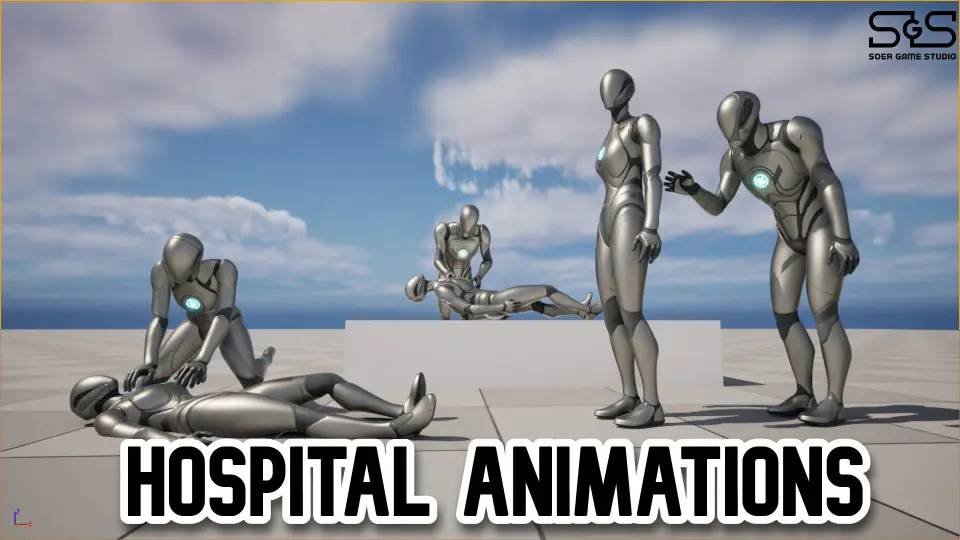
While routine appointments populate the calm areas of a hospital, the package also includes motion capture data for critical, high-stakes medical scenarios. These emergency procedures are tailored for trauma centers, emergency rooms, or field medic situations where characters must perform life-saving actions. The CPR (cardiopulmonary resuscitation) animations capture the intense, rhythmic physical exertion required for chest compressions. Motion capture is particularly valuable here, as hand-animating the shifting body weight and repetitive force of CPR often results in stiff or unnatural movement. The mocap data ensures that the character performing the CPR moves with realistic urgency and physical effort.
Alongside the CPR sequences, the collection features defibrillation attempts. These animations involve the preparation and application of defibrillator paddles to a patient. The sequences cover the stance of the doctor or nurse, the placement of the equipment, and the physical execution of the shock. For developers building medical simulators or narrative-driven projects with triage mechanics, these emergency animations provide the exact physical actions needed to portray immediate, critical care accurately.
Setting Up Patient Transport and Injections
Hospital environments require constant movement, and the package addresses this with specific stretcher transport animations. These sequences allow characters to push, pull, or guide a medical stretcher through the environment. Setting up these animations involves attaching a stretcher prop to the character's hands and utilizing the motion data to drive the walk cycles and turning mechanics. This is vital for creating active hospital corridors where nurses and orderlies are actively transporting patients between wards, surgery rooms, or ambulance bays.
In terms of direct medical treatment, the pack includes animations for various types of injections. Administering an injection requires precise hand-eye coordination and specific postures from both the person giving the shot and the person receiving it. The variety of injection types included in the package means developers can set up different scenarios, such as a quick vaccination in a clinic or a more complex intravenous setup in a hospital bed. The motion capture ensures that the delicate, focused movements of handling a syringe are accurately represented during treatment.
Synchronizing Doctor and Patient NPC Logic
A defining characteristic of the Hospital Animations package is its inclusion of actions for both sides of the medical interaction. The motion capture data is not limited solely to the medical professionals; it encompasses the range of actions performed by the patients themselves. This dual-sided approach is critical for scene assembly. When a doctor is performing an examination or an emergency procedure, the patient model cannot remain in a static, rigid pose. The package supplies the corresponding patient motions, whether they are sitting on an examination table during a stethoscope check, lying flat on a stretcher during transport, or physically reacting to various types of injections.
By utilizing these paired animations, developers can populate their environments with interactive, socially integrated NPCs. Distributing these sequences across various mannequins or character models transforms a static hospital level into a busy medical facility. Every corner of a virtual clinic can feature relevant movement, from a routine consultation in a side room to an emergency CPR attempt in the main hall. This variety of motion capture data provides the foundational building blocks for populating medical environments with realistic clinical behavior.
 Variety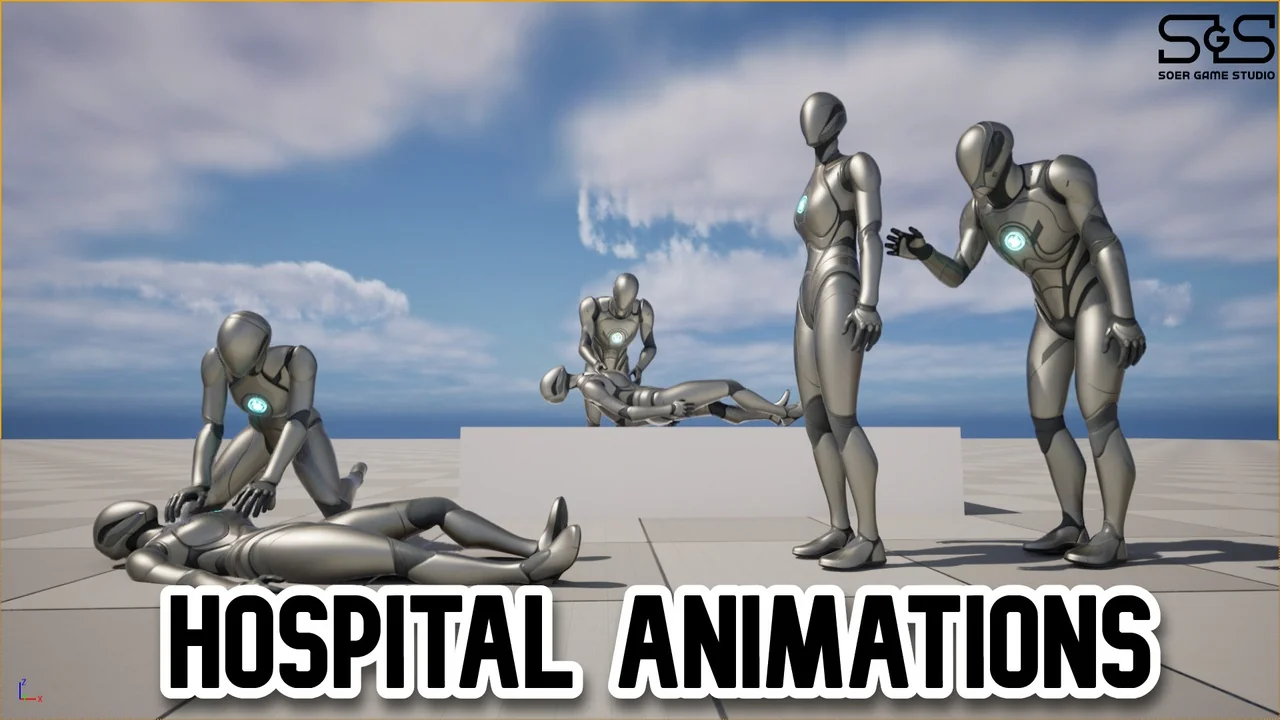
 Variety
 Variety
 Variety