"c68a05d5e51405b3"{"id":"25140","slug":"severe-injury-animations","title":"Severe Injury Animations","category":"Variety","engine":"5.3+","assetVersion":"Engine version: 5.3+","engineVersion":"","tag":"Variety","accent":"blue","visual":"animation","summary":"Severe Injury Animations focuses on clear physical injury states, including broken legs, arms, neck injuries, and writhing in pain. It gives artists and developers direct motions for wounded characters when a scene needs the damage to read fast.","platform":"Unreal Engine","publishedAt":"2026-04-19T06:44:22.000Z","updatedAt":"2026-04-20T06:12:32.000Z","sourceNotes":[],"fileContents":[],"compatibility":["Unreal Engine","Engine version: 5.3+"],"featuredImage":{"alt":"Severe Injury Animations","src":"https://3dcghub.com/wp-content/uploads/2026/04/01c09ad19ad2_c12b2fcd-43c1-4132-be74-f59f35447d1f.webp"},"hasDownloadLink":true,"downloads":1,"terms":[{"taxonomy":"category","slug":"variety-animations","name":"Variety"},{"taxonomy":"post_tag","slug":"animation","name":"Animation"},{"taxonomy":"post_tag","slug":"characters","name":"Characters"},{"taxonomy":"post_tag","slug":"environment","name":"Environment"}],"galleryImages":[{"src":"https://3dcghub.com/wp-content/uploads/2026/04/d164ef490816_a659bc4c-b19c-4c50-ab66-ccf128e01ea8.webp","alt":"Severe Injury Animations"},{"src":"https://3dcghub.com/wp-content/uploads/2026/04/735d04341b94_b7086c56-a99c-4861-a851-75fcff6d0c43.webp","alt":"Severe Injury Animations"},{"src":"https://3dcghub.com/wp-content/uploads/2026/04/55b7ac83c9ef_13dfb5ed-e29f-4f0f-8fab-33d7f53bb113.webp","alt":"Severe Injury Animations"},{"src":"https://3dcghub.com/wp-content/uploads/2026/04/b5f400bc77e7_144c6bd5-bb41-49ab-89cc-f9c85ab35059.webp","alt":"Severe Injury Animations"},{"src":"https://3dcghub.com/wp-content/uploads/2026/04/37c2331a5093_6d918e8f-252f-415c-a625-fb5c37688539.webp","alt":"Severe Injury Animations"},{"src":"https://3dcghub.com/wp-content/uploads/2026/04/c1975501ac63_0a93bcc5-505c-4836-930c-f9394ed646a4.webp","alt":"Severe Injury Animations"},{"src":"https://3dcghub.com/wp-content/uploads/2026/04/e7206e6beb8f_1257b06a-ebeb-4c54-83cf-063093eb7d58.webp","alt":"Severe Injury Animations"},{"src":"https://3dcghub.com/wp-content/uploads/2026/04/b61f39260e61_2b39e8c7-fdce-4d37-9fa2-080b8f3e3142.webp","alt":"Severe Injury Animations"}],"accessPanel":{"kind":"resource","title":"Access this resource","eyebrow":"Free Download","message":"Log in or create a free account to start your download.","fileName":"Content.7z","safetyNote":"All resources are 100% manually reviewed to eliminate all risks.","actionLabel":"Download Free","resourceType":"Resource archive"},"contentHtml":"\u003ch2\u003eImmediate injury states for character work\u003c/h2\u003e\u003cp\u003eSevere Injury Animations gives characters visible physical distress in a form that reads quickly. The pack includes animations for broken legs, broken arms, broken necks, writhing in pain, and more. That combination makes it useful when a scene needs the body itself to carry the meaning of the moment instead of leaving the injury implied.\u003c/p\u003e\u003cp\u003eEach motion points to a different kind of severe damage. A broken leg changes how a character can be staged and how their posture lands in the frame. A broken arm shifts the silhouette and makes the body look compromised in a different way. A neck injury carries a heavier sense of danger, while a writhing-in-pain motion gives the scene an active response rather than a frozen pose. The result is a set of reactions that can tell a story through movement alone.\u003c/p\u003e\u003ch2\u003eHow the motions help a scene read\u003c/h2\u003e\u003cp\u003eThese animations are useful when the moment needs to communicate that a character has been hurt, and hurt badly. A fight aftermath, a collapse, or a rescue beat can all benefit from an injury state that is specific enough to be recognized right away. Instead of relying on a generic hurt pose, the pack offers motions that make the severity of the damage part of the performance.\u003c/p\u003e\u003cp\u003eThat makes the pack practical for scenes that move from impact to aftermath. A character can remain visibly compromised while the scene continues around them, or the animation can become the focal point of a shot that depends on pain and instability. Because the motions are centered on severe injury, they can help artists hold attention on the character’s condition without extra visual explanation.\u003c/p\u003e\u003ch2\u003eMotion, character, and wound-focused presentation\u003c/h2\u003e\u003cp\u003eThe surrounding tags place the pack in a character animation context that also touches motion capture, injury, mannequin, animated, wound, and injured. Those terms point to a body-driven workflow where the performance itself is the focus. The movement is not abstract or decorative; it is meant to present injury in a direct, readable way.\u003c/p\u003e\u003cp\u003eThe mannequin tag also reinforces that this is about the body as a visual subject. Pose, alignment, and visible strain matter here. When a character is framed with a broken limb or a painful twist through the torso, the motion needs to carry the emotional weight of the scene. The pack’s injury states give that weight a clear physical form.\u003c/p\u003e\u003ch2\u003eCreative uses for artists and developers\u003c/h2\u003e\u003cp\u003eArtists can use these motions to make wounded characters feel more immediate in cinematic work or scene staging. A body that is writhing in pain communicates distress without needing a separate explanation. A broken leg or arm creates a stronger sense of aftermath than a neutral pose, and a neck injury can shift the whole tone of a shot toward something harsher and more serious.\u003c/p\u003e\u003cp\u003eDevelopers can use the same motions when a game or interactive scene needs damage to be obvious at a glance. The pack supports characters that need to look injured while standing, collapsing, reacting, or waiting for the next beat. Since the motions distinguish between different kinds of severe injury, they can help a scene show that the character is not simply hurt in a general way, but affected in a specific and visible way.\u003c/p\u003e\u003cp\u003eFor projects that need severe damage to register quickly, the pack offers a direct set of character reactions: broken legs, broken arms, broken necks, and pain-driven movement. That makes it a straightforward fit for production work where the body language has to do the storytelling.\u003c/p\u003e\n\n\u003ch2\u003eMore From The Same Workflow\u003c/h2\u003e\n\u003cul\u003e\n\u003cli\u003e\u003ca href=\"https://3dcghub.com/ultimate-fps-animations-pack/\" title=\"Ultimate FPS Animations Pack\"\u003eUltimate FPS Animations Pack\u003c/a\u003e\u003c/li\u003e\n\u003cli\u003e\u003ca href=\"https://3dcghub.com/school-animations/\" title=\"School Animations\"\u003eSchool Animations\u003c/a\u003e\u003c/li\u003e\n\u003cli\u003e\u003ca href=\"https://3dcghub.com/military-animation-pack-i-unarmed/\" title=\"Military Animation Pack I (Unarmed)\"\u003eMilitary Animation Pack I (Unarmed)\u003c/a\u003e\u003c/li\u003e\n\u003cli\u003e\u003ca href=\"https://3dcghub.com/sequine-sequencing-animation-and-visual-scripting/\" title=\"Sequine – Sequencing, Animation, and Visual Scripting\"\u003eSequine – Sequencing, Animation, and Visual Scripting\u003c/a\u003e\u003c/li\u003e\n\u003cli\u003e\u003ca href=\"https://3dcghub.com/umotion-pro-animation-editor/\" title=\"UMotion Pro – Animation Editor\"\u003eUMotion Pro – Animation Editor\u003c/a\u003e\u003c/li\u003e\n\u003c/ul\u003e","contentTextLength":3763,"navigation":{"current":2218,"total":3860,"previous":{"id":"25145","slug":"shootlikeme-unreal-engine-third-person-shooter-template","title":"ShootLikeMe - Unreal Engine Third Person Shooter Template","category":"Shooter","platform":"Unreal Engine","updatedAt":"2026-04-20T06:12:32.000Z"},"next":{"id":"25129","slug":"road-creator-pro","title":"Road Creator Pro","category":"Procedural Systems","platform":"Unreal Engine","updatedAt":"2026-04-20T06:12:32.000Z"}},"relatedResources":[{"id":"24809","slug":"school-animations","title":"School Animations","category":"Variety","engine":"5.3+","assetVersion":"Engine version: 5.3+","engineVersion":"","tag":"Variety","accent":"blue","visual":"animation","summary":"School Animations Pack focuses on everyday classroom behavior, from a teacher explaining at the board to students studying, writing, reading, and whispering. It also includes quieter school-life moments, giving the pack a range that fits both instruction an...","platform":"Unreal Engine","publishedAt":"2026-04-17T08:57:37.000Z","updatedAt":"2026-04-20T06:12:37.000Z","sourceNotes":[],"fileContents":[],"compatibility":["Unreal Engine","Engine version: 5.3+"],"featuredImage":{"alt":"School Animations","src":"https://3dcghub.com/wp-content/uploads/2026/04/0e740df9471e_6b2a611d-86c5-440f-b0c0-bfd3e123f0e6.webp"},"hasDownloadLink":true,"downloads":1},{"id":"27483","slug":"city-sim-animation-pack","title":"CiTY SIM ANIMATION PACK","category":"Variety","engine":"4.27,5.0+","assetVersion":"Engine version: 4.27,5.0+","engineVersion":"","tag":"Variety","accent":"blue","visual":"animation","summary":"This animation library focuses on everyday city behavior: walking, running, sitting, sleeping, bar interaction, and emotes, along with role-based emergency actions. It also includes male and female movement sets that fit citizen and service-character scenes.","platform":"Unreal Engine","publishedAt":"2026-04-26T06:01:51.000Z","updatedAt":"2026-04-26T06:01:52.000Z","sourceNotes":[],"fileContents":[],"compatibility":["Unreal Engine","Engine version: 4.27,5.0+"],"featuredImage":{"alt":"CiTY SIM ANIMATION PACK","src":"https://3dcghub.com/wp-content/uploads/2026/04/89cb54dc9b3e_225b779a-c1f6-4171-b9ea-1efe1f14d322.webp"},"hasDownloadLink":true,"downloads":0},{"id":"24757","slug":"military-animation-pack-i-unarmed","title":"Military Animation Pack I (Unarmed)","category":"Variety","engine":"5.5+","assetVersion":"Engine version: 5.5+","engineVersion":"","tag":"Variety","accent":"blue","visual":"animation","summary":"Military Animation Pack I (Unarmed) brings together Brazilian Army drill commands and exercise motions for the UE5 Mannequin. It focuses on marching, turn-in-place actions, idles, salutes, and bodyweight exercises with real-world attention to posture and ha...","platform":"Unreal Engine","publishedAt":"2026-04-16T17:52:33.000Z","updatedAt":"2026-04-20T06:12:38.000Z","sourceNotes":[],"fileContents":[],"compatibility":["Unreal Engine","Engine version: 5.5+"],"featuredImage":{"alt":"Military Animation Pack I (Unarmed)","src":"https://3dcghub.com/wp-content/uploads/2026/04/67393d0c8a47_69026678-e416-435f-bfb2-6ce9bc1f092c.webp"},"hasDownloadLink":true,"downloads":1}]}
Variety
Severe Injury Animations
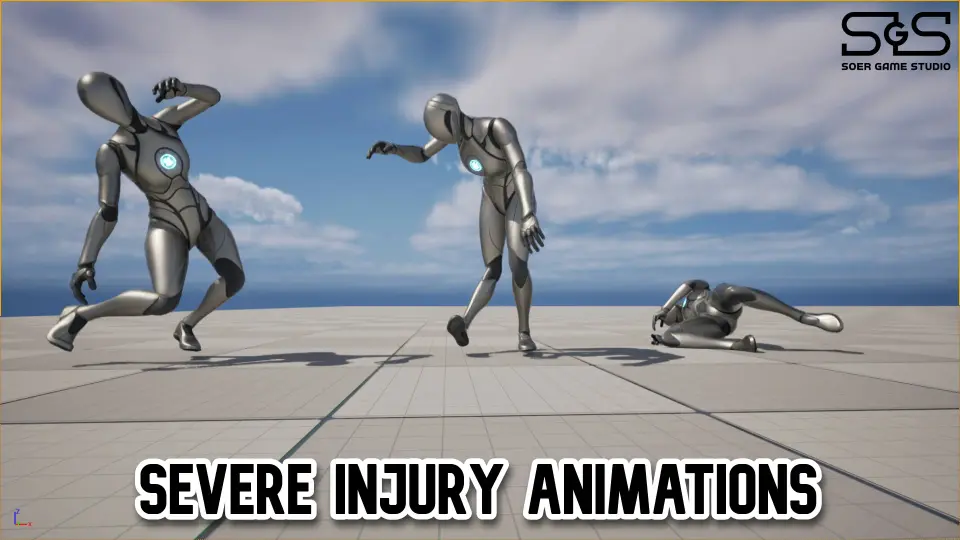
Severe Injury Animations focuses on clear physical injury states, including broken legs, arms, neck injuries, and writhing in pain. It gives artists and developers direct motions for wounded characters when a scene needs the damage to read fast.
Severe Injury Animations gives characters visible physical distress in a form that reads quickly. The pack includes animations for broken legs, broken arms, broken necks, writhing in pain, and more. That combination makes it useful when a scene needs the body itself to carry the meaning of the moment instead of leaving the injury implied.
Each motion points to a different kind of severe damage. A broken leg changes how a character can be staged and how their posture lands in the frame. A broken arm shifts the silhouette and makes the body look compromised in a different way. A neck injury carries a heavier sense of danger, while a writhing-in-pain motion gives the scene an active response rather than a frozen pose. The result is a set of reactions that can tell a story through movement alone.
How the motions help a scene read
These animations are useful when the moment needs to communicate that a character has been hurt, and hurt badly. A fight aftermath, a collapse, or a rescue beat can all benefit from an injury state that is specific enough to be recognized right away. Instead of relying on a generic hurt pose, the pack offers motions that make the severity of the damage part of the performance.
That makes the pack practical for scenes that move from impact to aftermath. A character can remain visibly compromised while the scene continues around them, or the animation can become the focal point of a shot that depends on pain and instability. Because the motions are centered on severe injury, they can help artists hold attention on the character’s condition without extra visual explanation.
Motion, character, and wound-focused presentation
The surrounding tags place the pack in a character animation context that also touches motion capture, injury, mannequin, animated, wound, and injured. Those terms point to a body-driven workflow where the performance itself is the focus. The movement is not abstract or decorative; it is meant to present injury in a direct, readable way.
The mannequin tag also reinforces that this is about the body as a visual subject. Pose, alignment, and visible strain matter here. When a character is framed with a broken limb or a painful twist through the torso, the motion needs to carry the emotional weight of the scene. The pack’s injury states give that weight a clear physical form.
Creative uses for artists and developers
Artists can use these motions to make wounded characters feel more immediate in cinematic work or scene staging. A body that is writhing in pain communicates distress without needing a separate explanation. A broken leg or arm creates a stronger sense of aftermath than a neutral pose, and a neck injury can shift the whole tone of a shot toward something harsher and more serious.
Developers can use the same motions when a game or interactive scene needs damage to be obvious at a glance. The pack supports characters that need to look injured while standing, collapsing, reacting, or waiting for the next beat. Since the motions distinguish between different kinds of severe injury, they can help a scene show that the character is not simply hurt in a general way, but affected in a specific and visible way.
For projects that need severe damage to register quickly, the pack offers a direct set of character reactions: broken legs, broken arms, broken necks, and pain-driven movement. That makes it a straightforward fit for production work where the body language has to do the storytelling.
 Variety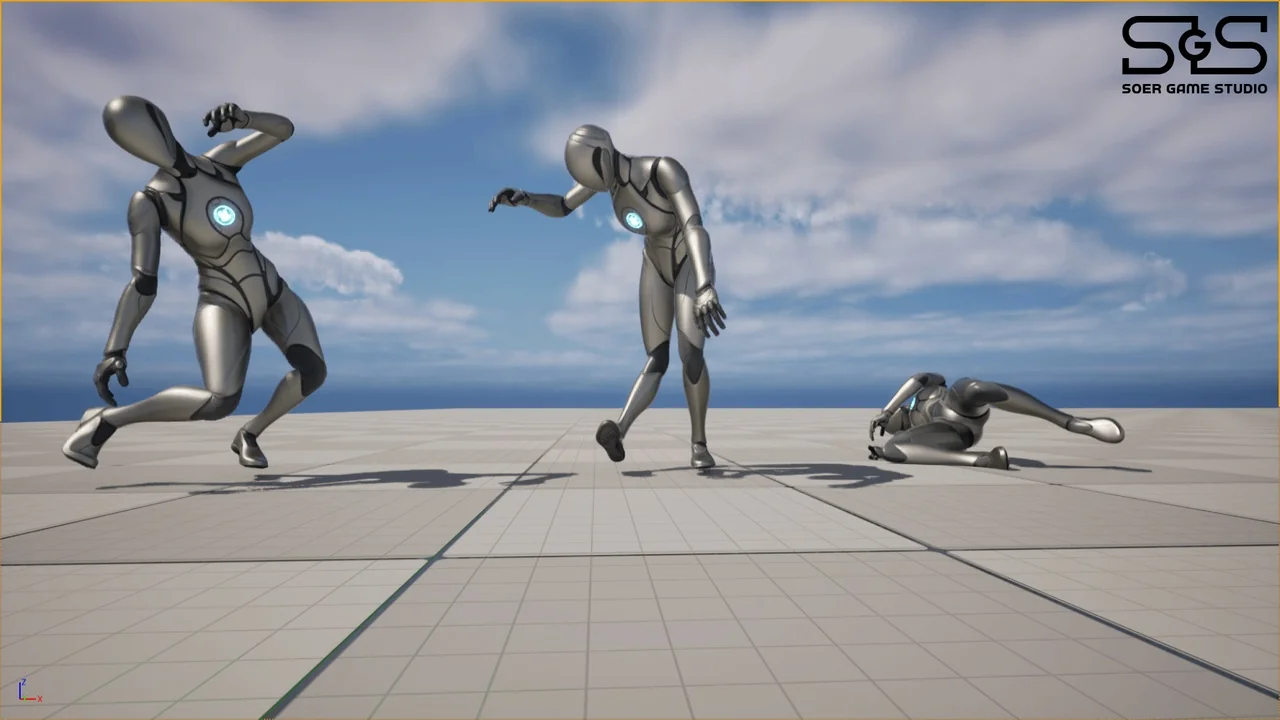
 Variety
 Variety
 Variety