"fb5ea1e7d1b41445"{"id":"1002408","slug":"g2-survival-characters","title":"G2: Survival Characters","category":"Humans","engine":"4.20+,5.0+","assetVersion":"","engineVersion":"Engine Version: 4.20+,5.0+","tag":"Humans","accent":"blue","visual":"character","summary":"G2: Survival Characters delivers modular male and female survivor models featuring 83 facial blendshapes, UE4 Mannequin rigging, and Lyra compatibility.","platform":"Unreal Engine","indexPolicy":"index","publishedAt":"2026-11-10T12:05:08.477Z","updatedAt":"2026-11-10T12:05:08.477Z","sourceNotes":[],"fileContents":[],"compatibility":["Unreal Engine","Engine Version: 4.20+,5.0+"],"featuredImage":{"alt":"G2: Survival Characters","src":"/wp-content/uploads/published/2026/11/ffe935c30732-a46822b3-cc4e-4745-93cb-c808e8c3dd11-32f9f8982c.webp"},"hasDownloadLink":true,"downloads":0,"terms":[{"taxonomy":"category","slug":"humans","name":"Humans"}],"galleryImages":[{"src":"/wp-content/uploads/published/2026/11/13db2c01c956-5f56d485-d2c5-4dc8-93ff-3ef95a7a15f9-fc3ad5a83f.webp","alt":"G2: Survival Characters"},{"src":"/wp-content/uploads/published/2026/11/3a8d7d79741e-05f61e2a-b22f-44ee-bc3b-5ec9e7ac1b29-ad04495ff5.webp","alt":"G2: Survival Characters"},{"src":"/wp-content/uploads/published/2026/11/115ce3dca162-3026e605-af4b-4561-a3db-314b7aa1ee28-e90b342bc0.webp","alt":"G2: Survival Characters"},{"src":"/wp-content/uploads/published/2026/11/35a0e832a602-b93b875d-a007-47ac-8c78-1c5320445dc1-b233ab0402.webp","alt":"G2: Survival Characters"},{"src":"/wp-content/uploads/published/2026/11/6fa8b29205c7-e84a9645-7604-4ee6-8ad4-8c18e74c45bb-0ff5c9fbce.webp","alt":"G2: Survival Characters"},{"src":"/wp-content/uploads/published/2026/11/f96ab5a5ae9d-466510b2-ed44-43f8-b692-03882e30316c-dfc7b6a480.webp","alt":"G2: Survival Characters"},{"src":"/wp-content/uploads/published/2026/11/8d1269176c08-d7b6faeb-7be1-46cf-8bf1-73ca15579c5e-e18824e1f3.webp","alt":"G2: Survival Characters"},{"src":"/wp-content/uploads/published/2026/11/f35a9f1d7c7b-578d355a-c122-4441-b07c-9e3b38b967e8-9d9920191e.webp","alt":"G2: Survival Characters"},{"src":"/wp-content/uploads/published/2026/11/734dd74b691c-30e73220-9baf-4e02-be4c-5bd54748bcfd-1dc6135d75.webp","alt":"G2: Survival Characters"},{"src":"/wp-content/uploads/published/2026/11/d022c2d57b7e-8b8ff137-4a4c-4d63-b4a3-0cd89e983d22-5df3438057.webp","alt":"G2: Survival Characters"}],"accessPanel":{"kind":"resource","title":"Get this resource","eyebrow":"Free resource","message":"Download this resource in your browser.","fileName":"Content.7z","safetyNote":"Resources are manually reviewed before listing to improve quality and reduce obvious risks.","actionLabel":"Get this resource","resourceType":"Resource archive","versions":[]},"contentHtml":"\u003cp\u003eG2: Survival Characters introduces a realistic, low-poly cast of male and female survivor models structured to populate harsh, grounded game environments. Built as game-ready visual assets, these characters arrive ready for immediate staging, providing immediate visual feedback in engine viewports. The collection depicts utilitarian survival wear, suited for field exploration, scavenging, and combat scenarios. Rather than functioning as rigid, single-mesh figures, the models rely on modular assembly, enabling creators to swap garments, gear, and anatomical elements across projects.\u003c/p\u003e \u003ch2\u003eModular Assembly Across G2 Survival Characters\u003c/h2\u003e\n\u003cp\u003eModularity stands as the central functional design element within G2: Survival Characters. Clothing, gear, hair, weapons, and accessories can be mixed and matched freely, provided the exchanged pieces belong to the same gender category within the broader Genesis 2 (G2: Characters) line. A jacket, vest, or pair of survival trousers from one release within the ecosystem seats cleanly onto another model of the same gender frame. This cross-compatibility extends the shelf life of each mesh piece, allowing small teams to assemble distinct background scavengers, intermediate squad members, or custom player avatars without manual refitting or skeletal retargeting.\u003c/p\u003e \u003cp\u003eInterchangeability extends to specialized props and peripheral survival tools. Gear such as arrows, hair elements, and distinct weaponry can be attached directly to designated sockets or fitted over base apparel. This setup also accounts for compatibility with the N5: Human Base standard, preserving consistent proportions and anchor points across related asset collections. Creators working with layered outfits can strip away heavy outer coats, adjust boots, or trade survival gear while maintaining uniform joint alignments across the torso and limbs.\u003c/p\u003e \u003ch2\u003eMaterial Adaptation and Surface Blending\u003c/h2\u003e\n\u003cp\u003eVisual variety across modular clothing parts requires flexible surface shading. G2: Survival Characters utilizes master materials engineered to give developers direct authority over colors and surface textures. Within material instances derived from these master shaders, texture maps and tint channels can be blended to align with the visual tone of a specific scene or lighting environment.\u003c/p\u003e \u003cp\u003eThis texture-blending pipeline avoids repetitive duplicate meshes when creating multiple non-player characters for a single settlement or wilderness outpost. Adjusting the base values allows an artist to dull bright fabrics, introduce dirty undertones, adjust fabric values, or harmonize equipment palettes across an entire faction. Because these changes occur at the material instance layer, memory overhead remains predictable while producing extensive aesthetic divergence across identical geometry.\u003c/p\u003e \u003ch2\u003eFacial Animation and Unisex Hair for G2 Characters\u003c/h2\u003e\n\u003cp\u003eClose-up cinematic framing and in-game dialogue demand responsive deformation around the eyes, jaw, and mouth. G2: Survival Characters incorporates 83 individual blendshapes and morph targets engineered for speech synchronization and complex emotional states. This morph library accommodates phoneme generation for real-time lipsync systems as well as layered expressions, ranging from subtle fatigue to high-stress reactions during combat or traversal sequences.\u003c/p\u003e \u003cp\u003eHairstyles in character collections often run into gender-locked constraints, limiting asset flexibility across varied casts. This package resolves that hurdle by providing two unisex hairstyles constructed to seat identically on both male and female head meshes. These hair assets maintain proper scalp alignment regardless of the base skull form they are applied to. Combined with the extensive facial blendshape library, developers can construct believable conversations, scripted cinematic interludes, or dynamic reaction states without needing to model bespoke corrective blendshapes.\u003c/p\u003e \u003ch2\u003eLocomotion Integration with ALS v4 and Lyra\u003c/h2\u003e\n\u003cp\u003eUnder the skin, the character meshes are weighted to the established UE4 Mannequin skeleton, augmented by two extra bones. This structural continuity ensures near-native compatibility with existing Unreal Engine animation sets, eliminating long hours spent setting up complex IK rigs or manual retargeting profiles. Standard jump, crouch, sprint, and aim cycles developed for the Epic skeleton align directly with the character meshes.\u003c/p\u003e \u003cp\u003eBeyond standard animation playback, G2: Survival Characters operates smoothly within sophisticated gameplay sandboxes, specifically Advanced Locomotion System v4 (ALS v4) and Epic's Lyra Starter Game project. Because the skeletal tree retains core Mannequin conventions alongside its two additional bones, procedural movement features like foot placement, stride warping, turning in place, and mantle sequences adapt to the meshes without severe deformation. Studios prototyping survival action mechanics can drop these characters into an active Lyra or ALS v4 controller framework, linking gameplay inputs straight to responsive visual avatars without custom animation graphs.\u003c/p\u003e \u003ch2\u003ePackage Architecture and Pipeline Boundaries\u003c/h2\u003e\n\u003cp\u003eThe package received a structural reorganization on December 10, 2024, streamlining internal folder arrangements to make asset location and migration between projects cleaner. Textures, master materials, modular skeletal meshes, and props are partitioned into predictable subdirectories, reducing file conflicts when merging the pack into existing project repositories.\u003c/p\u003e \u003cp\u003eIt remains equally important to understand what the asset pack deliberately excludes. The package delivers game-ready character art, meshes, and rigging configurations; it does not contain prebuilt gameplay logic, custom particle VFX systems, or fully scripted Blueprint gameplay frameworks. The models are designed to supply production-grade visual bodies intended for injection into a studio's own gameplay code, animation blueprints, or existing locomotion frameworks like Lyra. For teams equipped with an established animation and interaction codebase, G2: Survival Characters provides a fully rigged, modular visual layer ready for instant deployment.\u003c/p\u003e\n\n\u003ch2\u003eRelated Resources Worth Checking\u003c/h2\u003e\n\u003cul\u003e\n\u003cli\u003e\u003ca href=\"https://3dcghub.com/g2-mercenaries/\" rel=\"noopener noreferrer\"\u003eG2: Mercenaries\u003c/a\u003e\u003c/li\u003e\n\u003cli\u003e\u003ca href=\"https://3dcghub.com/g2-wulin-swordman-01/\" rel=\"noopener noreferrer\"\u003eG2: Wulin Swordman 01\u003c/a\u003e\u003c/li\u003e\n\u003cli\u003e\u003ca href=\"https://3dcghub.com/survivor-girl-1-modular/\" rel=\"noopener noreferrer\"\u003eSurvivor Girl 1 (Modular)\u003c/a\u003e\u003c/li\u003e\n\u003cli\u003e\u003ca href=\"https://3dcghub.com/survival-man/\" rel=\"noopener noreferrer\"\u003eSurvival Man\u003c/a\u003e\u003c/li\u003e\n\u003cli\u003e\u003ca href=\"https://3dcghub.com/g2-monk/\" rel=\"noopener noreferrer\"\u003eG2: Monk\u003c/a\u003e\u003c/li\u003e\n\u003c/ul\u003e","contentTextLength":6248,"navigation":{"current":11,"total":4340,"previous":{"id":"1002409","slug":"gym-bundle-boys-and-girls","title":"Gym Bundle: Boys and Girls","category":"Humans","platform":"Unreal Engine","updatedAt":"2026-11-10T12:06:07.966Z"},"next":{"id":"1002407","slug":"g2-monk","title":"G2: Monk","category":"Humans","platform":"Unreal Engine","updatedAt":"2026-11-10T12:03:25.219Z"}},"relatedResources":[{"id":"1002412","slug":"western-characters-series-2025-adventure-survival-shooter-action-cowboy-man","title":"Western Characters Series 2025 - Adventure Survival Shooter Action Cowboy Man","category":"Humans","engine":"4.20+,5.0+","assetVersion":"","engineVersion":"Engine Version: 4.20+,5.0+","tag":"Humans","accent":"blue","visual":"character","summary":"Explore Western Characters Series 2025 with modular outfits, 5 unique characters, weapons, UE5 Epic Skeleton rigging, and Live Link Face support.","platform":"Unreal Engine","indexPolicy":"index","publishedAt":"2026-11-10T12:10:14.228Z","updatedAt":"2026-11-10T12:10:14.228Z","sourceNotes":[],"fileContents":[],"compatibility":["Unreal Engine","Engine Version: 4.20+,5.0+"],"featuredImage":{"alt":"Western Characters Series 2025 - Adventure Survival Shooter Action Cowboy Man","src":"/wp-content/uploads/published/2026/11/ee98d1803268-daa600a2-24c5-46bb-8021-691be9915944-ffa65093be.webp"},"hasDownloadLink":true,"downloads":0},{"id":"1002402","slug":"g2-mercenaries","title":"G2: Mercenaries","category":"Humans","engine":"4.20+,5.0+","assetVersion":"","engineVersion":"Engine Version: 4.20+,5.0+","tag":"Humans","accent":"blue","visual":"mech","summary":"Explore G2: Mercenaries, featuring modular male and female realistic characters, UE4 mannequin rigging with pectoral bones, and ARKit facial morphs.","platform":"Unreal Engine","indexPolicy":"index","publishedAt":"2026-11-10T04:54:18.684Z","updatedAt":"2026-11-10T04:54:18.684Z","sourceNotes":[],"fileContents":[],"compatibility":["Unreal Engine","Engine Version: 4.20+,5.0+"],"featuredImage":{"alt":"G2: Mercenaries","src":"/wp-content/uploads/published/2026/11/2874a2c8252c-0430aa00-38fd-4b0e-8751-782250d440f3-92add7fd0d.webp"},"hasDownloadLink":true,"downloads":0},{"id":"1000612","slug":"g2-wulin-swordman-01","title":"G2: Wulin Swordman 01","category":"Humans","engine":"4.26+,5.0+","assetVersion":"","engineVersion":"Engine Version: 4.26+,5.0+","tag":"Humans","accent":"blue","visual":"mech","summary":"A Genesis 2 modular martial arts character rigged to the UE4 Mannequin Skeleton, with 85 face blendshapes, cross-pack wardrobe mixing, and ARKit Live Link suppo","platform":"Unreal Engine","indexPolicy":"index","publishedAt":"2026-07-20T20:27:46.766Z","updatedAt":"2026-07-20T20:27:46.766Z","sourceNotes":[],"fileContents":[],"compatibility":["Unreal Engine","Engine Version: 4.26+,5.0+"],"featuredImage":{"alt":"G2: Wulin Swordman 01","src":"/wp-content/uploads/published/2026/07/7049d4f3bbeb-b25ffb55-5eba-4cbe-b281-a1628fb5d5ce-563c8b33b9.webp"},"hasDownloadLink":true,"downloads":1}]}
Humans
G2: Survival Characters
G2: Survival Characters delivers modular male and female survivor models featuring 83 facial blendshapes, UE4 Mannequin rigging, and Lyra compatibility.
Category:Unreal Engine,HumansPlatform: Unreal EngineEngine Version: 4.20+,5.0+Published: Nov 10, 2026
Humans
Resource overview
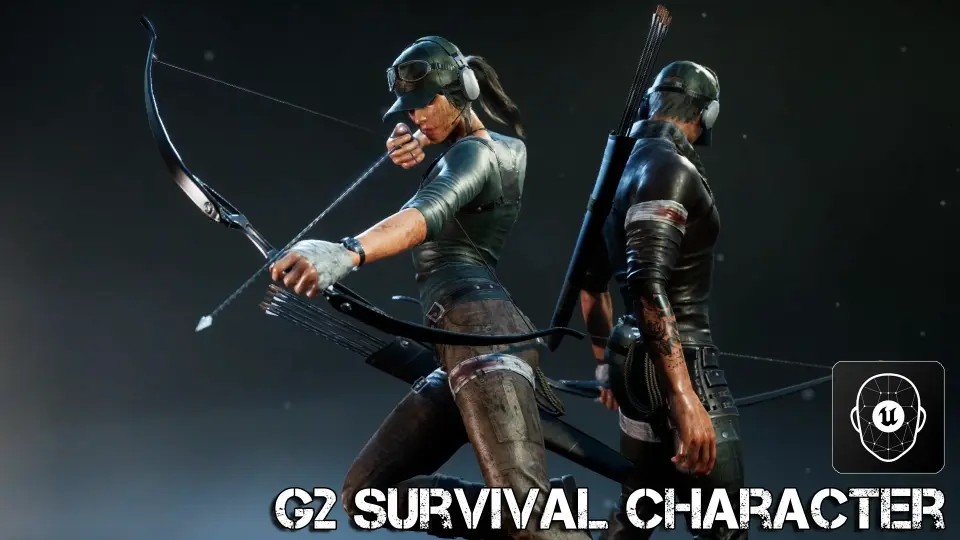
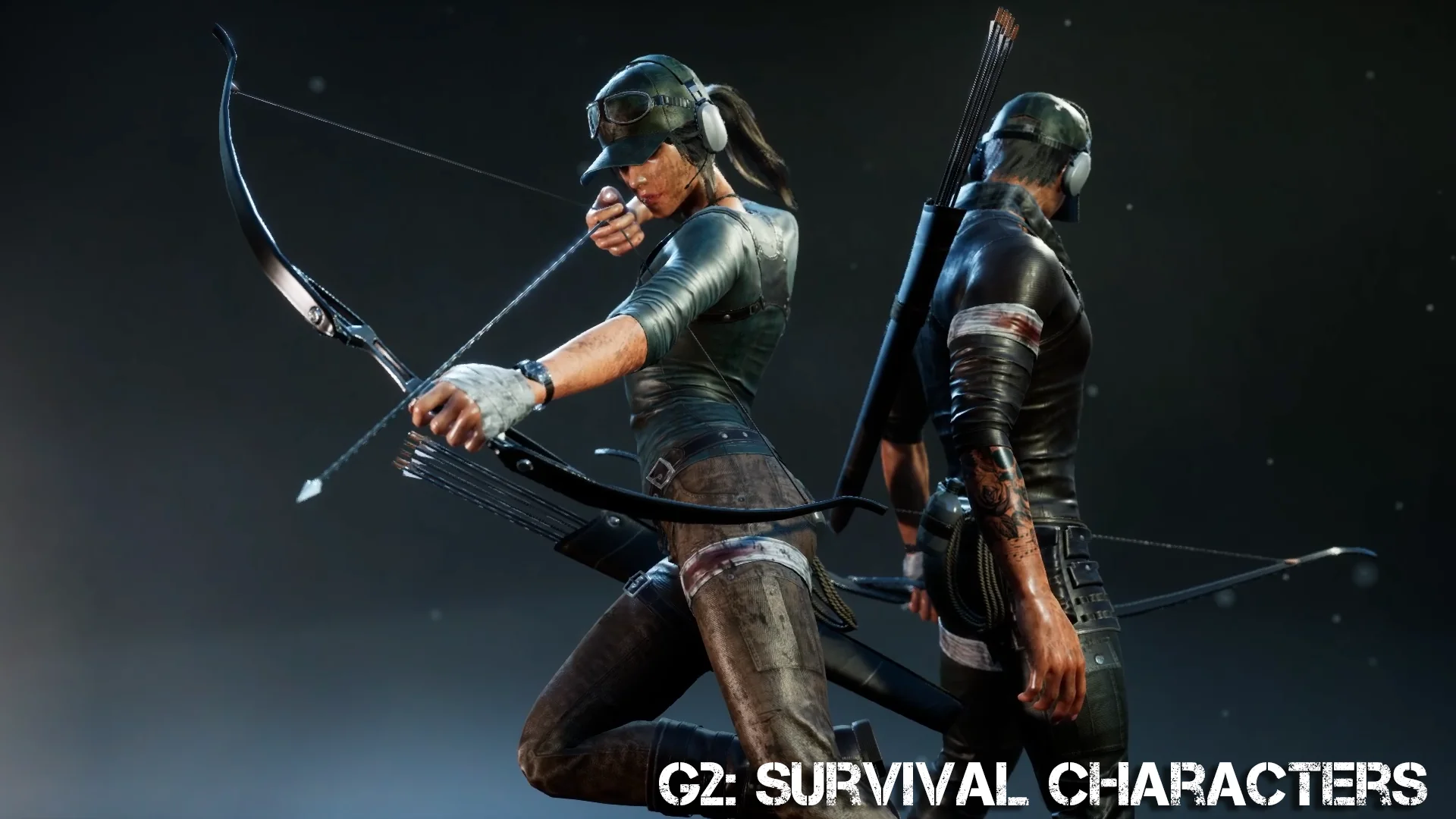
G2: Survival Characters introduces a realistic, low-poly cast of male and female survivor models structured to populate harsh, grounded game environments. Built as game-ready visual assets, these characters arrive ready for immediate staging, providing immediate visual feedback in engine viewports. The collection depicts utilitarian survival wear, suited for field exploration, scavenging, and combat scenarios. Rather than functioning as rigid, single-mesh figures, the models rely on modular assembly, enabling creators to swap garments, gear, and anatomical elements across projects.
Modular Assembly Across G2 Survival Characters
Modularity stands as the central functional design element within G2: Survival Characters. Clothing, gear, hair, weapons, and accessories can be mixed and matched freely, provided the exchanged pieces belong to the same gender category within the broader Genesis 2 (G2: Characters) line. A jacket, vest, or pair of survival trousers from one release within the ecosystem seats cleanly onto another model of the same gender frame. This cross-compatibility extends the shelf life of each mesh piece, allowing small teams to assemble distinct background scavengers, intermediate squad members, or custom player avatars without manual refitting or skeletal retargeting.
Interchangeability extends to specialized props and peripheral survival tools. Gear such as arrows, hair elements, and distinct weaponry can be attached directly to designated sockets or fitted over base apparel. This setup also accounts for compatibility with the N5: Human Base standard, preserving consistent proportions and anchor points across related asset collections. Creators working with layered outfits can strip away heavy outer coats, adjust boots, or trade survival gear while maintaining uniform joint alignments across the torso and limbs.
Material Adaptation and Surface Blending
Visual variety across modular clothing parts requires flexible surface shading. G2: Survival Characters utilizes master materials engineered to give developers direct authority over colors and surface textures. Within material instances derived from these master shaders, texture maps and tint channels can be blended to align with the visual tone of a specific scene or lighting environment.
This texture-blending pipeline avoids repetitive duplicate meshes when creating multiple non-player characters for a single settlement or wilderness outpost. Adjusting the base values allows an artist to dull bright fabrics, introduce dirty undertones, adjust fabric values, or harmonize equipment palettes across an entire faction. Because these changes occur at the material instance layer, memory overhead remains predictable while producing extensive aesthetic divergence across identical geometry.
Facial Animation and Unisex Hair for G2 Characters
Close-up cinematic framing and in-game dialogue demand responsive deformation around the eyes, jaw, and mouth. G2: Survival Characters incorporates 83 individual blendshapes and morph targets engineered for speech synchronization and complex emotional states. This morph library accommodates phoneme generation for real-time lipsync systems as well as layered expressions, ranging from subtle fatigue to high-stress reactions during combat or traversal sequences.
Hairstyles in character collections often run into gender-locked constraints, limiting asset flexibility across varied casts. This package resolves that hurdle by providing two unisex hairstyles constructed to seat identically on both male and female head meshes. These hair assets maintain proper scalp alignment regardless of the base skull form they are applied to. Combined with the extensive facial blendshape library, developers can construct believable conversations, scripted cinematic interludes, or dynamic reaction states without needing to model bespoke corrective blendshapes.
Locomotion Integration with ALS v4 and Lyra
Under the skin, the character meshes are weighted to the established UE4 Mannequin skeleton, augmented by two extra bones. This structural continuity ensures near-native compatibility with existing Unreal Engine animation sets, eliminating long hours spent setting up complex IK rigs or manual retargeting profiles. Standard jump, crouch, sprint, and aim cycles developed for the Epic skeleton align directly with the character meshes.
Beyond standard animation playback, G2: Survival Characters operates smoothly within sophisticated gameplay sandboxes, specifically Advanced Locomotion System v4 (ALS v4) and Epic's Lyra Starter Game project. Because the skeletal tree retains core Mannequin conventions alongside its two additional bones, procedural movement features like foot placement, stride warping, turning in place, and mantle sequences adapt to the meshes without severe deformation. Studios prototyping survival action mechanics can drop these characters into an active Lyra or ALS v4 controller framework, linking gameplay inputs straight to responsive visual avatars without custom animation graphs.
Package Architecture and Pipeline Boundaries
The package received a structural reorganization on December 10, 2024, streamlining internal folder arrangements to make asset location and migration between projects cleaner. Textures, master materials, modular skeletal meshes, and props are partitioned into predictable subdirectories, reducing file conflicts when merging the pack into existing project repositories.
It remains equally important to understand what the asset pack deliberately excludes. The package delivers game-ready character art, meshes, and rigging configurations; it does not contain prebuilt gameplay logic, custom particle VFX systems, or fully scripted Blueprint gameplay frameworks. The models are designed to supply production-grade visual bodies intended for injection into a studio's own gameplay code, animation blueprints, or existing locomotion frameworks like Lyra. For teams equipped with an established animation and interaction codebase, G2: Survival Characters provides a fully rigged, modular visual layer ready for instant deployment.
 Humans
 Humans
 Humans
 Humans